Garden Bird Forecast: 7-Day Feeder Activity for Your Area (Free)
Free 7-day bird forecast for your garden: how busy your feeders will be, which birds to expect this week and what to put out before frost, snow or heavy rain.
In this article
Will your feeders be busy this week, and what should you put out before the next frost? This free garden bird forecast combines the 7-day weather for your area with 908 million bird records to tell you how hard birds will be feeding each day, which birds to expect this week and exactly what to do before frost, snow or a storm arrives.
How the bird forecast works
Two data sets drive it. The weather is the live 7-day forecast from MET Norway, the Norwegian Meteorological Institute, which covers the whole world and is shared under an open licence. The birds come from GBIF.org: for every state, region and province in the US, UK, Germany, France and the Netherlands, we count how often each common garden bird is reported each month (CC0 and CC BY records, 2016 to 2025).
The activity score starts at a middle value for every day. It rises as nights get colder, and rises more with frost and snow, because small birds burn energy fast in the cold and snow hides their natural food. It falls in heavy rain, strong wind and heat, when birds sit tight in cover. After a rough day it gets a bump, because birds rush back to feed as soon as the weather calms down.
It is an estimate of feeding pressure, not a bird count, and we show how it is built so you can judge it yourself.
Why weather changes what happens at your feeder
A cold night is hard work for a small bird. A chickadee or a blue tit can lose around a tenth of its body weight overnight in hard frost, just keeping warm, and must refuel at first light. That is why feeders are busiest in the first two hours after sunrise on cold mornings, and why the forecast shows that window for your area.
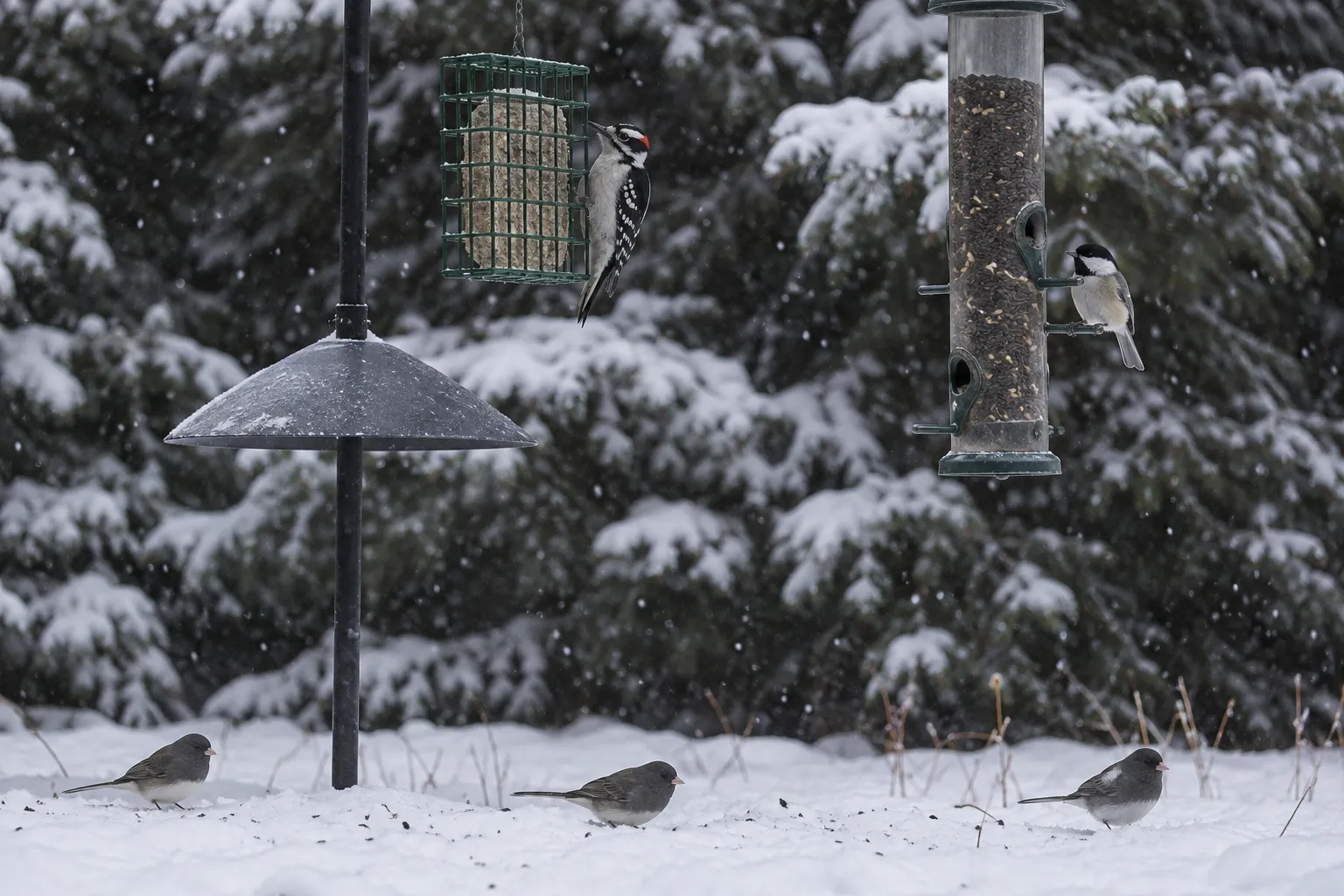
Snow changes the picture again. Seeds, berries and insects on the ground disappear under it, so birds that normally forage for themselves turn to gardens. Ground feeders such as juncos, sparrows, blackbirds and robins struggle most, because they will not always use a hanging feeder.
Water is the forgotten need. When everything freezes, birds still need to drink and to bathe, because clean feathers insulate better. A bowl of fresh water in the morning, or a heated bird bath, can bring more birds than extra seed.
What to put out before frost, snow and storms
Before frost: put out fresh, unfrozen water early, and fill feeders the evening before so food is there at dawn.
In a cold spell: switch to high-energy food. Suet, peanuts and sunflower hearts give the most energy for each beakful, and hulled seed means no time wasted cracking shells.
When snow is forecast: clear a patch of ground or use a ground tray, and scatter some food there for the birds that will not hang on a feeder.
Before heavy rain: use feeders with a roof or drainage. Wet seed clumps and grows mould, so throw away anything that has gone soft.
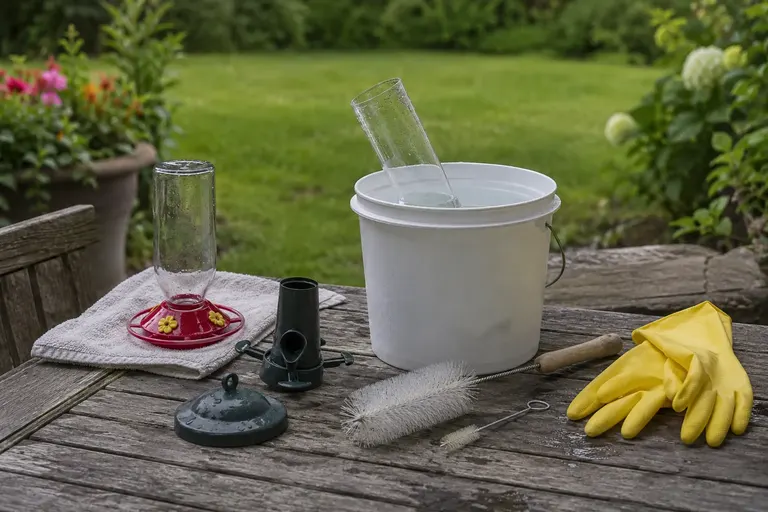
In a mild, damp week: clean feeders and the bird bath. Germs spread easily at busy feeding stations in mild, wet weather, and disease has hit some garden finches hard.
Which birds will come this week
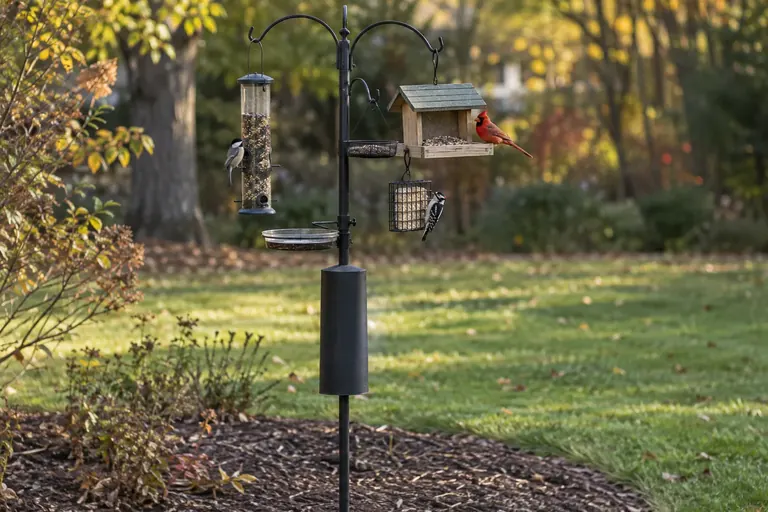
The visitor list shows the birds most reported in your state or region this month, so it changes through the year. In autumn and winter you will see winter visitors marked: birds such as juncos in the US, or Redwings and Bramblings in Europe, that arrive from the north for the cold months. Under the list you will find the foods that suit this week’s visitors best.
If you want to identify a bird you have seen, or keep a list of everything in your garden, use our free garden bird companion. Choosing a present for a bird lover? The bird gift finder picks gifts that suit their own garden.
Where the data comes from
Weather data is from MET Norway, licensed under CC BY 4.0. Bird data is from GBIF.org, using only records shared under CC0 or CC BY licences. Bird photos are from Wikimedia Commons, credited to their authors. The forecast runs in your browser; your chosen region is saved only on your device.

Frequently asked questions
How does the garden bird forecast work?
It reads the 7-day weather forecast for your area from MET Norway and turns it into a feeder activity estimate: cold nights, frost and snow push it up, while heavy rain, strong wind and heat pull it down. It then lists the birds most reported in your state or region this month, from GBIF.org records.
Is the activity score a bird count?
No. It is an estimate of feeding pressure based on the weather, not a count of birds. Use it to plan when to top up feeders and when to watch, not as a prediction of exact numbers.
When do birds visit feeders most?
Most garden birds feed hardest in the first two hours after sunrise, to refuel after the night, and again in the late afternoon before roosting. Visits rise in cold snaps and snow, when natural food is harder to find.
Does it need my location?
No. You can pick your state or region from the list. If you tap Use my location, your browser shares a rounded position only to fetch the weather for your exact spot. Nothing is stored by Perch and Glass. On your first visit the forecast opens on your approximate area, worked out from your internet connection, and you can change it at any time.