The Best Bird Feeders for Your Backyard
The best bird feeders for most backyards: a squirrel-resistant tube, a big hopper, a tray, suet and nectar feeders, chosen for cleaning ease and capacity.
If you buy through links on this page we may earn a commission, at no cost to you. It never decides what we recommend. How we earn
In this article
- Quick picks
- How we chose
- Brome Squirrel Buster Plus: best bird feeder overall
- Heritage Farms Absolute II: best large hopper feeder
- Droll Yankees Onyx Clever Clean: best basic tube feeder
- Woodlink Going Green Platform Feeder: best platform feeder
- Birds Choice Upside Down Suet Feeder: best suet feeder
- Aspects HummZinger HighView 12 oz: best hummingbird feeder
- Nature’s Hangout Window Bird Feeder: best window feeder
- Comparison table
- Which type of bird feeder should you buy?
- What seed should you put in your bird feeder?
- Where to hang a bird feeder
- How to keep bird feeders clean
- How many bird feeders do you need?
- Common mistakes when buying a bird feeder
- Sources
- Frequently asked questions
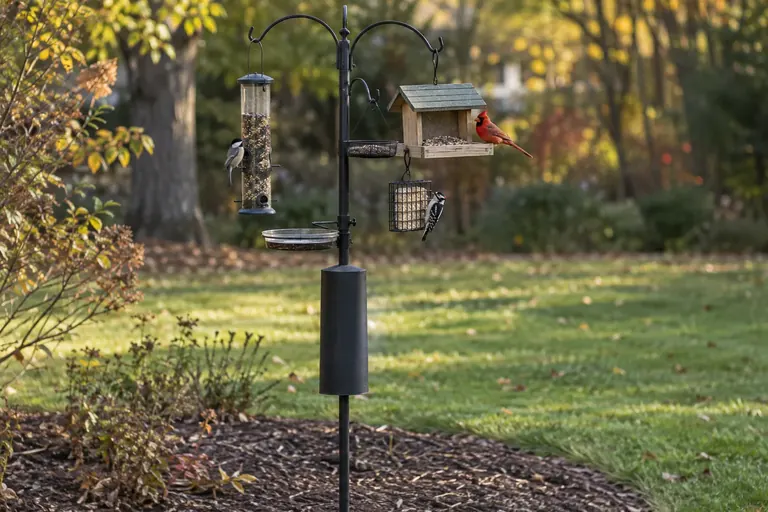
The best bird feeder for most backyards is a squirrel-resistant tube, and the Brome Squirrel Buster Plus, with a 5.1 lb seed capacity, is the one we would start with. Fill it with black-oil sunflower seed and you will feed most common songbirds without funding the local squirrels. Then add a suet feeder for woodpeckers, a tray for ground feeders and a nectar feeder for hummingbirds. Each feeder type brings in a different set of birds.
Quick picks
- Best overall: Brome Squirrel Buster Plus. Weight-activated, 5.1 lb capacity, tool-free cleaning.
- Best large hopper: Heritage Farms Absolute II. Over 12 lb of seed, two feeding sides, adjustable perches.
- Best basic tube: Droll Yankees Onyx Clever Clean. The base twists off for thorough cleaning.
- Best platform feeder: Woodlink Going Green Platform Feeder. The widest species list of any feeder type.
- Best suet feeder: Birds Choice Upside Down Suet Feeder. Woodpeckers love it, starlings struggle.
- Best hummingbird feeder: Aspects HummZinger HighView 12 oz. Built-in ant moat, easy to scrub.
- Best window feeder: Nature’s Hangout Window Bird Feeder. Close views from indoors.
Brome Squirrel Buster Plus
A weight-activated tube that shuts out squirrels, holds 5.1 lb of seed, takes apart by hand for cleaning and has a ring perch cardinals can use.
- Best for
- Most backyards, especially those with squirrels.
- Skip it if
- You want to feed large birds like jays and doves, which it can shut out on heavier settings.
- Capacity
- 5.1 lb seed
- Ports
- 6
- Height
- 28 in, base to hanger
Heritage Farms Absolute II
A two-sided steel hopper holding over 12 lb of seed, with weight-sensitive perches you can adjust.
- Best for
- Busy yards and people who want to refill less often.
- Skip it if
- You need something light enough to hang from a thin branch.
- Capacity
- Over 12 lb seed
- Material
- Powder-coated steel
- Feeding sides
- 2
Droll Yankees Onyx Clever Clean Tube Feeder
A metal-capped tube whose base twists off, so you can brush it out fully without fighting stale seed at the bottom.
- Best for
- People who hate cleaning feeders and want a simple tube.
- Skip it if
- Squirrels are a problem and you have no baffle.
- Cleaning
- Twist-off removable base
- Sizes
- 12 in (1 lb, 2 ports) to 24 in (6 ports)
Woodlink Going Green Platform Feeder
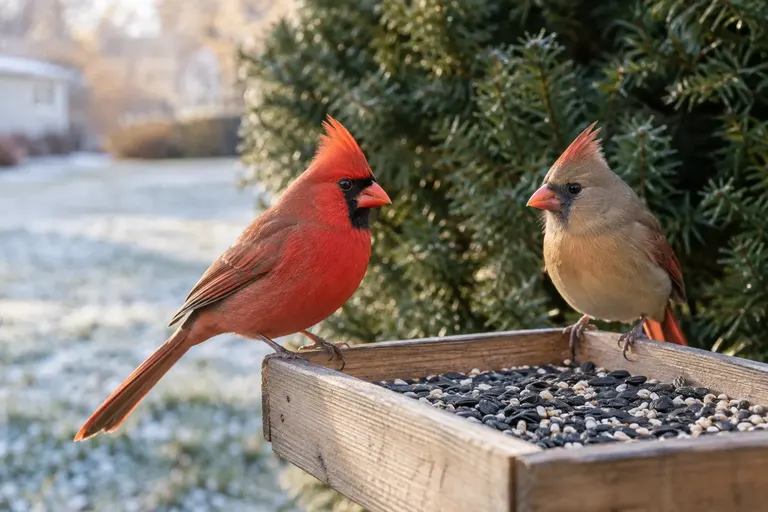
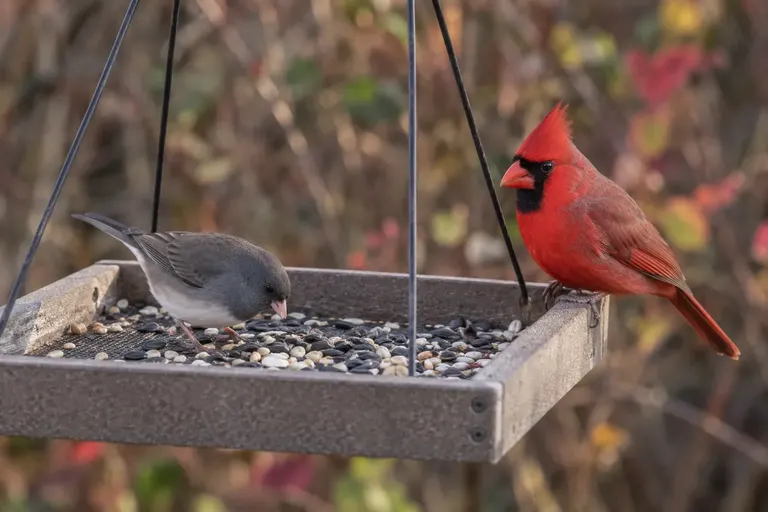
A recycled plastic tray that welcomes cardinals, doves, juncos and sparrows that avoid tube perches.
- Best for
- Attracting the widest variety of species.
- Skip it if
- You cannot clear it of wet seed often, or squirrels have free access.
- Size
- 12.75 x 12.75 x 2.5 in
- Material
- Recycled plastic
Birds Choice Upside Down Suet Feeder
Clinging birds feed from below, which woodpeckers and nuthatches handle easily and starlings find awkward.
- Best for
- Woodpeckers, nuthatches and chickadees, especially in winter.
- Skip it if
- Starlings are not a problem and a simple cage will do.
- Capacity
- 2 suet cakes
- Size
- 12.5 x 9 x 4.25 in
- Material
- Recycled poly-lumber, made in USA
Aspects HummZinger HighView 12 oz
A saucer-style nectar feeder with a built-in ant moat and port design that discourages bees and wasps.
- Best for
- Anyone who wants a nectar feeder that is quick to clean.
- Skip it if
- You need a large capacity for a very busy western yard.
- Capacity
- 12 oz nectar
- Ports
- 4
- Diameter
- 7.8 in
Nature's Hangout Window Bird Feeder
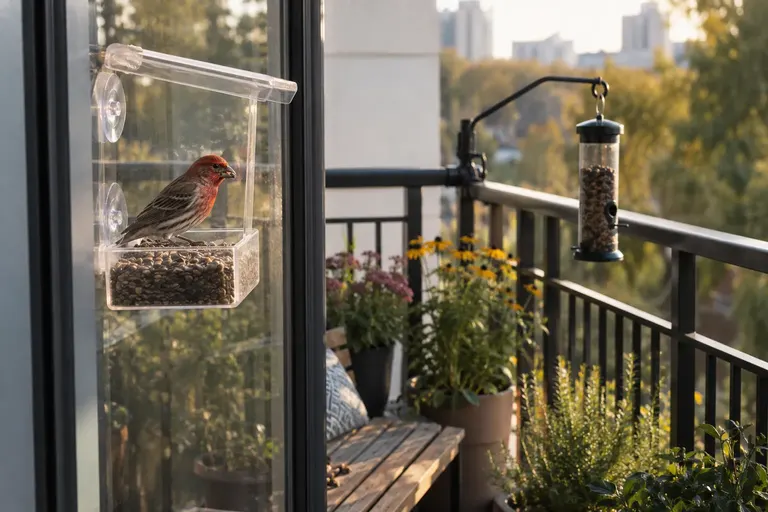
A clear acrylic house that sticks to glass with suction cups and has a sliding, drained seed tray.
- Best for
- Close views from indoors, apartments and people without a yard.
- Skip it if
- Your window is hard to reach from outside for cleaning.
- Material
- UV-resistant acrylic
- Mounting
- Suction cups, 3 spares included
How we chose
We have not yet hung or refilled these feeders ourselves. This list is research-led. We started with guidance from the Cornell Lab of Ornithology and Project FeederWatch on which feeder types suit which birds and how feeders should be cleaned. We then compared manufacturer specifications for capacity, materials, cleaning design and squirrel resistance, confirmed each product is currently sold, and read patterns across verified owner reviews for recurring praise and problems, such as cracking, leaks or hard-to-clean corners. We favored feeders that come apart easily, since a clean feeder matters for bird health. We did not consider price beyond noting where a design adds cost.
Brome Squirrel Buster Plus: best bird feeder overall
What it is: A tube feeder with a metal shroud that slides down over the seed ports when a squirrel’s weight pulls on it. Brome lists a 5.1 lb seed capacity, six ports and a height of 28 inches from base to hanger.
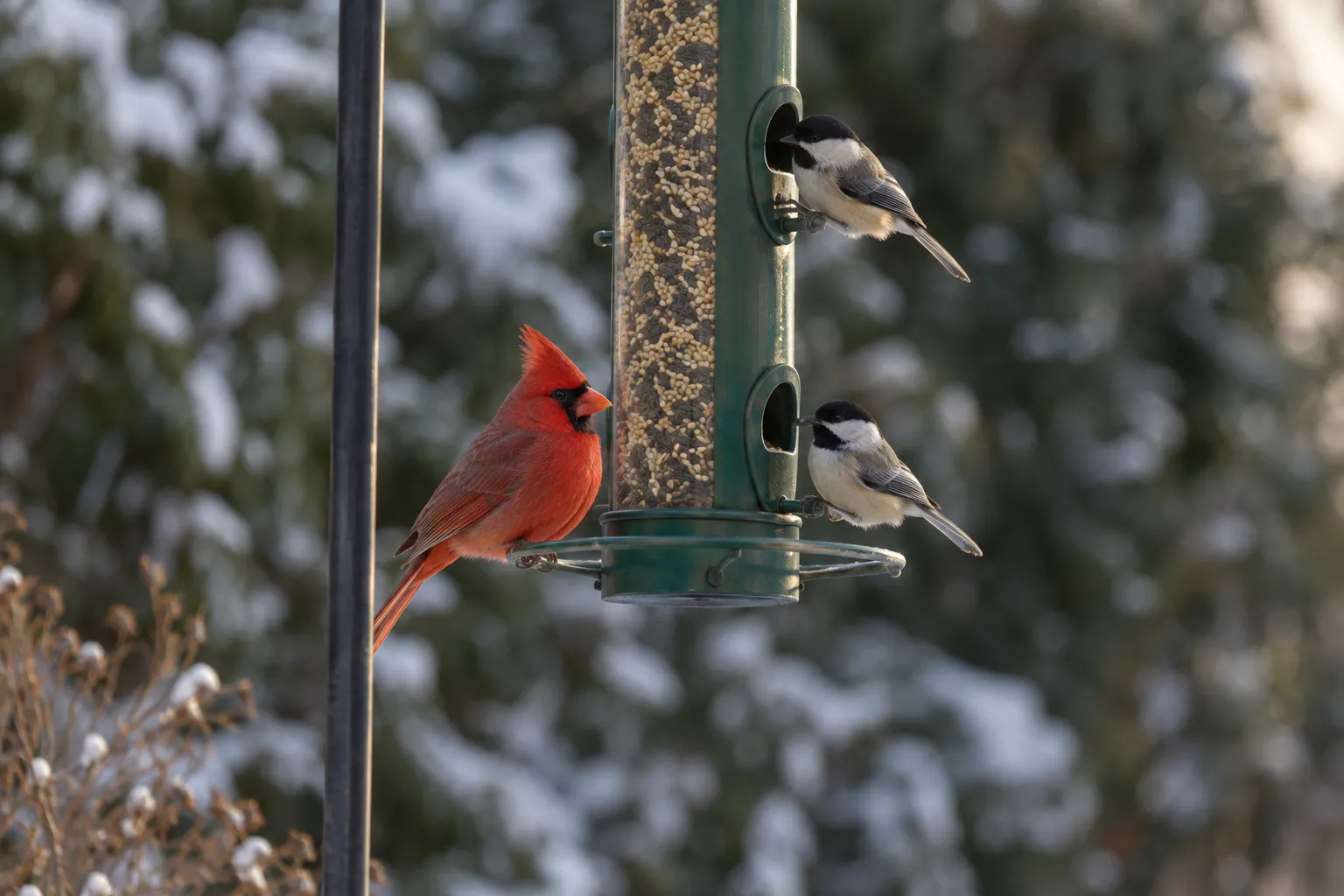
Why it stands out: Three features make it easy to live with. First, the spring is adjustable, so you can set how much weight closes the ports. Second, Brome’s Detachable Component System lets you take it apart by hand, with no tools, for cleaning. Third, the Cardinal Ring gives larger perching birds like Northern Cardinals, which do not like short tube perches, a place to stand. Brome also lists seed tube ventilation to let humid air escape and chew-proof, UV-resistant materials.
Owner patterns: Owners most often praise how completely it stops squirrels and how long it lasts. The main drawback is built into the design: on lighter spring settings, heavier birds such as doves and jays can close the ports, so you may need to adjust it for the birds you want.
- Best for: Almost any backyard, especially one with persistent squirrels.
- Skip it if: You want to feed jays, doves or woodpeckers heavy enough to close the ports, or you want a cheap starter feeder.
For more squirrel-proof options, see our full guide to the best squirrel-proof bird feeders.
Heritage Farms Absolute II: best large hopper feeder
What it is: A large, two-sided hopper made of powder-coated steel. Retailers list it as holding over 12 lb (about 2 gallons) of seed. Its perches are weight sensitive: when a squirrel or heavy bird lands, a panel drops over the seed.
Why it stands out: Capacity is the big draw. A feeder this size can go days between refills even in a busy winter yard. The weight settings are adjustable, and retailers list both hanging and pole-mounting hardware as included. Hoppers, according to the Cornell Lab, appeal to finches, cardinals and chickadees and keep seed dry under a roof.
Owner patterns: Owners like that it resists squirrels and holds a lot. The common complaints are its weight when full, which calls for a sturdy pole or hook, and that its size makes cleaning a bigger job.
- Best for: Busy yards, large flocks in winter, and people who prefer to refill once or twice a week.
- Skip it if: You need to hang it from a thin branch or a light hook, or you prefer small feeders that are easy to carry to a sink.
Droll Yankees Onyx Clever Clean: best basic tube feeder
What it is: A clear tube feeder with metal ports and caps. Its main feature is a twist-and-release base: turn it and the whole bottom comes off, so a brush can go straight through the tube. The top opens with a push button. It comes in several lengths, from a 12 inch model that Duncraft lists as holding 1 lb with two ports, up to a 24 inch, six-port version.
Why it stands out: Tube feeders are the classic seed feeder, and the Cornell Lab notes they protect seed from weather and suit many seed sizes. The hardest part of owning one is cleaning the packed, damp seed that collects at the bottom. The Clever Clean solves that directly. Duncraft lists it as made in the USA.
Owner patterns: Owners regularly mention easy cleaning as the reason they bought it. The main caution is that it is not squirrel-proof: metal parts resist chewing, but squirrels can still reach the seed without a baffle.
- Best for: Anyone who wants a simple, durable tube and dreads cleaning.
- Skip it if: You have squirrels and no baffle. Pair it with one of the options in our guide to feeder poles and baffles.
Woodlink Going Green Platform Feeder: best platform feeder
What it is: A flat tray made from recycled plastic. WoodLink lists it at 12.75 by 12.75 inches, 2.5 inches deep.
Why it stands out: Platform feeders attract the widest variety of birds, according to the Cornell Lab, including grosbeaks, sparrows, juncos and jays. Many ground-feeding birds such as Mourning Doves and Dark-eyed Juncos rarely use tube perches but will land on a tray. Recycled plastic does not rot or split like thin wood.
Owner patterns: Owners commonly report a big jump in the number of species visiting. The trade-off is maintenance: trays collect rain and droppings, so seed spoils faster. Offer only what birds will eat in a day or two, and scrape and rinse often.
- Best for: Maximizing variety, and feeding cardinals, doves, juncos and sparrows.
- Skip it if: You cannot clean it often, or squirrels and blackbirds have easy access.
Birds Choice Upside Down Suet Feeder: best suet feeder
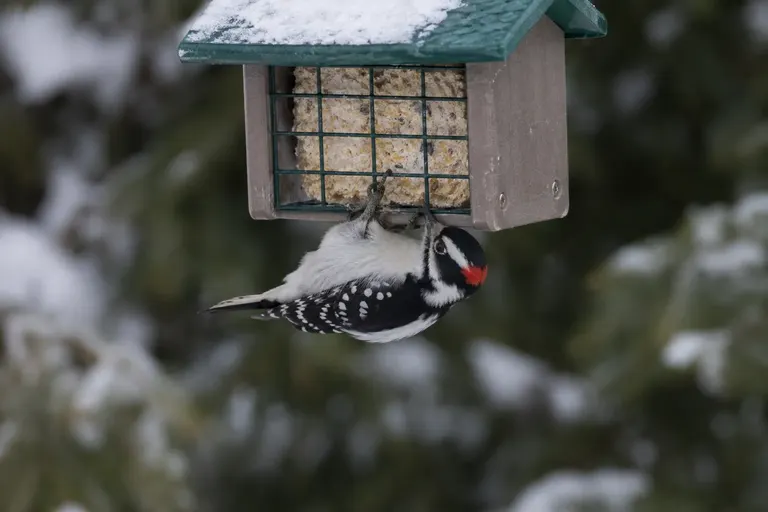
What it is: A roofed suet feeder that holds suet cakes facing down. Birds Choice lists the two-cake model at 12.5 by 9 by 4.25 inches, built from recycled poly-lumber with a vinyl-coated grid and stainless steel screws, and made in the USA.
Why it stands out: Woodpeckers, nuthatches and chickadees cling easily and are comfortable feeding upside down. European Starlings, which can empty a standard suet cage fast, find the position awkward. The Cornell Lab’s FeederWatch notes that suet cages accessible only from the bottom tend to be starling resistant. The roof also helps keep rain off the suet.
Owner patterns: Owners often report woodpecker visits within days and fewer starlings. Keep expectations realistic: the design makes starlings work harder rather than excluding them completely, and it does nothing special to stop squirrels.
- Best for: Downy, Hairy and Red-bellied Woodpeckers, nuthatches and chickadees, especially in cold months.
- Skip it if: Starlings are not a problem where you live; a simple suet cage works. See more choices in our suet feeder guide.
Aspects HummZinger HighView 12 oz: best hummingbird feeder
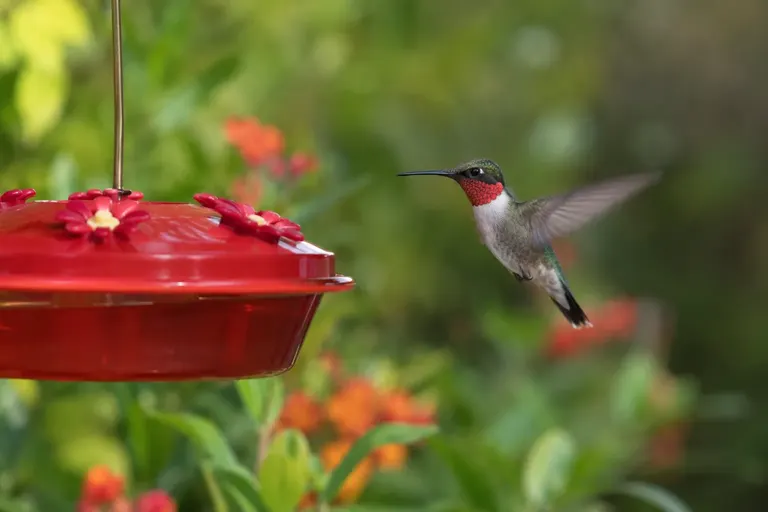
What it is: A red-lidded saucer feeder that holds 12 oz of nectar and has four ports. Aspects lists a built-in ant moat and a 7.8 inch diameter. The lid lifts off so you can scrub both halves.
Why it stands out: Saucer designs tend to leak less than inverted bottles, since nectar sits below the ports. The ports are long and oval, a shape the maker says discourages bees and wasps. The raised perch lets hummingbirds sit while feeding. Most important, there are few hidden corners, which matters because nectar feeders need cleaning every couple of days in warm weather.
Owner patterns: Owners most often praise how quick it is to clean and the lack of drips. Its 12 oz capacity is modest, so busy yards may need daily top-ups in peak season.
- Best for: Most backyards with Ruby-throated or Anna’s Hummingbirds.
- Skip it if: You host dozens of hummingbirds at once and need a larger capacity. See our hummingbird feeder guide for bigger options.
Nature’s Hangout Window Bird Feeder: best window feeder
What it is: A clear acrylic feeder that attaches to the outside of a window with suction cups. The seed tray slides out and has drain holes. Nature’s Hangout lists UV-resistant acrylic and includes three spare suction cups.
Why it stands out: Window feeders give the closest views you can get, and the Cornell Lab notes they may reduce collision risk, since birds at the glass are not approaching it at speed. They also suit apartments and homes without a yard.
Owner patterns: Owners love the close views of finches and chickadees. As with any suction-cup feeder, the cups hold best on clean, smooth glass, and you need to reach the outside of the window to refill and clean it.
- Best for: Close viewing from indoors, small spaces and people who want to watch birds from a chair.
- Skip it if: You cannot safely reach the outside of the window. Compare options in our window feeder guide.
Comparison table
| Feeder | Type | Capacity | Squirrel defense | Main birds |
|---|---|---|---|---|
| Squirrel Buster Plus | Tube | 5.1 lb | Weight-activated shroud | Finches, chickadees, titmice, cardinals |
| Absolute II | Hopper | Over 12 lb | Weight-activated perches | Cardinals, finches, chickadees, grosbeaks |
| Onyx Clever Clean | Tube | 1 lb (12 in) and larger sizes | Metal parts only | Finches, chickadees, titmice, nuthatches |
| Going Green Platform | Tray | Open tray | None | Juncos, doves, sparrows, cardinals, jays |
| Birds Choice Upside Down | Suet | 2 cakes | Limited | Woodpeckers, nuthatches, chickadees |
| HummZinger HighView | Nectar | 12 oz | Not needed | Hummingbirds |
| Nature’s Hangout | Window | Tray | Height and glass | Chickadees, finches, titmice |
Which type of bird feeder should you buy?
Feeder type matters more than brand, because it decides which birds can eat.
Tube feeders
Best for small perching birds: chickadees, titmice, finches and nuthatches. They keep seed relatively dry. Larger birds like jays and grackles struggle with short perches, which can be a plus.
Hopper feeders
A roofed box that releases seed into a tray as birds eat. They hold a lot and suit cardinals, finches and chickadees. The Cornell Lab notes they are harder to clean than tubes.
Platform and tray feeders
Open trays draw the most species, including ground feeders. They need the most cleaning.
Suet feeders
Cages or holders for suet cakes. They bring in woodpeckers, nuthatches and wrens, and are most useful in cooler months.
Nectar feeders
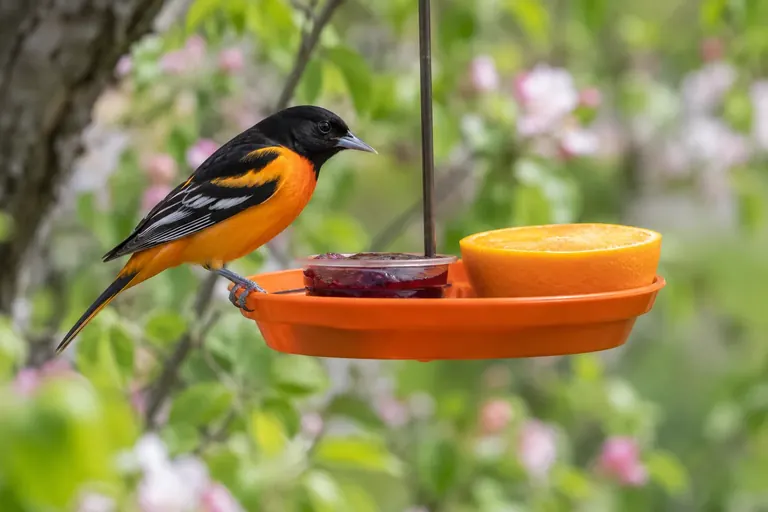
For hummingbirds and sometimes orioles. Fill with a simple 1 part sugar to 4 parts water mixture, with no red dye.
Window feeders
Small feeders on the glass for close-up views. Great for finches and chickadees.
What seed should you put in your bird feeder?
If you choose only one seed, make it black-oil sunflower. The Cornell Lab recommends it as the place to start because thin shells and high fat content appeal to most feeder birds. Our guide to black-oil sunflower seed explains why. Beyond that:
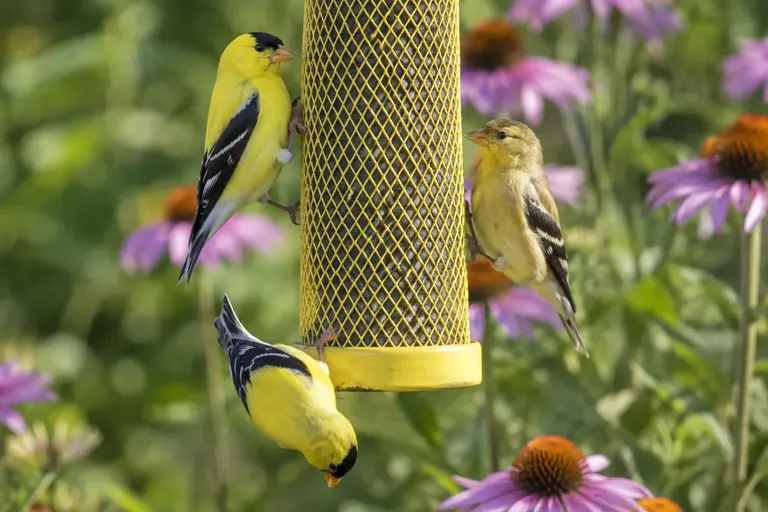
- Nyjer (thistle) in a fine-port feeder for goldfinches and siskins.
- Safflower for cardinals; many squirrels and blackbirds show less interest in it.
- White proso millet on a tray or the ground for juncos, sparrows and doves.
- Suet in winter for woodpeckers and nuthatches.
Avoid cheap mixes heavy in red milo and filler grains, which many backyard birds kick out onto the ground.
Where to hang a bird feeder
Project FeederWatch recommends placing feeders near cover such as shrubs or trees, which gives birds a place to escape hawks, but about 10 feet away from branches strong enough to act as jump-off points for squirrels and cats. Hang feeders where you can see them from a window you use every day.
Windows matter too. The Cornell Lab now advises that older rules about exact feeder distance from windows are not reliable, and that the best protection is making the windows themselves bird friendly with screens, external film or markers. Our guide on where to put a bird feeder covers height, distance and cover in detail.
How to keep bird feeders clean
Dirty feeders can spread disease among birds. Project FeederWatch recommends:
- Clean seed and suet feeders every week or two, more often in wet weather or when feeders are busy.
- Clean nectar feeders every couple of days, ideally at each refill.
- Empty old seed before refilling so fresh seed does not sit on spoiled seed.
- Disinfect by scrubbing, then soaking for 10 minutes in one part bleach to nine parts water. Rinse well and dry fully before refilling.
- Rake up hulls and droppings under feeders regularly.
Watch for sick birds with fluffed feathers, crusty eyes or lethargy. If you see them, clean more often and consider taking feeders down for a while.
How many bird feeders do you need?
Most yards do well with a small, deliberate set rather than a crowd of feeders. A practical build-up looks like this:
- Start with one seed feeder. A tube or hopper with black-oil sunflower brings in the core group of chickadees, titmice, finches, nuthatches and cardinals.
- Add suet in fall and winter. This is the fastest way to add woodpeckers.
- Add a tray or low platform once birds are visiting, to bring in juncos, doves and sparrows.
- Add a nectar feeder in spring before hummingbirds arrive in your area, and keep it clean through summer.
Spacing feeders a few feet apart also reduces squabbles, since aggressive birds cannot guard every feeder at once. If birds are slow to show up, our guide to why birds are not coming to a new feeder covers the usual reasons.
Common mistakes when buying a bird feeder
- Buying a feeder you cannot take apart. Hidden corners trap mold. Choose designs that open fully.
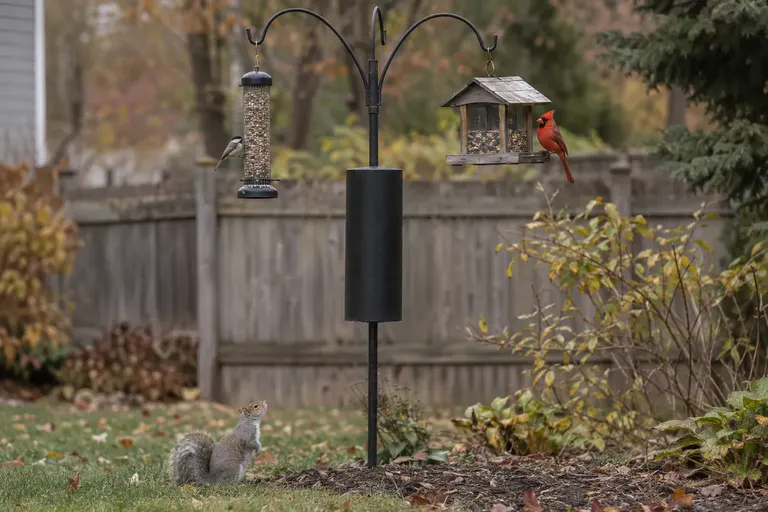
- Hanging a feeder where squirrels can jump to it. No feeder is squirrel-proof if a squirrel can reach seed from a railing.
- Using cheap filler mixes. Birds throw out milo and wheat, which attracts rodents.
- Putting out too many feeders at once. Start with one or two and add as birds find them.
- Using red dye in nectar. It is not needed; the red on the feeder attracts hummingbirds.
- Leaving a tray full of wet seed. Offer only what birds eat in a day or two.
Sources
- Cornell Lab of Ornithology, All About Birds: How to choose the right kind of bird feeder
- Project FeederWatch: Feeder types
- Project FeederWatch: Feeding birds, cleaning and placement
- Cornell Lab of Ornithology, All About Birds: Why birds hit windows and how you can help
- Brome Bird Care: Squirrel Buster Plus specifications
- Birds Choice: Upside Down Suet Feeder for two cakes
- WoodLink: Going Green Platform Feeder
Frequently asked questions
What is the best type of bird feeder for beginners?
A tube or hopper feeder filled with black-oil sunflower seed is the best place to start. The Cornell Lab recommends beginning with black-oil sunflower in a tube feeder with squirrel protection, because that seed appeals to the widest range of common feeder birds. Once birds find it, add a suet feeder and a tray to bring in woodpeckers and ground-feeding species.
Where should I put a bird feeder?
Project FeederWatch suggests placing feeders near natural cover like shrubs or trees, where birds can escape predators, but about 10 feet away so squirrels and cats cannot use branches as jump-off points. Put feeders where you can see them from a favorite window, and make nearby windows bird friendly with screens or markers to reduce collisions.
How often should I clean my bird feeder?
Project FeederWatch recommends cleaning seed and suet feeders every week or two, and more often during heavy use or wet weather. Clean hummingbird feeders every couple of days, ideally at each refill. To disinfect, scrub out debris, then soak parts for 10 minutes in one part bleach to nine parts water, rinse well and let them dry.
What feeder attracts the most kinds of birds?
Platform or tray feeders attract the widest variety, because both perching and ground-feeding birds such as juncos, doves, sparrows, cardinals and jays will use them. The trade-off is that they offer little weather protection and are open to squirrels and larger birds. Many people pair a tray with a tube or hopper to cover both groups.
Do squirrel-proof feeders really work?
Weight-activated feeders such as the Squirrel Buster line and the Absolute II work well when they are hung correctly. The key is placement: the feeder must be far enough from trees, fences and roofs that squirrels have to climb onto it and trigger the mechanism rather than reach seed from a nearby perch. Cages and baffles are alternatives.