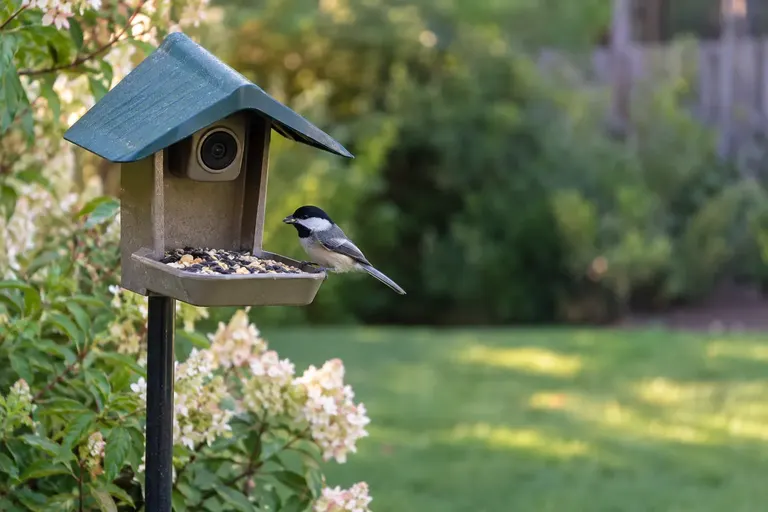
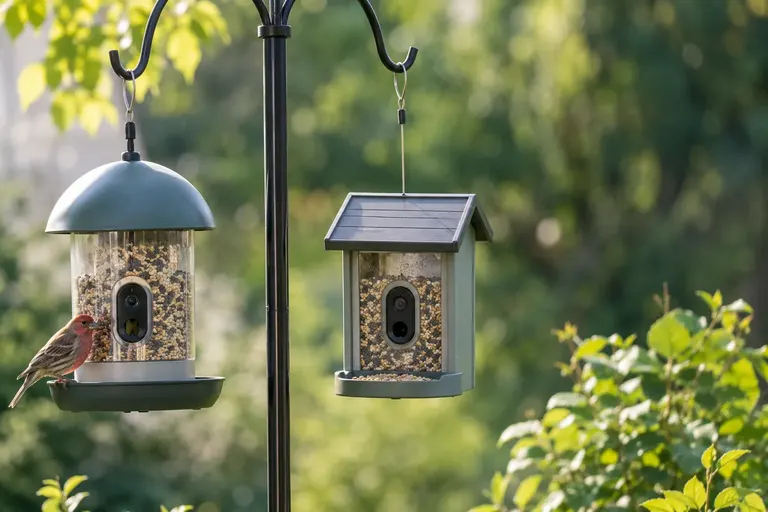
Best Bird Feeder Cameras
The best bird feeder camera for most people is the Birdbuddy Pro Solar, with Birdfy close behind. Research-based picks with verified specs and plan details.
If you buy through links on this page we may earn a commission, at no cost to you. It never decides what we recommend. How we earn
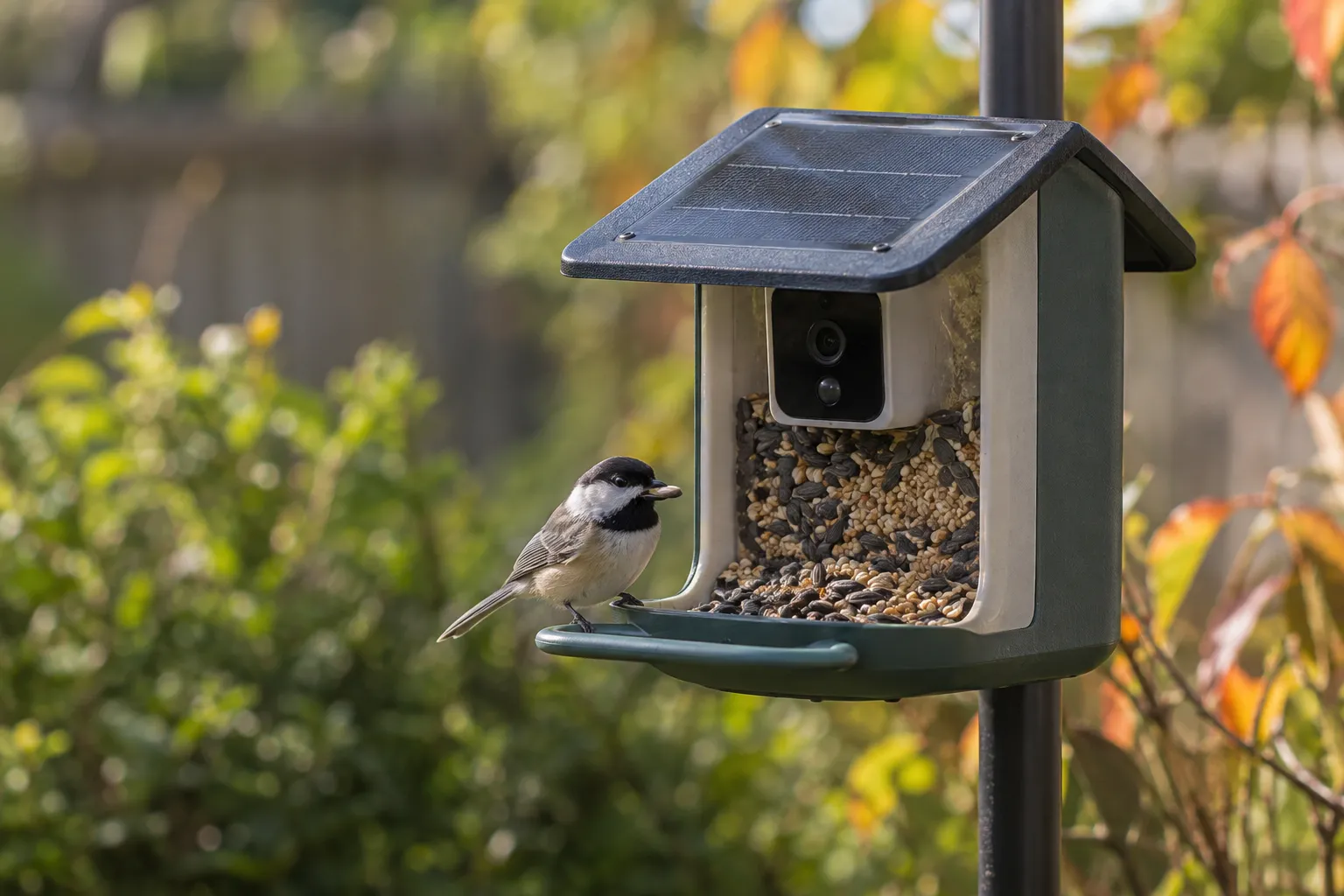
In this article
- Quick picks
- How we chose
- What to look for in a bird feeder camera
- Birdbuddy Pro Solar: best overall
- Birdfy Feeder 2 Duo: best dual-camera feeder
- Birdfy Feeder: best value
- Birdfy Feeder Metal: most durable
- Birdbuddy Hummingbird Feeder Pro: best hummingbird camera
- Wyze Cam v4: best DIY option
- Bird feeder camera comparison table
- What resolution do you need in a bird feeder camera?
- How accurate is AI bird identification?
- How do you protect a camera feeder from squirrels and weather?
- Birdbuddy vs Birdfy: which should you buy?
- How to get sharp photos from a feeder camera
- Are bird feeder cameras worth it?
- Common mistakes with bird feeder cameras
- Sources
- Frequently asked questions
The best bird feeder camera for most people is the Birdbuddy Pro Solar. On paper it pairs the strongest image specs here (2K video, 5 MP photos, a 1/2.7-inch sensor with HDR) with an IP67 rating, an included solar roof and a polished app. Birdfy is the main alternative, and its feeders make more sense if you want a bigger seed bin, two cameras in one feeder, or a version sold with lifetime-free AI identification.
Camera feeders have matured. The differences now come down to image quality, battery and solar, seed capacity, and what the app keeps behind a paywall. This guide explains each and gives picks for different needs.
Quick picks
- Best overall: Birdbuddy Pro Solar. Best image specs, IP67, solar included.
- Best dual-camera feeder: Birdfy Feeder 2 Duo. Tracking portrait lens plus wide lens.
- Best value: Birdfy Feeder. Large 50 oz seed bin and long battery rating.
- Most durable: Birdfy Feeder Metal. Metal body, built-in solar, 2.5 L bin.
- Best hummingbird camera: Birdbuddy Hummingbird Feeder Pro.
- Best DIY option: Wyze Cam v4. Point it at a feeder you already own.
For lower-cost options, see our best budget bird feeder cameras.
Birdbuddy Pro Solar
A 2K, 5 MP camera with HDR and a wide 122-degree view, an IP67 rating and a solar roof in the box.
- Best for
- Most people who want the most refined app and strong image specs.
- Skip it if
- You refuse any subscription upsell, since 2K video viewing sits in Premium.
- Camera
- 2K video, 5 MP photos, 1/2.7 in sensor
- Field of view
- 122 degrees
- Seed capacity
- 3.8 cups
- Weather rating
- IP67
Birdfy Feeder 2 Duo
Two cameras, a tracking 2K portrait lens and a 1080p wide lens, with a 9000 mAh battery and a 5W solar panel included.
- Best for
- People who want both close portraits and a wider scene.
- Skip it if
- You want local storage, since it is cloud only.
- Cameras
- 3 MP 2K tracking + 2 MP 1080p wide
- Battery
- 9000 mAh
- Solar
- 5W panel included
Birdfy Feeder
Birdfy's original camera feeder, with a large 50 oz seed bin, 2K high-quality mode and a battery rated for months of light use.
- Best for
- First-time buyers who want room for plenty of seed.
- Skip it if
- You want the sharpest possible images.
- Camera
- 2K high-quality mode, 1080p standard
- Seed capacity
- 50 oz (1.5 L)
- Battery
- 5200 mAh
Birdfy Feeder Metal
A heavy metal-bodied camera feeder with a built-in solar panel, a 9000 mAh battery and the biggest seed bin here.
- Best for
- Yards where squirrels chew plastic feeders.
- Skip it if
- You care most about resolution.
- Camera
- 1080p
- Seed capacity
- 84.5 oz (2.5 L)
- Weight
- 7.34 lb
Birdbuddy Hummingbird Feeder Pro
Birdbuddy's 2K camera on a nectar feeder, with slow-motion video suited to fast wingbeats.
- Best for
- Hummingbird fans in the US who want slow-motion clips.
- Skip it if
- You do not live in hummingbird range, since Birdbuddy ships it to the US only.
- Camera
- 2K video, 5 MP photos
- Nectar capacity
- 14 fl oz
- Weather rating
- IP67
Wyze Cam v4
A 2.5K security camera you can aim at any feeder you already own, with continuous local recording to microSD and no subscription required for that.
- Best for
- Tinkerers who already have a feeder and outdoor power.
- Skip it if
- You want automatic species ID or a battery-powered setup.
- Resolution
- 2560 x 1440
- Storage
- microSD up to 256 GB
- Weather rating
- IP65
How we chose
We have not tested these cameras ourselves. This is a research-based guide. We gathered specs directly from Birdbuddy, Birdfy and Wyze product pages, including camera resolution, sensor details where published, field of view, battery capacity, solar options, seed capacity, weather rating and Wi-Fi requirements. We checked each model is currently sold by its maker.
We then read the subscription terms on each maker’s site to see exactly what is free and what is paid, because that affects the true cost more than most buyers expect. Finally, we looked for consistent patterns in verified owner reviews, such as Wi-Fi drop-outs, battery life in winter, focus issues and app reliability, and weighed those against the specs. Where a maker did not publish a number, we left it out.
What to look for in a bird feeder camera
Image quality
Resolution is only part of it. Sensor size, HDR, focus distance and frame rate all matter. Birdbuddy publishes a 1/2.7-inch sensor with HDR and up to 120 fps. Birdfy’s newer feeders use two lenses, one of which tracks birds. Higher frame rates enable slow motion, which is ideal for hummingbirds and wingbeats.
Field of view
A wide field of view catches birds anywhere on the perch, but makes each bird smaller in the frame. Birdbuddy lists 122 degrees. Birdfy’s dual-camera design splits the difference with one close lens and one wide lens.
Power
All the smart feeders here run on rechargeable batteries. Birdbuddy’s Pro Solar includes a solar roof, while the Birdfy Feeder 2 Duo includes a 5W panel and the Birdfy Feeder Metal has a 2W panel built in. Solar matters most at busy feeders, which trigger many recordings a day.
Seed capacity
Small bins mean frequent refills, which means more trips outside. Capacities here range from 3.8 cups on the Birdbuddy to 84.5 oz on the Birdfy Metal.
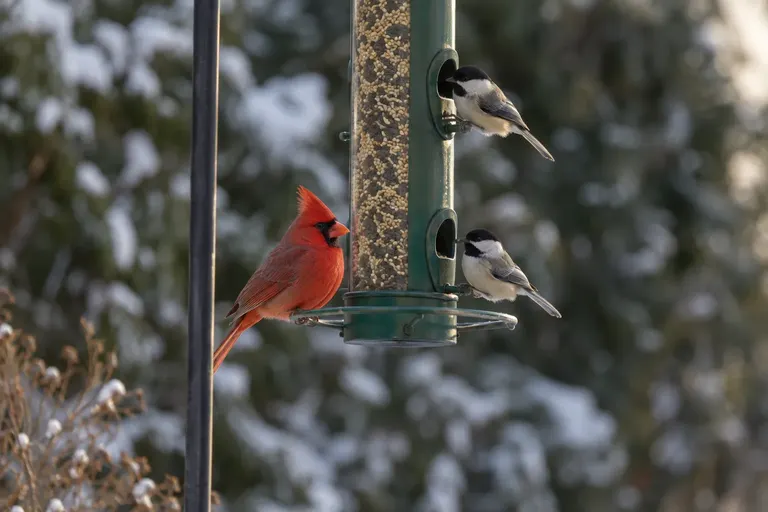
App and subscription
Every smart feeder here works without a subscription, but paid plans unlock extras. Our guide to bird feeder cameras without a subscription breaks down what each brand gives for free.
Wi-Fi
Birdbuddy and Birdfy both require 2.4 GHz Wi-Fi. Signal at the feeder is the most common setup problem owners report.
Birdbuddy Pro Solar: best overall
What it is: Birdbuddy’s current flagship feeder, with a removable camera module (“Nature Cam Pro”), a solar roof and an app with AI species recognition.
Who it suits: Most buyers, especially those who value app polish and sharing sightings with family.
Key specs: 2K video and 5 MP photos from a 1/2.7-inch sensor with HDR, up to 120 fps variable frame rate, and a 122-degree field of view. Birdbuddy lists a 3800 mAh battery rated for up to one month per charge without solar, IP67 certification, operation from -5°F to 120°F, 2.4 GHz Wi-Fi and Bluetooth. The feeder measures 9 x 6.3 x 6.89 inches and holds 3.8 cups of seed.
Strengths: The image specs are the most detailed and strongest published by any maker here. IP67 is a high weather rating for a feeder. The free plan already includes photo and sound ID, automatic photos and videos, and sharing with up to 10 guests.
Drawbacks: Seed capacity is small, so busy feeders need frequent refills. Birdbuddy’s membership page lists 2K video viewing and other features as Premium benefits, so free users do not get everything the hardware can do. It relies on cloud and app access; Birdbuddy does not list a memory-card slot.
Skip it if: You want to avoid any paid tier entirely, or you need a large seed bin.
Birdfy Feeder 2 Duo: best dual-camera feeder
What it is: A Birdfy feeder with two cameras: a portrait lens that tracks birds and a fixed wide-angle lens, plus a side view.
Who it suits: Anyone who wants both tight portraits and a wider picture of the whole feeder.
Key specs: Birdfy lists a 3 MP 2K tracking lens, a 2 MP 1080p wide-angle lens, a 100 fps high-frame-rate mode, a 9000 mAh battery and an included 5W solar panel. It uses cloud storage only, with unlimited clips kept for 30 days. Birdfy says the lifetime-free AI version is included by default for this model.
Strengths: Two lenses solve the classic smart-feeder problem of choosing between close and wide. The large battery plus solar panel should mean few charging trips. Lifetime-free AI identification removes the main subscription question.
Drawbacks: No microSD storage, so older clips disappear after 30 days unless you save them. Birdfy’s product page does not list field of view, seed capacity or weather rating for this model. Birdfy also sells a closely related Feeder 2 Pro, so check which version and AI option a listing includes.
Skip it if: You want to keep every clip locally without downloading.
Birdfy Feeder: best value
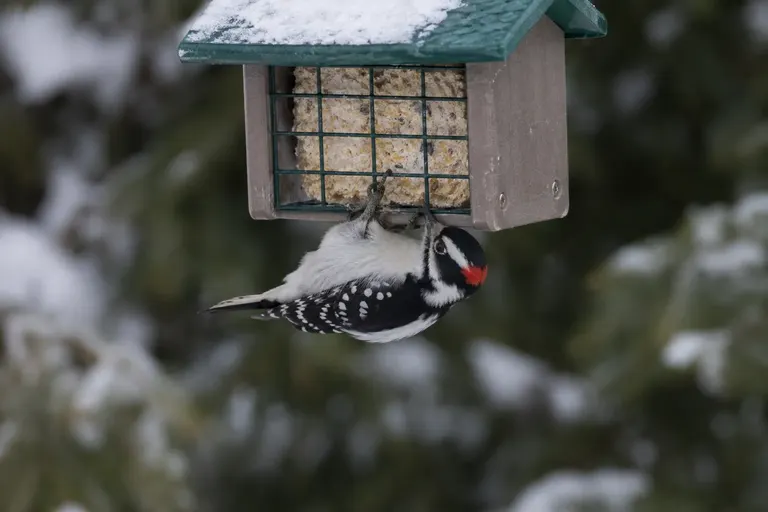
What it is: Birdfy’s original camera feeder, still sold alongside newer models.
Who it suits: First-time buyers who want a simple camera feeder with a big seed bin.
Key specs: 2K in high-quality mode and 1080p standard, color and infrared night modes, 5200 mAh battery rated for about three months at 10 videos a day, optional solar panel, 50 oz (1.5 L) seed capacity, 8.8 x 8.7 x 10.6 inches, 3 lb, IP65, and 2.4 GHz Wi-Fi. Birdfy offers AI ID as a subscription after a 7-day trial or in an “AI Lifetime Free” version.
Strengths: A much bigger seed bin than the Birdbuddy. Long battery rating for light use. Multi-user support for 20 or more guests per feeder.
Drawbacks: A single fixed camera, so birds at the edge of the tray can appear small. The microSD slot is not available for playback, per Birdfy. Solar is an extra.
Skip it if: Image quality is your main priority.
Birdfy Feeder Metal: most durable
What it is: A heavy metal-bodied Birdfy feeder with an integrated solar panel.
Who it suits: Yards where squirrels or weather are hard on plastic feeders.
Key specs: 1080p camera with white-light night mode and two-way audio, 9000 mAh battery, built-in 2W solar panel, 84.5 oz (2.5 L) seed bin, 8.7 x 7.9 x 10.2 inches, 7.34 lb, IP66, 2.4 GHz Wi-Fi. Cloud storage with 30-day retention; no microSD.
Strengths: The biggest seed bin and heaviest build in this list. Built-in solar means no separate panel to mount.
Drawbacks: 1080p is a step down from the 2K models. At 7.34 lb empty, it needs a sturdy pole or hook. Unlimited AI recognition requires Birdfy’s paid membership on this model.
Skip it if: You want the sharpest images or a light feeder.
Birdbuddy Hummingbird Feeder Pro: best hummingbird camera
What it is: A nectar feeder built around the same camera as Birdbuddy’s Pro seed feeder.
Who it suits: People in hummingbird range who want close-up clips of feeding and wingbeats.
Key specs: 2K video and 5 MP photos, 1/2.7-inch sensor with HDR, 122-degree field of view, slow-motion capability, 14 fl oz nectar basin, 3800 mAh battery, optional solar, IP67. Birdbuddy ships it to the US only.
Strengths: Hummingbirds move fast, so frame rate and slow motion matter more here than on a seed feeder. The camera module is the same high-spec unit as the Pro seed feeder.
Drawbacks: Nectar feeders need cleaning every few days in warm weather, and a camera adds steps. Premium is needed for some features.
Skip it if: You are outside the US or rarely see hummingbirds. Our hummingbird feeder picks include easy-clean non-camera options.
Wyze Cam v4: best DIY option
What it is: A small home security camera that you can aim at any feeder.
Who it suits: People who already own a feeder they like and have outdoor power available.
Key specs: 2560 x 1440 resolution, 115.8-degree diagonal field of view, microSD up to 256 GB, continuous local recording with no subscription, IP65. It needs wired power, and outdoor use requires Wyze’s separate outdoor power adapter.
Strengths: No subscription needed for local recording. You keep your existing feeder, and you can reposition the camera freely.
Drawbacks: No bird species identification. It is designed for room-scale scenes, so small birds far from the lens look tiny; placing it close enough for sharp detail takes experimentation. Wyze’s AI detection and cloud features need its Cam Plus plan.
Skip it if: You want automatic bird ID or battery power.
Bird feeder camera comparison table
| Camera | Resolution | Seed or nectar | Solar | Storage | Weather rating |
|---|---|---|---|---|---|
| Birdbuddy Pro Solar | 2K, 5 MP | 3.8 cups | Included | App/cloud | IP67 |
| Birdfy Feeder 2 Duo | 2K + 1080p | Not listed | 5W included | Cloud, 30 days | Not listed |
| Birdfy Feeder | 2K / 1080p | 50 oz | Optional | Cloud, 30 days | IP65 |
| Birdfy Feeder Metal | 1080p | 84.5 oz | 2W built in | Cloud, 30 days | IP66 |
| Birdbuddy Hummingbird Pro | 2K, 5 MP | 14 fl oz nectar | Optional | App/cloud | IP67 |
| Wyze Cam v4 | 2560 x 1440 | Your feeder | No | microSD | IP65 |
What resolution do you need in a bird feeder camera?
For clear feather detail on small songbirds, 2K is the practical target in 2026. At 1080p, a chickadee close to the lens can still look good, but birds at the edge of the tray lose detail quickly, especially when you zoom or crop. Higher resolution also helps AI identification, which relies on field marks such as wing bars and eye rings.
Resolution is not everything, though. A larger sensor and HDR help in shade and in the low light of early morning, when many birds feed. Frame rate matters for motion: Birdbuddy lists up to 120 fps and Birdfy’s newer feeders a 100 fps mode, both of which allow slow-motion playback of wingbeats. Focus distance matters too. Smart feeders are designed to focus a few inches from the lens, which is why they beat a general security camera for close portraits.
How accurate is AI bird identification?
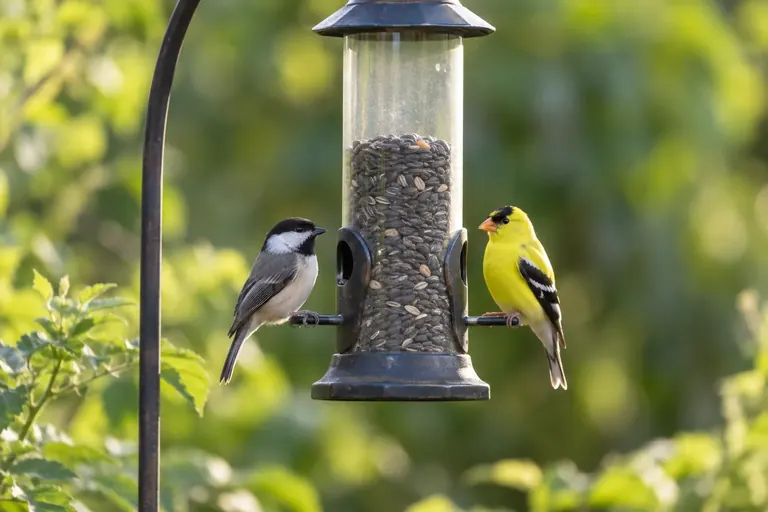
AI species ID on smart feeders is useful for common backyard birds and a good learning tool for beginners, but it is not infallible. Birdfy says its AI identifies 6,000-plus species. In practice, owners commonly report that males of distinctive species are identified reliably, while females, juveniles, molting birds and look-alike pairs cause more errors. Downy and Hairy Woodpeckers, House and Purple Finches, and various sparrows are classic examples.
Treat each ID as a suggestion. Check it against a field guide or an app such as Merlin, and learn the clues experienced birders use. Our roundup of bird identification apps explains which tools are best for confirming a tricky visitor.
How do you protect a camera feeder from squirrels and weather?
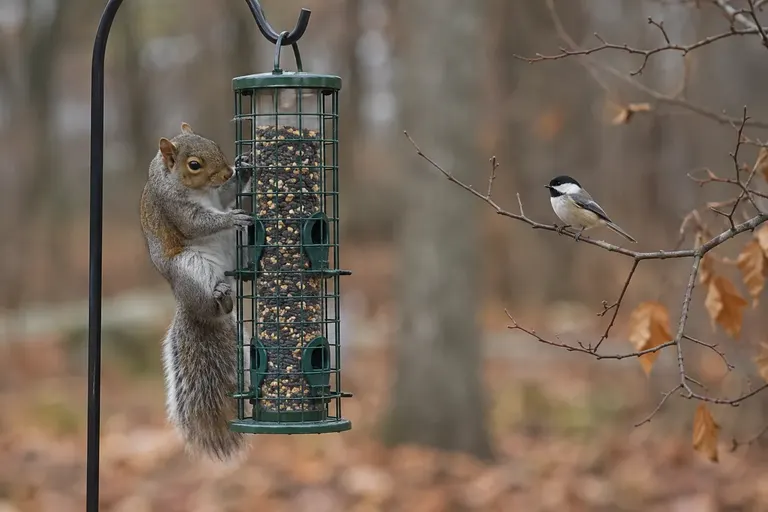
Squirrels are the biggest threat to a smart feeder. They trigger clips, empty seed bins and can chew plastic housings. Mount the feeder on a pole with a baffle, well away from trees, fences and roofs, rather than on a tree or deck rail. Heavier builds like the Birdfy Feeder Metal resist chewing better.
For weather, check the IP rating. IP65, IP66 and IP67 all indicate protection against dust and water, with IP67 rated for temporary immersion. Also check the operating temperature range. Birdbuddy lists -5°F to 120°F, while Birdfy lists 14°F to 113°F, so Birdfy owners in very cold regions may need to bring the camera in during deep freezes.
Birdbuddy vs Birdfy: which should you buy?
Choose Birdbuddy if you value image specs and app polish and do not mind the idea of a Premium plan for extras. Choose Birdfy if you want a bigger seed bin, a dual-camera design, or a version with lifetime-free AI identification. Our full Bird Buddy vs Birdfy comparison goes category by category.
How to get sharp photos from a feeder camera
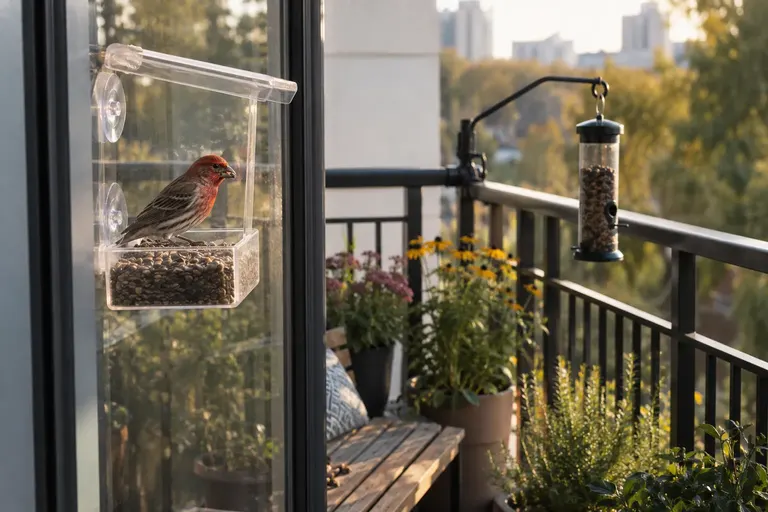
- Face the camera away from the sun. Backlit birds turn into silhouettes. North-facing or shaded setups tend to work best.
- Keep the lens clean. Wipe it every time you refill.
- Put a plain background behind the feeder. Distant shrubs look better than a fence or house wall.
- Place it near cover. Birds settle faster and stay longer when shrubs are nearby. See where to put a bird feeder.
- Check Wi-Fi at the exact spot. Weak signal causes missed clips.
Our step-by-step feeder camera setup guide covers mounting, angles and settings in more detail.
Are bird feeder cameras worth it?
For people who cannot watch feeders all day, they can be. They catch birds you would otherwise miss and make identification easier for beginners. They also cost several times more than a plain feeder and bring batteries, apps and Wi-Fi into a hobby that used to need none. We weigh both sides in are smart bird feeders worth it.
Common mistakes with bird feeder cameras
- Mounting where squirrels can reach. Squirrels trigger endless clips and can damage feeders.
- Ignoring cleaning. Camera feeders need the same regular cleaning as any feeder.
- Trusting AI IDs blindly. Species recognition is helpful but not perfect, especially with females, juveniles and look-alikes.
- Aiming into the sun. Backlight hides color and field marks, and it can confuse motion detection.
- Placing it at the edge of Wi-Fi range. Clips upload slowly or not at all, and battery drains faster as the camera retries.
- Letting the battery run flat in winter. Cold reduces battery capacity, and short days reduce solar charging. Check charge levels more often from late fall.
- Filling with cheap mixed seed. Filler draws House Sparrows and blackbirds that crowd out the species you want on camera. Black oil sunflower or a quality blend gives better variety.
Sources
Frequently asked questions
What is the best bird feeder camera?
For most people, the Birdbuddy Pro Solar is the strongest all-rounder on paper: a 2K camera with a 5 MP sensor, a 122-degree field of view, IP67 weather rating and an included solar roof. Birdfy is the main alternative, with larger seed capacity, dual-camera models and versions sold with lifetime-free AI identification. The right pick depends on budget, subscription tolerance and seed needs.
Do bird feeder cameras need Wi-Fi?
Smart feeders like Birdbuddy and Birdfy need 2.4 GHz Wi-Fi at the feeder to send notifications, clips and species IDs to your phone. Both brands list 2.4 GHz as a requirement. If your signal is weak in the yard, a mesh node or Wi-Fi extender near a window facing the feeder usually helps. Check signal strength with your phone at the planned spot before buying.
Do bird feeder cameras require a subscription?
Not to work. Birdbuddy's free plan includes photo and sound ID, automatic photos and videos, and guest sharing, while Premium adds features such as 2K video viewing. Birdfy's free app includes live view, notifications, auto-recorded clips and cloud storage with 30-day retention, and some models are sold with lifetime-free AI identification. See our no-subscription guide for details.
How long do bird feeder camera batteries last?
It depends on how many clips the camera records. Birdbuddy rates its Pro Solar at up to one month per charge without solar. Birdfy rates its original Feeder's 5200 mAh battery at about three months at 10 videos per day. A busy feeder records far more, so solar panels, which several models include, make the biggest difference.
Can squirrels damage bird feeder cameras?
Yes. Squirrels will climb, chew and empty most camera feeders, and a heavy squirrel can also fill your phone with alerts. Mount the camera feeder on a baffled pole away from trees and fences, or choose a sturdier model such as the metal-bodied Birdfy Feeder Metal.