Tube Bird Feeder Buying Guide: 6 Best Picks by Seed and Size
The best tube bird feeder for most yards is a metal-capped polycarbonate tube with a removable base. Our 6 picks by seed, size, squirrels and cleaning ease.
If you buy through links on this page we may earn a commission, at no cost to you. It never decides what we recommend. How we earn
In this article
- Quick picks
- How we chose
- Droll Yankees Onyx Clever Clean and Fill 18 inch
- Brome Squirrel Buster Plus
- Aspects Quick-Clean Seed Tube Feeder Medium
- Brome Squirrel Buster Standard
- Droll Yankees Ring Pull Tube Finch Feeder
- Stokes Select Jumbo Seed Tube Feeder
- Tube bird feeder comparison table
- Which tube bird feeder should you buy? A decision table
- Metal vs polycarbonate: which tube material is better?
- Which size tube bird feeder do you need?
- What seed works best in a tube feeder?
- Do squirrel-resistant tube feeders work?
- Which birds use tube feeders?
- Where should you hang a tube bird feeder?
- How do you keep a tube bird feeder clean?
- How much does a good tube bird feeder cost?
- Buyer’s checklist: what to look for before you buy
- What are the alternatives to a tube feeder?
- Sources
- Frequently asked questions
The best tube bird feeder for most backyards is a clear polycarbonate tube with metal ports, a metal cap and a base you can remove for cleaning, filled with black-oil sunflower seed. Our top pick is the 18 inch Droll Yankees Onyx Clever Clean and Fill with 4 ports. If squirrels are a problem, buy the Brome Squirrel Buster Plus instead.
Tube feeders keep seed dry, show you when to refill, and suit the small clinging birds most people want: chickadees, titmice, nuthatches and finches. What separates good tubes from bad ones is material, port size, capacity and how easily the tube comes apart.
Quick picks
- Best overall: Droll Yankees Onyx Clever Clean and Fill 18 inch
- Best squirrel-resistant tube: Brome Squirrel Buster Plus
- Best easy-clean medium tube: Aspects Quick-Clean Seed Tube Feeder Medium
- Best compact squirrel-resistant tube: Brome Squirrel Buster Standard
- Best nyjer tube: Droll Yankees Ring Pull Tube Finch Feeder
- Best budget high-capacity tube: Stokes Select Jumbo Seed Tube Feeder
Droll Yankees Onyx Clever Clean and Fill 18 inch
A metal-capped tube whose base twists off by hand, so you can brush out the whole tube and never fight caked seed at the bottom.
- Best for
- Anyone who wants a simple sunflower tube that is genuinely quick to clean.
- Skip it if
- Squirrels reach your feeders and you have no baffle.
- Length
- 18 in
- Ports
- 4
- Cleaning
- Twist-off removable base
Brome Squirrel Buster Plus
A weight-activated tube that closes its ports when a squirrel climbs on, with a ring perch that cardinals can use.
- Best for
- Yards with persistent squirrels and people who want to refill less often.
- Skip it if
- You want a small, light feeder for a thin branch or a balcony.
- Capacity
- 5.1 lb seed
- Ports
- 6
- Height
- 28 in, base to hanger
Aspects Quick-Clean Seed Tube Feeder Medium
A made-in-USA polycarbonate tube with die-cast metal parts and a base that pops off when you squeeze two tabs.
- Best for
- Small and medium yards where a modest tube empties before seed can spoil.
- Skip it if
- You have a busy yard and do not want to refill every day or two.
- Capacity
- 1.25 qt
- Ports
- 4
- Height
- 14 in
- Material
- Polycarbonate tube, die-cast metal
Brome Squirrel Buster Standard
The smaller Squirrel Buster, with the same weight-activated shroud in a shorter, lighter body.
- Best for
- Small yards, patios and balconies with squirrel pressure.
- Skip it if
- You feed large flocks of finches and want fewer refills.
- Capacity
- 1.3 lb seed
- Ports
- 4
Droll Yankees Ring Pull Tube Finch Feeder
A narrow finch tube with tiny ports sized for nyjer, and a ring-pull top that makes filling and cleaning simple.
- Best for
- Goldfinches, Pine Siskins and redpolls.
- Skip it if
- You want to feed sunflower too; nyjer ports are too small for it.
- Capacity
- 1 lb
- Size
- 16 x 5 x 2.6 in
- Material
- UV-stabilized polycarbonate, zinc-plated metal
Stokes Select Jumbo Seed Tube Feeder
A big, open polycarbonate tube with six ports, a rain-shedding roof and a built-in socket for a 1 inch pole.
- Best for
- Busy yards on a budget where seed goes fast.
- Skip it if
- Squirrels can reach it; plastic ports and roof will not stop chewing.
- Ports
- 6
- Material
- Polycarbonate
- Mounting
- Hangs or fits a 1 in pole
How we chose
This is a research-led guide, not a hands-on test. We compared manufacturer specifications, checked that each model is currently sold, and looked for patterns in verified owner feedback: which feeders crack, leak seed in rain, or are easy enough to take apart that owners actually clean them. We weighed cleaning design heavily, because Cornell Lab’s Project FeederWatch is clear that dirty feeders help spread disease. Specs appear only where we could confirm them.
Droll Yankees Onyx Clever Clean and Fill 18 inch
This is the tube we would point most people to first. The Onyx line pairs a clear tube with black metal ports, cap and base, and its standout feature is the base: it twists off by hand. With the base off, the tube is open at both ends and a bottle brush goes straight through, with no clumped seed trapped at the bottom.
The 18 inch model has four ports and suits sunflower or a quality mix. Droll Yankees also makes the Onyx in 12 inch and 24 inch lengths, plus a finch version with small nyjer ports, so you can match the size to your traffic.
- Key specs: 18 in long, 4 ports, twist-off removable base
- Strengths: fastest full clean of any tube here; metal parts resist chewing; clear tube shows seed level
- Drawbacks: no squirrel defense on its own; owners note that the short perches suit small birds better than cardinals
Skip it if: squirrels can reach your feeding station and you have no baffle.
Brome Squirrel Buster Plus
The Squirrel Buster Plus is a tube inside a spring-loaded metal shroud. When something heavier than a songbird grips it, the shroud drops and covers the ports. Owners consistently report that it works better than baffles alone when squirrels can reach the feeder from above.
It holds 5.1 lb of seed across six ports and stands 28 inches from base to hanger. The cardinal ring perch gives larger birds a place to face the ports, which most tubes lack. It comes apart without tools for cleaning, and Brome backs it with a lifetime care program. We cover it in more depth in our guide to squirrel-proof bird feeders.
- Key specs: 5.1 lb capacity, 6 ports, 28 in tall
- Strengths: reliable squirrel exclusion; ring perch for cardinals; big capacity
- Drawbacks: heavy when full; bulky; heavier birds such as jays can be shut out on stricter settings
Skip it if: you want a small, light feeder for a thin branch or a balcony rail.
Aspects Quick-Clean Seed Tube Feeder Medium
Aspects builds its tubes in the USA from UV-stabilized polycarbonate with die-cast metal caps and ports. The Quick-Clean base comes off when you squeeze two side tabs, so cleaning is nearly as easy as the Droll Yankees design. The medium size holds 1.25 quarts across four ports and stands 14 inches tall.
Its ports have raised ridges meant to improve seed flow and turn rainwater away, and there is a built-in seed deflector. In a small yard, the medium size empties before seed goes stale.
- Key specs: 1.25 qt capacity, 4 ports, 14 in tall, polycarbonate and die-cast metal
- Strengths: tool-free base removal; sturdy metal parts; rain-shedding port design
- Drawbacks: smaller capacity means frequent refills in busy yards; not squirrel resistant
Skip it if: your yard hosts big finch flocks and you want to refill weekly, not daily.
Brome Squirrel Buster Standard
The Standard is the compact sibling of the Plus: the same weight-activated shroud in a smaller body holding 1.3 lb of seed across four ports. That suits small yards, where a big feeder lets seed sit, and balconies, where weight matters.
Like the Plus, it disassembles by hand for cleaning. The lower capacity means more refills, but also fresher seed.
- Key specs: 1.3 lb capacity, 4 ports
- Strengths: squirrel resistance in a light, compact body; fresher seed through faster turnover
- Drawbacks: no ring perch; needs frequent refills when finches arrive in numbers
Skip it if: you feed large flocks and want a feeder that lasts several days between fills.
Droll Yankees Ring Pull Tube Finch Feeder
Nyjer needs its own tube, because it pours straight out of standard ports. The Ring Pull finch feeder has narrow feeding holes sized for nyjer, a UV-stabilized polycarbonate tube and zinc-plated metal parts. The ring-pull top lifts off for filling without tools.
It holds 1 lb and measures 16 x 5 x 2.6 inches. Small capacity suits nyjer, which goes stale and spoils when wet. For more options, including mesh and upside-down designs, see our finch feeder roundup.
- Key specs: 1 lb capacity, 16 x 5 x 2.6 in, polycarbonate and zinc-plated metal
- Strengths: small ports cut nyjer waste; easy top fill; slim profile
- Drawbacks: nyjer only; small capacity when siskins or redpolls irrupt in winter
Skip it if: you want one feeder for both sunflower and nyjer. It cannot do both.
Stokes Select Jumbo Seed Tube Feeder
The Stokes Select Jumbo is the value option for yards where seed disappears fast. It is a wide, open polycarbonate tube with six ports, a rooftop that sheds rain and a built-in socket that fits a 1 inch pole, so you can hang it or pole-mount it. The perches are shaped so birds face the feeder while eating.
Its all-plastic build keeps the cost down but leaves it exposed to squirrels, so owners who are happy with it tend to mount it on a baffled feeder pole.
- Key specs: 6 ports, polycarbonate body, hangs or fits a 1 in pole
- Strengths: high capacity for the money; rain roof; flexible mounting
- Drawbacks: plastic ports and roof can be chewed; the open tube takes longer to clean than tubes with a removable base
Skip it if: squirrels can reach it, or you want the quickest possible cleaning routine.
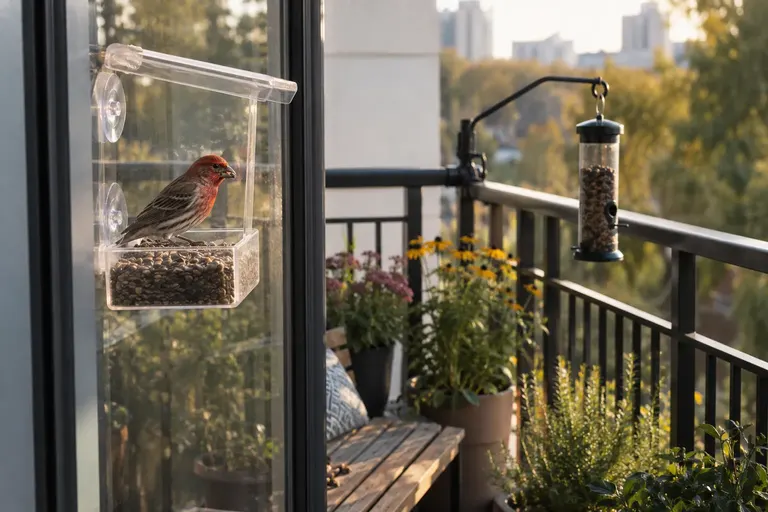
Tube bird feeder comparison table
| Feeder | Best for | Capacity | Ports | Squirrel resistant | Removable base |
|---|---|---|---|---|---|
| Droll Yankees Onyx Clever Clean and Fill 18 in | Most yards | Varies by length | 4 | No | Yes, twist-off |
| Brome Squirrel Buster Plus | Squirrel-heavy yards | 5.1 lb | 6 | Yes, weight-activated | Tool-free disassembly |
| Aspects Quick-Clean Medium | Small to medium yards | 1.25 qt | 4 | No | Yes, squeeze tabs |
| Brome Squirrel Buster Standard | Small yards, balconies | 1.3 lb | 4 | Yes, weight-activated | Tool-free disassembly |
| Droll Yankees Ring Pull Finch | Nyjer for finches | 1 lb | Nyjer ports | No | Ring-pull top |
| Stokes Select Jumbo | Busy yards on a budget | Large, open tube | 6 | No | No |
Which tube bird feeder should you buy? A decision table
Start from your yard, not the product: the right tube depends on your seed, your squirrels and how often you will clean.
| If your situation is… | Buy this type of tube | Why |
|---|---|---|
| No squirrels, want the easiest cleaning | Metal-capped tube with removable base | Open-ended tube brushes clean in minutes |
| Squirrels reach the feeder from above or from a branch | Weight-activated squirrel-resistant tube | Baffles do not help when squirrels drop down from above |
| Squirrels only climb the pole | Any metal-port tube on a baffled pole | A good baffle is cheaper than a special feeder |
| You mainly want goldfinches | Nyjer tube with small ports | Standard ports spill nyjer onto the ground |
| You want woodpeckers and nuthatches | Metal mesh tube with shelled peanuts or hearts | Clinging birds work mesh easily |
| Small yard or balcony | 1 to 1.5 lb tube | Seed turns over before it spoils |
| Busy yard with daily finch flocks | 3 lb or larger tube | Fewer refills, less empty-feeder downtime |
| Cardinals are a priority | Tube with a ring perch, or add a tray | Cardinals prefer to face their food on a wide perch |
Metal vs polycarbonate: which tube material is better?
The best tubes use both: a UV-stabilized polycarbonate tube so you can see the seed level, with metal ports, cap and base. Polycarbonate is tougher than the cheaper acrylic used on bargain feeders, and UV stabilization slows the yellowing and brittleness sunlight causes over time.
The weak points on any tube are the ports and the cap, because that is where squirrels chew. Metal ports hold up far longer than plastic ones. Full metal mesh tubes are another category. They are excellent for shelled peanuts and sunflower hearts, which clinging birds pick through the mesh, but whole seed in mesh can get wet in rain and needs checking more often.
Which size tube bird feeder do you need?
Pick the smallest tube that your birds will empty in about three to five days. Seed that sits longer tends to clump, attract moisture and go stale, especially in humid summers. Capacity and port count work together: more ports means more birds eating at once, so a six-port tube empties faster than a four-port tube of the same size.
Tube sizing chart
| Your yard | Suggested tube | Ports | Refill rhythm to aim for |
|---|---|---|---|
| Balcony or first feeder | 12 to 14 in, about 1 lb (0.45 kg) | 2 to 4 | Every few days |
| Average suburban yard | 16 to 18 in, 1.5 to 3 lb (0.7 to 1.4 kg) | 4 | Every 3 to 5 days |
| Busy yard, winter flocks | 24 in or larger, 3 to 5 lb (1.4 to 2.3 kg) | 6 or more | Weekly |
| Nyjer for goldfinches | 1 to 2 lb finch tube | Small nyjer ports | Refill often, keep seed fresh |
If a tube is still half full after a week, fill it halfway. If it empties in a day, add a second feeder rather than a giant tube.
What seed works best in a tube feeder?
Black-oil sunflower is the best single seed for a standard tube feeder. Its thin shell and high fat content suit chickadees, titmice, nuthatches, finches and cardinals. Read our guide to black-oil sunflower seed for why it is the one seed to start with.
Match the seed to the port:
- Standard sunflower ports: black-oil sunflower, sunflower hearts, safflower and quality mixes
- Small nyjer ports: nyjer only, or a fine finch mix designed for those ports
- Mesh tubes: shelled peanuts, sunflower hearts
Avoid cheap mixes heavy in milo, red millet and cracked corn in a tube. Tube birds pick out the sunflower and flick the filler onto the ground, which wastes money and draws rodents. Sunflower hearts cost more per pound but leave no shells below the feeder.
Do squirrel-resistant tube feeders work?
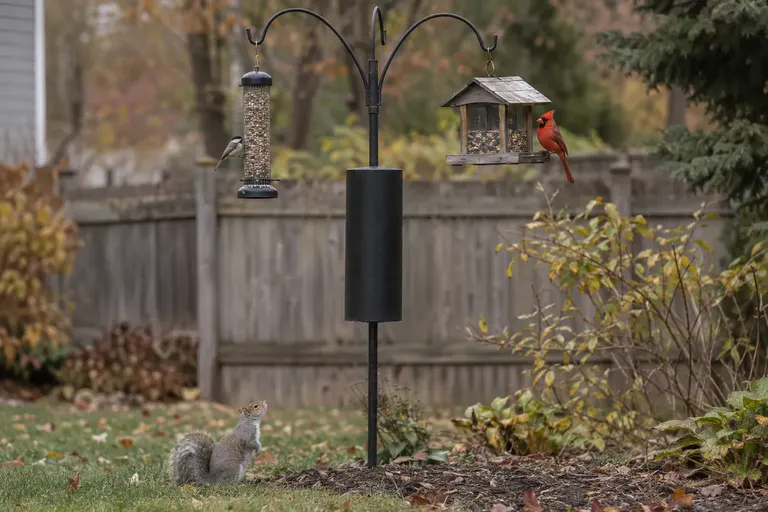
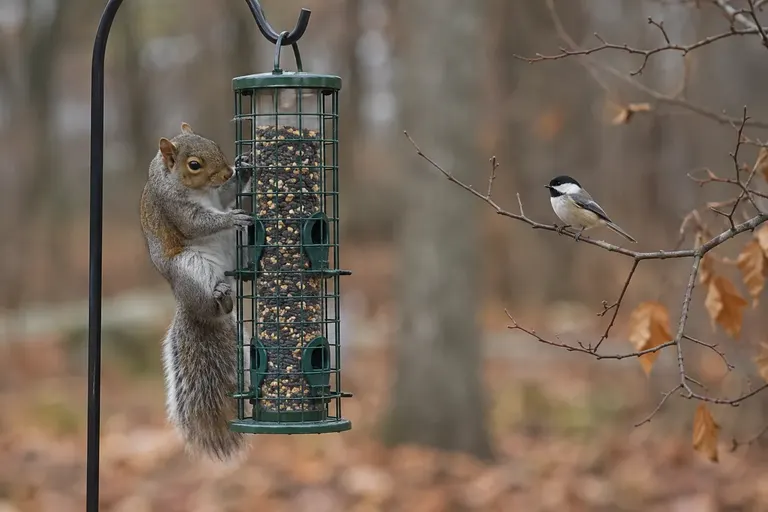
Yes, weight-activated tubes work well, and they are the only reliable option when squirrels can reach a feeder from above. When a squirrel’s weight lands on the shroud, it slides down and covers the ports. Cages around tubes also work against squirrels, and they keep out larger birds like grackles too, though some small birds are slower to use them.
If squirrels can only reach a feeder by climbing a pole, a properly placed baffle often solves the problem for less money.
Which birds use tube feeders?
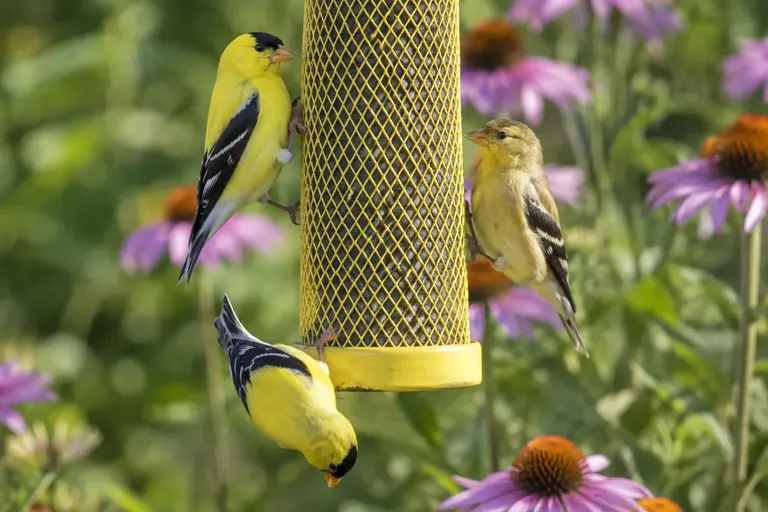
Tube feeders mostly draw small birds that can cling or perch on short pegs. According to Cornell Lab’s All About Birds, chickadees, titmice and nuthatches readily take sunflower seed from hanging feeders, and American Goldfinches favor nyjer and sunflower.
Common tube feeder visitors:
- Black-capped and Carolina Chickadees
- Tufted Titmouse
- White-breasted and Red-breasted Nuthatches
- House Finch, Purple Finch and American Goldfinch
- Pine Siskin, and redpolls in northern winters
- Downy Woodpecker, especially at mesh tubes with peanuts or hearts
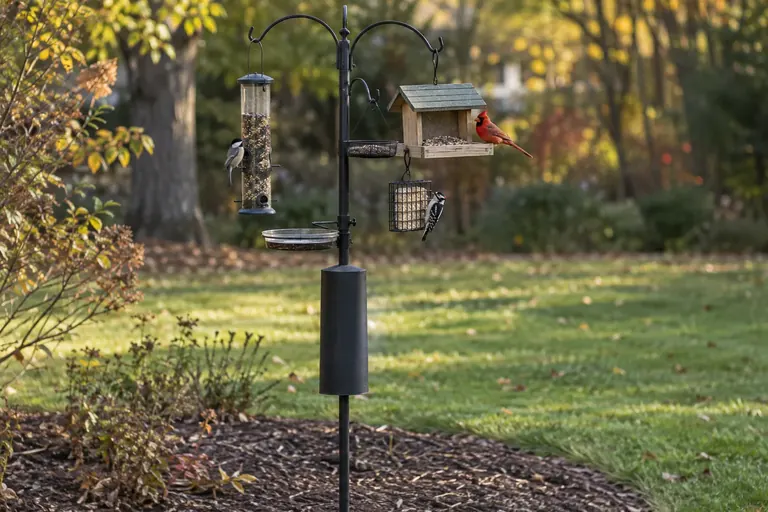
Northern Cardinals use tubes with ring perches or longer perches but are more comfortable on trays and hoppers. Doves, juncos and many sparrows prefer to feed on flat surfaces or the ground. For those birds, add a platform or tray feeder alongside the tube. Our overview of the best bird feeders shows how a tube fits into a complete feeding setup.
Where should you hang a tube bird feeder?
Hang a tube about 5 to 6 feet (1.5 to 1.8 m) off the ground, near cover but not so near that predators can ambush. Shrubs or a small tree about 10 to 12 feet (3 to 3.7 m) away give birds a safe place to wait and escape to.
For window safety, follow the widely used guidance: either within about 3 feet (1 m) of glass, so birds cannot build up speed, or more than 30 feet (9 m) away. For squirrels, keep the feeder at least 8 to 10 feet (2.4 to 3 m) from trees, fences and roofs they can leap from. Our full guide on where to put a bird feeder goes deeper on height, distance and cover.
How do you keep a tube bird feeder clean?
Clean it about every two weeks, and more often in wet weather or when many birds visit. Tube feeders need extra attention at the base, where seed collects, gets damp and molds.
Step by step:
- Empty all old seed into the trash, not onto the ground.
- Remove the base, cap and any removable perches.
- Scrub the inside with a long bottle brush and the ports with a small brush.
- Soak in a solution of one part bleach to nine parts water for about 10 minutes, or use hot soapy water.
- Rinse thoroughly with clean water.
- Let every part dry completely before refilling, because damp seed spoils fast.
- Rake up or scrape away hulls and spilled seed below the feeder.
If you see birds with crusty eyes or birds sitting fluffed and lethargic, take the feeder down for a while. Our guide on how to clean bird feeders covers disinfectant options and schedules in detail.
How much does a good tube bird feeder cost?
A basic plastic tube costs the least, a metal-capped polycarbonate tube with a removable base sits in the middle, and weight-activated squirrel-resistant tubes cost the most. The price gap mostly buys durability and cleaning ease, which matter more over the years than the upfront cost. A cheap tube that squirrels chew open, or that is too awkward to clean, often gets replaced within a season or two.
Buyer’s checklist: what to look for before you buy
Use this checklist in the store or on a product page.
- Removable base or open bottom: the single biggest factor in keeping a tube clean
- Metal ports and cap: resists chewing and lasts years longer than plastic
- UV-stabilized polycarbonate: clearer and tougher than acrylic
- Port size matched to your seed: sunflower ports for sunflower, nyjer ports for nyjer
- Seed deflector or base drainage: keeps seed from pooling and rotting below the lowest port
- Capacity matched to traffic: empties in three to five days
- Squirrel plan: a weight-activated design, a cage, or a baffle in the right place
- Perch style: ring perches or longer pegs if you want cardinals
What are the alternatives to a tube feeder?
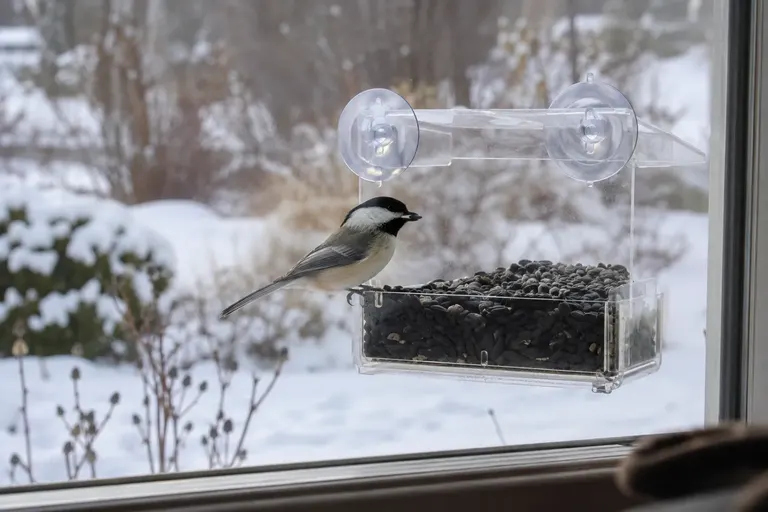
A hopper feeder holds more seed and suits cardinals and larger birds. A tray or platform feeder welcomes the widest range of species, including ground feeders. Suet feeders draw woodpeckers, and window feeders give close-up views in small spaces. Most yards do best with a tube as the base and one other feeder type added for variety.
Sources
- Cornell Lab of Ornithology, Project FeederWatch: Feeders
- Cornell Lab of Ornithology, All About Birds: American Goldfinch
- Cornell Lab of Ornithology, All About Birds: Black-capped Chickadee
- Birds Choice: Aspects Quick Clean Seed Tube Feeder, Medium
- Duncraft: Droll Yankees Onyx Clever Clean 12 inch Tube Feeder
- Brome Bird Care
Frequently asked questions
What birds eat from a tube bird feeder?
Tube feeders mostly draw small, clinging birds: chickadees, titmice, nuthatches, House Finches, American Goldfinches, Pine Siskins and Downy Woodpeckers. Sparrows and cardinals will use them if the perches are long enough or there is a ring perch. Large birds such as jays, doves and grackles struggle on short perches, which is one reason tubes waste less seed than open trays.
How often should you clean a tube bird feeder?
Clean it about every two weeks, and more often in wet or humid weather or when many birds are visiting. Empty it, scrub the tube and ports with a long bottle brush, soak in a solution of one part bleach to nine parts water, rinse well and let it dry completely before refilling. Clean immediately if you see sick birds.
Are metal or plastic tube feeders better?
The best tubes combine both: a UV-stabilized polycarbonate tube so you can see the seed level, with metal ports, cap and base that resist chewing. All-plastic tubes are cheaper but squirrels can gnaw the ports and cap. Full metal mesh tubes are best for shelled peanuts or sunflower hearts, not for whole seed in wet climates.
Can you put nyjer seed in a regular tube feeder?
No. Nyjer is a tiny, light seed and pours straight out of standard sunflower ports. Use a dedicated finch tube with very small ports, or a fine mesh sock or mesh tube. Likewise, whole black-oil sunflower will not fit through nyjer ports, so pick the tube to match the seed rather than the other way around.
How high should a tube bird feeder hang?
Hang it about 5 to 6 feet (1.5 to 1.8 m) off the ground, at least 8 to 10 feet (2.4 to 3 m) from any jumping point squirrels can use. To reduce window strikes, place it either within about 3 feet (1 m) of a window or more than 30 feet (9 m) away, and keep shrubs within easy reach for cover.