Best Bird Bath: 6 Pedestal, Deck, Ground and Heated Picks
The best bird bath for most yards is a shallow, textured, frost-proof pedestal like the JCs Wildlife Poly Lumber bath. 6 picks, a depth chart and a checklist.

Nest boxes that suit real species: hole sizes, placement, cleaning and timing.
The best bird bath for most yards is a shallow, textured, frost-proof pedestal like the JCs Wildlife Poly Lumber bath. 6 picks, a depth chart and a checklist.
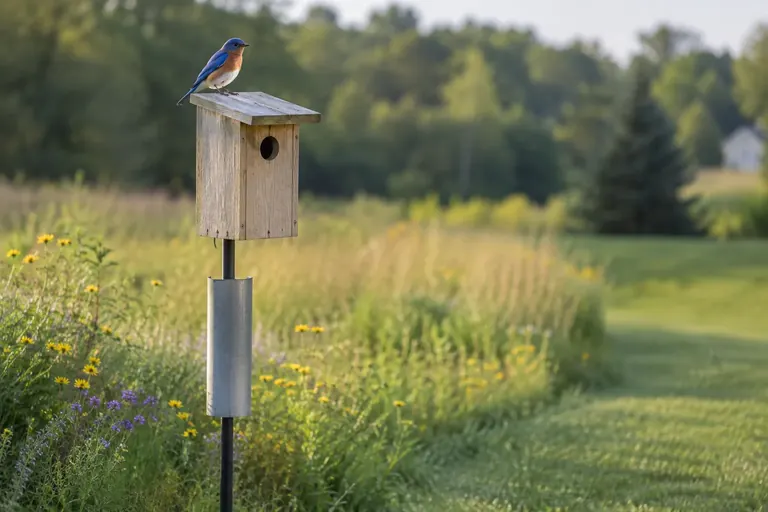
The best birdhouses have the right hole size, vents, drainage, a clean-out door and no perch. See 6 researched picks for bluebirds, wrens, chickadees and owls.
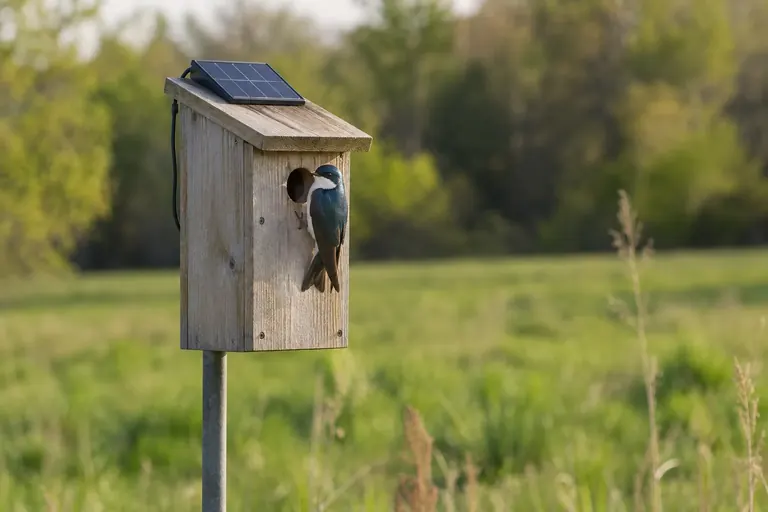
A birdhouse camera lets you watch eggs hatch without opening the box. See 6 researched picks, built-in vs add-in, WiFi vs wired, and bird-safe night vision.
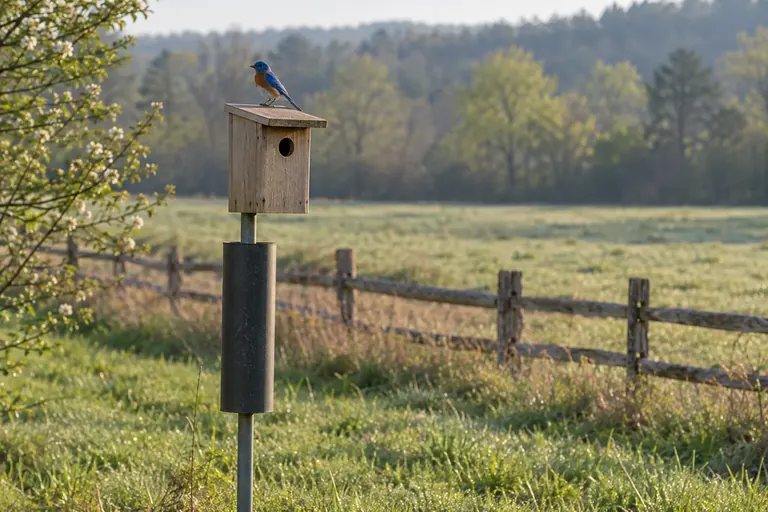
The best bluebird house has a 1.5 inch hole, vents, drainage, a side door and no perch. Compare 6 NABS-style boxes, from slot to Peterson and Gilbertson.
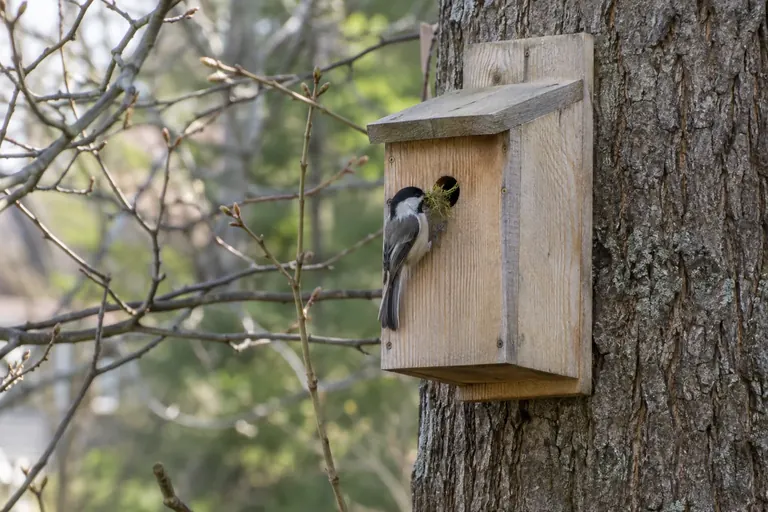
The best chickadee house has a 1 1/8-inch hole, a floor near 4 to 5 1/2 inches, vents, drainage and no perch. Compare 6 boxes for chickadees, titmice and wrens.
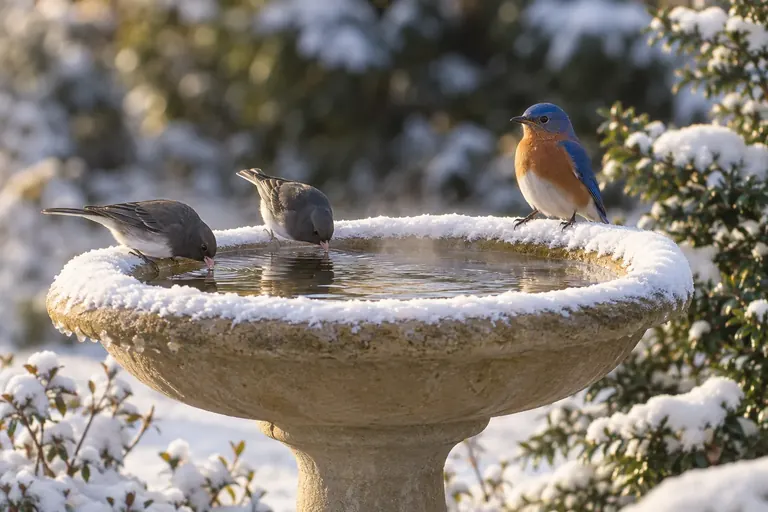
The best heated bird bath for most yards is the Allied Precision 970: a 20-inch basin with a 150 W thermostat. 6 picks, a wattage chart and GFCI checklist.
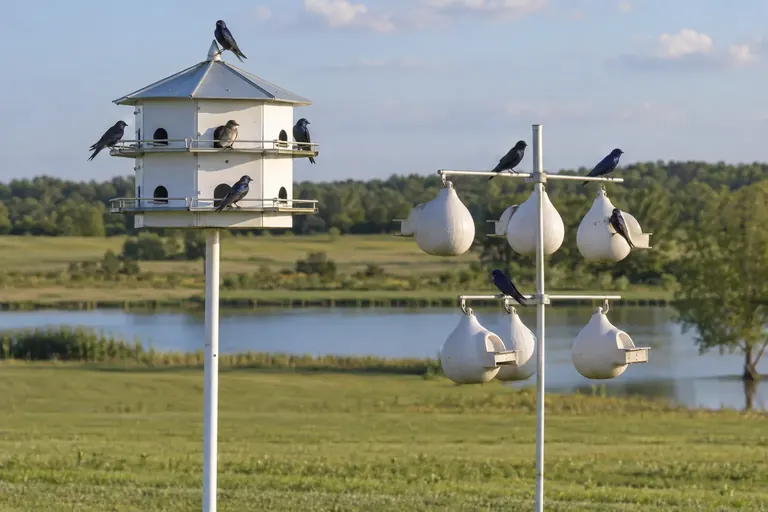
The best purple martin house is one you can lower straight down for weekly checks. See 6 researched picks: aluminum houses, gourd racks, gourds and a pole.
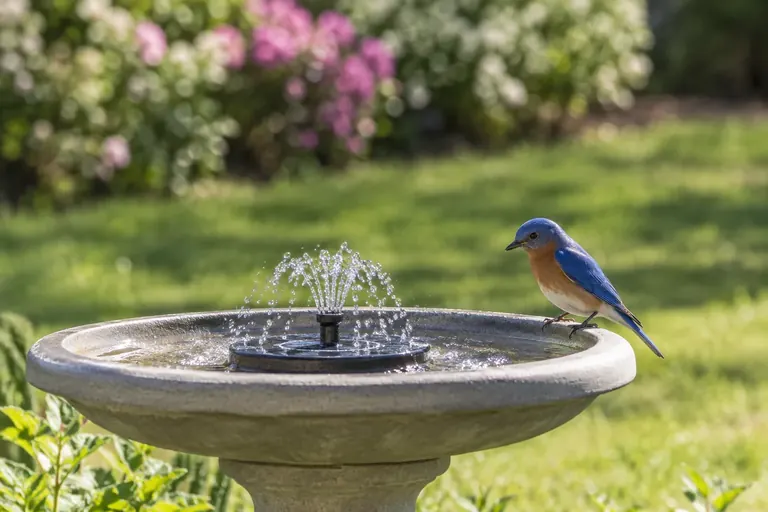
The best solar bird bath fountain for most yards is a floating 3.5W pump with battery backup. 6 picks, a sun-hours sizing chart and a clog-free cleaning plan.
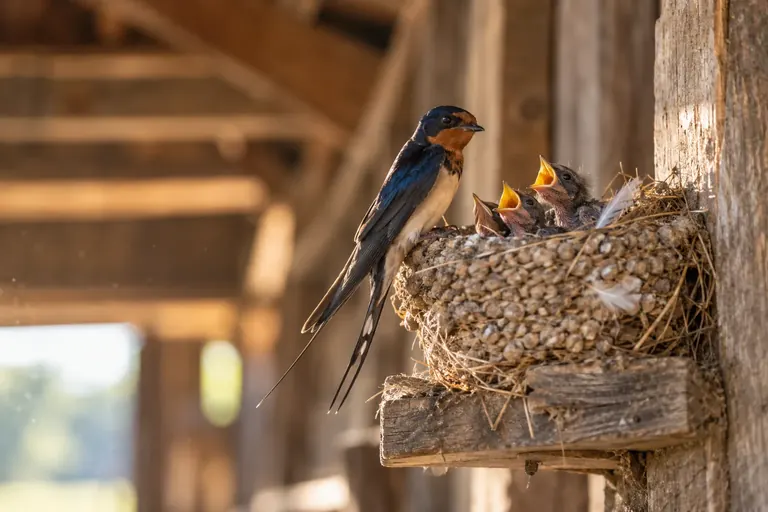
A barn swallow nest needs a sheltered ledge, wet mud nearby and all-day open access. Nest cups, droppings boards, return dates and the laws on removing nests.
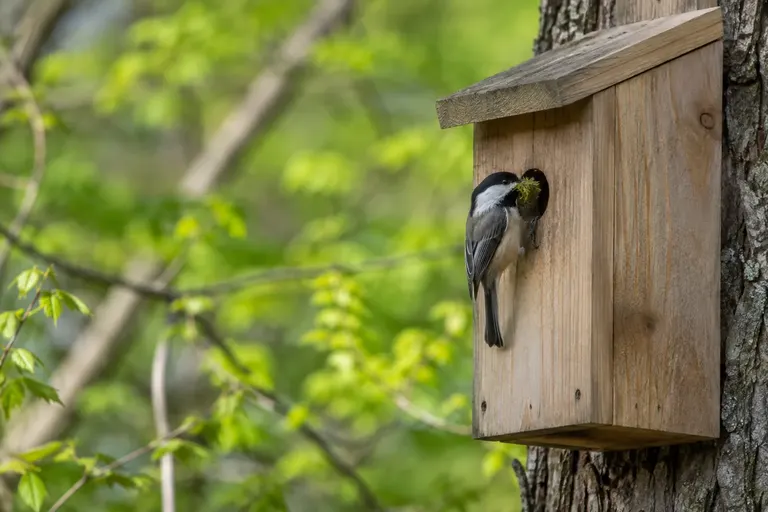
Birdhouse hole sizes by species: 1-1/8 inches for chickadees and wrens, 1-1/2 for bluebirds, 2-1/2 for flickers. Full chart in inches and mm, plus tips.
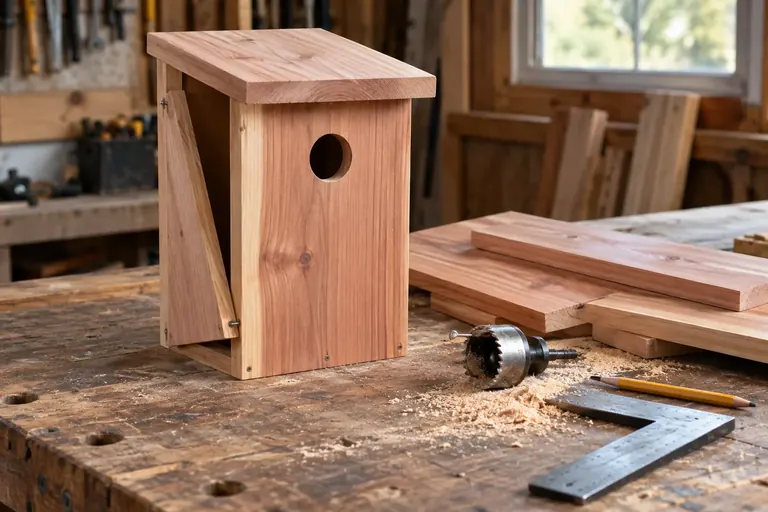
How to build a birdhouse from one 1x6 board: cut list in inches and cm, hole sizes by species, vents, drainage, a hinged side for cleaning and safe mounting.
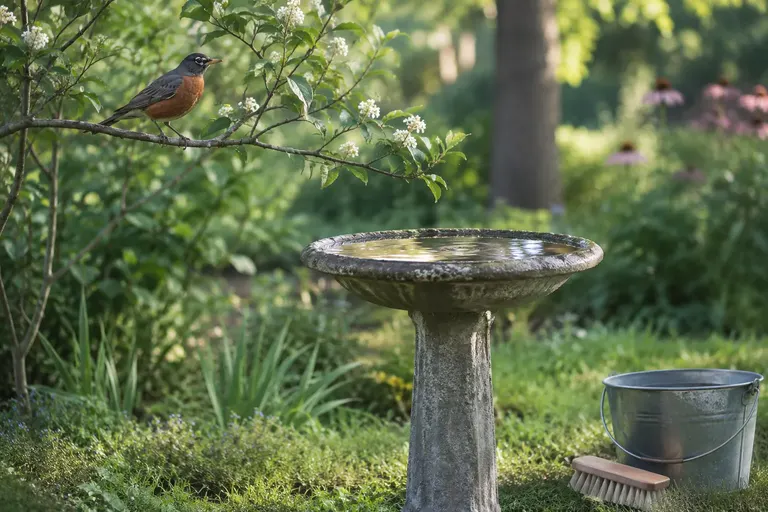
How to clean a bird bath safely: change the water every 1 to 3 days, scrub weekly with a stiff brush, disinfect with 1:9 bleach when needed and rinse well.
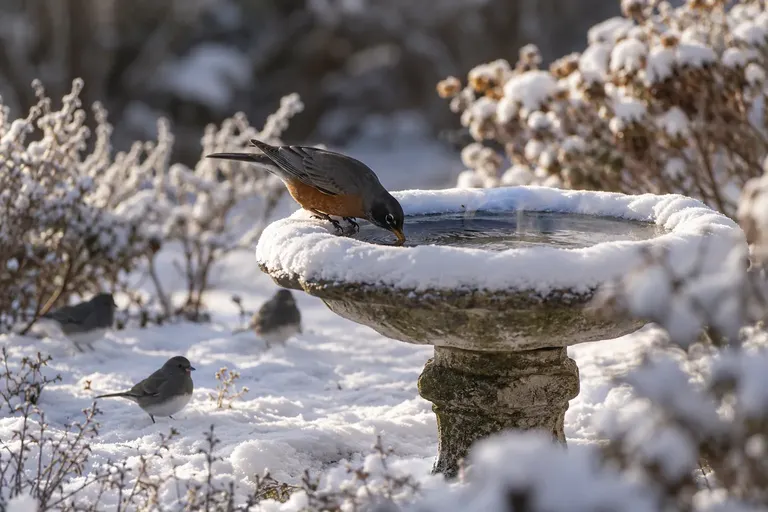
How to keep a bird bath from freezing: a thermostatic heater or heated bath on a GFCI outlet works best. Plus no-power methods, safety rules and what to avoid.
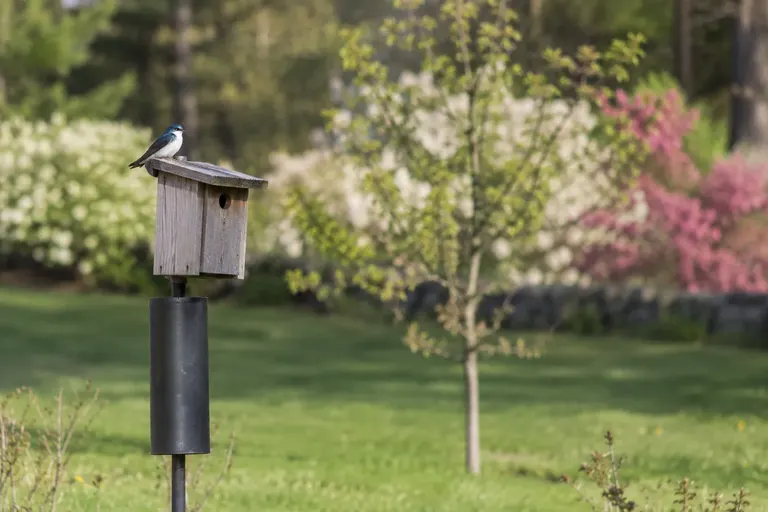
How to mount a birdhouse: a smooth metal pole with a predator baffle is safest, while trees and walls suit some species. Heights, direction and setup steps.
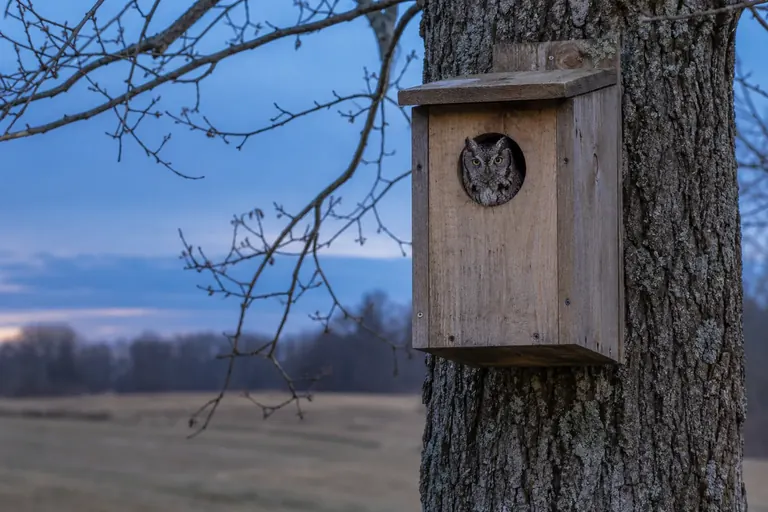
An owl box works when it matches the owl: a 3-inch hole 10 to 30 feet up for screech-owls, a big 4.5-inch box on open land for Barn Owls. Sizes, height, timing.
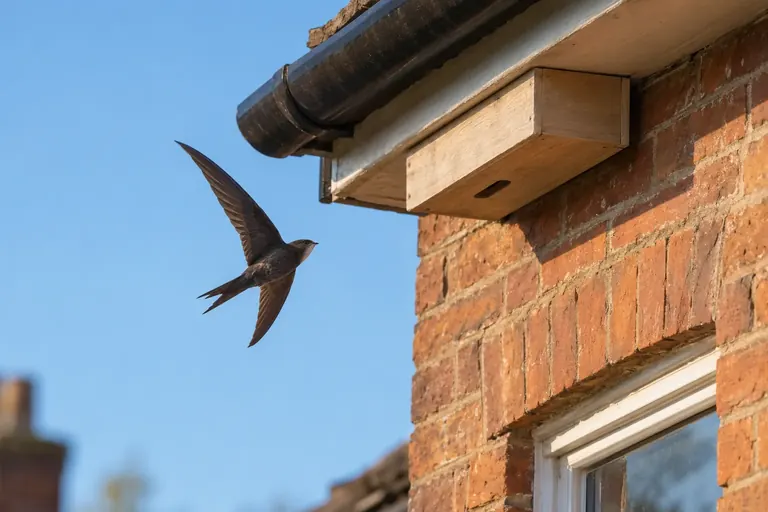
A swift nest box works only at 16 ft (5 m) or higher under the eaves with a clear drop below. Sizes, entrance holes, call playback and chimney swift towers.
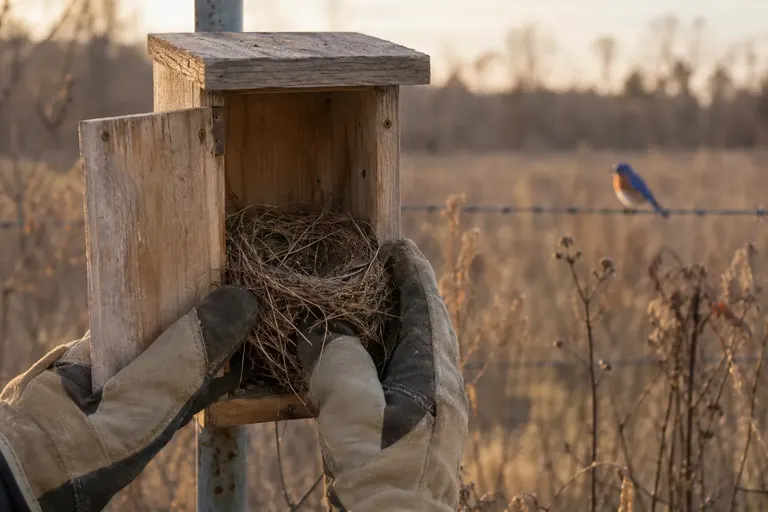
When and how to clean out a birdhouse: remove old nests after young fledge and again in late fall or winter, scrub with hot water or dilute bleach, then dry it.
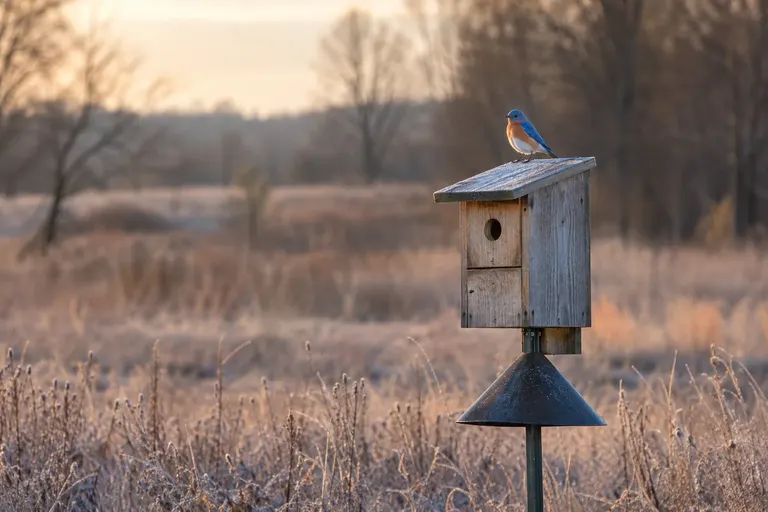
When to put up birdhouses: by late winter, February in most of the US and Europe, so birds can find them before nesting. Timing by region, species and season.
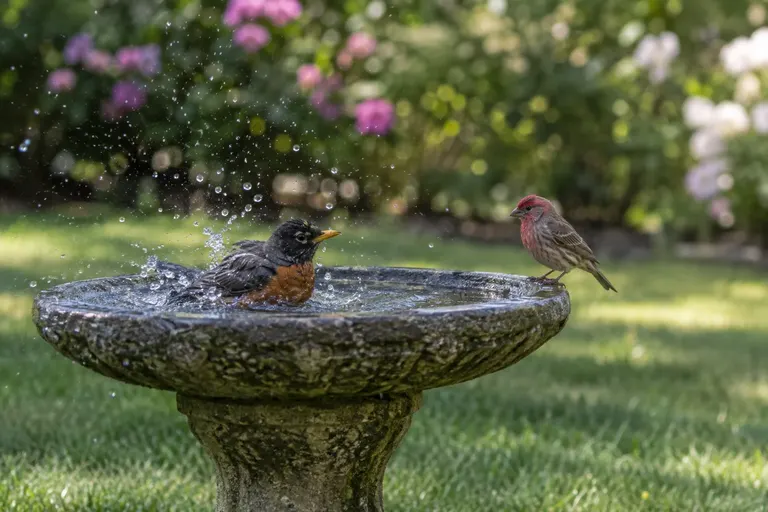
Where to put a bird bath: in open, partly shaded ground 10 to 15 feet from shrubs, away from feeders and near a perch. Height, sun, safety and placement tips.
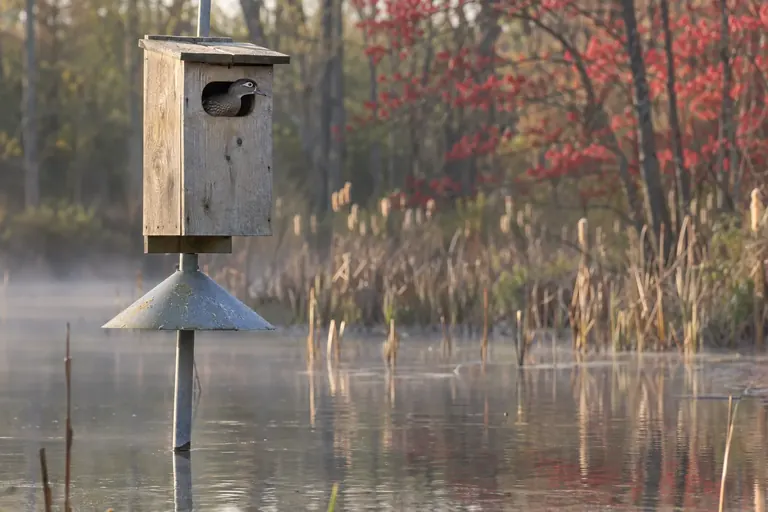
A wood duck box needs a 4 x 3 inch oval hole, a 24-inch-deep box, wood shavings and a predator guard on a pole near water. Size, placement, cleaning and picks.
Birdhouses, nest boxes and bird baths give birds two things feeders cannot, a safe place to raise young and clean water, and this hub covers how to choose, size, place and maintain each one. The most important decision for any birdhouse is the entrance hole, because it decides which species can use it. Based on NestWatch and similar guidance, about 1 1/8 in (28 mm) suits chickadees and house wrens, and 1 1/2 in (38 mm) suits Eastern Bluebirds. A hole too large lets in house sparrows and starlings, which compete aggressively with native birds.
After size, look at build and placement. A good nest box is made of untreated wood about 3/4 in (19 mm) thick, has ventilation holes near the top, drainage holes in the floor, a side or front panel that opens for cleaning, and no perch below the hole, since native cavity nesters do not need one and it helps predators. Mount it on a pole with a predator guard rather than a fence post where cats and raccoons can reach it, and face the entrance away from prevailing winds. Put boxes up in late winter or early spring, before nesting starts in your area, and clean out old nests after the season ends.
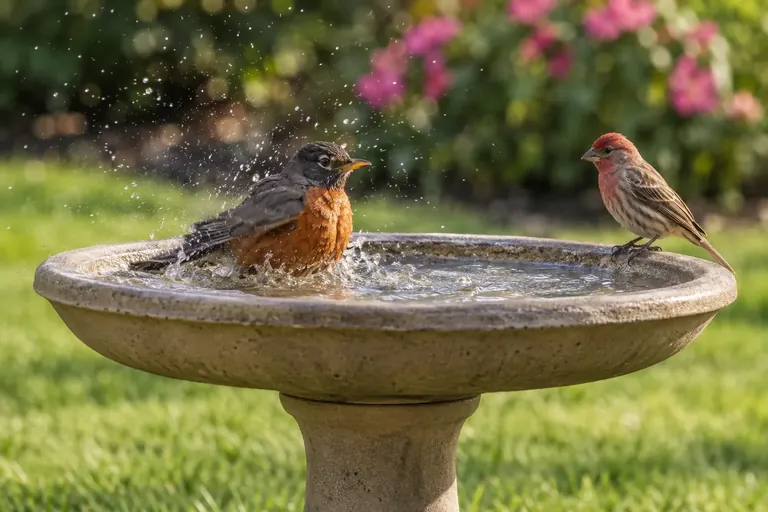
For bird baths, shallow is better: aim for about 1 to 2 in (2.5 to 5 cm) of water with a rough surface for footing, and place it near cover but not beside a shrub where a cat can hide. Change the water every few days and scrub out algae. In cold regions, a heated bath or de-icer keeps water open when natural sources freeze. Start with the hole-size chart, then the mounting and timing guides.