Best Hopper Bird Feeders for Cardinals, Jays and More
The best hopper bird feeder for most yards is the Birds Choice recycled plastic hopper with suet cages. Compare metal, squirrel-resistant, big and small.
If you buy through links on this page we may earn a commission, at no cost to you. It never decides what we recommend. How we earn
In this article
- Quick picks
- How we chose
- What is a hopper bird feeder, and who is it for?
- Birds Choice Medium Hopper with Suet Cages: best hopper bird feeder overall
- Perky-Pet Squirrel-Be-Gone II Home Style: best squirrel-resistant hopper
- Absolute II Hopper Feeder: best large-capacity hopper
- Birds Choice Small Hopper: best small hopper feeder
- Birds Choice Large Hopper: best hopper for pole mounting
- Comparison table
- Which hopper material is best: wood, recycled plastic or metal?
- Which birds will use a hopper feeder?
- What seed should you put in a hopper?
- Where should you put a hopper feeder?
- How do you keep a hopper feeder clean and dry?
- Common mistakes with hopper feeders
- Sources
- Frequently asked questions
The best hopper bird feeder for most yards is the Birds Choice Medium Hopper with Suet Cages. It’s made from recycled poly lumber that won’t crack, split or fade, holds about 3 lb of seed plus two suet cakes, and drains through a removable screen. If squirrels are your main problem, pick a weight-activated metal hopper instead.
Quick picks
- Best overall: Birds Choice Medium Hopper with Suet Cages. About 3 lb of seed, two suet cakes, recycled plastic.
- Best squirrel-resistant: Perky-Pet Squirrel-Be-Gone II Home Style. All metal, weight-activated perch, up to 8 lb.
- Best large capacity: Absolute II Hopper Feeder. Steel, up to 12 lb, pole included.
- Best small: Birds Choice Small Hopper. About 1.5 lb, hanging cable included.
- Best for pole mounting: Birds Choice Large Hopper. About 6 lb on a 1 in pole.
Birds Choice Medium Hopper with Suet Cages
A recycled poly lumber hopper with a removable drainage screen, stainless steel fasteners and a suet cage on each end.
- Best for
- Mixed backyards that want seed and suet in one weatherproof feeder.
- Skip it if
- You need a feeder that keeps squirrels out on its own.
- Capacity
- About 3 lb seed plus 2 suet cakes
- Material
- Recycled poly lumber
- Mounting
- Hang or 1 in pole (hardware sold separately)
Perky-Pet Squirrel-Be-Gone II Home Style
An all-metal, house-shaped hopper whose weight-activated perch closes the ports under a squirrel, with a lid lock to stop lid lifting.
- Best for
- Yards where squirrels raid every feeder in reach.
- Skip it if
- You want doves and other heavy birds to eat from the same feeder.
- Capacity
- Up to 8 lb seed
- Material
- Powder-coated metal
- Squirrel guard
- Weight-activated perch
- Mounting
- Hang or pole
Absolute II Hopper Feeder
A two-sided steel hopper holding up to 12 lb of seed, with adjustable spring perches and both a hanger and a sectional pole included.
- Best for
- Big winter flocks and people who want to refill less often.
- Skip it if
- You cannot support a heavy, full feeder on a sturdy pole.
- Capacity
- Up to 12 lb seed
- Material
- Steel
- Squirrel guard
- Adjustable spring perches
- Mounting
- Hanger and 58 in pole included
Birds Choice Small Hopper
A compact recycled plastic hopper that holds about 1.5 lb of seed and comes with its hanging cable.
- Best for
- Small yards, patios and anyone who wants seed eaten before it goes stale.
- Skip it if
- You feed a big flock and don't want to refill every day or two.
- Capacity
- About 1.5 lb seed
- Material
- Recycled poly lumber
- Size
- 7.75 x 10.5 x 9 in
Birds Choice Large Hopper
A big recycled plastic hopper holding about 6 lb of seed, built to sit on a 1 in pole with a mounting flange.
- Best for
- A permanent feeding station on a baffled pole.
- Skip it if
- You want to hang your feeder from a hook or branch.
- Capacity
- About 6 lb seed
- Material
- Recycled poly lumber
- Mounting
- 1 in pole (flange sold separately)
How we chose
We haven’t hung these feeders in our own yard yet. This guide is research-based. We compared manufacturer specifications for capacity, materials, drainage, mounting and squirrel protection, and we confirmed each model is currently sold by its maker or a major retailer. We read feeder guidance from the Cornell Lab of Ornithology and Project FeederWatch, and looked for consistent patterns in verified owner reviews, especially reports of rot, leaks, wet seed and squirrel damage. We gave extra weight to materials that survive years outdoors and to designs that keep seed dry, because wet seed in a hopper spoils quickly.
What is a hopper bird feeder, and who is it for?
A hopper feeder is a small house for seed. Project FeederWatch describes it as a platform with walls and a roof built over it, forming a hopper that protects seed from the weather. Seed sits in the reservoir and slides out onto a ledge as birds eat.
The Cornell Lab lists clear pros and cons:
- Pros: it holds enough seed to last several days, the roof helps keep seed dry, and birds are less likely to soil the food with droppings.
- Cons: most designs give squirrels easy access, seed can spoil if it gets wet and stays wet, and it’s harder to clean than a tray feeder.
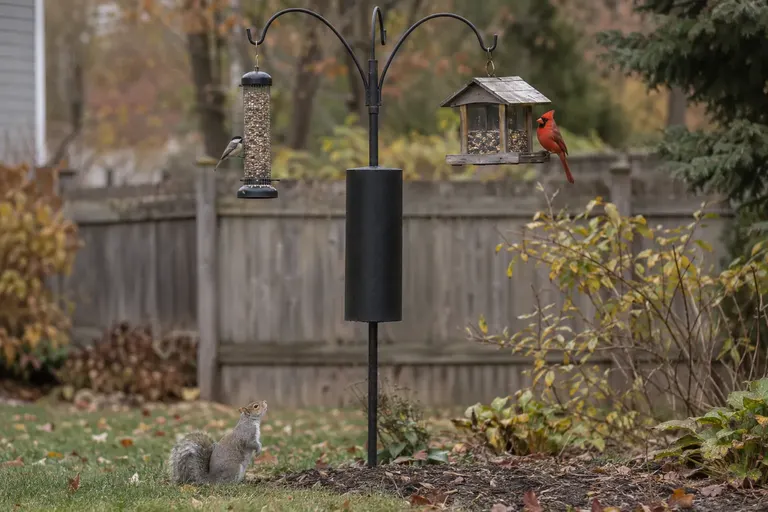
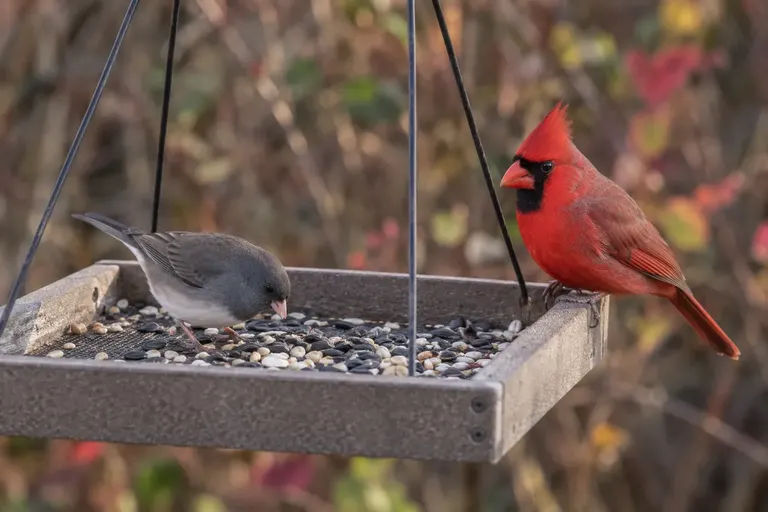
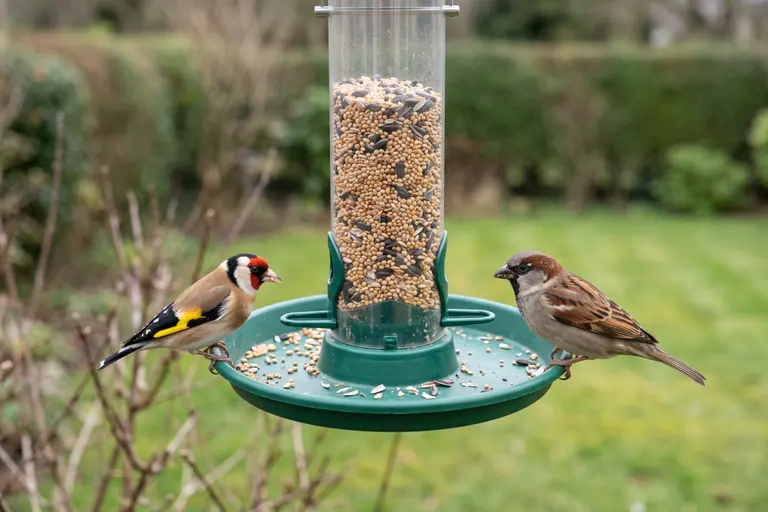
That makes a hopper a good main feeder for a mixed yard. Cornell says hoppers attract most feeder birds, including finches, jays, cardinals, buntings, grosbeaks, sparrows, chickadees and titmice. If you only want goldfinches, a tube feeder or nyjer feeder is a better fit.
Birds Choice Medium Hopper with Suet Cages: best hopper bird feeder overall
What it is: A medium hopper made in the USA from recycled poly lumber, with a suet cage on each side. Birds Choice lists a capacity of about 3 lb of seed and two suet cakes, and a size of 10.625 x 10.625 x 8.85 in (about 12.75 in long with the suet cages).
Why it stands out: Recycled plastic lumber doesn’t rot or soak up water the way wood can, and Birds Choice says it’s guaranteed never to crack, split or fade. A removable powder-coated screen floor lets rain drain, which matters in a hopper where wet seed turns moldy. Stainless steel fasteners hold it together. The suet cages turn one feeder into a station for both seed eaters and woodpeckers.
Owner patterns: Owners of recycled plastic hoppers tend to praise how well they hold up to years of weather. Worth knowing before you buy: Birds Choice sells the 15 in hanging cable and the pole mounting flange separately for this model, so budget for the mount you need.
Key specs: About 3 lb seed plus 2 suet cakes, recycled poly lumber, hang or 1 in pole.
- Best for: Mixed backyards that want seed and suet in one place.
- Skip it if: Squirrels already raid your feeders. They can chew and climb onto plastic hoppers like any other.
See available listings on Amazon
Perky-Pet Squirrel-Be-Gone II Home Style: best squirrel-resistant hopper
What it is: A house-shaped hopper in powder-coated metal. Perky-Pet lists a capacity of up to 8 lb of black oil sunflower, hulled sunflower, mixed seed or safflower, and a size of about 14 x 11 x 13.75 in.
Why it stands out: Its perch is weight activated, so when an animal heavier than the intended birds lands on it, the perch drops and closes the feeding ports. Perky-Pet says the tension can be adjusted for different bird sizes, and a weathervane lid lock stops squirrels lifting the roof. The all-metal body stands up to chewing far better than wood or plastic. The roof lifts off for filling.
Owner patterns: In verified reviews, owners mainly praise how it stops squirrels from eating seed when it’s hung clear of jump-off points. The recurring complaint with any weight-activated hopper is placement: if a squirrel can reach the seed from a railing without stepping on the perch, it will.
Key specs: Up to 8 lb seed, powder-coated metal, weight-activated perch, hang or pole.
- Best for: Yards where squirrels take more seed than the birds. Pair it with tips from our squirrel-proof feeder guide.
- Skip it if: You want Mourning Doves and other heavy birds at the same feeder, since they can close the ports.
See available listings on Amazon
Absolute II Hopper Feeder: best large-capacity hopper
What it is: A two-sided steel hopper. Duncraft lists capacity of up to 12 lb of mixed seed, a size of 11 x 14 x 9 in, and says it’s made in the USA. It comes with a metal hanger and a 58 in, 1 in round sectional pole with a ground socket.
Why it stands out: Capacity and toughness. Both sides have adjustable spring-activated perches meant to shut off seed when a gray squirrel’s weight lands on them. A lift-up roof makes filling and cleaning easier.
Owner patterns: Owners praise how long it goes between fills and how well the steel resists chewing. The caution that comes up most is weight: full, it needs a solid pole or strong hook, and a large hopper takes longer to clean than a small one.
Key specs: Up to 12 lb seed, steel, adjustable perches, pole and hanger included.
- Best for: Busy yards, cold winters and people who refill once or twice a week.
- Skip it if: You want something light enough to carry to the sink every week.
See available listings on Amazon
Birds Choice Small Hopper: best small hopper feeder
What it is: A compact recycled poly lumber hopper. Birds Choice lists about 1.5 lb of seed capacity, a size of 7.75 x 10.5 x 9 in and a weight of 3.5 lb. Unlike the medium model, the hanging cable is included.
Why it stands out: Small hoppers have real advantages. Seed gets eaten before it goes stale or wet, the feeder is light enough for a bracket, and cleaning is quick. Project FeederWatch notes that a small hopper suits small birds and can help keep grackles from taking over. It shares the same drainage screen and stainless fasteners as the bigger Birds Choice hoppers.
Owner patterns: Owners like the size for patios and small yards. The trade-off is more frequent refills when a flock finds it.
Key specs: About 1.5 lb seed, recycled poly lumber, cable included.
- Best for: Small yards and patios. See also our guide to feeders for small spaces.
- Skip it if: You feed big flocks and only want to refill weekly.
See available listings on Amazon
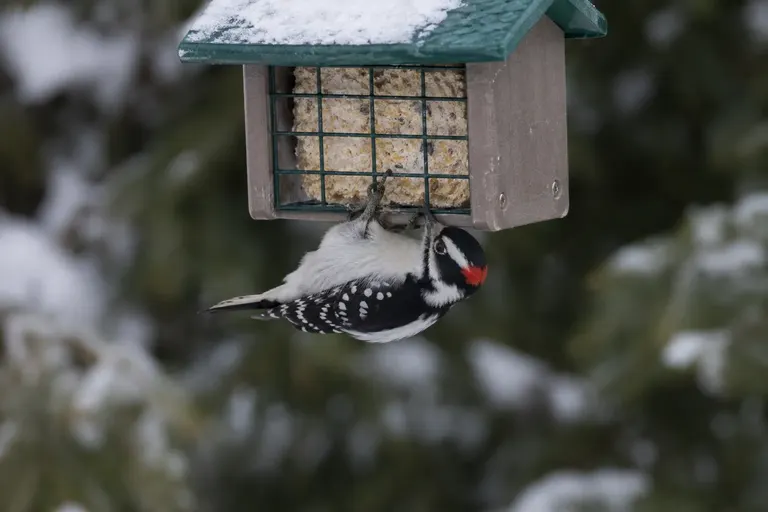
Birds Choice Large Hopper: best hopper for pole mounting
What it is: The biggest of the Birds Choice recycled plastic hoppers. It holds about 6 lb of seed, measures 14.3 x 14 x 11.85 in and weighs 10.75 lb. It’s designed to sit on a 1 in pole with a mounting flange sold separately.
Why it stands out: A pole-mounted hopper is the easiest feeder to protect from squirrels, because a baffle under it blocks the only route up. Birds Choice lists a wide range of visitors, from cardinals and grosbeaks to juncos, sparrows and towhees.
Key specs: About 6 lb seed, recycled poly lumber, 1 in pole mount.
- Best for: A permanent station. Our guide to bird feeder poles and baffles covers the hardware.
- Skip it if: You want to hang a feeder from a branch or hook.
See available listings on Amazon
Comparison table
| Feeder | Material | Capacity | Squirrel guard | Mounting |
|---|---|---|---|---|
| Birds Choice Medium with Suet | Recycled poly lumber | About 3 lb + 2 suet cakes | No | Hang or pole (sold separately) |
| Squirrel-Be-Gone II Home Style | Powder-coated metal | Up to 8 lb | Weight-activated perch | Hang or pole |
| Absolute II | Steel | Up to 12 lb | Adjustable spring perches | Hanger and pole included |
| Birds Choice Small | Recycled poly lumber | About 1.5 lb | No | Hang (cable included) |
| Birds Choice Large | Recycled poly lumber | About 6 lb | No | 1 in pole |
Which hopper material is best: wood, recycled plastic or metal?
Recycled plastic and metal last longest. Each material has a clear trade-off.
- Recycled plastic (poly lumber): doesn’t rot, crack or soak up water, and cleans up well. It’s heavier than wood, and squirrels can still climb on and gnaw at the edges.
- Metal: the best choice where squirrels chew. Powder coating resists rust. Metal hoppers usually have the weight-activated mechanisms.
- Wood (usually cedar): looks natural but can crack, warp and hold moisture over time. If you choose wood, look for a screened floor and plan to replace it sooner.
Which birds will use a hopper feeder?
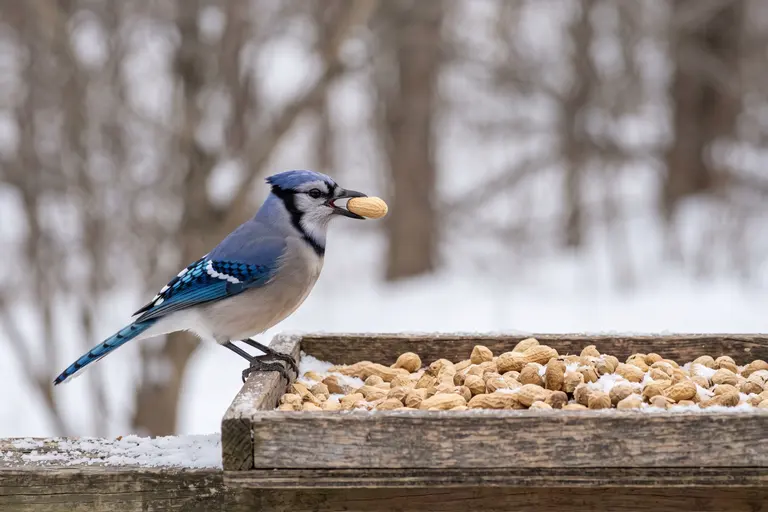
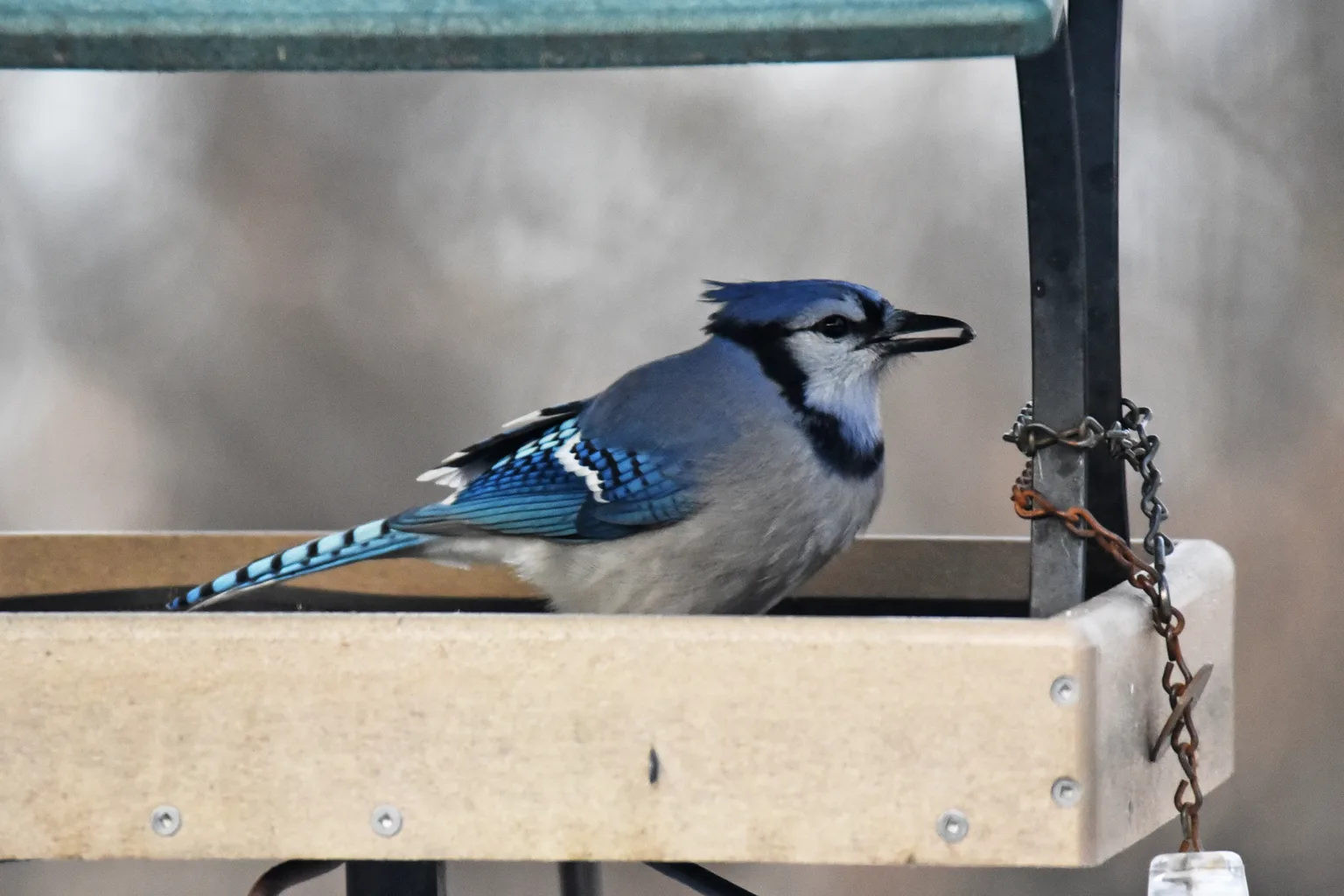
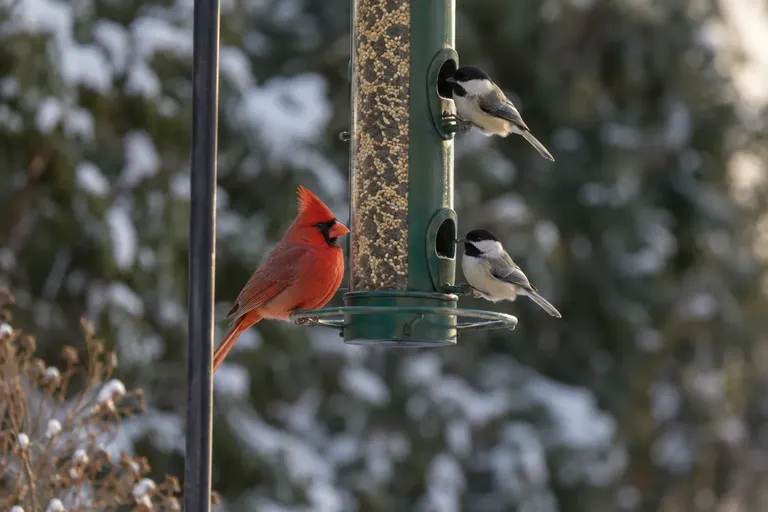
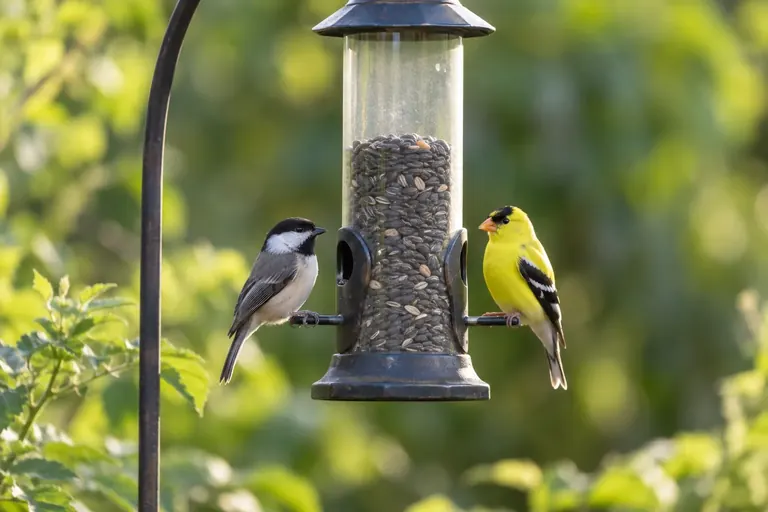
Most common seed eaters will. Hoppers suit the Northern Cardinal, which Cornell says eats many kinds of birdseed, particularly black oil sunflower. The Blue Jay is another regular: Cornell notes jays prefer tray feeders or hopper feeders on a post rather than hanging feeders, and like peanuts, sunflower seed and suet.
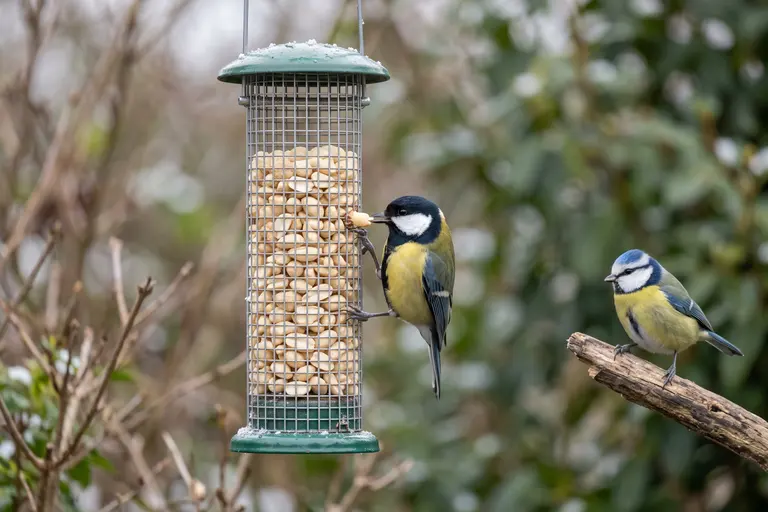
Chickadees, titmice, nuthatches, finches, grosbeaks and sparrows all use hoppers too. Large hoppers let Mourning Doves and grackles feed. If those big birds empty your feeder, a small hopper or a weight-activated model set to close under heavy birds can help.
What seed should you put in a hopper?
Start with black oil sunflower seed. It feeds the widest range of species and holds up well in a hopper. Safflower suits cardinals, chickadees and titmice, and many squirrels show less interest in it. A quality mix works too.
Two cautions:
- Hulled sunflower spoils faster. Project FeederWatch notes that shelled seed goes bad more quickly than seed in the shell, so only use it where it will be eaten fast.
- Skip filler-heavy mixes. Seeds birds don’t want get kicked to the ground and attract rodents.
Where should you put a hopper feeder?
Put it on a baffled pole or hang it where squirrels can’t jump to it, with cover nearby but not too close. Project FeederWatch suggests about 10 feet from dense shrubs, so cats can’t ambush birds. Cornell recommends mounting a hopper on a pole or hanging it from a branch, with a baffle on the pole or line to deter squirrels.
Don’t worry too much about exact distance from windows. Cornell now says older distance rules for feeders near windows are no longer thought to be valid, and that the fix is to make nearby windows bird friendly. Our guide to preventing window collisions explains how.
How do you keep a hopper feeder clean and dry?
Clean it every week or two, more often in wet weather, and never let seed stay soaked.
- Empty the seed and throw out anything clumped or moldy.
- Scrub the hopper, tray and screen with hot soapy water.
- Disinfect with one part bleach to nine parts water for 10 minutes, as Project FeederWatch recommends.
- Rinse and dry completely before refilling.
Fill a hopper only as much as birds will eat in a few days during rainy spells. Our step-by-step guide to cleaning bird feeders covers every feeder type.
Common mistakes with hopper feeders
- Overfilling in wet weather. A full hopper of wet seed is a full hopper of mold.
- Choosing a solid floor. Look for a screen or drain holes so water can escape.
- Hanging it within jumping distance. Squirrels sit on the tray and empty it.
- Ignoring the weight. A large hopper full of seed is heavy; use a pole rated for it.
Sources
- Cornell Lab of Ornithology, All About Birds: How to choose the right kind of bird feeder
- Project FeederWatch: Feeding birds
- All About Birds: Why birds hit windows and how you can help prevent it
- Birds Choice: Hopper bird feeders
- Perky-Pet: Squirrel-Be-Gone II Home Style Wild Bird Feeder
- Duncraft: Absolute II Bird Feeder

Frequently asked questions
What is a hopper bird feeder?
A hopper feeder is a platform with walls and a roof built over it, forming a hopper that holds seed and lets it drop onto a tray as birds eat. Project FeederWatch describes it as a design that protects seed against the weather. Most hoppers hold enough seed to last several days and suit cardinals, jays, finches, chickadees, titmice and sparrows.
What birds use hopper feeders?
The Cornell Lab of Ornithology lists hopper feeders as attractive to most feeder birds, including finches, jays, cardinals, buntings, grosbeaks, sparrows, chickadees and titmice. Large hoppers also let bigger birds such as Mourning Doves and grackles feed. A small hopper tends to suit small birds and can help if grackles crowd out everything else.
What seed should I put in a hopper feeder?
Black oil sunflower seed is the safest single choice, because so many species eat it and Cornell notes that Northern Cardinals particularly favor it. Safflower and good mixed blends also work. Hulled sunflower spoils faster than seed in the shell, so keep it dry. Avoid cheap mixes heavy in fillers that birds kick out onto the ground.
How often should you clean a hopper feeder?
Project FeederWatch recommends cleaning seed feeders every week or two, and more often in wet weather or heavy use. Empty old seed, scrub the hopper and tray, then soak for 10 minutes in one part bleach to nine parts water. Rinse well and let every part dry completely before refilling, so new seed doesn't clump or mold.
Are hopper feeders squirrel-proof?
Most are not. Cornell notes that most hopper designs give squirrels easy access, since the tray and roof are easy to grab and sit on. Weight-activated metal hoppers close their ports when a squirrel steps on the perch, and a baffle on the pole helps any hopper. Placement still matters, because squirrels will jump from nearby railings, trunks and roofs.