How to Clean a Bird Feeder, and How Often
How to clean a bird feeder: scrub off debris, soak 10 minutes in 1 part bleach to 9 parts water, rinse, dry. Seed feeders every 2 weeks, nectar feeders more.
In this article
- Quick answer: cleaning schedule by feeder type
- Why do bird feeders need to be cleaned?
- What you need to clean a bird feeder
- How to clean a seed feeder, step by step
- How to clean a hummingbird feeder
- How to clean suet, nyjer and specialty feeders
- How to clean wooden and metal feeders
- Can you spot-clean a feeder without taking it down?
- How to protect yourself while cleaning feeders
- How to clean a bird bath
- When should you take bird feeders down?
- How to keep feeders cleaner between washes
- Common mistakes when cleaning bird feeders
- Will cleaning the feeder scare birds away?
- A simple cleaning routine you can keep
- Sources
- Frequently asked questions
Clean seed feeders about every two weeks, and hummingbird feeders every time you change the nectar. Here is how to clean a bird feeder properly: scrub away old seed and debris, soak the feeder for 10 minutes in a solution of no more than 1 part bleach to 9 parts water, rinse thoroughly, and let it dry completely before refilling. That routine, recommended by the Cornell Lab of Ornithology, prevents most feeder-spread disease.
Quick answer: cleaning schedule by feeder type
| Feeder type | How often to clean | Best method |
|---|---|---|
| Tube, hopper and platform seed feeders | Every 2 weeks; weekly in wet weather or heavy use | Scrub, 10-minute soak in 1:9 bleach solution, rinse, dry |
| Nyjer (thistle) tube feeders | Every 2 weeks; check for clumped seed after rain | Same as seed feeders |
| Mesh or sock finch feeders | Replace socks when dirty or moldy | Fabric is hard to disinfect |
| Suet cages | Every 2 weeks, and whenever suet goes rancid | Hot soapy water, bleach soak, rinse |
| Hummingbird feeders | Every nectar change: every 3 to 5 days, more often in heat | Hot water and bottle brush, or dilute bleach, then rinse well |
| Oriole and jelly feeders | Every few days in warm weather | Hot water and brush, remove old jelly and fruit |
| Bird baths | Refresh water every few days; scrub regularly | Scrub; 1:9 bleach solution when needed, rinse well |
| Ground under feeders | Rake up hulls and waste regularly | Rake and bag, do not compost moldy seed |
Project FeederWatch frames the same idea slightly differently: clean seed and suet feeders every week or two, and clean hummingbird feeders every couple of days, more often during heavy use or warm weather.
Why do bird feeders need to be cleaned?
Feeders bring birds closer together than they would normally gather. That makes them useful for watching birds and also efficient at spreading disease. Droppings land on perches and trays, wet seed turns moldy, and sick birds leave germs where healthy birds feed.
Audubon names several diseases linked to feeders:
- Salmonellosis. Salmonella bacteria spread through droppings. Outbreaks can hit winter finch flocks hard, and sick birds often look fluffed up and lethargic.
- House Finch eye disease. Mycoplasmal conjunctivitis causes red, swollen, crusty eyes. It is most common in House Finches but also affects goldfinches and other species.
- Aspergillosis. A fungal respiratory infection linked to moldy seed and debris.
- Avian pox. A virus that causes wart-like growths on featherless skin around the bill, eyes and feet.
- Avian influenza. Audubon also lists bird flu among the diseases where good feeder hygiene matters.
The good news is that simple, regular cleaning goes a long way. Our guide to sick birds at the feeder covers the signs of each disease in more detail.
What the research says about cleaning methods
Project FeederWatch reported on a study that compared three ways to clean feeders contaminated with Salmonella: scrubbing with soap and water, a 10-minute soak in a bleach solution, and soap-and-water scrubbing followed by a bleach soak. All three reduced Salmonella, but the methods that included bleach worked better.
The most useful finding for everyday feeder owners: feeders caked with old debris still carried risky levels of bacteria after soap-only cleaning. In other words, the scrubbing step matters, and bleach gives you a margin of safety that soap alone does not.
What you need to clean a bird feeder
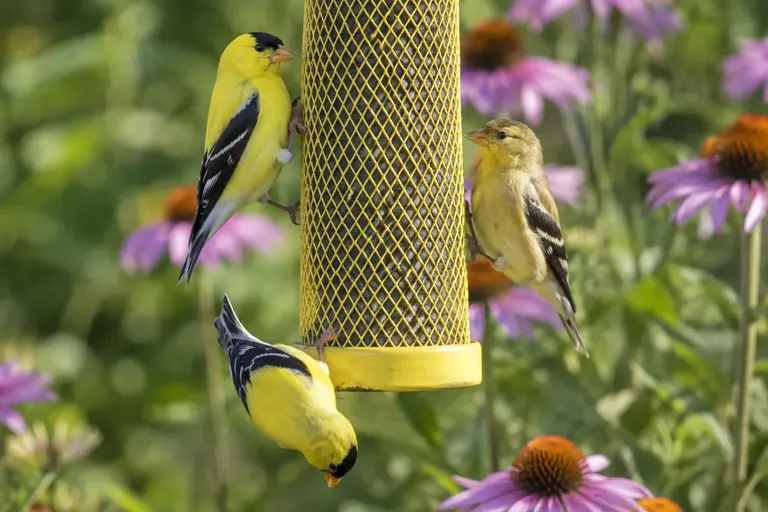
You do not need special products. A basic kit:
- A bucket or deep sink dedicated to feeder cleaning, not the kitchen sink you use for food.
- Household bleach (plain, unscented).
- Rubber gloves and old clothes.
- A long bottle brush for tube feeders and hummingbird reservoirs.
- A small port or pipe brush for feeding holes and hummingbird flowers.
- An old toothbrush for perches, seams and screens.
- A scraper or putty knife for caked seed in trays.
- A rack or towel where parts can dry in the sun.
Buy two feeders of each type if you can. Then you can swap in a clean, dry feeder while the other one is washed and dried, and the birds never lose their food source.
How to clean a seed feeder, step by step
This routine works for tube, hopper, platform and most window feeders.
- Empty the feeder. Dump old seed into a trash bag. Do not pour it on the ground, where damp seed grows mold.
- Take it apart. Remove the base, lid, perches and any removable trays. Many modern feeders come apart by hand. For example, Brome describes its Squirrel Buster Plus as able to be dismantled into individual components without tools.
- Scrub off all debris. Use the bottle brush, toothbrush and scraper to remove caked seed, hulls, droppings and mold. This is the step that matters most, based on the FeederWatch study.
- Mix the bleach solution. Use no more than 1 part bleach to 9 parts water. For example, 1 cup of bleach in 9 cups of water.
- Soak for 10 minutes. Fully submerge the parts. The Cornell Lab describes a 10-minute soak in dilute bleach as an effective technique.
- Rinse thoroughly. Rinse with clean water until you cannot smell bleach.
- Dry completely. Let everything air-dry, ideally in the sun, for several hours. Seed added to a damp feeder clumps and molds fast.
- Clean the area below. Rake up hulls and uneaten seed under the feeder.
- Reassemble and refill with fresh, dry seed.
Can you use soap instead of bleach?
Soap and hot water are better than nothing and fine for a quick weekly rinse. The Cornell Lab lists soap with boiling water as one hand-washing option. For a full clean, especially after rain or during disease outbreaks, add the bleach soak. The FeederWatch research shows bleach is the more reliable choice.
What about the dishwasher?
The Cornell Lab lists a dishwasher on a hot setting as an option for seed feeders. Check the manufacturer’s instructions first, because some plastics warp in high heat. Keep feeder parts in a separate load from your dishes if you prefer.
How to clean a hummingbird feeder
Hummingbird feeders need more frequent cleaning than seed feeders because sugar water ferments and grows mold, especially in heat. The Cornell Lab recommends changing the nectar every 3 to 5 days and cleaning the feeder at least weekly, and more often in hot weather. Project FeederWatch suggests cleaning every couple of days in heavy use or warm weather. In practice, the simplest rule is to clean the feeder every time you change the nectar.
- Empty the old nectar. Never top off old nectar with new.
- Take the feeder apart. Separate the reservoir, base, feeding ports and any insect guards.
- Scrub with hot water. Use a bottle brush in the reservoir and a small brush in each port. The Cornell Lab recommends hot water without soap or detergent, which can leave residue.
- Disinfect when needed. If you see black mold or cloudy film, soak in dilute bleach solution, then rinse very well.
- Air-dry. Let parts dry before refilling.
- Refill with fresh 4:1 nectar. Use 1 part white sugar to 4 parts water, no red dye. See our hummingbird nectar recipe.
Signs your hummingbird feeder needs cleaning now
- Cloudy or milky nectar
- Black spots or fuzzy growth in the ports or reservoir
- Ants or bees crowding the ports
- Nectar that smells sour
If feeders are hard to clean, the design may be the problem. Wide-mouth reservoirs and saucer-style bases are much easier to scrub. Our best hummingbird feeders roundup favors designs that are easy to take apart and clean.
How to clean suet, nyjer and specialty feeders
Suet cages
Suet can go rancid in warm weather and gets smeared across the cage. Remove old suet, scrub the cage in hot soapy water with a stiff brush, soak in the bleach solution, rinse and dry. In summer, offer only no-melt suet and check it often.
Nyjer tube feeders
Nyjer seed is tiny and packs down when wet. After a rain, check the bottom of the tube for clumped seed. Dump it, scrub the tube and ports, soak, rinse and dry.
Mesh socks
Fabric finch socks are hard to disinfect. Replace them when they get dirty, moldy or torn rather than trying to clean them.
Window feeders
Take the tray out of the holder and clean it like any seed feeder. Clean the suction cups too, since grime weakens their grip.
Camera feeders
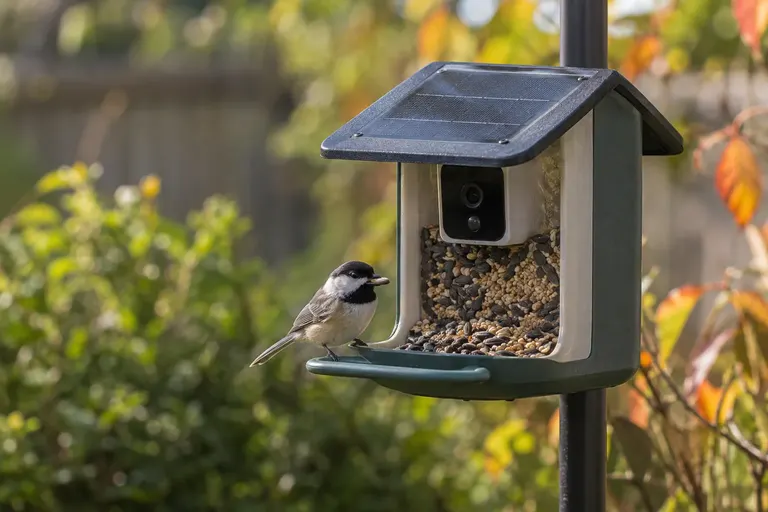
Remove the camera module and battery before cleaning, and follow the maker’s instructions. Wipe the lens with a soft, dry cloth. Our guide to whether smart bird feeders are worth it covers the extra care they need.
How to clean wooden and metal feeders
Material changes the details of the job.
Wooden feeders
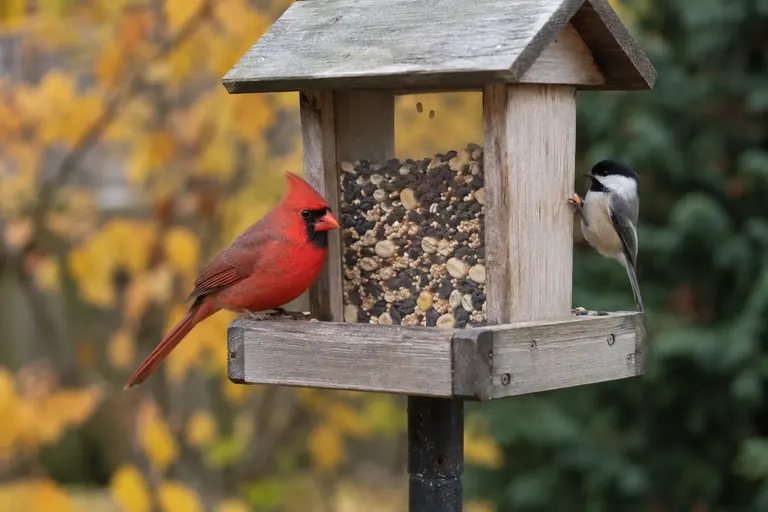
Wood is porous, so it holds moisture and grime longer than plastic or metal. Cedar resists rot better than most woods, but it still needs care.
- Scrape and brush all seed and droppings from the tray, corners and roof seams.
- Scrub with hot soapy water and a stiff brush.
- Use the bleach solution sparingly, brushing it on rather than soaking for long periods, which can swell or crack the wood.
- Rinse well.
- Dry for longer. Give wooden feeders a full day in the sun if you can. Refilling damp wood invites mold.
Replace wooden trays and feeders that have soft, cracked or blackened wood you cannot scrub clean.
Metal feeders
Powder-coated steel and aluminum feeders clean easily and tolerate the bleach soak well. Rinse thoroughly and dry completely to prevent rust at scratches and seams. Check metal mesh for broken strands that could snag a bird’s toe.
Plastic and polycarbonate tubes
Clear tubes show dirt clearly, which makes it easy to know when they need cleaning. Avoid abrasive scouring pads that scratch the plastic, since scratches trap grime. If a tube becomes permanently cloudy or cracked, replace it.
Can you spot-clean a feeder without taking it down?
A quick wipe between full cleanings helps, but it is not a substitute. Between washes you can:
- Brush off perches and trays with a stiff brush while the feeder hangs.
- Knock out clumped seed from the bottom of tube feeders after rain.
- Wipe hummingbird ports with a damp cloth when you see sticky residue.
A full disinfecting clean still needs the feeder emptied, scrubbed, soaked, rinsed and dried. The research on Salmonella makes clear that debris protects bacteria, and a wipe-down does not remove all of it.
How to protect yourself while cleaning feeders
Feeder germs are a concern for people too. Salmonella in particular can make people sick, and droppings are the main source. Simple precautions:
- Wear gloves while emptying, scrubbing and rinsing feeders.
- Clean feeders outdoors or in a utility sink, not where you prepare food.
- Wash your hands with soap and water afterward, even if you wore gloves.
- Keep children and pets away from the cleaning area and from seed and droppings under feeders.
- Ventilate. If you work indoors with bleach, open a window or door.
How to clean a bird bath
Bird baths spread disease the same way feeders do. Audubon recommends the same 1 part bleach to 9 parts water solution for bird baths. Refresh the water every few days, which also keeps mosquito larvae from maturing. Scrub the basin whenever you see algae or droppings, rinse very well, and refill with clean water.
When should you take bird feeders down?
Sometimes cleaning is not enough, and the right move is to stop feeding for a while.
- You see sick birds. Take down feeders and bird baths, clean them, and clear seed from the ground. Mass Audubon suggests leaving them down for about two weeks so sick birds disperse. Audubon notes you can contact a licensed wildlife rehabilitator or your state agency if you find sick or dead birds.
- Your state wildlife agency asks. During some disease outbreaks, agencies have asked residents to pause feeding. Follow current local guidance.
- Bears are active. In bear country, many agencies advise removing feeders during the months bears are out.
How to keep feeders cleaner between washes
Good habits reduce how much scrubbing you have to do:
- Buy only what you will use in a few weeks. New Jersey Audubon advises tossing seed that has sat untouched for about a month. Our guide on how to store bird seed explains how to keep it dry and pest-free.
- Use a feeder with drainage. Mesh-bottom trays and tubes with drain holes dry faster after rain.
- Add a weather guard. A roof or dome over a tube feeder keeps seed drier.
- Offer hulled seed carefully. Sunflower hearts cut down on mess below feeders, but Project FeederWatch notes that hulled seed spoils more quickly, so keep it dry. See our best no-mess bird seed.
- Spread feeders out. Several spaced feeders reduce crowding and droppings at any one spot. Our feeder placement guide explains spacing.
- Rake regularly. Hulls and waste under feeders grow mold and draw rodents.
Common mistakes when cleaning bird feeders
- Skipping the scrub. Soaking a feeder caked with seed does not disinfect what is underneath the debris.
- Making the bleach too strong. More bleach is not better. Stick to no more than 1 part bleach to 9 parts water and rinse well.
- Mixing cleaners. Never mix bleach with vinegar or ammonia, which creates toxic gas. Use one cleaner at a time, rinse between them, and work in a well-ventilated spot.
- Refilling a damp feeder. Moisture trapped in seed leads to mold within days.
- Topping off old seed or nectar. Always empty the old food first.
- Dumping old seed on the ground. Bag it and throw it away.
- Forgetting the ground. A clean feeder over a pile of moldy hulls still exposes birds to disease.
- Waiting for visible disease. Clean on a schedule, not only when you see a problem.
Will cleaning the feeder scare birds away?
No. Birds may hold back for a short while after you move around the feeder or swap it out, but regular visitors return quickly once food is back. Two things keep the disruption small:
- Swap, do not remove. Hang a clean, dry backup feeder in the same spot while you wash the other one. The birds barely notice the change.
- Clean at midday. Feeder traffic is often heaviest early in the morning and again late in the day. Cleaning between those peaks means fewer hungry birds waiting.
A clean feeder with fresh, dry seed is more attractive to birds than a dirty one full of clumped, stale seed. If birds seem to be avoiding a feeder you just cleaned, check that no bleach smell remains and that the seed inside is fresh.
A simple cleaning routine you can keep
The easiest system is to tie cleaning to the calendar:
- Every nectar change: clean the hummingbird feeder.
- Every other weekend: clean seed feeders, suet cages and bird baths, and rake under feeders.
- After every heavy rain: check for clumped or wet seed.
- Once a season: replace worn perches, cracked tubes and old finch socks.
With two sets of feeders, the birds never go without, and the job takes about as long as your morning coffee.
Sources
- How to Clean Your Bird Feeder (Cornell Lab, All About Birds)
- Preventing disease: What’s the best way to clean your bird feeders? (Project FeederWatch)
- Feeding Birds: How to Clean Your Feeders (Project FeederWatch)
- Three Easy but Important Ways to Keep Your Bird Feeders Disease-Free (Audubon)
- Bird Feeding Best Practices (Mass Audubon)
- Why are there no birds at my feeders? (New Jersey Audubon)
- Squirrel Buster Plus product page (Brome)
Frequently asked questions
How often should you clean a bird feeder?
The Cornell Lab recommends cleaning seed feeders about every two weeks, and more often during heavy use, wet weather or disease outbreaks. Project FeederWatch suggests every week or two. Hummingbird feeders need more frequent care: change sugar water every 3 to 5 days, and more often in hot weather, cleaning the feeder each time.
What is the best solution to clean bird feeders?
A dilute bleach solution of no more than 1 part bleach to 9 parts water is the standard recommendation from the Cornell Lab and Audubon. A Project FeederWatch study found that methods using bleach reduced Salmonella on feeders more reliably than soap and water alone, especially on feeders caked with debris.
Can you put a bird feeder in the dishwasher?
Yes, if the manufacturer says the parts are dishwasher safe. The Cornell Lab lists a dishwasher on a hot setting as one cleaning option for seed feeders. Remove any electronics first, check that plastic parts will not warp, and make sure the feeder is completely dry before refilling it with seed.
Is vinegar safe for cleaning hummingbird feeders?
Vinegar is safe for birds once rinsed off and is a common household cleaner, but the major ornithology sources point to hot water with a bottle brush or a dilute bleach solution. Never mix vinegar with bleach, which releases toxic chlorine gas. Rinse every cleaner thoroughly before refilling.
What should I do if I see sick birds at my feeder?
Take feeders and bird baths down, clean and disinfect them, and clear seed from the ground. Mass Audubon suggests leaving feeders down for about two weeks so sick birds disperse. Audubon advises contacting a licensed wildlife rehabilitator or your state wildlife agency if you find sick or dead birds.