Birds Not Coming to My Feeder? Common Causes and Fixes
Birds not coming to my feeder? Usually it is time, season or placement: a new feeder can take weeks to be found. How to diagnose and fix each likely cause.
In this article
- Quick answer: the most common reasons, and what to do
- How birds find a new feeder
- Are birds visiting when you are not looking?
- Is your feeder in the wrong place?
- Is it the food?
- Is it the season?
- Is a predator scaring birds away?
- Is the feeder itself the problem?
- Are other birds keeping them away?
- Could the birds nearby be in decline?
- Once birds find it: how to draw more species
- Should you feed birds year-round?
- Does feeder color or style matter?
- Troubleshooting step by step
- Common mistakes that keep birds away
- What a healthy first month looks like
- Sources
- Frequently asked questions
Birds not coming to my feeder? If that is your question about a new feeder, the most likely reason is simply that birds have not found it or learned to trust it yet. Mass Audubon notes it is normal for weeks or even months to pass before birds recognize and frequent a new feeding station. Beyond time, the usual causes are the season, the location (about 10 feet from cover is ideal), the food and predators. Each one has a clear fix.
Quick answer: the most common reasons, and what to do
| What you see | Likely cause | Fix |
|---|---|---|
| Brand-new feeder, no visitors at all | Birds have not discovered it yet | Wait, scatter a little seed on the ground, move closer to cover |
| Feeder in open lawn, birds in nearby trees but not visiting | Location feels exposed | Move it about 10 feet from shrubs or trees |
| Seed untouched for weeks | Wrong or stale food | Switch to fresh black oil sunflower seed |
| Birds vanished suddenly | Hawk, cat or disturbance | Watch for predators, add cover, keep cats indoors |
| Quiet from late spring into fall | Natural food is abundant | Normal, traffic returns in colder months |
| Few birds during a mild winter | Birds are finding natural food | Normal, traffic rises with snow and cold |
| Clumped, moldy or smelly seed | Spoiled food, dirty feeder | Empty, clean and refill |
| Only starlings, grackles or pigeons | Bully birds scaring smaller species | Change food and feeder type |
How birds find a new feeder
Birds find feeders mainly by sight and by watching other birds. Chickadees, titmice and nuthatches are active, curious foragers that roam the neighborhood in small groups, especially in fall and winter. Once a few of them start using a feeder, other birds notice the activity and follow.
That means a feeder that is hard to see, far from where birds already spend time, or in a spot that feels dangerous may go unnoticed for a long time. Anything that makes the station more visible and safer helps speed things up.
How to help birds discover your feeder faster
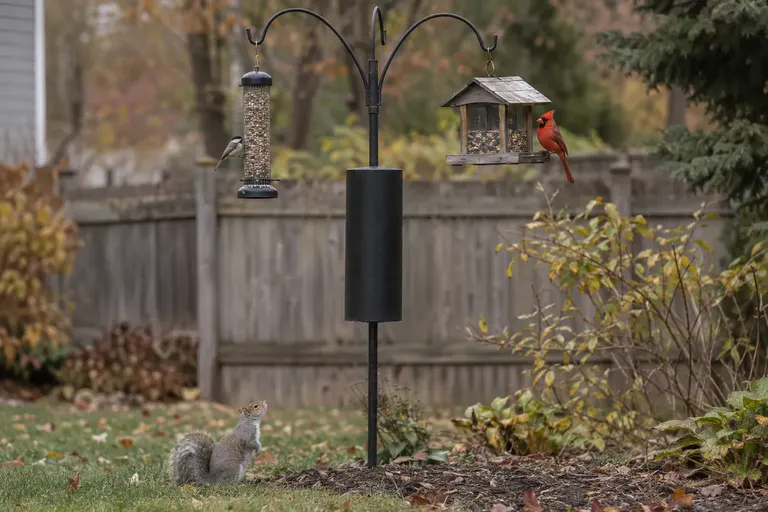
- Place it near cover. Put the feeder about 10 feet from shrubs or trees, the distance Project FeederWatch describes as a good compromise between safety from hawks and protection from squirrels and cats. Evergreens are ideal.
- Scatter a little seed on the ground. The Cornell Lab suggests sprinkling seed near a new feeder to make the station more visible while birds discover it. Use only what will be eaten in a day.
- Use an open feeder at first. A platform tray or hopper where seed is easy to see gets noticed faster than a closed tube.
- Offer water. A bird bath nearby draws birds that may then notice the feeder.
- Be patient. Keep the feeder filled with fresh seed so birds that find it keep returning.
Are birds visiting when you are not looking?
Before you change anything, make sure birds are really absent. Many people check the feeder at midday, when activity is often lowest, and miss the early morning rush. Signs that birds are already using the feeder:
- The seed level drops over several days, and not only after rain or squirrel visits.
- Hulls pile up on the tray or the ground below.
- Droppings appear on perches or the tray.
- You hear chickadee or titmouse calls near the feeder even when you do not see birds on it.
Watch for 15 minutes shortly after sunrise and again in the late afternoon. If you want a record without the wait, a feeder camera or a trail camera pointed at the feeder can show exactly who visits and when. If the seed is going down but you never see birds, check for squirrels, chipmunks or, overnight, flying squirrels and raccoons.
Is your feeder in the wrong place?
Location is the most common fixable problem. Birds weigh food against danger every time they approach a feeder.
Too exposed
A feeder in the middle of an open lawn, with no cover within 20 or 30 feet, forces birds to cross open ground where hawks can catch them. Many small birds will not do it, or will visit only briefly. The Cornell Lab suggests that if birds avoid a feeder because it seems too exposed, you should move it to a calmer, more sheltered spot.
Too close to cover
A feeder inside a shrub or right beside dense bushes may look inviting, but cats can hide there. Birds that have learned the danger may avoid it.
Too busy or noisy
Feeders next to a busy door, a dog run, a play area or a driveway see more disturbance. Project FeederWatch recommends a quiet area that is still easy for you to see and refill.
Too windy
A feeder that swings hard in the wind is harder for birds to land on, and spilled seed blows away. Pick a spot sheltered from the prevailing wind.
For distances, heights and window safety, read our guide on where to put a bird feeder.
Is it the food?
Cheap mixes
Many low-cost seed mixes are padded with milo, wheat, oats or red millet. Most feeder birds pick through these for the sunflower and toss the rest on the ground. If your feeder is full of seed that never goes down, the mix may be the reason.
Stale or spoiled seed
Seed goes bad. New Jersey Audubon advises that if seed has not been touched in about a month, it is time to throw it out and refill with fresh seed. Penn State Extension notes that seed left all summer in a garage often develops mold or gets infested by insects. Check the seed for clumping, mold, a musty smell, webbing or insects. Our guide on how to store bird seed explains how to keep it fresh.
Wrong food for the birds nearby
If you have only a nyjer feeder, you are mostly inviting goldfinches, and they may not be in your area or may be feeding on wild seeds. If you offer only suet, you are mostly inviting woodpeckers, nuthatches and chickadees.
The one seed to start with
For a new feeder, black oil sunflower seed is the safest choice. It attracts the widest range of common feeder birds, including chickadees, titmice, nuthatches, cardinals, finches, jays and many woodpeckers. The thin shell is easy for small birds to crack, and the kernel is high in fat. Read more in our guide to black oil sunflower seed.
Is it the season?
Feeder traffic rises and falls through the year, and a quiet feeder is often normal.
Late spring and summer
Many feeder birds switch to insects while they are raising young, and natural food is plentiful. Feeder visits often drop.
Late summer and early fall
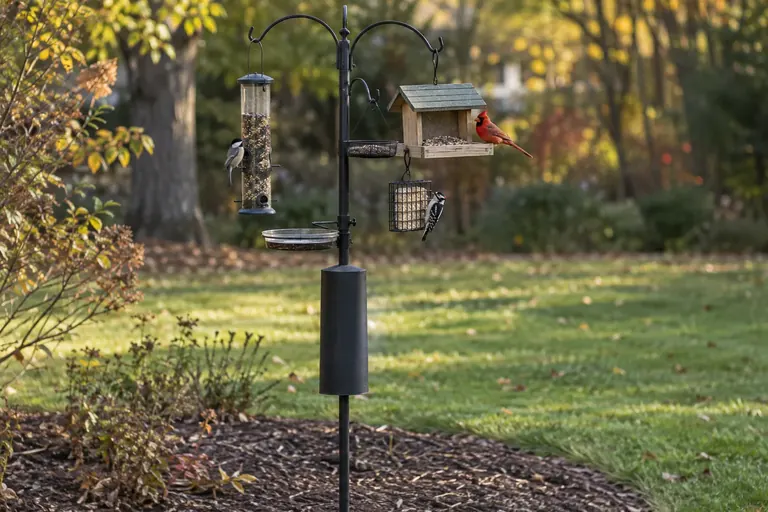
Mass Audubon notes that birds may seem to disappear in early fall. Birdsong has largely stopped by late summer, and after leaving breeding territories, birds gather into roaming feeding flocks. Meanwhile, berries, weed seeds and acorns and other nuts are abundant. Birds concentrate where wild food is richest and may leave some yards for a while.
Mild winters
New Jersey Audubon points out that warm weather lowers birds’ energy needs, and without snow and ice, natural food stays uncovered and accessible. Mild spells can also keep insects active. All of this means fewer feeder visits.
Cold, snowy weather
Penn State Extension notes that feeder use is heaviest when temperatures are cold and when natural food is covered by ice or snow. If you set up a feeder in fall, the first hard cold snap often brings a noticeable jump in visitors. Our guide to winter bird feeding explains what birds need most in cold weather.
Year-to-year swings
Bird numbers also change from year to year. Mass Audubon describes bird populations as extremely dynamic, affected by breeding success, weather, food and predators. A poor acorn crop, for example, can push Blue Jays to move farther south. A quiet year at your feeder does not always mean you are doing something wrong.
Is a predator scaring birds away?
If birds were visiting and then suddenly stopped, think predators first.
Hawks
Cooper’s Hawks and Sharp-shinned Hawks hunt small birds, and a feeder full of songbirds is an easy place to look for a meal. When a hawk is around, birds stay hidden. Mass Audubon notes that birds make themselves scarce when threatened by hawks, and that a Sharp-shinned Hawk working a feeder is usually temporary before the hawk moves on. You can help by making sure dense cover is close enough for birds to escape into. Our guide on how to stop hawks from hunting at your feeder covers what helps.
Cats
Outdoor cats are a serious threat. Project FeederWatch notes that cats kill hundreds of millions of birds each year. Birds that see a cat near a feeder will avoid it. Keep pet cats indoors, and do not place feeders beside shrubs where cats can hide.
Other disturbance
New construction, a new dog, heavy yard work or even a repositioned lawn chair can make birds wary for a few days.
Is the feeder itself the problem?
Sometimes the feeder design gets in the way.
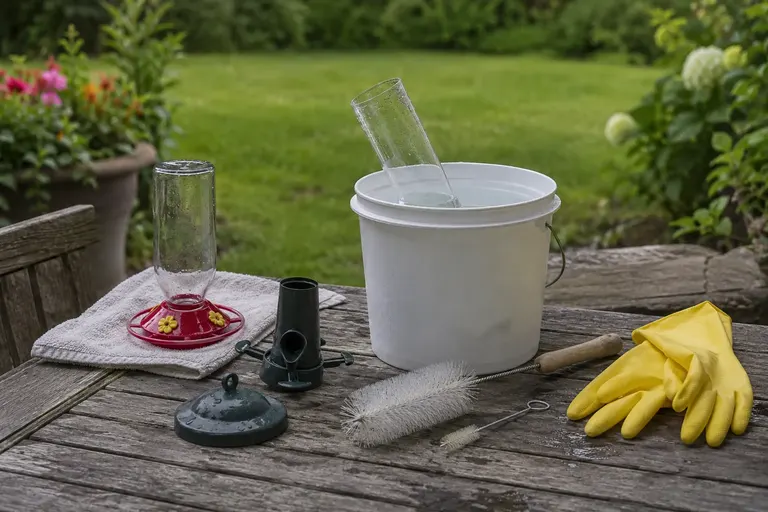
- Dirty or moldy feeders. Birds may avoid spoiled food, and dirty feeders spread disease. Clean seed feeders about every two weeks, as the Cornell Lab recommends. See how to clean a bird feeder.
- Clogged ports. Wet seed can pack into the bottom of a tube and block the ports. Birds see a full feeder but cannot get food.
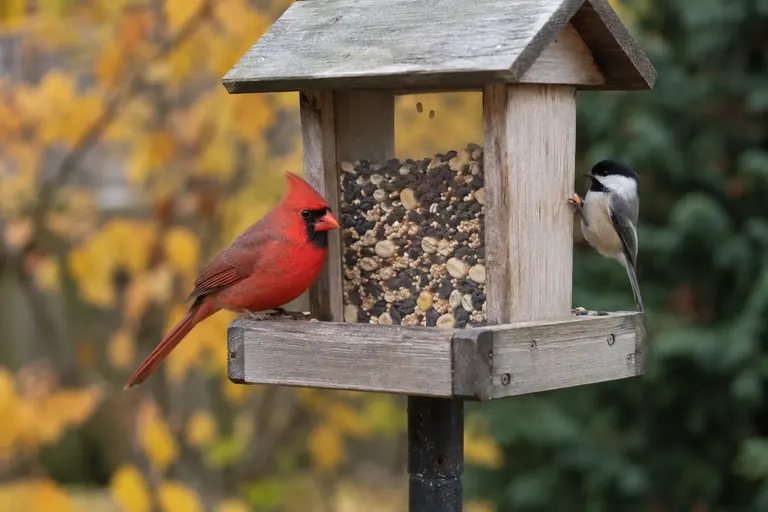
- Perches that are too short or too few. Cardinals and other larger birds prefer a stable ledge or tray.
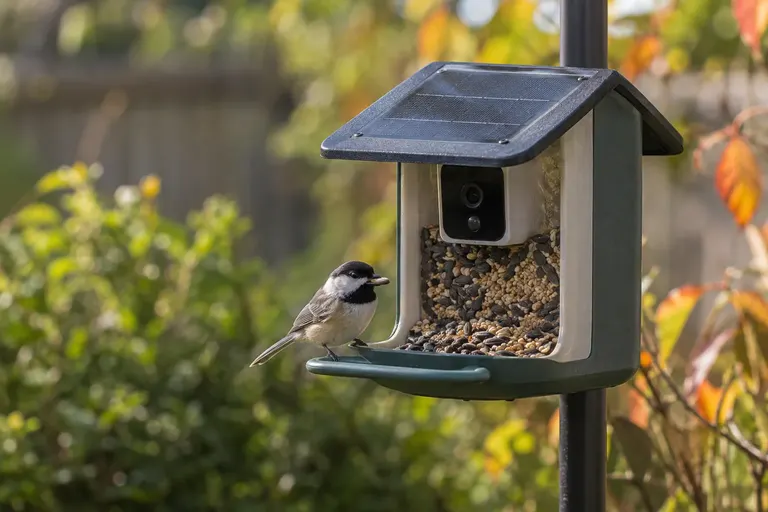
- A new, shiny or unusual feeder. A camera feeder, a brightly colored feeder or a feeder with moving parts can make birds cautious at first.
- A squirrel-proof mechanism set too sensitively. If a weight-activated feeder closes for heavier birds, they give up.
Are other birds keeping them away?
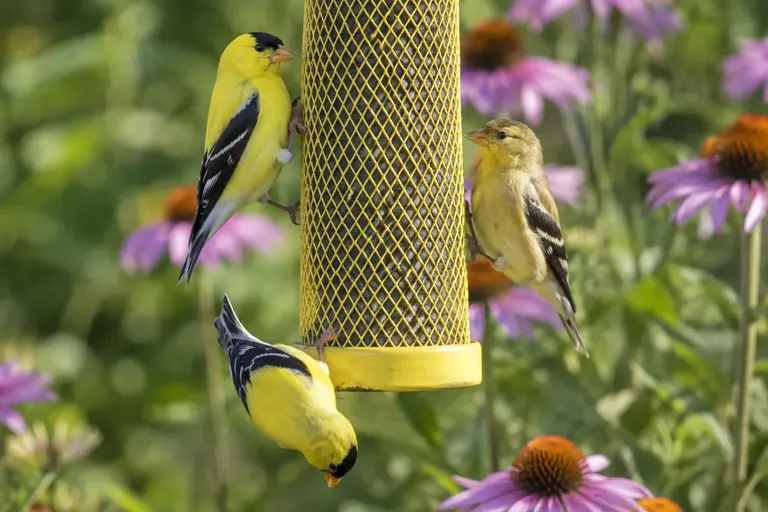
Aggressive or crowding species can push smaller birds off a feeder.
- European Starlings and Common Grackles often arrive in groups and empty a feeder quickly. Our guide to keeping starlings and grackles off feeders covers food and feeder changes that help, such as switching to safflower or using caged feeders.
- House Sparrows can dominate some feeders, especially those filled with millet or cracked corn.
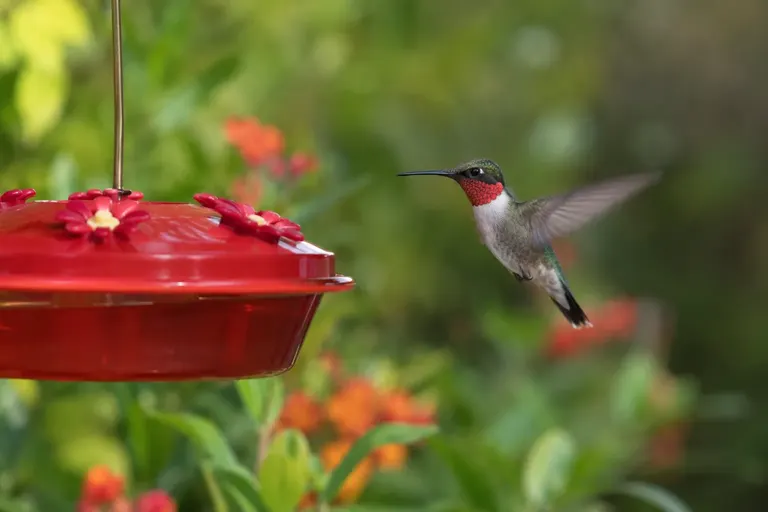
- Hummingbirds chase each other from feeders. Several feeders out of sight of each other let more birds feed.
Could the birds nearby be in decline?
For some species, yes. A 2019 study led by scientists at the Cornell Lab of Ornithology, published in the journal Science, estimated that North America has lost nearly 3 billion breeding birds since 1970. New Jersey Audubon also points to significant population declines in many species from large-scale causes like habitat loss. You cannot fix that from your yard alone, but you can help locally by planting native shrubs and trees, keeping cats indoors, making windows safer and keeping feeders clean.
Once birds find it: how to draw more species
After the first regulars settle in, you can widen the mix by adding feeder types and foods that match different feeding styles. Mass Audubon’s list of foods is a good starting framework:
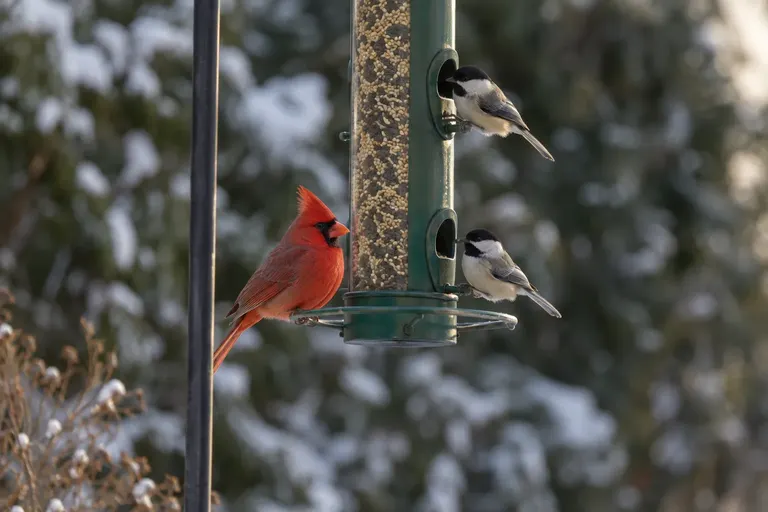
- Black oil sunflower seed in a tube or hopper for chickadees, titmice, nuthatches, cardinals and finches.
- Nyjer seed in a finch feeder for American Goldfinches and, in some winters, Pine Siskins and redpolls.
- White proso millet on a low platform or scattered near cover for ground feeders like juncos, sparrows and doves.
- Safflower for cardinals and sparrows, with the bonus that many squirrels and blackbirds are less interested in it.
- Suet for woodpeckers, nuthatches and chickadees. Mass Audubon suggests offering suet in winter, since it can turn rancid in warm weather.
- Sugar water in spring and summer for hummingbirds, placed in shade and changed every few days.
Add one new feeder at a time and give each a few weeks. Spacing feeders apart also reduces crowding and the spread of disease, which Audubon recommends.
Should you feed birds year-round?
In most places, yes, if you keep feeders clean. Mass Audubon notes that year-round feeding is fine in most communities, and that the instinct to migrate is largely hard-wired, so a feeder does not stop birds from migrating on schedule. The main exception is bear country, where Mass Audubon advises taking feeders down during the months bears are active. Expect summer traffic to be lighter than winter traffic either way.
Does feeder color or style matter?
Less than food, placement and cover. Many feeder birds use plain tube, hopper and tray feeders of any color. What matters more is how easy the seed is to see and reach. Open trays and hoppers show seed clearly, which helps birds notice a new station. Hummingbird feeders are the exception: red parts on the feeder help draw hummingbirds, which is why the nectar itself does not need red dye. If you are starting out, pick a simple hopper or tray that is easy to clean and refill, and put your effort into location and fresh seed.
Troubleshooting step by step
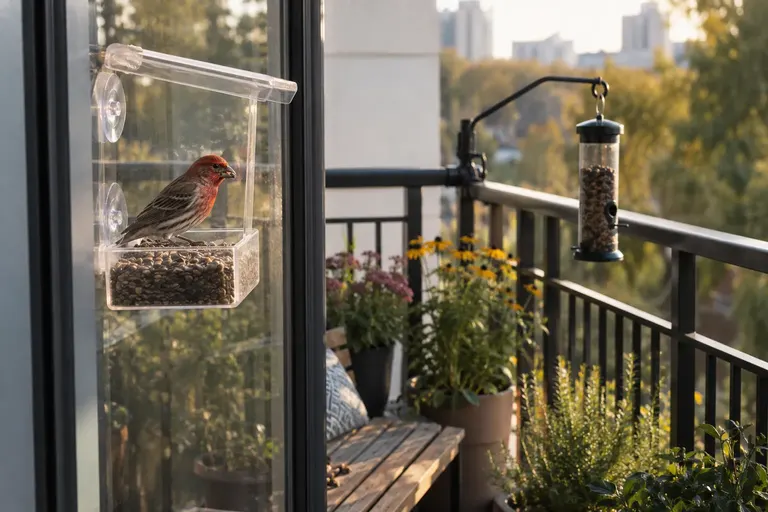
Work through this list if your feeder has been up for more than two weeks with little or no activity:
- Check the seed. Is it fresh, dry and clean? If in doubt, replace it with black oil sunflower seed.
- Check the feeder. Are ports clear? Is it clean? Can birds actually reach the seed?
- Check the spot. Is it about 10 feet from cover? Quiet? Sheltered from wind?
- Check for predators. Have you seen a hawk, cat or new dog nearby?
- Check the season. Is it late spring to early fall, or a mild winter spell? Low traffic may be normal.
- Make it visible. Scatter a small amount of seed nearby and add water.
- Give it time. Keep the feeder full and fresh, and watch at the busy times: early morning and late afternoon.
Common mistakes that keep birds away
- Moving the feeder every few days. Birds need a chance to learn where it is. Pick a good spot and leave it.
- Letting the feeder run empty. Birds that find an empty feeder repeatedly may stop checking it.
- Buying the cheapest mix. More filler means less food birds want.
- Leaving old seed in place. Stale, damp seed drives birds away and can make them sick.
- Hanging it in the open to see it better. What is easy for you to see is also easy for a hawk.
- Expecting summer to look like winter. Seasonal lulls are normal.
What a healthy first month looks like
In many yards, the first visitors are chickadees, titmice, nuthatches, House Finches or cardinals, often within the first few weeks. Once a few birds use the feeder regularly, others tend to follow. Visitors usually peak in the early morning, drop off at midday and pick up again in late afternoon.
If you have been patient for several weeks, used fresh black oil sunflower seed, put the feeder near cover and ruled out predators, and birds still do not come, the problem is usually habitat. Adding native shrubs, a brush pile and water will help more than a new feeder. Our guide to backyard birding shows how to build a yard birds want to visit.
Sources
- Where Are the Birds? (Mass Audubon)
- Why are there no birds at my feeders? (New Jersey Audubon)
- Attracting Birds to a Feeder (Penn State Extension)
- Where to Put Your Bird Feeder (Cornell Lab, All About Birds)
- Feeder Placement (Project FeederWatch)
- Feeding Birds (Project FeederWatch)
- How to Clean Your Bird Feeder (Cornell Lab, All About Birds)
Frequently asked questions
How long does it take birds to find a new feeder?
It varies widely. Some yards see chickadees or finches within days, while Mass Audubon notes it is normal for weeks or even months to pass before birds recognize and frequent a new feeding station. Placing the feeder near shrubs, using black oil sunflower seed and scattering a little seed on the ground can speed discovery.
Why did birds suddenly stop coming to my feeder?
Common causes are a hawk hunting nearby, abundant natural food in late summer and fall, mild weather, spoiled or moldy seed, a dirty feeder, or a cat that has started lurking. Sharp-shinned Hawks and Cooper's Hawks often make birds scarce for days. Check the seed, clean the feeder and watch for predators.
What is the best seed to attract birds to a new feeder?
Black oil sunflower seed attracts the widest range of common feeder birds, including chickadees, titmice, nuthatches, cardinals, finches and many woodpeckers. Its thin shell and high fat content make it easy and rewarding to eat. Avoid cheap mixes heavy in milo, wheat or red millet, which many feeder birds leave behind.
Should I put seed on the ground to attract birds to a new feeder?
A small amount helps. The Cornell Lab suggests sprinkling seed on the ground near a new feeder to make the station more visible while birds discover it. Scatter only what birds will eat in a day, since leftover seed can mold and attract rodents.
Do birds stop using feeders in summer?
Many feeder birds visit less in late spring, summer and early fall because insects, seeds and fruit are abundant, and many species eat insects while raising young. Penn State Extension notes feeder use is heaviest in cold weather when natural food is covered by snow or ice. Quiet summer feeders are normal.