Are Smart Bird Feeders Worth It?
Are smart bird feeders worth it? Yes, if you want close-up photos and species alerts and have strong 2.4 GHz Wi-Fi. Here is who benefits and who should skip.
If you buy through links on this page we may earn a commission, at no cost to you. It never decides what we recommend. How we earn
In this article
- Quick answer: who should buy a smart bird feeder?
- How we researched this guide
- What does a smart bird feeder actually do?
- What are the real benefits of a smart bird feeder?
- What are the downsides of smart bird feeders?
- Can a smart feeder help with community science?
- Is a smart bird feeder safe for birds?
- Smart feeder vs regular feeder: side-by-side
- Birdbuddy vs Birdfy: which smart feeder platform fits you?
- How to decide in five questions
- Where to put a smart bird feeder
- Common mistakes new smart feeder owners make
- So, are smart bird feeders worth it?
- Sources
- Gear mentioned in this guide
- Frequently asked questions
Yes, a smart bird feeder is worth it for most backyard birders who want to see birds up close and learn what they are, as long as your 2.4 GHz Wi-Fi reaches the feeder. It is not worth it if your main goal is feeding lots of birds cheaply, if your signal drops at the edge of the yard, or if you will resent a membership. The camera, not the feeder, is what you are paying for.
Quick answer: who should buy a smart bird feeder?
- Buy one if you enjoy photos and short videos, want help identifying visitors, have limited mobility or limited time outdoors, or want to share sightings with family.
- Think twice if your feeder spot is more than a room or two away from your router, you already struggle with squirrels, or you hate charging devices.
- Skip it if you want to feed a big flock of finches, jays and doves on a budget. A standard tube or hopper feeder holds more seed and costs far less.
Based on manufacturer specifications, published reviews and patterns in verified owner feedback, the biggest predictor of satisfaction is not image quality. It is whether the feeder stays connected.
How we researched this guide
We have not physically tested these feeders. This guide is built from manufacturer spec pages and support documentation for the Birdbuddy and Birdfy lines, independent expert reviews, recurring themes in verified owner reviews, and bird-feeding guidance from the Cornell Lab of Ornithology and Audubon. Where a spec could not be confirmed on a manufacturer page, we left it out.
What does a smart bird feeder actually do?
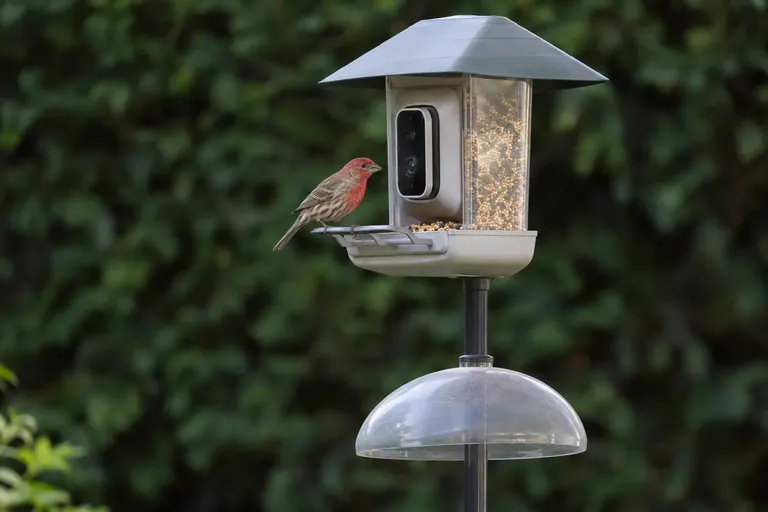
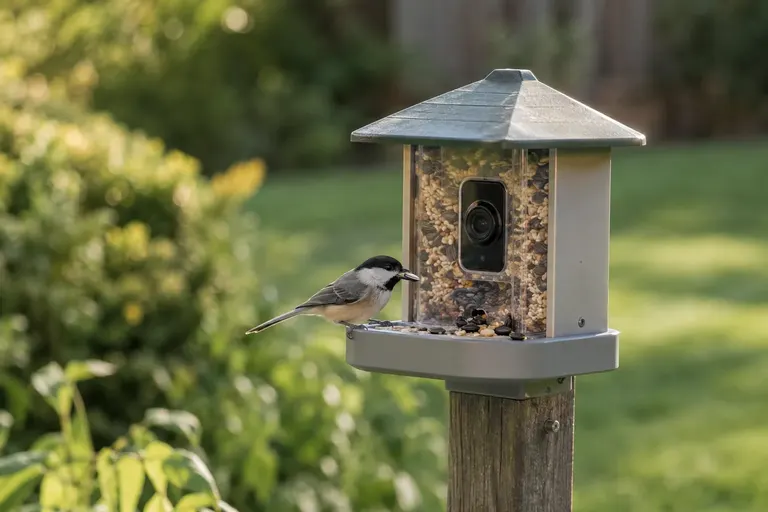
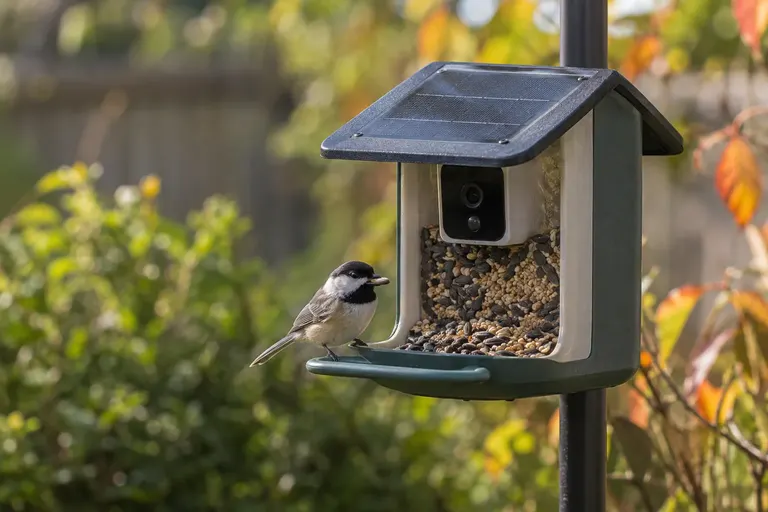
A smart bird feeder is a seed feeder with a built-in camera that wakes when a bird lands. It takes photos or video clips, uploads them over Wi-Fi, and sends a notification to your phone. Most add AI species identification, either free, by subscription or as a one-time purchase.
The typical feature set includes:
- Motion-triggered capture. The camera sleeps to save battery and wakes when a bird lands on the perch.
- Photos and video. Current flagship models record 2K video. The Birdbuddy Pro Solar pairs 2K video with 5MP photos.
- Species identification. An AI model labels the bird. Birdfy says its system recognizes more than 6,000 species.
- Live view. You can open the camera from your phone and watch in real time.
- Cloud storage and sharing. Clips live in the app, and some plans let family members follow along.
What a smart feeder does not do is make birds appear. The food, the placement and the surrounding habitat still decide who visits. If birds ignore an ordinary feeder in your yard, a camera will not change that. Our guide to why birds aren’t coming to your new feeder covers the real causes.
What are the real benefits of a smart bird feeder?
You see details you would otherwise miss
A bird at a window feeder is a quick glance. A bird 6 inches from a lens is a portrait. Owners commonly report noticing field marks for the first time: the red nape on a male Downy Woodpecker, the streaked flanks of a House Finch, the pale wing bars of a Pine Siskin in winter. For people learning birds, that close view is a real teaching tool. Saved clips become study material you can replay as often as you like.

You get a record of who visits and when
Because every visit is logged, patterns show up. You may learn that your chickadees come early, that a Red-bellied Woodpecker visits mid-afternoon, or that juncos arrive with the first cold snap. That kind of record used to take a notebook and a lot of patience.
It helps people who cannot sit outside
For older birders, people with mobility limits, or anyone who works long hours, a camera feeder turns a few minutes on the phone into a birding session. This is one of the strongest arguments for buying one, and it is a recurring theme in owner feedback.
It is easy to share
Grandchildren who would never sit still at a window will happily scroll through a feed of cardinal photos. Birdbuddy leans hardest into this, with postcards and a Family Premium tier that adds guest access to live streams.
What are the downsides of smart bird feeders?
Wi-Fi is the number one complaint
Both Birdbuddy and Birdfy connect over 2.4 GHz Wi-Fi only. The 2.4 GHz band travels farther than 5 GHz, but exterior walls, brick, stucco and distance all weaken it. A feeder that works on the patio may drop offline at the back fence. Birdfy also states that the microSD slot on its feeder is intended only for manufacturer testing, so there is no local fallback if the connection fails.
Check before you buy: stand where the feeder will hang and run a speed test on your phone while it is set to your 2.4 GHz network. If the signal is weak there, plan on a mesh node or outdoor-rated extender, or choose a closer spot.
Batteries need attention
Battery life depends on how busy the feeder is, how cold it gets and how much sun reaches any solar panel. Birdbuddy rates the Pro Solar at up to one month per charge. Birdfy rates its feeder at up to three months per charge, with a solar panel available as an option. Owners commonly report shorter runs in winter and at busy feeders. Solar helps a lot, but only if the panel gets several hours of direct sun.
Subscriptions split the features
This is where many buyers feel surprised. Features are not all included with the hardware:
- Birdbuddy: the free tier includes photo and sound ID, manual AI recognition, pet alerts and a daily Nature Chat prompt. Premium adds automatic AI+ recognition, 2K Ultra HD video, sick or injured bird alerts, the ability to name returning birds and discounts on add-ons. Family Premium extends this to up to 10 guests.
- Birdfy: live view, motion alerts, push notifications and 30-day rolling cloud storage are free, plus 5GB of permanent storage for bookmarked clips. AI species identification is paid, either by subscription or as a one-time lifetime purchase on select models.
Plans change often, so check the current plan page before buying. If avoiding fees matters most, compare the free tier of each brand line by line before you buy.
AI identification is good, not perfect
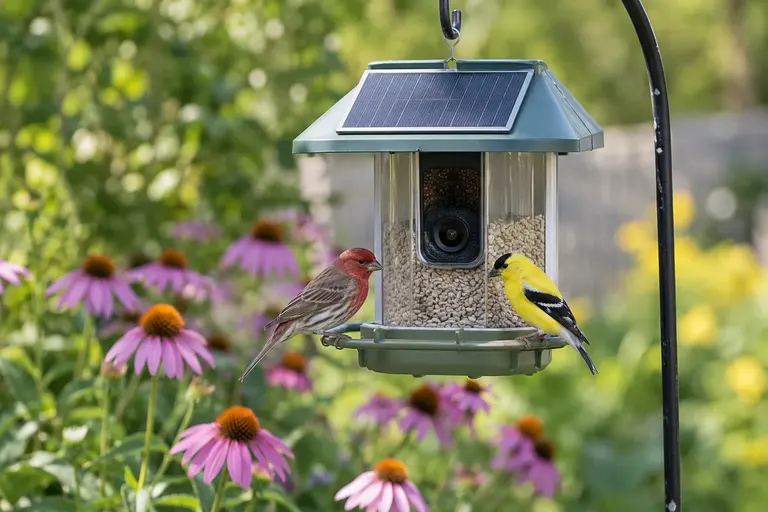
Independent reviewers and owners commonly report that AI labels are reliable on common species and weaker on similar-looking ones. Classic look-alike pairs that trip up people and software alike include House Finch and Purple Finch, and Downy and Hairy Woodpecker. Birds that land at the edge of the frame or face away from the lens are also harder to identify. Treat the label as a first guess and confirm with a field guide or the Merlin app. Our comparison of bird ID apps explains which tools help most.
Smaller seed capacity
Camera feeders hold much less seed than a standard hopper. The Birdbuddy Pro Solar holds 3.8 cups (0.9 L). The Birdfy Feeder holds 50 oz (1.5 L). A busy winter feeder can empty either in a day or two, so expect frequent refills.
Squirrels still come
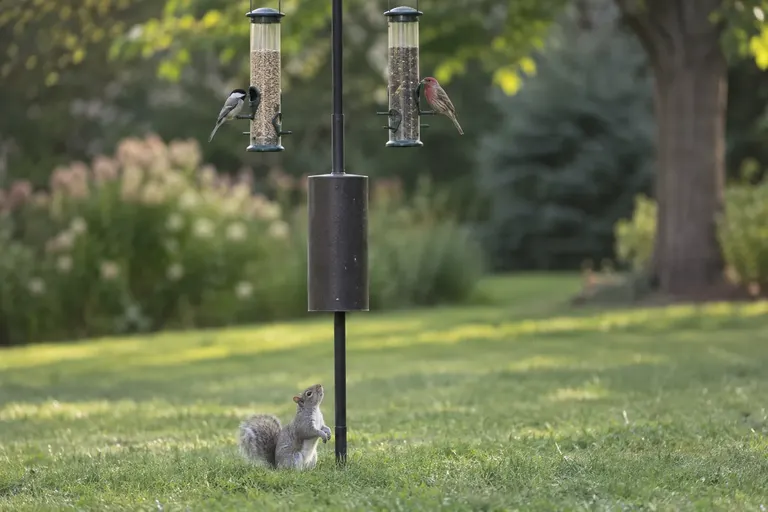
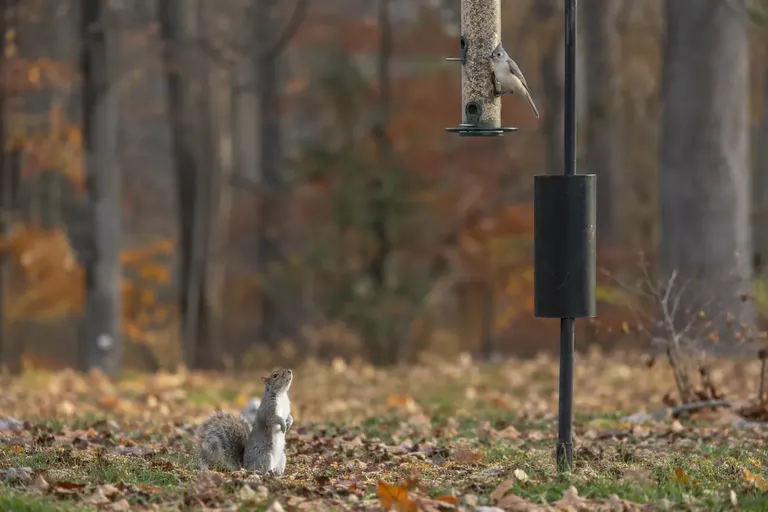
A camera does not stop squirrels. Some owners enjoy squirrel videos, but others find the notifications and seed loss frustrating. Both brands offer accessories, and a pole with a baffle does more than any feeder design. See how to keep squirrels off bird feeders for the setup that works.
Cleaning takes more care
You cannot drop a camera feeder in the dishwasher or soak it in bleach. The camera module has to come out first, and the seed tray needs regular scrubbing to prevent Salmonella and other diseases. The Cornell Lab recommends cleaning seed feeders about every two weeks, more often in wet weather or heavy use. Our guide on how to clean a bird feeder walks through a camera-safe routine.
Can a smart feeder help with community science?
It can, with care. Projects like eBird and Project FeederWatch depend on accurate counts, and a camera log is a useful memory aid when you fill out a checklist. FeederWatch runs each winter, with its season starting November 1, and asks participants to count the most individuals of each species seen at once during a count period. A camera makes it easier to catch brief visitors you would otherwise miss.
Two cautions keep your data useful:
- Confirm the species yourself. Do not submit an AI label you have not checked, especially for rare or out-of-season birds. Reviewers flag unusual records, and a clear photo is the best support.
- Do not double count. One chickadee visiting 40 times is still one chickadee. Count the most birds of a species visible in a single frame or moment, not the number of notifications.
Used this way, a feeder camera turns casual watching into data that helps researchers track how bird populations change. Our guide on how to use eBird explains checklists step by step.
Is a smart bird feeder safe for birds?
A camera feeder is as safe as any other feeder, which means safety depends on how you run it. The camera itself does not harm birds. The risks are the same ones that come with all bird feeding:
- Disease. Crowded, dirty feeding surfaces can spread Salmonella and House Finch eye disease. Audubon recommends cleaning feeders every two weeks or so with a solution of one part bleach to nine parts water, and more often if you see sick birds. On a camera feeder, remove the camera module before using any liquid.
- Window strikes. Keep the feeder within 3 feet of glass or well away from it, and mark nearby windows.
- Cats. Outdoor cats kill enormous numbers of birds each year, according to the Cornell Lab. Keep feeders away from spots where a cat can hide close by.
- Spoiled seed. Small camera trays trap moisture. Toss any clumped or moldy seed and refill with fresh food.
Batteries and electronics are sealed on weather-rated models, and both major brands list outdoor ratings: IP67 for the Birdbuddy Pro Solar and IP65 for the Birdfy Feeder.
Smart feeder vs regular feeder: side-by-side
| Factor | Smart camera feeder | Standard tube or hopper feeder |
|---|---|---|
| Main purpose | Photos, video, ID and alerts | Feeding birds |
| Seed capacity | Small (about 1 to 1.5 L on major models) | Often much larger |
| Power | Rechargeable battery, optional or built-in solar | None |
| Connectivity | 2.4 GHz Wi-Fi required for useful function | None |
| Ongoing cost | Optional membership for some features | Seed only |
| Cleaning | Remove camera first, hand wash | Many are dishwasher or bleach-soak friendly |
| Learning value | High, close-up photos and logs | Depends on your binoculars and time |
| Squirrel resistance | Low without a baffle | Varies, weight-activated models do well |
Birdbuddy vs Birdfy: which smart feeder platform fits you?
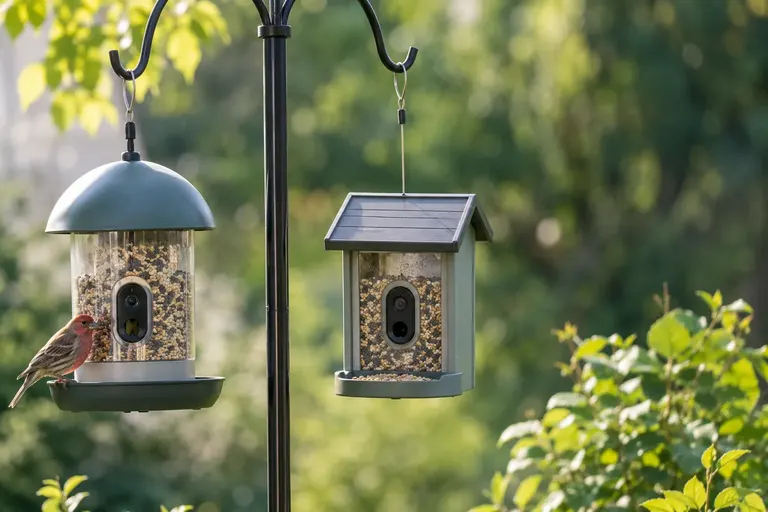
These two brands dominate the category, and they take different approaches. For a full breakdown, read our Bird Buddy vs Birdfy comparison.
Birdbuddy Pro Solar
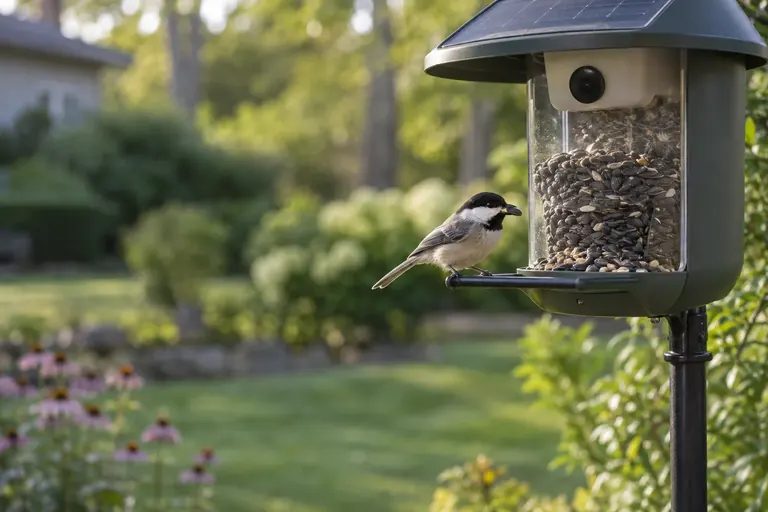
The Birdbuddy Pro Solar has a solar roof built in, so there is no separate panel to mount. Birdbuddy lists 2K video, 5MP photos, a 1/2.7-inch sensor with HDR, and a 122-degree field of view. Seed capacity is 3.8 cups, and the 3,800 mAh battery is rated for up to one month per charge. It is IP67 rated and specified for -5°F to 120°F.
Strengths: polished app, shareable postcards, wide field of view that catches more of the perch, clean all-in-one solar design.
Drawbacks: the most complete experience sits behind Premium, and independent reviews note that the AI can be selective about which visits become postcards.
Skip it if: you want the fullest feature set with no ongoing membership, or you need a large seed reservoir.
Birdfy Feeder (AI version)
The Birdfy Feeder records 2K in high-quality mode and 1080p in standard mode. It holds 50 oz (1.5 L) of seed and runs on a 5,200 mAh battery rated for up to three months. It is rated IP65 and connects over 2.4 GHz Wi-Fi. Birdfy offers AI identification by subscription with a 7-day trial, or as a lifetime purchase so there is no recurring fee.
Strengths: free live view and 30-day cloud history, bigger seed capacity, a real path to AI ID without a subscription.
Drawbacks: solar is an add-on on this version, and there is no usable local storage.
Skip it if: you want the most social, share-first app, or you need local recording for a spotty connection.
How to decide in five questions
- Does your 2.4 GHz Wi-Fi reach the spot? Test it with your phone first. If not, fix that or pick a different spot.
- Will you pay for AI features? If no, look at models with a lifetime AI option or free ID features, and read our no-subscription roundup.
- How much sun does the spot get? Several hours of direct sun make solar worthwhile. Deep shade means regular charging.
- Do you have squirrels? If yes, budget for a pole and baffle, not just the feeder.
- Is the goal learning or feeding? For learning and photos, a camera wins. For feeding volume, a standard feeder wins, and you can run both.
Where to put a smart bird feeder
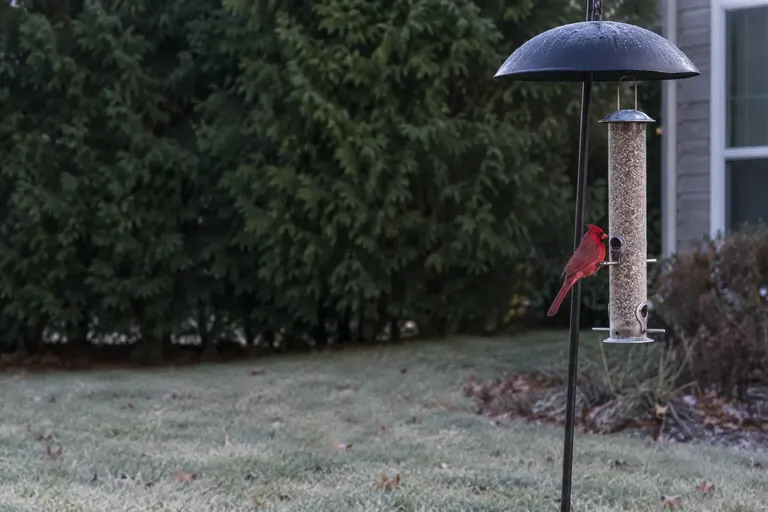
Placement matters more with a camera because the lens needs a clean background and steady light. The Cornell Lab suggests placing feeders about 10 feet from trees and shrubs, close enough for birds to dart to cover but far enough to limit squirrels and ambushing cats. For window safety, Cornell and Audubon advise keeping feeders within 3 feet of a window, where a bird cannot build up dangerous speed. Cornell has also noted that making nearby windows bird-friendly with markings matters more than exact distance.
A few camera-specific tips:
- Face the lens away from direct sun. Morning or afternoon sun straight into the lens washes out photos. North-facing is often easiest.
- Keep the background simple. A plain hedge or lawn behind the perch keeps the focus on the bird.
- Mount it solidly. A pole or sturdy bracket gives steadier video than a swinging hook.
Our feeder camera setup guide covers angles and focus in more detail, and our placement guide covers distance, height and cover.
Common mistakes new smart feeder owners make
- Skipping the Wi-Fi test. Most setup frustration traces back to a weak signal at the feeder spot.
- Using cheap mixed seed. Filler grains like milo draw fewer species. Black oil sunflower seed attracts the widest range of feeder birds.
- Hanging it in full sun facing the lens. Harsh light and backlight ruin photos.
- Ignoring cleaning. Seed trays on camera feeders collect damp husks. Clean regularly and keep the ground below tidy.
- Trusting every AI label. Confirm unusual IDs before logging them to eBird.
- Expecting instant visitors. Birds can take days or longer to trust any new feeder.
So, are smart bird feeders worth it?
For most people who already enjoy feeder birds, yes. A camera feeder turns quick glances into close-up portraits and a record of who visits. It is also one of the easiest ways to share birding with family who are not outdoors with you.
The value drops fast if the connection is unreliable, if you would pay for a membership you resent, or if you mainly want to feed a crowd. In those cases, a quality standard feeder and a decent pair of binoculars by the window is the better buy. If you are ready to shop, our best bird feeder cameras roundup compares the wider field, including budget and subscription-free options.
Sources
- Birdbuddy Pro Solar product page and specifications
- Birdbuddy memberships: free vs Premium features
- Birdfy Feeder product page and specifications
- Does Birdfy need a subscription? (Birdfy)
- Where to Put Your Bird Feeder (Cornell Lab, All About Birds)
- How to Clean Your Bird Feeder (Cornell Lab, All About Birds)
- Help Birds Avoid a Deadly Collision (Audubon)
Gear mentioned in this guide
Birdbuddy Pro Solar
A camera feeder with a built-in solar roof, 2K video and a 122-degree field of view, backed by the most social, shareable app in the category.
- Best for
- Buyers who value an easy app, shareable postcards and a solar roof with no extra parts.
- Skip it if
- You want the fullest feature set without an ongoing membership.
- Video
- 2K, 5MP photos
- Field of view
- 122 degrees
- Seed capacity
- 3.8 cups (0.9 L)
- Wi-Fi
- 2.4 GHz
Birdfy Feeder (AI version)
A larger-capacity camera feeder with 2K video, free 30-day rolling cloud storage and an option to buy lifetime AI identification up front.
- Best for
- Buyers who want species ID without a recurring fee and a feeder that holds more seed.
- Skip it if
- You want local microSD recording; the slot is for factory testing only.
- Video
- 2K (1080p standard mode)
- Seed capacity
- 50 oz (1.5 L)
- Battery
- 5,200 mAh
- Weather rating
- IP65
Frequently asked questions
Do smart bird feeders need a subscription?
Most work without one, but features are split. Birdbuddy's free tier includes photo and sound ID and basic recognition, while Premium adds automatic AI+ recognition, 2K video and sharing extras. Birdfy gives free live view, motion alerts and 30-day rolling cloud storage, with AI species ID sold by subscription or as a one-time lifetime purchase on some models.
Do birds get scared of camera feeders?
Birds may be cautious for the first days, as they are with any new feeder. Once the feeder is filled with a food they like, such as black oil sunflower seed, owners commonly report regular visits. Placing the feeder near cover, about 10 feet from shrubs, helps birds feel safe approaching it.
How accurate is AI bird identification on smart feeders?
It is good on common backyard species and weaker on look-alikes. Independent reviews note that similar species are sometimes mislabeled, and classic look-alike pairs such as Downy and Hairy Woodpecker are hard for software and people alike. Birds partly out of frame are also harder to label. Treat the label as a suggestion and confirm with a field guide or Merlin.
Will a smart bird feeder work without Wi-Fi?
Not usefully. The main models rely on a 2.4 GHz Wi-Fi connection to upload photos and send alerts, and Birdfy notes its microSD slot is for factory testing only. If your signal is weak at the feeder spot, plan on a mesh node or outdoor extender, or choose a spot closer to the house.
How often do you charge a smart bird feeder?
It depends on activity, sun and temperature. Birdbuddy rates the Pro Solar battery at up to one month per charge, and Birdfy rates its feeder at up to three months, with optional solar on some versions. Busy feeders, cold weather and shady spots all shorten real-world battery life.