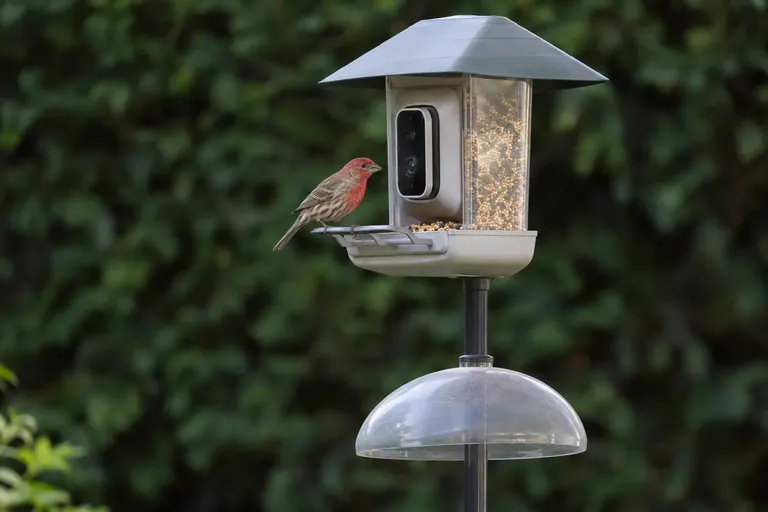
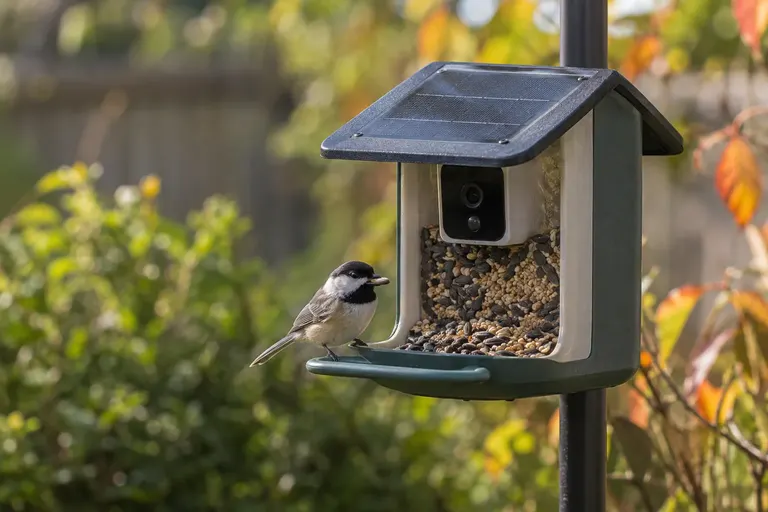
Bird Buddy vs Birdfy: Which Smart Feeder to Buy
Bird Buddy vs Birdfy: Birdbuddy wins on weatherproofing and app polish, Birdfy on free lifetime AI, battery size and range. Specs and subscriptions compared.
If you buy through links on this page we may earn a commission, at no cost to you. It never decides what we recommend. How we earn
In this article
- Quick answer
- Bird Buddy vs Birdfy at a glance
- How we compared them
- Which has better video and photo quality?
- Is the AI bird identification free?
- Which handles weather and winter better?
- Battery life and solar power
- Wi-Fi and setup
- Seed capacity and refilling
- Apps, sharing and community
- Lineup range and price tiers
- Birdbuddy Nook vs Birdfy Feeder Rookie: the entry models
- Older models you will still see for sale
- Build quality, materials and mounting
- Privacy, cloud storage and what happens if the company changes course
- Bird Buddy vs Birdfy: the final verdict
- Common mistakes when choosing between them
- Sources
- Frequently asked questions
Bird Buddy vs Birdfy mostly comes down to climate and subscriptions. For most buyers in cold or wet climates, Birdbuddy is the better smart feeder: its current models carry an IP67 rating, a -5°F operating floor and, on the full-size Birdbuddy Home, dual-band Wi-Fi and built-in solar. Birdfy is the better buy if you want species identification without a membership, since many Birdfy versions include lifetime AI, and it offers bigger batteries plus multi-lens models that Birdbuddy does not.
That is the short answer. The longer one depends on three questions: how cold your winters get, what your Wi-Fi looks like at the feeder, and how you feel about paying monthly for identification.
Quick answer
- Coldest winters: Birdbuddy (IP67, rated to -5°F).
- No identification fees: Birdfy, in a version labeled lifetime AI.
- 5 GHz-only Wi-Fi: Birdbuddy Home.
- Close-up portrait lens: Birdfy Feeder 2 Pro or Duo.
- Longest time between charges without solar: Birdfy, with larger batteries.
- Smallest budget: Birdfy Feeder Rookie or Birdbuddy Nook.
Birdbuddy Home (Birdbuddy 2)
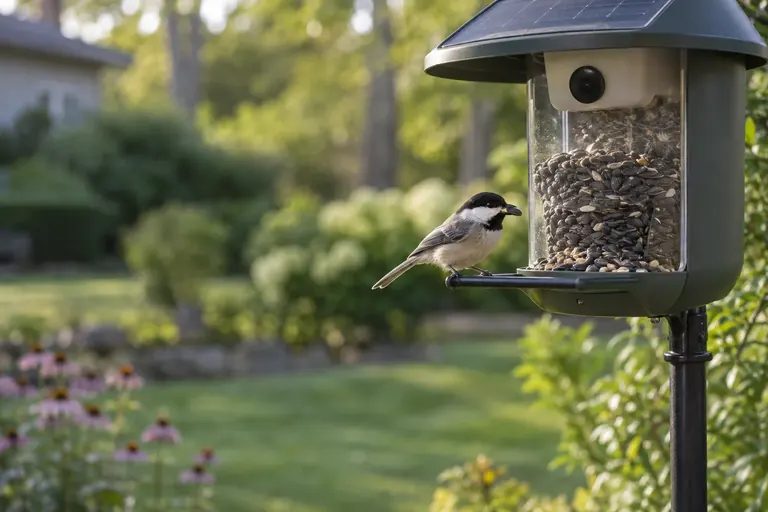
Birdbuddy's current full-size feeder, with a 135-degree view, built-in dual solar panels, 6-cup hopper, IP67 and dual-band Wi-Fi.
- Best for
- Cold climates, 5 GHz-only homes and people who love the Birdbuddy app.
- Skip it if
- You want automatic species ID without paying for Premium.
- Field of view
- 135°
- Seed capacity
- 6 cups (1.4 L)
- Battery
- 3,900 mAh + integrated solar
- Weather rating
- IP67
Birdfy Feeder 2
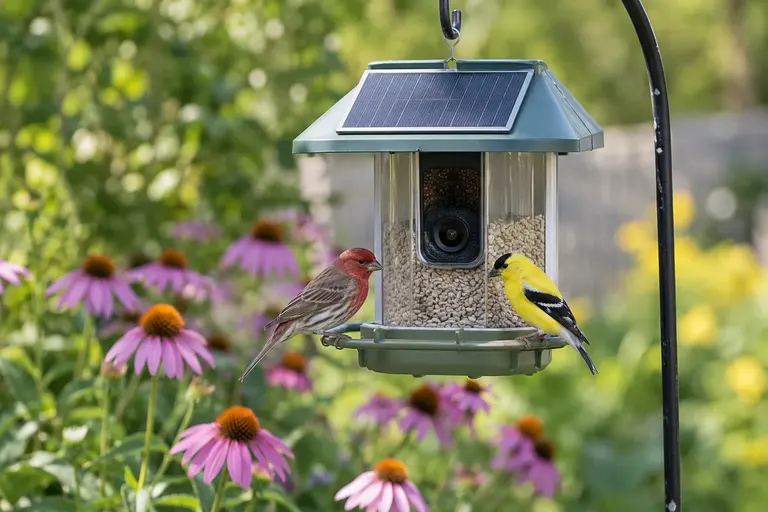
Birdfy's second-generation top-loading feeder with a 9,000 mAh battery, IP66 rating and Pro and Duo versions that add extra lenses and solar.
- Best for
- Buyers who want lifetime AI options and a close-up portrait lens.
- Skip it if
- Winters regularly drop below 14°F, the bottom of Birdfy's rated range.
- Camera
- 1080p wide (single-lens); Pro adds 2K portrait lens
- Battery
- 9,000 mAh
- Weather rating
- IP66
Birdbuddy Nook
Birdbuddy's compact model with the same IP67 rating and 5MP HDR photos in a smaller 3.8-cup body.
- Best for
- Balconies and smaller budgets.
- Skip it if
- Your router only broadcasts 5 GHz.
- Seed capacity
- 3.8 cups (0.9 L)
- Wi-Fi
- 2.4 GHz only
- Weather rating
- IP67
Birdfy Feeder Rookie
A light, simple Birdfy with 1080p video, a 60 fps mode and a battery rated up to four months.
- Best for
- First-time buyers who want free cloud clips.
- Skip it if
- You want 2K clips or two-way audio.
- Seed capacity
- 44 oz (1.3 L)
- Battery
- 5,200 mAh, rated up to 4 months
- Weather rating
- IP66
Bird Buddy vs Birdfy at a glance
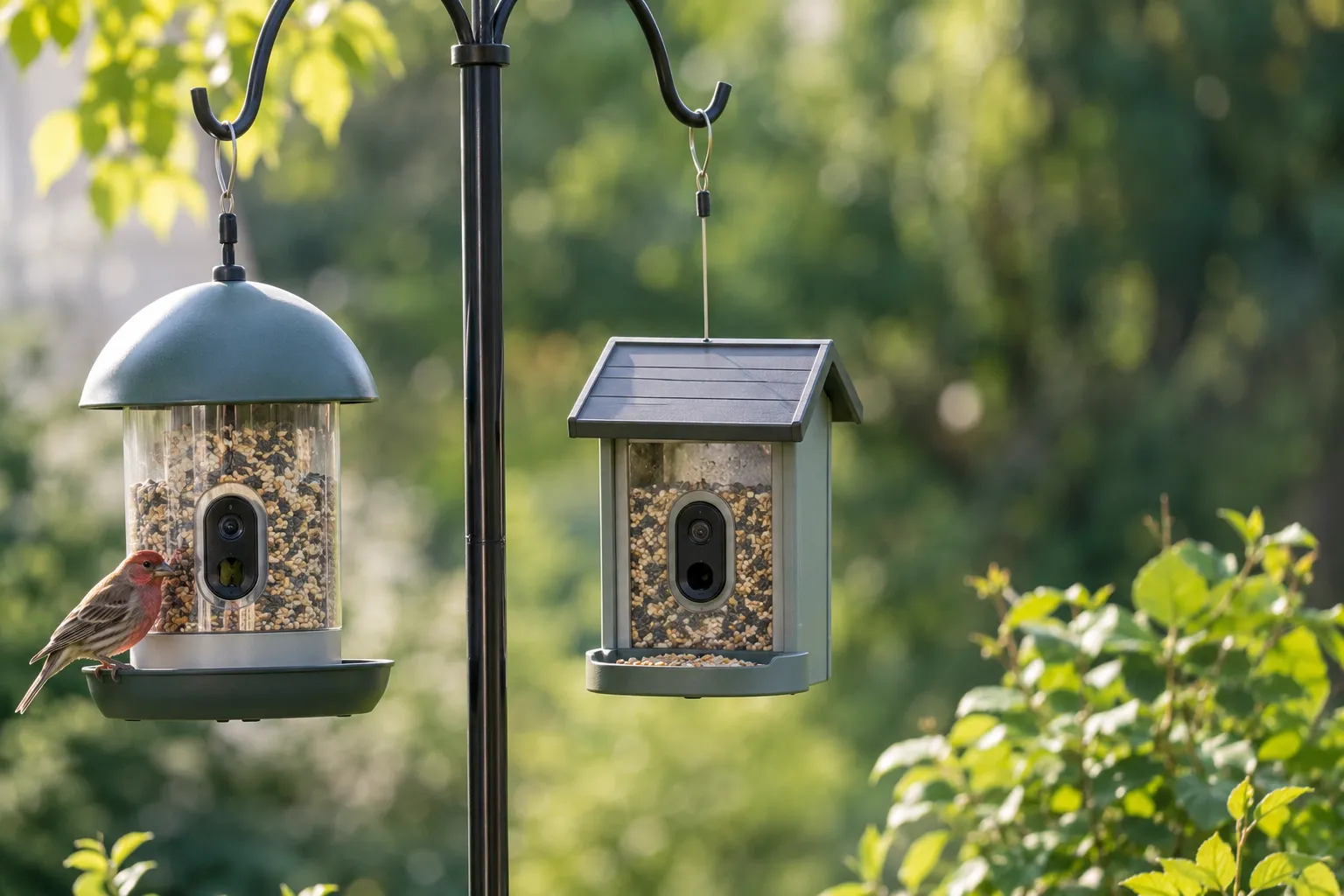
Both brands sell several feeders, so we compare the current flagships head to head and note where the entry models differ. Specs below come from each maker’s product and support pages.
| Feature | Birdbuddy Home (Birdbuddy 2) | Birdfy Feeder 2 |
|---|---|---|
| Camera | 5MP HDR photos; 2K HDR video capability; 1/2.8-inch sensor | 1080p wide lens (single-lens); Pro adds a 2K portrait lens, Duo adds a third |
| Field of view | 135° | Wide angle (degrees not published) |
| Orientation | Rotates for landscape or portrait | Portrait lens on Pro and Duo |
| Seed capacity | 6 cups (1.4 L) | Not published |
| Battery | 3,900 mAh | 9,000 mAh |
| Solar | Built-in dual-panel roof | Included on Pro and Duo; optional otherwise |
| Wi-Fi | 2.4 and 5 GHz | 2.4 GHz |
| Weather rating | IP67 | IP66 |
| Operating temperature | -5°F to 120°F | 14°F to 113°F |
| Audio | Microphone and speaker; sound ID | Varies by model |
| Local storage | No | No (cloud only) |
| Species ID | Manual free; automatic AI+ with Premium | Lifetime free or subscription, by version |
How we compared them
We have not physically tested either feeder yet. This comparison is research-led: we worked from Birdbuddy’s and Birdfy’s spec sheets and support documents, independent expert reviews, and recurring patterns in verified owner feedback. Where a manufacturer did not publish a number, we left it out rather than estimate.
Which has better video and photo quality?
On paper, the two are close at the flagship level, but they take different approaches.
Birdbuddy builds around a single camera module with a 1/2.8-inch sensor, 5MP HDR stills and a wide 135-degree view on the Home. The module rotates, so you can shoot tall portrait frames for phone sharing or wide landscape frames for group scenes. Birdbuddy’s membership documents list HD and 2K videos in the free tier and a “2K Ultra Resolution” mode for Premium members. One independent review of the Birdbuddy 2 at launch found 2K and slow motion were not yet unlocked in firmware, so treat headline video modes as software-dependent.
Birdfy goes multi-lens on the Feeder 2 series. The standard model uses one 1080p wide lens. The Pro adds a second lens, a 3MP portrait camera recording in 2K with auto-tracking, and the Duo adds a third perspective. Birdfy also lists a 100 fps high-frame-rate mode for slow-motion clips on the Feeder 2 series.
Verdict: For close-up portraits, a Birdfy Feeder 2 Pro or Duo gives you a dedicated tight lens. For a single, flexible camera with HDR on bright days, Birdbuddy is the cleaner design. On the base models, the difference is smaller than the marketing suggests; at feeder distance, 1080p already fills the frame.

Is the AI bird identification free?
This is the biggest practical difference between the brands, and the one most buyers overlook.
Birdbuddy’s model
Birdbuddy’s free tier is generous on media: automatic photos and videos, live streaming, HD and 2K videos, sensitivity controls, up to 10 guest members, Birdbuddy TV, downloads and pet alerts. Identification is where the line falls. Free users get manual AI recognition: unrecognized birds arrive as postcards, and you tap “Identify this visitor” or “Analyze” to get a suggestion. The paid Premium membership turns on automatic AI+ recognition, reanalyzes earlier unrecognized visitors, and adds Name That Bird for tracking regulars, Nature Chat, Alexa integration, photo styling and ignored-species lists. A Family Premium tier extends features to guests.
Birdfy’s model
Birdfy says the app is free and that live view, motion clips, alerts and 30-day rolling cloud storage cost nothing, plus 5 GB of permanent storage for bookmarked clips. AI identification of 6,000+ species comes either as “AI Lifetime Free” bundled with the device or as “AI by Subscription” after a 7-day trial, sold monthly, annually or as a one-time purchase. Birdfy notes each subscription covers one device. The same feeder can appear in both versions at different retailers, so the listing wording matters.
Verdict: If you never want a recurring bill for identification, buy a Birdfy version labeled lifetime AI. If you enjoy the app experience and do not mind tapping to identify, Birdbuddy’s free tier is still very usable.
Which handles weather and winter better?
Birdbuddy wins on published specs. Both the Home and the Nook are IP67 certified and rated to operate from -5°F to 120°F. Birdfy’s current feeders are IP66 (Feeder 2, Rookie) or IP65 (the original Feeder), rated from 14°F to 113°F.
The practical difference matters most across the northern states, where January nights often fall below 14°F. Any lithium battery loses capacity in hard cold, so even with Birdbuddy, expect shorter runtimes in winter. Built-in solar on the Birdbuddy Home helps; Birdfy includes a panel with the Feeder 2 Pro and Duo. For more on the season itself, see our guide to winter bird feeding.
Battery life and solar power
Birdfy fits bigger batteries: 9,000 mAh in the Feeder 2 and 5,200 mAh in the Rookie, which Birdfy rates at up to four months per charge. Birdbuddy uses a 3,900 mAh battery in both Home and Nook, and leans on solar instead. The Home has an integrated dual-panel solar roof; the Nook takes a single-panel solar roof as an add-on.
One independent Birdbuddy 2 review praised its solar efficiency in standard power mode but noted that charging by cable means removing the unit or roof assembly. Owners of both brands commonly report that battery ratings assume modest traffic; a busy winter feeder that wakes the camera hundreds of times a day drains much faster.
Verdict: Birdfy if you will charge by cable. Birdbuddy Home if you have a sunny spot and want to forget about charging.
Wi-Fi and setup
The Birdbuddy Home is the only feeder here with 2.4 GHz and 5 GHz Wi-Fi, and Birdbuddy says pairing takes about 10 seconds versus roughly 5 minutes on its older Pro. That helps homes with 5 GHz-only mesh networks. The Nook and all current Birdfy feeders are 2.4 GHz only. That band usually reaches farther into the yard, so it is not a drawback for most people, but it is a hard stop if your router cannot broadcast it.
Before buying either, stand at the mounting spot with your phone and check the signal. Our camera setup guide covers placement, framing and signal fixes.
Seed capacity and refilling
The Birdbuddy Home holds 6 cups (1.4 L) and refills through a back hatch; the Nook holds 3.8 cups (0.9 L) and opens at the roof with side buttons. Birdfy’s Feeder 2 is a top-loading design with a detachable seed guard, though Birdfy does not publish its capacity; the Rookie holds 44 oz (1.3 L) and the original Birdfy Feeder 50 oz (1.5 L).
Both brands suit shelled sunflower, safflower and blends. Mixes heavy in millet or milo attract ground-feeding birds and make more mess below the feeder; see our picks for no-mess bird seed if cleanup matters.
Apps, sharing and community
Birdbuddy’s app is built around “postcards,” a curated card for each visit, plus a public Birdbuddy TV feed and social features. Premium adds Name That Bird for recognizing returning individuals. Independent reviewers consistently describe it as the more polished and playful of the two. The main owner complaints in recent reviews are slow livestream loading and firmware update hiccups at launch.
Birdfy’s app focuses on clips, daily recaps, monthly visitor summaries and a species encyclopedia. It supports 20+ guest accounts per feeder on the Feeder 2 series. It is less social but more utilitarian, and the lifetime-AI versions put species labels on clips automatically.
Lineup range and price tiers
Birdfy sells far more models: the Rookie, the original Feeder, Wood, Bamboo and Metal versions, the Feeder 2 family (standard, Pro, Duo) and a 4K Metal 2, plus the stand-alone Birdfy Cam that watches a feeder you already own. Birdbuddy’s current lineup is tighter: the Home, the compact Nook, older Pro and Pro Solar units while stock lasts, plus hummingbird feeder and bird bath housings for its Nature Cam Pro. More choice makes Birdfy easier to match to a budget; our budget bird feeder camera picks include models from both.
Birdbuddy Nook vs Birdfy Feeder Rookie: the entry models
Many shoppers never look past the flagships, but the entry models are where most first purchases happen. Here is how the two cheapest current feeders line up on their makers’ spec sheets.
| Feature | Birdbuddy Nook | Birdfy Feeder Rookie |
|---|---|---|
| Camera | 5MP HDR photos, Full HD HDR video | 1080p/30 fps; 1280x960/60 fps mode |
| Seed capacity | 3.8 cups (0.9 L) | 44 oz (1.3 L) |
| Battery | 3,900 mAh | 5,200 mAh, rated up to 4 months |
| Solar | Optional single-panel roof | Optional add-on |
| Wi-Fi | 2.4 GHz | 2.4 GHz |
| Weather rating | IP67 | IP66 |
| Operating temperature | -5°F to 120°F | 14°F to 113°F |
| Audio | Microphone (no speaker) | No two-way audio |
| Species ID | Manual free; automatic with Premium | Lifetime free per Birdfy’s page; some retail listings show a 7-day trial |
The Nook has the tougher weather rating and HDR stills. The Rookie holds more seed, carries a bigger battery and is very light, at 0.96 lb on Birdfy’s spec sheet. Birdbuddy announced this compact model at CES 2026 as the Birdbuddy 2 Mini; its support pages now call it the Nook, and stock has varied since launch.
Older models you will still see for sale
Both brands’ earlier feeders still turn up at retailers and on clearance, and they are worth understanding before you compare prices.
Birdbuddy Pro and Pro Solar
The Pro and Pro Solar use Birdbuddy’s Nature Cam Pro module: 5MP HDR photos, a 122-degree field of view per Birdbuddy’s comparison page, a close-focus range of about 2.6 to 5.9 inches, 2.4 GHz Wi-Fi only and a 3.8-cup hopper. Birdbuddy’s own comparison says the Home nearly doubles capacity, widens the view to 135 degrees and cuts pairing from about 5 minutes to 10 seconds. A discounted Pro Solar is still a capable feeder if you have 2.4 GHz coverage.
The original Birdfy Feeder
Birdfy’s first feeder now records in a 2K high-quality mode, holds 50 oz (1.5 L), runs on a 5,200 mAh battery rated up to three months and offers both infrared and white-light night vision. It is heavier than newer models at 3 lb and carries an IP65 rating. It remains one of the more affordable ways into 2K from an established brand.
Build quality, materials and mounting
Birdbuddy builds the Home from BPA-free polycarbonate and ABS, and the Nook from ASA and ABS. The Birdbuddy 2 generation added Gorilla Glass protection over the lens, which matters on a device that birds peck and seed dust scratches. One independent Birdbuddy 2 review flagged that its standard mount let the feeder swing and tip backward, so a wall mount or solid bracket is worth considering.
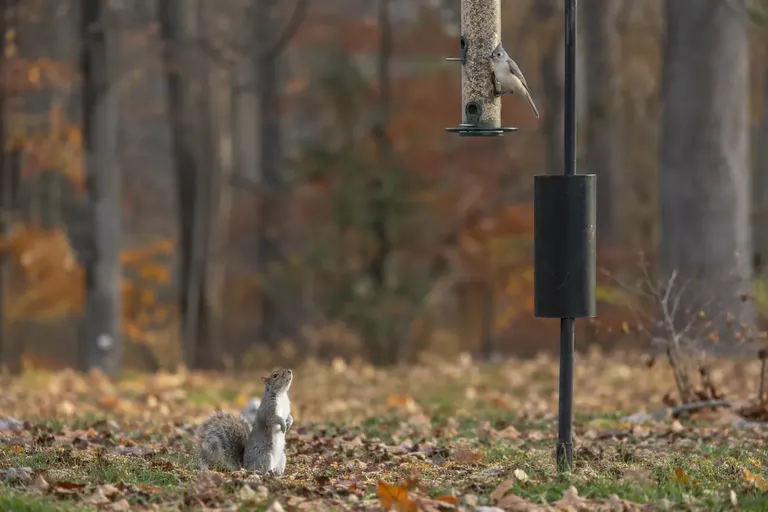
Birdfy uses ABS with 20% recycled content on its Feeder 2 and Rookie, and sells metal, wood and bamboo versions for buyers who want a less plastic look or better resistance to chewing. Metal matters in yards with persistent squirrels; our guide to keeping squirrels off feeders covers baffles and placement that protect either brand.
For both, mount the feeder where the camera faces away from direct sun, ideally toward the north, to avoid silhouetted birds. Distance from windows matters too: the usual advice from bird-collision research is either within 3 feet of glass or well beyond 30 feet.
Privacy, cloud storage and what happens if the company changes course
Both brands store your clips in their own cloud. Birdfy keeps motion clips for 30 days on its free plan and gives you 5 GB of permanent space for bookmarks. Birdbuddy keeps your postcards and media in its app and lets you download and share them. Neither current feeder records locally, so a company outage or policy change affects your footage. The practical habit: download the clips you love, rather than treating either cloud as an archive.
Bird Buddy vs Birdfy: the final verdict
Birdbuddy is the stronger all-weather feeder with the friendlier app. Birdfy is the stronger value if you want identification without a membership, bigger batteries or a dedicated portrait lens. Match the brand to your climate, your Wi-Fi and your tolerance for subscriptions.
Who should buy Bird Buddy, and who should buy Birdfy?
Buy Birdbuddy if:
- Your winters regularly drop below 14°F.
- Your home network is 5 GHz only (choose the Home, not the Nook).
- You want a rotating camera for portrait or landscape framing.
- You enjoy a social, gamified app and do not mind tapping to identify, or will pay for Premium.
Buy Birdfy if:
- You want species identification with no ongoing fee (buy a lifetime-AI version).
- You would rather charge a big battery a few times a year than rely on solar.
- You want a dedicated close-up portrait lens (Feeder 2 Pro or Duo).
- You want to add a camera to a feeder you already own (Birdfy Cam).
Skip both if you need local microSD recording. Neither brand’s current feeders record to a card. Our guide to bird feeder cameras without a subscription covers options that do.
Common mistakes when choosing between them
- Comparing the wrong models. A Birdbuddy Home against a Birdfy Rookie is not a fair fight. Match tiers.
- Assuming “AI” means free AI. Check whether a Birdfy listing says lifetime or subscription, and know that Birdbuddy’s automatic recognition sits in Premium.
- Ignoring temperature ratings. A 14°F floor is fine in Georgia and limiting in Minnesota.
- Mounting on a swinging hook. Both brands shoot sharper from a solid pole or bracket. Pair a sturdy pole with a squirrel baffle.
- Skipping cleaning. Smart feeders still need regular washing; remove the camera and follow our feeder cleaning guide.
Not sure a smart feeder is right for you at all? Read are smart bird feeders worth it first.
Sources
Frequently asked questions
Is Bird Buddy or Birdfy better?
Neither wins everything. Birdbuddy's current feeders have the tougher weather specs (IP67, rated to -5°F) and a more social app, and the Birdbuddy Home adds 5 GHz Wi-Fi. Birdfy offers lifetime AI identification on many versions, larger batteries and more models, including multi-lens feeders. Pick based on climate, Wi-Fi and how you feel about subscriptions.
Does Bird Buddy require a subscription?
No. Birdbuddy's free tier includes automatic photos and videos, live streaming, manual AI recognition, guest members and downloads. The paid Premium membership adds automatic AI+ recognition, Name That Bird for returning visitors, 2K Ultra Resolution, Nature Chat and Alexa integration. Without Premium, unrecognized visitors arrive as postcards you can tap to analyze.
Does Birdfy require a subscription?
No. Birdfy says live video, motion clips, alerts and 30-day rolling cloud storage are free, plus 5 GB of permanent storage for bookmarked clips. AI species identification is either included for life or sold as an optional plan, depending on which version of the feeder you buy, so check the listing wording.
Can Bird Buddy or Birdfy save video to an SD card?
Not on their current feeders. Birdfy's spec pages state its feeders only support cloud storage, and the microSD slot on some models is for factory testing. Birdbuddy stores media in its cloud and app. If local storage matters, look at a plug-in camera such as the Wyze Bird Feeder bundle instead.
Which works better in cold weather?
On paper, Birdbuddy. Its Home and Nook feeders are rated to operate from -5°F to 120°F, while Birdfy's feeders are rated from 14°F to 113°F. Any lithium battery loses capacity in hard cold, so solar power and a sheltered mounting spot help either brand through winter.