Hedgehog Food: What to Feed Garden Hedgehogs (2026)
Hedgehog food, sorted: meaty cat or dog food and water beat most hedgehog mixes, say charities. What to feed, what never to give, feeding stations, 5 picks.
If you buy through links on this page we may earn a commission, at no cost to you. It never decides what we recommend. How we earn
In this article
- Quick picks
- How we chose
- What do hedgehogs eat in the wild?
- What is the best food to put out for hedgehogs?
- Can hedgehogs eat cat food?
- Is specialist hedgehog food worth buying?
- Comparison: what belongs in a hedgehog’s bowl?
- Meat-based wet cat or dog food: best overall
- Meaty cat biscuits: best dry food
- Grain-free specialist hedgehog food: best specialist food
- Wooden feeding station with a maze: best wooden feeding station
- Feeding station with a rat flap: best against rats
- What should you never feed hedgehogs?
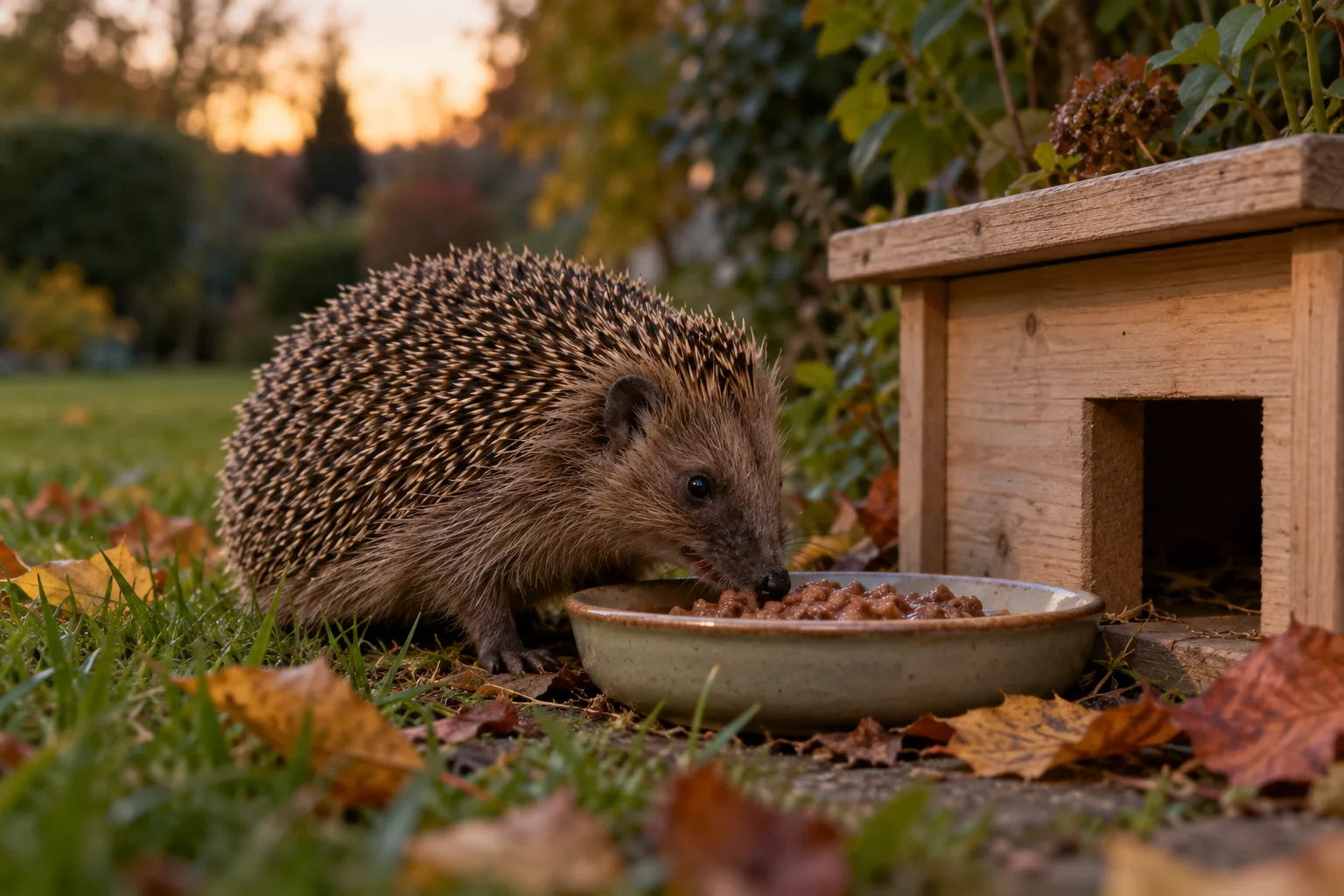
- How do you set up a hedgehog feeding station?
- How do you keep a hedgehog feeding station clean?
- When should you feed hedgehogs?
- Should you feed hedgehogs in winter?
- When does a hedgehog need help?
- What are the most common hedgehog feeding mistakes?
- Verdict: what is the best hedgehog food?
- Sources
- Frequently asked questions
The best hedgehog food for most gardens is meat-based wet cat or dog food, or meaty cat biscuits, with a shallow dish of water. The British Hedgehog Preservation Society also lists specialist hedgehog food, but many mixes on sale contain nuts, cereals or raisins that hedgehogs should not eat. Serve the food inside a closed feeding station with an entrance of about 5 x 5 in (13 x 13 cm) so cats cannot help themselves.
A note before you start: wild hedgehogs live in Europe, Asia and Africa, not in the Americas. This guide is written for gardens in Britain, Ireland and mainland Europe, where the European hedgehog is a regular night visitor. Pet African pygmy hedgehogs have different dietary needs and are not covered here. If you are looking for a winter nest box rather than food, see our hedgehog house guide.
Quick picks
- Best overall: meat-based wet cat or dog food, with no added sugar or cereals.
- Best dry food: grain-free meaty cat biscuits with small kibble.
- Best specialist food: a grain-free hedgehog food with no nuts, seeds or fruit.
- Best wooden feeding station: a closed box with a maze entrance.
- Best against rats: a feeding station with a rat flap.
Meat-based wet cat or dog food
The food British and German hedgehog charities name first: rich in animal protein and fat, low in carbohydrate.
- Best for
- Almost any garden with autumn hedgehog visits.
- Skip it if
- You cannot wash the dish every day; wet food spoils overnight faster than biscuits.
- Main ingredient
- Meat or meat derivatives
- Avoid
- Added sugar, cereals, lots of gravy or jelly
- Serve
- Small portion each evening, removed next morning
Meaty cat biscuits, grain-free, small kibble
Dry cat food with meat listed first keeps longer than wet food and is easy to spread between several spots.
- Best for
- Feeding stations you cannot refill fresh every evening, and late autumn.
- Skip it if
- You cannot put out water alongside it.
- Main ingredient
- Chicken or other meat listed first
- Kibble
- Small, kitten-style
- Serve with
- A shallow dish of water, always
Grain-free specialist hedgehog food with no nuts or fruit
A dedicated hedgehog food is fine if the label passes the checks below; many mixes on sale do not.
- Best for
- Readers who want a food made for wild hedgehogs and will read the ingredient list first.
- Skip it if
- The pack is labeled for pet pygmy hedgehogs, or nuts and cereals lead the ingredient list.
- First ingredient
- Meat or poultry
- Must not contain
- Peanuts, sunflower seeds, raisins, sugar
- Cereal
- None, or very little
Wooden hedgehog feeding station with maze entrance
A closed box with an inner wall the hedgehog walks around, so cats cannot reach the bowl with a paw.
- Best for
- Gardens with visiting cats where rats are not yet a problem.
- Skip it if
- Rats already visit your feeding spot; a rat flap is the better choice.
- Entrance
- About 5 x 5 in (13 x 13 cm)
- Inside
- Maze or baffle wall
- Roof
- Lift-off for daily cleaning
Hedgehog feeding station with rat flap
A feeding box with a hinged flap at the entrance, the second design NABU recommends besides a maze to keep out cats, rats and martens.
- Best for
- Built-up areas and gardens near compost, chickens or water, where rats are more common.
- Skip it if
- The flap is so stiff it will not open with light finger pressure.
- Entrance
- Flap the hedgehog pushes open
- Deters
- Rats, cats, martens
- Cleaning
- Bowls daily, box regularly
How we chose
Perch and Glass has not tried these foods or feeding stations in its own garden. This guide is research-based. We started from the published advice of the British Hedgehog Preservation Society (BHPS), the Hedgehog Street campaign run by the People’s Trust for Endangered Species, the Woodland Trust and the Sussex Wildlife Trust, and compared it with NABU in Germany. We also used a 2026 review of commercial hedgehog foods by the Swiss association Pro Igel, as reported by the Swiss magazine Beobachter, and checked ingredient declarations on retailer pages. The main filter for every food pick is the BHPS rule that meat must be the first ingredient. Because feeding stations vary widely between sellers, we recommend designs and measurements rather than single models.
What do hedgehogs eat in the wild?
Wild hedgehogs eat mostly insects and other invertebrates: beetles, caterpillars, earthworms and slugs, according to the Woodland Trust. Germany’s Deutsche Wildtier Stiftung adds snails, spiders and the occasional bird egg, and notes that hedgehogs eat fallen fruit mainly for the grubs inside it.
That tells you what a good hedgehog food looks like. A hedgehog is an insectivore that needs protein and fat, not grain or sugar. Anything you put out only supplements the “creepy crawlies” it finds, as Hedgehog Street puts it; it never replaces them. The most useful thing you can do is keep a garden full of insects: leaf litter under hedges, a brush pile, native shrubs, and no slug pellets. The Deutsche Wildtier Stiftung warns that chemical slug killers are deadly, because hedgehogs eat both the poison and the poisoned slugs.
What is the best food to put out for hedgehogs?
The best food to put out is meaty cat or dog food, wet or dry, or a good meaty hedgehog food, plus fresh water. The BHPS recommends “a good quality meaty hedgehog food, meaty cat or dog food or dry biscuits for cats,” and gives one simple test: check that meat is the first ingredient listed. Hedgehog Street says hedgehogs will relish any combination of meat-based wet dog or cat food, hedgehog food or cat biscuits.

Which foods pass the meat-first test?
| Food type | Passes the BHPS meat-first test? | Our call |
|---|---|---|
| Meat-based wet cat food, pâté style | Yes, when meat or meat derivatives lead the label | Best overall pick |
| Grain-free meaty cat biscuits | Yes, when chicken or other meat is listed first | Best dry food pick |
| Grain-free specialist hedgehog food | Only some; read the label | Pick only if meat leads |
| Meat-based dog food | Yes, when meat leads | Acceptable; NABU prefers cat food |
| Hedgehog mixes led by cereal, peanuts or sunflower hearts | No | Skip |
| Dried mealworms | Not a meat food | Skip as a staple |
Four quick checks on any label:
- Is meat the first ingredient? Poultry, beef or meat derivatives should lead (BHPS).
- Are cereals high on the list? Maize, wheat, oats or rice near the top are a poor sign.
- Are there peanuts, sunflower seeds or raisins? Put it back.
- Is there added sugar, honey or rusk? Not suitable for an insect eater.
NABU also lists cooked, unseasoned minced beef and plain scrambled egg as occasional extras, never raw meat, and says gravy and jelly are unnecessary, so a pâté beats chunks in jelly.
Can hedgehogs eat cat food?
Yes. Meat-based cat food is the most widely recommended hedgehog food in Britain and Germany. NABU advises high-quality wet or dry cat food with a high meat content, and a German hedgehog charity bulletin calls suitable wet cat food the proven base diet, partly because no suitable commercial complete hedgehog food exists.
Charities disagree on dog food. The BHPS and Hedgehog Street include meat-based dog food; NABU says it is less suitable than cat food because it contains less protein and more carbohydrate. If you want the safer option, use cat food.
Is specialist hedgehog food worth buying?
Some is, but many products sold as hedgehog food are poor. NABU goes furthest: it says the hedgehog foods on sale can stay on the shelf, because their composition makes none of them recommendable. In 2026 the Swiss association Pro Igel reviewed ten dry and four wet hedgehog foods sold in Switzerland and found most had too much plant material such as maize, wheat and oats, too much fat from nuts and seeds, sugar or starch from ingredients like rusk, puffed rice or honey, and too little protein, Beobachter reported.
Pro Igel warned that nuts and seeds can upset the phosphorus and calcium balance and lead to metabolic bone disease, a painful condition. It said the name “hedgehog food” gives a false impression of being specialized and safe. Its conclusion was that not one product was truly suitable; only two grain-free foods were described as digestible, both from Swiss shop shelves. The lesson for UK buyers is simple: the BHPS does list specialist hedgehog food, but read the ingredient list before you trust the picture on the bag.
Comparison: what belongs in a hedgehog’s bowl?
| Food | Suitable? | What charities say |
|---|---|---|
| Meat-based wet cat food | Yes, first choice | BHPS, Hedgehog Street, NABU: recommended |
| Meaty cat biscuits | Yes, with water | BHPS: meat must be the first ingredient |
| Grain-free hedgehog food, no nuts | Yes, if meat leads | Swiss Pro Igel: only two grain-free foods digestible |
| Meat-based dog food | Acceptable | BHPS: yes; NABU: less protein than cat food |
| Cooked unseasoned mince, scrambled egg | Occasional extra | NABU: suitable, never raw meat |
| Hedgehog mixes with nuts, cereal, raisins | No | NABU and Swiss Pro Igel: not recommended |
| Mealworms, sunflower hearts, peanuts | Rarely, if at all | Sussex Wildlife Trust: rare treat only |
| Milk, bread, table scraps | Never | BHPS: water only to drink; NABU: unsuitable |
Meat-based wet cat or dog food: best overall
What it is: Wet cat or dog food in which meat or meat derivatives make up the main ingredient, without added sugar or cereals. A pâté is easier than chunks in jelly because less liquid ends up in the dish.
Why it works: It is the food UK and German charities name first, it is sold in every supermarket, and it gives a hedgehog the protein and fat it needs to build up reserves for winter.
What to watch: Wet food spoils quickly on mild nights. Put out a small amount in the evening and clear leftovers in the morning.
- Strengths: easy to find, recommended by the main charities, easy to digest.
- Drawbacks: attracts cats, spoils fast, needs a clean dish every day.
- Best for: almost any garden with hedgehog visits in autumn.
- Skip it if: you cannot wash the dish daily.
See available listings on Amazon
Meaty cat biscuits: best dry food
What it is: Dry cat food with meat listed first and no cereals. Kitten formulas usually have smaller kibble, which small hedgehogs manage easily.
Why it works: The BHPS points out that dry cat biscuits last longer than wet food, so there is less waste, and the Woodland Trust notes that biscuits kept under cover stay dry and edible for at least a week. That makes them ideal for late autumn, when visits become irregular.
What to watch: Always put water next to dry food. The BHPS suggests scattering some of the food to encourage natural foraging.
- Strengths: keeps well, easy to spread between several spots.
- Drawbacks: useless without water, just as tempting to cats.
- Best for: stations you cannot refill fresh every evening.
- Skip it if: you cannot offer water alongside it.
See available listings on Amazon
Grain-free specialist hedgehog food: best specialist food
What it is: A dry or semi-moist food sold for wild hedgehogs, with meat or poultry as the first ingredient and no nuts, seeds, fruit or added sugar.
Why it works: A good one is made for the job and keeps well. In the Swiss review, the only two foods called digestible were grain-free.
What to watch: This is a type, not a single product, because the only foods we could verify as digestible came from Swiss shop shelves. On a general online store, ignore anything labeled for pet pygmy hedgehogs, and reject any mix where peanuts or cereals sit near the top of the list.
- Strengths: made for wild hedgehogs, long shelf life.
- Drawbacks: quality varies wildly; most mixes on sale fail the label check.
- Best for: readers who will read the ingredient list first.
- Skip it if: nuts, cereals or raisins lead the ingredients.
See available listings on Amazon
Wooden feeding station with a maze: best wooden feeding station
What it is: A closed wooden box with a small entrance and an inner wall, so the hedgehog walks around a corner to reach the bowl while a cat’s paw cannot.
Why it works: NABU recommends serving hedgehog food in a feeding house with a rat flap or maze entrance to keep cats, rats and martens out. The BHPS gives 5 x 5 in (13 x 13 cm) as the entrance size for its own DIY station.
What to watch: Look for a lift-off roof, untreated wood inside and a floor you can wipe clean. Skip any listing that does not give the entrance size.
- Strengths: keeps food dry and away from cats, hedgehogs accept it readily.
- Drawbacks: will not stop a determined rat, wood needs regular cleaning.
- Best for: gardens with visiting cats.
- Skip it if: rats already visit your feeding spot.
See available listings on Amazon
Feeding station with a rat flap: best against rats
What it is: A feeding station whose entrance is closed by a hinged flap. The hedgehog pushes it open with its head and the flap drops behind it.
Why it works: The rat flap is the second design NABU names alongside a maze. Where rats are around, an open feeding spot quickly becomes a problem for you and your neighbors; our guide on keeping rats away from feeders covers the wider fixes.
What to watch: The flap must open easily or the hedgehog will stay outside too. Watch the first few evenings to see whether it learns the way in.
- Strengths: an extra barrier for rats, cats and martens.
- Drawbacks: some hedgehogs need a few nights to get used to the flap.
- Best for: built-up areas, gardens with compost or chickens.
- Skip it if: the flap is stiff.
See available listings on Amazon
What should you never feed hedgehogs?
Never give hedgehogs milk, bread, salty or seasoned food, table scraps, nuts or fruit. The BHPS says to only ever offer fresh water to drink, Hedgehog Street explains that they are lactose intolerant, and NABU lists milk, nuts, fruit and kitchen waste as definitely unsuitable.
Mealworms need a special mention, because many gardeners already buy them for robins and other garden birds; see our guide to dried mealworms. They are bird food, not hedgehog food. The Sussex Wildlife Trust says mealworms should be a rare treat because they are high in phosphorus, and the Woodland Trust lists mealworms, seed and peanuts as foods thought to cause health problems when eaten in large quantities. Keep peanuts and sunflower hearts from the bird table out of the hedgehog bowl too.
How do you set up a hedgehog feeding station?
A good feeding station is a closed box with an entrance of about 5 x 5 in (13 x 13 cm), a maze or rat flap, and the food placed as far from the entrance as possible. These measurements come from the BHPS leaflet on making a simple station from a large plastic storage box, and the Sussex Wildlife Trust uses the same entrance size.
The BHPS tips work for a bought station too:
- Bowls at the back: put food and water at the far end, away from the entrance.
- A brick on the roof: stops animals pushing the box aside.
- A brick in front: a second brick about 5 in (13 cm) from the entrance stops cats lying down and reaching in with a paw.
Put the station with its back to a wall, fence or hedge, in a quiet spot you can see from a window, and leave a gap under the fence so hedgehogs can get in. If cats live nearby, our guide to cats and wildlife in the yard has more ideas.
Should you buy or build a feeding station?
| DIY storage box (BHPS plan) | Bought wooden station with maze | Bought station with rat flap | |
|---|---|---|---|
| Entrance | 5 x 5 in (13 x 13 cm), cut and taped yourself | Check the listing gives a size | Flap the hedgehog pushes open |
| Keeps cats out | Yes, with a brick in front | Yes | Yes |
| Keeps rats out | Poorly | Poorly | Better |
| Cleaning | Plastic wipes clean | Needs a lift-off roof | Needs a lift-off roof |
| Effort | Some cutting and taping | Set it down | Set it down, then a few nights of learning |
| Best for | Trying it out, the lowest budget | Gardens with visiting cats | Built-up areas, compost, chickens |
How many feeding stations do you need?
If more than one hedgehog visits, use more than one station. The BHPS suggests setting up multiple feeding stations in different locations around the garden, and scattering some food to encourage natural foraging.
How do you keep a hedgehog feeding station clean?
Clean the dishes after every use and give fresh water every day; the BHPS treats hygiene as part of feeding, not an extra.
Hygiene box (BHPS)
- Clean dishes and surfaces after every use with an animal-safe disinfectant, rinse thoroughly and let them air-dry.
- Keep hedgehog dishes and cleaning kit separate from your own, outside and away from where you prepare food.
- Wear gloves, then wash your hands and forearms with soapy water.
- Offer only fresh water to drink, in a shallow, stable dish at ground level.
- Remove leftovers every morning; NABU also says to clean food and water dishes daily.
A shallow clay or ceramic saucer works well for water. A tall bird bath is out of reach for a hedgehog, so add a low dish on the ground, and change the water twice a day in heat waves.
When should you feed hedgehogs?
Feed hedgehogs mainly in autumn and early spring, when natural food is scarce. NABU says food becomes scarce from mid-October, just when hedgehogs need to build fat for hibernation, and late-born juveniles have the least time of all.
A simple autumn routine:
- Evening: put out a small amount of food and fresh water in each station.
- Morning: remove leftovers and clean the dishes.
- Keep going: feed until the visits stop.
Well-fed adults in summer do not need extra food, but water helps a lot in dry spells.
Should you feed hedgehogs in winter?
Only if a hedgehog wakes in a mild spell and comes to your station. NABU says most hedgehogs hibernate from mid-November until March or April, sometimes into May in poor weather. Hedgehog Street advises feeding through autumn until hedgehogs stop taking food, then leaving a few dry biscuits out because they keep longer. If they are eaten, start feeding again. A hedgehog seen out in daylight in frost or snow needs a rescue, not a dish.
When does a hedgehog need help?
A hedgehog needs help if it is out in daylight without purpose, injured, wobbling, or clearly too small in late autumn. The BHPS advises rescuing any hedgehog seen out in the day, or one curled up and cold outside a proper nest.
On weight, the BHPS gives a clear guide. A healthy juvenile over 1 lb (450 g) can survive hibernation, and from late October hedgehogs below that may need rescue depending on the weather. Juveniles under 9 oz (250 g) in autumn are likely orphans and should be rescued straight away. About 21 oz (600 g) gives a better chance. The BHPS strongly discourages rescuing on weight alone above 450 g: a healthy, active visitor over that weight is best left in the wild with food and water.
If you are worried, call the BHPS helpline on 01584 890801 to find a local rescue. Until then, place the hedgehog in a high-sided box lined with newspaper in a quiet room, with a hot water bottle filled with warm, not hot, water and wrapped in a towel.
What are the most common hedgehog feeding mistakes?
- Putting out milk: the storybook classic makes hedgehogs ill.
- Buying by the picture: many hedgehog mixes contain nuts, cereals or raisins. Read the ingredients.
- Feeding in the open: cats, rats and foxes eat the food, and rain ruins it.
- Skipping the washing up: NABU says to clean food and water dishes and remove leftovers every day.
- Using bird food: peanuts, sunflower hearts and lots of mealworms are wrong for hedgehogs.
- Tidying everything away: removing every leaf in autumn removes beetles, worms and nest material; see why to leave the leaves.
- Feeding a hedgehog that needs a rescue: a sick or tiny hedgehog needs expert care, not a bowl by the door.
Verdict: what is the best hedgehog food?
The best hedgehog food is meat-based cat or dog food, wet or dry, with a shallow dish of fresh water, served in a closed feeding station with a 5 x 5 in (13 x 13 cm) entrance and a maze or rat flap. Feed in the evening in autumn, wash the dishes every day, and call a rescue for any hedgehog out in daylight or under 1 lb (450 g) from late October. If you want a specialist hedgehog food, pick a grain-free one with no nuts, seeds, raisins or sugar.
Free printable: Download the hedgehog feeding plan and feeding-station build (PDF, 2 pages). No ads and no affiliate links; free to print and share with your neighbours, school or local group.
Sources
- British Hedgehog Preservation Society: Autumn Juveniles
- British Hedgehog Preservation Society: Feeding
- British Hedgehog Preservation Society: How to create a simple hedgehog feeding station (PDF)
- Hedgehog Street: What should we be feeding hedgehogs?
- Woodland Trust: What do hedgehogs eat?
- Sussex Wildlife Trust: How to build a hedgehog feeding station
- NABU: Igel im Garten (German)
- Beobachter: Igelfutter? Gut gemeint, aber potenziell tödlich (German, June 2026)


Frequently asked questions
What is the best food for hedgehogs?
Meat-based wet cat or dog food, meaty cat biscuits or a specialist hedgehog food, with a shallow dish of water, according to the British Hedgehog Preservation Society and Hedgehog Street. Germany's NABU prefers high-meat cat food and advises against most commercial hedgehog mixes. Whatever you choose, avoid foods with nuts, cereals, raisins or added sugar.
Can hedgehogs eat cat food?
Yes. Meat-based cat food, wet or dry, is one of the foods UK and German hedgehog charities recommend most. Choose high-meat varieties without cereals or added sugar, and go easy on gravy and jelly. Always put a shallow dish of water next to dry biscuits, and wash the bowls every day so leftovers do not attract flies or rats.
Can hedgehogs drink milk?
No. Hedgehogs are lactose intolerant, and milk can make them seriously ill with diarrhea. The British Hedgehog Preservation Society, Hedgehog Street, NABU and the Dutch charity Egelbescherming all say to give water only. Put out a shallow, stable dish of fresh water and change it every day, especially in hot, dry weather and whenever you feed biscuits.
Are mealworms good for hedgehogs?
Not as a regular food. The Sussex Wildlife Trust calls mealworms a rare treat because they are high in phosphorus, and the Woodland Trust lists mealworms, seed and peanuts as bird foods thought to cause health problems in large quantities. A German hedgehog charity bulletin adds that insect larvae are very fatty and should only be given in small amounts.
When should I feed hedgehogs?
Mainly in autumn, when hedgehogs build fat for hibernation and late-born juveniles need to reach at least 1 lb (450 g), and again in early spring after they wake. Feed in the evening, remove leftovers in the morning and wash the dishes daily. Hedgehog Street suggests feeding until they stop taking food, then leaving a few biscuits out.
How big should a hedgehog be before winter?
The British Hedgehog Preservation Society says a healthy juvenile over 1 lb (450 g) can survive hibernation, and that from late October hedgehogs under that weight may need help depending on the weather. About 21 oz (600 g) gives a better chance. Juveniles under 9 oz (250 g) in autumn are likely orphans and should be taken to a rescue.