How to Keep Rats Away From Bird Feeders
How to keep rats away from bird feeders: stop seed spill, feed only what birds finish by dusk, baffle the pole, seal storage and pause feeding if rats settle.
In this article
- Quick answer: the rat-proof checklist
- Why do rats come to bird feeders?
- How do you know if rats are visiting your feeder?
- Step 1: How do you stop seed falling on the ground?
- Step 2: How do you make the feeder itself rat-resistant?
- Step 3: How does feeding time affect rats?
- Step 4: How do you make your yard less attractive to rats?
- Step 5: When should you stop feeding to get rid of rats?
- Should you use rat poison or traps?
- Are rats at bird feeders a health risk?
- What about mice, chipmunks and other seed thieves?
- Common mistakes
- Quick facts
- Sources
- Frequently asked questions
Knowing how to keep rats away from bird feeders starts with removing what attracts them: spilled seed on the ground, food left out overnight, and seed stored where they can reach it. Use no-waste foods and catch trays, feed only what birds finish by dusk, mount feeders on a baffled pole about 10 feet from cover, and store seed in metal bins. If rats are already established, stop feeding for at least two to four weeks so they move on.
Rats are not attracted to bird feeders as such. They are attracted to easy food, and a busy feeder can drop a surprising amount of seed. The good news is that most rat problems at feeders are solvable without giving up bird feeding for good. This guide explains why rats show up, how to confirm them, and the specific steps that work.
Quick answer: the rat-proof checklist
- Stop the spill. Use hulled seed (sunflower hearts) or no-waste mixes, and add a seed-catching tray.
- Clean the ground daily while you are dealing with rats. Rake or sweep up hulls and dropped seed.
- Feed only what birds eat by dusk. Rats feed mostly at night, so an empty feeder at sunset starves them out.
- Bring feeders in at night if needed, or at least any ground trays.
- Use a smooth metal pole and a baffle, placed well away from fences, decks and shrubs.
- Store seed in metal cans with tight lids. Rats chew through plastic and bags.
- Remove cover and other food: woodpiles, dense ground clutter near the feeder, pet food, open compost and fallen fruit.
- Pause feeding for two to four weeks if rats are established, then restart with better habits.
- Avoid poison. Use enclosed snap traps or a professional if control is needed.
Why do rats come to bird feeders?
Rats need three things: food, water and shelter. A typical backyard feeding setup can supply all three.
- Food. Birds are messy eaters. Many species flick unwanted seed out of feeders to get to their favorites, and husks from sunflower seed pile up with plenty of edible bits mixed in. Ground-feeding birds are often encouraged with seed scattered directly on the lawn or patio. Our guide on why birds throw seed out of the feeder explains why so much ends up on the ground.
- Water. Bird baths, ponds, leaky hoses and pet bowls give rats a drink.
- Shelter. Decks, sheds, woodpiles, dense shrubs, garden clutter and compost heaps provide safe burrowing and nesting sites close to the food.
Which rats visit bird feeders?
Two species cause most problems in North America and Europe:
- Brown rat, also called the Norway rat (Rattus norvegicus). A heavy-bodied rat that usually burrows in the ground, under slabs, decks and sheds. It is the common rat across most of the US, Canada and Europe.
- Roof rat, also called the black rat or ship rat (Rattus rattus). A slimmer, long-tailed and very agile climber that prefers to nest above ground in trees, vines, attics and dense vegetation. It is more common in warmer, coastal regions of the US and in parts of southern Europe and South America.
The difference matters. Brown rats tend to feed on the ground under feeders. Roof rats can climb poles, trees and fences to reach the feeder itself.
| Trait | Brown (Norway) rat | Roof (black) rat |
|---|---|---|
| Build | Heavy, blunt nose, shorter tail than body | Slim, pointed nose, tail longer than body |
| Usual nest site | Burrows in soil, under decks and slabs | Trees, vines, attics, dense shrubs |
| Climbing | Can climb, but mostly feeds on the ground | Excellent climber, reaches hanging feeders |
| Main fix at feeders | Clean ground, no overnight food, seal burrow sites | Baffles, distance from trees and fences, trim vines |
| Typical range | Most of the US, Canada and Europe | Warmer, coastal US; parts of southern Europe and South America |
How do you know if rats are visiting your feeder?
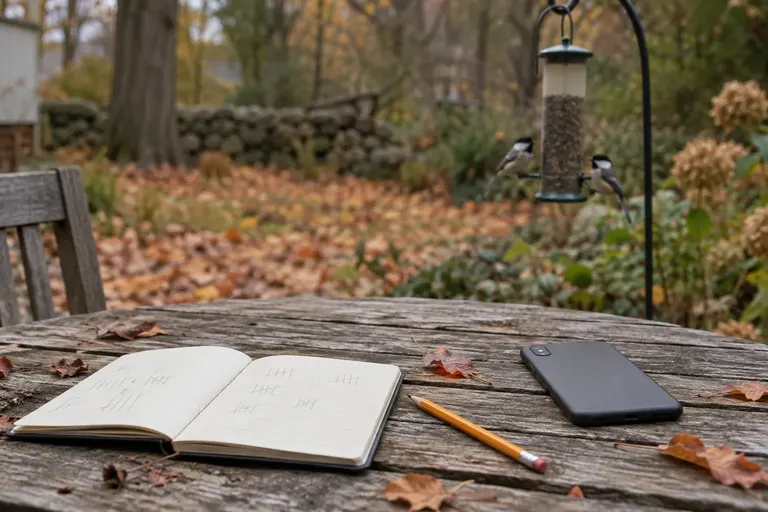
Rats are mostly nocturnal and cautious, so you may never see one even if they are present. Look for these signs:
- Seed disappearing overnight, especially from trays or ground-feeding areas.
- Burrows about 2 to 4 inches across in soil near structures, under decks, beside sheds or under shrubs, often with smooth, packed edges and fresh soil.
- Droppings, dark and capsule-shaped, commonly around half an inch to three-quarters of an inch long for brown rats. Mouse droppings are much smaller.
- Runways, narrow, worn paths through grass or along fences and walls.
- Gnaw marks on plastic seed bins, feeder parts or wooden structures.
- Greasy rub marks along walls and fences where rats travel regularly.
- Sightings at dusk or dawn, or in daylight. Seeing rats in daylight often means a larger population or heavy competition for food.
A trail camera pointed at the ground under your feeder for a few nights can confirm what is visiting. Mice, chipmunks, squirrels, opossums, raccoons and even deer also take spilled seed, and the fixes differ slightly.
Step 1: How do you stop seed falling on the ground?
This is the single most effective thing you can do. If rats cannot find food on the ground, most will move on.
Switch to no-waste food
Birds discard shells and seeds they do not want. Two changes cut that waste dramatically:
- Sunflower hearts (hulled sunflower seed). No shells, and nearly all seed-eating backyard birds eat them. Waste under the feeder drops sharply. See our guide to no-mess bird seed.
- Avoid cheap mixes with filler. Red millet, milo (sorghum) and cracked grains are often discarded by feeder birds and end up on the ground.
Add a seed-catching tray
A wide tray fitted under a tube feeder catches dropped seed and hulls. Birds often feed from the tray too. Clean it daily while rats are an issue, and choose one with drainage holes so seed does not turn to mush.
Use hot pepper food
Mammals, including rats, squirrels and mice, have receptors that respond to capsaicin, the compound that makes chili peppers hot. Birds do not respond to capsaicin in the same way, so they eat pepper-treated seed and suet without apparent discomfort. Hot pepper seed will not stop rats from eating at all, but it makes spilled seed much less rewarding. Wear gloves and avoid touching your eyes when handling it. Our guide on whether birds can taste spicy food explains the science, and bird food squirrels won’t eat covers the options.
Stop scattering seed on the ground
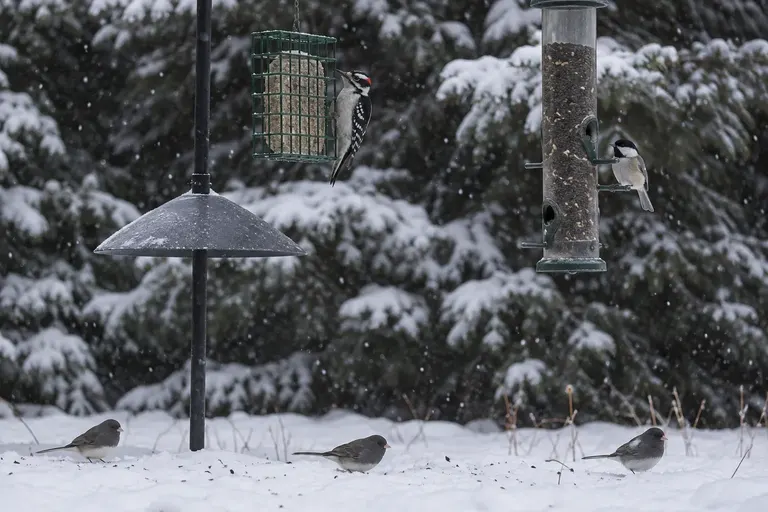
Scattering seed for juncos, doves and sparrows is the most direct invitation to rats. If you want to feed ground birds, use a low tray feeder, offer only small amounts in the morning, and remove leftovers before dusk.
Step 2: How do you make the feeder itself rat-resistant?
Use a smooth metal pole
Rats climb rough wooden posts, trees and fences easily. A smooth metal pole is harder, especially for brown rats, but agile roof rats can still manage it. A baffle is the real barrier.
Add a baffle
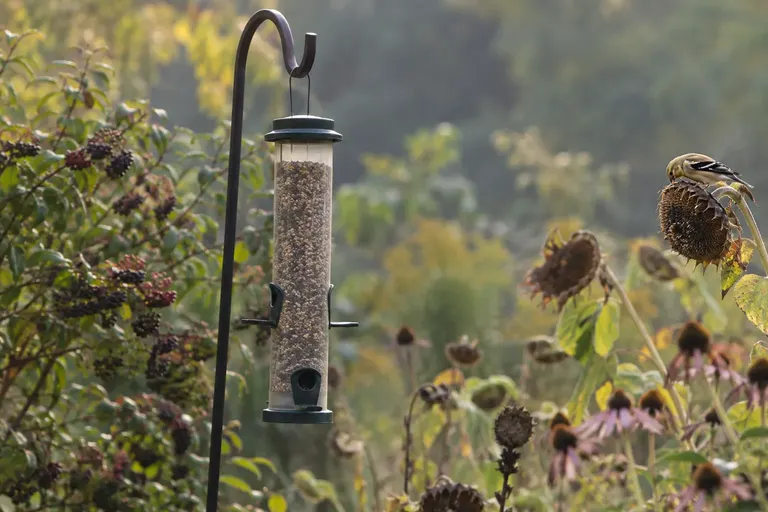
A baffle is a dome or cylinder that blocks climbing animals. For rats, a stovepipe (cylinder) baffle or a wide dome baffle mounted on the pole below the feeder works well. Mount it so its top is at least 4 to 5 feet above the ground. Our guide to squirrel baffles covers sizes and placement in detail, and the same rules apply to rats.
Place the feeder away from launch points
Rats can jump. Figures commonly cited by pest control authorities suggest brown rats can jump around 3 feet vertically and farther horizontally, and roof rats are more agile still. Keep the feeder pole well away from fences, deck rails, walls, overhanging branches and shrubs. Around 10 feet from any launch point is a sensible target, similar to the advice for squirrels. See where to put a bird feeder.
Choose feeders that do not spill
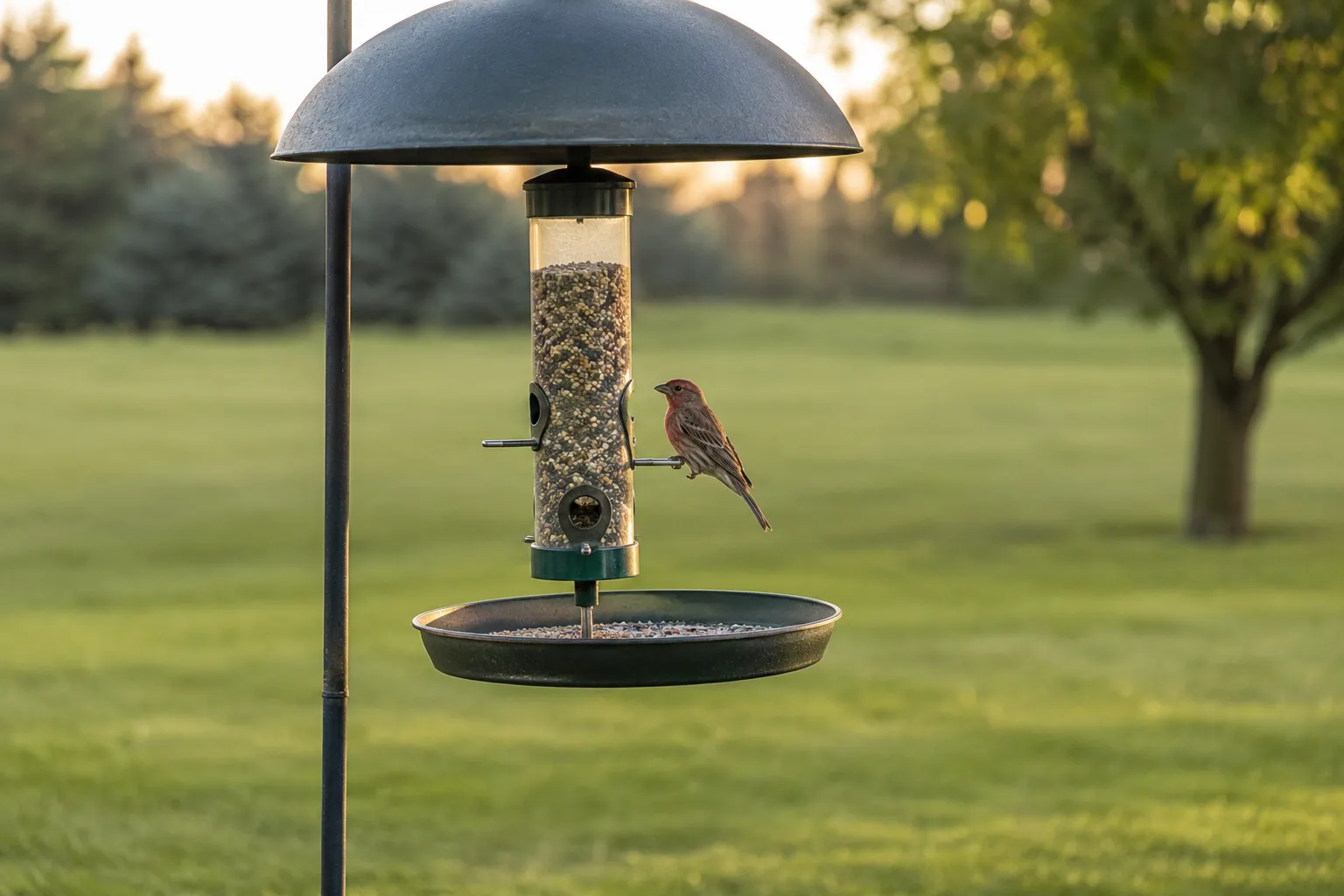
Tube feeders with short perches and small ports, and weight-activated squirrel-resistant feeders, generally drop less food than open hoppers and trays. Weight-activated feeders can also close when a heavy rat climbs onto them. Our guide to keeping squirrels off feeders explains how these designs work.
Step 3: How does feeding time affect rats?
Rats are most active from dusk through the night. Birds feed most heavily in the morning and again in the late afternoon. That difference is your advantage.
- Fill feeders in the morning with only what birds will eat in a day.
- Aim for empty or nearly empty feeders by dusk. If seed is left at night, reduce the amount.
- Bring feeders and trays inside at night if rats persist. It is extra work, but it works quickly.
- Remove ground and tray food before dusk.
After a week or two of this routine, you will get a feel for how much your birds actually eat each day.
Step 4: How do you make your yard less attractive to rats?
Store seed properly
Rats can chew through paper, plastic bags and thin plastic bins. Store seed in galvanized metal trash cans with tight-fitting lids, kept in a shed or garage if possible. This also keeps seed dry and fresh, and a cool, dark spot slows spoilage.
Remove other food sources
- Bring pet food indoors and do not leave bowls outside overnight.
- Keep compost in closed, rodent-resistant bins, and do not add meat, fat or cooked food.
- Pick up fallen fruit from trees.
- Keep trash in bins with tight lids.
- Clean up after outdoor meals and barbecues.
Reduce cover near the feeder
- Move woodpiles away from the house and off the ground.
- Clear clutter under decks and around sheds.
- Trim dense ground-level vegetation directly around the feeder, while keeping shrubs for birds at a safe distance.
- Block gaps under decks, sheds and steps with hardware cloth (wire mesh), buried a few inches deep to stop digging.
Manage water
You do not need to remove bird baths, which are valuable for birds. Keep them clean, and fix any leaking hoses or dripping taps that provide extra water.
Step 5: When should you stop feeding to get rid of rats?
If you see rats regularly, find active burrows near the feeder, or see them in daylight, the most effective step is to stop feeding entirely for a while. Many wildlife and pest control authorities recommend a pause of at least two to four weeks.
Rats breed quickly. A female can produce several litters a year, so a small problem can grow fast when food is abundant. Removing the feeder takes away the main food source, and many rats will move on or the population will decline naturally.
Birds will be fine during the break. Research shows that feeder birds get most of their food from wild sources and cope well when feeders are removed, as we explain in do birds become dependent on feeders?
When you restart:
- Clean the area thoroughly, including removing old seed and hulls.
- Use no-waste food and a catch tray from the start.
- Feed smaller amounts, only in the morning.
- Keep a closer eye on the ground and on any new burrows.
Should you use rat poison or traps?
Why is rat poison a bad idea near bird feeders?
Most rat poisons (rodenticides) are anticoagulants, which stop blood from clotting. Rats do not die immediately. They can wander for days, becoming weak and easy prey for owls, hawks, foxes and domestic cats. Predators that eat poisoned rats can be poisoned in turn, a problem called secondary poisoning. Studies in North America and Europe have found anticoagulant rodenticide residues in a high proportion of tested owls and hawks. California has restricted many second-generation anticoagulant rodenticides partly because of harm to wildlife.
Bait stations can also be accessed by other animals, and some birds and pets eat bait directly. Near a bird feeder, poison creates exactly the kind of risk you are trying to avoid.
What are safer control options?
- Snap traps in tamper-resistant boxes. Place them along walls and runways where rats travel, inside a covered box or under a board so that birds, pets and children cannot reach them. Check them daily.
- Professional pest control. A licensed pest control professional can identify the species, find entry points and set traps safely. Ask for methods that avoid secondary poisoning.
- Exclusion. Sealing gaps under decks and sheds with hardware cloth prevents re-infestation.
Glue traps are widely considered inhumane, and they can catch birds, lizards and pets. Several jurisdictions, including England, have restricted their use. Avoid them.
Do natural predators help?
Owls, hawks, foxes and snakes all eat rats. Avoiding poison keeps these predators healthy, and some people put up barn owl boxes in rural areas. Predators alone rarely solve a rat problem around a food source, but they help keep numbers in check.
Are rats at bird feeders a health risk?
Rats can carry diseases that affect people and pets, including leptospirosis and Salmonella, spread through urine and droppings. Some rat-borne viruses exist too, although the hantavirus strains most people hear about in the US are carried mainly by deer mice rather than rats.
Basic precautions:
- Wear gloves when cleaning feeders, trays and the ground under them.
- Do not sweep or vacuum dry droppings, which can raise dust. Spray with a disinfectant first, then wipe up.
- Wash your hands thoroughly afterward.
- Keep children and pets away from droppings and burrows.
What about mice, chipmunks and other seed thieves?
The same steps help with most ground-feeding mammals:
- Mice are drawn to spilled seed and stored bags. No-waste food and metal storage bins work well.
- Chipmunks carry seed away in their cheek pouches. Baffles and no-spill feeders help.
- Raccoons and opossums visit at night. Bringing feeders in at night solves most issues.
- Squirrels respond to the same baffles, pole placement and hot pepper foods that deter rats.
Common mistakes
- Scattering seed on the ground for ground-feeding birds and leaving it overnight.
- Using cheap filler mixes that birds throw out.
- Storing seed in the bag it came in, in a garage or shed.
- Putting feeders next to decks, sheds or fences, which give rats cover and launch points.
- Using poison near feeders, which puts owls, hawks, pets and other wildlife at risk.
- Waiting too long to pause feeding. A short break early is better than a long one later.
- Restarting without changes. If the same habits return, so will the rats.
Quick facts
- Rats are attracted by spilled seed, overnight food, water and nearby cover.
- Rats are mostly nocturnal, so feeders that are empty by dusk help starve them out.
- Hulled sunflower hearts and catch trays greatly reduce spillage.
- Capsaicin deters mammals but not birds.
- A baffle mounted 4 to 5 feet up on a smooth pole stops most climbing rodents.
- A two- to four-week feeding pause is often enough to make rats move on.
- Rat poison can kill owls, hawks and pets through secondary poisoning.
Sources
Frequently asked questions
Do bird feeders attract rats?
Bird feeders can attract rats, mainly through seed that falls to the ground, gets left out overnight, or is stored in bags that rats can chew through. Rats are drawn to reliable food, water and cover. A feeder that drops seed onto the ground next to a deck, shed or woodpile gives them all three. Controlling spillage is the most important fix.
What bird seed do rats not like?
Rats eat most seeds, but they are less attracted to foods that leave nothing on the ground. Hulled sunflower hearts and no-waste blends reduce spillage. Seed and suet treated with hot pepper (capsaicin) deter mammals, including rats and squirrels, while birds cannot taste the heat. Nyjer in a proper finch feeder also produces little ground waste.
Should I stop feeding birds if I see a rat?
One rat seen once is a warning to tighten up: clean up spilled seed, bring feeders in at night and secure storage. If you see rats repeatedly, find burrows or droppings, or see them in daylight, pause feeding for at least two to four weeks. Removing the food source is often the fastest way to make rats move on.
Is it safe to use rat poison near bird feeders?
Rat poison is a poor choice near bird feeders. Poisoned rats can be eaten by owls, hawks, foxes, cats and dogs, causing secondary poisoning, and some baits can be eaten directly by birds and pets. If you need control beyond removing food, use enclosed snap traps placed where birds and pets cannot reach, or hire a pest professional who uses wildlife-safe methods.
Can rats climb bird feeder poles?
Yes. Rats, especially roof rats, climb well and can scale wooden posts, rough poles, fences and trees. Smooth metal poles are harder to climb, and a properly sized baffle mounted about 4 to 5 feet up stops most climbing rodents. Keep the pole well away from anything a rat could jump from, such as fences, decks and branches.