Insect Hotel Guide: Hole Sizes, Placement and Cleaning
An insect hotel only helps if it suits solitary bees: 6-inch tubes, 1/8 to 3/8 inch holes, morning sun and yearly cleaning. Sizing chart and what to avoid.
If you buy through links on this page we may earn a commission, at no cost to you. It never decides what we recommend. How we earn
In this article
- Quick answer: insect hotel at a glance
- Do insect hotels actually help bees?
- Which hole size should an insect hotel have?
- What materials should you avoid in an insect hotel?
- How big should an insect hotel be?
- Where should you put an insect hotel?
- How do you keep an insect hotel clean?
- Do insect hotels attract birds, and which birds?
- How much does an insect hotel cost?
- Insect hotel buyer’s checklist
- Two cleanable bee houses worth a look
- What are the alternatives to an insect hotel?
- Common insect hotel mistakes
- Sources
- Gear mentioned in this guide
- Frequently asked questions
An insect hotel helps native mason and leafcutter bees only when it is small, cleanable and built to their needs: smooth holes 1/8 to 3/8 inch (3 to 10 mm) across, about 6 inches (15 cm) deep, closed at the back and facing morning sun. The big decorative kind stuffed with pine cones and cracked bamboo mostly feeds parasites.
Most insect hotels sold are built to look good in a garden center, not to raise bees. This guide covers hole sizes, materials, placement, cleaning and the link to your garden birds. In German-speaking countries the same thing is sold as an Insektenhotel or Wildbienen Nisthilfe, and the rules below apply there too.
Quick answer: insect hotel at a glance
| Question | Short answer |
|---|---|
| Who uses it | Cavity-nesting solitary bees and wasps, mainly mason and leafcutter bees |
| Hole diameter | 1/8 to 3/8 inch (3 to 10 mm), smooth inside |
| Hole depth | About 6 in (15 cm) for 1/4 inch and larger holes, 3 to 4 in for small holes |
| Back of hole | Closed |
| Facing | East or southeast, morning sun |
| Height | About 3 to 6 ft, fixed firmly, not swinging |
| Rain | Under a roof overhang of at least 2 in |
| Cleaning | Replace tubes or open trays every fall |
| Avoid | Pine cones, straw, splintered or open-ended bamboo, glass or plastic tubes |
Do insect hotels actually help bees?
Yes, for the right bees and only when they are managed. Of the roughly 4,000 native bee species in the United States, the Xerces Society estimates about 30 percent nest in tunnels in wood or hollow stems. The rest dig nests in bare ground, and an insect hotel does nothing for them.
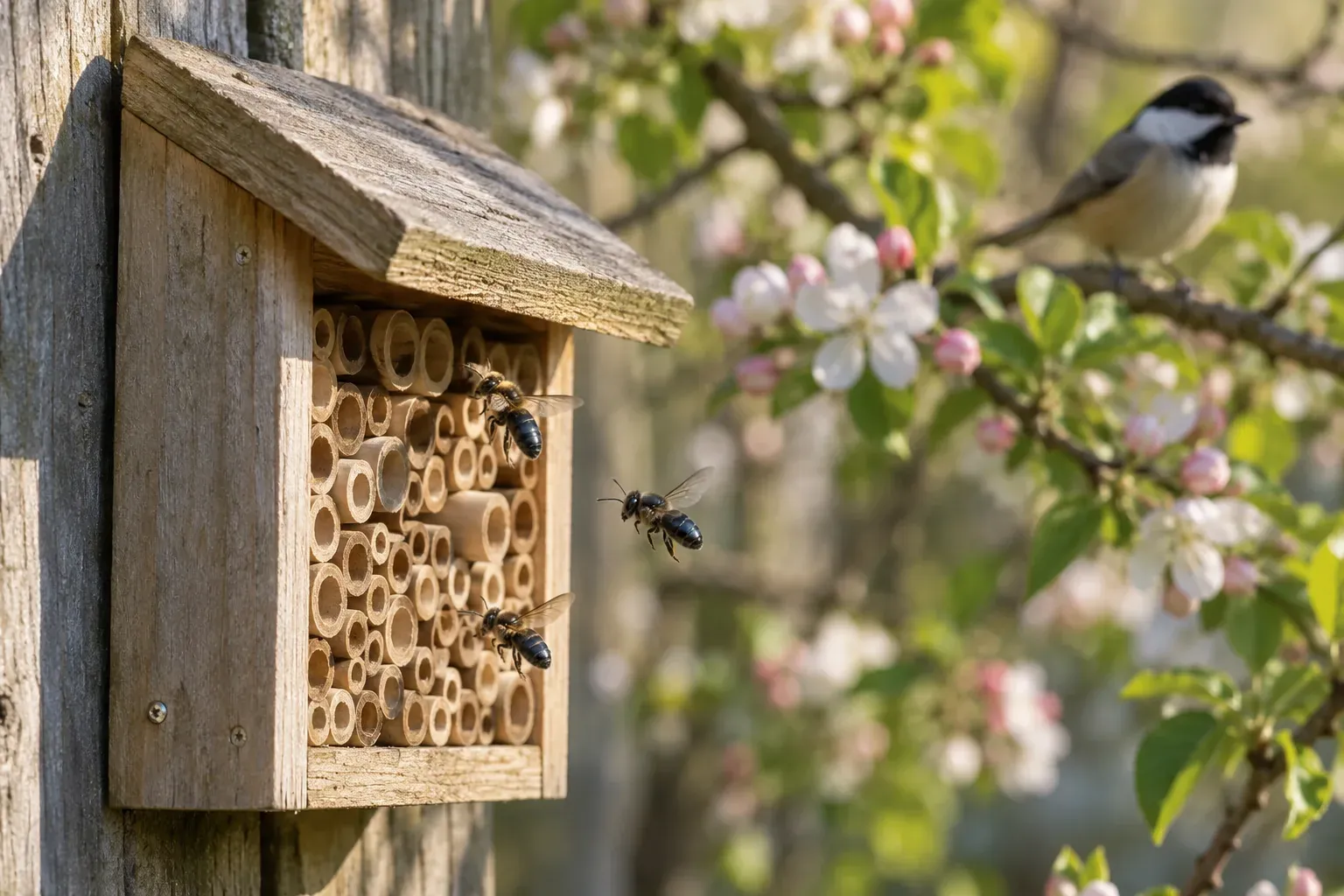
The cavity nesters are the audience. Mason bees (genus Osmia, including the blue orchard bee) fly in early spring and seal their nests with mud. Leafcutter bees (Megachile) fly in summer and line their nests with neatly cut leaf discs. Small resin bees, some carpenter bees and a range of solitary wasps that hunt caterpillars and aphids also nest in holes. None are aggressive: with no hive to defend, females sting only if handled roughly.
A female mason bee walks to the back of a tunnel, packs in a ball of pollen and nectar, lays an egg on it and builds a mud wall. She repeats this until the tunnel is full, then plugs the entrance. The larvae eat the pollen, spin cocoons and spend the winter inside as adults before emerging the next spring. That life cycle explains every rule below.
Which hole size should an insect hotel have?
Offer a range from 1/8 to 3/8 inch (3 to 10 mm), weighted toward 1/4 and 5/16 inch, because those sizes suit the bees most gardeners can attract. Depth matters as much as width.
Here is the sizing chart we built from Xerces Society nest guidance and mason bee supplier specifications. Use it to plan or check any hotel.
Insect hotel sizing chart
| Hole diameter | Metric | Depth | Main users | Active season |
|---|---|---|---|---|
| 1/8 in | 3 mm | 3 to 4 in (8 to 10 cm) | Small resin bees, tiny mason bees, small wasps | Late spring to summer |
| 3/16 in | 5 mm | 4 to 5 in (10 to 13 cm) | Small Osmia and Megachile species, wasps | Spring to summer |
| 1/4 in | 6 mm | 5 to 6 in (13 to 15 cm) | Leafcutter bees, including the alfalfa leafcutter | Summer |
| 5/16 in | 8 mm | 6 in (15 cm) | Blue orchard mason bee and other Osmia | Early spring |
| 3/8 in | 10 mm | 6 in (15 cm) | Larger leafcutters, some wasps | Summer |
Why 6 inches deep?
Female solitary bees lay female eggs in the innermost cells and male eggs near the entrance. A short tunnel of 3 or 4 inches gives room for mostly males, which do not nest. A 6 inch (15 cm) tunnel lets the female build a full series of cells with a healthy share of daughters. Crown Bees recommends 6 inch tunnels at 8 mm for mason bees for exactly this reason.
Why closed at the back?
An open-ended tube is a draughty corridor that invites predators and parasitic wasps from both sides. Drilled blocks should stop short of going all the way through, and tubes or reeds should be closed at one end, either naturally at a node or with a backing board.
What materials should you avoid in an insect hotel?
Avoid pine cones, straw, loose bark, glass and plastic tubes, and bamboo that is splintered, cracked or open at both ends. These fill space and look natural, but they either do not suit nesting bees or actively harm them.
- Pine cones and straw. No bee nests in a pine cone. The stuffing adds bulk, holds moisture and does nothing for bees.
- Bamboo with splinters or open ends. Bamboo cut between nodes is open at both ends. Cut roughly, it leaves sharp fibers that shred bee wings. It also cannot be opened for cleaning, so it is best used once and discarded.
- Glass or plastic tubes. They do not breathe. Moisture condenses inside, and pollen stores go moldy. Paper tubes, paper liners, reeds and wood let moisture escape.
- Drilling into end grain. Holes drilled into the cut end of a log crack as the wood dries, letting in water and parasites. German wild bee guidance makes the same point: drill into the side grain (Längsholz) of dried hardwood, not the end grain (Hirnholz).
- Treated or soft, fuzzy wood. Pressure-treated wood and paint inside the holes are not safe for larvae. Soft woods tear into fibers when drilled, leaving rough walls.
- Holes too wide. Holes wider than about 3/8 inch mostly go unused by bees and are more likely to fill with debris.
What works: paper tubes, paper liners in drilled wood, reeds closed at a node and routed wooden trays that come apart. Smooth, dry, breathable and replaceable.
How big should an insect hotel be?
Smaller than most people expect. A block or house with 50 to 150 holes is plenty for a typical backyard, and several small hotels in different spots beat one large wall.
Big hotels concentrate bees, and parasites find crowds. Chalcid wasps, pollen mites and fungus spread from cell to cell when hundreds of nests sit side by side. Studies of urban bee hotels have also found large, unmanaged ones hosting many wasps and introduced bees.
Match the size to your flowers. A female mason bee typically forages within a few hundred feet of her nest, so a large hotel next to a lawn has nothing to feed its residents.
Where should you put an insect hotel?
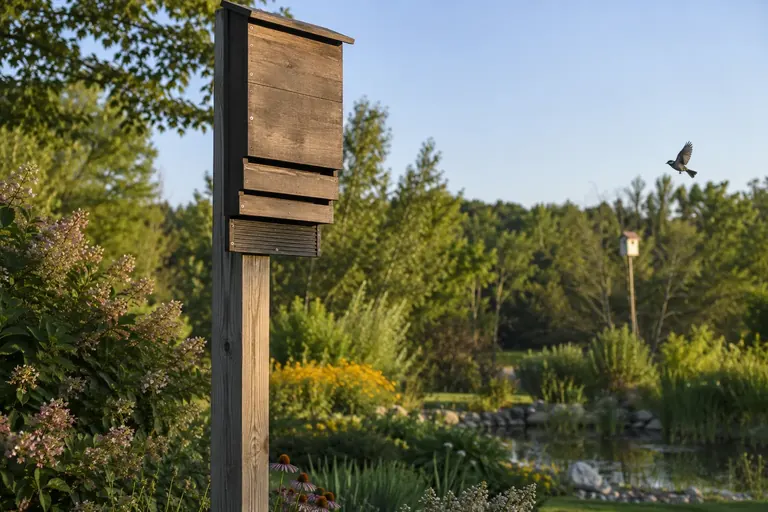
Mount it firmly on a wall, fence or post, 3 to 6 feet off the ground, facing east or southeast, with a roof or eave keeping rain off the holes. Placement often decides whether a hotel is used at all.
- Face the morning sun. Solitary bees are cold-blooded and need warmth to fly. An east or southeast face lets them start foraging early. In very hot climates, afternoon shade prevents the tubes from overheating.
- Fix it solidly. A hotel that swings from a branch or hook is rarely used. Screw it to a wall, fence post or shed.
- Keep it dry. Choose a house with a roof overhang of about 2 inches or mount it under an eave. Wet tubes grow mold.
- Put flowers close by. Early-blooming fruit trees, willows, redbuds, native shrubs and spring bulbs feed mason bees. Summer leafcutters want a wider mix of blooms. Our guide to designing a small bird-friendly garden shows how to layer plants so something is always flowering.
- Provide mud for mason bees. Mason bees need moist clay soil to build their walls. Crown Bees suggests a mud source 10 to 20 feet from the house, not directly beneath it. A shallow dish of wet clay soil works if your ground is sandy.
- Keep it away from feeders. Bird feeders pull birds into one area. Put the hotel on the opposite side of the yard from your feeders, not beside them. Our guide on where to put a bird feeder covers feeder spacing from the other side.
When should you put it up?
Mount it in late winter or very early spring, before the first mason bees emerge. Mason bees become active when daytime temperatures hold around 55°F (13°C). Leafcutters fly in summer, so a second set of 1/4 inch tubes can go up by late spring.
How do you keep an insect hotel clean?
Replace or open the nesting material every year. Paper tubes and reeds are single-use: once bees have emerged, remove and discard them and add fresh ones. Wooden trays are opened in fall so cocoons can be taken out and debris scraped away.
The yearly routine
- Summer, after nesting stops: leave filled tubes in place for several weeks while larvae develop.
- Early fall: move filled tubes or trays into an unheated shed or garage, inside a box with small holes or fine mesh. This protects them from birds and from parasitic wasps that hunt late in the season.
- October or November: harvest mason bee cocoons. Unroll paper tubes or open trays, remove the cocoons and discard mites, mold and damaged cells. Suppliers such as Crown Bees recommend gently rinsing cocoons and storing them in a refrigerator through winter.
- Spring: put the cocoons out in a small release box near the clean house when temperatures warm, alongside fresh tubes.
If harvesting cocoons sounds like too much, the minimum: use paper liners or reeds, move filled ones into a protected emergence box in spring, and discard them after bees emerge.
Parasites and pests to watch for
- Pollen mites (Chaetodactylus). Tiny mites that eat stored pollen and starve larvae. They show up as orange or pink dust in opened cells and spread quickly in uncleaned hotels.
- Parasitic wasps such as Monodontomerus. Tiny metallic wasps that drill through tube walls to lay eggs in bee larvae. Thin cardboard tubes are especially vulnerable, and storing nests in a mesh bag in late summer helps.
- Kleptoparasitic flies. Cacoxenus indagator, a small fly from Europe now also found in North America, lays eggs in cells so its larvae can eat the pollen.
- Fungus. Chalkbrood and molds thrive in damp, crowded, reused tubes.
Do insect hotels attract birds, and which birds?
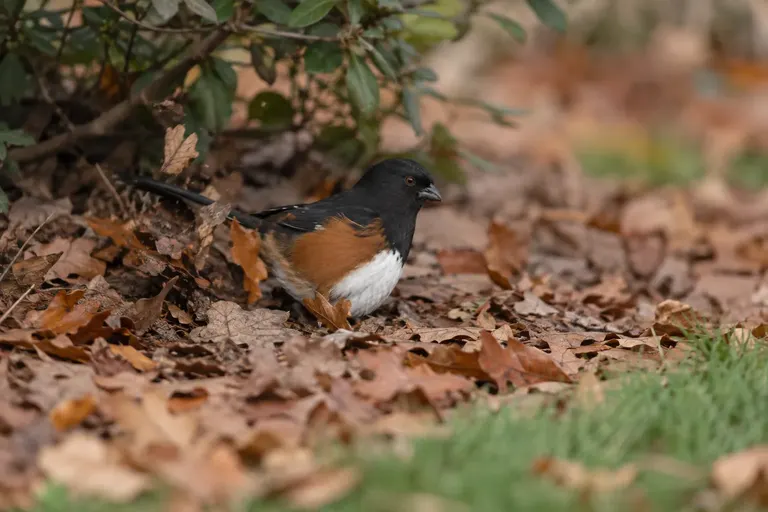
Indirectly, and not always in the way you want. A bee hotel is not a bird feeder, but the insects it supports and the plants they pollinate feed garden birds. Some birds also raid the hotel itself.
How insects feed garden birds
Almost all North American songbirds raise their young on insects, even species that eat seed as adults. Cornell Lab and Audubon both stress this point, and entomologist Doug Tallamy has estimated that one pair of chickadees needs several thousand caterpillars to raise a single brood. Our article on what baby birds eat covers this in detail.
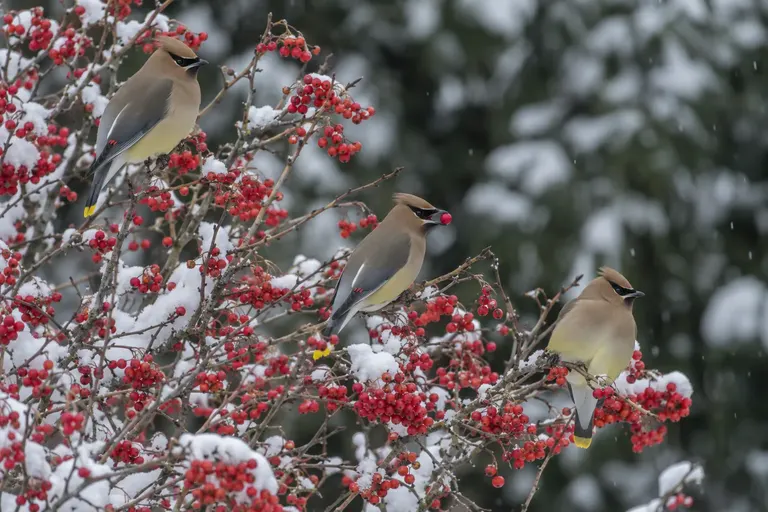
Bees themselves are a small part of most songbirds’ diets. The bigger connection is pollination. Mason and leafcutter bees pollinate fruit trees, berry shrubs and wildflowers, and those plants produce the fruit and seed that birds eat in fall and winter. More bees on your serviceberry or dogwood means more berries for robins, waxwings and thrushes. See our list of berry shrubs that feed birds all winter for plants that benefit from both.
Birds that raid insect hotels
Woodpeckers, chickadees, nuthatches and titmice learn that tubes hold fat larvae. In Europe, great spotted woodpeckers and great tits do the same. They pull out reeds or hammer through soft wood, mostly in fall and winter. A Downy Woodpecker that finds a full bee house can empty it in a few visits.
The fix is simple: fit a cage of 1/2 or 3/4 inch hardware cloth an inch or two in front of the holes. Bees pass through easily and birds cannot reach the tubes. Moving filled tubes indoors for winter solves it completely.
How much does an insect hotel cost?
A homemade block costs little more than scrap hardwood and a drill bit. A well-made commercial house with replaceable nesting material costs more than a decorative hotel, and it adds a small recurring cost for fresh tubes or liners each year.
Decorative hotels spend their budget on size and fillings. A useful house spends it on rot-resistant cedar, a deep overhang and replaceable nesting material. Paper tubes and reeds are single-use; wooden trays cost more up front but last for years.
Insect hotel buyer’s checklist
Use this before buying or building. A good insect hotel passes every line.
| Check | Pass | Fail |
|---|---|---|
| Hole diameter | 1/8 to 3/8 in (3 to 10 mm) | Mostly wider than 1/2 in |
| Hole depth | About 6 in for 1/4 in and larger | Under 3 in |
| Back of hole | Closed | Open straight through |
| Inside surface | Smooth paper, reed or routed wood | Splintered bamboo, rough drilled softwood |
| Cleanable | Tubes replace or trays open | Glued-in or fixed fillings |
| Materials | Breathable | Glass or plastic tubes |
| Roof | Overhang of about 2 in | Flat top flush with holes |
| Mounting | Screws flat to a wall or post | Hangs from a hook or string |
| Fillings | Only nesting tubes | Pine cones, straw, loose bark |
| Size | 50 to 150 holes for a backyard | Hundreds of holes in one block |
Two cleanable bee houses worth a look
We chose these by comparing manufacturer specifications, nesting guidance from bee conservation groups and patterns in owner feedback. We have not tested them ourselves. Both are built around replaceable nesting material, which is the single feature that matters most.
Crown Bees Chalet Cedar Bee House
A compact cedar house measuring 10 inches high, 10 inches wide and 9 inches deep, with a 2 inch roof overhang and a keyhole slot for easy removal. It takes 150 paper tubes, 125 natural reeds or a 48-hole wood tray drilled at 8 mm for mason bees. An attic space holds cocoons for spring release. On paper, it ticks every line of the checklist above: cedar body, deep overhang, closed-back replaceable tubes and a flat mount. Budget for fresh tubes or liners each year.
Skip it if you want one house to shelter many insect groups, or a statement piece for the garden.
Crown Bees Tower Cedar Bee House
The taller version at 14 inches high, 10 inches wide and 9 inches deep. It holds up to 280 paper tubes or a combination of a 96-hole 8 mm tray and a 156-hole 6 mm tray, so it can host spring mason bees and summer leafcutters. It suits large gardens and orchards.
Skip it if your garden is small. A bigger house in one spot concentrates parasites, so two small houses in different places may serve you better.
What are the alternatives to an insect hotel?
Habitat does more than any single box. About 70 percent of native bees nest in the ground, and many insects overwinter in leaf litter and plant stems. These options often help more than a hotel.
- Bare, sunny soil. Leave a patch of unmulched, well-drained ground in full sun. Ground-nesting mining and sweat bees dig there.
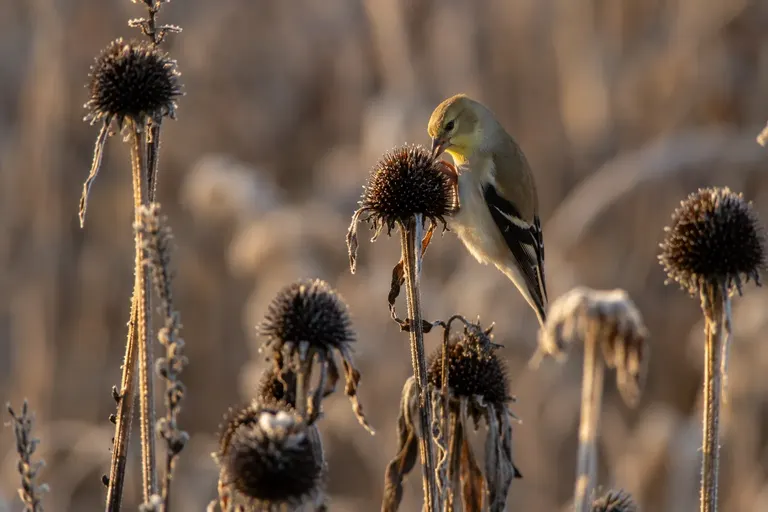
- Standing stems. Cut hollow or pithy stems such as raspberry, elderberry, sumac or bee balm to 12 to 24 inches and leave them standing. Small carpenter bees and others nest inside the next season. Our guide to seed heads to leave standing explains how this also feeds finches.
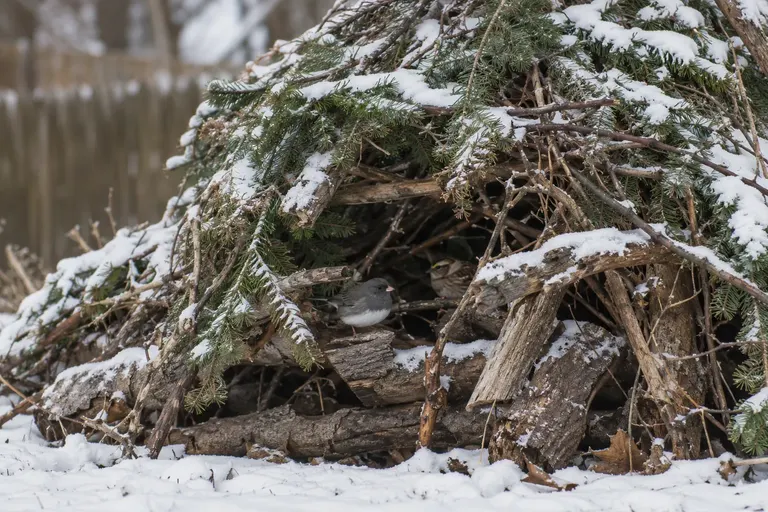
- Dead wood. A log or snag with beetle holes is a natural insect hotel. A brush pile adds cover for birds at the same time.
- Leaf litter. Leaving leaves under shrubs shelters overwintering moths, beetles and bumble bee queens. See leave the leaves for why this matters to birds.
- More flowers. Without nearby bloom from early spring to fall, no nest site will fill.
The best plan pairs one small, well-managed bee house with these features. The house gives you something to watch; the habitat does most of the work.
Common insect hotel mistakes
- Buying the biggest, most decorative hotel on the shelf.
- Hanging it where it swings, or facing it north into shade.
- Leaving it in the rain without an overhang.
- Using the same tubes year after year.
- Filling spare space with pine cones and straw.
- Using insecticides in the same garden.
Sources
Gear mentioned in this guide
Crown Bees Chalet Cedar Bee House
A compact cedar house built around replaceable nesting materials, with a deep roof overhang and a keyhole mount so you can take it down for the winter.
- Best for
- A first bee house in a small or medium garden.
- Skip it if
- You want a large, showy hotel with mixed materials for many insect groups.
- Size
- 10 in H x 10 in W x 9 in D
- Material
- Pacific Northwest cedar
- Roof overhang
- 2 in
- Capacity
- 150 paper tubes, 125 reeds or a 48-hole 8 mm wood tray
Crown Bees Tower Cedar Bee House
The same cleanable, tube-based design in a taller body, for gardens with plenty of spring and summer bloom.
- Best for
- Orchards, big vegetable gardens and yards with mason bees already nesting.
- Skip it if
- Your garden is small. More holes in one spot also means more room for parasites to build up.
- Size
- 14 in H x 10 in W x 9 in D
- Material
- Pacific Northwest cedar
- Capacity
- 280 paper tubes, or a 96-hole 8 mm and 156-hole 6 mm tray
Frequently asked questions
Do insect hotels actually work?
They work for cavity-nesting solitary bees and wasps, such as mason and leafcutter bees, when the holes are the right size, deep enough, closed at the back and cleaned or replaced every year. Large decorative hotels with pine cones, straw and open bamboo rarely help and can concentrate parasites. Most native bees nest in the ground, so bare soil and flowers matter just as much.
What size holes should an insect hotel have?
Offer holes from about 1/8 to 3/8 inch (3 to 10 mm) across. Blue orchard mason bees prefer about 5/16 inch (8 mm), and leafcutter bees prefer about 1/4 inch (6 mm). Make the holes around 6 inches (15 cm) deep for the larger sizes and 3 to 4 inches for the smallest, and always close the back end.
Which direction should an insect hotel face?
Face it east or southeast so the front catches morning sun, which warms the bees so they can start foraging early. Mount it firmly about 3 to 6 feet off the ground under a roof overhang or eave that keeps rain off the tubes. A hotel that swings in the wind or sits in full shade is far less likely to be used.
Do birds eat bees from insect hotels?
Yes, woodpeckers, chickadees and other birds sometimes pull out tubes or peck into them to reach larvae, especially in fall and winter. A cage of 1/2 or 3/4 inch hardware cloth set an inch or two in front of the holes stops most raids. Bringing tubes or cocoons into a shed or garage for winter also protects them.
Should I clean my insect hotel?
Yes. Replace paper tubes or reeds after bees emerge, and open wooden trays each fall to remove cocoons, mites and debris. Uncleaned hotels build up pollen mites, fungus and parasitic wasps year after year. If you cannot clean the materials, retire them after two seasons and start with fresh ones rather than leaving the old ones in place.