Best Dried Mealworms for Birds: Bluebirds and Wrens
The best dried mealworms for birds, compared on size, sourcing and waste. Kaytee is the easy start, a 5 lb bag suits regulars, and live worms win at nesting.
If you buy through links on this page we may earn a commission, at no cost to you. It never decides what we recommend. How we earn
In this article
- Quick picks
- How we chose
- Why mealworms attract bluebirds and wrens
- Best to start with: Kaytee Mealworms
- Best bulk bag: PICKY NEB Dried Mealworms 5 lb
- Bulk alternative: Hatortempt Dried Mealworms 5 lb
- Best for calcium: Grubbly Farms Grubblies
- Best for warm weather and wrens: C&S Mealworm Delight No Melt Suet Dough
- Best mealworm feeder: Birds Choice Recycled Bluebird Feeder
- Dried vs live mealworms: which is better for bluebirds?
- How to feed dried mealworms: step by step
- How many mealworms should you feed?
- Which birds eat dried mealworms?
- What to look for in a bag of dried mealworms
- Mealworms vs black soldier fly larvae
- How to store dried mealworms
- Common mistakes with mealworms
- Comparison table
- Sources
- Frequently asked questions
The best dried mealworms for birds depend on how many you go through: Kaytee Mealworms are the easiest way to test if your yard’s bluebirds and wrens will take dried insects, and a 5 lb bag of PICKY NEB is the better value once they do. If bluebirds are feeding nestlings, switch to live mealworms dusted with calcium, because dried worms lack the moisture and minerals growing chicks need. For wrens, a mealworm suet dough often works better than loose worms.
Quick picks
- Best to start with: Kaytee Mealworms, in 3.5, 7 or 17.6 oz sizes.
- Best bulk bag: PICKY NEB Dried Mealworms, 5 lb.
- Bulk alternative: Hatortempt Dried Mealworms, 5 lb.
- Best for calcium: Grubbly Farms Grubblies black soldier fly larvae.
- Best for warm weather and wrens: C&S Mealworm Delight No Melt Suet Dough.
- Best mealworm feeder: Birds Choice Recycled Bluebird Feeder with 1.5-inch entry holes.
Kaytee Mealworms
Oven-dried mealworms from a mainstream wild bird brand, sold in small resealable sizes that stay fresh while you learn if local birds will take them.
- Best for
- First-timers and anyone feeding a handful a day.
- Skip it if
- You go through more than a pound a month, since bulk bags cost far less per ounce.
- Sizes
- 3.5 oz, 7 oz, 17.6 oz
- Processing
- Oven dried
PICKY NEB Dried Mealworms 5 lb
Single-ingredient whole dried mealworms in a 5 lb resealable bag, labeled non-GMO with no additives.
- Best for
- Regular mealworm feeders with bluebirds or wrens visiting daily.
- Skip it if
- You lack a cool, dry, sealed spot to store 5 lb for several months.
- Size
- 5 lb
- Protein (labeled)
- Over 50%
- Ingredients
- Mealworms only
Hatortempt Dried Mealworms 5 lb
A widely sold 5 lb bag marketed for wild birds and backyard hens, useful as a second bulk option when your usual bag is out of stock.
- Best for
- Households that feed both wild birds and chickens.
- Skip it if
- You want clear country-of-origin information on the product page before you buy.
- Size
- 5 lb
- Labeling
- Non-GMO
Grubbly Farms Grubblies
Dried black soldier fly larvae, which carry far more calcium than mealworms, raised on farms in the USA and Canada.
- Best for
- Spring and summer feeding, when breeding birds need calcium for eggs and bones.
- Skip it if
- Your birds already ignore dried mealworms; larvae are firmer and some birds take time to accept them.
- Calcium (guaranteed)
- 1.0% min to 1.5% max
- Grown in
- USA and Canada
- Sizes
- 1 lb to 20 lb
C&S Mealworm Delight No Melt Suet Dough
A crumbly suet dough cake with mealworms mixed in, rated by the maker to stay solid up to 100°F.
- Best for
- Carolina Wrens, woodpeckers and other suet eaters, in a standard suet cage.
- Skip it if
- Starlings are a problem in your yard, since they relish suet dough.
- Cake weight
- 11.75 oz
- Heat rating
- Solid up to 100°F
- Fat / protein (min)
- 28% / 9%
Birds Choice Recycled Bluebird Feeder
An enclosed recycled-plastic feeder with 1.5-inch entry holes that let bluebirds in and keep bigger birds out.
- Best for
- Yards where robins, mockingbirds or starlings steal every mealworm in an open dish.
- Skip it if
- You want wrens and chickadees to share the food with bluebirds in an open, easy-to-watch dish.
- Entry holes
- 1.5 in
- Size
- 13.5 x 10.25 x 8 in
- Weight
- 5.25 lb
How we chose
We have not physically tested these products. This list is based on research: manufacturer product pages and guaranteed analyses, feeding guidance from the North American Bluebird Society and the Cornell Lab of Ornithology, and recurring patterns in verified owner feedback on major retail sites. We looked at what each product is made of, where the maker says it comes from, how it is packaged for storage, and whether owners consistently report problems such as dust, broken worms or stale smell. We only list specs the maker publishes. Where a detail is not stated, such as country of origin for some bulk bags, we say so rather than guess.
Why mealworms attract bluebirds and wrens
Bluebirds and wrens are insect eaters first. The Cornell Lab describes Eastern Bluebirds hunting caterpillars, beetles, crickets, grasshoppers and spiders by dropping to the ground from a low perch, then shifting to berries such as dogwood and juniper in colder months. Carolina Wrens eat caterpillars, moths, beetles, crickets and other insects they pick from leaf litter and tangles. Neither species cares much for the sunflower seed that fills most feeders.
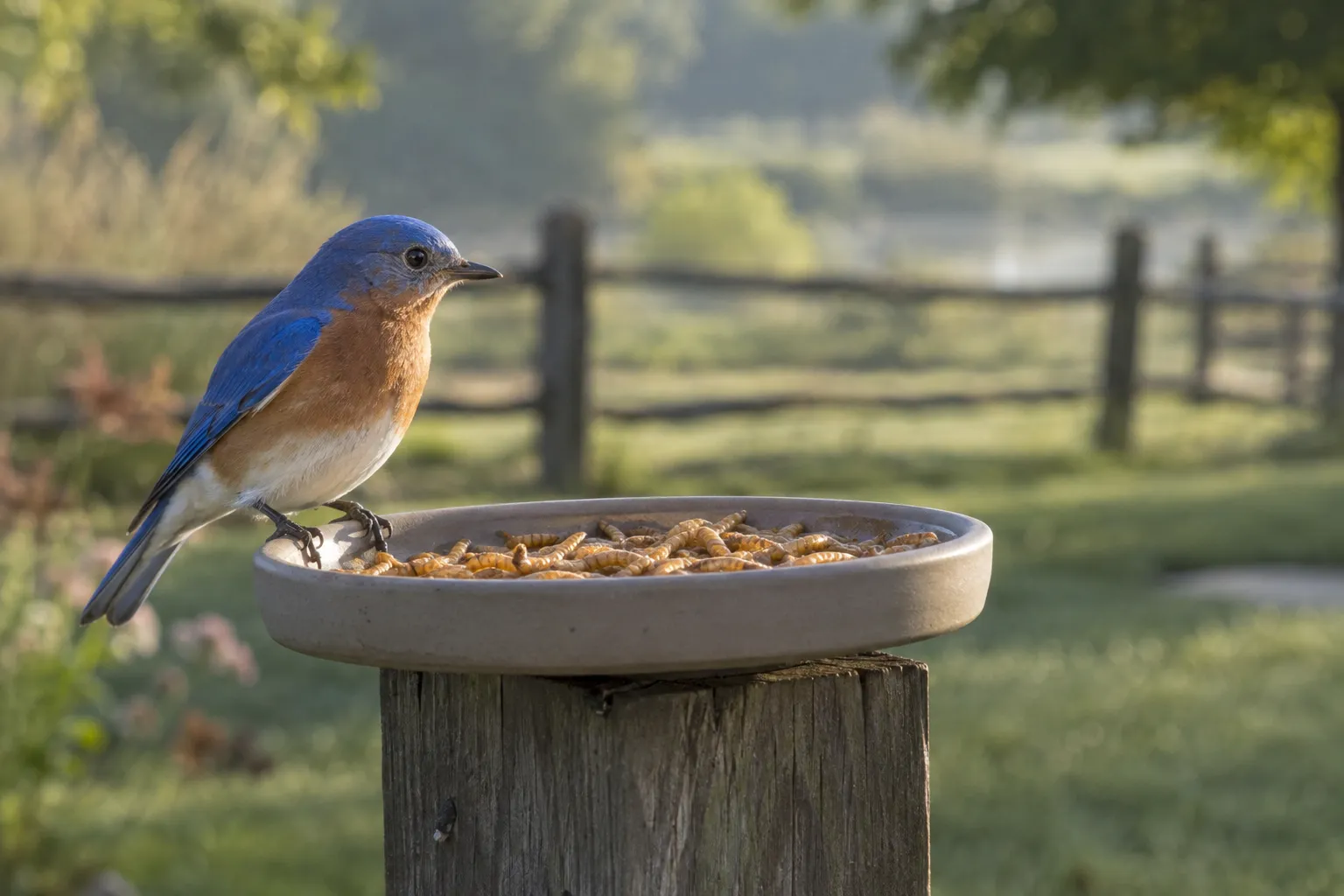
That is why mealworms work. Cornell’s Project FeederWatch calls mealworms one of the only foods that reliably attract bluebirds. They also bring in chickadees, nuthatches, titmice, robins and wrens. A small dish of mealworms can turn a bluebird that perches on your fence into one that visits within a few feet of the window.
Mealworms are not a complete diet, though. They are the larvae of a darkling beetle, and they are high in fat and protein but low in calcium. Treat them as a supplement that brings birds closer, not a replacement for the insects your yard provides.
Best to start with: Kaytee Mealworms
Kaytee’s mealworms are oven dried and sold in three small sizes: 3.5 oz, 7 oz and 17.6 oz. The maker markets them for bluebirds, wrens, robins, chickadees, woodpeckers and cardinals, and says they can be offered alone or mixed with seed.
Who it suits: anyone trying mealworms for the first time. A small pouch lets you test whether local birds will take dried worms before you commit to a bulk bag.
Strengths: easy to find in stores and online, resealable packaging, and a mainstream brand with consistent sizing. Owner feedback commonly mentions whole worms and little dust.
Drawbacks: the cost per ounce is much higher than 5 lb bags. If birds get hooked, a 17.6 oz tub can disappear within weeks.
Skip it if: you already know your bluebirds eat dried mealworms and you feed every day.
Best bulk bag: PICKY NEB Dried Mealworms 5 lb
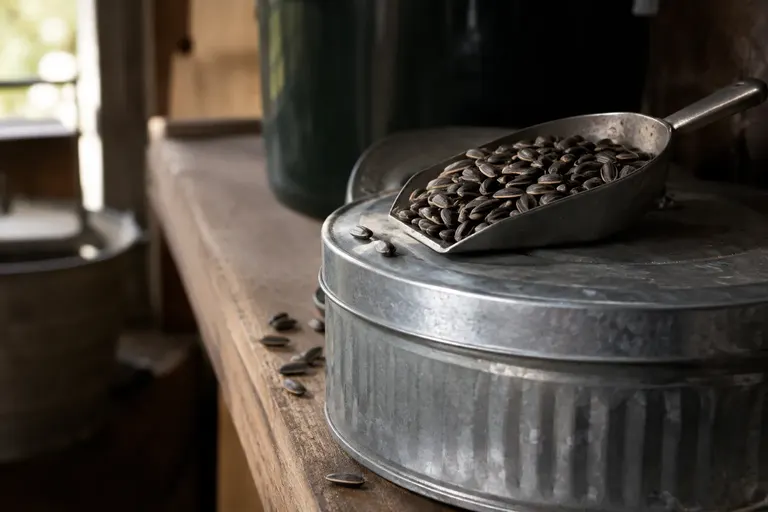
PICKY NEB sells whole dried mealworms in a 5 lb resealable bag. The maker lists the product as non-GMO, single ingredient and free of additives or preservatives, with protein stated as over 50%. Its product page does not state the country of origin or drying method.
Who it suits: yards with daily bluebird, wren or robin traffic, and people who also feed backyard chickens.
Strengths: strong value per pound, whole worms rather than broken bits, and a simple ingredient list. Owner feedback frequently mentions low dust and a mild smell for a dried insect product.
Drawbacks: 5 lb is a lot of mealworms for a small yard. Once opened, the bag needs a cool, dry, sealed spot, or the fats in the worms can go stale over time.
Skip it if: you feed only a few worms a day, or you want sourcing details printed on the product page.
Bulk alternative: Hatortempt Dried Mealworms 5 lb
Hatortempt is one of the most widely sold dried mealworm brands online, marketed for wild birds, chickens and ducks, and labeled non-GMO. It comes in a 5 lb bag.
Who it suits: households that want one bag for wild birds and a backyard flock, or a backup brand when another bulk bag is sold out.
Strengths: easy to find and widely reviewed. Owners commonly report that bluebirds and chickens take the worms readily.
Drawbacks: listings emphasize chickens as much as wild birds, and sourcing details are thin. As with any bulk dried insect, occasional owner reports mention broken worms or dust near the bottom of the bag.
Skip it if: country of origin matters to you and you cannot confirm it from the packaging.
Best for calcium: Grubbly Farms Grubblies
Grubblies are dried black soldier fly larvae rather than mealworms. Grubbly Farms states they are harvested on farms in the USA and Canada and that they carry 50 times more calcium than mealworms, with a guaranteed analysis of 1.0% to 1.5% calcium. They come in sizes from 1 lb to 20 lb.
Who it suits: hosts feeding bluebirds or wrens through spring and summer, when females need calcium to form eggshells and nestlings are growing bone.
Strengths: a real nutritional difference from mealworms on calcium, stated North American sourcing, and a size range that suits both small yards and heavy users.
Drawbacks: the larvae are firmer and darker than mealworms, and some birds ignore them at first. The brand is marketed mainly for chickens, so wild bird feedback is thinner.
Skip it if: your birds are only just learning to use a dish. Start with mealworms, then mix in a few larvae once visits are steady.
Best for warm weather and wrens: C&S Mealworm Delight No Melt Suet Dough
C&S lists this suet dough as a blend of corn, roasted peanuts, rendered beef suet, oats, soybean oil and mealworms. The cake weighs 11.75 oz, fits a standard suet cage, and the maker says it stays solid up to 100°F. The guaranteed analysis lists 28% minimum fat and 9% minimum protein.
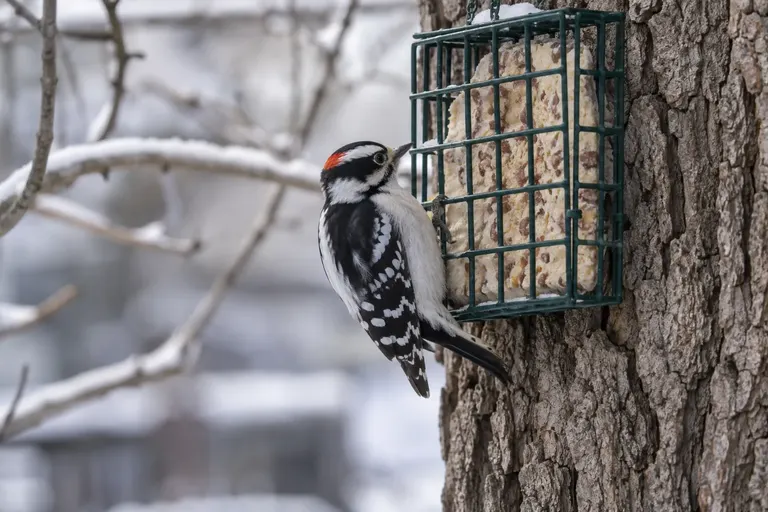
Who it suits: Carolina Wren fans, and anyone who wants insect protein out in hot weather without soaking and replacing a dish every day. C&S says it attracts sparrows, bluebirds, cardinals and other insect eaters. Woodpeckers, chickadees and nuthatches also use suet cages.
Strengths: no dish to clean, no loose worms blowing away, and a dough texture that the maker says is fully consumed without leftover waste.
Drawbacks: starlings love suet dough, and a flock can empty a cake in a day. The mealworm share is modest compared with a dish of whole worms.
Skip it if: starlings dominate your feeders. Our guide to keeping starlings and grackles off feeders covers cage feeders that help. For more suet options, see our roundup of the best suet cakes and blends.
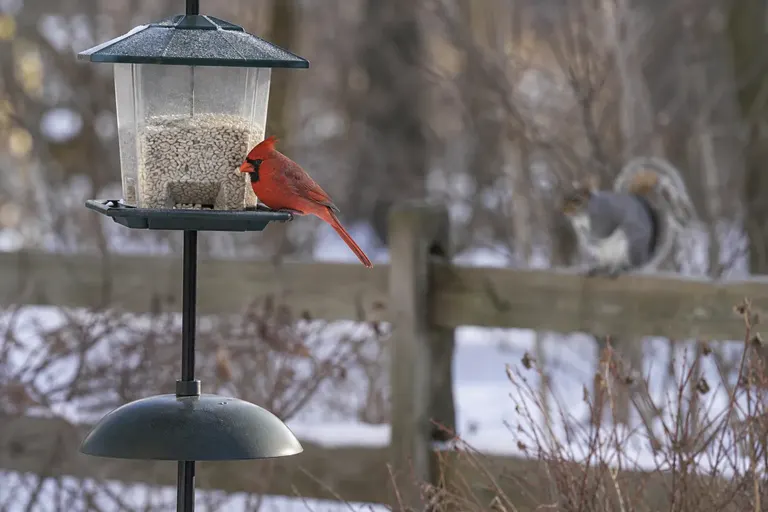
Best mealworm feeder: Birds Choice Recycled Bluebird Feeder
An open dish works well until robins, mockingbirds or starlings find it. The Birds Choice Bluebird Feeder solves that with an enclosed box that birds enter through 1.5-inch holes. The maker states it is built from recycled poly lumber with acrylic panels, aluminum hinges and stainless fasteners, measures 13.5 x 10.25 x 8 inches, weighs 5.25 lb and is made in the USA. It has an indentation for a mealworm cup, sold separately.
Who it suits: yards where larger birds take every worm before bluebirds arrive.
Strengths: durable materials that the maker guarantees not to crack, split or fade, clear panels so bluebirds can see the food, and multiple openings so birds can escape quickly.
Drawbacks: bluebirds need time to learn to go inside. Owners commonly describe leaving the panels open or placing worms on the roof at first. It is also heavy and needs a sturdy pole or hanger.
Skip it if: you want wrens, chickadees and titmice to share the food in plain view.
Dried vs live mealworms: which is better for bluebirds?
Both have a place, and the season decides.
Live mealworms are the better food during nesting. The North American Bluebird Society says only live mealworms should be used for nestlings, because dried worms do not supply enough moisture. Live worms also wriggle, and that movement catches a bluebird’s eye. Specialist suppliers sell them by count and ship them in bran. They keep for weeks in a refrigerator, but you have to feed and check them.
Dried mealworms are easier. They store at room temperature, do not escape, and cost less per serving. Outside nesting season they are a fine supplement, and many hosts start with dried worms and switch to live once a pair is feeding young.
| Factor | Dried mealworms | Live mealworms |
|---|---|---|
| Moisture | Low | High |
| Suitable for nestlings | No, per NABS | Yes |
| Storage | Sealed container, cool and dry | Refrigerator, in bran |
| Shelf life | Months if sealed | Weeks, with care |
| Attraction | Good once birds learn | Strong, movement draws birds |
| Mess and effort | Low | Moderate |
How to feed dried mealworms: step by step
- Start in the right place. Put a shallow dish 5 to 10 feet from a perch bluebirds already use, such as a fence, nest box pole or low branch. For wrens, place it near shrubs or a brush pile.
- Use a smooth-sided dish. The NABS suggests a dish or a clean tuna can. Smooth sides stop live worms from climbing out and keep dried worms from blowing away.
- Offer a small amount. A tablespoon or two is plenty at first. You can always add more.
- Soak if it is hot or dry. A 15 to 30 minute soak in warm water softens dried worms and adds moisture. Drain well before serving.
- Dust with calcium. The NABS suggests shaking worms in a bag with calcium carbonate or calcium citrate powder, or with sterilized, finely ground eggshell.
- Feed at the same times each day. Once or twice a day, morning and afternoon, keeps birds coming without creating dependence.
- Remove leftovers. Soaked worms spoil within hours in warm weather. Empty the dish each evening.
How many mealworms should you feed?
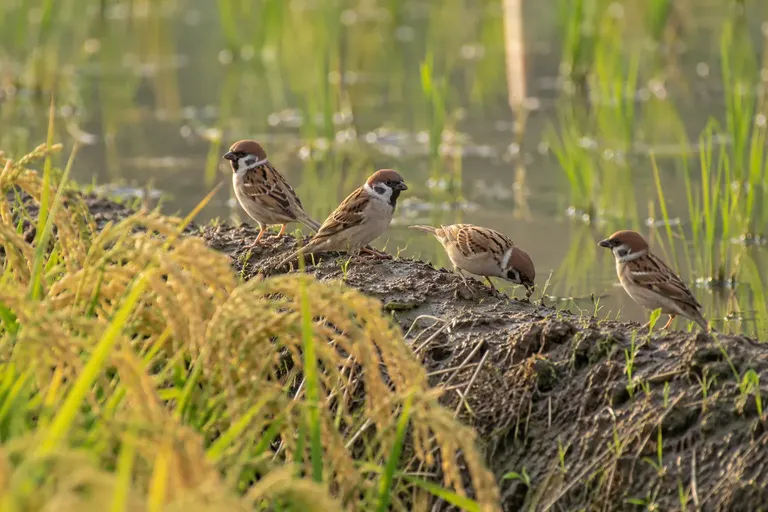
Less than most people think. The NABS says about 100 live mealworms a day, split between morning and afternoon, is enough for a pair of bluebirds with a box of nestlings. For dried worms outside the breeding season, a small handful once or twice a day is plenty. Feed more during a cold snap or a long rain, when insects are hard to find, and scale back when the weather improves.
Overfeeding has two costs. Mealworms are low in calcium, and a diet heavy in them can crowd out the varied insects nestlings need. Leftover worms also attract starlings, grackles and, at night, raccoons and mice.
Which birds eat dried mealworms?
Beyond bluebirds, the most common takers are:
- Carolina Wrens, especially in winter. Cornell notes their range has expanded north partly because of backyard feeders. See our guide to attracting Carolina Wrens.
- House Wrens, now listed by Cornell as Northern House Wren, which eat insects and spiders almost exclusively and visit dishes near cover less often. Our House Wren guide covers nest boxes.
- American Robins, which can empty an open dish quickly.
- Chickadees, titmice and nuthatches, which carry worms off one at a time.
- Northern Mockingbirds, which may defend a mealworm dish aggressively.
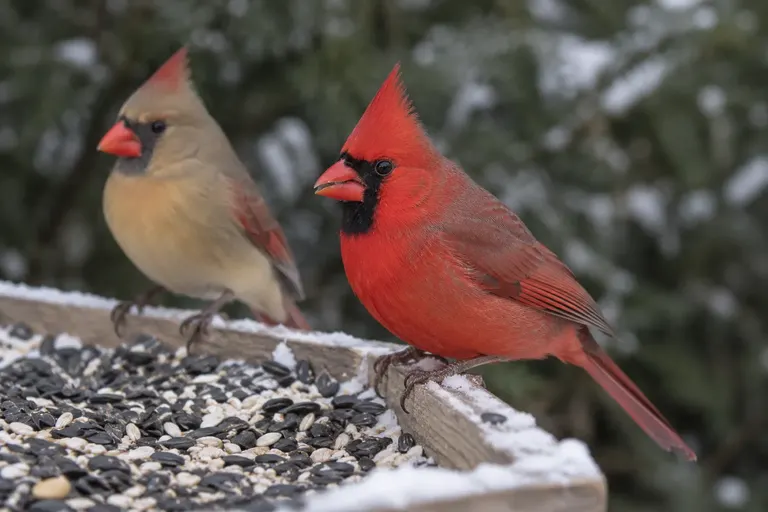
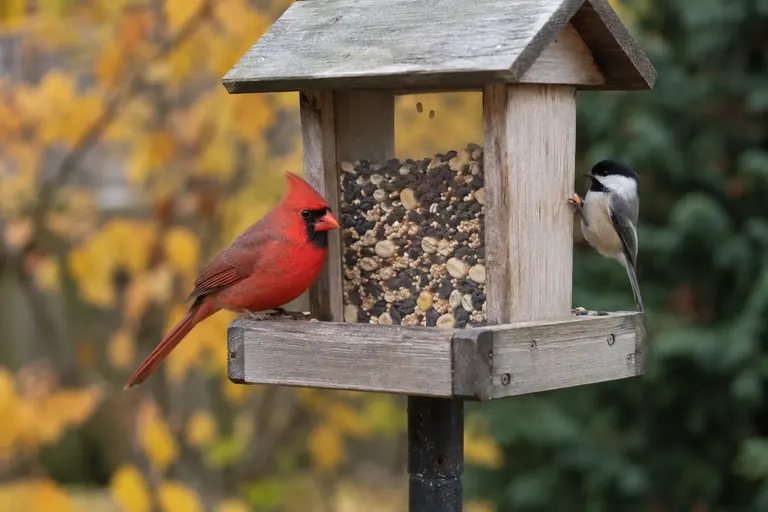
- Northern Cardinals, which will take mealworms, especially when feeding young.
If you are in the West, the same approach works for Western Bluebirds. In the East, our Eastern Bluebird guide covers nest boxes and plants.
What to look for in a bag of dried mealworms
Whole worms, little dust. Broken worms and powder at the bottom of the bag suggest rough handling or old stock. Owner reviews that mention dust are worth noting.
Single ingredient. The label should list mealworms and nothing else. Avoid products with added dyes or flavorings.
Resealable packaging. Dried insects absorb moisture and odors. A zip-top bag or tub keeps them fresh longer.
Sourcing information. Many dried mealworms sold in the US are imported, and some bags do not state where they were raised. If sourcing matters to you, look for a brand that states it on the package, or consider North American black soldier fly larvae such as Grubblies.
Size you can use. A 5 lb bag is excellent value only if you use it before it goes stale. For one or two dishes a day, a 17.6 oz tub may last a season.
Mealworms vs black soldier fly larvae
Mealworms are softer and more familiar to most feeder birds, so they are the better starting food. Black soldier fly larvae carry far more calcium. Grubbly Farms states 50 times more calcium than mealworms. That matters in spring, when females are forming eggs.
A practical approach: feed mostly mealworms, then mix in a quarter to a third larvae during nesting season. Birds that already trust the dish tend to accept the new item more readily when it is mixed with a familiar one.
How to store dried mealworms
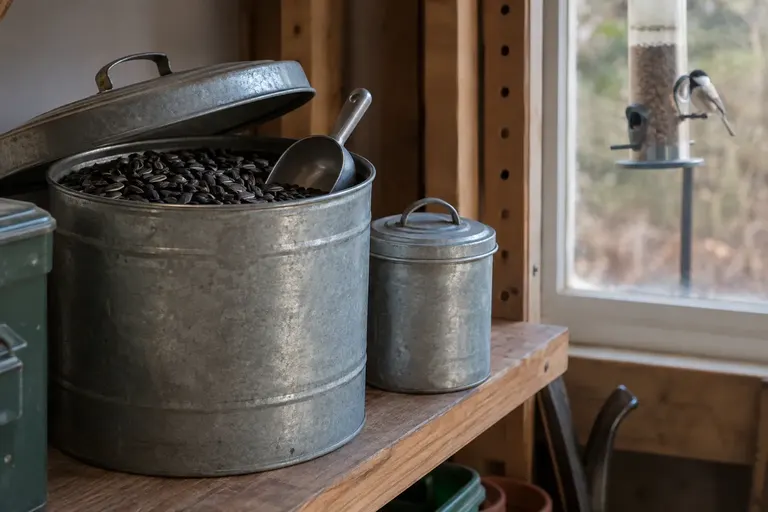
Keep them in an airtight container in a cool, dark, dry place. Heat and humidity speed up rancidity in the fats and invite pantry moths. Some hosts freeze part of a bulk bag and thaw a week’s supply at a time. Throw out any worms that smell sour or show mold. Our guide on how to store bird seed covers containers and pest prevention that apply to mealworms too.
Common mistakes with mealworms
- Feeding only dried worms to nestlings. The NABS is clear that live worms are the right food for young birds.
- Putting out too many. A heaping dish attracts starlings and robins and encourages birds to rely on one food.
- Leaving soaked worms out overnight. They spoil and draw rodents.
- Using a deep bowl with steep sides. Bluebirds prefer to land on the rim and see the worms clearly.
- Placing the dish far from any perch. Bluebirds hunt from perches and like to swoop down.
- Skipping cleaning. Wash dishes every few days with hot soapy water or a dilute bleach solution. Our guide to cleaning bird feeders covers the details.
Comparison table
| Product | Type | Size | Key detail | Best for |
|---|---|---|---|---|
| Kaytee Mealworms | Dried mealworms | 3.5, 7, 17.6 oz | Oven dried | First-timers |
| PICKY NEB Dried Mealworms | Dried mealworms | 5 lb | Protein labeled over 50% | Daily feeders |
| Hatortempt Dried Mealworms | Dried mealworms | 5 lb | Non-GMO labeled | Birds and backyard hens |
| Grubbly Farms Grubblies | Dried black soldier fly larvae | 1 to 20 lb | 1.0 to 1.5% calcium | Nesting season |
| C&S Mealworm Delight | Suet dough with mealworms | 11.75 oz cake | Solid up to 100°F | Wrens, summer |
| Birds Choice Bluebird Feeder | Enclosed feeder | 13.5 x 10.25 x 8 in | 1.5 in entry holes | Excluding larger birds |
Sources
- North American Bluebird Society: Mealworms fact sheet
- Cornell Lab Project FeederWatch: Feeding birds
- Cornell Lab All About Birds: Eastern Bluebird life history
- Cornell Lab All About Birds: Carolina Wren life history
- Kaytee: Mealworms
- Grubbly Farms: Grubblies
- C&S: Mealworm Delight No Melt Suet Dough
- Birds Choice: Bluebird Feeder in Recycled Plastic
Frequently asked questions
Are dried mealworms good for bluebirds?
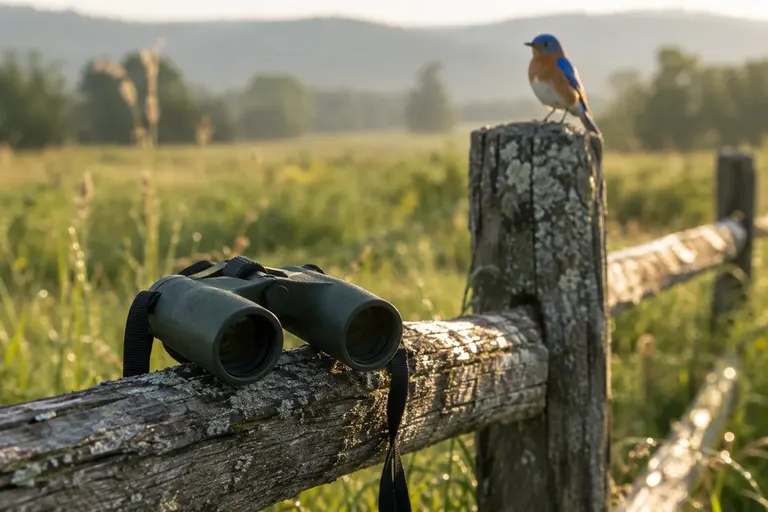
Yes, as a supplement. Dried mealworms are high in protein and fat and are one of the few foods that reliably draw bluebirds to a feeder. They are low in calcium and moisture, so the North American Bluebird Society advises live mealworms for nestlings and suggests dusting worms with calcium carbonate powder. Offer a limited amount once or twice a day.
Should I soak dried mealworms before feeding?
Soaking is optional but often helps. A 15 to 30 minute soak in warm water softens the worms and adds moisture, which some birds prefer, especially in hot weather. Only soak what birds will eat in a few hours, because wet mealworms spoil quickly. Discard any leftovers at the end of the day and wash the dish.
How many mealworms should I put out for bluebirds?
Keep it modest. The North American Bluebird Society suggests about 100 live mealworms a day, split between morning and afternoon, is adequate for a pair feeding nestlings. Outside nesting season, a small handful once or twice a day is plenty. Mealworms are a supplement, and too many can crowd out the varied insect diet adults and young need.
Do wrens eat dried mealworms?
Carolina Wrens are frequent takers of mealworms and suet with insects mixed in, especially in winter when insects are scarce. House Wrens are almost entirely insectivorous and visit feeders less often, but some will take mealworms from a dish near cover. Placing the dish close to shrubs improves the odds for both species.
Is black soldier fly larvae better than mealworms for wild birds?
It is higher in calcium. Grubbly Farms states its larvae carry 50 times more calcium than mealworms, which matters for egg-laying birds. Mealworms are softer and more readily accepted at first. Many hosts offer mostly mealworms and mix in some larvae during spring and summer, rather than switching completely.