Winter Berry Shrubs for Birds: Best Picks With Lasting Fruit
Winter berry shrubs for birds: winterberry, native hollies, sumac, chokeberry, viburnum, hawthorn and juniper hold fruit into late winter. What to plant where.
In this article
- Quick answer: top winter berry shrubs
- Why do some berries last all winter?
- Which birds depend on winter berries?
- What are the best berry shrubs for winter by region?
- How do you get the most berries from your shrubs?
- How do you plant a winter berry shrub?
- Can you grow winter berry shrubs in a small yard or container?
- Do birds get drunk on winter berries?
- Are winter berries safe for people and pets?
- Which berry plants should you avoid?
- Common mistakes with winter berry shrubs
- What does this mean for backyard birders?
- Quick facts
- Sources
- Frequently asked questions
The best winter berry shrubs for birds are the ones with persistent fruit, berries that hang on the branches long after the leaves drop. In North America, winterberry holly, American holly, yaupon, sumacs, chokeberries, American cranberrybush viburnum, coralberry, native roses, hawthorns and junipers are reliable choices. In Europe, holly, hawthorn, dog rose, guelder rose and ivy do the same job.
These plants act like a natural feeder that refills every year. Their fruit is there in January and February, when insects are gone and seed supplies have been picked over, and it pulls in species that rarely visit seed feeders: robins, waxwings, bluebirds, mockingbirds and thrushes. This guide explains why some berries last and others vanish, lists the best shrubs by region and covers planting tips and plants to avoid.
Quick answer: top winter berry shrubs
| Shrub | Native range (general) | Fruit held | Key birds |
|---|---|---|---|
| Winterberry holly (Ilex verticillata) | Eastern North America | Fall into late winter | Robins, bluebirds, waxwings, mockingbirds |
| American holly (Ilex opaca) | Eastern and southeastern US | Winter | Robins, mockingbirds, Cedar Waxwings |
| Yaupon holly (Ilex vomitoria) | Southeastern US | Winter | Bluebirds, mockingbirds, waxwings |
| Possumhaw (Ilex decidua) | Southern and central US | Winter | Robins, bluebirds, waxwings |
| Staghorn and smooth sumac (Rhus) | Much of North America | All winter | Bluebirds, flickers, robins, thrushes |
| Chokeberries (Aronia) | Eastern North America | Into late winter | Robins, waxwings, thrushes |
| American cranberrybush (Viburnum trilobum) | Northern North America | Into late winter | Waxwings, robins, grosbeaks |
| Coralberry (Symphoricarpos orbiculatus) | Central and eastern US | Winter | Robins, thrushes, bluebirds |
| Native roses (Rosa species) | Across North America | Hips all winter | Thrushes, bluebirds, waxwings |
| Hawthorns (Crataegus) | North America and Europe | Varies; some into winter | Waxwings, robins, thrushes |
| Eastern red cedar and other junipers | Widespread | Cones all winter | Waxwings, bluebirds, Yellow-rumped Warblers |
| Toyon (Heteromeles arbutifolia) | California | Winter | Robins, waxwings, mockingbirds |
Always confirm that a plant is native and suited to your specific area. Audubon’s native plants database lets US gardeners search by ZIP code.
Why do some berries last all winter?
Fruit-eating birds face a seasonal puzzle, and shrubs have evolved different answers to it.
Fall fruits are rich and eaten fast
Many shrubs ripen fruit in late summer and fall that is high in fat. Flowering dogwood, spicebush, Virginia creeper, sassafras and magnolias are good examples. Their fruits are a fuel stop for migrating thrushes, vireos and catbirds, and they usually disappear within days or weeks of ripening. That fits the plant’s strategy: get seeds dispersed by migrants traveling long distances.
Winter fruits are leaner and last longer
Persistent fruits are generally lower in fat, and some are high in water and sugar or contain bitter or acidic compounds that make them less attractive early in the season. Birds tend to leave them while richer foods are available. As winter goes on and those foods run out, the persistent fruit becomes the best meal around. Many also soften and seem to become more palatable after repeated freezing and thawing.
For the plant, this is a second dispersal strategy: feed resident and wintering birds, which then spread seeds across the landscape in late winter and spring.
Why that matters in your garden
A garden with only fall-fruiting shrubs may be buzzing with birds in October and empty by January. A mix of fall and winter fruiting plants spreads the food over many months. Our guide on designing a small bird-friendly garden shows how to fit several of these into a small space.
Which birds depend on winter berries?
Winter fruit is especially important for species that do not use seed feeders.
- American Robins. Many robins do not migrate far, or at all. In winter they switch from worms to fruit and travel in flocks between fruiting trees and shrubs. See our American Robin guide.
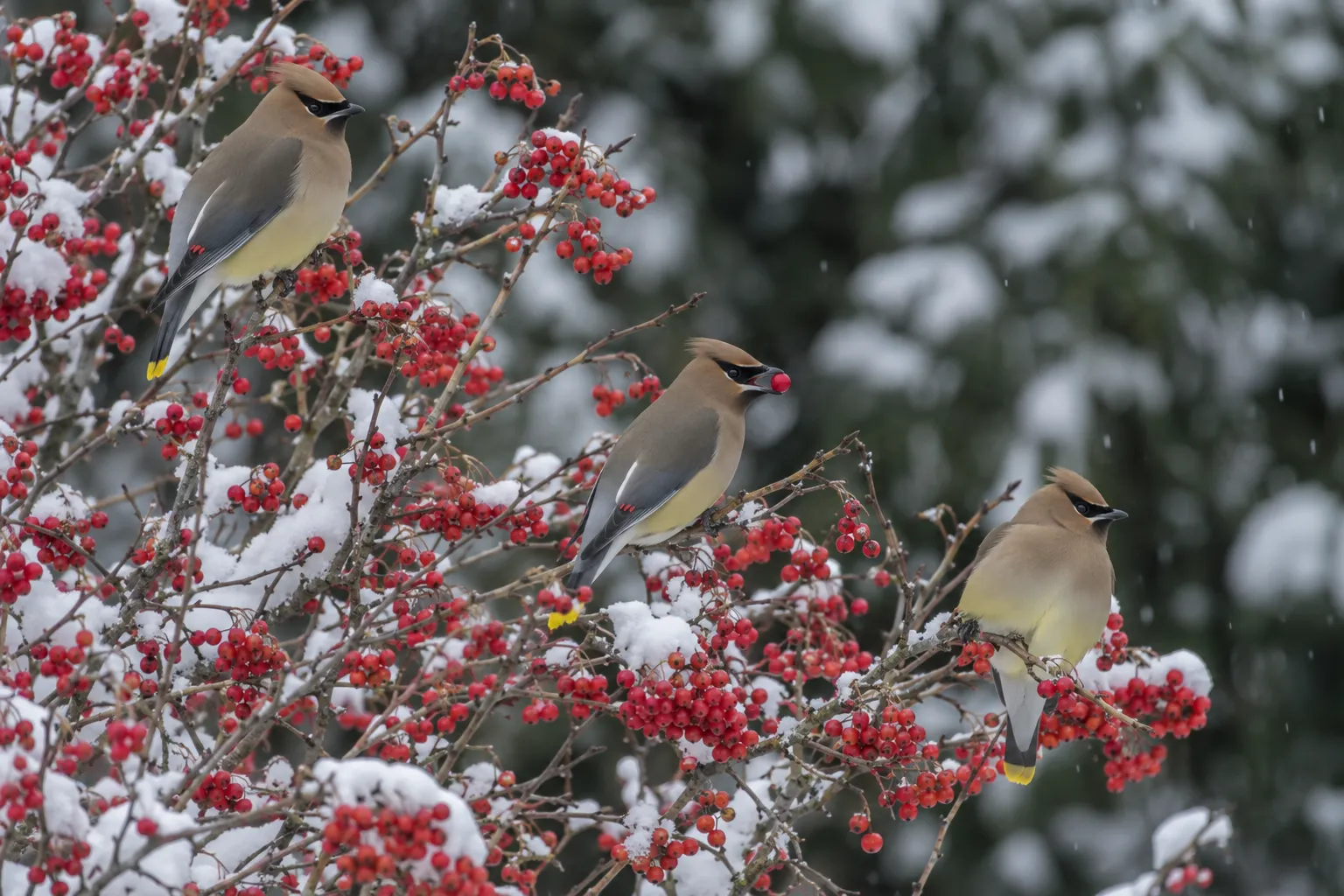
- Cedar Waxwings. Among the most fruit-dependent birds in North America, they wander in flocks tracking berry crops. Our Cedar Waxwing guide covers their feeding habits.
- Eastern and Western Bluebirds. They eat insects in summer but rely heavily on fruit in winter, including sumac, holly, juniper and dogwood. See our Eastern Bluebird guide.
- Northern Mockingbirds. Individuals often defend a fruiting shrub or tree as a winter feeding territory, chasing other birds away. Our Northern Mockingbird guide explains the behavior.
- Hermit Thrushes, Yellow-rumped Warblers and Northern Flickers. All take winter fruit. Yellow-rumped Warblers are unusual among warblers in being able to digest the wax on bayberry and wax myrtle fruit.
In Europe the list includes Blackbirds, Song and Mistle Thrushes, winter visitors such as Redwings and Fieldfares, European Robins and Blackcaps. Mistle Thrushes are known for defending holly or mistletoe clumps through winter, much as mockingbirds defend a shrub. In irruption years, Bohemian Waxwings arrive in western Europe and strip rowan, cotoneaster and rose hips in towns and supermarket parking lots.
What are the best berry shrubs for winter by region?
Regional choice matters more than any single “best” plant. These are widely recommended natives; always check what grows naturally near you.
Northeast and Midwest US
- Winterberry holly. The standout winter shrub for wet or average soil. Berries often last into February unless a flock of robins or waxwings finds them first.
- American cranberrybush viburnum. Bright red clusters that persist into late winter.
- Chokeberries. Red and black species, compact and adaptable.
- Staghorn and smooth sumac. Fuzzy red seed heads that last all winter and are eaten when little else remains.
- Eastern red cedar. Evergreen cover plus berry-like cones.
- Native roses. Pasture rose and swamp rose keep hips through winter.
Southeast US
- Yaupon holly and possumhaw. Evergreen and deciduous hollies respectively, both heavy fruiters on female plants.
- American holly. A tall evergreen that doubles as roosting cover.
- Wax myrtle. Waxy gray fruit important to Yellow-rumped Warblers and Tree Swallows along the coast.
- American beautyberry. Striking purple fruit in fall; not as persistent as hollies but valuable into early winter.
- Coralberry. A tough, low shrub for shade.
West and Pacific Coast
- Toyon. California’s classic winter berry shrub, with red fruit clusters from late fall into winter.
- Junipers. Rocky Mountain, Utah and western junipers feed Townsend’s Solitaires, which defend juniper territories through winter.
- Snowberry (Symphoricarpos albus). White berries that persist; widespread in the West.
- Native roses and hawthorns. Nootka rose and black hawthorn in the Pacific Northwest.
UK and northern Europe
- Holly (Ilex aquifolium). Evergreen cover and winter berries on female plants.
- Hawthorn (Crataegus monogyna). Heavy haw crops eaten by thrushes through winter.
- Guelder rose (Viburnum opulus). Translucent red berries often eaten later in winter.
- Dog rose. Hips last well into winter.
- Ivy (Hedera helix). Flowers in fall and ripens fruit in late winter and early spring, filling the gap when most other fruit has gone. In its native European range it is one of the most valuable plants for birds; in North America it is invasive and should not be planted.
Mediterranean Europe and Turkey
- Strawberry tree (Arbutus unedo). Flowers and fruits in autumn and winter; eaten by thrushes and Blackcaps.
- Hawthorn, juniper and myrtle. Drought-tolerant and widely eaten by wintering thrushes and robins.
- Sea buckthorn and rose hips in cooler inland areas of Turkey.
Brazil and warm climates
Winters are mild and many plants fruit at different times, so aim for a sequence of fruiting species through the year. Brazilian pepper tree or aroeira (Schinus terebinthifolia) is native to Brazil and fruits in autumn and winter, feeding many birds there, although it is a serious invasive in Florida and Hawaii and should not be planted outside its range. Pitanga, native Myrsine species (capororoca) and other myrtles help fill the calendar.
How do you get the most berries from your shrubs?
Plant males for hollies
Hollies are dioecious: separate male and female plants. Only females produce berries, and they need a male of the same species with an overlapping bloom time nearby. Nurseries often label matched male cultivars for popular female winterberry varieties. One male can serve several females; keep them reasonably close, within the same garden.
Give them sun
Most fruiting shrubs flower and fruit best in full sun or light shade. A shrub in deep shade may grow leaves but produce few berries.
Plant in groups
A cluster of three to five shrubs produces a crop large enough for a flock to notice and keeps pollinators moving between plants.
Prune at the right time
Many shrubs flower on the previous year’s wood. Pruning in fall or winter removes next year’s flowers and berries. Prune lightly right after flowering if you must, and never shear berry shrubs into tight shapes.
Plant a sequence
Combine early fruiting plants such as serviceberry, fall fruit such as dogwood and spicebush, and persistent winter fruit. Our guide to fruit for birds covers offering fruit directly, too.
How do you plant a winter berry shrub?
Fall and early spring are the best planting times in most temperate climates, because cool weather and regular rain let roots establish before summer heat. In hot, dry climates such as the Mediterranean, the US Southwest or central Turkey, autumn planting usually works best, giving shrubs the wet season to settle in.
- Pick the spot. Choose full sun or light shade, check the mature width on the label and allow enough room so the shrub will not need heavy pruning later.
- Test the drainage. Dig a hole and fill it with water. If it drains within a few hours, most shrubs will be fine. Winterberry, chokeberries and possumhaw tolerate wetter soil; sumac, junipers and toyon prefer good drainage.
- Dig wide, not deep. Make the hole two to three times as wide as the root ball and no deeper. The top of the root ball should sit level with or slightly above the surrounding soil.
- Loosen circling roots. Tease apart roots that wrap around the pot so they grow outward.
- Backfill with native soil. Heavy amendments in the planting hole can make roots stay put rather than spread into surrounding soil.
- Water deeply and mulch. Spread 2 to 3 inches of shredded leaves or wood chips, kept a few inches away from the stems.
- Water through the first year. Give a deep soak about once a week in dry spells until the shrub is established.
Most berry shrubs start fruiting within two to four years of planting, and crops increase as the plants mature. Hollies can vary from year to year, and a heavy crop one year may be followed by a lighter one.
Can you grow winter berry shrubs in a small yard or container?
Yes. Many species have compact forms. Dwarf winterberry cultivars stay around 3 to 5 feet tall, chokeberries come in low-growing selections, and coralberry and snowberry are naturally small. A single large container, at least 18 to 24 inches across, can hold a compact winterberry or chokeberry on a patio, although potted shrubs dry out faster and may need winter protection in cold regions, because roots in pots are more exposed to freezing than roots in the ground.
On a small lot, use berry shrubs as the backbone of a mixed border or hedge, where they double as screening. A short row of hollies with one male at the end, or a hedge of hawthorn, dog rose and holly in Europe, gives birds both food and cover in very little space.
Do birds get drunk on winter berries?
Occasionally, yes. When berries freeze and thaw repeatedly, some of their sugars can ferment, producing ethanol. Birds that gorge on fermented fruit, especially waxwings, which can eat large amounts quickly, have been recorded acting disoriented, falling from branches or striking windows. Such cases are unusual and are seen most often in late winter and early spring. Keeping shrubs a sensible distance from large windows, or marking the glass, reduces the risk of collisions when this happens.
Are winter berries safe for people and pets?
Many berries that birds eat safely are not safe for people or pets. Holly berries, for example, can cause vomiting and diarrhea in children and dogs if eaten in quantity, and yew seeds are highly toxic. Birds process many fruits differently from mammals. If you have small children or pets that chew plants, check each species with your local extension service or poison control guidance, and choose placement accordingly. Chokeberries and elderberries are eaten by people, but typically after cooking or processing.
Which berry plants should you avoid?
Some widely planted shrubs are invasive, spreading into woodlands where they crowd out native plants. Birds eat their fruit and scatter the seeds, which is exactly how they spread.
- Bush honeysuckles (Lonicera maackii, L. tatarica and relatives): fruit is abundant but tends to be sugary and lower in fat than many native fall fruits.
- Autumn olive and Russian olive
- Japanese barberry
- Multiflora rose
- Asian bittersweet
- Common and glossy buckthorn: fruit has a laxative effect.
- Nandina (heavenly bamboo): berries contain cyanogenic compounds, and mass Cedar Waxwing deaths after birds gorged on them have been documented in the southeastern US.
- Brazilian pepper outside its native range.
- English ivy in North America.
- Some cotoneasters in the UK, several of which are listed as invasive.
Check your state, provincial or national invasive plant list before buying. Local nurseries that specialize in natives are a good source of alternatives.
Common mistakes with winter berry shrubs
- Buying a single female holly. No male, no berries.
- Choosing sterile or low-fruiting cultivars. Check the label or ask the nursery.
- Pruning in late winter. You remove the buds that become next year’s fruit.
- Planting only fall fruit. It is gone by December.
- Expecting berries to last forever. A flock of waxwings or robins can strip a shrub in an afternoon. That is success, not failure.
- Spraying pesticides. They reduce pollinators and the insects birds also need.
What does this mean for backyard birders?
Winter fruit shrubs bring species that feeders cannot. They also provide cover from wind and predators, especially evergreen hollies and junipers, which double as night roosts. On the coldest days, a yard with both fruit and a seed feeder offers the full menu. Our guide on what to feed birds in winter covers the feeder side, and seed heads to leave standing covers the other natural food source.
Quick facts
- Persistent berries are generally lower in fat and eaten late in winter.
- High-fat fall berries are eaten quickly by migrants.
- Hollies need a male plant for the females to fruit.
- Robins, waxwings, bluebirds and mockingbirds depend on winter fruit.
- Ivy is valuable in Europe but invasive in North America.
- Nandina berries can poison Cedar Waxwings.
- Plant groups of shrubs in sun for the biggest crops.
Sources
Frequently asked questions
What shrubs keep their berries all winter for birds?
Shrubs with persistent fruit include winterberry and other deciduous hollies, American holly, yaupon, staghorn and smooth sumac, chokeberries, American cranberrybush viburnum, coralberry, native roses, many hawthorns and small-fruited crabapples. Eastern red cedar and other junipers hold berry-like cones. In Europe, holly, hawthorn, dog rose and ivy fill the same role.
Why do some berries last all winter and others disappear in fall?
Fall fruits such as dogwood, spicebush and Virginia creeper are rich in fat and are eaten quickly by migrating birds. Persistent winter fruits tend to be lower in fat and less appealing at first, so they stay on the plant. Many become more palatable after repeated freezing and thawing and are eaten in late winter, when food is scarce.
Do I need a male and female winterberry?
Yes. Winterberry and other hollies are dioecious: only female plants produce berries, and they need a compatible male of the same species nearby that blooms at the same time. Nurseries usually sell matched males. One male can pollinate several females planted within reasonable bee-flying distance.
Which birds eat winter berries?
American Robins, Cedar Waxwings, Eastern and Western Bluebirds, Northern Mockingbirds, Hermit Thrushes, Yellow-rumped Warblers, Northern Flickers and Gray Catbirds that overwinter all eat winter fruit in North America. In Europe, Blackbirds, Mistle Thrushes, Fieldfares, Redwings, Robins, Blackcaps and Bohemian Waxwings rely heavily on berries.
Are nandina berries poisonous to birds?
Nandina, or heavenly bamboo, produces berries that contain cyanogenic compounds. Cedar Waxwings that gorged on them have been reported dying in the southeastern US. Nandina is also invasive in parts of the Southeast. Removing fruiting nandina, or at least cutting off the berries, and planting native alternatives is the safer choice.