Small Bird-Friendly Garden Design: A Layer-by-Layer Plan
A small bird-friendly garden layers native plants from ground to canopy, adds clean shallow water, dense cover and year-round food, and skips pesticides.
In this article
- Quick answer: the small-garden checklist
- What do birds need from a small garden?
- How do you plan the layout of a small bird garden?
- Which plants should go in a small bird-friendly garden?
- How can a tiny garden, patio or balcony help birds?
- What should you avoid in a bird-friendly garden?
- How do you match plants to sun, shade and soil?
- What does a bird garden offer through the seasons?
- Should a small garden include a feeder and a nest box?
- How long does it take for birds to use a new garden?
- Common mistakes in small bird garden design
- Quick facts
- Sources
- Frequently asked questions
A small bird-friendly garden works by packing the four things birds need, food, water, cover and nesting places, into layers that stack vertically rather than spreading out. In practice that means one small native tree, a band of dense shrubs, native flowers and grasses that leave seed heads, some leaf litter on the ground, a shallow bath and no pesticides. Even a 20 by 30 foot yard or a balcony can support far more birds than a lawn of the same size.
Space is less limiting than it looks. Birds use gardens in three dimensions and move between neighboring yards, so a small plot that offers what the surrounding area lacks can punch above its weight. This guide walks through the design principles, a sample layout, plant choices by region and the mistakes that quietly keep birds away.
Quick answer: the small-garden checklist
| Element | What to include | Why birds need it |
|---|---|---|
| Canopy | One small native tree | Perches, song posts, nest sites, insect food |
| Shrub layer | 3 to 7 dense native shrubs | Escape cover, nesting, berries |
| Flowers and grasses | Native perennials that set seed | Insects in summer, seeds in fall and winter |
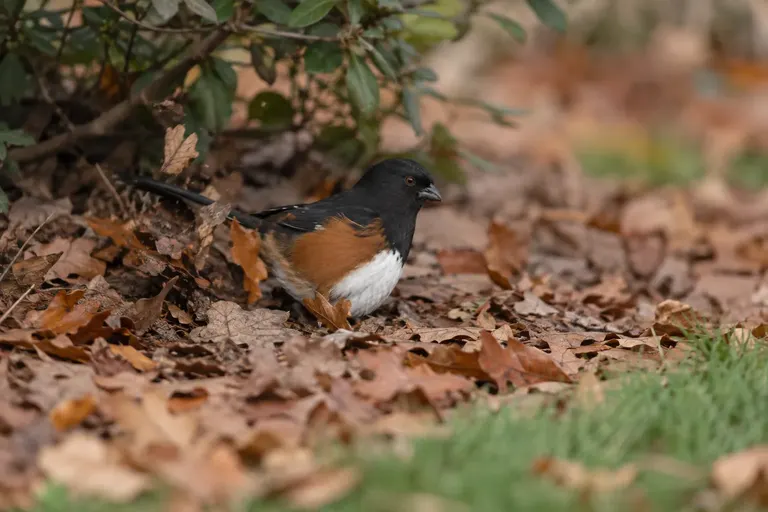
| Ground layer | Leaf litter, groundcovers, a brush pile | Foraging for sparrows, thrushes, wrens |
| Water | Shallow bath, 1 to 2 inches deep | Drinking and bathing all year |
| Nest sites | A nest box sized for local species | Cavity nesters lack natural holes |
| Safety | Window treatments, cats indoors, no pesticides | Removes the biggest hidden killers |
What do birds need from a small garden?
Birds visit a garden when it meets needs that are hard to find elsewhere. Food, water and shelter are the core, but how they are arranged matters as much as what is present.
Food through the whole year
Most garden birds eat seeds, fruit or both for much of the year, yet almost all North American songbirds, and most European ones, feed their nestlings insects. Research by entomologist Douglas Tallamy and colleagues estimated that a pair of Carolina Chickadees needs thousands of caterpillars, somewhere between about 6,000 and 9,000, to raise a single brood. A small garden that produces caterpillars in spring does more for breeding birds than a feeder alone.
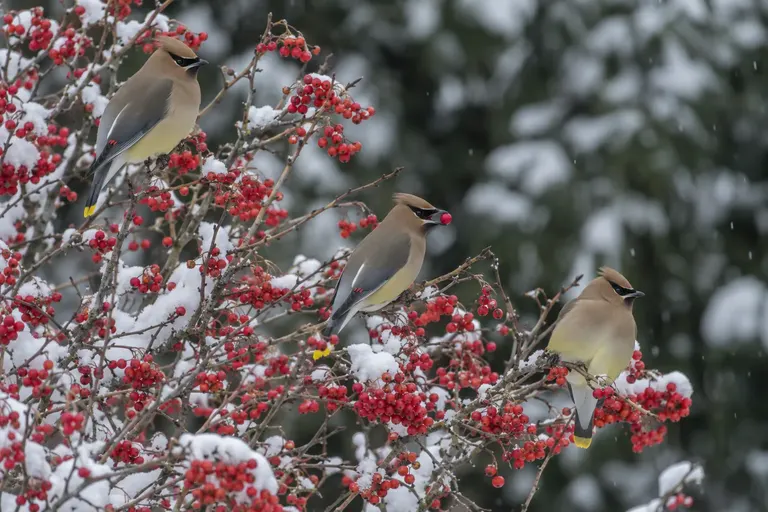
Seeds and berries matter most from late summer through winter. Our guides to berry shrubs that feed birds all winter and seed heads to leave standing for winter finches cover those seasons in detail.
Water
Clean, shallow water is one of the fastest ways to attract birds, including species that never use feeders, such as warblers and thrushes. A single bath placed well can serve a whole block. See where to put a bird bath for placement.
Cover
Birds need somewhere to dive when a hawk or cat appears, somewhere to rest out of the wind and somewhere to hide a nest. Dense shrubs, evergreens and tangles provide it. A garden with food but no cover often attracts fewer birds, because they feel exposed.
Nesting places
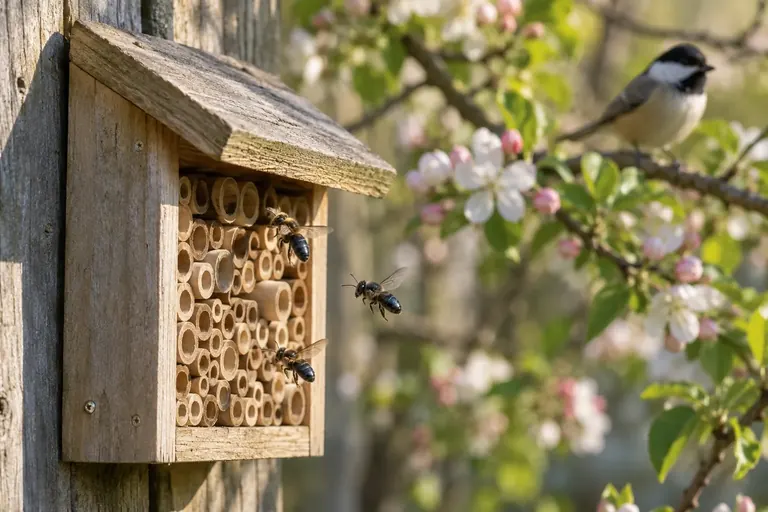
Shrubs and small trees host open-cup nesters such as cardinals, robins and Blackbirds. Cavity nesters, including chickadees, tits, wrens and bluebirds, need holes that tidy suburbs rarely provide, which is where a nest box helps.
How do you plan the layout of a small bird garden?
Start with a quick sketch of your space. Mark the house, windows, fence lines, sun and shade patterns, existing trees and where you sit or look out most. Then work through these steps.
- Decide what the garden is for. Most people want to see birds from a window or patio. Design the view first.
- Put the tallest layer at the back or edges. A small tree in a corner and shrubs along the fence create a green wall that shelters the space and blocks wind.
- Step down toward the viewing point. Shrubs, then perennials and grasses, then groundcovers. Birds can move down through the layers to feed and back up to hide.
- Create an edge, not an island. Birds like the boundary between cover and open space. A curved bed edge gives more of that boundary than a straight line.
- Place water where birds feel safe. A bath 5 to 10 feet from shrubs lets birds reach cover quickly without giving cats a hiding place right next to the water.
- Place feeders with windows in mind. Cornell Lab recommends feeders either within about 3 feet of a window or more than 30 feet away, which reduces fatal collisions.
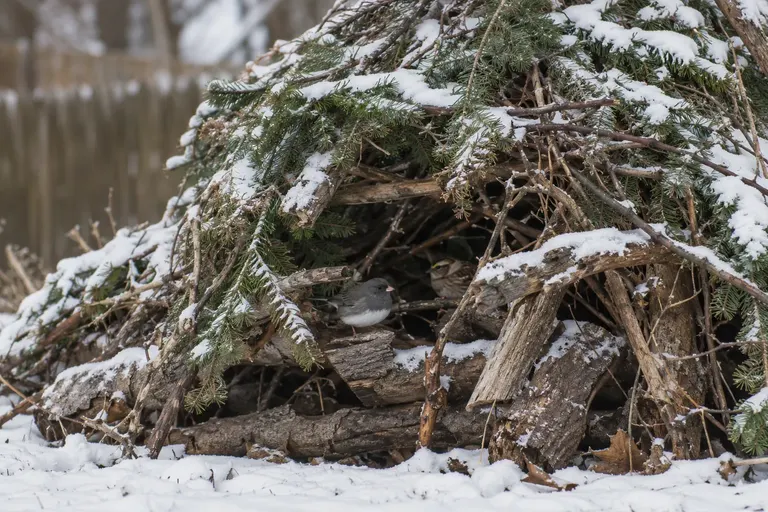
- Leave a quiet corner. A spot left untidy, with leaf litter, a log or a small brush pile, becomes the busiest foraging zone in winter.
- Plan for all four seasons. Aim for something in flower, fruit or seed in every month you can.
A sample plan for a 20 by 30 foot backyard
This example suits a typical temperate US yard. Swap plants for local natives where you live.
| Zone | Size | Plants and features |
|---|---|---|
| Back corner | 10 x 10 ft | One serviceberry or native dogwood; underplant with ferns and leaf litter |
| Fence line | 3 to 5 ft deep, full length | Viburnums, winterberry holly, native roses, an evergreen such as a compact juniper or holly |
| Middle beds | Two 6 x 8 ft beds | Coneflowers, black-eyed Susans, asters, goldenrods, native grasses such as little bluestem |
| Near the house | 3 ft strip | Low native groundcovers, a hummingbird plant such as native columbine or bee balm |
| Open center | Path and small lawn or gravel area | Room to sit and watch, and a place for robins to hunt |
| Features | Scattered | Shallow bath near the shrubs, a nest box on a pole with a baffle, a small brush pile in the back corner |
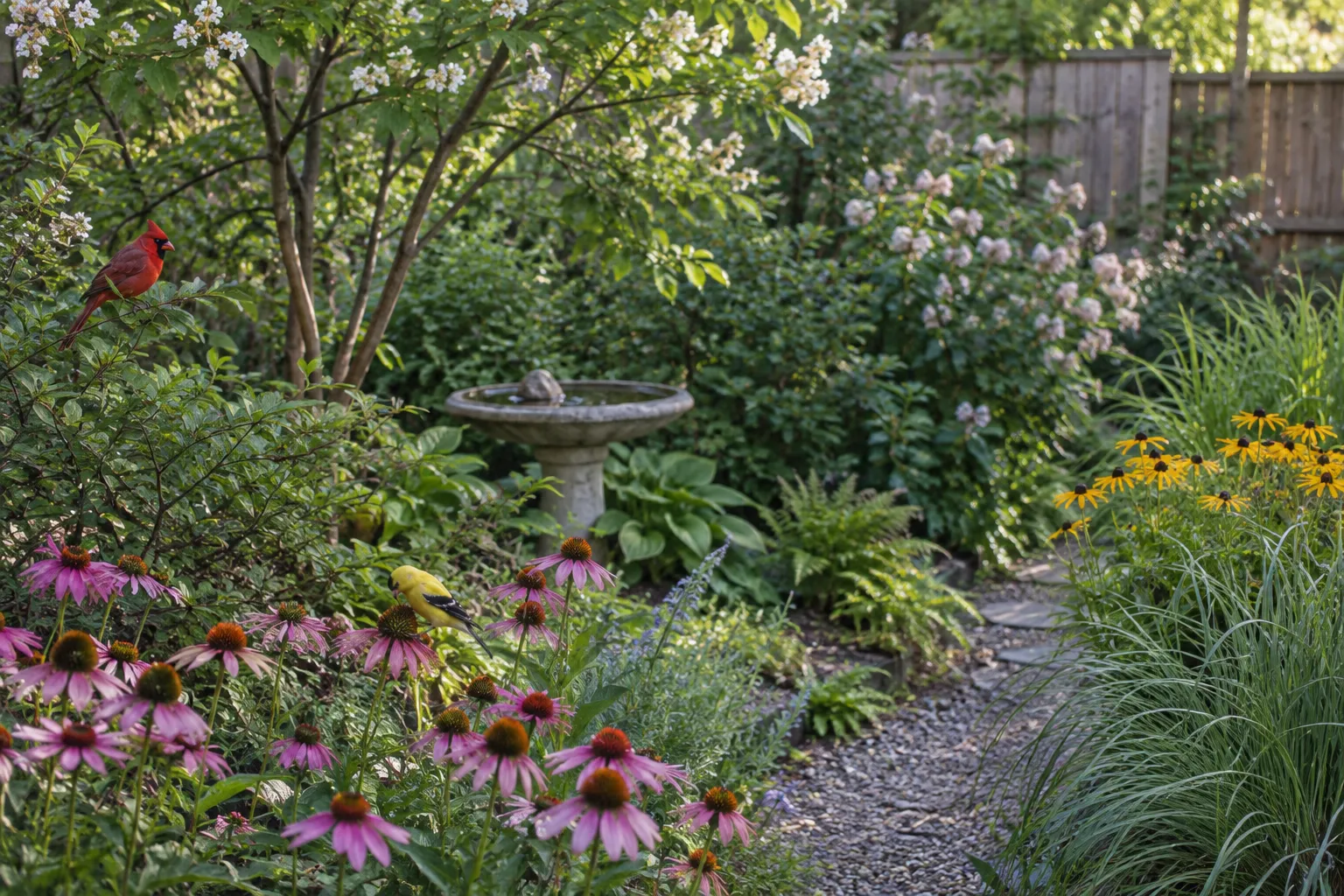
A plan like this fits dozens of native plants into a small lot without feeling crowded, because each layer occupies a different height.
Which plants should go in a small bird-friendly garden?
Choose plants that are native to your region wherever possible. Native plants support many more of the local insects birds depend on, and their fruit and seeds ripen in step with local bird needs. Audubon’s native plants database lets US gardeners search by ZIP code.
Small trees for tight spaces
- Serviceberries (Amelanchier). Early flowers, June berries that robins, catbirds and waxwings strip quickly, good fall color.
- Flowering and pagoda dogwoods (Cornus). High-fat fall fruit valued by migrating thrushes.
- Hawthorns (Crataegus). Dense, thorny cover for nests, persistent fruit in some species.
- Native hollies. American holly in the East, yaupon in the Southeast; evergreen cover and winter berries on female plants.
- Oaks, if you have room. Even one oak supports hundreds of caterpillar species in eastern North America, though most oaks outgrow a tiny yard.
Shrubs that do double duty
- Viburnums, such as arrowwood and American cranberrybush.
- Winterberry holly, with bright red fruit into winter.
- Native roses, which offer thorny cover and hips.
- Chokeberries (Aronia), compact and tolerant of wet soil.
- Spicebush, a host plant for the Spicebush Swallowtail and a source of fall fruit.
Flowers and grasses
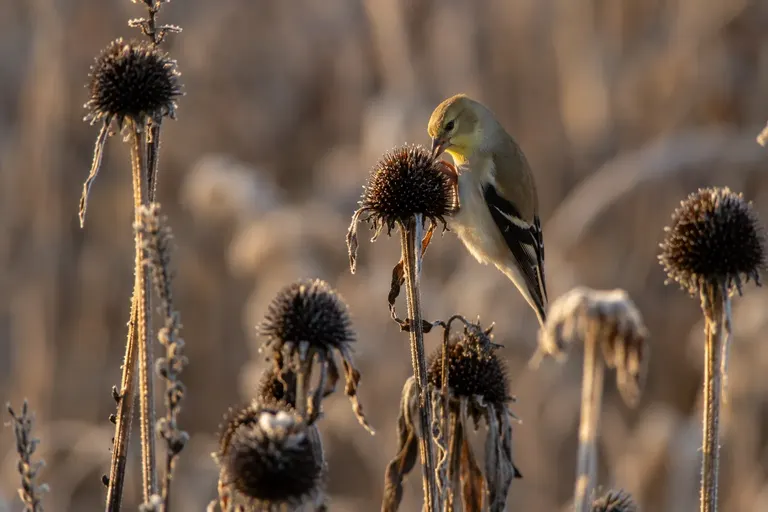
Coneflowers, black-eyed Susans, sunflowers, asters, goldenrods, native grasses and Joe Pye weed feed pollinators in summer and finches, sparrows and juncos in fall. Leave the seed heads standing through winter.
Vines for vertical space
On a fence or trellis, native vines add cover and food without taking ground. Trumpet honeysuckle (Lonicera sempervirens) feeds hummingbirds in the East; Virginia creeper offers fall fruit. Avoid invasive Japanese honeysuckle and English ivy in North America.
Plant ideas beyond North America
The same design principles work anywhere; only the plant list changes.
- UK and northern Europe. Hawthorn, holly, rowan, guelder rose, dog rose and ivy on a wall. A mixed native hedge is one of the most valuable features a small British garden can have.
- Mediterranean Europe and Turkey. Strawberry tree (Arbutus unedo), myrtle, hawthorn, juniper and wild olive tolerate summer drought and feed thrushes, Blackcaps and Robins in winter.
- Brazil. Pitanga (Eugenia uniflora), jabuticaba and other native myrtles fruit heavily and are favored by thrushes, tanagers and saíras. Native flowering shrubs and bromeliads attract hummingbirds.
How can a tiny garden, patio or balcony help birds?
Even a paved patio or balcony can help if you think in containers and vertical space.
- Use large pots. Bigger containers hold moisture and support small shrubs, native grasses and perennials.
- Grow insect-friendly flowers. Native flowers and herbs such as oregano and thyme, allowed to bloom, draw the small insects birds hunt.
- Add a shallow dish of water. A plant saucer with a flat stone makes a perfectly good bath.
- Keep feeders close to glass. On balconies, feeders on or within a few feet of windows reduce collision risk.
- Link up with neighbors. A row of small bird-friendly yards creates a corridor that birds follow.
What should you avoid in a bird-friendly garden?
Pesticides and herbicides
Insecticides remove caterpillars and other prey at the very time birds need them most. Some, including certain neonicotinoids, have been linked in research to harmful effects on seed-eating birds. Weed killers remove the plants that insects depend on. Hand-pulling, tolerance for some leaf damage and healthy plant choices work better.
Too much tidiness
Clipping everything back in fall removes seeds, insect eggs and overwintering shelter. Our article leave the leaves explains why a little mess helps.
Invasive plants
Some widely sold ornamentals spread into wild areas: Japanese barberry, burning bush, Bradford pear, bush honeysuckles and nandina in North America. Several cotoneasters are a problem in parts of the UK. Check your state or national invasive plant lists before buying.
Hazards
Windows and cats are two of the largest human-related causes of bird deaths. Add window markings where birds strike, and keep cats indoors or in an enclosure. Our guides on window collisions and cats and birds cover the practical fixes.
How do you match plants to sun, shade and soil?
A plant in the wrong spot struggles, produces little fruit or seed and supports fewer insects. Before buying anything, spend a day noting where the sun falls in the morning, at midday and in late afternoon.
- Full sun (6 or more hours). Most seed-producing prairie and meadow plants, including coneflowers, asters, goldenrods and native grasses, and fruiting shrubs such as native roses and chokeberries, fruit most heavily here.
- Part shade (3 to 6 hours). Serviceberries, dogwoods, viburnums and spicebush are woodland-edge plants and do well with some shade.
- Full shade. Ferns, woodland sedges, wild ginger and shade-tolerant shrubs build the ground layer. Leaf litter is especially valuable here, because thrushes, towhees and wrens forage in it.
- Wet soil. Winterberry holly, buttonbush, red-osier dogwood and chokeberries tolerate soggy ground, and a rain garden in a low spot can host all of them.
- Dry, sandy or rocky soil. In drought-prone regions, including much of the western US, the Mediterranean and central Turkey, choose drought-adapted natives and group plants with similar water needs.
Local native plant societies, extension services and botanic gardens publish regional lists, and they are the most reliable guides to what grows well in your conditions.
What does a bird garden offer through the seasons?
A well-designed small garden changes through the year, and birds use it differently in each season.
| Season | What the garden provides | Typical visitors (eastern US examples) |
|---|---|---|
| Spring | Flowers, new leaves, the first caterpillars, nest sites in shrubs and boxes | Chickadees, wrens, cardinals, migrating warblers |
| Summer | Insects for nestlings, early berries such as serviceberry, water | Robins, catbirds, hummingbirds, goldfinches |
| Fall | High-fat berries, ripening seed heads, leaf litter | Migrating thrushes, sparrows, waxwings |
| Winter | Persistent fruit, standing seed heads, evergreen shelter, water | Juncos, titmice, woodpeckers, bluebirds |
In Britain the cast changes, with Blue Tits and Dunnocks in spring, Blackbirds and Song Thrushes on the lawn, and Redwings and Fieldfares arriving for winter berries. In southern Brazil, winter brings fruiting natives and flocks of tanagers, while spring means nesting thrushes and the Rufous Hornero building its mud oven nest. The principle is the same everywhere: plan for every month, not just the season you spend outdoors.
Should a small garden include a feeder and a nest box?
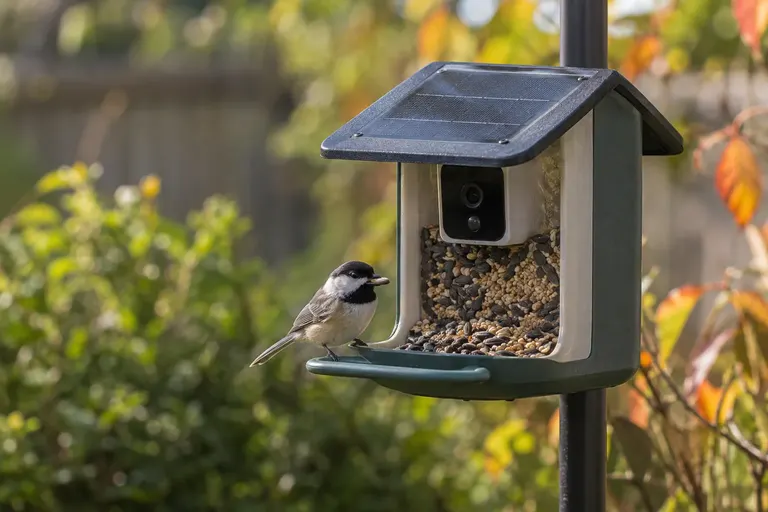
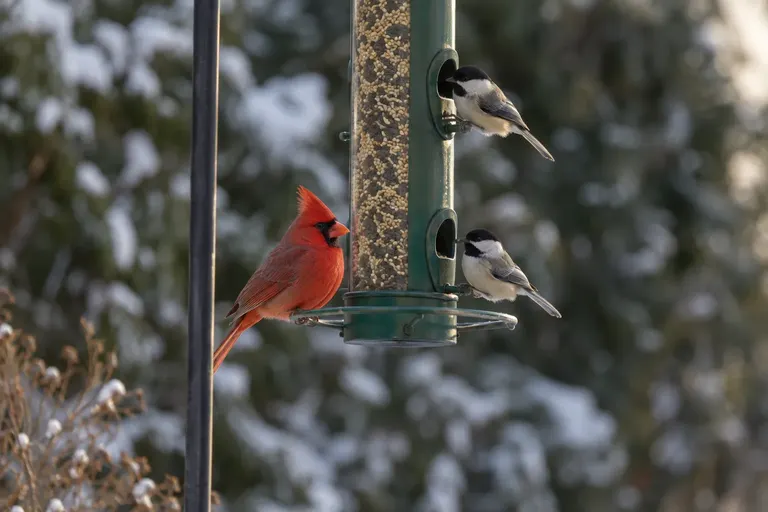
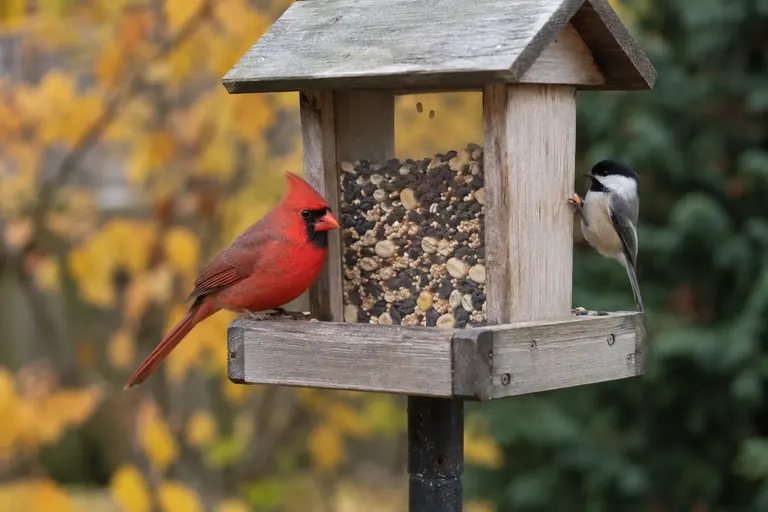
Neither is essential, but both help in a small space. A feeder concentrates birds where you can see them and fills gaps in natural food, especially in late winter. A single feeder with black oil sunflower seed attracts a wide range of species. Keep it clean and place it with windows and cats in mind. Our guide on where to put a bird feeder covers distances and heights.
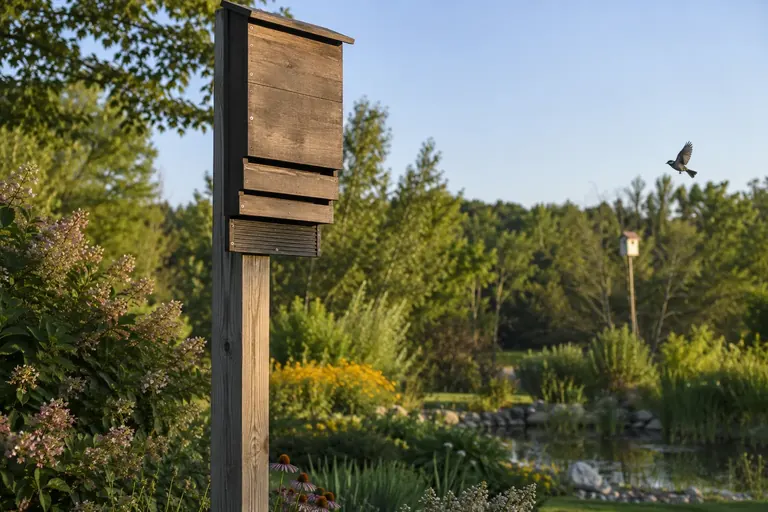
A nest box adds a nest site that small, tidy gardens usually lack. Match the entrance hole to the species you hope to attract, mount it on a pole with a baffle or on a tree trunk where predators cannot easily reach, and face it away from the prevailing wind and hottest afternoon sun. One well-placed box is better than several crowded together, because many species defend territories around their nests.
How long does it take for birds to use a new garden?
Water and feeders often draw birds within days to weeks. Plantings take longer: perennials usually bloom well in their second season, shrubs fill in within two to three years and small trees take several years to provide real cover. Expect the number of species to rise each year as the layers mature and insect populations build.
Common mistakes in small bird garden design
- Only planting flowers. Without shrubs and a tree, birds have nowhere to hide.
- Scattering single plants. Groups of three to five of the same species are easier for birds and insects to find.
- Putting the bath in the open lawn. Birds feel exposed and visit less.
- Placing a feeder right next to a dense shrub. Cats use the cover to ambush.
- Choosing plants for flowers alone. Double-flowered cultivars often produce little pollen, nectar or seed.
- Removing every dead stem. Hollow stems shelter insects that birds eat in spring.
- Forgetting winter. Include evergreens and persistent fruit.
Quick facts
- Plant in layers: tree, shrubs, flowers and grasses, ground layer.
- Native plants support far more insect food for nestlings.
- A pair of chickadees may need thousands of caterpillars for one brood.
- Keep water 1 to 2 inches deep and within a short dash of cover.
- Put feeders within 3 feet of windows or beyond 30 feet.
- Leave seed heads and some leaf litter through winter.
- Skip pesticides and invasive ornamentals.
For the bigger picture of attracting birds, our guide to backyard birding ties garden design together with feeding and nest boxes.
Sources
Frequently asked questions
How do I make a small garden attractive to birds?
Give birds the four things they need in a compact space: food, water, cover and places to nest. Plant layers from groundcover to a small tree, choose native plants that host insects and produce seeds or berries, add a shallow bath, and leave some leaf litter and seed heads. Avoid pesticides, which remove the insects birds feed their young.
What is the best small tree for a bird garden?
It depends on region, but serviceberries, native dogwoods, hawthorns, crabapples with small fruit and native hollies suit many small North American yards. In Europe, rowan and hawthorn are good choices. Pick a species native to your area that fits the space at maturity and offers flowers, fruit or insect food.
Can a balcony or patio be bird-friendly?
Yes. Containers of native flowers, herbs and small shrubs attract pollinators and the insects birds eat, and a shallow dish of water and a small feeder can bring visitors even several stories up. Place feeders very close to glass or use window markers to reduce collisions, and keep plants pesticide-free.
Why are native plants better for birds?
Native plants support far more of the caterpillars and other insects that most songbirds feed their nestlings. Many ornamental exotics host few local insects. Native fruit and seed plants also ripen in step with local bird needs, such as high-fat fall berries for migrants. A mostly native planting feeds birds better year-round.
How much lawn should I keep in a bird garden?
Keep only as much lawn as you actually use for play, paths or sitting. Short grass offers little food or cover except for species such as robins that hunt worms. Replacing some lawn with native beds, shrubs and a small tree usually increases the number and variety of birds in even a small yard.