Best Spotting Scopes for Birding
The best spotting scope for birding for most people is the Vortex Razor HD 27-60x85. Compare Celestron, Hawke, Kowa, Swarovski and Zeiss picks by budget.
If you buy through links on this page we may earn a commission, at no cost to you. It never decides what we recommend. How we earn
In this article
- Quick picks
- How we chose
- Do you need a spotting scope for birding?
- Vortex Razor HD 27-60x85 Angled: best spotting scope for birding overall
- Celestron Regal M2 80ED: best value spotting scope
- Hawke Endurance ED 15-45x60: best budget spotting scope
- Kowa TSN-501 20-40x50 Angled: best lightweight spotting scope
- Swarovski ATX 25-60x85: best premium spotting scope
- Zeiss Victory Harpia 85: best wide-view spotting scope
- Comparison table
- Angled or straight: which spotting scope is better for birding?
- What objective size do you need?
- Which zoom eyepiece is best?
- What kind of tripod does a spotting scope need?
- How does digiscoping work with a spotting scope?
- Sources
- Frequently asked questions
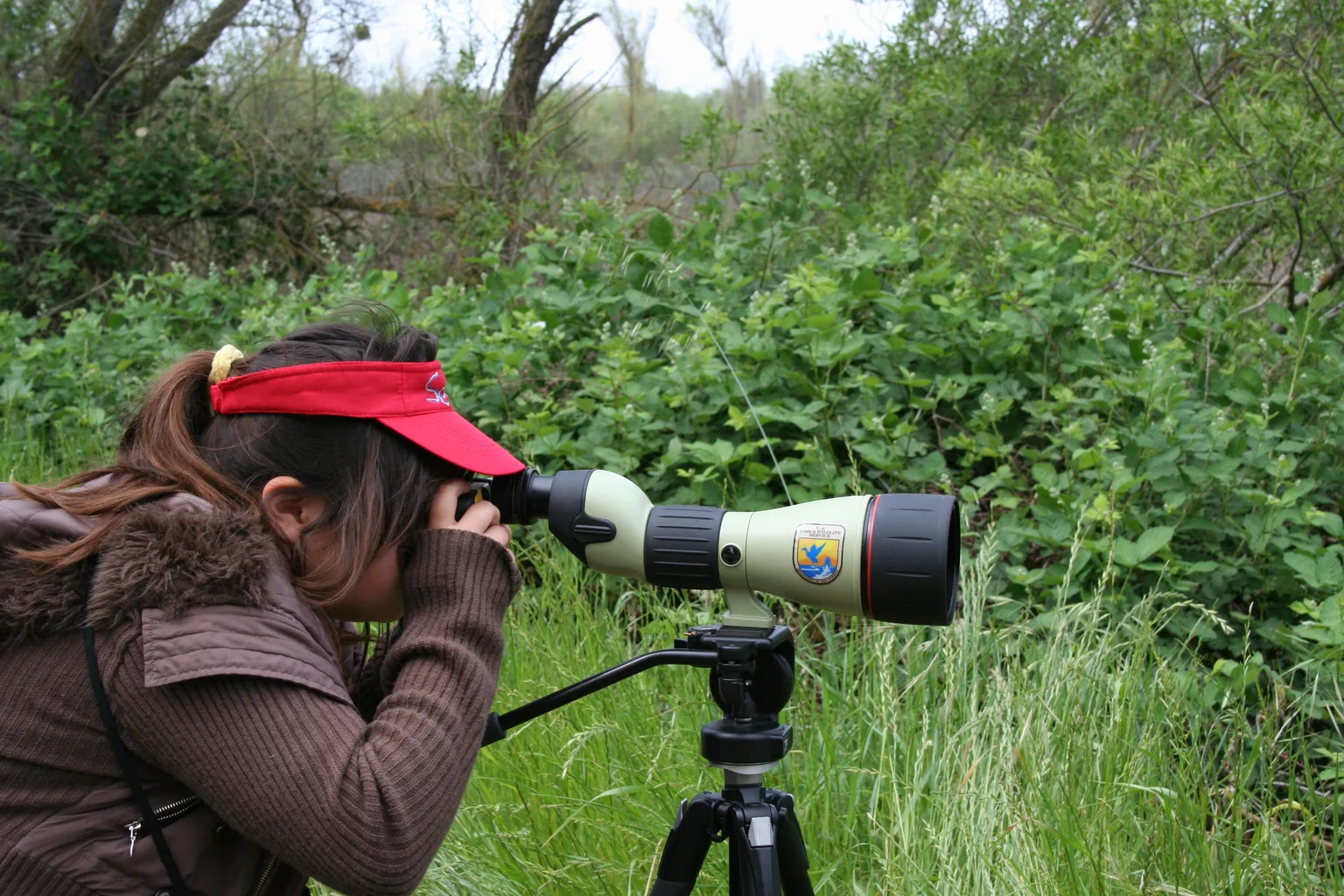
The Vortex Razor HD 27-60x85 Angled is the best spotting scope for birding for most people. It pairs an 85mm objective and apochromatic HD glass with a 16.4 ft close focus and an unconditional lifetime warranty. For a lower budget, the Celestron Regal M2 80ED and Hawke Endurance ED 15-45x60 are strong picks, and the Swarovski ATX 25-60x85 leads at the top end.
A spotting scope picks up where binoculars stop. Ducks in the middle of a reservoir, shorebirds on a far mudflat and a hawk on a distant pole all become identifiable at 30x to 60x. Below are six scopes from budget to premium, then the buying basics.
Quick picks
- Best overall: Vortex Razor HD 27-60x85 Angled. 85mm brightness, HD glass and an unconditional warranty.
- Best value: Celestron Regal M2 80ED. 80mm ED objective and a dual focus knob for less.
- Best budget: Hawke Endurance ED 15-45x60. ED glass, 8.2 ft close focus and 31.6 oz.
- Best lightweight: Kowa TSN-501 20-40x50 Angled. 400 g and 9.4 in long.
- Best premium: Swarovski ATX 25-60x85. Modular, waterproof to 13 ft and made for digiscoping.
- Best wide view: Zeiss Victory Harpia 85. A 22-65x zoom that keeps a wide view at every setting.
Vortex Razor HD 27-60x85 Angled
A large 85mm objective, apochromatic HD glass and a 117 ft view at 27x, backed by Vortex's unlimited, unconditional lifetime warranty.
- Best for
- Birders who want one serious scope for lakes, coasts and refuges.
- Skip it if
- You need a scope light enough to carry all day on foot.
- Magnification
- 27-60x
- Field of view
- 117-68 ft at 1,000 yd
- Close focus
- 16.4 ft
- Weight
- 65.6 oz
Celestron Regal M2 80ED
An 80mm ED scope with a dual focus knob, 20 mm eye relief at 20x and a T-adapter for cameras in the box, at a mid-range level.
- Best for
- Birders who want big-objective brightness without premium cost.
- Skip it if
- You watch birds close in; 21.3 ft is longer than ideal.
- Magnification
- 20-60x
- Field of view
- 110-52 ft at 1,000 yd
- Close focus
- 21.3 ft
- Weight
- 66.6 oz with eyepiece
Hawke Endurance ED 15-45x60
ED glass, a wide 147 ft view at 15x and an 8.2 ft close focus in a 31.6 oz body, with Hawke's no-fault lifetime warranty.
- Best for
- First scope buyers who want ED glass and a manageable weight.
- Skip it if
- You often bird at dawn or dusk, where a 60mm objective dims at high zoom.
- Magnification
- 15-45x
- Field of view
- 147-78 ft at 1,000 yd
- Close focus
- 8.2 ft
- Weight
- 31.6 oz
Kowa TSN-501 20-40x50 Angled
A 400 g (14.1 oz) angled scope just 9.4 in long, with a fixed 20-40x zoom, waterproof body and a 2.5 m close focus.
- Best for
- Travelers and hikers who want a scope that fits in a daypack.
- Skip it if
- You want high magnification or bright views in poor light.
- Magnification
- 20-40x
- Objective
- 50 mm
- Close focus
- 8.2 ft (2.5 m)
- Weight
- 14.1 oz (400 g)
Swarovski ATX 25-60x85
Swarovski's modular scope: one eyepiece module that works with 65, 85 or 95mm objectives, waterproof to 13 ft and built for digiscoping.
- Best for
- Dedicated birders and digiscopers who want a scope for decades.
- Skip it if
- Cost matters; it is the most expensive system here.
- Magnification
- 25-60x
- Field of view
- 104-57 ft at 1,000 yd
- Close focus
- 11.8 ft
- Weight
- 67.4 oz
Zeiss Victory Harpia 85
A 22-65x wide-angle zoom with a 72-degree apparent field at every setting, 88 percent light transmission and a 3.5 m close focus.
- Best for
- Birders who scan big flocks and want the widest low-power view.
- Skip it if
- You want a straight-through scope; the Harpia is angled.
- Magnification
- 22-65x
- Field of view
- 190-63 ft at 1,000 yd
- Close focus
- 11.5 ft
- Weight
- 68.2 oz
How we chose
We have not used these scopes ourselves yet. This guide is research-based, and we want to be clear about how it was put together.
We started with current birding-grade scopes from established optics makers and confirmed every number on the maker’s own product page: magnification, objective size, field of view, close focus, eye relief, weight and weather sealing. We read buying guidance from Audubon and the Cornell Lab of Ornithology, including Audubon’s advice that a birding scope should focus to 20 ft or closer, and looked for patterns in verified owner reviews, such as stiff focus, heavy bodies or eyepieces that are hard to use with glasses. We left out discontinued models and any scope whose specs we couldn’t confirm.
Do you need a spotting scope for birding?
You need one if you regularly watch birds that stay far away. Binoculars at 8x or 10x are best for birds in trees and gardens, but they can’t resolve a distant duck, gull or shorebird well enough to separate similar species.
Scopes shine on lakes, coasts, marshes and refuges, especially in winter, when diving ducks raft up far offshore. Our guide to winter ducks explains how most of those identifications come down to one mark on the head, bill or sides, details that are hard to see at distance without a scope, and our winter birding guide covers where to look. If you mostly watch a backyard feeder, good binoculars will serve you better; start with our best binoculars for birding.
Vortex Razor HD 27-60x85 Angled: best spotting scope for birding overall
What it is: Vortex’s top scope line, with an 85mm objective, apochromatic index-matched HD lenses, dielectric prism coatings and an argon-purged, O-ring sealed body.
Who it suits: Birders at lakes, coasts and refuges who want a scope that works in low light.
Key specs: 27-60x, 85mm, 117-68 ft at 1,000 yd, 16.7 to 17.0 mm eye relief, 16.4 ft close focus, 15.5 in long, 65.6 oz. Waterproof and fogproof.
Strengths: The 85mm objective gathers far more light than a 60mm or 65mm scope, so the view stays usable later into dusk and at higher zoom. Apochromatic glass is designed to keep color fringing low on high-contrast edges, such as a white gull against dark water. A 16.4 ft close focus beats Audubon’s 20 ft guideline. Vortex’s VIP warranty is unlimited and unconditional, covering accidents too.
Drawbacks: At 65.6 oz, it’s heavy, and it needs a solid tripod. Eye relief of about 17 mm is workable for many eyeglass wearers, but not generous.
Skip it if: you mostly bird on long hikes, or your budget is under mid-range.
See available listings on Amazon
Celestron Regal M2 80ED: best value spotting scope
What it is: Celestron’s mid-range ED scope, with an 80mm objective, angled body and a 20-60x zoom eyepiece included.
Who it suits: Birders who want the brightness of a large objective without paying premium prices.
Key specs: 20-60x, 80mm, 110-52 ft at 1,000 yd, 20 mm eye relief at 20x, 21.3 ft close focus at 20x, 19.1 in long and 66.6 oz with eyepiece. Fully waterproof and nitrogen purged. Limited lifetime warranty.
Strengths: You get an 80mm ED objective, a dual focus mechanism with coarse and fine knobs, and 20 mm of eye relief at low power, which helps glasses wearers. Celestron includes a T-adapter so a camera body can be mounted for photography.
Drawbacks: The 21.3 ft close focus is a little longer than Audubon’s 20 ft guideline, so birds at the very near edge of a pond may not come sharp. It’s also heavy and long.
Skip it if: weight and length matter more to you than light gathering.
See available listings on Amazon
Hawke Endurance ED 15-45x60: best budget spotting scope
What it is: A compact angled scope from British optics brand Hawke, with ED glass, dielectric prism coatings and a 15-45x zoom.
Who it suits: First-time scope buyers and birders who want a lighter scope to carry on walks.
Key specs: 15-45x, 60mm, 147-78 ft at 1,000 yd, 20 mm eye relief, 8.2 ft (2.5 m) close focus, 12.1 in long, 31.6 oz. Nitrogen purged, waterproof and fogproof. Hawke no-fault lifetime warranty.
Strengths: The 147 ft view at 15x is wider than any pick here except the Zeiss, which makes it easier to find a bird before you zoom in. An 8.2 ft close focus is excellent, and dual focus knobs help fine-tune at 45x. At roughly half the weight of the 85mm scopes, it is far easier to carry.
Drawbacks: A 60mm objective dims noticeably at 45x in poor light. A 45x top end is lower than the 60x on the larger scopes.
Skip it if: you watch distant waterfowl in the last light of winter afternoons.
See available listings on Amazon
Kowa TSN-501 20-40x50 Angled: best lightweight spotting scope
What it is: A small angled scope from Japanese optics maker Kowa, with a fixed 20-40x zoom eyepiece.
Who it suits: Travelers, hikers and anyone who wants a scope that rides in a daypack.
Key specs: 20-40x, 50mm, 2.5 m (8.2 ft) close focus, 239 mm (9.4 in) long, 400 g (14.1 oz). Fully sealed, waterproof and nitrogen filled.
Strengths: It weighs less than many full-size binoculars and is less than 10 in long. The short close focus suits ponds and nearby shorebirds, and Kowa makes a smartphone adapter that fits with an adapter ring.
Drawbacks: A 50mm objective is dim at 40x in poor light, and the eyepiece can’t be changed.
Skip it if: you want maximum detail on distant birds; one of the 80mm or 85mm scopes is better.
See available listings on Amazon
Swarovski ATX 25-60x85: best premium spotting scope
What it is: Swarovski’s modular system. An angled ATX eyepiece module attaches to a 65mm, 85mm or 95mm objective module, so you can change size later.
Who it suits: Committed birders and digiscopers who want top-tier optics for decades.
Key specs (85mm): 25-60x, 104-57 ft at 1,000 yd, 20 mm eye relief, 11.8 ft close focus, 14.6 in long, 67.4 oz. Waterproof to 13 ft (4 m).
Strengths: Swarovski is widely regarded by expert reviewers for sharpness and color. The modular design lets you carry the 65mm objective for travel (55.9 oz, 6.9 ft close focus) and the 85mm at home. Swarovski supports digiscoping with its own phone and camera adapters, and 20 mm of eye relief helps glasses wearers.
Drawbacks: It’s the most expensive system here by a wide margin, and the 85mm setup is heavy.
Skip it if: you are buying your first scope or bird only a few times a year.
See available listings on Amazon
Zeiss Victory Harpia 85: best wide-view spotting scope
What it is: Zeiss’s flagship angled scope, with a 3x wide-angle zoom that keeps a 72-degree apparent field across the zoom range. It’s often sold as a body plus Vario eyepiece kit, so check the listing includes the eyepiece.
Who it suits: Birders who scan large flocks and want the widest low-power view.
Key specs: 22-65x, 190-63 ft at 1,000 yd (63.2 to 21.0 m at 1,000 m), 3.5 m (11.5 ft) close focus, 384 mm (15.1 in) long, 1,934 g (68.2 oz). Zeiss lists 88 percent light transmission.
Strengths: At 22x, its field of view is far wider than any other pick here, which makes scanning a raft of ducks much faster. DualSpeed Focus offers fast and fine adjustment, and LotuTec coating helps shed rain.
Drawbacks: It’s heavy and premium priced, and it comes only as an angled scope.
Skip it if: you prefer straight scopes or need to keep weight down.
See available listings on Amazon
Comparison table
| Model | Zoom | Objective | FOV at low power (ft at 1,000 yd) | Close focus | Weight |
|---|---|---|---|---|---|
| Vortex Razor HD 27-60x85 Angled | 27-60x | 85 mm | 117 | 16.4 ft | 65.6 oz |
| Celestron Regal M2 80ED | 20-60x | 80 mm | 110 | 21.3 ft | 66.6 oz |
| Hawke Endurance ED 15-45x60 | 15-45x | 60 mm | 147 | 8.2 ft | 31.6 oz |
| Kowa TSN-501 Angled | 20-40x | 50 mm | not listed | 8.2 ft | 14.1 oz |
| Swarovski ATX 25-60x85 | 25-60x | 85 mm | 104 | 11.8 ft | 67.4 oz |
| Zeiss Victory Harpia 85 | 22-65x | 85 mm | 190 | 11.5 ft | 68.2 oz |
All figures are manufacturer specifications.
Angled or straight: which spotting scope is better for birding?
For most birders, angled is the better choice. Audubon notes that with an angled scope you look down at about 45 degrees into the eyepiece, which works well for groups and for birds high overhead.
Nikon’s own guidance adds that angled scopes need a lower tripod, suit seated viewing and let people of different heights share one setup. Straight scopes are easier to aim at a bird, feel natural at eye level and work better through a car window. If you often bird from your car at refuges, a straight scope deserves a look. All six picks here are angled, and Vortex and Swarovski also make straight versions in the same lines.
What objective size do you need?
Choose 80mm to 85mm for the brightest image, or 50mm to 65mm if weight matters most. Audubon notes that scopes typically range from 50mm to 80mm and that larger objectives gather more light but add weight and bulk.
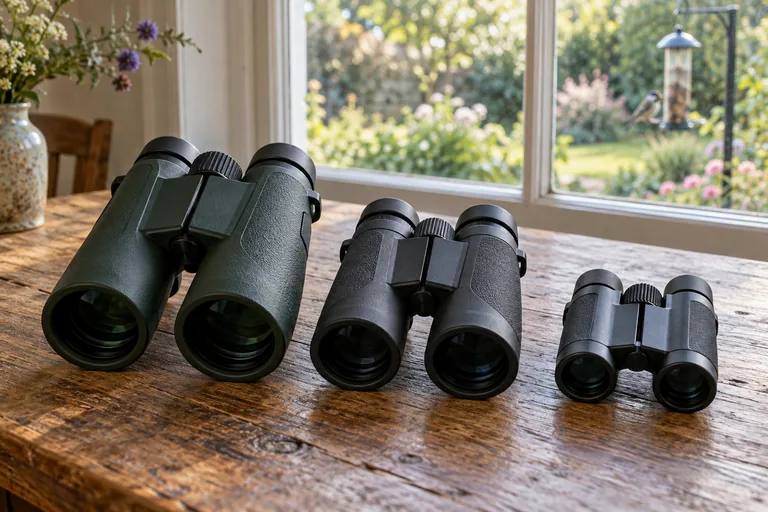
A 60x view through a 60mm scope gives a 1 mm exit pupil, which looks dim on a gray winter day. An 85mm scope at the same power is far brighter. The trade-off is weight: our 85mm picks weigh 65 to 68 oz, while the Hawke weighs 31.6 oz and the Kowa just 14.1 oz. If you’re new to exit pupil and other optics terms, our guide to what the numbers on binoculars mean applies to scopes too.
Which zoom eyepiece is best?
A zoom that starts between 15x and 25x is the most useful for birding. Audubon suggests 20x to 30x for a fixed eyepiece and points out that higher powers often suffer from heat shimmer and vibration.
On a hot day, shimmer over water or mudflats can make 60x worse than 30x. ED or HD glass helps keep the image sharp and color-true at high zoom; our guide to ED glass explains why.
What kind of tripod does a spotting scope need?
A sturdy one. Audubon says the tripod should be firm enough to give a steady view even in wind.
Match the tripod to the scope: an 85mm scope needs a heavier tripod than a 50mm travel scope. Pick a head that pans smoothly so you can follow flying birds. For an angled scope, the tripod doesn’t need to reach your full eye height, which saves weight.
How does digiscoping work with a spotting scope?
Digiscoping means taking photos through the scope’s eyepiece, usually with a phone. The Cornell Lab calls the smartphone arguably the most convenient digiscoping tool.
A phone adapter that holds the phone centered on the eyepiece makes it far easier. Cornell suggests shooting at a lower, brighter zoom and cropping later, using the self-timer or a remote release to avoid shake, and using burst mode. It also notes that larger scopes, such as 85mm rather than 65mm models, give noticeably better digiscoped photos. For a lighter start, see our guide to phone photos through binoculars.
Sources

Frequently asked questions
What magnification spotting scope is best for birding?
A zoom eyepiece that starts around 15x to 25x and reaches 45x to 60x suits most birders. Audubon recommends 20x to 30x for a fixed eyepiece and notes that higher power often brings heat shimmer and vibration. Start at the low end to find the bird, then zoom in only as far as the light and air allow.
Is an angled or straight spotting scope better for birding?
Most birders choose angled. An angled scope lets people of different heights share one tripod setting, needs a shorter tripod and is more comfortable for birds overhead or for viewing while seated. A straight scope is quicker to aim and easier to use from a car window or when looking down a slope. Try both if you can.
What size objective lens do I need in a spotting scope?
Birding scopes usually have 50mm to 85mm objectives. An 80mm to 85mm scope gathers noticeably more light, which helps at dawn, dusk and high zoom, and the Cornell Lab notes it gives better digiscoped photos. A 50mm to 65mm scope weighs much less and is easier to carry on long walks or when you travel.
Do I need a tripod for a spotting scope?
Yes. At 20x to 60x every small shake is magnified, so a scope is almost unusable handheld. Audubon advises a tripod firm enough to stay steady in wind. Choose one that extends to your eye height for a straight scope, or a little lower for an angled scope, and use a smooth fluid or pan head so you can follow birds.
Can I take photos through a spotting scope with my phone?
Yes, this is called digiscoping. Hold the phone lens to the eyepiece or, better, clip it into a phone adapter so it stays centered. The Cornell Lab suggests shooting at a lower, brighter zoom setting and cropping later, and using the self-timer or a remote release to avoid shake. A sturdy tripod matters as much as the scope.