Best Binocular Harnesses and Straps
The best binocular harness for most birders is the Vortex Binocular Harness Strap. We compare OP/TECH, Crooked Horn, Swarovski, GlassPak and neoprene straps.
If you buy through links on this page we may earn a commission, at no cost to you. It never decides what we recommend. How we earn
In this article
- Quick picks
- How we chose
- Harness, chest pack or strap: which type is right for you?
- Vortex Binocular Harness Strap: best binocular harness overall
- OP/TECH USA Bino/Cam Harness: best quick-release binocular harness
- Crooked Horn Outfitters Bino-System: best made-in-USA binocular harness
- Swarovski BSP Bino Suspender Pro: best harness for Swarovski binoculars
- Vortex GlassPak Binocular Harness: best binocular chest pack
- OP/TECH USA E-Z Comfort Strap: best binocular neck strap
- Binocular harnesses and straps compared
- Harness or strap: what changes on a long walk?
- Using a harness with a camera, scope or backpack
- How long do binocular harnesses last?
- How to choose a binocular harness
- How to set up a binocular harness in five steps
- Common mistakes with binocular harnesses
- Do you need a harness for backyard birding?
- Sources
- Frequently asked questions
The best binocular harness for most birders is a simple elastic cross-back design, and the Vortex Binocular Harness Strap is our top pick. It takes the 21 to 25 oz of a typical 8x42 off the back of your neck, stops the binocular swinging when you bend or walk, and works with nearly any binocular. If you swap binoculars often, the OP/TECH USA Bino/Cam Harness has quick-release connectors, and if you bird in rain or dust, a covered chest pack like the Vortex GlassPak protects the lenses.
A typical 8x42 weighs 21 to 25 oz. On a thin strap, that weight hangs from the back of the neck for hours, and the binocular bounces off your chest with every step. A harness spreads the load and keeps the binocular where your hands expect it.
Quick picks
- Best overall: Vortex Binocular Harness Strap. Simple, adjustable, lifetime warranty.
- Best quick-release: OP/TECH USA Bino/Cam Harness. Snap-in connectors, elastic or webbing.
- Best made in USA: Crooked Horn Outfitters Bino-System. Elastic straps and quick-release hooks.
- Best for Swarovski owners: Swarovski BSP Bino Suspender Pro.
- Best chest pack: Vortex GlassPak Binocular Harness. Covered, with pockets.
- Best neck strap: OP/TECH USA E-Z Comfort Strap. Neoprene pad, adjustable length.
Vortex Binocular Harness Strap
A simple, adjustable nylon and Lycra cross-back harness that works with most binoculars and is covered by Vortex's unconditional lifetime warranty.
- Best for
- Birders who want a no-fuss harness for any brand of binocular.
- Skip it if
- You want lens protection or pockets; this is straps only.
- Type
- Elastic cross-back harness
- Material
- Nylon/Lycra straps, leather back patch
- Fit
- One size, fully adjustable
OP/TECH USA Bino/Cam Harness
Made in the USA, offered in elastic or non-stretch webbing, with snap-in Uni-Loop connectors that release in seconds.
- Best for
- Birders who move binoculars between a harness, a car and a scope bag.
- Skip it if
- You want the simplest possible setup with no connectors to remember.
- Versions
- Webbing or elastic
- Connectors
- Uni-Loop quick disconnect
- Comfort load
- Up to 15 lb
Crooked Horn Outfitters Bino-System
A long-running elastic harness with quick-release hooks, a four-point adjuster and 1 in straps, made in the USA.
- Best for
- Birders who want a proven, sturdy elastic harness.
- Skip it if
- You dislike hooks on your binocular's strap lugs.
- Strap width
- 1 in, elastic
- Attachment
- Quick-release hooks
- Weight
- 0.35 lb
Swarovski BSP Bino Suspender Pro
Swarovski's own harness, designed to connect to its current binoculars and spread the load across the upper body.
- Best for
- Owners of recent Swarovski binoculars who want a matched fit.
- Skip it if
- You own another brand; Swarovski only lists its own models.
- Listed fit
- AX Visio, EL, SLC, NL Pure, EL Range
- Type
- Shoulder harness
Vortex GlassPak Binocular Harness
A covered chest pack for full-size binoculars that keeps rain, dust and pollen off the lenses, with pockets for small gear.
- Best for
- Birders who walk in rain, dusty trails or thick brush.
- Skip it if
- You want the fastest possible raise to the eyes.
- Weight
- 8 oz
- Size
- 6.75 x 6.25 x 3.75 in
- Storage
- 2 mesh side pockets, zippered rear pocket
OP/TECH USA E-Z Comfort Strap
A slim neoprene neck strap that spreads weight better than a thin stock strap and works with most rainguards.
- Best for
- Window and porch watchers, and anyone who dislikes harnesses.
- Skip it if
- You walk long distances; a harness will be more comfortable.
- Pad
- Neoprene, 1.3 x 14 in
- Length
- 22 to 44 in, adjustable
- Connectors
- 3/8 in webbing
How we chose
We have not physically tested these harnesses and straps. This is a research-based guide, and here is how we built it.
We compared current products from established optics and carry-gear makers using the maker’s own product pages for materials, attachment methods, sizing and warranties. We focused on what matters to birders rather than hunters: comfort over long walks, how quickly the binocular comes to the eyes, compatibility with common binoculars, and whether the design works over a jacket. We then looked for patterns in verified owner feedback and birding forum discussions about fit, slipping straps, elastic that sags over time and hardware that rattles.
We did not include products whose makers do not publish clear specifications or that we could not confirm are still sold.
Harness, chest pack or strap: which type is right for you?
Strap harness (X-back or Y-back)
These are elastic or webbing straps that clip to your binocular’s lugs and loop over both shoulders. The elastic lets you raise the binocular to your eyes, then pulls it back against your chest. They are light, cheap and fit almost any binocular.
Best for: most birders, most of the time.
Chest pack (bino harness with a case)
A padded case sits on your chest, held by a harness, with a lid that opens toward you. The binocular usually stays tethered inside. These keep rain, dust, pollen and snow off the lenses and add pockets for a phone, notebook or lens cloth.
Best for: wet climates, dusty trails, and birders who carry small gear on their chest.
Trade-off: you must open the lid before every look, which costs a second or two when a warbler pops out.
Padded neck strap
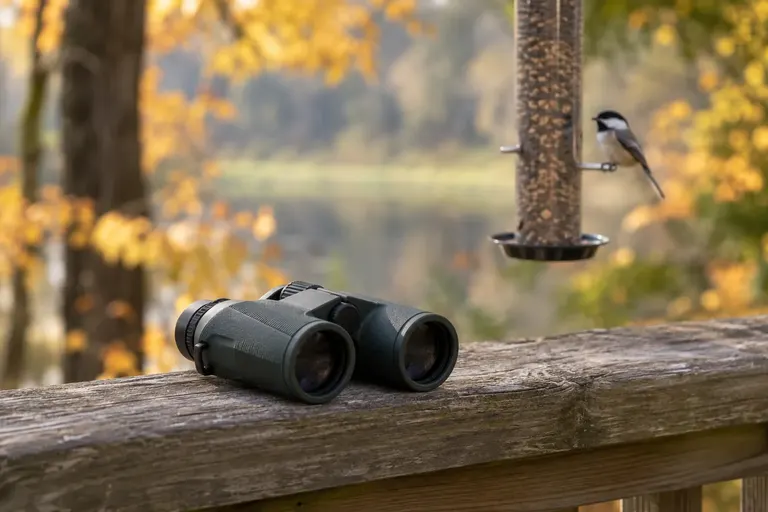
A wider neoprene or padded strap is the simplest upgrade over the thin strap in the box. It spreads pressure on the neck but does not stop swinging.
Best for: window watching, short walks and people who find harnesses fiddly.
Vortex Binocular Harness Strap: best binocular harness overall
What it is: A cross-back elastic harness from Vortex, with nylon and Lycra straps and a leather backing patch.
Who it suits: Birders of any level who want a harness for any brand of binocular.
Key details: One-size, fully adjustable. Vortex says it also works with rangefinders and cameras. Covered by Vortex’s unlimited, unconditional lifetime warranty.
Strengths: It is simple and light, and it fits most binoculars with standard strap lugs. The elastic keeps the binocular snug against your chest so it does not bounce when you walk or bend. The warranty is unusually broad for a strap.
Drawbacks: It offers no protection from rain or dust. Owners of harnesses in this style commonly mention that the clips can take a moment to set up the first time, and that the elastic needs readjusting when switching between a T-shirt and a winter coat.
Skip it if: you bird in steady rain or want pockets.
OP/TECH USA Bino/Cam Harness: best quick-release binocular harness
What it is: A harness offered in two versions, non-stretch webbing and elastic, with OP/TECH’s Uni-Loop quick-disconnect connectors.
Who it suits: Birders who move binoculars between a harness, a car and a pack, or who also carry a camera.
Key details: OP/TECH lists a comfortable carrying load of up to 15 lb, says it fits most binoculars, and says it does not compete for space with backpack straps. It is made in the USA from domestic and imported components.
Strengths: The snap-in connectors let you take the binocular off in seconds without unthreading anything. The elastic version holds the binocular tighter to your body when idle. It can be worn over or under a jacket.
Drawbacks: The quick-disconnect hardware is one more thing to check before a walk. The webbing version does not stretch, so it relies on strap length alone.
Skip it if: you never take your binocular off its strap.
Crooked Horn Outfitters Bino-System: best made-in-USA binocular harness
What it is: An elastic harness that has been popular with hunters and birders for years.
Who it suits: Birders who want a sturdy, straightforward elastic harness.
Key details: 1 in wide elastic straps, a four-point adjuster, quick-release hooks and a leather back patch. It weighs 0.35 lb, is made in the USA and carries a limited lifetime warranty.
Strengths: The elastic lets the binocular move freely when in use and pulls it back against your chest when you let go. The four-point adjuster helps fine-tune fit. Quick-release hooks make removal fast.
Drawbacks: Metal hooks on strap lugs can click against the binocular body. Owners of elastic harnesses in general report that elastic loses some tension after years of use.
Skip it if: you want a silent setup or a padded, covered case.
Swarovski BSP Bino Suspender Pro: best harness for Swarovski binoculars
What it is: Swarovski’s own binocular harness.
Who it suits: Owners of current Swarovski binoculars.
Key details: Swarovski lists compatibility with the AX Visio, EL, SLC, NL Pure and EL Range. It is designed to take the strain off the neck by spreading weight across the upper body.
Strengths: Because it is designed around Swarovski’s own binoculars, owners of the listed models do not need to guess about fit. Owner feedback on Swarovski’s site commonly praises how easy it is to adjust and how well it holds up.
Drawbacks: Swarovski only lists its own binoculars as compatible, so it is not a universal choice. It costs more than generic harnesses.
Skip it if: you do not own one of the listed Swarovski models.
Vortex GlassPak Binocular Harness: best binocular chest pack
What it is: A covered chest pack with a harness, sized for full-size binoculars.
Who it suits: Birders in rainy regions, on dusty trails, or who push through brush.
Key details: 6.75 x 6.25 x 3.75 in and 8 oz. A full-coverage lid closes with a bungee and nylon tab. Two mesh side pockets and a zippered rear pocket hold small gear. It includes two binocular tether straps and has fully adjustable straps. Lifetime VIP warranty.
Strengths: Lenses stay clean and dry. The pockets are handy for a phone, lens pen or small notebook. Vortex offers a size guide, and the GlassPak line also includes Sport and Pro versions, with the Pro offered in sizes for small and large binoculars.
Drawbacks: Opening the lid adds a step before every look. It is bulkier on the chest than a strap harness, and pocket-heavy designs can feel warm in summer.
Skip it if: you bird mostly in dry, open country and want the fastest raise.
OP/TECH USA E-Z Comfort Strap: best binocular neck strap
What it is: A slim neoprene neck strap with leather and nylon webbing.
Who it suits: People who watch from a window or porch and anyone who dislikes harnesses.
Key details: 1.3 x 14 in neoprene pad, length adjustable from 22 to 44 in, 3/8 in webbing connectors, no quick disconnects. OP/TECH says it works with most binocular rainguards and lists a comfortable carrying load of up to 7 lb. Made in the USA.
Strengths: The neoprene pad spreads pressure far better than a thin stock strap. Adjustable length lets you wear the binocular high on the chest, which reduces swing.
Drawbacks: It still hangs from the neck and still swings when you bend over.
Skip it if: you walk for hours at a time.
Binocular harnesses and straps compared
| Product | Type | Attachment | Weather protection | Notable detail |
|---|---|---|---|---|
| Vortex Binocular Harness Strap | Elastic X-back | Clips to strap lugs | None | Lifetime VIP warranty |
| OP/TECH USA Bino/Cam Harness | Elastic or webbing | Uni-Loop quick disconnect | None | Comfort load to 15 lb |
| Crooked Horn Bino-System | Elastic, four-point | Quick-release hooks | None | Made in USA, 0.35 lb |
| Swarovski BSP Bino Suspender Pro | Shoulder harness | Swarovski connection | None | Listed for Swarovski models |
| Vortex GlassPak | Chest pack | Tethers inside case | Covered lid | 8 oz, three pockets |
| OP/TECH USA E-Z Comfort Strap | Neck strap | 3/8 in webbing | None | 22 to 44 in length |
Harness or strap: what changes on a long walk?
The difference is easy to underestimate in a store and obvious after two hours on a trail.
Weight path. A neck strap puts the whole load on a narrow band at the back of the neck. A harness splits it across both shoulders and the upper back. The binocular weighs the same, but it is carried by larger muscles.
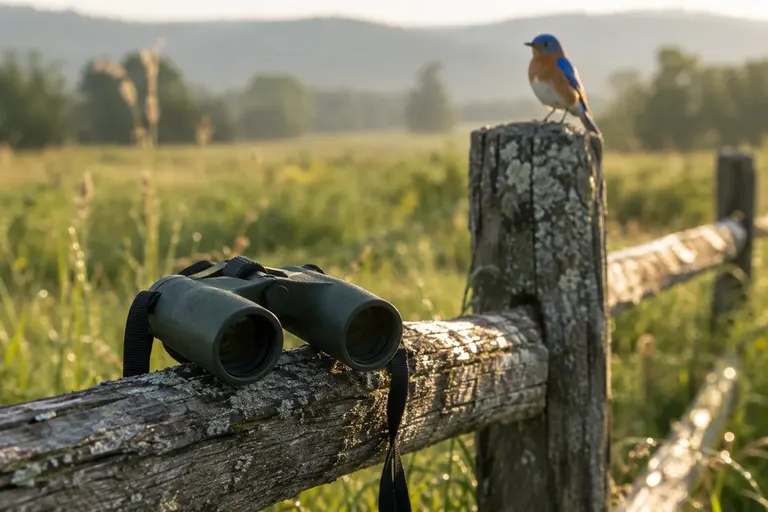
Swing. On a neck strap, a binocular swings forward every time you lean over to read a trail sign, tie a boot or look at a wildflower. A harness holds it against your chest. That also protects the binocular from bumping a fence post or a car door.
Raise speed. A strap harness keeps the binocular in the same spot, high on the chest, so your hands find it without looking. That matters when a bird is only visible for a few seconds. Our guide on how to find a bird in your binoculars fast explains why keeping your eyes on the bird while you raise the binocular makes such a difference.
Setup time. A strap goes on in one motion. A harness takes a few seconds more, and needs readjusting when your layers change.
Using a harness with a camera, scope or backpack
Many birders carry more than a binocular. A few combinations work better than others.
- With a backpack: Most strap harnesses work under or over pack straps. Try both. Chest packs can sit awkwardly with a pack’s sternum strap, so check the height of both before a long hike.
- With a camera: Wear the camera on a sling on one hip and the binocular on a harness in the center of your chest, so they do not knock together. OP/TECH says its Bino/Cam Harness also works for cameras, which is handy if you carry a small camera instead of a binocular on some days.
- With a spotting scope on a tripod: A harness keeps the binocular out of the way while you carry the tripod over one shoulder, and it will not swing into the scope when you bend to the eyepiece.
How long do binocular harnesses last?
Elastic is the part that wears. Sun, sweat and years of stretching slowly reduce its tension, and owners of elastic harnesses commonly report replacing them after several seasons of heavy use. Webbing lasts longer but does not stretch. To extend the life of either type, rinse off sweat and sunscreen now and then, let the harness dry away from direct heat, and store it loose rather than stretched. Check the clips, hooks and connectors at the start of each season, because a failed clip is how binoculars end up on the ground.
How to choose a binocular harness
Check your binocular’s strap lugs
Most harnesses clip or loop onto the same two lugs as the original neck strap. Some premium binoculars use proprietary connectors, which is why brand-specific harnesses exist. Look at your binocular before buying.
Think about your climate
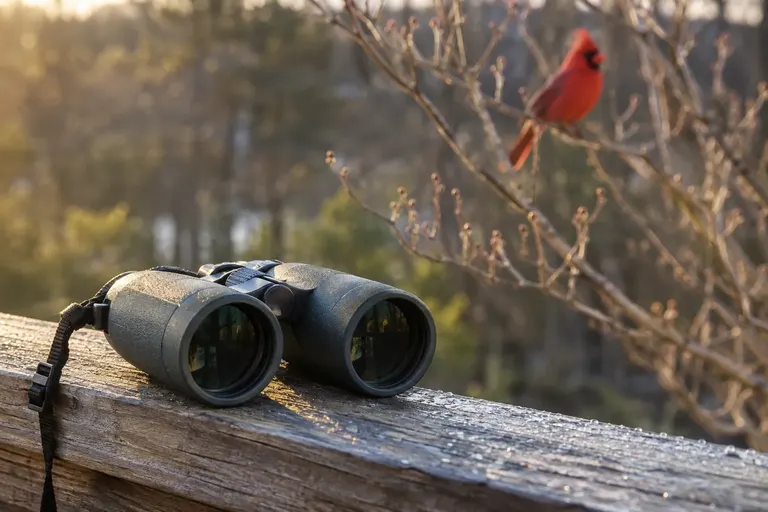
Rain, snow, pollen and trail dust all land on exposed lenses. If you often wipe your binocular before looking, a chest pack is worth the extra step. In dry weather, a strap harness is faster.
Consider what you wear
A harness adjusted over a T-shirt will be too tight over a down coat. Elastic designs forgive more. Plan to readjust between seasons.
Match the harness to the binocular’s weight
Heavier binoculars benefit most from a harness. If you are also looking to lighten the load itself, our roundups of lightweight binoculars for seniors and compact binoculars for birding cover models from about 10 to 19 oz.
How to set up a binocular harness in five steps
- Put on your normal birding layers. Adjust over the jacket you actually wear.
- Clip the harness to the binocular lugs. Remove the old neck strap first, or tuck it away so it does not tangle.
- Center the back. The X or Y crossing should sit between your shoulder blades, not up on your neck.
- Set the height. The binocular should rest high on your chest, a few inches below the collarbone. Too low and it bounces off your stomach; too high and it presses on your throat.
- Test the raise. Lift the binocular to your eyes. The elastic should allow a full raise without strain. Then set your eyecups and diopter; our guide to adjusting binoculars explains how.
Common mistakes with binocular harnesses
- Wearing it too low. A binocular at belly height swings and is slow to raise.
- Over-tightening the elastic. You should not have to fight the straps to lift the binocular.
- Leaving the old neck strap on. Two sets of straps tangle and add weight.
- Forgetting the rainguard. A harness keeps the binocular upright, so rain lands on the eyepieces. Use the rainguard in wet weather.
- Buying a chest pack for window watching. At home, speed matters more than protection.
Do you need a harness for backyard birding?
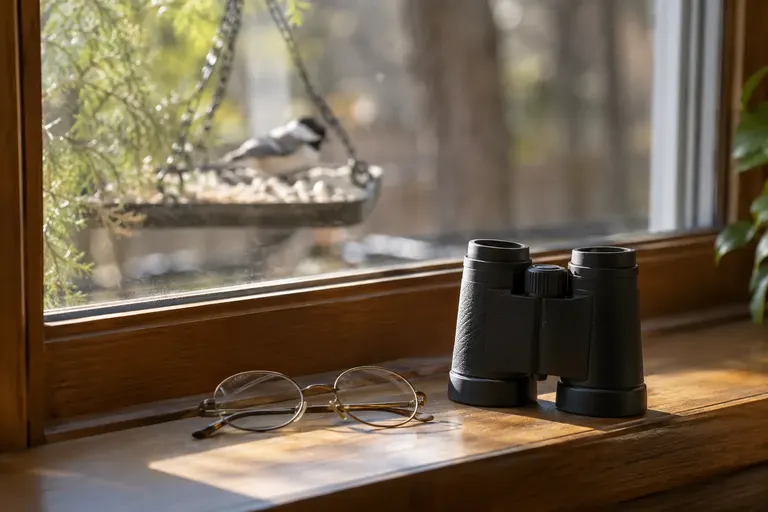
Not always. If you watch from a window or porch and rarely walk with your binocular, a padded strap is enough, and hanging the binocular on a hook by the window is simpler still. If you walk a local park, a trail or a birding festival, a harness quickly pays for itself in comfort. For the rest of your starter kit, see our guide to birding for beginners, and if you are still choosing a binocular, start with our best binoculars for birding roundup.
Sources

Frequently asked questions
Is a binocular harness better than a neck strap?
For walking, usually yes. A harness spreads the weight across both shoulders and holds the binocular against your chest, so it does not swing or bump when you bend over. A neck strap is quicker to put on and fine for short sessions at a window. Many birders use a harness in the field and a strap at home.
Do binocular harnesses work with any binoculars?
Most strap-style harnesses attach to the same two lugs as a neck strap, so they fit nearly any binocular with standard lugs. Chest packs have size limits, and brand-specific harnesses, such as Swarovski's Bino Suspender Pro, are listed only for that brand's models. Check the maker's size guide or compatibility list before buying.
Can you use a binocular harness with a backpack?
Yes. Most people wear the harness first and the backpack over it, or the harness straps over the pack straps. OP/TECH says its Bino/Cam Harness does not compete for space with backpack straps. Try both arrangements, because comfort depends on the pack's shoulder strap shape and your jacket.
Will a harness help with neck pain from binoculars?
It often does. A harness moves the load from the back of the neck to the shoulders and upper back, which many owners with neck discomfort say is noticeably more comfortable. Pairing a harness with a lighter binocular, such as an 8x32, reduces the load further. Anyone with a medical condition should also ask their doctor.
How do you adjust a binocular harness?
Put it on over the clothing you will actually wear. Adjust the back straps so the X or Y sits between your shoulder blades. Then set the front straps so the binocular rests high on your chest, a few inches below the collarbone, and can be raised to your eyes without the elastic pulling hard. Recheck when you add or remove a jacket.