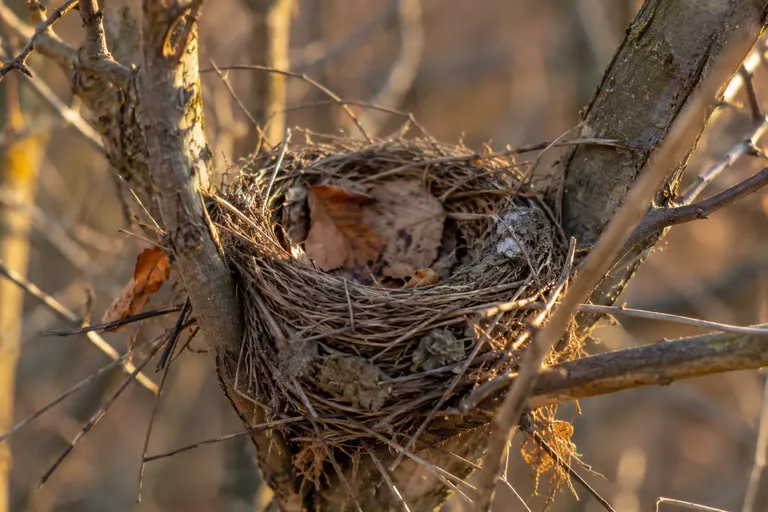
What Do Baby Birds Eat?
What do baby birds eat? Most songbird chicks are raised on insects, mainly caterpillars, even if adults eat seed. Doves feed crop milk; raptors bring meat.
In this article
- Quick facts: what baby birds eat
- Why do baby birds need insects instead of seeds?
- Which birds feed their babies seeds?
- What is crop milk, and which birds make it?
- How do different kinds of birds feed their chicks?
- How often do parent birds feed their babies?
- What do fledglings eat after leaving the nest?
- Myths vs facts about feeding baby birds
- What should you do if you find a baby bird?
- How can you help parent birds feed their young?
- Common mistakes backyard birders make
- How does diet change across the year?
- The bottom line
- Sources
- Frequently asked questions
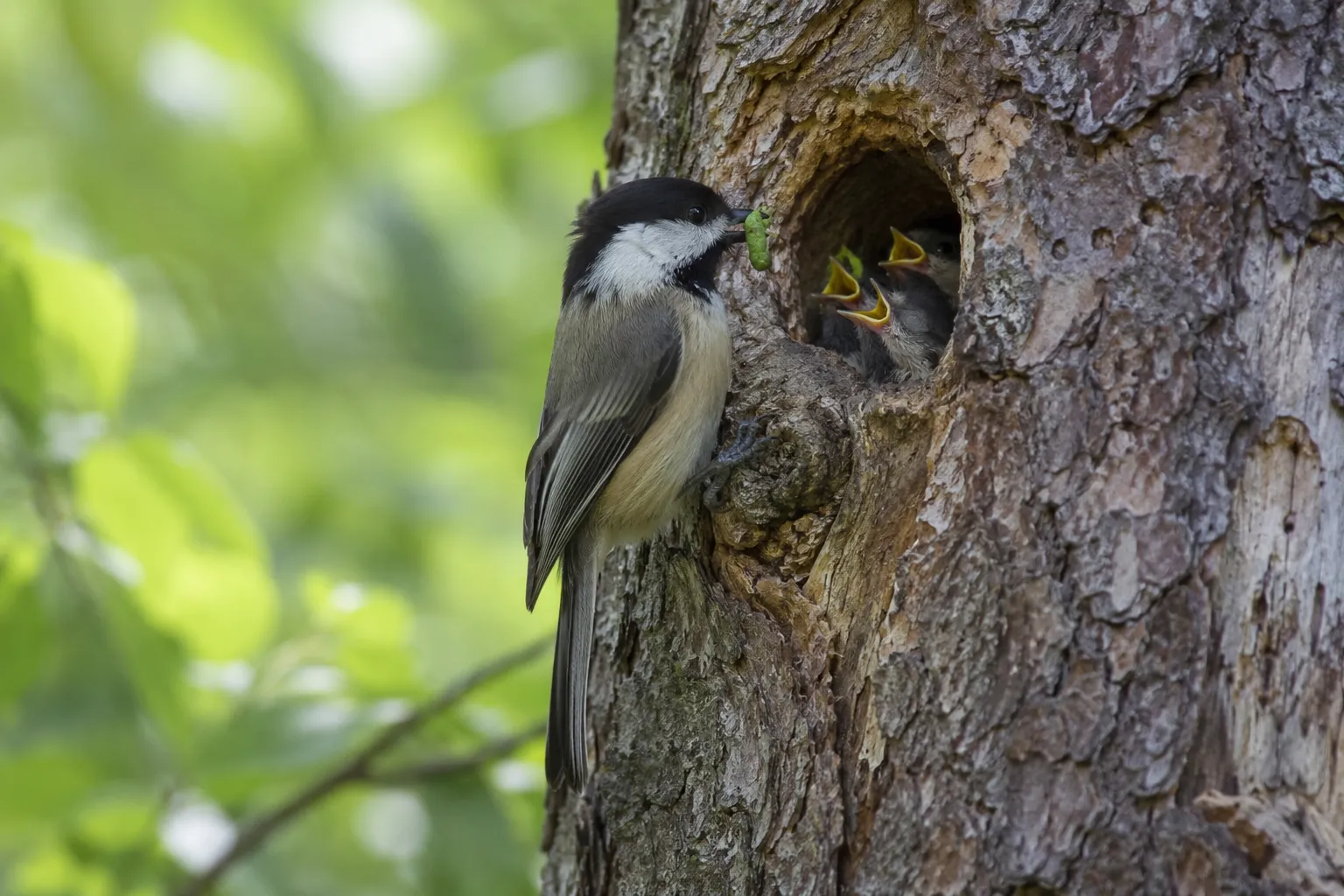
Most baby birds eat insects. Even species that live on seed as adults, like cardinals and sparrows, usually feed their chicks soft caterpillars, spiders and other invertebrates, because growing nestlings need concentrated protein and fat. A single brood of Carolina Chickadees needs an estimated 6,000 to 9,000 caterpillars. The main exceptions are pigeons and doves, which feed crop milk, a handful of finches that raise young on regurgitated seeds, and birds of prey, seabirds and waterbirds, which feed meat or fish.
That short answer hides a lot of interesting biology. What a chick eats depends on how developed it is at hatching, what its parents can carry, and what is abundant at exactly the right moment in spring. Here is how it works across the bird world, and what it means for your yard.
Quick facts: what baby birds eat
- Songbirds (most species): caterpillars, spiders, flies, beetle larvae, moths and other soft invertebrates.
- Finch specialists: American Goldfinches, House Finches, Pine Siskins and crossbills feed mostly regurgitated seeds.
- Pigeons and doves: crop milk for the first days, then softened seeds.
- Hummingbirds: regurgitated nectar mixed with tiny insects and spiders.
- Hawks, eagles and owls: strips of meat torn from prey, later whole prey.
- Herons, gulls, seabirds: regurgitated fish, squid or crustaceans.
- Ducks, geese, shorebirds, quail: find their own food from day one, mostly insects and small aquatic animals, with parents leading them to it.
Why do baby birds need insects instead of seeds?
Nestlings grow astonishingly fast. Many small songbirds go from hatching to leaving the nest in about two weeks, and in that time they may multiply their hatching weight many times over. Building muscle, organs and thousands of feathers that quickly takes protein, and insects deliver far more of it per bite than most seeds.
Soft-bodied prey is also easy to digest. A newly hatched songbird has a small, immature gut. A caterpillar is basically a water-rich package of protein and fat with no hard husk to crack. Seeds, by contrast, need grinding in a muscular gizzard, and most adult seed-eaters crack or hull them first.
Insects also supply water. Nestlings in an enclosed nest do not drink, so most of their moisture comes from their food. That is one reason caterpillars are ideal: they are juicy.
Why caterpillars matter so much
Caterpillars are the single most important baby food for many North American and European songbirds. Entomologist Doug Tallamy, whose research focuses on native plants and insects, has estimated that a single brood of Carolina Chickadees needs somewhere in the range of 6,000 to 9,000 caterpillars to reach fledging. Treat that as an estimate rather than a precise count, but the scale is the point: parents need an enormous, reliable supply.
A 2018 study in the Proceedings of the National Academy of Sciences by Desirée Narango, Doug Tallamy and Peter Marra found that Carolina Chickadees breeding in yards dominated by nonnative plants had lower reproductive success, because those plants support far fewer caterpillars than native trees and shrubs.
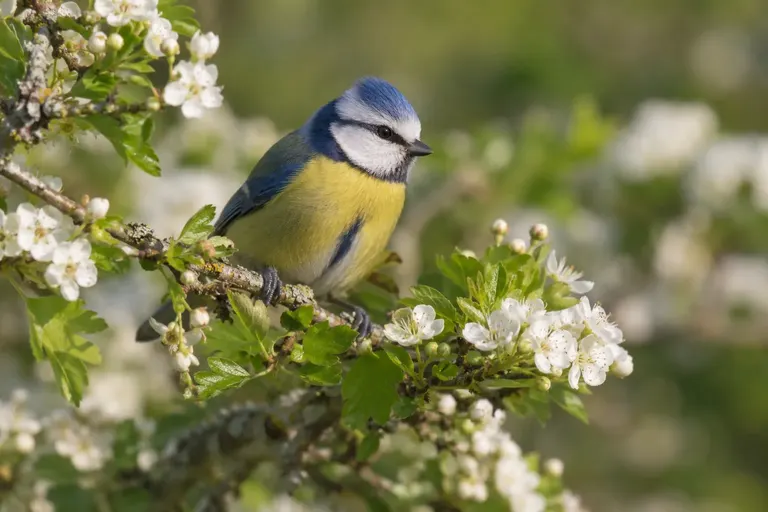
In Europe, the classic example is the Great Tit and Blue Tit. Decades of research, much of it in woodlands such as Wytham Woods near Oxford, show that these tits time their breeding so that chick-rearing lines up with a short spring peak in oak-feeding caterpillars. When warming springs shift the caterpillar peak earlier, some populations struggle to keep up, a mismatch that ecologists study closely.
Which birds feed their babies seeds?
A few groups break the insect rule. The best known in North America are the American Goldfinch and the House Finch. Both feed their nestlings mostly regurgitated seeds. The goldfinch is famous for nesting late, often in July and later, which lines up with thistle and other composite plants going to seed.
Other seed-feeding specialists include Pine Siskins, redpolls and crossbills, which can breed whenever conifer seed crops are good, sometimes even in winter. In Europe and Asia, the European Goldfinch, linnets and some other cardueline finches lean heavily on seeds for their young as well, though many include some insects too.
Seed-raised chicks work because the parents do the processing. The adults eat seeds, soften and partly digest them in the crop, then regurgitate a mash to the chicks.
One side effect is well documented: the Brown-headed Cowbird, a brood parasite, fares poorly when it lays eggs in House Finch nests. Cowbird chicks appear to do badly on the finch’s mostly seed diet, and few survive.
What is crop milk, and which birds make it?
Pigeons and doves have a unique solution. For the first days after hatching, both parents feed their squabs crop milk, a thick, cheesy secretion produced by cells lining the crop, a pouch in the throat used to store food. It is rich in protein and fat and is sometimes called pigeon milk. It is not true milk, since birds have no mammary glands, but it plays a similar role, and it is produced under the control of the hormone prolactin, the same hormone involved in mammalian lactation.
As the squabs grow, the parents mix in more softened seed until the young are on an adult diet. Mourning Doves, Eurasian Collared-Doves and the feral Rock Pigeons found in cities from São Paulo to Istanbul all do this.
Two other groups produce comparable secretions:
- Flamingos feed chicks a red-tinted secretion from glands in the upper digestive tract, produced by both parents.
- Male Emperor Penguins can feed a newly hatched chick a protein-rich secretion from the esophagus if the female has not yet returned from the sea.
How do different kinds of birds feed their chicks?
Songbirds: carry, stuff and repeat
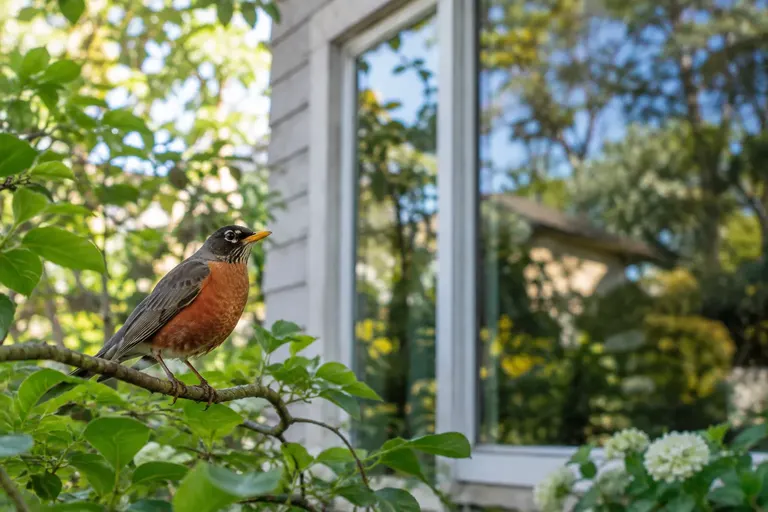
Most songbirds carry prey in the bill and push it directly into a chick’s open mouth. Small insect-eaters like chickadees, wrens and warblers often bring one or a few items per trip. Birds like American Robins may bring a bill full of earthworms and insects. Some species, including many swallows and swifts, compress insects caught in flight into a food ball held in the throat.
Early in the nestling period, parents often choose smaller, softer items. As the chicks grow, prey gets bigger and more varied: grasshoppers, beetles, and for robins, more earthworms. Many parents also bring fruit later in the season.
Hummingbirds: regurgitated nectar and insects
Hummingbird mothers feed chicks by inserting the bill deep into the chick’s throat and regurgitating a mix of nectar and small insects or spiders. Nectar alone is not enough: protein from arthropods is essential for growth. In most North American hummingbirds, the female raises the chicks alone.
Woodpeckers: regurgitation from the cavity
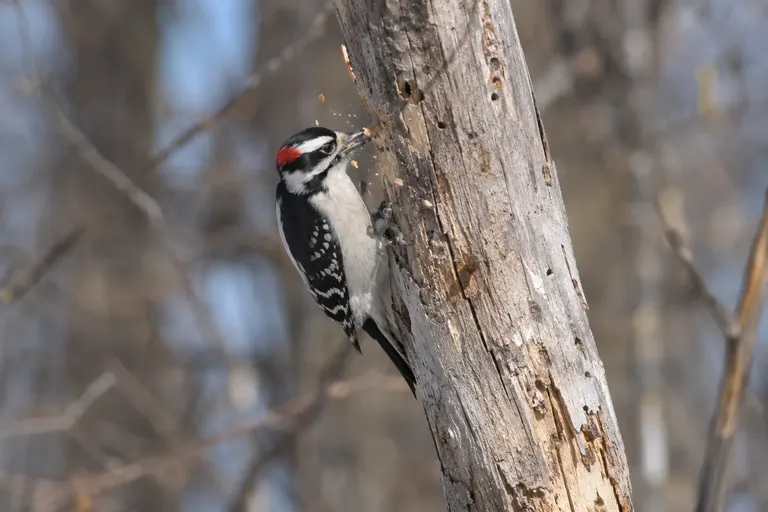
Woodpeckers typically feed nestlings insects, larvae and sometimes fruit, often regurgitated. Downy and Hairy Woodpecker nestlings become noisy toward the end of the nestling period, and you can sometimes hear them from a distance.
Raptors and owls: tearing and sharing
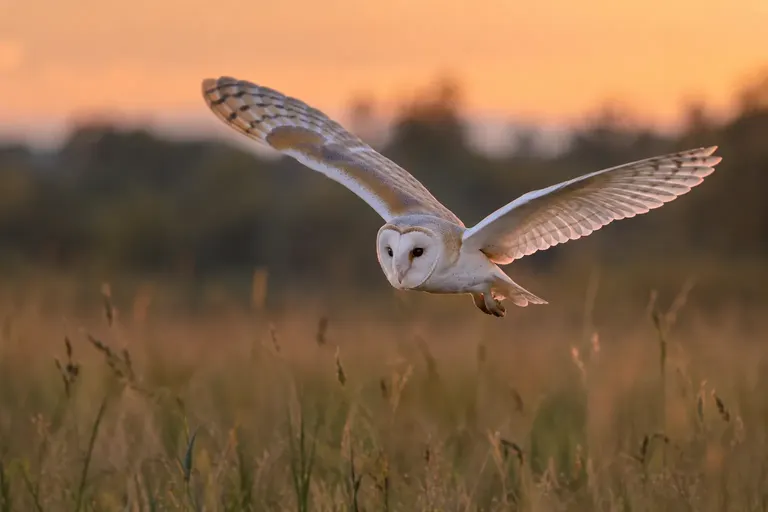
Hawks, falcons, eagles and owls bring prey to the nest. For tiny chicks, the parent, usually the female, tears off small pieces and offers them bill to bill. As the chicks grow they learn to tear food themselves, and later they are given whole prey. Owls such as Barn Owls swallow small rodents whole once they are big enough.
Waterbirds and seabirds: fish by regurgitation
Herons, egrets, pelicans, cormorants, gulls and many seabirds regurgitate fish or other prey for their chicks. Herring Gull chicks famously peck at the red spot on the parent’s lower bill, which stimulates the parent to regurgitate. That behavior was the subject of classic experiments by Nobel laureate Niko Tinbergen.
Many tubenoses, including petrels and shearwaters, feed chicks a mix of partly digested prey and an energy-dense stomach oil, which lets parents carry more calories over long foraging trips at sea.
Precocial chicks: feeding themselves from day one
Ducks, geese, swans, shorebirds, gamebirds such as quail and grouse, and chickens hatch with open eyes and downy coats. They leave the nest within a day or so and peck for their own food, mainly insects, snails and small aquatic animals at first. Parents lead them to good feeding areas, keep them warm and warn them of danger, but do not usually put food in their mouths. Gamebird parents may call chicks over to food they find.
This split between helpless altricial chicks (songbirds, woodpeckers, raptors) and self-feeding precocial chicks is one of the biggest dividing lines in how baby birds are fed.
How often do parent birds feed their babies?
A lot. Small songbirds commonly feed nestlings several times an hour through the day, and feeding rates tend to climb as chicks grow. Pairs of busy species like tits and chickadees can make hundreds of feeding trips per day at the peak of the nestling period. Exact numbers vary widely between species, weather and brood size, so be wary of any single figure.
Most songbirds share feeding duties between both parents. In some species one parent does most of the work. Female hummingbirds raise chicks alone, and in some species helpers such as older offspring join in, as in Florida Scrub-Jays and many cooperative breeders around the world.
How do parents decide who gets fed?
Chicks beg with wide gapes, loud calls and stretching necks. The inside of the mouth and the fleshy flanges at the corners of the bill are often brightly colored, yellow, orange or red, which helps parents target food in a dark nest. Many parents tend to feed the chick that begs hardest or reaches highest. Some species show more complex patterns, such as favoring larger or smaller chicks depending on how much food is available.
What happens to the waste?
Many songbird nestlings produce their droppings in a fecal sac, a mucus-wrapped package the parent can carry away or swallow. This keeps the nest clean and less obvious to predators. It is one of the tidier tricks in bird parenting.
What do fledglings eat after leaving the nest?
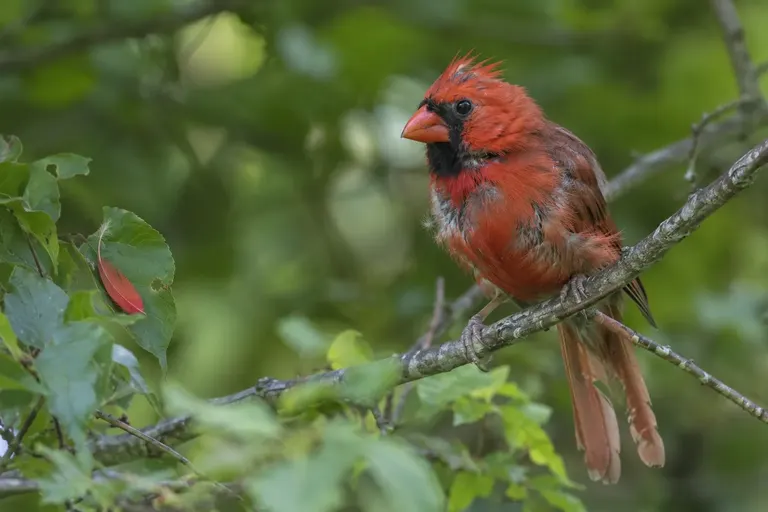
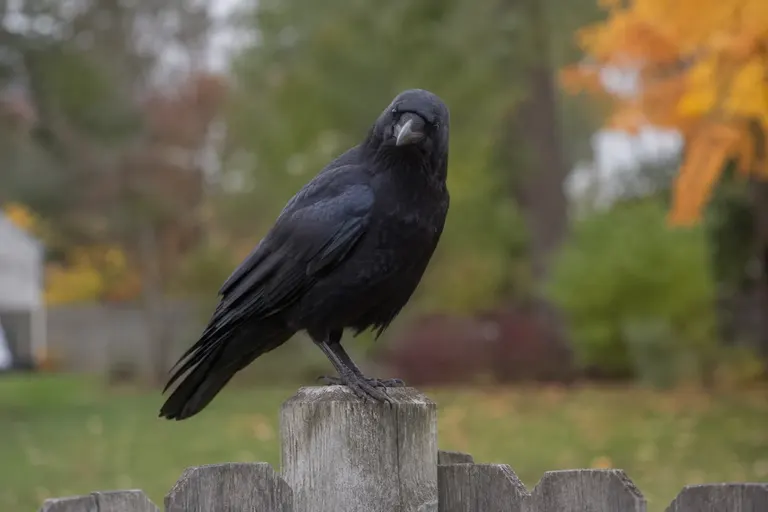
Leaving the nest does not mean independence. Most songbird fledglings are still fed by their parents for days to weeks while they learn to find food. You might see a fluffy young robin or cardinal following an adult around the lawn, fluttering its wings and begging. Parents gradually shift from delivering food to letting the young forage alongside them.
This is also when you may see young birds at your feeders, often accompanied by a parent. Young chickadees, titmice, cardinals, woodpeckers and House Finches are common feeder visitors in early summer. Some fledglings will beg from a parent perched right beside a full feeder, even though they could help themselves.
For more on the timeline, see our guide on how long baby birds stay in the nest.
Myths vs facts about feeding baby birds
| Myth | Fact |
|---|---|
| Seed-eating birds feed their chicks seeds | Most switch to insects for their young; only a few finches, plus pigeons and doves, rely on seed-based diets |
| A baby bird needs water from a dropper | Nestlings get moisture from food; water dripped into the mouth can be inhaled into the airway |
| Bread and milk are good baby food | Bread offers little nutrition, and birds are not built to digest cow’s milk |
| Earthworms from the yard are a safe emergency food | Worms can carry parasites, and the wrong diet can harm a chick; leave feeding to trained rehabilitators |
| Parents abandon chicks a person has touched | Most birds rely little on smell and do not abandon young because of human scent |
The last myth has its own article: do mother birds reject babies touched by humans?
What should you do if you find a baby bird?
The short version: do not feed it. The Cornell Lab of Ornithology and wildlife rehabilitators consistently advise against feeding or watering baby birds. Nestlings have specific dietary needs, and hand-feeding without training risks aspiration, where food or water goes into the lungs.
Instead:
- Work out its age. A feathered chick that hops and grips a twig is a fledgling and is usually fine where it is. A bare or fuzzy chick is a nestling and belongs back in the nest if you can find it.
- Keep pets indoors for a day or two if a fledgling is on the ground.
- Watch from a distance. Parents may visit only briefly, every few minutes or less often, so give it an hour before deciding the chick is orphaned.
- Call a licensed wildlife rehabilitator if the bird is injured, cold, caught by a cat, or truly orphaned.
In the United States, native wild birds are protected by the Migratory Bird Treaty Act, so raising one without a permit is not legal. Our full walkthrough is here: found a baby bird? what to do.
How can you help parent birds feed their young?
The most useful thing a backyard birder can do is increase the local supply of insects, especially caterpillars.
Plant native trees and shrubs
Native plants generally host far more caterpillar species than ornamental nonnatives. In much of eastern North America, oaks, cherries, willows and birches are often cited as some of the richest caterpillar hosts. Even a single native tree can add a lot of baby food. See our guide to designing a small bird-friendly garden.
Go easy on pesticides
Insecticides remove exactly the food that nestlings depend on. A lawn and garden with some tolerated “damage” to leaves is a lawn and garden that is feeding chicks.
Leave leaf litter where you can
Many moths and other insects spend part of their life cycle in fallen leaves. Leaving leaves under shrubs and in beds supports the insects that parent birds hunt the next spring. More detail: leave the leaves.
Offer mealworms, carefully
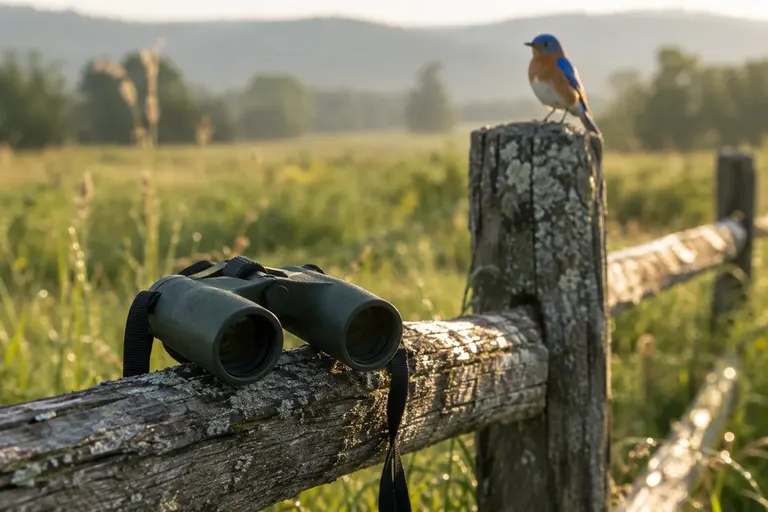
Many bluebird and wren enthusiasts offer live or rehydrated dried mealworms during nesting season, and parents often carry them to the nest. They can be a helpful supplement, especially during cold, wet spells when insects are scarce, but they should remain a supplement rather than the main diet. Offer modest amounts and keep the dish clean. Our overview of dried mealworms for bluebirds and wrens covers the basics.
Keep feeders clean and safe
Adults that can refuel quickly at a feeder have more time to hunt insects for their chicks. Keep feeders clean to reduce disease, and avoid foods that can harm birds, covered in what not to feed birds.
Common mistakes backyard birders make
- Assuming a seed feeder feeds nestlings. Seed helps the adults, but most chicks still need insects.
- Offering bread in spring. It fills bellies with low-value food. See is bread bad for birds?
- Spraying the garden during nesting season. This removes the chicks’ food supply at the worst time.
- “Rescuing” healthy fledglings. Most young birds on the ground are being fed by parents you cannot see.
- Cleaning up every leaf and seed head. Tidy yards produce fewer insects.
How does diet change across the year?
Diet shifts are a big part of the story. A Northern Cardinal eats mostly seeds and fruit in winter, then hunts beetles, caterpillars and other insects for its chicks in spring and summer. Chickadees, which cache seeds in fall and winter, feed their young almost entirely on insects. Robins eat earthworms and insects in the breeding season and lean more on fruit in fall and winter.
The same pattern holds worldwide. In Brazil, many tanagers and thrushes that eat plenty of fruit as adults still bring insects to their nestlings. In Turkey and across Europe, House Sparrows, which are strongly seed-eating as adults, feed young nestlings mainly insects, particularly in the first days after hatching.
This seasonal switch is a big reason why spring gardens full of insects matter as much as winter feeders full of seed.
The bottom line
Baby birds eat what helps them grow fastest. For most songbirds that means insects, especially caterpillars, delivered by parents dozens to hundreds of times a day. Pigeons and doves rely on crop milk, a few finches raise young on seeds, and raptors, gulls and seabirds bring meat and fish. Ducks and other precocial chicks feed themselves from their first day.
If you want to help, grow native plants, skip the pesticides, keep feeders clean, and let parent birds do the feeding. If you find a chick that truly needs help, call a licensed rehabilitator rather than feeding it yourself.
Sources
- Cornell Lab of Ornithology, All About Birds: House Finch life history
- Cornell Lab of Ornithology, All About Birds: American Goldfinch life history
- Narango, Tallamy and Marra (2018), Nonnative plants reduce population growth of an insectivorous bird, PNAS
- Cornell Lab of Ornithology, All About Birds
- Audubon: Plants for Birds native plant database
Frequently asked questions
What do baby birds eat in the nest?
Most songbird nestlings eat insects and other small invertebrates, especially soft caterpillars, plus spiders, beetle larvae and flies. Parents carry or regurgitate this food many times an hour. The main exceptions are pigeons and doves, which feed crop milk, and a few seed specialists like American Goldfinches and House Finches, which feed their chicks regurgitated seeds.
Do seed-eating birds feed their babies seeds?
Usually not. Cardinals, sparrows, chickadees and many other birds that eat seed in winter switch to insects when raising young, because chicks need concentrated protein to grow fast. A small group of finches, including American Goldfinches, House Finches, siskins and crossbills, are the notable exceptions that raise their young mainly on seeds.
How often do parent birds feed their babies?
Small songbirds often feed their nestlings several times an hour through the daylight hours, and busy pairs can make hundreds of trips a day. Rates usually rise as the chicks grow. Larger birds such as hawks, herons and seabirds bring bigger meals less often, sometimes only a few times a day or less.
Should I feed a baby bird I found?
No. Wildlife authorities, including the Cornell Lab of Ornithology, advise against feeding or giving water to baby birds. The wrong food can harm them, and water dripped into the mouth can be inhaled. If the bird is truly orphaned or hurt, contact a licensed wildlife rehabilitator, who has the proper diets and permits.
What is pigeon milk?
Pigeon milk, or crop milk, is a protein and fat rich substance produced by cells lining the crop of both parent pigeons and doves. It is not true milk, since birds have no mammary glands, but it plays a similar role. Chicks feed on it for their first days before parents gradually add softened seeds.