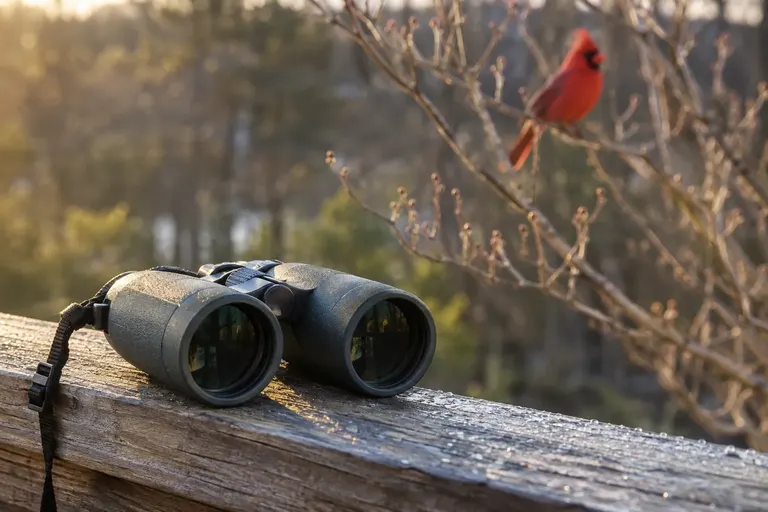
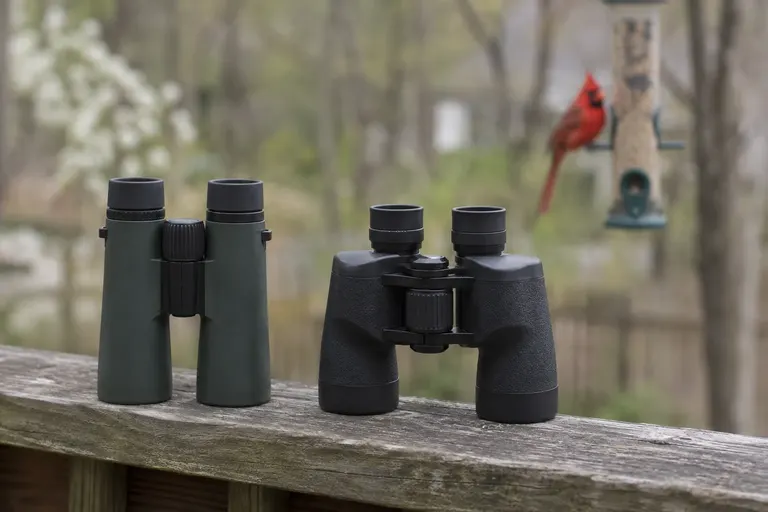
Celestron Nature DX 8x42 Review: Specs, Strengths and Who It Suits
Celestron Nature DX 8x42 review: a wide 388 ft view, 6.5 ft close focus and full waterproofing make it a solid budget birding binocular for daylight use.
If you buy through links on this page we may earn a commission, at no cost to you. It never decides what we recommend. How we earn
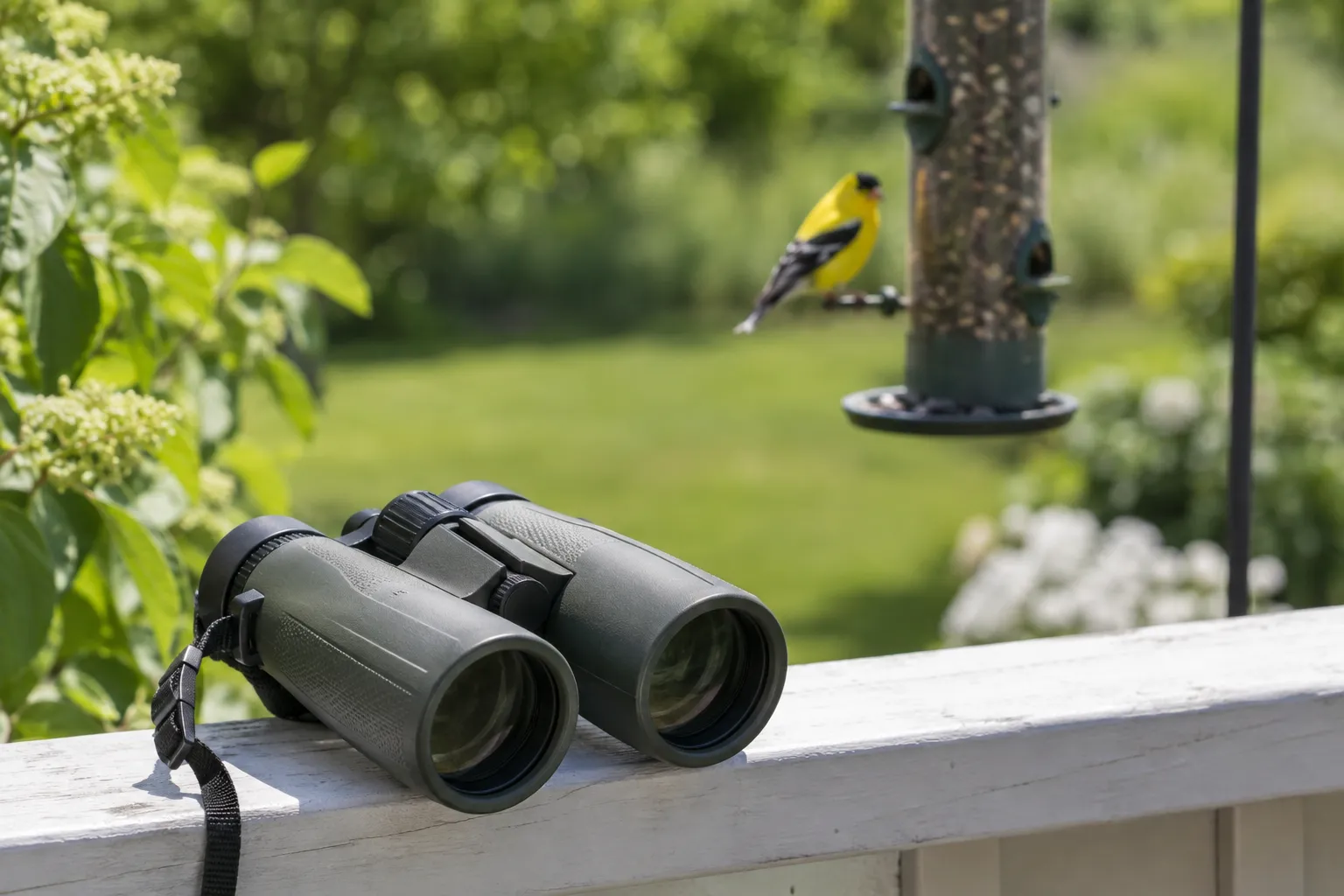
In this article
- Quick answer: should you buy the Celestron Nature DX 8x42?
- How we evaluated the Nature DX
- Celestron Nature DX 8x42 specs
- What the specs mean for birding
- Strengths of the Celestron Nature DX 8x42
- Drawbacks, based on expert reviews and owner patterns
- What owners commonly report
- Is a budget binocular good enough for birding?
- How the Nature DX handles common backyard situations
- Caring for the Nature DX
- Who the Celestron Nature DX 8x42 suits
- Nature DX 8x42 vs the alternatives
- Is the Nature DX 8x42 or 10x42 better for birding?
- How to get the most from a budget binocular
- Common mistakes when buying the Nature DX
- The verdict
- Sources
- Alternatives worth a look
- Frequently asked questions
The Celestron Nature DX 8x42 is one of the most sensible ways to get a real roof prism birding binocular on a small budget. On paper it has the right numbers: a wide 388 ft field of view, 6.5 ft close focus, phase-coated BaK-4 prisms and full waterproofing. Independent reviewers agree it shows birds sharply in the center of the view in good light. Its limits are soft edges, weaker performance at dawn and dusk, and a build that feels budget.
Quick answer: should you buy the Celestron Nature DX 8x42?
- Buy it if you are starting out and want a binocular that is genuinely good enough for bird ID, without spending mid-range money.
- Buy it if you mostly watch birds in daylight from a yard, park or trail.
- Skip it if you often bird in the first and last half hour of light, or you want a crisp view right to the edges.
- Skip it if a broad no-fault warranty matters to you. The Vortex Diamondback HD 8x42 has one.
How we evaluated the Nature DX
We have not physically tested this binocular. This review is research-led. We compared Celestron’s published specifications with competing 8x42 models, read independent reviews from OutdoorGearLab and Live Science, drew on the Cornell Lab’s review of the related Nature DX ED, and looked for repeated patterns in verified owner feedback. When reviewers measured something differently from the spec sheet, we note both figures.
Celestron Nature DX 8x42 specs
All figures below come from Celestron’s product page.
| Spec | Celestron Nature DX 8x42 |
|---|---|
| Magnification | 8x |
| Objective lens | 42 mm |
| Field of view | 388 ft at 1,000 yd (7.4 degrees) |
| Close focus | 6.5 ft |
| Eye relief | 17.5 mm |
| Exit pupil | 5.25 mm |
| Twilight factor | 18.33 |
| Interpupillary distance | 56 to 74 mm |
| Diopter range | plus or minus 3 |
| Weight | 22.2 oz |
| Dimensions | 5.3 x 4.9 x 2 in |
| Prism | Roof, BaK-4, phase coated |
| Lens coatings | Fully multi-coated |
| Weather sealing | Waterproof, nitrogen filled |
| Tripod adaptable | Yes |
| Warranty | Celestron limited lifetime |
In the box: neck strap, objective caps, rainguard, padded case, lens cloth and manual. If any of these terms are new, our guide to what the numbers on binoculars mean explains them.
What the specs mean for birding
Wide 388 ft field of view
At 388 ft at 1,000 yards, the Nature DX sits near the wide end of the 8x42 class. That makes it easier to get on a bird and to keep it in view when it moves. It is wider than the Nikon Monarch M5 (335 ft) and close to the Vortex Diamondback HD (393 ft). For beginners, a wide field is one of the most helpful features a binocular can have.
6.5 ft close focus, with some variation
Celestron lists 6.5 ft. Live Science’s review repeats that figure, while OutdoorGearLab measured its sample closer to 8 ft. Either way, it can focus on birds at a feeder a short distance from your chair, and on butterflies and dragonflies in a garden bed.
BaK-4 prisms and phase coating
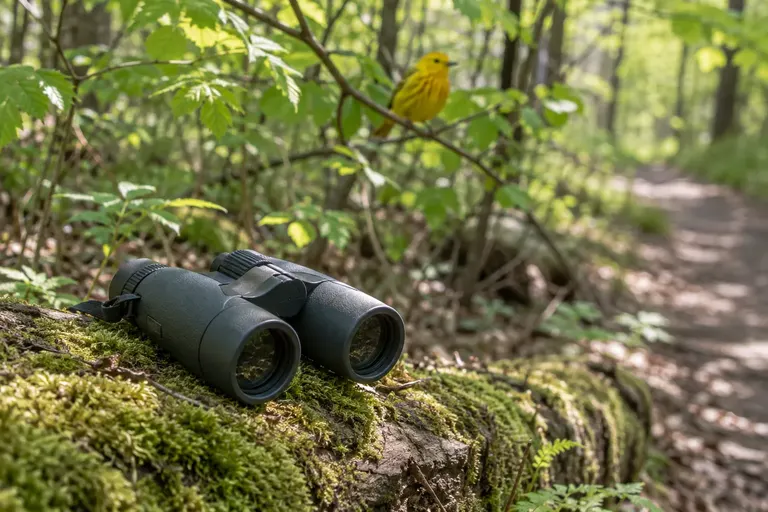
BaK-4 is a higher-grade prism glass that transmits light more evenly than the cheaper BK-7 used in some budget binoculars. Phase coating corrects a contrast loss that happens in roof prisms when light waves split and recombine. Both are signs that the Nature DX is a real step above toy-grade binoculars. What it lacks, compared with pricier models, are ED glass and dielectric prism coatings, which improve color control and brightness. Our explainer on roof prism vs porro prism binoculars covers why prism design matters.
17.5 mm eye relief
This is typical for the class and workable for many eyeglass wearers with thin or moderate lenses. Those with thick lenses may see a slightly reduced field. OutdoorGearLab noted that the eyecups lock in only two positions, which gives fewer options for fine-tuning.
Strengths of the Celestron Nature DX 8x42
Sharp center in good light
OutdoorGearLab reported that the main subject consistently looked sharp, with small details discernible, which is what matters for identifying birds. Live Science described the clarity as impressive for the price. Many owners who upgrade from inexpensive compact or porro binoculars describe the difference as large.
Light and easy to carry
At 22.2 oz on Celestron’s spec sheet (OutdoorGearLab weighed its sample at 22.8 oz), it is comfortable to hold and carry for a morning walk. Live Science found it comfortable for extended use by adults and older children, which makes it a sensible shared family binocular.
Weatherproof and practical
It is waterproof and nitrogen filled, so fogging and rain are not concerns. The included padded case, rainguard and caps cover the basics.
Smooth focus wheel
OutdoorGearLab described the focus knob as smooth and responsive, which helps with quick target acquisition. That is a practical strength for birding, where you are often refocusing from a near branch to a far one.
Drawbacks, based on expert reviews and owner patterns
Edges soften
Both OutdoorGearLab and Live Science note that the image gets blurrier toward the edge of the view. This is common at budget prices. It is most noticeable when scanning a flock or a shoreline, and less noticeable when you center a single bird.
Weaker in dim light
This is the most important limitation for birders. OutdoorGearLab found that at very early morning and very late dusk, birds looked closer to silhouettes with little detail. Live Science reported the same pattern. On paper the 5.25 mm exit pupil is the same as any 8x42. The difference is in glass and coatings, which affect how much light actually reaches your eye. If you often bird at first light, a pair with dielectric coatings will show more.
Mild color fringing
Live Science noted mild chromatic aberration. The Nature DX does not use ED glass, so dark birds against a bright sky may show a thin colored outline. The Nature DX ED model is Celestron’s answer to that.
Budget feel
OutdoorGearLab described the armor as feeling more like hard plastic and less grippy than premium models, with no thumb grooves, and a stiff diopter knob that does not lock. Live Science reported strap durability issues. None of these affect the view, and a replacement strap or harness is inexpensive.
What owners commonly report
Across verified owner reviews at large retailers, several points come up repeatedly:
- Value is the dominant theme. Many owners say it performs above its price in daylight.
- Beginner friendliness: owners new to birding often mention how quickly they learned to use it.
- Low light complaints appear mostly from owners who compared it with more expensive glass.
- Strap and case quality draw the most criticism among the accessories.
Is a budget binocular good enough for birding?
For most backyard birders, yes. The features that make the biggest difference to identifying birds are a sharp center, a wide enough field to find the bird, close focus for nearby birds and a comfortable fit. The Nature DX has all four. What extra money buys, as you move up in price, is mostly better performance at the margins: sharper edges, better color control on backlit birds, more brightness in dim light and a sturdier, more refined build.
Those margins matter more the more you bird. Someone who watches the feeder over morning coffee will get most of the value from a pair like this. Someone who is out every weekend at dawn chasing migrants will notice the limits sooner. Our guide on how to choose binoculars without overpaying goes through where each extra step in price goes.
How the Nature DX handles common backyard situations
These are informed expectations from the published specs and independent reviewer findings, not our own field results.
Feeder birds in daylight
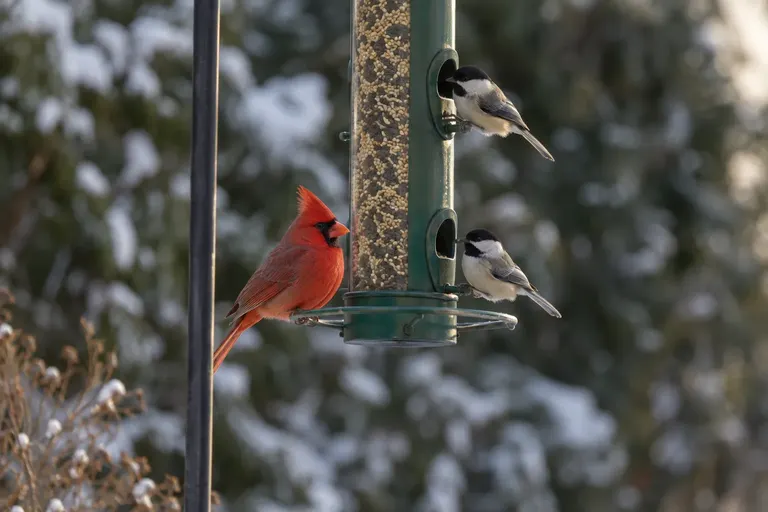
This is the Nature DX’s best case. Birds at a feeder 10 to 30 ft away, in good light, sit still long enough to center them in the sharpest part of the view. Field marks like the white back stripe of a Downy Woodpecker, the black bib of a Black-capped Chickadee or the streaked breast of a House Finch should be easy to see.
Songbirds moving in trees
The wide 388 ft field helps you keep up with active birds. Softer edges matter less here, because you will naturally center the bird as you follow it.
Birds against a bright sky
This is where the Nature DX is weaker. A bird high in a tree against white sky shows as darker, with less color, and may show mild fringing. Moving so the light falls on the bird helps more than anything else.
Dawn, dusk and heavy overcast
Reviewers consistently found the image flattens toward silhouettes in the lowest light. For ordinary overcast days it remains usable, but first and last light are its weakest times.
Distant birds on water
At 8x, ducks and herons across a pond are well within range for identification in good light. For birds far out on a lake or shoreline, a 10x binocular or a spotting scope shows more.
Caring for the Nature DX
- Blow off grit before wiping the lenses, then clean with lens fluid and a microfiber cloth.
- Use the rainguard in wet weather and the objective caps when stored.
- Let it dry in open air after rain before zipping it into the padded case.
- Avoid heat, such as a closed car in summer.
Who the Celestron Nature DX 8x42 suits
First-time birders
If you are just starting, the Nature DX covers everything you need to identify common birds and learn what you value in a binocular. Our guide for beginner birders compares it with other starting options.
Backyard and daytime birders
Most feeder activity happens in full daylight, when the Nature DX is at its best. Its wide field and 6.5 ft close focus suit a yard well.
A second pair for the house or car
Many birders keep a budget binocular by the window or in the glove box. At this price, the Nature DX is a sensible spare.
Who should look elsewhere
- Dawn and dusk birders who need more detail in low light.
- Birders who notice color fringing on birds against a bright sky.
- Anyone who wants a no-questions warranty. Celestron’s limited lifetime warranty covers defects in materials and workmanship for the original owner, not accidental damage.
Nature DX 8x42 vs the alternatives
| Model | Field of view (ft at 1,000 yd) | Close focus | Eye relief | Weight | ED glass |
|---|---|---|---|---|---|
| Celestron Nature DX 8x42 | 388 | 6.5 ft | 17.5 mm | 22.2 oz | No |
| Celestron Nature DX ED 8x42 | 393 | 6.5 ft | 17.8 mm | 24.9 oz | Yes |
| Vortex Diamondback HD 8x42 | 393 | 5.0 ft | 17 mm | 21.8 oz | Not listed |
| Nikon Prostaff P3 8x42 | 377 | 9.8 ft | 20.2 mm | 20.3 oz | Not listed |
| Nikon Monarch M5 8x42 | 335 | 8.2 ft | 19.5 mm | 22.2 oz | Yes |
All figures from manufacturer product pages.
Nature DX vs Nature DX ED
The ED version adds extra-low dispersion objective lenses to reduce color fringing. The Cornell Lab rated it a solid choice, praising a colorful image and light weight for its class. It also noted trouble resolving fine detail on backlit birds and eyecups that slipped out of position. On Celestron’s spec sheet it is heavier at 24.9 oz. If color fringing bothers you and the price gap is small, the ED is the better buy.
Nature DX vs Vortex Diamondback HD
The Diamondback HD is a step up in price. It measured brighter in OutdoorGearLab’s testing, focuses closer (5 ft) and comes with a chest harness and Vortex’s unconditional lifetime warranty. If you can stretch your budget, it is the clearer long-term purchase. See our Diamondback HD 8x42 review.
Nature DX vs Nikon Prostaff P3
The Prostaff P3 8x42 is lighter (20.3 oz) and has much longer eye relief (20.2 mm), making it better for thick glasses. Its field is a little narrower (377 ft) and its 9.8 ft close focus is far longer, which is a real drawback in a yard. Pick the Nikon for glasses, the Celestron for close focus. Our binoculars under $200 list covers both.

Is the Nature DX 8x42 or 10x42 better for birding?
The Nature DX line also includes 8x32, 10x32 and 10x42 models, plus larger 50 mm and 56 mm sizes. For most birding, the 8x42 is the right choice: a wider, brighter, steadier view. Since low light is already the Nature DX’s weak spot, the 8x42’s larger exit pupil matters. Our guide to 8x42 vs 10x42 explains when 10x is worth it.
How to get the most from a budget binocular
Setup and technique close a surprising amount of the gap between budget and premium glass.
- Set the diopter carefully. Focus with the left eye using the center wheel, then set the right eye with the diopter ring. Because the ring is stiff and has no lock, check it before each outing.
- Use the eyecups correctly. Up without glasses, down with glasses.
- Center the bird. The sharpest part of the image is the middle. Move the binocular so the bird sits there.
- Put the sun behind you. Budget glass struggles most with backlit birds. Position yourself so the light falls on the bird.
- Keep lenses clean. Smudges cost more contrast than most spec differences. Blow off grit before wiping.
Common mistakes when buying the Nature DX
- Mixing up the Nature DX and Nature DX ED. Listings can be confusing. Check for “ED” in the model name if you want the ED version.
- Choosing 10x for a first binocular. It is harder to hold steady and to aim.
- Expecting premium low-light performance. It is a daylight binocular first.
- Keeping the stock strap for long walks. A harness or better strap makes it much more comfortable.
The verdict
The Celestron Nature DX 8x42 does what a budget birding binocular should: a wide field, close focus, a sharp center and proper waterproofing. Its edges are soft, it struggles at dawn and dusk, and it feels budget in the hand. For new birders, families and daytime backyard watchers, it is a sound choice. If you can spend more, the Vortex Diamondback HD offers a clear step up and a better warranty. To see how it stacks up against the whole field, read the best binoculars for birding.
Sources
- Celestron: Nature DX 8x42 product page and specifications
- Celestron: Nature DX ED 8x42 product page and specifications
- OutdoorGearLab: Celestron Nature DX 8x42 review
- Live Science: Celestron Nature DX 8x42 binocular review
- Cornell Lab of Ornithology, All About Birds: Celestron Nature DX ED 8x42 review
- Nikon USA: Prostaff P3 8x42 specifications
Alternatives worth a look
Celestron Nature DX 8x42
Phase-coated BaK-4 prisms, a 388 ft field of view and 6.5 ft close focus in a waterproof 22.2 oz body.
- Best for
- Beginners and daytime backyard birders on a budget.
- Skip it if
- Low-light performance matters to you.
- Field of view
- 388 ft at 1,000 yd
- Close focus
- 6.5 ft
- Eye relief
- 17.5 mm
- Weight
- 22.2 oz
Celestron Nature DX ED 8x42
The same family with ED objective lenses to cut color fringing, and a slightly wider 393 ft field.
- Best for
- Budget buyers who notice color fringing.
- Skip it if
- You want the lightest pair.
- Field of view
- 393 ft at 1,000 yd
- Eye relief
- 17.8 mm
- Weight
- 24.9 oz
Vortex Diamondback HD 8x42
Brighter in reviewer tests, closer 5 ft focus and an unconditional lifetime warranty.
- Best for
- Buyers who can stretch the budget for a clear step up.
- Skip it if
- Your budget is firm.
- Field of view
- 393 ft at 1,000 yd
- Close focus
- 5.0 ft
- Weight
- 21.8 oz

Frequently asked questions
Is the Celestron Nature DX 8x42 good for bird watching?
Yes, for daylight backyard and park birding. It has a wide 388 ft field of view, 6.5 ft close focus, phase-coated BaK-4 prisms and full waterproofing, which covers the basics well. Independent reviewers found the center of the image sharp enough to identify birds, but edges soften and the image loses detail in very low light at dawn and dusk.
What is the difference between the Nature DX and the Nature DX ED?
The Nature DX ED adds extra-low dispersion objective lenses, which reduce the purple and green color fringing around dark birds against bright sky. On Celestron's spec sheets the ED version also has a slightly wider 393 ft field and 17.8 mm eye relief, but it is heavier at 24.9 oz versus 22.2 oz. It typically costs more.
Can you use the Celestron Nature DX 8x42 with glasses?
Many eyeglass wearers can. Celestron lists 17.5 mm of eye relief with twist-up eyecups, which is typical for the class. People with thin or moderate lenses usually see most or all of the view with the eyecups down. Those with thick lenses may see a slightly reduced field. Reviewers noted the eyecups have only two positions.
Is the Celestron Nature DX waterproof?
Yes. Celestron lists the Nature DX 8x42 as waterproof and nitrogen filled, which prevents internal fogging when you move between a warm house and cold air. That means rain, dew and splashes are not a concern. As with any binocular, let it air dry after wet use before sealing it in the case.
What comes with the Celestron Nature DX 8x42?
Celestron lists a neck strap, objective lens caps, a rainguard for the eyepieces, a padded carrying case, a lens cloth and a manual. The binocular is tripod adaptable, although the adapter is sold separately. It is covered by Celestron's limited lifetime warranty, which is narrower than an unconditional no-fault warranty.