Cheap Bird Feeders: 6 Budget Picks Under $30
The best cheap bird feeders still come apart for cleaning. Our top pick is the Perky-Pet Metal Tube Feeder, plus budget window, tray, suet and hopper picks.
If you buy through links on this page we may earn a commission, at no cost to you. It never decides what we recommend. How we earn
In this article
- Quick picks
- How we chose
- What makes a cheap bird feeder worth buying?
- Perky-Pet Metal Tube Bird Feeder: best cheap bird feeder overall
- Perky-Pet Farmhouse Wild Bird Feeder: best cheap hopper feeder
- Nature’s Way Clear View Window Feeder: best cheap window feeder
- Birds Choice Small Hanging Tray Feeder: best cheap tray feeder
- Heath Single Hanging Suet Feeder: best cheap suet cage
- More Birds 13 Inch Finch Screen Feeder: best cheap finch feeder
- Comparison table
- Which cheap feeder should you buy first?
- Where should you hang a budget feeder?
- How do you keep a cheap feeder clean?
- Where to save and where to spend
- Sources
- Frequently asked questions
The best cheap bird feeder for most yards is the Perky-Pet Metal Tube Bird Feeder. It’s a powder-coated metal tube with six ports, it holds 1 lb of seed, and its base and perches come off so you can clean the inside properly. That matters more than price: a low-cost feeder is only a good buy if it can be washed and it keeps seed dry.
Quick picks
- Best overall: Perky-Pet Metal Tube Bird Feeder. Metal tube, six ports, removable base.
- Best small hopper: Perky-Pet Farmhouse Wild Bird Feeder. All metal, slide-out windows.
- Best window feeder: Nature’s Way Clear View Window Feeder. Lift-out drained tray.
- Best tray feeder: Birds Choice Small Hanging Tray Feeder. Recycled plastic with a mesh floor.
- Best suet cage: Heath Single Hanging Suet Feeder. Simple vinyl-coated cage for one cake.
- Best for finches: More Birds 13 Inch Finch Screen Feeder. Steel mesh, twist-off ends.
Perky-Pet Metal Tube Bird Feeder
A powder-coated metal tube with six feeding ports, plus a base and perches that come off so you can clean inside.
- Best for
- First feeders, chickadees, titmice and finches on sunflower or mixed seed.
- Skip it if
- You need a big feeder that lasts several days between refills.
- Capacity
- 1 lb seed
- Ports
- 6 with perches
- Size
- 13.25 in tall, 5.5 in wide
- Cleaning
- Removable base and perches
Perky-Pet Farmhouse Wild Bird Feeder
An all-metal hopper with a removable roof and see-through windows that slide out of the frame for cleaning.
- Best for
- Cardinals, chickadees and finches, and anyone who wants a classic hopper look.
- Skip it if
- Squirrels can reach it; an open-roof hopper is easy for them to raid.
- Capacity
- 2.8 lb seed
- Material
- Powder-coated metal
- Size
- 10 in tall
- Cleaning
- Lift-off roof, slide-out windows
Nature's Way Clear View Window Feeder
A clear window feeder with four side suction cups and a perforated seed tray that lifts out for filling and cleaning.
- Best for
- Close-up views from indoors, apartments and small yards.
- Skip it if
- Your window glass is textured or hard to reach from outside.
- Capacity
- 2 cups seed
- Mount
- 4 side suction cups
- Tray
- Removable, drained
Birds Choice Small Hanging Tray Feeder
A small hanging tray in recycled poly lumber with a stainless steel mesh floor that drains rain.
- Best for
- Cardinals, juncos, sparrows and other birds that prefer an open platform.
- Skip it if
- Starlings, grackles or pigeons already crowd your yard.
- Size
- 8.5 x 9 x 2.25 in
- Material
- Recycled poly lumber
- Floor
- Stainless steel mesh
Heath Single Hanging Suet Feeder
A basic vinyl-coated wire cage for one standard suet cake, with a front panel that opens for filling.
- Best for
- Woodpeckers, nuthatches and chickadees in cool weather.
- Skip it if
- Starlings empty your suet; an upside-down suet feeder slows them down.
- Capacity
- 1 suet cake
- Size
- 5.25 x 5.25 x 2.25 in
- Material
- Vinyl-coated metal
More Birds 13 Inch Finch Screen Feeder
An all-metal mesh tube for nyjer, with a twist-off top and base for filling and cleaning.
- Best for
- American Goldfinches, Pine Siskins and other small finches.
- Skip it if
- You get a lot of rain and cannot shelter it; wet nyjer clumps in mesh.
- Capacity
- 1.6 lb nyjer
- Size
- 13.5 in tall
- Material
- Steel mesh
- Cleaning
- Twist-off top and base
How we chose
We have not used these feeders ourselves yet. This guide is research-based. We set a budget rule first: every pick is usually sold under $30 at the time of writing, though prices change often and vary by store. Within that limit, we compared manufacturer and retailer specifications for capacity, materials, drainage and how each feeder opens for cleaning, and we confirmed each model is currently sold. We checked each design against feeder guidance from Project FeederWatch and the Cornell Lab of Ornithology. We gave the most weight to feeders that come apart or open wide without tools, because a cheap feeder you can’t clean is a poor deal for the birds that use it.
What makes a cheap bird feeder worth buying?
A good budget feeder does three things: it opens for cleaning, it keeps seed dry, and it’s made of something that survives weather and chewing.
It comes apart or opens wide
Project FeederWatch asks people not to use bird feeders that can’t be thoroughly washed, such as feeders made of wood. Look for a removable base, a lift-off roof, a twist-off lid or a tray that slides out. Tube feeders also tend to hold old seed below the lowest port, where birds never reach it, so a base that comes off makes a real difference.
It drains
Wet seed spoils. FeederWatch says platform feeders should have plenty of drainage holes, and the Cornell Lab suggests choosing a tray with a screened rather than a solid bottom. On window feeders, a perforated tray does the same job.
It’s made of the right material
The Cornell Lab notes that squirrels can damage plastic tube feeders, while metal resists them better. Recycled poly lumber, used in many tray feeders, doesn’t rot and is easy to scrub. Thin, untreated wood and flimsy plastic are where cheap feeders usually fail first.
Perky-Pet Metal Tube Bird Feeder: best cheap bird feeder overall
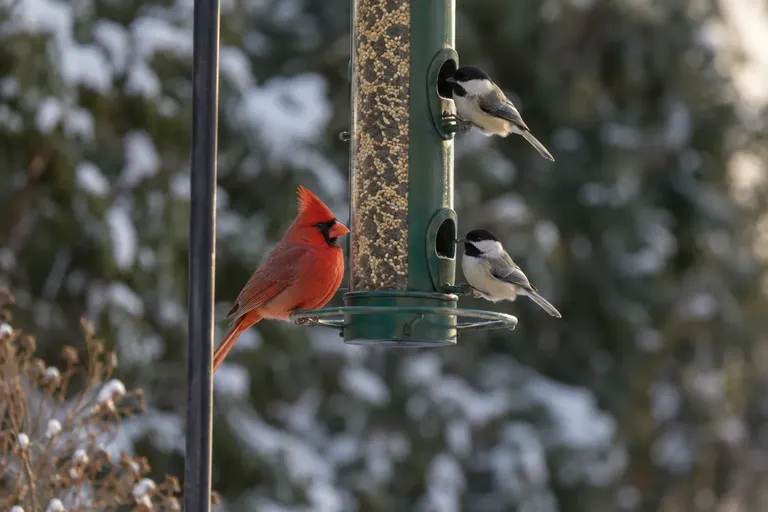
What it is: A small tube feeder in powder-coated metal. Perky-Pet lists a 1 lb capacity for mixed seed or black-oil sunflower, six feeding stations with perches, and a size of 13.25 inches tall by 5.5 inches across. It comes in more than one color.
Why it stands out: Most low-cost tube feeders are all plastic and have a fixed base. This one has a metal body and a removable base and perches, which Perky-Pet describes as being for easy cleaning. Short perches on a tube suit small birds such as chickadees, titmice and finches, and the tube keeps seed fairly dry, as FeederWatch notes for tube feeders in general.
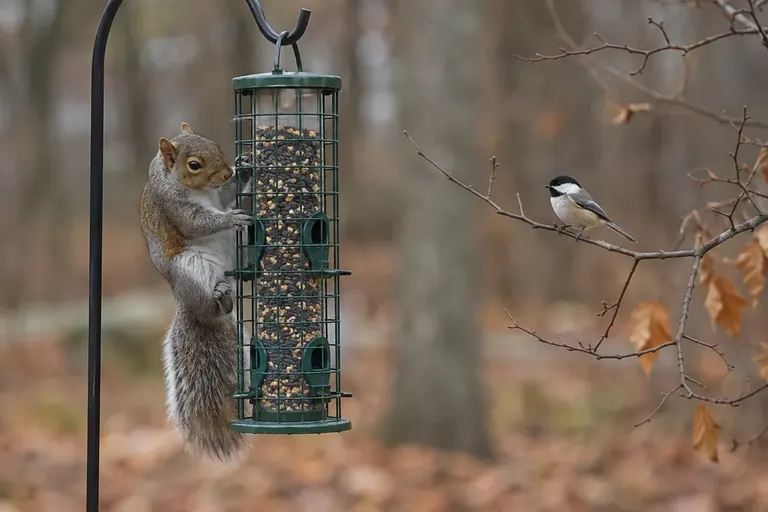
What to watch: A 1 lb tube empties quickly when a flock finds it, so expect to refill often in winter. It isn’t squirrel-proof; metal resists chewing, but a squirrel can still hang on and eat.
- Best for: A first feeder, or a second tube to spread birds out.
- Skip it if: You want to refill only once or twice a week.
See available listings on Amazon
Perky-Pet Farmhouse Wild Bird Feeder: best cheap hopper feeder
What it is: A small house-style hopper in powder-coated, rust-resistant metal. Perky-Pet lists a 2.8 lb seed capacity, a height of 10 inches, four U-shaped perches so birds can feed from every side, drainage holes and a seed tray that catches dropped seed.
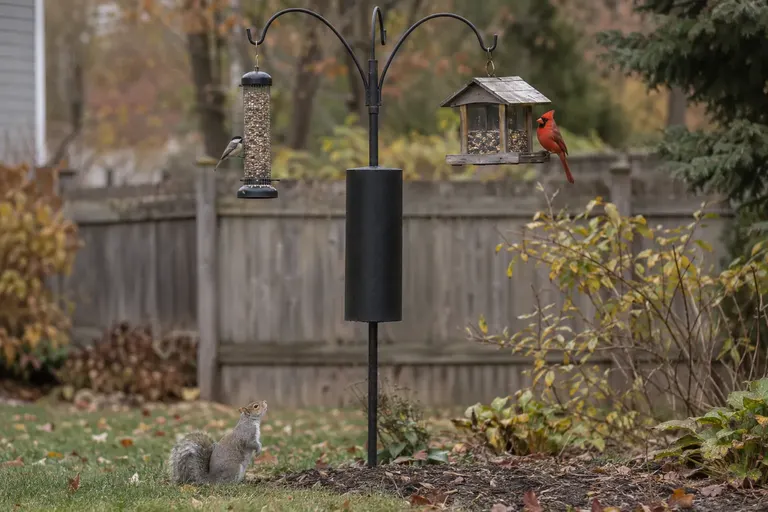
Why it stands out: The Cornell Lab notes that hopper feeders keep seed dry under a roof but are harder to clean than a tray. This design deals with that weakness: the roof lifts off, and the maker says the translucent windows slide out of the metal frame so you can reach every surface.
What to watch: Hoppers are open to squirrels, so hang it where they can’t jump on, or put it on a pole with a baffle. The windows are plastic, so treat them gently when cleaning.
- Best for: Cardinals, chickadees, titmice, nuthatches and finches on mixed or sunflower seed.
- Skip it if: Squirrels can reach your hanging spot and you can’t move it.
See available listings on Amazon
Nature’s Way Clear View Window Feeder: best cheap window feeder
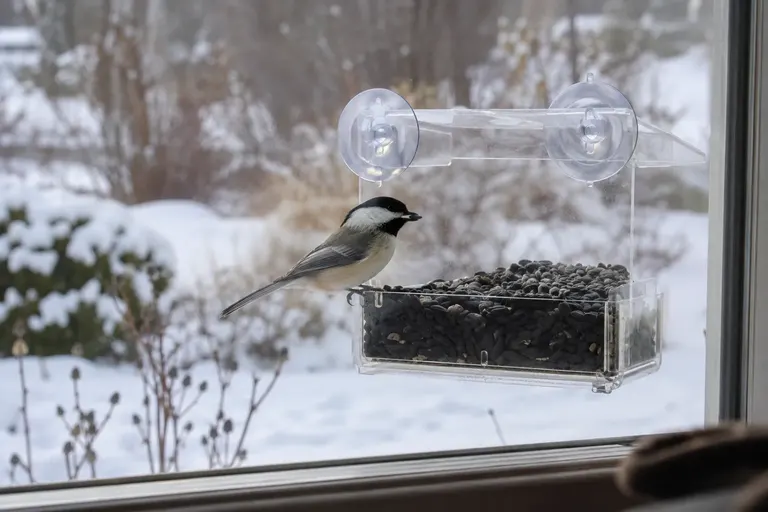
What it is: A clear window feeder held by four suction cups mounted on the sides. Retailers list a 2 cup seed capacity, a rounded perch, UV-stabilized crack-resistant material and a channeled, perforated seed tray designed to drain water.
Why it stands out: The tray lifts out for filling and cleaning, and the feeder detaches from the window without pulling off the suction cups. Side-mounted cups keep the view clear. Window feeders give close-up views of small birds such as chickadees, titmice, nuthatches and finches, according to the Cornell Lab, which also notes that birds may take several days before they’re ready to come that close.
What to watch: Birds soil window trays with droppings, so this feeder needs frequent cleaning. Suction cups hold best on smooth, clean glass.
- Best for: Apartments, balconies and anyone who wants to watch birds from a chair. Our guide to feeders for small spaces covers more options.
- Skip it if: You can’t safely reach the outside of the window to refill it.
See available listings on Amazon
Birds Choice Small Hanging Tray Feeder: best cheap tray feeder
What it is: A small hanging platform made from recycled poly lumber, with an expanded stainless steel mesh floor, stainless hanging rods and fasteners. Retailers list it at 8.5 by 9 by 2.25 inches.
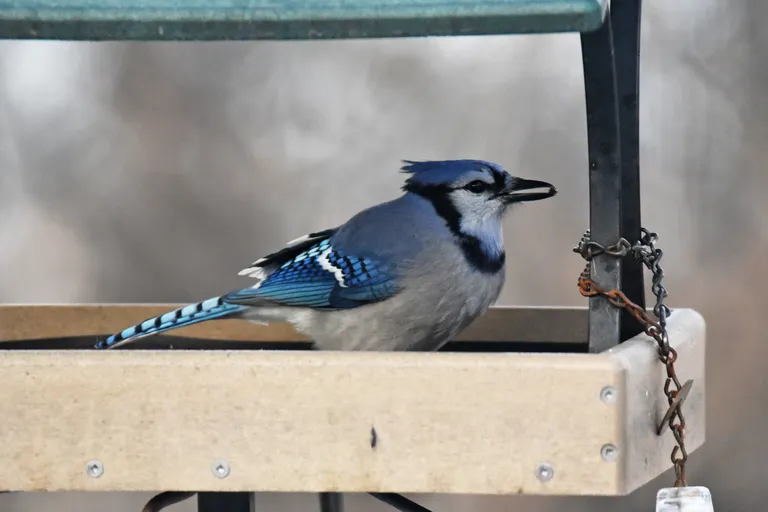
Why it stands out: A mesh floor is exactly what the Cornell Lab recommends for trays, because it drains rain and keeps seed drier than a solid bottom. Recycled plastic lumber doesn’t crack, split or rot like cheap wood. Trays attract a wide range of birds, including sparrows, juncos, jays, doves and cardinals that don’t like small tube perches.
What to watch: Open trays also draw starlings, House Sparrows, pigeons and squirrels. Offer only what birds eat in a day, and clean often; the Cornell Lab suggests washing trays with a dilute bleach solution every couple of weeks.
- Best for: Ground-feeding and larger songbirds.
- Skip it if: Unwanted birds already dominate your yard.
See available listings on Amazon
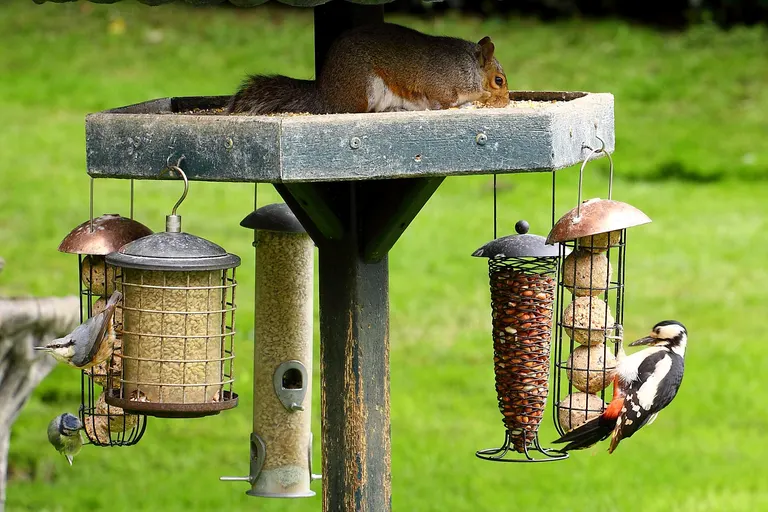
Heath Single Hanging Suet Feeder: best cheap suet cage
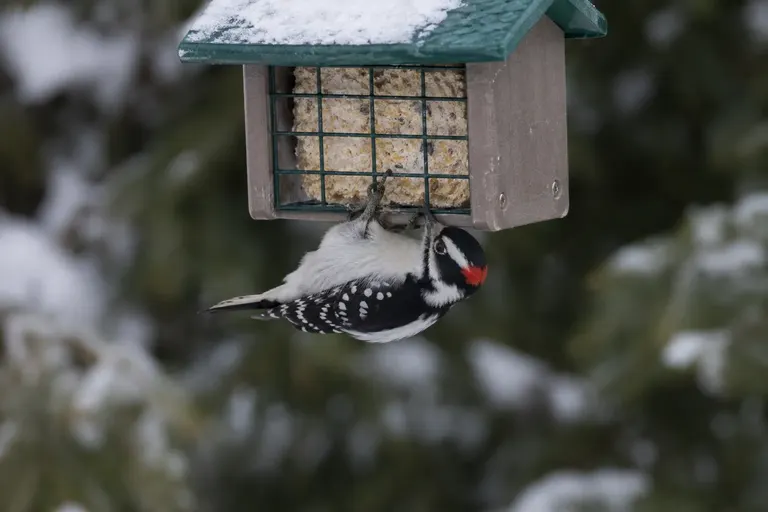
What it is: A simple wire cage for one standard suet or seed cake. It’s vinyl coated for weather protection, measures 5.25 by 5.25 by 2.25 inches, hangs from an attached chain, and the front panel opens for filling.
Why it stands out: Suet cages are among the least expensive feeders you can buy, and this one is easy to clean: the product listing says to wash it regularly with warm, soapy water. Birds can feed from all sides, which suits woodpeckers, nuthatches and chickadees.
What to watch: The Cornell Lab warns that raw suet can turn rancid above freezing, and FeederWatch cautions about suet in hot weather unless it’s specially processed. Starlings also love suet. If they take over, look at the upside-down designs in our main bird feeder guide.
- Best for: Woodpeckers and other clinging birds from fall to spring.
- Skip it if: You want to feed suet through a hot summer.
See available listings on Amazon
More Birds 13 Inch Finch Screen Feeder: best cheap finch feeder
What it is: An all-metal nyjer feeder. Perky-Pet, which sells the More Birds line, lists a 1.6 lb capacity, a size of 13.5 by 6 by 6 inches, a steel mesh body with a powder-coated top and base, drainage holes and a seed diverter.
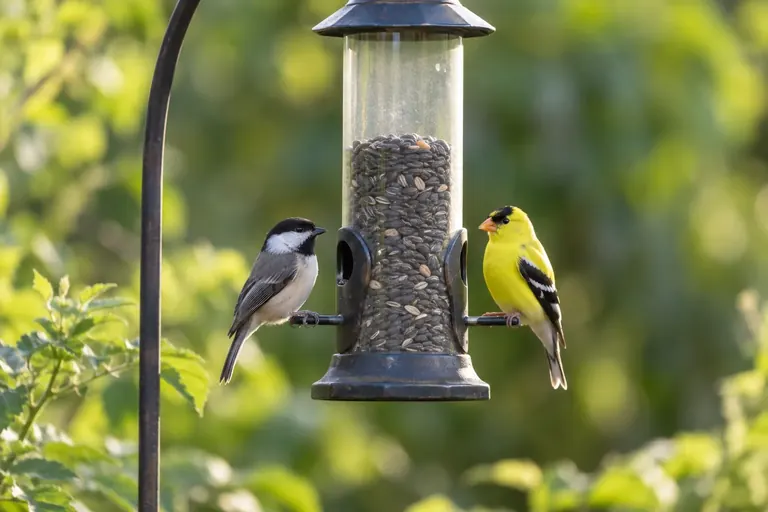
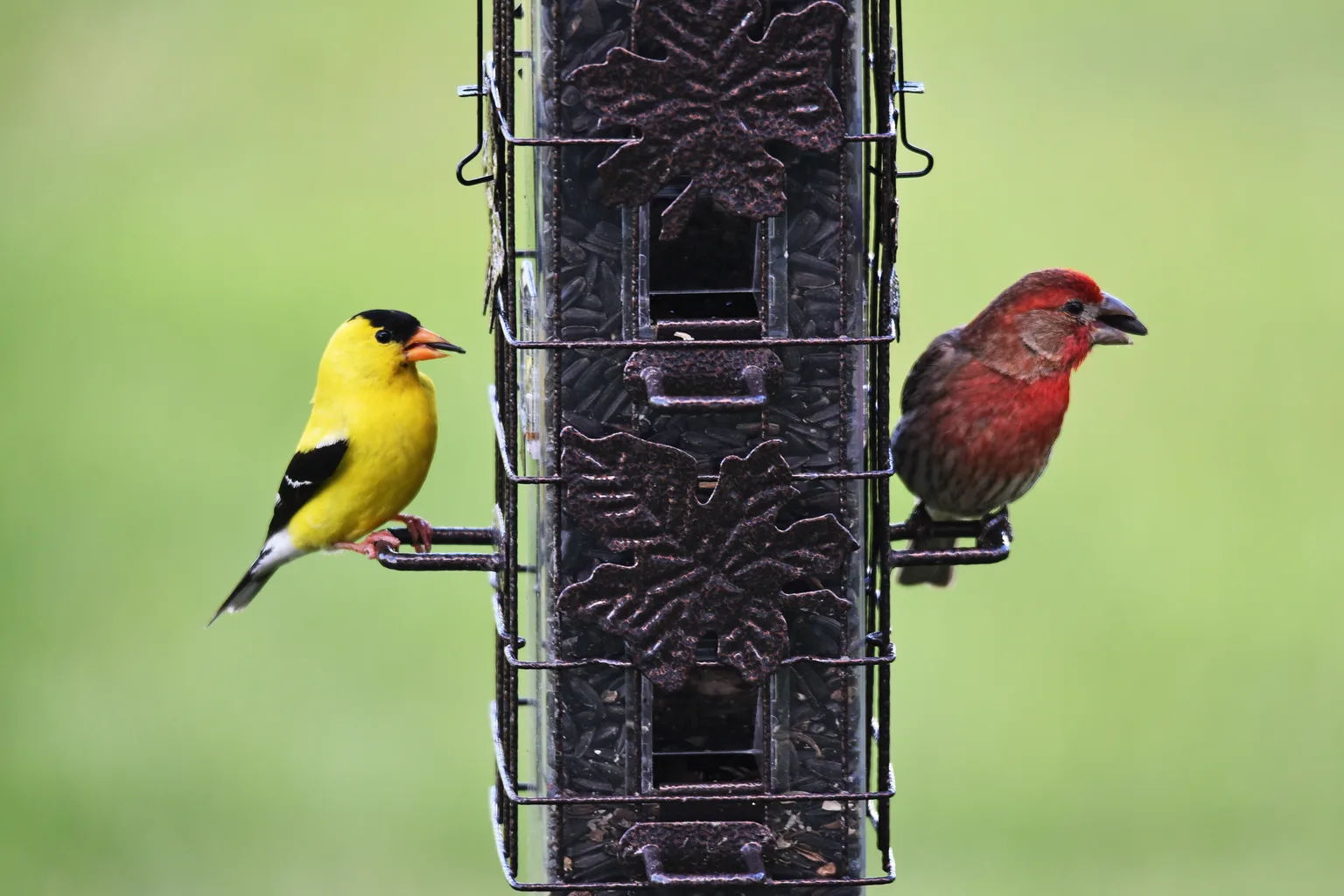
Why it stands out: Goldfinches cling all over a mesh tube, so many birds can feed at once. The top and base twist off for filling and cleaning, and the maker gives clear care instructions: clean weekly, or monthly at minimum, with a 15-minute soak in nine parts water to one part bleach, then scrub, rinse and dry. The Cornell Lab notes that metal nyjer feeders usually last much longer than mesh socks.
What to watch: Mesh lets rain in, and wet nyjer clumps. The maker says not to put it in a dishwasher.
- Best for: American Goldfinches, Pine Siskins and redpolls.
- Skip it if: You can’t hang it somewhere sheltered from heavy rain.
See available listings on Amazon
Comparison table
| Feeder | Type | Capacity | Material | Cleaning feature |
|---|---|---|---|---|
| Perky-Pet Metal Tube | Tube | 1 lb | Powder-coated metal | Removable base and perches |
| Perky-Pet Farmhouse | Hopper | 2.8 lb | Powder-coated metal | Lift-off roof, slide-out windows |
| Nature’s Way Clear View | Window | 2 cups | UV-stabilized clear plastic | Lift-out tray |
| Birds Choice Small Hanging Tray | Tray | Small tray | Recycled poly lumber | Open tray, mesh floor |
| Heath Single Suet | Suet cage | 1 cake | Vinyl-coated metal | Front panel opens |
| More Birds Finch Screen | Nyjer mesh tube | 1.6 lb | Steel mesh | Twist-off top and base |
Which cheap feeder should you buy first?
Start with the birds you already see, then match the feeder to them.
Small songbirds like chickadees, titmice and finches
A small tube or hopper with sunflower seed is the simplest start. The Cornell Lab lists finches, chickadees, titmice, cardinals and sparrows among hopper visitors, and tubes with short perches favor smaller birds.
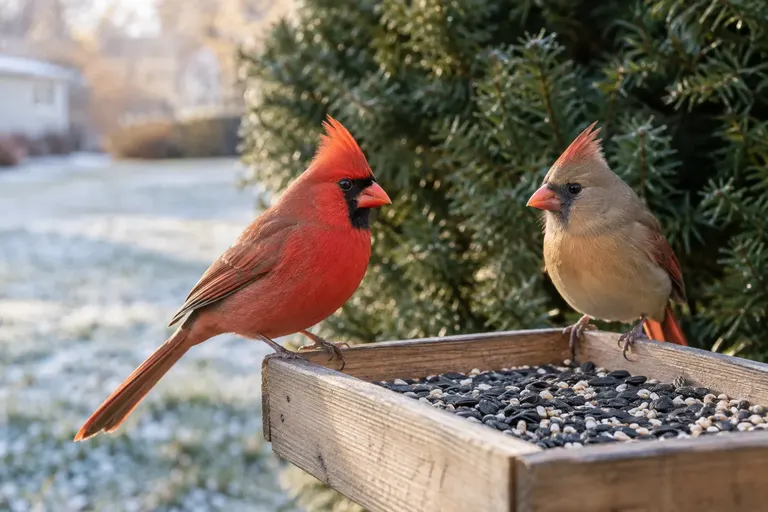
Cardinals, juncos and sparrows
Choose a tray. Many of these birds prefer an open surface to a short perch.
Woodpeckers and nuthatches
A suet cage is the cheapest way to bring them in during cold months.
Goldfinches
A nyjer feeder. The Cornell Lab notes that squirrels often ignore tiny nyjer seed, so it’s a good choice where squirrels empty other feeders.
Where should you hang a budget feeder?
Placement does more for squirrels and safety than any feature on a cheap feeder. FeederWatch notes that squirrels can jump to feeders placed less than ten feet from a tree or building. Hang the feeder where you can reach it easily for refilling and cleaning, and where cats can’t ambush birds from cover. Our guide to where to put a bird feeder goes through every factor.
How do you keep a cheap feeder clean?
Project FeederWatch recommends cleaning seed and suet feeders every week or two, and more often in wet weather or during heavy use.
- Empty old seed and throw away anything clumped or moldy.
- Take the feeder apart as far as it goes: base, roof, windows or tray.
- Scrub with hot, soapy water and a bottle brush.
- Soak the parts for 10 minutes in one part bleach to nine parts water.
- Rinse and dry completely before refilling.
Our step-by-step guide on how to clean bird feeders covers each feeder type in detail.
Where to save and where to spend
- Save on: the feeder body, decoration and brand name. Birds respond to food, cover and a clean feeder.
- Spend a little more on: parts that come apart, metal where squirrels chew, and drained trays.
- Don’t skimp on: seed freshness and cleaning time. A cheap feeder kept clean beats an expensive one left dirty.
Sources
- Project FeederWatch: Feeding birds, placement and cleaning
- Cornell Lab of Ornithology, All About Birds: How to choose the right kind of bird feeder
- Cornell Lab of Ornithology, All About Birds: Why birds hit windows and how you can help prevent it
- Perky-Pet: Metal Tube Wild Bird Feeder
- Perky-Pet: Farmhouse Wild Bird Feeder
- Perky-Pet: More Birds 13 Inch Finch Screen Bird Feeder

Frequently asked questions
Are cheap bird feeders worth buying?
Yes, if the feeder can be taken apart and washed. Birds don't care what a feeder costs, but they are affected by dirty ports and wet, moldy seed. A low-cost feeder with a removable base, a drained tray or a twist-off lid can keep birds as healthy as an expensive one. Avoid cheap feeders that can't be opened for scrubbing or that hold water.
What is the cheapest way to start feeding birds?
Start with one simple feeder that suits the birds you already see, such as a small metal tube for chickadees and finches or a hanging tray for ground-feeding birds like juncos and cardinals. Fill it with black-oil sunflower seed, which many common feeder birds eat. Add a second feeder type only after birds are visiting the first one regularly.
Are plastic or metal bird feeders better on a budget?
Metal parts usually last longer because squirrels chew plastic ports, roofs and perches, a weakness the Cornell Lab of Ornithology points out for plastic tube feeders. Recycled poly lumber, used in many tray feeders, resists rot and cleans easily. Clear plastic is fine for window feeders, where squirrels are rarely a problem. Avoid unsealed wooden feeders that can't be washed thoroughly.
How often should I clean a cheap bird feeder?
Project FeederWatch recommends cleaning seed and suet feeders every week or two, and more often in wet weather or periods of heavy use. Scrub with hot soapy water, soak the parts for 10 minutes in one part bleach to nine parts water, rinse, and let everything dry fully before refilling. Open trays benefit from even more frequent cleaning.
Do window bird feeders cause birds to hit the glass?
The Cornell Lab of Ornithology says older advice about safe feeder distances from windows is no longer thought to be valid. Instead, make nearby windows bird friendly. Project FeederWatch suggests marking the outside of the glass with repeating patterns spaced no more than 2 inches apart, which helps birds see the window as a barrier.