Best No-Mess Bird Seed
The best no mess bird seed is 100% shelled: no hulls, no sprouts. Lyric Delite leads our research picks, with Wild Delight and hulled sunflower close behind.
If you buy through links on this page we may earn a commission, at no cost to you. It never decides what we recommend. How we earn
In this article
- Quick picks
- How we chose
- What makes bird seed “no mess”?
- Lyric Delite No-Waste Mix: best overall
- Wild Delight Deck, Porch N’ Patio: best for decks and patios
- Lyric Sunflower Kernels: best single ingredient
- Lyric Fine Tunes No Waste Mix: best for small songbirds
- Cole’s Hot Meats: best to deter squirrels
- Cole’s Sunflower Meats: best bulk hulled sunflower
- No-mess bird seed compared
- Which birds eat no mess bird seed?
- How to switch to no mess seed without losing birds
- Can you make your own no mess blend?
- No mess seed through the seasons
- Is no mess bird seed worth it?
- Does no mess seed keep rats and mice away?
- How to keep the area under your feeder even cleaner
- Common mistakes with no mess seed
- Sources
- Frequently asked questions
The best no mess bird seed is food with no shells at all, and Lyric Delite No-Waste Mix is our top pick: shelled peanuts, sunflower kernels, pecans, pistachios and shelled pumpkin seed, with nothing for birds to drop and nothing to sprout, and Lyric lists more than 35 species it attracts. For a deck or porch, Wild Delight Deck, Porch N’ Patio is the close alternative, and plain hulled sunflower kernels are the simplest option that still feeds the widest range of feeder birds.
Be clear about what “no mess” means: no hulls, no sprouting seed and far less spilled filler. Birds still drop crumbs, scatter a little and leave droppings. The goal is a clean patio with a quick sweep, not a sterile one.
Quick picks
- Best overall: Lyric Delite No-Waste Mix
- Best for decks and patios: Wild Delight Deck, Porch N’ Patio
- Best single ingredient: Lyric Sunflower Kernels
- Best for small songbirds: Lyric Fine Tunes No Waste Mix
- Best to deter squirrels: Cole’s Hot Meats
- Best bulk hulled sunflower: Cole’s Sunflower Meats
Lyric Delite No-Waste Mix
Shelled peanuts, sunflower kernels, pecans, pistachios and shelled pumpkin seed, with no hulls to drop.
- Best for
- Most feeders over patios and beds.
- Skip it if
- Your tube feeder has small ports.
- Ingredients
- Peanuts, sunflower kernels, pecans, pistachios, pumpkin seed (all shelled)
- Bag sizes
- 5 and 20 lb
Wild Delight Deck, Porch N' Patio
A zero-waste blend of sunflower kernels, peanuts, pistachios and hulled pumpkin seed, with no corn, milo or millet.
- Best for
- Outdoor living areas where any debris is unwelcome.
- Skip it if
- You want ground-feeding sparrows and juncos; there is no millet.
- Excludes
- Corn, milo, millet
- Formats
- 5 and 20 lb bags; 16 oz block
Lyric Sunflower Kernels
Straight hulled sunflower, 100% edible, feeding every bird that eats black oil sunflower.
- Best for
- Tube and hopper feeders, and anyone who wants the broadest species list with no shells.
- Skip it if
- You want nuts and fruit to widen the crowd.
- Ingredient
- Sunflower kernels
- Bag sizes
- 5 and 25 lb
Lyric Fine Tunes No Waste Mix
A finely cut nut and kernel blend with hulled millet, sized for smaller beaks.
- Best for
- Finches, chickadees, bluebirds and other small birds.
- Skip it if
- Squirrels already raid your feeders; fine nut pieces are easy for them.
- Ingredients
- Peanut, sunflower, almond, pistachio, pecan and pumpkin seed pieces; hulled white proso millet
- Bag sizes
- 5 and 15 lb
Cole's Hot Meats
Hulled sunflower infused with habanero chili: no shells, and most mammals give up on it.
- Best for
- No-mess feeding in squirrel-heavy yards.
- Skip it if
- You fill feeders bare-handed; wear gloves.
- Ingredients
- Sunflower meats, liquid habanero chili peppers, safflower oil
- Bag sizes
- 5, 10, 20 and 40 lb
Cole's Sunflower Meats
Plain hulled sunflower in sizes up to 40 lb, marketed as a no waste, no mess feed.
- Best for
- Busy feeders that go through seed fast.
- Skip it if
- You cannot store a large bag cool and dry.
- Ingredient
- Hulled sunflower
- Bag sizes
- 5, 10, 20 and 40 lb
How we chose
We have not run side-by-side feeder trials of these blends ourselves. This is a research-led guide. We read each manufacturer’s published ingredient list and kept only products where every main ingredient is shelled or hulled. We cross-checked seed-preference and spoilage guidance from Cornell Lab of Ornithology’s Project FeederWatch and All About Birds, and looked for patterns in verified owner feedback about mess, sprouting, spoilage and squirrels. We skipped any blend with whole-shell sunflower, milo or unhulled millet high on the label, since those are the main sources of mess.
What makes bird seed “no mess”?
Mess under a feeder comes from three sources:
- Hulls. Birds crack black oil sunflower and drop the shells. At a busy feeder, hulls build up into a mat that can smother grass and stain decks.
- Rejected filler. Birds dig through milo, red millet, wheat and flax to reach the seeds they want, flicking the rest to the ground. Cornell’s All About Birds calls these seeds that most birds reject.
- Sprouting. Whole seeds that fall can germinate into weedy grasses and sunflowers.
No-mess seed removes all three. Shelled ingredients leave no hulls, every piece is something birds eat, and Lyric notes that seeds without a protective shell will not germinate beneath the feeder.
No mess vs no waste vs no grow
These labels overlap but are not identical:
- No mess: usually means no hulls.
- No waste: usually means 100% edible, with no filler birds reject.
- No grow: means the seed will not sprout, either because it is shelled or because it has been heat-treated.
The best products tick all three. Always check the ingredient list rather than trusting the front of the bag.
Lyric Delite No-Waste Mix: best overall
What it is. A shell-free blend of shelled peanuts, sunflower kernels, pecans, pistachios and shelled pumpkin seed, per Lyric’s product page.
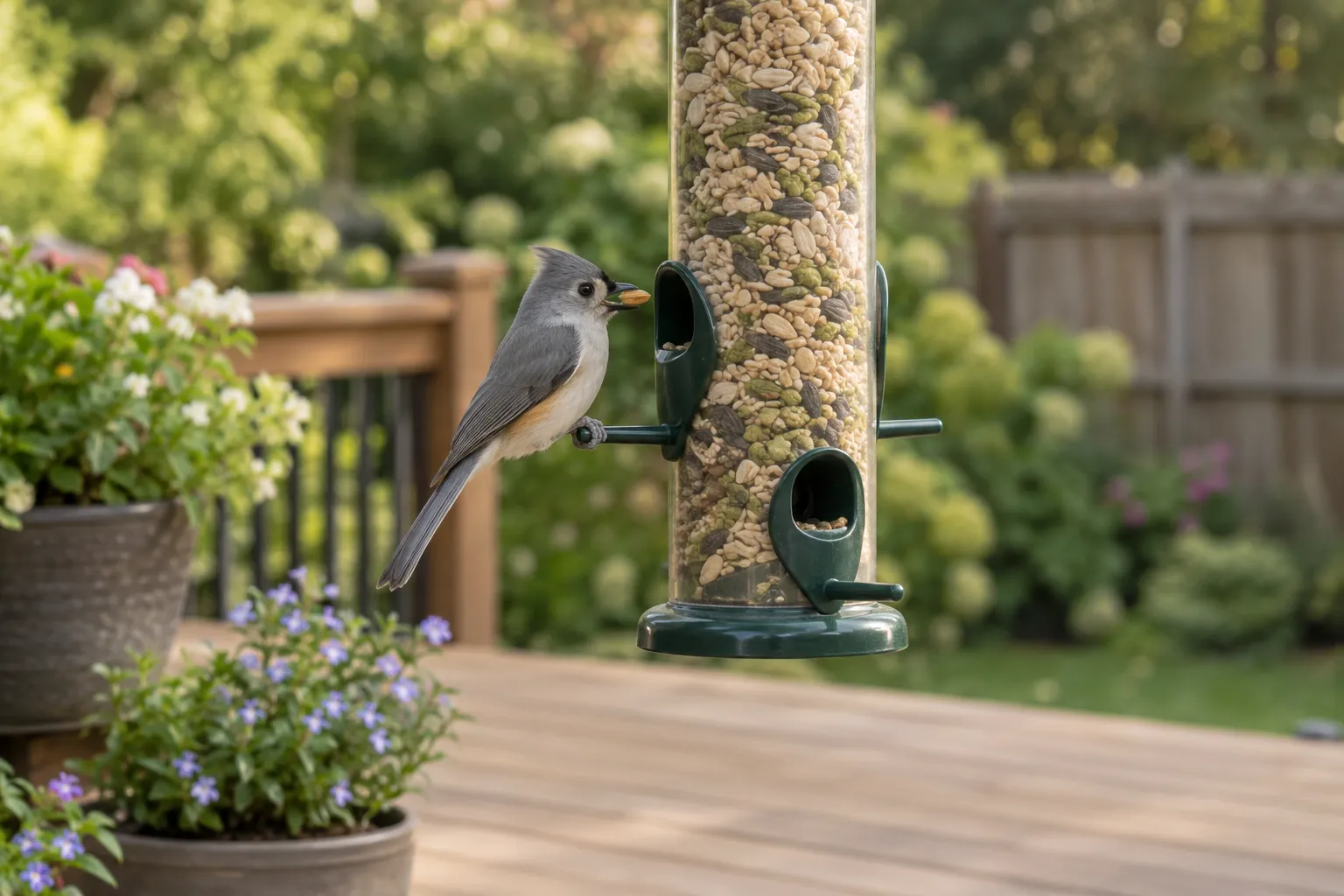
Who it suits. Anyone feeding over a patio, deck, balcony or planted bed. Lyric lists more than 35 species it attracts, including woodpeckers, finches, chickadees, nuthatches and sparrows.
Strengths. Every ingredient is edible and shell-free. The nut content brings in woodpeckers and jays that a sunflower-only feeder may miss.
Drawbacks. Lyric recommends hopper feeders, covered trays, tube feeders with appropriately sized ports, or wire mesh feeders, all protected from weather. Whole nut pieces jam small tube ports.
Skip it if your only feeder is a small-port tube; use hulled sunflower instead.
Wild Delight Deck, Porch N’ Patio: best for decks and patios
What it is. Wild Delight describes it as a “zero-waste” blend built for outdoor living areas. Ingredients start with sunflower kernels, peanuts, pistachios and hulled pumpkin seed, plus added vitamins and minerals.
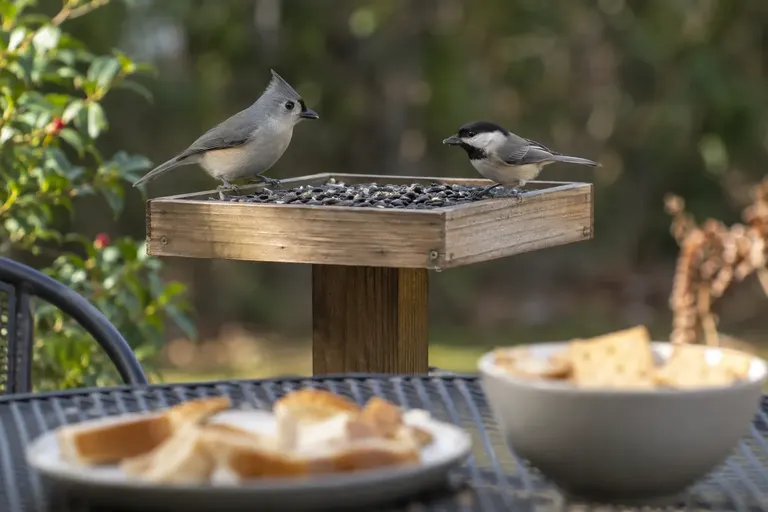
Who it suits. People whose feeder hangs directly over furniture, pavers or a deck. Wild Delight names songbirds, cardinals, grosbeaks, finches, jays and nuthatches as target birds.
Strengths. No corn, milo or millet, which removes the three ingredients most likely to be tossed or sprout. It also comes as a 16 oz block for block holders.
Drawbacks. No millet means fewer ground-feeding juncos and sparrows. Larger pieces need large ports.
Skip it if you want the full ground-feeding crowd; pair it with a low platform of millet away from the patio.
Lyric Sunflower Kernels: best single ingredient
What it is. Hulled sunflower seed. Lyric says it “contains no shells and is 100% edible.”
Who it suits. Anyone who wants the broadest species list from one simple food. Cornell’s Project FeederWatch notes that hulled sunflower appeals to any bird that eats regular sunflower and that many prefer it. That makes it the no-mess version of the seed we recommend starting with in our black oil sunflower guide.
Strengths. Works in nearly any feeder, including standard tubes. Goldfinches, chickadees, titmice, cardinals, nuthatches and House Finches all take it.
Drawbacks. Hulled kernels spoil faster when damp, per FeederWatch. In humid summers, fill smaller amounts more often.
Skip it if you want nuts and fruit to pull in woodpeckers and jays.
Lyric Fine Tunes No Waste Mix: best for small songbirds
What it is. A finely cut blend Lyric describes as a “100% edible nut and kernel blend,” designed for smaller beaks. Ingredients: peanut pieces, sunflower kernels, almond pieces, pistachio pieces, hulled white proso millet, pecan pieces and shelled pumpkin seed pieces.
Who it suits. Yards with lots of small birds: finches, chickadees, nuthatches, buntings and bluebirds, all on Lyric’s list of 25+ species.
Strengths. Small pieces fit standard feeders and small bills. Including hulled millet brings some ground-feeding sparrows without adding hulls.
Drawbacks. Fine nut pieces are easy pickings for squirrels, and small particles can pack down in wet weather.
Skip it if squirrels are your main problem.
Cole’s Hot Meats: best to deter squirrels
What it is. Sunflower meats (hulled sunflower) infused with liquid habanero chili peppers and safflower oil, per Cole’s.
Who it suits. No-mess feeders in squirrel-heavy yards. Birds do not react to capsaicin, the chili compound mammals find hot.
Strengths. Shell-free and chili-coated. Cole’s lists it as rich in vitamins A and D and carotene from the peppers.
Drawbacks. Cole’s itself says chilies are not an instant repellent: squirrels may sample it at first, and it can take two to three weeks for them to give up. The chili residue can sting skin and eyes, so wear gloves when refilling.
Skip it if you prefer to solve squirrels with baffles and placement.
Cole’s Sunflower Meats: best bulk hulled sunflower
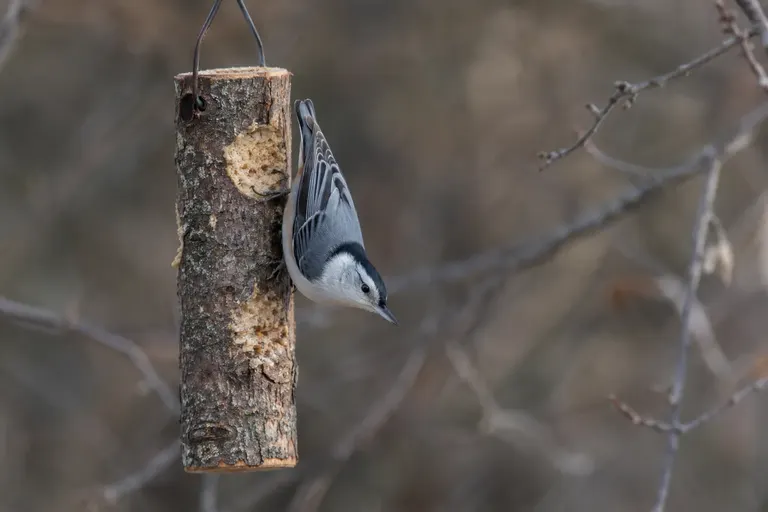
What it is. Plain hulled sunflower that Cole’s markets as “a no waste, no mess feed” with “more feed per pound and no messy hulls to clean up.” It suits balcony and deck feeding.
Who it suits. Busy feeders that go through seed quickly, where a 20 or 40 lb bag makes sense.
Strengths. Available in 5, 10, 20 and 40 lb bags. Simple and broadly eaten.
Drawbacks. Squirrels like it as much as birds do. Large bags of hulled seed need airtight, cool storage to avoid spoilage and pantry moths; see our bird seed storage guide.
Skip it if you use less than a few pounds a month; buy a smaller bag and keep it fresh.
No-mess bird seed compared
| Pick | 100% shelled | Nuts | Millet | Corn / milo | Best feeder |
|---|---|---|---|---|---|
| Lyric Delite No-Waste Mix | Yes | Peanuts, pecans, pistachios | No | No | Hopper, covered tray, large-port tube |
| Wild Delight Deck, Porch N’ Patio | Yes | Peanuts, pistachios | No | No | Hopper, large-port tube, block holder |
| Lyric Sunflower Kernels | Yes | No | No | No | Any |
| Lyric Fine Tunes No Waste Mix | Yes | Peanut, almond, pistachio, pecan | Hulled white proso | No | Tube, hopper |
| Cole’s Hot Meats | Yes | No | No | No | Tube, hopper |
| Cole’s Sunflower Meats | Yes | No | No | No | Any |
Which birds eat no mess bird seed?
Shelled food feeds nearly every seed-eating backyard bird, because it is the same seed with the work already done. The ingredient decides who comes.
| Ingredient | Typical feeder visitors |
|---|---|
| Sunflower kernels | Chickadees, titmice, nuthatches, cardinals, goldfinches, House Finches, Pine Siskins |
| Shelled peanuts and peanut pieces | Jays, woodpeckers, chickadees, nuthatches, titmice, wrens |
| Tree nut pieces (pecans, almonds, pistachios) | Woodpeckers, jays, nuthatches, titmice |
| Hulled pumpkin seed | Cardinals, grosbeaks, jays, finches |
| Hulled white proso millet | Juncos, native sparrows, doves |
| Dried fruit | Bluebirds, mockingbirds, catbirds, some woodpeckers |
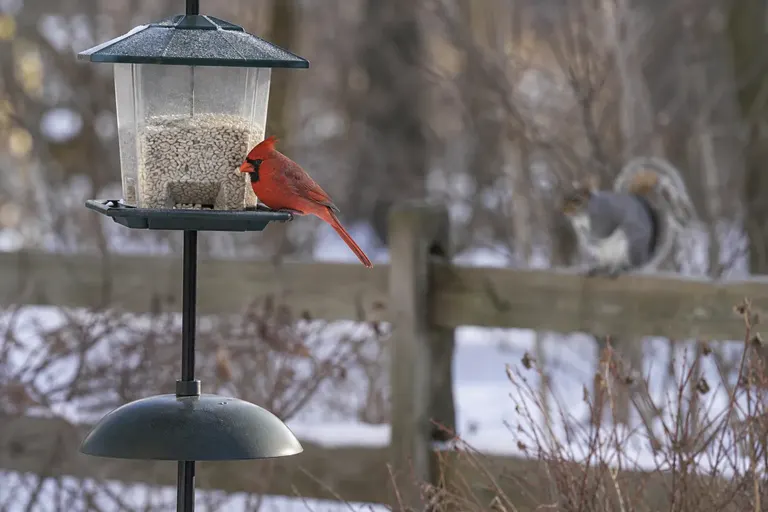
The one gap is the ground-feeding crowd. Juncos, White-throated Sparrows and Mourning Doves favor millet, and most zero-waste blends leave it out. If you notice them missing, scatter hulled millet on a low platform; our platform feeder picks cover options that drain well.
How to switch to no mess seed without losing birds
Birds are creatures of habit, and a sudden switch can mean a quiet feeder for a few days. A gradual change helps.
- Mix old and new. For the first week, blend about one part shelled seed with two parts of your current seed.
- Shift the ratio. Over the next week or two, move to mostly shelled food.
- Keep feeder placement the same. Change one thing at a time so birds recognize the feeder.
- Watch the ports. If birds struggle or food jams, the pieces are too big for the feeder; switch to kernels or a large-port feeder.
- Clean up the old hull pile. Rake or sweep once so you can see how much cleaner the new food is, and so old, damp hulls do not harbor mold.
Can you make your own no mess blend?
Yes, and it is a good way to tailor food to your yard. A simple starting point is mostly sunflower kernels, with a smaller share of shelled peanut pieces and a little hulled pumpkin seed or chopped unsalted nuts. Add hulled millet only if you want ground feeders. Adjust based on what disappears first.
A few rules keep a homemade blend safe:
- Use unsalted, unflavored, unroasted-in-oil nuts and seeds only. Salt and seasonings are bad for birds; see what not to feed birds.
- Buy fresh, and store the mix in an airtight container in a cool, dry place.
- Mix small batches. Shelled food goes stale faster than whole seed.
- Never use moldy or rancid nuts. Peanuts can carry aflatoxins when damp, a risk All About Birds flags for several seeds.
No mess seed through the seasons
Winter is when shelled food shines. Birds need energy, kernels and nuts are packed with fat, and cold air slows spoilage. Summer is the tricky season: heat and humidity make kernels clump and mold faster. In summer, fill feeders with a day or two of food at a time, favor covered feeders, and clean them more often. In the wettest climates, some people switch back to whole black oil sunflower for July and August, because the shell protects the seed.
Is no mess bird seed worth it?
It depends on where your feeder hangs.
Worth it when:
- The feeder is over a deck, patio, balcony or walkway.
- You have flower beds or a lawn you do not want sprouting sunflowers and millet.
- Your HOA or landlord objects to debris. Our small-space feeder picks pair well with shelled seed.
- Rodents are drawn to spilled seed piles.
Less worth it when:
- The feeder stands over rough lawn or a wild corner far from the house.
- You mainly feed ground birds on a platform, where white proso millet does the job.
On value, remember that a bag of whole sunflower is partly shell by weight. With shelled food, everything you buy is edible, so the gap per bite is smaller than the gap per bag.
Does no mess seed keep rats and mice away?
It helps, but it is not a cure. Rodents come for spilled food, and a feeder that drops hulls mixed with half-eaten seed and rejected filler leaves a steady buffet on the ground. Shell-free, filler-free food shrinks that buffet, because birds eat nearly everything they take. What remains is the small spill from birds knocking pieces loose, which a seed tray catches.
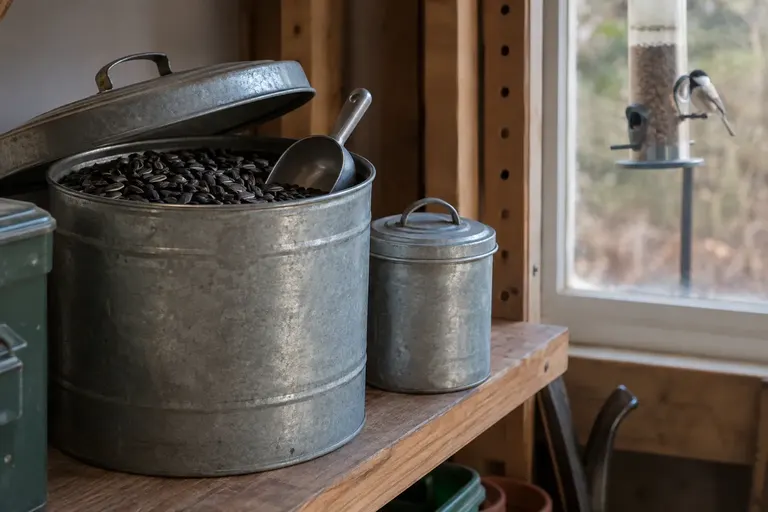
If rats are already visiting, combine no mess seed with other steps: bring feeders in at night for a week or two, sweep up every evening, move feeders away from sheds, woodpiles and dense ground cover where rodents hide, and store seed in metal cans with tight lids. If activity continues, pause feeding for a couple of weeks. Birds have other food sources and will return when you start again.
How to keep the area under your feeder even cleaner
Shell-free seed solves most of the mess. These habits handle the rest:
- Match food to feeder. Nut blends in hoppers or large-port tubes; kernels in standard tubes. Food that does not fit gets flicked out.
- Add a seed tray. A tray under a tube feeder catches crumbs and gives birds another perch.
- Fill less, more often. Especially in humid weather, when shelled seed can clump and mold.
- Keep feeders clean. Moldy, caked seed gets dumped by birds. Follow our feeder cleaning guide.
- Place feeders over mulch or gravel rather than lawn when you can, so any spill is easy to rake.
- Discourage flocking bullies. Starlings and grackles scatter food; see how to keep starlings and grackles off feeders.
Common mistakes with no mess seed
- Trusting the bag front. “No mess” blends sometimes include whole seeds or unhulled millet further down the list. Read every ingredient.
- Using open trays in the rain. Shelled seed soaks up water fast. Use covered feeders with drainage.
- Overfilling in summer. Heat and humidity speed spoilage of kernels and nuts.
- Forgetting ground feeders. If juncos and sparrows vanish after the switch, add a small millet platform away from the patio.
- Buying huge bags for small feeders. Hulled seed goes stale faster than whole seed.
For a broader look at which seed draws which birds, see our guide to the best bird seed.
Sources
- Feeding Birds: seed types (Cornell Lab Project FeederWatch)
- Types of bird seed: a quick guide (Cornell Lab, All About Birds)
- Lyric Delite No-Waste Mix (Lyric)
- Lyric Fine Tunes No Waste Mix (Lyric)
- Lyric Sunflower Kernels (Lyric)
- Deck, Porch N’ Patio (Wild Delight)
- Cole’s Hot Meats (Cole’s Wild Bird Products)
- Cole’s Sunflower Meats (Cole’s Wild Bird Products)
Frequently asked questions
What is no mess bird seed?
No mess bird seed is food with the shells already removed, such as sunflower kernels (hearts), shelled peanuts and hulled pumpkin seed. Birds eat the whole piece, so no hulls pile up under the feeder. Blends labeled no-waste also skip filler grains like milo and red millet that birds toss aside.
Does no mess bird seed sprout?
Mostly not. Lyric notes that seeds without a protective shell will not germinate beneath the feeder, so shelled kernels, nuts and hulled pumpkin seed should not sprout. Blends that include whole seeds or unhulled millet can. Check the ingredient list: every item should say shelled, hulled, kernels or pieces.
Is no mess bird seed worth the extra cost?
Often, yes, when you count waste. You are not paying for shells, which make up a large share of the weight of whole sunflower seed, and there is less cleanup, fewer weeds and less spilled food drawing rodents. It is less worth it over lawn far from the house, where hulls matter little.
Does no mess seed attract fewer birds?
Not in general. Cornell Lab's Project FeederWatch notes that hulled sunflower appeals to any bird that eats regular sunflower and that many prefer it. The exception is ground feeders like juncos and native sparrows, which favor millet; most premium no-mess blends leave millet out, so add a platform if you want them.
Why does my no mess seed get moldy?
Without shells, kernels absorb moisture and spoil faster than whole seed, a point Cornell's FeederWatch makes about hulled sunflower. Use covered feeders with drainage, fill only a few days' worth in wet or humid weather, store bags sealed in a cool, dry place, and clean feeders regularly.