Best Bird Feeders UK (2026): 8 Garden Feeders for Every Bird
The best garden bird feeders in the UK for 2026: easy-clean seed, metal, wooden, caged, fat ball, robin and squirrel-proof feeders compared, with the new RSPB rules.
If you buy through links on this page we may earn a commission, at no cost to you. It never decides what we recommend. How we earn
In this article
- Feeding garden birds in 2026: the new RSPB rules
- Quick picks
- How we chose
- Jacobi Jayne Ring-Pull Click Seed Feeder: best overall
- Peckish All Weather Metal Seed Feeder: best metal bird feeder
- Peckish Woodland Feast Seed Feeder: best wooden bird feeder
- Gardman Heavy Duty Squirrel Proof Seed Feeder: best caged bird feeder
- Jacobi Jayne Suet Ball Basket: best fat ball feeder
- Supa Premium Cage Fat Ball Feeder: best starling-resistant fat ball feeder
- Jacobi Jayne I Love Robins Easy-Clean Treat Dish: best robin feeder
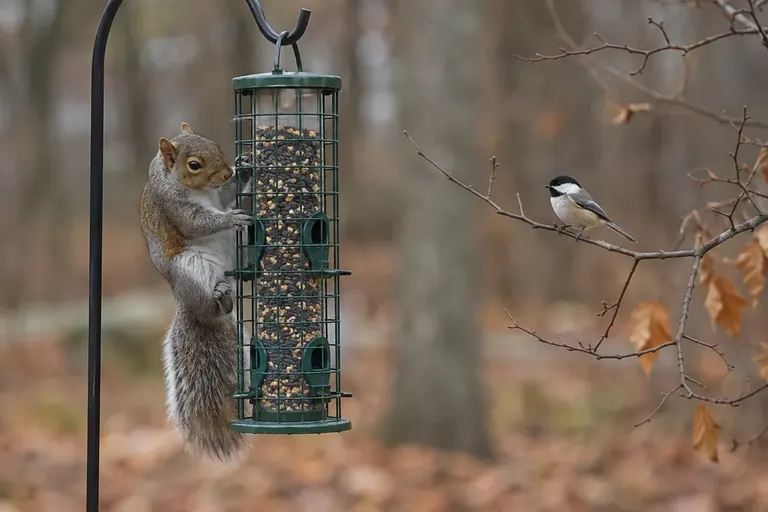
- Brome Squirrel Buster Plus: best squirrel-proof bird feeder
- Garden bird feeder comparison
- Which feeder for which UK garden bird?
- Wooden or metal bird feeder?
- Caged and starling-proof feeders
- Where to hang garden bird feeders
- How to clean bird feeders
- Buying bird feeders on Amazon: what to check
- The bottom line
- Sources
- Frequently asked questions
The best bird feeder for most UK gardens is the Jacobi Jayne Ring-Pull Click Seed Feeder: it comes fully apart by hand for the weekly clean the RSPB now asks for, and every part is replaceable. For fat balls, a metal basket like the Jacobi Jayne Suet Ball Basket is the safe choice, robins do best with a covered mealworm dish, and if squirrels raid your garden the Brome Squirrel Buster Plus is the one to beat.
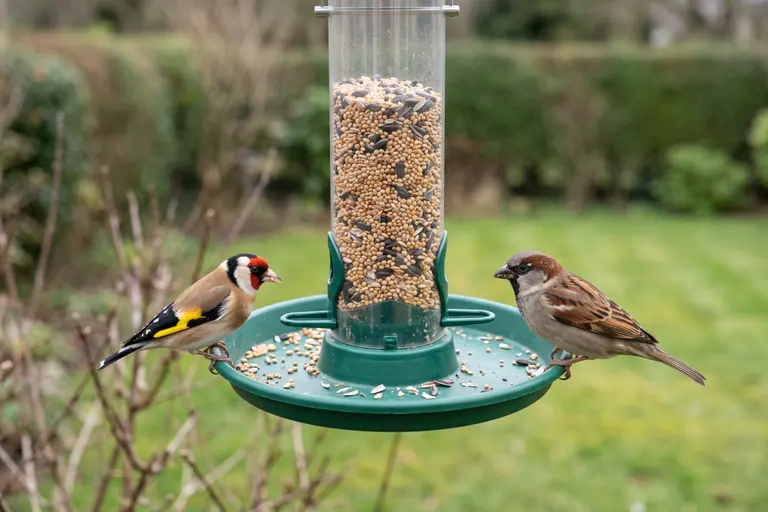
Britain’s garden birds have very different tastes. Goldfinches want sunflower hearts or nyjer, tits love peanuts and fat, and robins would rather have mealworms than anything in a tube. That is why this guide picks a feeder for each job instead of one feeder for everything.
Feeding garden birds in 2026: the new RSPB rules
In April 2026 the RSPB changed its garden feeding advice to slow diseases such as trichomonosis, which spreads where birds crowd together and has hit greenfinches and chaffinches hard. The BTO gives the same advice. In short:
- Feed seasonally. Pause seed and peanuts from 1 May to 31 October. Small amounts of mealworms, fat balls or suet are fine in that period. From 1 November to 30 April, the full range of foods is back on.
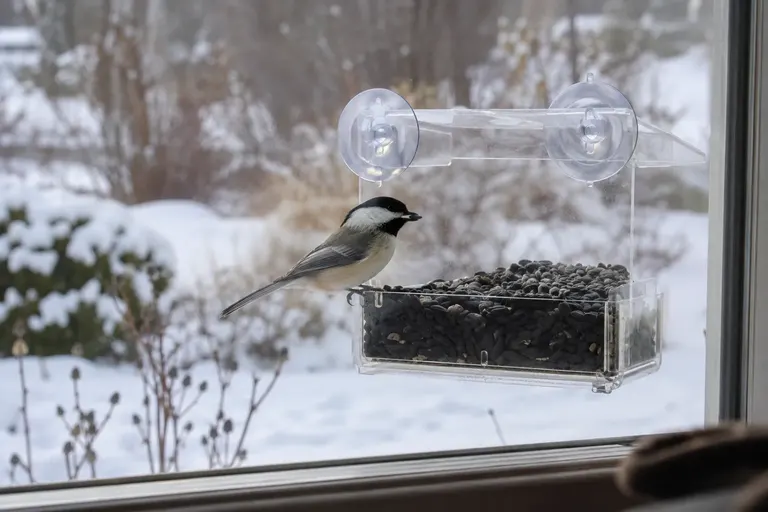
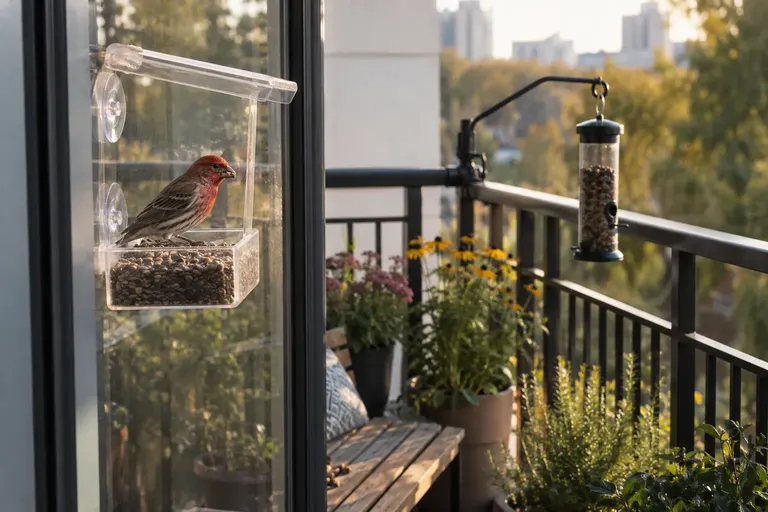
- Use hanging feeders. Avoid flat feeders such as bird tables, window feeders and feeders with trays.
- Clean weekly. Hot soapy water plus a non-toxic disinfectant or a 5% bleach solution, then rinse and dry.
- Move feeders regularly so droppings do not build up underneath.
That makes ease of cleaning the first thing to check on any feeder you buy. If you have a bird table already, our guide to the best bird tables in the UK explains how to keep one as safe as possible.
Jacobi Jayne Ring-Pull Click Seed Feeder
A British-designed metal-fitted tube feeder whose base twists off and whose parts come fully apart by hand, with every part replaceable.
- Best for
- Most gardens, and anyone who wants cleaning to take minutes.
- Skip it if
- Squirrels are regular visitors.
- Sizes
- 2, 4 or 6 ports (0.5, 1 or 1.5 L)
- Fittings
- Metal lid, ports and base
- Cleaning
- Comes apart, no tools
- Food
- Seed and seed blends
Peckish All Weather Metal Seed Feeder, Large
A four-port seed feeder with a tough alloy lid and base, metal perches and a quick-release base for cleaning.
- Best for
- A sturdy everyday seed feeder at a sensible price.
- Skip it if
- You want an all-metal feeder: the seed tube is plastic.
- Ports
- 4
- Size
- approx 9 x 9 x 31.5 cm
- Build
- Alloy lid and base, plastic tube
- Cleaning
- Quick-release base
Peckish Woodland Feast Seed Feeder
A small house-style wooden seed hopper made from sustainably sourced wood, with a slate-effect roof.
- Best for
- Gardeners who want a natural wooden look.
- Skip it if
- You want the most hygienic design: wood and open ledges take more cleaning.
- Capacity
- approx 700 g seed
- Size
- approx 21 x 20 x 19 cm
- Material
- Sustainably sourced wood
- Food
- Seed blends, sunflower hearts
Gardman Heavy Duty Squirrel Proof Seed Feeder
A four-port polycarbonate seed tube inside a die-cast metal cage that keeps squirrels and larger birds away from the food.
- Best for
- Keeping pigeons, larger birds and adult squirrels off seed.
- Skip it if
- You want larger birds such as greenfinches or woodpeckers at the feeder.
- Ports
- 4
- Capacity
- 500 g seed mix
- Height
- 31 cm
- Cage
- Die-cast metal, powder coated
Jacobi Jayne Suet Ball Basket
A chew-proof metal basket with a pitched roof that holds five 100 g fat balls with no plastic netting.
- Best for
- Feeding tits and sparrows fat balls safely, year-round in small amounts.
- Skip it if
- Starlings empty your fat balls: it is not a cage.
- Holds
- Five 100 g fat balls
- Material
- Chew-proof metal
- Roof
- Pitched
Supa Premium Wild Bird Cage Fat Ball Feeder
A heavy-duty steel wire cage around the fat balls, with a lift-up lid for filling and cleaning.
- Best for
- Gardens where larger birds clear fat balls in a day.
- Skip it if
- You want great spotted woodpeckers on your fat balls.
- Build
- Steel bite-proof wire, powder coated
- Food
- Fat balls or suet balls
- Access
- Release catch, lift-up lid
Jacobi Jayne I Love Robins Easy-Clean Hanging Treat Dish
A covered polycarbonate dish with a perching rim, drainage holes and a tray that twists off for cleaning.
- Best for
- Small amounts of mealworms for robins, all year.
- Skip it if
- You want a seed feeder: this is for treats and soft food.
- Material
- Polycarbonate
- Tray
- Twists off, drainage holes
- Type
- Hanging covered dish
Brome Squirrel Buster Plus
A six-port seed feeder whose weight-activated shroud closes the ports when a squirrel or large bird climbs on.
- Best for
- Gardens where squirrels beat every other feeder.
- Skip it if
- Your problem is starlings, which are light enough to feed normally.
- Ports
- 6
- Capacity
- 3 L
- Cleaning
- Comes apart by hand
- Warranty
- Lifetime (squirrel damage)
Quick picks
- Best overall: Jacobi Jayne Ring-Pull Click Seed Feeder. Comes apart by hand, every part replaceable.
- Best metal feeder: Peckish All Weather Metal Seed Feeder. Alloy lid and base, quick-release base.
- Best wooden feeder: Peckish Woodland Feast. Sustainably sourced wood, about 700 g of seed.
- Best caged feeder: Gardman Heavy Duty Squirrel Proof. Seed tube inside a die-cast cage.
- Best fat ball feeder: Jacobi Jayne Suet Ball Basket. Holds five fat balls, chew-proof metal.
- Best starling-resistant fat ball feeder: Supa Premium Cage Fat Ball Feeder. Steel wire cage.
- Best robin feeder: Jacobi Jayne I Love Robins Treat Dish. Covered, drained, tray twists off.
- Best squirrel-proof: Brome Squirrel Buster Plus. Weight-activated ports, lifetime squirrel warranty.
How we chose
We have not hung these feeders ourselves, so this guide is research-led. We shortlisted feeders sold on Amazon UK and checked each one against its maker’s catalogue or a specialist UK retailer’s page for capacity, ports, materials, cleaning method and guarantee. We matched feeder types to birds using RSPB and BTO feeding guidance. Where a detail is not stated by the maker, we say so.
Cleaning came first: a feeder that comes apart without tools gets cleaned more often, and that matters more than ever under the 2026 advice. We then looked at durability, squirrel and large-bird resistance, and which garden birds each design suits.
Jacobi Jayne Ring-Pull Click Seed Feeder: best overall
Jacobi Jayne is a Kent-based bird care company, and the Ring-Pull Click is built around cleaning. The base twists off, the feeder comes fully apart by hand, and every part can be replaced, so a cracked tube or chewed port does not mean a new feeder.
Who it suits: Almost every garden feeding seed from November to April.
Key specs: Small (2 ports, 0.5 L, 180 mm), medium (4 ports, 1 L, 360 mm) or large (6 ports, 1.5 L, 540 mm), in green or zinc. Metal lid, ports and base. Separate Click models are made for nyjer and peanuts.
Strengths:
- Tool-free strip-down makes the RSPB’s weekly clean quick.
- Replaceable parts give it a long working life.
- Three sizes, so you can match capacity to how fast your birds empty it.
Drawbacks: The guarantee varies by source: UK retailers describe a lifetime guarantee, while Jacobi Jayne’s 2026 catalogue shows five years, so check the listing. It offers no protection from squirrels.
Skip it if: Squirrels are regulars; go for the Brome Squirrel Buster Plus instead.
Peckish All Weather Metal Seed Feeder: best metal bird feeder
Peckish, a Westland brand sold in most UK garden centres, makes the All Weather feeder, which pairs a tough alloy lid and base with metal perches. A quick-release base makes cleaning simple.
Who it suits: Anyone who wants a sturdy, metal-fitted seed feeder without paying premium prices.
Key specs: Large size with four ports, about 9 x 9 x 31.5 cm. Alloy lid and base, metal perches, plastic seed tube. UK retailers list it for seed mixes and mealworms and name dunnocks, house sparrows, goldfinches, bullfinches, blue tits and greenfinches among visitors.
Strengths:
- The alloy lid and base stand up to weather and pecking.
- The quick-release base speeds up the weekly clean.
- Nyjer and suet versions are sold in the same range.
Drawbacks: The seed tube is plastic, so it is metal-framed rather than all-metal. Capacity and guarantee are not stated.
Skip it if: Squirrels visit; the plastic tube will not stop a determined one.
Peckish Woodland Feast Seed Feeder: best wooden bird feeder
If you want a feeder that looks at home in a cottage garden, this small house-style hopper is made from sustainably sourced wood with a slate-effect roof and holds about 700 g of seed.
Who it suits: Gardeners who prefer a natural wooden look and will keep it clean.
Key specs: About 21 x 20 x 19 cm, roughly 700 g of seed. Sustainably sourced wood; one UK retailer lists it as FSC certified. Suits seed blends, sunflower hearts and sunflower seed, and retailers name robins, finches and tits as visitors.
Strengths:
- Natural look with a roof that keeps seed drier.
- Generous capacity for its size.
Drawbacks: Wood is porous, and a hopper’s feeding ledge is a flat surface where food and droppings can collect, which the RSPB now advises against. The maker gives no cleaning method. Scrub it weekly, dry it fully and use it only during the November to April seed season.
Skip it if: Hygiene is your top priority; a tube feeder that comes apart is easier to keep clean.
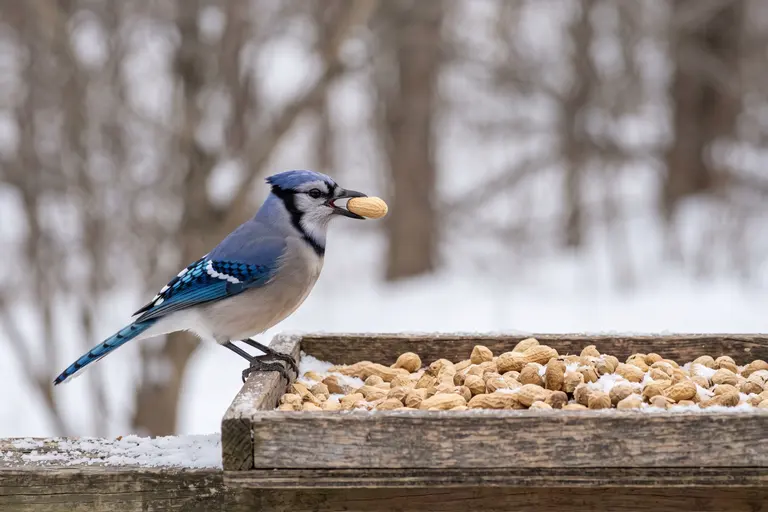
Gardman Heavy Duty Squirrel Proof Seed Feeder: best caged bird feeder
A caged bird feeder puts the seed tube inside an outer guard. Small birds such as blue tits, coal tits and goldfinches slip through, while squirrels and larger birds cannot reach the ports.
Who it suits: Gardens where pigeons, jackdaws or adult squirrels empty open feeders.
Key specs: Four ports, polycarbonate tube inside a die-cast metal cage with a gunmetal powder coat. Holds about 500 g of seed mix, 485 g of peanut bites or 360 g of sunflower seed. About 31 cm tall. Gardman says the feeder has an antibacterial coating.
Strengths:
- The die-cast cage is tougher than thin wire guards.
- Takes seed, peanut bites or sunflower, so it works across the feeding season.
Drawbacks: UK retailers note that young squirrels, jackdaws and pigeons can sometimes still get in. The maker does not describe a tool-free strip-down, so cleaning inside the cage takes longer. No guarantee is stated.
Skip it if: You want larger birds such as greenfinches or woodpeckers at the feeder.
Jacobi Jayne Suet Ball Basket: best fat ball feeder
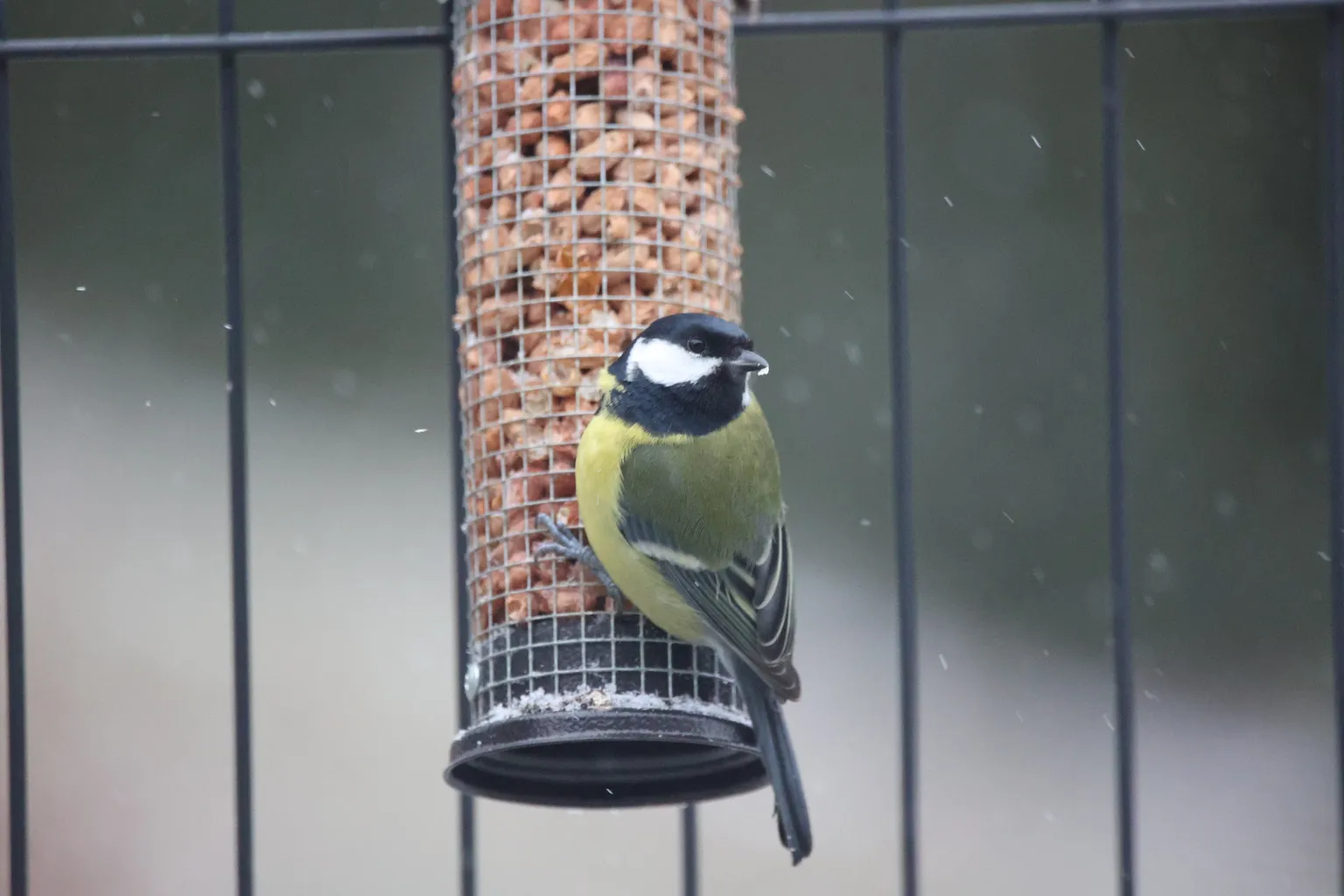
Fat balls are one of the few foods the RSPB still suggests in small amounts through the summer pause. Hang them in a rigid metal holder and never in the plastic net they are sold in, which can trap birds’ feet. This chew-proof basket holds five 100 g balls under a pitched roof.
Who it suits: Tits and house sparrows, which are the main fat ball eaters in UK gardens.
Key specs: Holds five 100 g fat balls. Chew-proof metal with a pitched roof and a curved clinging surface.
Strengths:
- No plastic netting near the birds.
- The roof keeps rain off the fat, which slows spoilage.
- Small capacity encourages little and often, as the RSPB recommends.
Drawbacks: It is an open basket, not a cage, so starlings can feed from it, whatever some listings say. The maker gives no cleaning method or guarantee.
Skip it if: Starlings arrive in groups; use the caged feeder below. For more designs, see our guide to suet and fat ball feeders and our safety guide to fat balls for birds.
Supa Premium Cage Fat Ball Feeder: best starling-resistant fat ball feeder
Search for a starling proof feeder and you will mostly find cages: a wire guard around the food that smaller birds reach through and larger birds cannot. This one is heavy-duty steel wire with a powder-coated finish.
Who it suits: Gardens where larger birds or squirrels clear the fat balls in a day.
Key specs: Steel bite-proof wire, black powder coat, built-in hanging handle. A release catch lets you lift the lid to fill and clean it. Takes fat balls or suet balls.
Strengths:
- The seller says it deters adult squirrels and larger birds such as doves and pigeons.
- The lift-up lid makes refilling and cleaning simple.
Drawbacks: The seller does not name starlings specifically, so treat it as starling-resistant rather than guaranteed starling-proof. It will also keep out great spotted woodpeckers. Detailed dimensions are not stated.
Skip it if: Woodpeckers are a highlight of your garden.
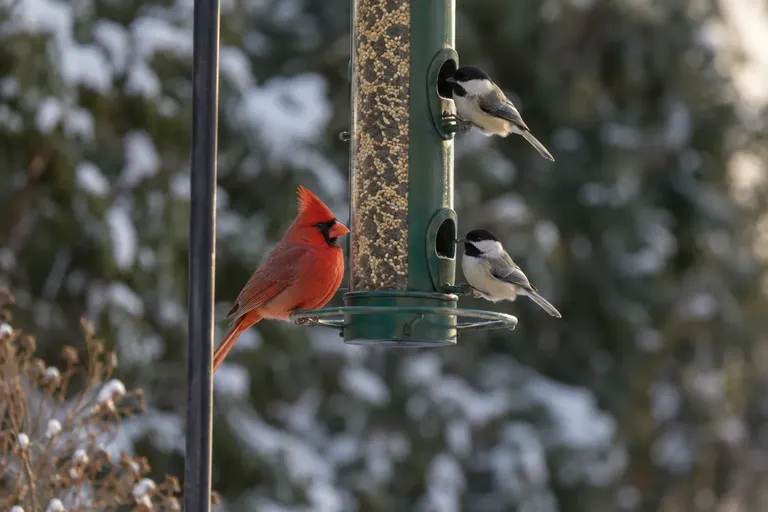
Jacobi Jayne I Love Robins Easy-Clean Treat Dish: best robin feeder
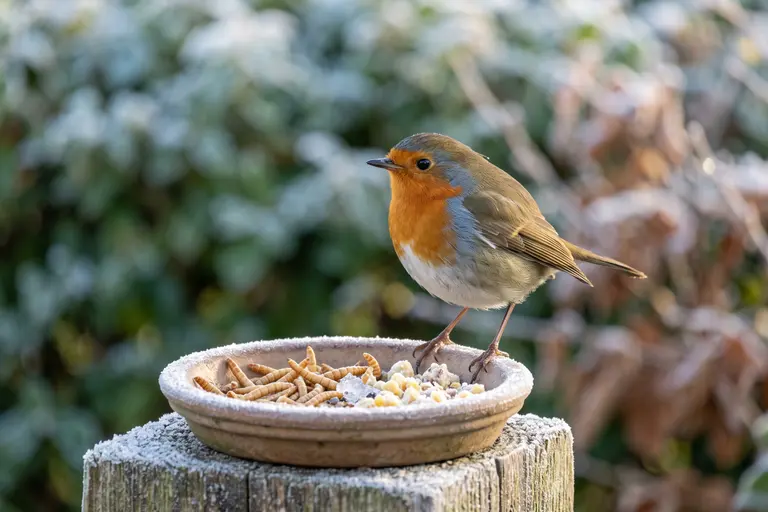
Robins rarely use tube feeders. The RSPB and BTO both point to soft food such as mealworms, and robins naturally feed on or near the ground. With flat tables now discouraged, a small covered hanging dish is the tidy middle ground.
Who it suits: Anyone who wants to offer robins small amounts of mealworms, including through the summer.
Key specs: Polycarbonate dish with a cover and perching rim. Drainage holes. The tray twists off or lifts out for cleaning. Jacobi Jayne names robins and other small birds.
Strengths:
- The removable tray makes daily rinsing realistic.
- Drainage holes stop soaked mealworms sitting in water.
- The cover keeps rain off and discourages larger birds.
Drawbacks: Size and capacity are not stated, and it is a treat dish, not a seed feeder. Put out only what robins finish in a day.
Skip it if: You want to feed seed; pair it with one of the tube feeders above. For what to put in it, see our guide to dried mealworms for birds.
Brome Squirrel Buster Plus: best squirrel-proof bird feeder
When a squirrel climbs on, its weight pulls down a spring-loaded shroud that closes all six ports. Birds are too light to trigger it, and the spring tension can be adjusted. Jacobi Jayne distributes it in the UK.
Who it suits: Gardens where grey squirrels beat every other feeder.
Key specs: Six ports, about 3 L of seed, around 50 cm tall (67 cm with the handle). Metal, plastic and resin with UV-resistant parts. Comes apart by hand for cleaning. UK retailers describe a lifetime warranty against squirrel damage.
Strengths:
- The weight-activated mechanism is the most reliable squirrel deterrent in a hanging feeder.
- Tool-free strip-down for the weekly clean.
- Big capacity means fewer refills in mid-winter.
Drawbacks: Brome says it does not deter starlings or young squirrels. Hang it at least 18 inches (about 47 cm) from anything a squirrel can jump from, or the mechanism is wasted. It is one of the dearest feeders here.
Skip it if: Starlings, not squirrels, are your problem. For more options, see our full guide to squirrel-proof bird feeders.
Garden bird feeder comparison
| Feeder | Type | Capacity | Cleaning | Keeps out squirrels | Keeps out larger birds |
|---|---|---|---|---|---|
| Jacobi Jayne Ring-Pull Click | Seed tube | 0.5 to 1.5 L | Comes apart, no tools | No | No |
| Peckish All Weather Metal | Seed tube | Not stated | Quick-release base | No | No |
| Peckish Woodland Feast | Wooden hopper | approx 700 g | Not stated | No | No |
| Gardman Heavy Duty | Caged seed tube | 500 g seed mix | Not stated | Mostly | Mostly |
| Jacobi Jayne Suet Ball Basket | Fat ball basket | 5 fat balls | Not stated | No | No |
| Supa Premium Cage | Caged fat balls | Not stated | Lift-up lid | Adults | Pigeons and doves |
| I Love Robins Treat Dish | Covered dish | Not stated | Tray twists off | No | Partly |
| Brome Squirrel Buster Plus | Weighted seed tube | 3 L | Comes apart, no tools | Yes | Large birds |
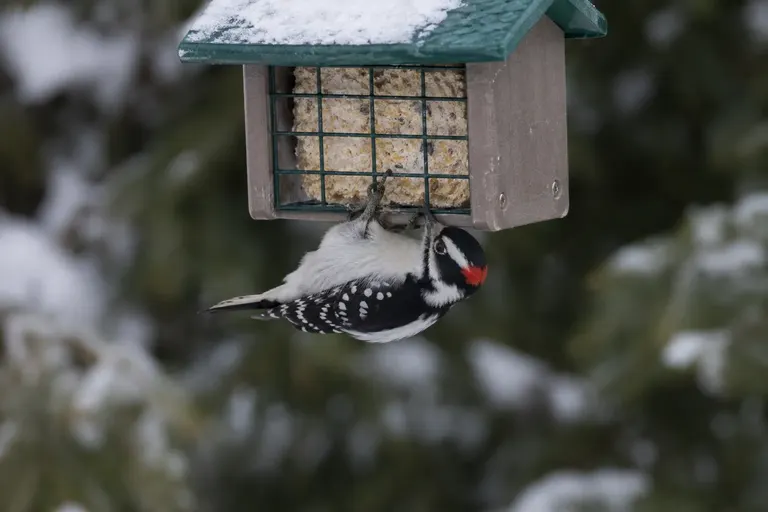
Which feeder for which UK garden bird?
| Bird | Food they prefer | Best feeder type |
|---|---|---|
| Blue tit, great tit, coal tit | Sunflower hearts, peanuts, fat | Seed tube, mesh peanut feeder, fat ball basket |
| Goldfinch, siskin | Sunflower hearts, nyjer | Seed tube or nyjer feeder |
| House sparrow | Seed mixes, fat | Seed tube, fat ball basket |
| Greenfinch | Sunflower hearts, peanuts | Seed tube or peanut feeder |
| Nuthatch, great spotted woodpecker | Peanuts, fat | Mesh peanut feeder, fat ball basket |
| Robin, blackbird | Mealworms | Covered dish or a little on the ground |
| Dunnock, wren | Small seed, crushed nuts, live food | Low feeders and ground, small amounts |
| Starling | Fat, mealworms | Fat ball basket (use a cage to limit them) |
Based on RSPB and BTO feeding guidance. The BTO notes goldfinches now often prefer sunflower hearts to nyjer, so a sunflower heart tube is the simplest way to attract them.
Wooden or metal bird feeder?
Metal and plastic feeders are quicker to clean and disinfect, and metal resists squirrel teeth. Wood looks more natural but absorbs moisture and dirt, so it needs scrubbing and full drying, and wooden hoppers often have open ledges where food sits. Under the 2026 advice, metal or metal-fitted tube feeders are the practical default, with wood a choice for looks.
Caged and starling-proof feeders
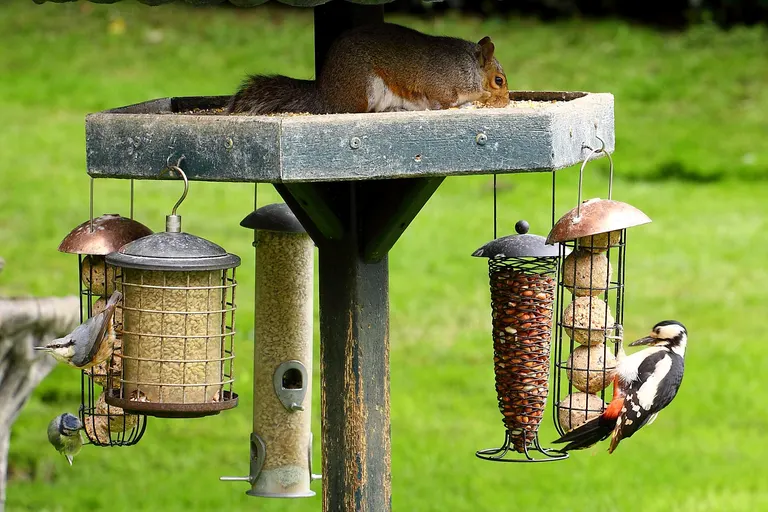
Cages work by size: the gaps let small birds through and keep larger ones out. That makes them good against pigeons, jackdaws and adult squirrels, and the best available option against starlings, though no cage is perfect. The trade-off is that cages also exclude birds you may like, such as greenfinches and woodpeckers, and they add surfaces to clean.
Where to hang garden bird feeders
- About 2 m from cover, as the RSPB suggests, so birds can dash to safety but cats cannot hide right beside the feeder.
- Out of squirrel range for squirrel-proof feeders: at least 18 inches from anything they can jump from.
- Spread out. Several feeders apart from each other reduce crowding, which helps limit disease spread.
- Moved regularly. Shift feeders every week or two so droppings do not build up below.
How to clean bird feeders
- Empty the feeder and throw away old or damp food.
- Take it apart, which is where tool-free designs pay off.
- Scrub every part with hot soapy water and a bottle brush.
- Disinfect with a non-toxic disinfectant or a 5% bleach solution.
- Rinse thoroughly and let everything dry before refilling.
- Clean the ground below, and repeat at least once a week.
Buying bird feeders on Amazon: what to check
Searching Amazon for bird feeders brings up hundreds of near-identical listings. A few checks help:
- Check the brand and model code. Established makers such as Jacobi Jayne, Peckish, Gardman and Brome list model codes, spare parts and guarantees.
- Check how it comes apart. If a listing cannot show how the base or ports remove, assume cleaning will be awkward.
- Ignore unsupported claims. Phrases like “small birds only” or “starling proof” in a title are seller copy unless the maker says so.
- Avoid nylon mesh bags for fat balls or peanuts; the RSPB warns they can trap birds’ feet.
The bottom line
Start with the Jacobi Jayne Ring-Pull Click for seed from November to April, add a Jacobi Jayne Suet Ball Basket for fat balls and a covered robin dish for mealworms, and switch to the Brome Squirrel Buster Plus if squirrels take over. Whatever you buy, the 2026 rule is the same: feed seasonally, keep it clean every week and move it now and then.
Sources
- RSPB: How to help garden birds (feeding advice, updated 2026)
- RSPB: How and what to feed your garden birds
- RSPB: All about bird feeding
- RSPB Shop: Bird food guide
- BTO: Feeding garden birds
- BTO: Rethinking how we feed garden birds (May 2026)
- Haith’s: Ring-Pull Click Seed Feeder
- Jacobi Jayne: 2026 trade catalogue
- Jollyes: Peckish All Weather Large Seed Feeder
- Tirlán: Peckish Woodland Feast Seed Feeder
- Gardman: Heavy Duty Squirrel Proof Seed Feeder
- Garden Wildlife Direct: I Love Robins Hanging Treat Dish
- Brome: Squirrel Buster Plus

Frequently asked questions
What is the best bird feeder in the UK?
For most gardens, an easy-clean tube seed feeder such as the Jacobi Jayne Ring-Pull Click is the best start: it comes apart by hand, and the RSPB now asks people to clean feeders at least weekly. Add a metal fat ball basket for tits and a squirrel-proof feeder such as the Brome Squirrel Buster Plus if squirrels raid your garden.
Can I feed birds seed in summer?
Not under the RSPB's 2026 advice. It asks people to pause seed and peanuts from 1 May to 31 October, then return to the full range of foods from 1 November to 30 April. During the pause, small amounts of mealworms, fat balls or suet are still fine.
What is the best feeder for robins?
Robins prefer soft food such as mealworms, taken on or near the ground rather than from tube feeders. A small hanging dish with a cover and drainage, like the Jacobi Jayne I Love Robins Treat Dish, lets you offer small amounts of mealworms while keeping them off a flat table, which the RSPB now advises against.
How do I stop starlings eating all the fat balls?
Use a caged fat ball feeder, which keeps larger birds back while tits and sparrows reach in. Put out fewer balls at a time so a flock cannot settle in. Squirrel Buster style feeders do not stop starlings, because they are light enough to feed normally.
Are wooden or metal bird feeders better?
Metal and plastic feeders are quicker to clean and disinfect, which matters now the RSPB asks for weekly cleaning. Wooden feeders look natural but wood is porous, so scrub them, let them dry fully and avoid letting food sit on open ledges.
How often should I clean my bird feeders?
At least once a week, according to the RSPB: hot soapy water, a non-toxic disinfectant or a 5% bleach solution, then rinse and dry before refilling. Moving feeders to a new spot regularly also stops droppings building up underneath.