Oriole Feeder Guide: 6 Picks for Jelly, Oranges and Nectar
The best oriole feeder for most yards holds jelly, orange halves and nectar in one orange unit with an ant moat. See 6 picks, a region chart and timing.
If you buy through links on this page we may earn a commission, at no cost to you. It never decides what we recommend. How we earn
In this article
- Quick picks
- How we chose
- Birds Choice OrioleFest NP1009: best overall
- Songbird Essentials Ultimate Oriole Feeder SE905: best high capacity
- Perky-Pet Oriole Jelly Feeder 253: best jelly feeder
- First Nature 3088 32 oz Oriole Feeder: best budget nectar
- Perky-Pet Fruit Trio 209BO-4: best glass
- Songbird Essentials Fruit and Jelly Oriole Feeder: best fruit and jelly only
- Oriole feeder comparison table
- Which oriole feeder should you buy for your region?
- When should you put out an oriole feeder?
- Why are oriole feeders orange?
- What should you put in an oriole feeder, and how much?
- How big should an oriole feeder be?
- Where should you hang an oriole feeder?
- How do you keep ants and bees out of an oriole feeder?
- How do you keep an oriole feeder clean?
- Can you use a hummingbird feeder for orioles?
- Is a more expensive oriole feeder worth it?
- What are the alternatives to an oriole feeder?
- The bottom line
- Sources
- Frequently asked questions
The best oriole feeder for most yards is a combination feeder that holds nectar, jelly and orange halves in one bright orange unit with a built-in ant moat. Our pick is the Birds Choice OrioleFest NP1009. For a crowd of orioles, the Songbird Essentials Ultimate Oriole Feeder holds a full quart of nectar, and if your birds live on jelly, the Perky-Pet 253 jar feeder keeps it covered and topped up.
Timing matters as much as the feeder: have it stocked before the first spring migrants arrive.
Quick picks
- Best overall: Birds Choice OrioleFest NP1009. Nectar, jelly and orange in one compact feeder with an ant moat.
- Best high capacity: Songbird Essentials Ultimate Oriole Feeder SE905. A quart of nectar, four orange halves, made in USA.
- Best jelly feeder: Perky-Pet Oriole Jelly Feeder 253. A 32 oz inverted jar with a stirrer.
- Best budget nectar: First Nature 3088 32 oz. Simple, cheap, twist-apart base.
- Best glass: Perky-Pet Fruit Trio 209BO-4. Glass bottle with orange spike and jelly cup.
- Best fruit and jelly only: Songbird Essentials Fruit and Jelly Oriole Feeder. No nectar to mix or spoil.
Birds Choice OrioleFest Oriole Feeder NP1009
One compact orange feeder with a 12 oz nectar reservoir, four jelly trays, an orange holder, bee guards and a built-in ant moat.
- Best for
- First-time oriole hosts who want to offer nectar, jelly and fruit at once.
- Skip it if
- You have a crowd of orioles that would drain 12 oz of nectar in a day.
- Nectar capacity
- 12 oz
- Nectar ports
- 4, with bee guards
- Jelly trays
- 4
- Cleaning
- Top-rack dishwasher safe
Songbird Essentials Ultimate Oriole Feeder SE905
A wide, flat, made-in-USA combination feeder that holds a quart of nectar, four orange halves and a large amount of jelly.
- Best for
- Busy yards with several orioles, or families that see many birds during peak spring migration.
- Skip it if
- You see only one or two orioles, since a quart of nectar will spoil before they finish it.
- Nectar capacity
- 32 oz (1 quart)
- Orange halves
- 4
- Size
- 12 x 12 x 2.5 in
- Made in
- USA
Perky-Pet Oriole Jelly Wild Bird Feeder 253
An upside-down jar feeder with a built-in stirrer that pushes jelly onto an open orange tray, so the supply stays covered.
- Best for
- Yards where orioles clearly prefer jelly and empty open cups by midday.
- Skip it if
- You want a feeder with a sturdy hanger out of the box; owners often swap the plastic chain for metal.
- Jelly capacity
- 32 oz
- Feeding ports
- 3
- Jar
- Fits most standard jelly jars with a 2.5 in opening
First Nature 3088 32 oz Oriole Feeder
A plain, inexpensive made-in-USA nectar feeder with an orange base that twists apart and a wide-mouth reservoir.
- Best for
- Western yards with Hooded or Bullock's Orioles that drink a lot of nectar, or anyone adding a second nectar station.
- Skip it if
- You need a built-in ant moat; add a separate moat above it.
- Capacity
- 32 oz
- Base
- Two-part, twists apart for cleaning
- Made in
- USA
Perky-Pet Fruit Trio Oriole Nectar Feeder 209BO-4
A glass bottle feeder with four perched ports, bee guards, an ant moat, an orange spike and a jelly cup.
- Best for
- People who prefer glass and want to see the nectar level from the house.
- Skip it if
- Your only hanging spot is in full afternoon sun, which makes any inverted bottle more likely to drip.
- Bottle
- Glass
- Ports
- 4 with perches and bee guards
- Size
- 11.25 x 9.1 x 9.1 in
Songbird Essentials Fruit and Jelly Oriole Feeder SERUBFJF
A made-in-USA feeder of recycled plastic that holds four orange halves and more jelly than most fruit feeders, with no nectar to spoil.
- Best for
- People who do not want to mix and change nectar every few days.
- Skip it if
- Your orioles are nectar drinkers, such as Hooded Orioles in the Southwest.
- Orange halves
- 4
- Size
- 10 x 8.25 x 6 in
- Weight
- 1.94 lb
- Material
- Recycled plastic, made in USA
How we chose
We have not hung these feeders ourselves yet, so this guide is built on research, not hands-on testing. We compared manufacturer specifications for capacity, ports, ant moats, materials and cleaning, using the makers’ own product pages where possible, and confirmed each model is currently sold. We looked for patterns in verified owner feedback about leaks, broken hangers and hard-to-clean corners, and checked designs against oriole biology from the Cornell Lab of Ornithology and Journey North.
Birds Choice OrioleFest NP1009: best overall
The OrioleFest is the feeder we would suggest to anyone hosting orioles for the first time. One orange body holds a 12 oz nectar reservoir with four ports, four jelly trays and a spot for half an orange, with a built-in ant moat and bee guards.
Who it suits: Eastern and Midwestern yards with Baltimore or Orchard Orioles, and western yards where you do not yet know whether local birds prefer nectar, jelly or fruit.
Key specs: 12 oz nectar, 4 ports with bee guards, 4 jelly trays, half-orange holder, built-in ant moat, high-impact polycarbonate, 10.5 x 10.5 x 9 inches, 0.75 lb. Birds Choice lists it as top-rack dishwasher safe.
Strengths:
- Every oriole food in one place, which helps early in the season.
- Dishwasher-safe parts make weekly deep cleaning easier.
Drawbacks: Twelve ounces of nectar is modest if several orioles visit, and the jelly trays and half-orange holder are small.
Skip it if: You regularly see five or more orioles at once.
Songbird Essentials Ultimate Oriole Feeder SE905: best high capacity
This is a wide, low orange platform. The maker says it holds one quart of nectar, twice as much as other flat-top nectar feeders, plus four orange halves and four times the jelly of typical combination feeders. It is made in the USA.
Who it suits: Yards on a migration route that see a rush of orioles in spring, and homes where orioles nest nearby and bring fledglings in early summer.
Key specs: 32 oz nectar, 4 orange halves, large jelly capacity, built-in ant moat that works with the oranges in place, 12 x 12 x 2.5 inches, made in USA.
Strengths:
- The low, wide shape gives several birds room to feed at once.
- Nectar sits under the ports rather than in an inverted bottle.
Drawbacks: A quart of nectar only helps if birds drink it before it spoils, which in warm weather is two or three days. The open shape catches rain, which can dilute jelly.
Skip it if: You see one pair of orioles a day. Fill it partway, or choose the OrioleFest.
Perky-Pet Oriole Jelly Feeder 253: best jelly feeder
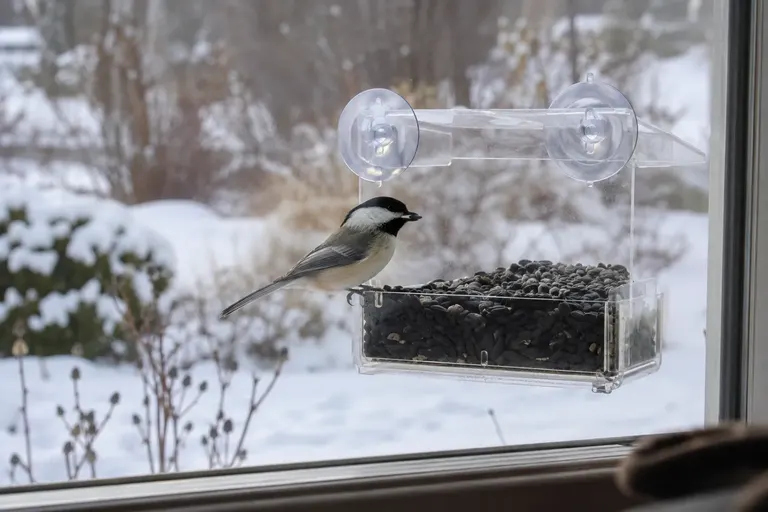
In many eastern yards, jelly brings Baltimore Orioles in fastest. Open cups dry out, fill with rain and draw bees. The Perky-Pet 253 uses an upside-down jar that feeds jelly onto an open orange tray as you turn a built-in stirrer.
Who it suits: Anyone whose orioles empty jelly cups every day.
Key specs: 32 oz jelly capacity, 3 feeding ports, built-in stirrer, open tray, hanging chain. Perky-Pet says the plastic jar can be swapped for most standard jelly jars with a 2.5 inch opening, so you can hang a store jar directly.
Strengths:
- Most of the jelly stays covered from rain and sun.
- The open tray is easy to wipe and rinse.
Drawbacks: Owner reviews on Perky-Pet’s own page often mention the plastic chain breaking, the feeder tipping and jelly leaking through drainage holes. Some owners with arthritis find the small crank hard to turn.
Skip it if: Your orioles show little interest in jelly.
First Nature 3088 32 oz Oriole Feeder: best budget nectar
First Nature makes plain, inexpensive feeders in the USA, and this is its oriole version in orange. The base twists apart into two pieces, and the wide-mouth reservoir is easy to fill and scrub.
Who it suits: Southwest and California yards where Hooded Orioles are mostly nectar drinkers, Bullock’s Oriole yards in the West, and anyone adding a second nectar station.
Key specs: 32 oz, two-part orange base that twists apart, wide-mouth reservoir, perch, made in USA. First Nature markets it with larger ports than its hummingbird feeders.
Strengths:
- Cheap enough to own two and rotate a clean one in.
- Few parts and no decorative crevices.
Drawbacks: Nectar only, with no jelly or fruit holder. We could not confirm a built-in ant moat, so plan to add one on the hanger.
Skip it if: Your orioles mainly eat jelly and fruit, which is common for Baltimore Orioles.
Perky-Pet Fruit Trio 209BO-4: best glass
The Fruit Trio is a clear glass bottle over an orange base with four perched ports, bee guards and an ant moat. An orange spike and a jelly cup make it a light combination feeder.
Who it suits: People who prefer glass, which does not cloud or stain, and like seeing the nectar level from a window.
Key specs: Glass bottle, 4 ports with perches, bee guards, ant moat, orange spike and jelly cup, 11.25 inches tall by 9.1 inches wide. Perky-Pet’s spec table lists 20 oz of nectar while its description says up to 30 oz, so treat capacity with caution.
Strengths:
- Glass cleans well and does not hold odors.
- Offers all three foods, though fruit and jelly space is limited.
Drawbacks: As an inverted bottle, it can drip when sun warms the air inside. Some owners say the bee guards do little against wasps.
Skip it if: You cannot hang it in afternoon shade.
Songbird Essentials Fruit and Jelly Oriole Feeder: best fruit and jelly only
This feeder drops nectar entirely. It holds four orange halves and, according to the maker, more jelly than most fruit and jelly feeders. It is made in the USA from recycled plastic.
Who it suits: People who do not want to mix and change sugar water, and eastern yards where orioles come mainly for oranges and jelly.
Key specs: 4 orange halves plus jelly, recycled plastic, 10 x 8.25 x 6 inches, 1.94 lb, made in USA. Replacement jelly cups are sold separately.
Strengths:
- No nectar to ferment in hot weather.
- Replaceable cups extend its life.
Drawbacks: At almost 2 lb empty, it needs a solid hook. Jelly cups are open to rain and bees. We could not confirm jelly capacity in ounces.
Skip it if: Your local orioles are nectar drinkers.
Oriole feeder comparison table
| Feeder | Foods | Nectar | Jelly | Orange halves | Ant moat | Made in USA |
|---|---|---|---|---|---|---|
| Birds Choice OrioleFest NP1009 | Nectar, jelly, fruit | 12 oz | 4 trays | 1 half | Built in | Not stated |
| Songbird Essentials Ultimate SE905 | Nectar, jelly, fruit | 32 oz | Large | 4 | Built in | Yes |
| Perky-Pet 253 | Jelly | None | 32 oz jar | None | No | Not stated |
| First Nature 3088 | Nectar | 32 oz | None | None | Not confirmed | Yes |
| Perky-Pet Fruit Trio 209BO-4 | Nectar, jelly, fruit | 20 oz listed | 1 cup | 1 spike | Built in | Not stated |
| Songbird Essentials Fruit and Jelly | Jelly, fruit | None | Large | 4 | Not confirmed | Yes |
Which oriole feeder should you buy for your region?
Buy for the orioles you actually get, because species differ in what they take at feeders. This decision table draws on range and diet information from the Cornell Lab’s All About Birds.
| Where you live | Orioles you are likely to see | What they take most at feeders | Feeder to start with |
|---|---|---|---|
| East and Midwest, north to southern Canada | Baltimore, Orchard | Orange halves, jelly, some nectar | Combination feeder, add a jelly jar if needed |
| Great Plains | Baltimore, Orchard, some Bullock’s and hybrids | Jelly, fruit and nectar | Combination feeder |
| Interior West and Pacific Northwest | Bullock’s | Nectar, fruit, some jelly | Combination or large nectar feeder |
| Southern California and low deserts of Arizona | Hooded, some Bullock’s | Nectar, often at hummingbird feeders | Large nectar feeder plus fruit |
| Desert Southwest uplands | Scott’s | Nectar and fruit | Nectar feeder with strong perches |
| South Texas | Altamira, Audubon’s, plus migrants | Fruit and nectar | Combination feeder |
Orchard Orioles, the smallest eastern species, also take jelly. For identification and nesting, see our guide to attracting Baltimore Orioles.
When should you put out an oriole feeder?
Put it out one to two weeks before orioles usually arrive where you live. Hungry early migrants that find food quickly are more likely to settle nearby.
Use this rough planning chart, then check live sightings:
| Region | Typical first orioles | Hang the feeder by |
|---|---|---|
| Gulf Coast and south Texas | Late March to early April | Mid to late March |
| Mid-Atlantic, Ohio Valley, central Plains | Mid to late April | Early to mid April |
| Northeast, Great Lakes, upper Midwest | Late April to mid May | Mid to late April |
| Southern California and Arizona (Hooded) | March | Late February to early March |
| Interior West and Northwest (Bullock’s) | Late April to May | Mid April |
Journey North collects first-sighting reports for Baltimore Orioles each spring, and eBird shows recent sightings by county. Our guide on how to use eBird alerts and hotspots shows how to get notified when birds reach your area.
Feeder visits usually drop in June as nesting orioles switch mostly to insects, especially caterpillars. Keep a little food out, because adults often bring fledglings back to jelly and fruit. Many Baltimore Orioles head south in late summer, so a quiet feeder in August is normal.
Why are oriole feeders orange?
Orioles are drawn to orange, much as hummingbirds respond to red. The color, together with cut fruit, helps a passing bird spot the feeder from the treetops. You do not need to dye nectar orange. Plain sugar water is safer, and the feeder’s color does the work.
What should you put in an oriole feeder, and how much?
Offer plain sugar water, fresh orange halves and a small amount of grape jelly. Start small and increase only as fast as birds finish the food.
Nectar: Mix refined white sugar and water with no dye. The 1 to 4 ratio used for hummingbirds works for orioles, and some hosts use a slightly weaker mix. Never use honey, brown sugar or sweeteners. Our 4:1 nectar recipe covers mixing and storage.
Oranges: Cut ripe oranges in half and replace them when they dry out, usually every day or two in warm weather. Orioles also take other ripe, dark fruit; see our guide to fruit for birds and when to offer it.
Jelly: Use regular grape jelly, never sugar-free types with artificial sweeteners. Offer a tablespoon or two at a time and scale up only if it disappears. Jelly is concentrated sugar, and the Cornell Lab suggests small amounts. Large open dishes also draw bees.
How big should an oriole feeder be?
Pick the size your birds can empty in two or three days, because nectar and jelly both spoil. Use this sizing guide as a starting point:
| Orioles you see at once | Nectar size | Jelly | Our suggestion |
|---|---|---|---|
| 1 to 2 | 8 to 12 oz | 1 to 2 tbsp a day | OrioleFest or Fruit and Jelly feeder |
| 3 to 5 | 12 to 20 oz | Jar feeder or several cups | OrioleFest plus Perky-Pet 253 |
| 6 or more, or nectar-heavy western birds | 32 oz, or two feeders | Jar feeder | Ultimate Oriole Feeder or First Nature 3088 |
Two medium feeders out of sight of each other usually beat one large one.
Where should you hang an oriole feeder?
Hang it in the open where orioles moving through tall trees can see the orange, close to cover but not buried in it. The edge of a lawn near large maples, oaks or cottonwoods is ideal.
- Give it afternoon shade to slow spoilage and stop bottle feeders dripping.
- Keep it near the house so refilling and cleaning is easy.
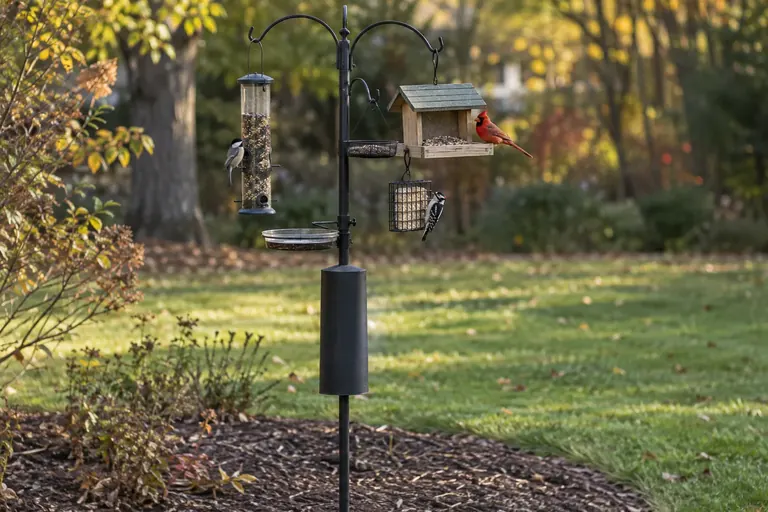
- If squirrels or raccoons raid the jelly, use a pole with a baffle; see our picks for bird feeder poles and baffles.
Our guide on where to put a bird feeder covers height, cover and window safety in detail.
How do you keep ants and bees out of an oriole feeder?
Use a water-filled ant moat, choose ports with bee guards, and clean up drips and spilled jelly.
Ants: Pick a feeder with a built-in moat, or hang a separate moat above it, filled with plain water only. Never put oil, grease or insect spray on the hanger, since it can end up on feathers.
Bees and wasps: Bee guards and flat-top designs that keep nectar below the port both help. Jelly sits in the open, so offer small amounts birds finish quickly, or use a covered jar. If wasps take over, move the feeder a few feet for a day or two.
How do you keep an oriole feeder clean?
Clean nectar parts every few days, more often in heat, and replace jelly and fruit before they spoil. Sugar foods go bad fast, and dirty feeders can make birds sick.
- Pour out old nectar and scrape out old jelly. Never top up old food.
- Take the feeder fully apart, including bee guards and jelly cups.
- Scrub with hot water and a small brush. A weak vinegar solution loosens sticky jelly.
- Rinse well, let parts dry, then refill and top up the ant moat.
For black mold in ports and a full routine, see how to clean a bird feeder, and how often.
Can you use a hummingbird feeder for orioles?
Sometimes, but it is not ideal. Many hummingbird feeders have ports too small for an oriole’s bill and perches too weak for a bird of about an ounce. Hooded Orioles in the Southwest regularly drink at hummingbird feeders, though. If you host both groups, hang each feeder type a few feet apart. Our roundup of the best hummingbird feeders covers the hummingbird side.
Is a more expensive oriole feeder worth it?
Usually not. Orioles respond to color, fresh food and timing, not price. Extra money buys capacity, glass or made-in-USA construction. Spend on a feeder that comes apart fully and has an ant moat.
What are the alternatives to an oriole feeder?
The simplest is half an orange pushed onto a nail or branch stub, with a small dish of jelly nearby. It costs almost nothing and tests whether orioles pass through your yard. Longer term, native trees that host caterpillars and fruiting shrubs such as serviceberry feed orioles through summer, and a shallow bird bath draws them in heat.
The bottom line
Start with a combination feeder like the Birds Choice OrioleFest, hung in the open before orioles arrive, and watch which food your birds choose. Add the Perky-Pet 253 if they live on jelly, pick the Songbird Essentials Ultimate for a crowd, and use a First Nature 32 oz in the nectar-loving Southwest. Keep portions small and everything clean.
Sources
- Cornell Lab of Ornithology, All About Birds: Baltimore Oriole
- Cornell Lab of Ornithology, All About Birds: Bullock’s Oriole
- Cornell Lab of Ornithology, All About Birds: Hooded Oriole
- Cornell Lab of Ornithology, All About Birds: Orchard Oriole
- Journey North: Orioles
- Birds Choice: OrioleFest Oriole Bird Feeder
- Songbird Essentials: Ultimate Oriole Fruit, Nectar and Jelly Feeder
- Perky-Pet: Oriole Jelly Wild Bird Feeder 253
Frequently asked questions
When should I put out an oriole feeder?
Hang it about one to two weeks before orioles usually arrive in your area. In much of the eastern US that means mid to late April, later near the Canadian border, and earlier in the Southwest for Hooded Orioles. Journey North and eBird sightings show when the first birds reach your latitude. Migrants that find food on arrival are more likely to stay and nest nearby.
What do you put in an oriole feeder?
Offer three things: plain sugar water made from white sugar and water with no dye, fresh orange halves, and a small amount of grape jelly. Cornell Lab lists all three for Baltimore Orioles. Use real jelly, not sugar-free types with artificial sweeteners, and put out only what birds finish in a day or two so it does not spoil or grow mold.
Why is my oriole feeder not attracting orioles?
The most common reasons are timing, placement and freshness. A feeder hung after migrants have passed will be ignored until fall. Orioles look for orange color in open areas near tall trees, so a feeder tucked under a porch can go unseen. Stale nectar and dried-out jelly also turn birds away. Hang it early, in the open, and refresh food every few days.
Can hummingbirds use an oriole feeder?
Sometimes. Oriole feeders have larger ports sized for an oriole's bill, and hummingbirds can often sip from them too, especially saucer designs. The reverse is harder: many hummingbird feeders have ports too small for orioles and no strong perch. If both species visit, hang one of each type a few feet apart so the larger orioles do not crowd out the hummingbirds.
How do I keep ants and bees out of an oriole feeder?
Use a built-in ant moat or hang a separate moat above the feeder and keep it filled with plain water. Do not use oil, grease or insect spray, which can end up on feathers. For bees, choose a feeder with bee guards, fix any drips, and wipe spilled jelly and nectar. Moving the feeder a few feet often breaks the habit of wasps that found it.