Best Window Bird Feeders
The best window bird feeder for most homes is the Nature's Hangout: clear acrylic, a slide-out tray with drain holes and strong suction cups. 6 picks compared.
If you buy through links on this page we may earn a commission, at no cost to you. It never decides what we recommend. How we earn
In this article
- Quick picks
- How we chose
- Nature’s Hangout Window Bird Feeder: best overall
- Nature Anywhere Birds-I-View: best polycarbonate
- Aspects Window Cafe: best made in USA
- Duncraft Songbird Mirrored Window Feeder: best one-way mirror
- Birds Choice Platform Window Mount (Small): best tray style
- Aspects Jewel Box: best for hummingbirds
- Window bird feeder comparison table
- Which birds come to window feeders?
- Is a window feeder a good choice for an apartment or condo?
- How to mount a window bird feeder so it stays up
- Do window feeders cause window collisions?
- How to keep squirrels off a window feeder
- What seed works best in a window feeder?
- How to clean a window bird feeder
- Common mistakes with window feeders
- The bottom line
- Sources
- Frequently asked questions
The best window bird feeder for most homes is the Nature’s Hangout Window Bird Feeder. It is clear, roomy, has a slide-out tray with drain holes, and carries a lifetime replacement guarantee. If you want tougher 4 mm polycarbonate, the Nature Anywhere Birds-I-View is the pick, and the Aspects Window Cafe is the choice for a compact, made-in-USA hopper that keeps seed dry.
A window feeder puts birds a foot or less from your face. For people who cannot get outside much, or who live in apartments without yards, that is hard to beat.
Quick picks
- Best overall: Nature’s Hangout Window Bird Feeder. Clear acrylic, drain-hole tray, lifetime guarantee.
- Best polycarbonate: Nature Anywhere Birds-I-View. Crack-resistant 4 mm polycarbonate, sliding tray.
- Best made in USA: Aspects Window Cafe. Covered hopper that slides out to fill.
- Best one-way mirror: Duncraft Songbird Mirrored Window Feeder. Two hoppers plus mirror film.
- Best tray style: Birds Choice Platform Window Mount (Small). Screen floor, recycled plastic.
- Best for hummingbirds: Aspects Jewel Box Window Hummingbird Feeder. Leak-free saucer on a bracket.
Nature's Hangout Window Bird Feeder
A clear acrylic house-style feeder with a removable tray that has drain holes, extra suction cups and a lifetime replacement guarantee.
- Best for
- Most windows and most small songbirds.
- Skip it if
- You want a hopper that holds a lot of seed between refills.
- Material
- Clear acrylic
- Tray
- Removable, with drain holes
- Guarantee
- Lifetime replacement
Nature Anywhere Birds-I-View Window Bird Feeder
A roomy window feeder made from 4 mm polycarbonate, which resists cracking better than acrylic, with a sliding seed tray.
- Best for
- Cold climates, where brittle plastics can crack.
- Skip it if
- You need clear drainage details before buying; the maker does not list them.
- Size
- 10 x 4.3 x 10 in
- Material
- 4 mm polycarbonate
- Tray
- Sliding
Aspects Window Cafe
A compact, made-in-USA polycarbonate hopper that slides out from under its roof for filling and cleaning.
- Best for
- People who want the seed kept dry under a roof.
- Skip it if
- You want a big open tray for cardinals to sit in.
- Capacity
- 0.75 qt
- Size
- 9.5 x 4 x 6.5 in
- Weight
- 0.85 lb
- Mount
- Triple suction-cup bracket
Duncraft Songbird Mirrored Window Feeder
A two-hopper window feeder that ships with one-way mirror film so birds are less likely to notice you moving inside.
- Best for
- Busy rooms where people walk past the window all day.
- Skip it if
- You want a single wide perch for bigger birds.
- Capacity
- 1 lb
- Size
- 11.5 x 3.5 x 6 in
- Hoppers
- 2
- Mirror film
- 8 x 14 in
Birds Choice Platform Bird Feeder Window Mount (Small)
A small recycled-plastic tray with an aluminum screen floor that drains water, made in Wisconsin.
- Best for
- Cardinals, and anyone who wants to offer mealworms or mixed foods.
- Skip it if
- You want the seed protected from rain and snow.
- Size
- 8.5 x 7 x 3.2 in
- Floor
- Aluminum screen
- Weight
- 2 lb
Aspects Jewel Box Window Hummingbird Feeder 8 oz
A leak-free saucer nectar feeder on a suction-cup bracket, made in the USA.
- Best for
- Watching hummingbirds up close in spring and summer.
- Skip it if
- The window gets hours of direct afternoon sun.
- Capacity
- 8 oz
- Ports
- 3
- Weight
- 0.68 lb
How we chose
We have not mounted these feeders ourselves yet. This guide is research-based. We compared manufacturer specifications for size, material, mounting and drainage, and confirmed each model is listed as a current product by its maker or a major specialty retailer. We read patterns in verified owner feedback, focusing on the problems that sink window feeders: suction cups letting go, seed getting soaked, and plastic yellowing or cracking. We also checked placement and window-safety advice from the Cornell Lab of Ornithology.
To make the list, a feeder needed a way to drain or shed water, a tray or hopper that removes for cleaning, and a mount rated for the weight of a full feeder.
Nature’s Hangout Window Bird Feeder: best overall
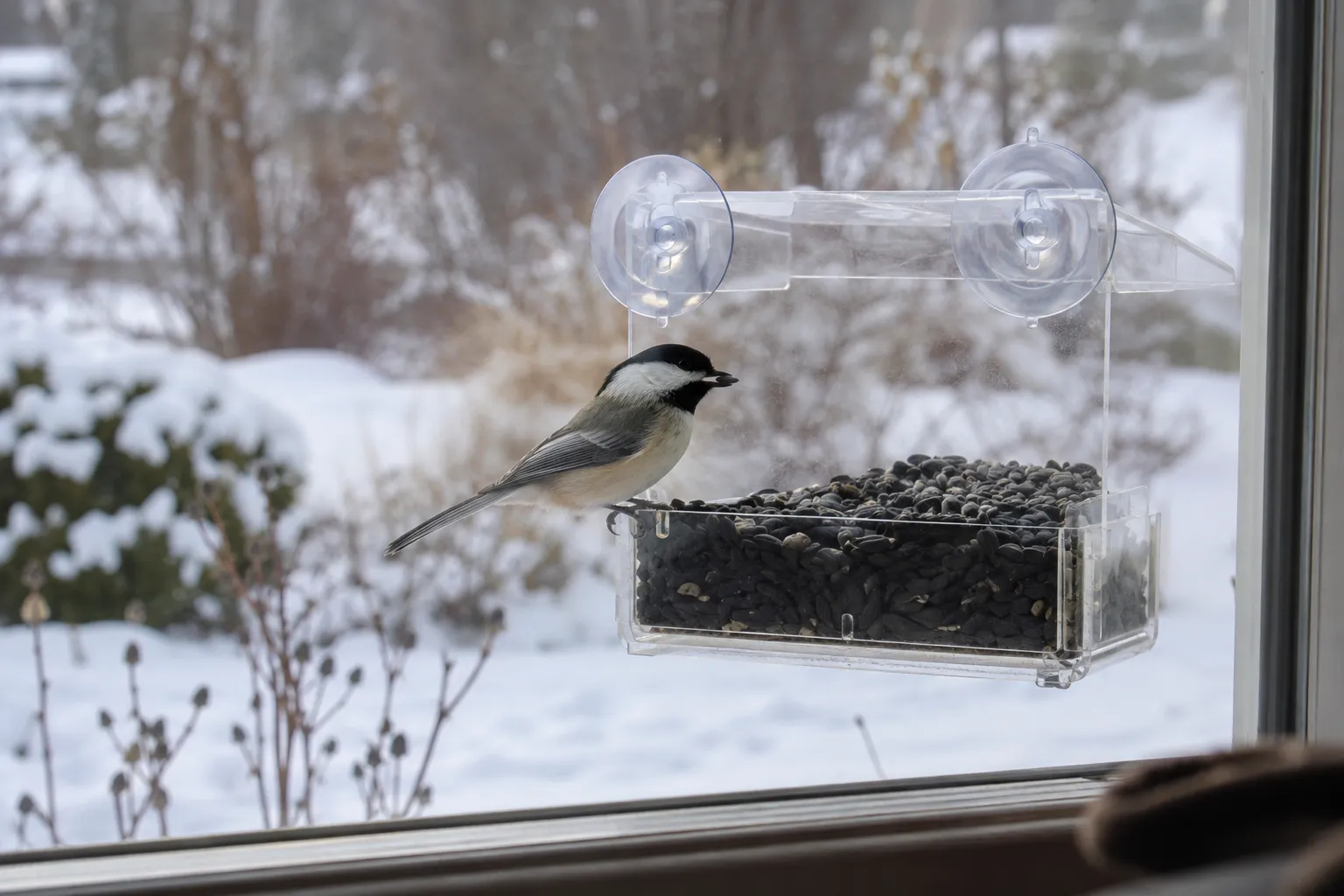
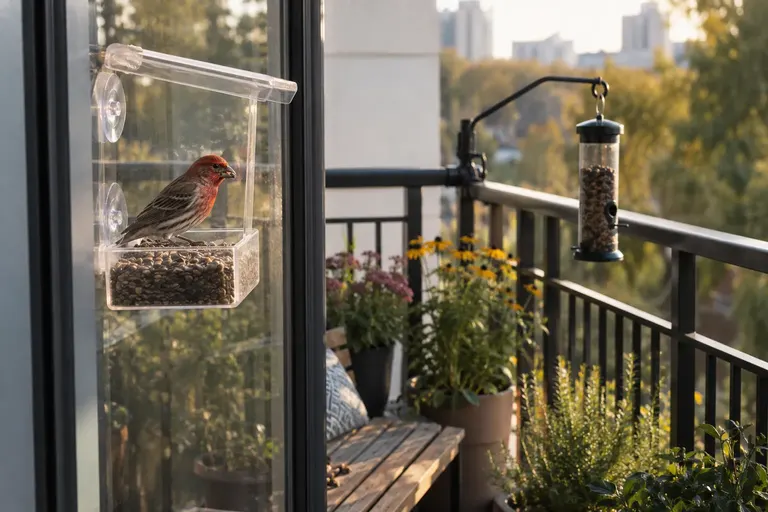
This is the house-shaped clear feeder you have probably seen on neighbors’ windows. The roof keeps off most rain, the back panel sits against the glass, and the seed tray slides out so you can dump old seed and rinse it without taking the feeder down.
Who it suits: Most people. It works for chickadees, titmice, nuthatches, finches and, on the wider tray, the occasional cardinal.
Key specs: Heat-bent clear acrylic, removable tray with drain holes, multiple suction cups plus spares. The maker says the cups are rated for up to 10 lb of pull force and backs the feeder with a lifetime replacement guarantee if it breaks for any reason.
Strengths:
- The drain holes let rain out, which is the difference between dry seed and a moldy mess.
- Extra suction cups in the box mean you can replace worn ones right away.
- The clear back gives an unobstructed view of every bird.
Drawbacks: Acrylic scratches more easily than polycarbonate and can cloud over years of sun. Owners commonly report that bigger birds like jays can crowd the tray. Like all suction-cup feeders, it needs smooth, clean glass.
Skip it if: You want to fill the feeder only once a week. The tray holds a modest amount of seed.
Nature Anywhere Birds-I-View: best polycarbonate
Nature Anywhere’s Birds-I-View is a similar concept built from 4 mm polycarbonate. Polycarbonate is more impact resistant than acrylic, which matters if the feeder falls, and it tends to handle cold better without cracking.
Who it suits: Northern homes with hard winters, and anyone who has had an acrylic feeder crack.
Key specs: 10 by 4.3 by 10 inches, 4 mm polycarbonate, sliding seed tray. The maker offers a money-back guarantee.
Strengths:
- A larger footprint than many window feeders, with room for several small birds at once.
- The sliding tray lets you replace seed without unmounting the feeder.
- Tough material for households with kids or pets nearby.
Drawbacks: Nature Anywhere does not publish drainage details or seed capacity on its product page. Polycarbonate can still yellow slightly with years of sun.
Skip it if: You want a mount with the manufacturer’s stated pull rating spelled out.
Aspects Window Cafe: best made in USA
The Window Cafe is a hopper feeder, not an open box. Seed sits in a clear polycarbonate body and trickles into a tray at the front. An overhanging roof held by three suction cups protects the seed. To refill or clean, you slide the feeder body out from under the roof and leave the mount on the glass.
Who it suits: People in rainy or snowy climates who are tired of wet seed, and anyone who wants the mount to stay put while they clean.
Key specs: 0.75 quart capacity, 9.5 by 4 by 6.5 inches, 0.85 lb, polycarbonate, triple suction-cup assembly, made in the USA. Duncraft lists it with Aspects’ lifetime guarantee.
Strengths:
- The mount stays on the window while the body slides out, which saves wear on the suction cups.
- A covered hopper keeps more seed dry than an open tray.
- Small and light, so the cups carry less load.
Drawbacks: The narrow feeding tray fits fewer birds at once. Larger birds such as cardinals may find it cramped.
Skip it if: Cardinals are your main target. A wider tray will suit them better.
Duncraft Songbird Mirrored Window Feeder: best one-way mirror
Birds at a window feeder can see movement inside, and a nervous bird will flush every time someone walks by. Duncraft’s answer is an 8 by 14 inch sheet of one-way mirror film that goes on the feeder’s back panel, so birds see a reflection while you still see them.
Who it suits: Kitchens, living rooms and home offices where people move past the window all day.
Key specs: Holds 1 lb of seed in two clear hoppers, 11.5 by 3.5 by 6 inches, two heavy-duty suction cups, removable roof, made in the USA by Duncraft.
Strengths:
- Two hoppers let you offer two foods, such as sunflower and safflower.
- The film can be removed or repositioned without sticky residue, according to Duncraft.
- Top filling means you do not have to unmount it.
Drawbacks: One-way film only works when the room is darker than the yard, so on dim days or with lights on inside, birds may still see movement. It is sold mainly through Duncraft, so Amazon availability varies. Only two suction cups carry a full pound of seed.
Skip it if: Your room is often brighter than the yard, such as a sunroom.
Birds Choice Platform Window Mount (Small): best tray style
This is a small platform feeder that hangs on the window. Birds Choice builds it from recycled poly lumber with an aluminum screen floor, so water drains straight through. The suction cups slip into keyholes on the back, making it easy to lift off and wash.
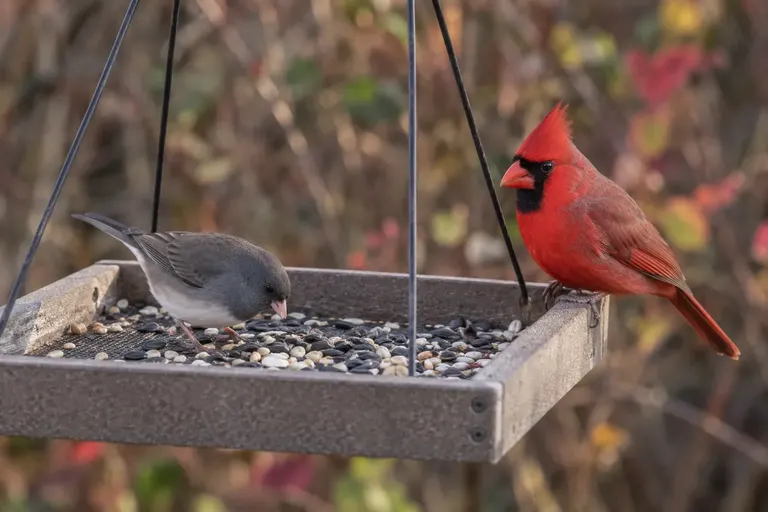
Who it suits: Cardinals and other birds that like a flat, open surface, and anyone offering mealworms, fruit or mixed foods. Our platform and tray feeder guide covers larger versions.
Key specs: 8.5 by 7 by 3.2 inches, 2 lb, aluminum screen floor, stainless steel fasteners, made in Chilton, Wisconsin.
Strengths:
- The screen floor drains far better than solid plastic.
- Recycled poly lumber is guaranteed by the maker never to crack, split or fade.
- Keyhole mounts let you remove the tray without peeling cups off the glass.
Drawbacks: It has no roof, so seed gets rained and snowed on. At 2 lb before seed, it is heavier than the plastic options, so the glass and cups must be spotless.
Skip it if: You live somewhere wet and do not want to change seed after every storm.
Aspects Jewel Box: best for hummingbirds
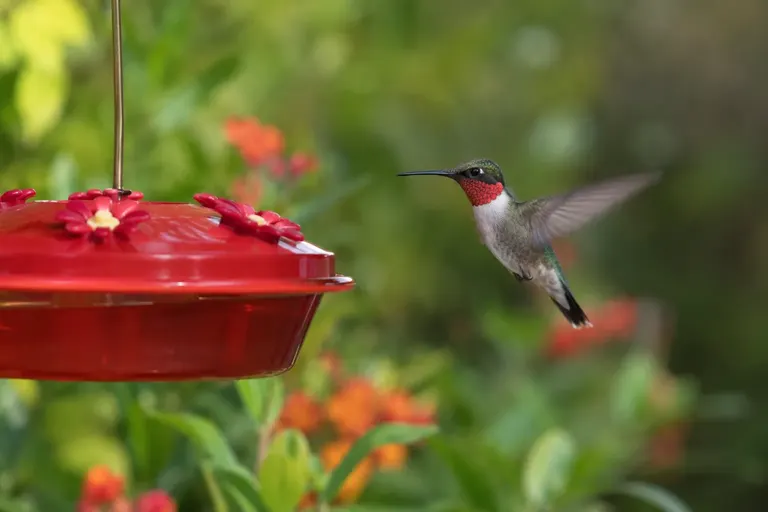
For nectar rather than seed, the Jewel Box is a saucer-style hummingbird feeder on a suction-cup bracket. Saucers do not drip, which matters when the drip would run down your window. It holds 8 oz with 3 ports, has a removable ant moat and is made in the USA. We cover it in more depth in our guide to the best hummingbird feeders.
Skip it if: Your window faces into strong afternoon sun, which spoils nectar quickly.
Window bird feeder comparison table
| Feeder | Style | Material | Size (in) | Capacity | Drainage | Made in USA |
|---|---|---|---|---|---|---|
| Nature’s Hangout | Open house, tray | Acrylic | Not listed | Not listed | Drain-hole tray | Not stated |
| Nature Anywhere Birds-I-View | Open house, tray | Polycarbonate | 10 x 4.3 x 10 | Not listed | Not listed | Not stated |
| Aspects Window Cafe | Covered hopper | Polycarbonate | 9.5 x 4 x 6.5 | 0.75 qt | Roof overhang | Yes |
| Duncraft Songbird Mirrored | Two hoppers | Clear plastic | 11.5 x 3.5 x 6 | 1 lb | Roof | Yes |
| Birds Choice Window Mount | Open tray | Recycled plastic | 8.5 x 7 x 3.2 | Not listed | Aluminum screen | Yes |
| Aspects Jewel Box | Nectar saucer | Polycarbonate | 8.5 x 6 x 2.2 | 8 oz | Rain-diverting ports | Yes |
Which birds come to window feeders?
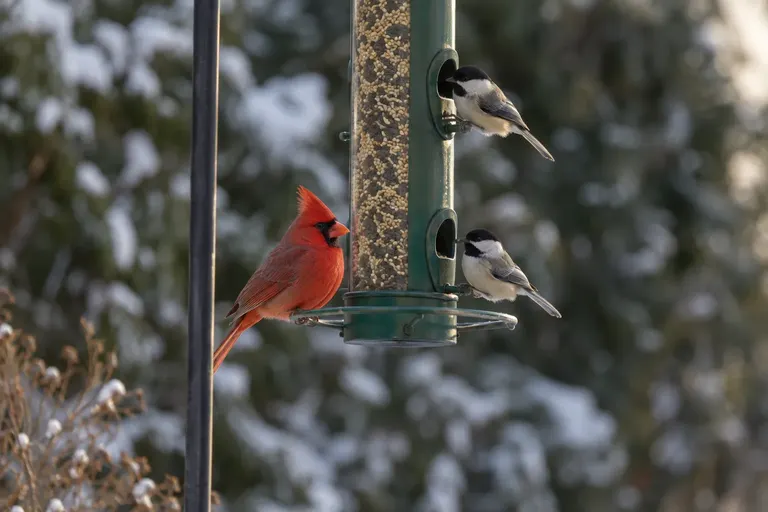
The first visitors are almost always the bold, curious species. In the East that means Black-capped Chickadees or Carolina Chickadees, Tufted Titmice and White-breasted Nuthatches. House Finches and American Goldfinches often follow. Northern Cardinals will use a window feeder with a wide enough perch, though they are usually more cautious. In the West, look for chickadees, nuthatches, juncos and House Finches.
Large or skittish birds such as Mourning Doves, jays and woodpeckers visit less often, but a roomy tray improves your chances.
Is a window feeder a good choice for an apartment or condo?
Often it is the only choice. Many buildings ban hanging feeders from balconies, or there is simply no yard. A window feeder takes no floor space, needs no pole and keeps seed off your neighbors’ patios if you use hulled seed. Check your lease or HOA rules first, since some restrict anything attached to the exterior.
A few things matter more at height. Wind is stronger on upper floors, so a feeder with a roof and a secure mount holds up better. Fewer species reach higher floors, but chickadees, finches and nuthatches will often find a feeder several stories up, especially if trees are nearby. Hummingbirds regularly visit balcony and window nectar feeders in cities. For more ideas, see our guide to the best bird feeders for balconies and small spaces.
How to mount a window bird feeder so it stays up
Most window feeder failures come down to suction cups. Follow these steps:
- Pick smooth glass. Suction cups do not hold on textured, frosted or dirty glass, or on window frames.
- Clean the outside of the glass with rubbing alcohol or glass cleaner, then dry it completely. Any film or residue weakens the seal.
- Warm the suction cups in hot tap water for a minute so they soften and conform to the glass.
- Press each cup firmly from the center out to push out air.
- Hang the feeder empty for a few hours, then add seed. This lets the seal set before it carries load.
- Check the cups monthly and replace any that have gone stiff, cloudy or cracked. Cold weather makes cups less flexible, so check more often in winter.
Mount the feeder at a height you can reach from outside, or pick a design like the Window Cafe or Nature Anywhere that can be refilled without removing it.
Do window feeders cause window collisions?
A feeder mounted on the glass itself does not give birds room to reach dangerous speed before they touch the window. The common older advice was to place feeders either within about 3 feet of a window or more than 30 feet away. However, the Cornell Lab of Ornithology now says past recommendations about safe feeder distances are no longer considered valid, and suggests focusing on making the windows themselves visible to birds.
The Cornell Lab reports that roughly 1 billion birds die from window strikes in the US each year. It recommends markings spaced about 2 inches apart across the outside of the glass; one or two decals on a large window will not prevent strikes. Our guide on how to stop birds hitting windows explains the options.
How to keep squirrels off a window feeder
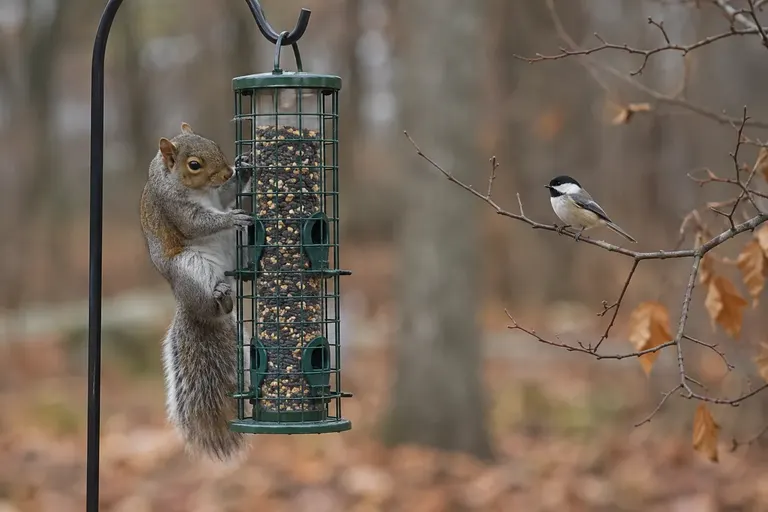
Squirrels can reach window feeders by jumping from sills, shutters, gutters, railings and nearby branches. You cannot baffle a window feeder the way you can a pole, so placement is everything:
- Mount it on a window with no ledge, deck railing or tree limb within easy jumping reach.
- Upper-floor windows are usually squirrel-free, as long as no branch overhangs.
- Offer safflower seed, which many squirrels ignore, if they keep coming. Straight safflower is one of the few foods most squirrels tend to leave alone.
For more strategies, read how to keep squirrels off bird feeders.
What seed works best in a window feeder?
Small feeders run out of room quickly, so choose food the birds eat rather than kick out:
- Black oil sunflower seed: The best all-round choice. Nearly every window visitor eats it.
- Hulled sunflower chips: No shells on your sill or on the ground below, which is useful above patios. See our picks for no-mess bird seed.
- Safflower: Loved by cardinals and less attractive to grackles and many squirrels.
- Mealworms: A good option for tray-style feeders if you want bluebirds or wrens.
Skip cheap mixes with lots of milo, which many songbirds at window feeders toss aside.
How to clean a window bird feeder
Window feeders get dirty fast because birds perch and feed in the same small space. Wet seed also molds quickly in a tray.
- Remove old seed every few days in wet weather, and whenever it clumps.
- Take the tray or hopper out and scrub it with warm, soapy water.
- Every week or two, soak it in a diluted bleach solution. Project FeederWatch suggests 1 part bleach to 9 parts water.
- Rinse well and let it dry completely before refilling.
- Wipe droppings off the glass so you can see clearly.
Most clear plastic feeders are not dishwasher safe because heat can warp or cloud them. Our full guide on how to clean a bird feeder covers schedules and disease signs.
Common mistakes with window feeders
- Mounting on dirty or textured glass. The feeder will fall, often full of seed.
- Overfilling. A small tray full of wet seed molds quickly. Fill only what birds eat in a day or two.
- Giving up too soon. Birds can take a couple of weeks to trust a new feeder, especially one near moving shapes indoors.
- Placing it next to a jump point. A railing or branch within reach turns it into a squirrel buffet.
- Choosing a window in full sun for nectar. Hummingbird nectar spoils fast behind hot glass.
The bottom line
For most homes, start with the Nature’s Hangout Window Bird Feeder. Choose the Nature Anywhere Birds-I-View if you want polycarbonate, the Aspects Window Cafe if you want seed kept under a roof, and the Duncraft mirrored feeder if people walk past the window all day. Add a camera if you want photos of your visitors; our bird feeder camera guide compares options.
Sources
- Cornell Lab of Ornithology, All About Birds: Why Birds Hit Windows and How You Can Help Prevent It
- Project FeederWatch: House Finch Eye Disease and Feeder Cleaning
- Nature’s Hangout: Window Bird Feeder with Strong Suction Cups
- Nature Anywhere: Birds-I-View Window Bird Feeder
- Birds Choice: Aspects The Window Cafe
- Birds Choice: Platform Bird Feeder Window Mount
- Duncraft: Songbird Mirrored Window Feeder
Frequently asked questions
Do birds really use window feeders?
Yes, though it can take days or a few weeks. Chickadees, titmice and nuthatches usually come first because they are bold and curious. Cardinals, finches and sparrows often follow once the feeder is part of the routine. Putting the window feeder near an existing feeder, or moving a familiar feeder closer in steps, speeds things up.
Do window feeders cause birds to hit windows?
A feeder on the glass itself does not give birds room to build up speed, so strikes there tend to be low impact. Cornell Lab now says older advice about safe feeder distances is no longer considered valid. The better fix is to make the whole window visible to birds with markings spaced about 2 inches apart.
How do I keep a window feeder's suction cups from falling off?
Clean the outside of the glass with rubbing alcohol, then dry it completely. Warm the suction cups in hot water so they soften, press them firmly, and let the feeder hang empty for a few hours before filling. Replace cups that have gone stiff or cloudy. Smooth, untextured glass is required.
What seed is best for a window feeder?
Black oil sunflower seed or hulled sunflower chips are the best start. Hulled seed leaves no shells on the sill or ground below. Safflower works well if you want cardinals but fewer grackles. Avoid cheap mixes heavy in milo and millet, which many window visitors kick out onto the ledge.
Can I put a window feeder on a window with a screen?
Only if the screen can be removed or the feeder mounts to glass that is not behind it. Suction cups need direct contact with clean glass, and birds cannot reach a feeder behind a screen from outside anyway. Sliding windows and upper sashes of double-hung windows often have unscreened glass that works.