Fat Balls for Birds: Nets, Holders and Safe Feeding
Fat balls for birds are safe when you take off the plastic net, hang them in a metal holder and replace them before they turn rancid. Here's how to do it.
In this article
- Are fat ball nets dangerous to birds?
- Net, no net or holder: what should you do?
- Which holders work without a net?
- How do you feed fat balls safely?
- How many fat balls should you put out?
- Can you feed fat balls in summer?
- How can you tell if fat balls have gone rancid?
- How should you store fat balls, especially in warm months?
- Which birds eat fat balls?
- What should you check on the label?
- What’s actually in a fat ball?
- Is fat bad for tits? What the research says
- What to do next
- Sources
- Frequently asked questions
Fat balls for birds are safe and useful in cold weather, as long as you take them out of the plastic net, hang them in a metal holder and swap them before the fat turns rancid. Tits, sparrows, starlings and woodpeckers take them most. In warm weather, follow your national bird charity’s season rule, because soft fat spoils fast.
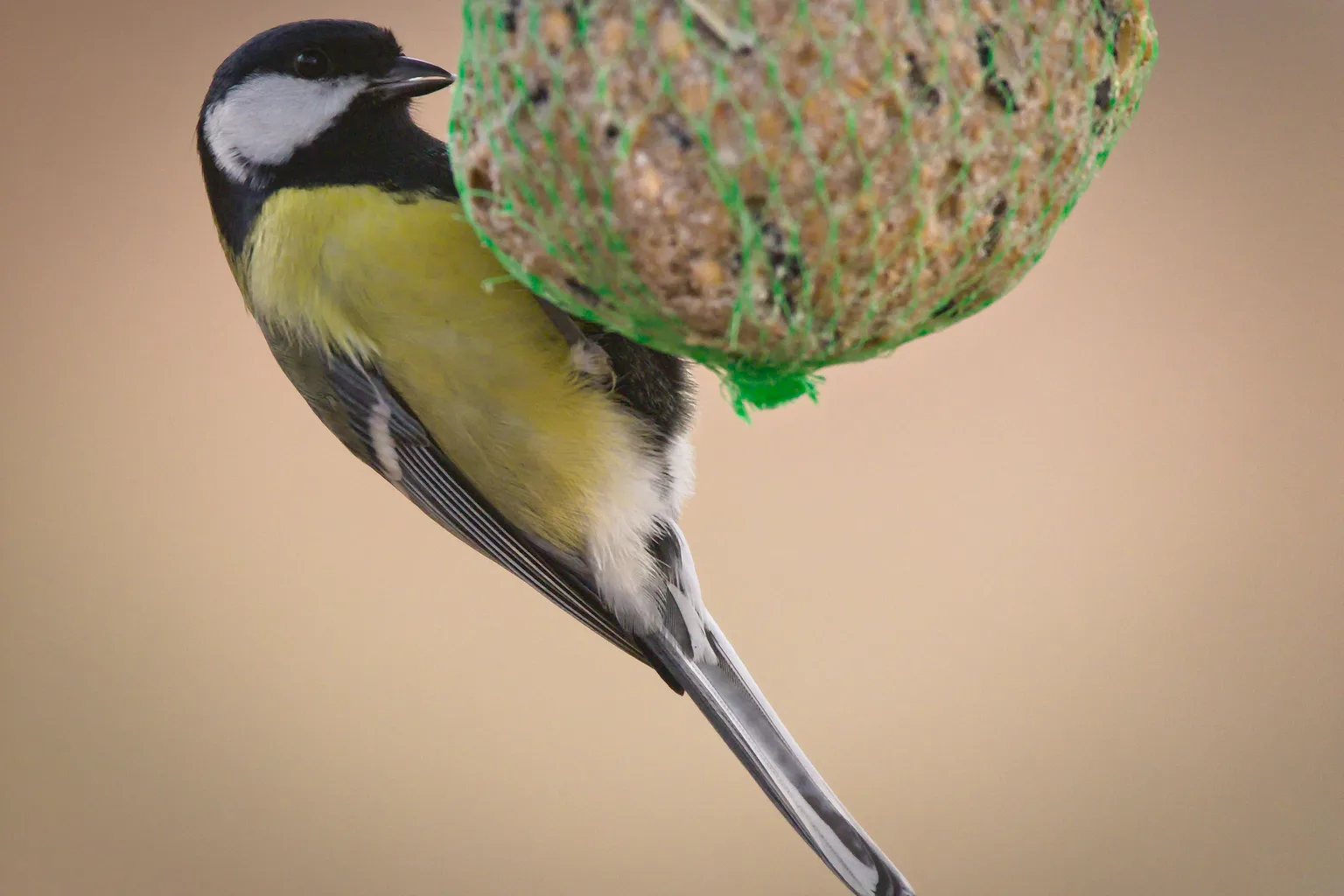
Fat balls (US readers usually call them suet balls) are fist-sized balls of hard fat packed with seeds, oats or insects. They’re cheap, sold everywhere from garden centres to supermarkets, and often still come wrapped in a green plastic net. That net is the first thing to deal with.
This guide covers how to feed fat balls safely. If you’d rather make your own, see our homemade suet recipes. If you’re choosing a product, our suet comparison covers that.
Are fat ball nets dangerous to birds?
Yes. The RSPB, NABU and Vogelbescherming all say to remove them. The RSPB is blunt: “Never put out any food in mesh bags. These may trap birds’ feet and even cause broken feet and legs.” It adds that birds with a barbed tongue, like woodpeckers, can become trapped by their beaks.
The same advice comes from the national bird societies across the Channel:
- NABU (Germany) asks people not to use fat balls in plastic nets, because birds get tangled and injured in them too often.
- Vogelbescherming Nederland lists “no fat balls or peanuts in a (plastic) net” on its do-not-feed list, because birds can get caught and the nets end up as litter.
- Natagora (Belgium), quoted by the broadcaster RTBF, says there’s no scientific study counting the birds that die this way, but that it does happen.
That last point matters. Nobody has a reliable figure for how many birds are hurt by nets, so be wary of any page that quotes one. What’s clear is that the risk is avoidable, and every source agrees on the fix.
Many fat balls are now sold without nets, often in a tub or bucket. If yours came netted, cut the net off with scissors before you hang the ball, and put the net in the bin so it can’t blow into a hedge.
Net, no net or holder: what should you do?
Here’s the decision table we built from the RSPB, NABU and Vogelbescherming advice. Find your situation and follow the right-hand column.
| What you have | Risk | What to do |
|---|---|---|
| Fat ball still in its plastic net, hung up | Feet, legs and tongues caught in the mesh; net becomes litter | Take it down, cut off the net, bin the net, rehang the ball in a metal holder |
| Net-free ball, no holder | Ball falls, rolls under cover where rats and cats wait | Buy or reuse a metal fat ball holder or spiral |
| Net-free ball in a metal mesh or wire holder | Low; holder gets greasy and dirty over time | Clean the holder weekly and keep it out of full sun |
| Fat balls loose on a bird table or the ground | Droppings mix with food on flat surfaces, which helps disease spread; attracts rats | Hang balls instead; crumble only small amounts for ground feeders and clear leftovers by evening |
| Fat ball that smells off, has a white or black haze, or sprouting seeds | Rancid or mouldy fat | Remove it and bin it; clean the holder before refilling |
| Fat ball going soft in hot weather | Fat smears on feathers and spoils fast | Take it in; in warm months, use only products labelled melt-resistant, or stop |
A metal holder is different from a mesh bag. When the RSPB recommends “a hanging mesh feeder with fat balls” for tits, sparrows and starlings, it means a rigid wire feeder, not the soft nylon net the balls are sold in. For holder types, see our guide to suet feeders.
Which holders work without a net?
Any rigid holder that lets birds cling without anything soft to snag on. This table pulls together what the RSPB, BTO, NABU, Vogelbescherming and the Cornell Lab say about each option.
| Holder | Suits | Watch out for | Source |
|---|---|---|---|
| Rigid wire cage or metal mesh tube | Tits, sparrows, starlings | Flocks of starlings and sparrows can empty it fast | RSPB |
| Spiral holder | A single ball for clinging tits | Holds only one ball; hang it out of full sun | - |
| Holder inside an outer cage | Small birds only | Keeps squirrels and larger birds off; fiddlier to clean | RSPB |
| Upside-down suet feeder | Woodpeckers, tits, nuthatches | Starlings can’t feed hanging upside down | Cornell Lab |
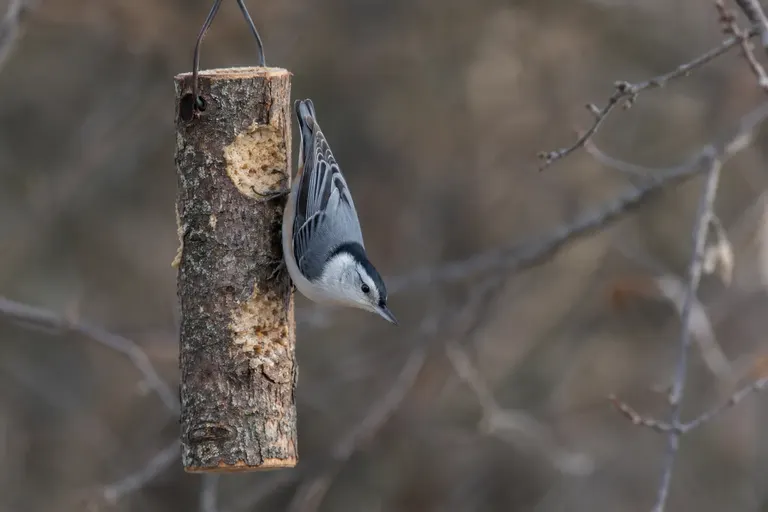
| Feeder log, or fat pressed into bark | Woodpeckers, nuthatches, treecreepers, wrens | Hard to clean, so fill small amounts | BTO, RSPB |
| Pine cone or coconut shell filled with fat | Tits; homemade, with no net at all | Single use; bin it once it’s empty or soiled | NABU, Vogelbescherming |
Whichever you choose, clean it as part of your weekly routine. The Cornell Lab suggests a hot dishwasher cycle, soap and boiling water, or a bleach solution of no more than 1 part bleach to 9 parts water with a 10-minute soak, then a thorough rinse and full drying. Our comparison of suet and fat ball feeders covers holder designs in more detail.
How do you feed fat balls safely?
Hang them in a rigid holder, in the right spot, and keep the station clean. Most problems come from where the food sits and how long it stays there.
Use the right holder
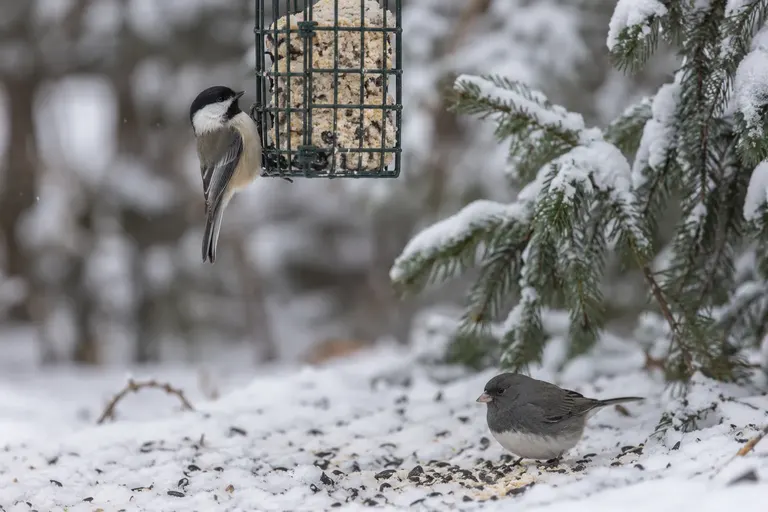
A wire cage, a mesh tube made of metal or a spiral holder lets birds cling and peck without anything to snag on. Tits love hanging food: the LBV notes that all tit species prefer it, because hardly any other birds can use it as well as they can. That means a hanging holder also keeps much of the fat for the small birds.
Hang it in the right place
The RSPB advises placing feeders high enough to be out of reach of cats, and a couple of metres from thick cover so small birds can escape a sparrowhawk. Avoid hanging them under places where birds perch, so droppings don’t land on the food.
Windows are the other hazard. Vogelbescherming Nederland says the risk of window strikes is highest when food hangs 5 to 10 metres from a window, so hang it closer than 5 metres or further than 10. Our guide on where to put a bird feeder goes into more detail.
Keep it clean
Dirty feeding stations spread disease. The RSPB recommends washing feeders every week with a mild disinfectant and hot water, then rinsing and drying them before refilling. It also suggests moving feeders, ideally weekly, so debris doesn’t build up underneath. NABU adds two simple habits: wear gloves and wash your hands afterwards. Our step-by-step guide covers how to clean a bird feeder.
Don’t overfeed
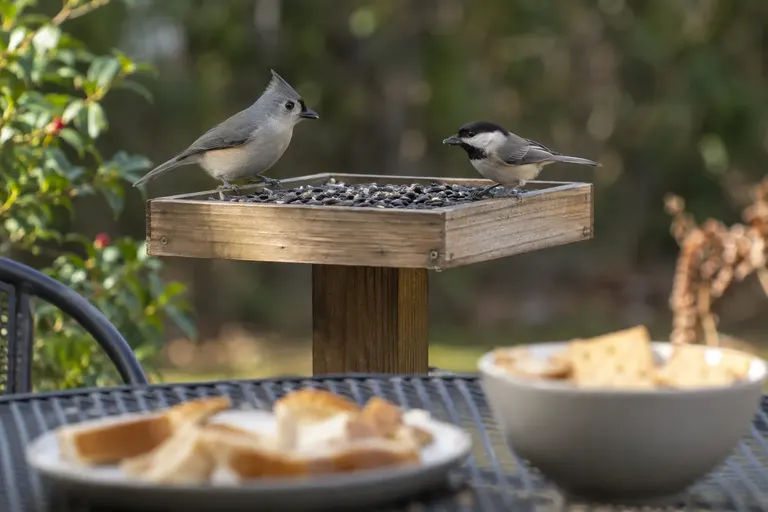
Put out only what birds will finish. The RSPB says food in feeders should be eaten within a day or two, and Vogelbescherming suggests amounts that are gone by evening. One or two balls at a time is plenty for most gardens.
How many fat balls should you put out?
Start with the one or two balls suggested above, then adjust to what your birds actually eat.
A fat ball holds a lot of energy for a small bird. The BTO says a blue tit of about 11 g needs roughly 1 kcal per gram of body weight per day, so about 11 kcal. Fat provides about 9 kcal per gram, according to the FAO’s standard conversion factors. Even if only 40 g of an 85 g ball were fat, that’s about 360 kcal, roughly a day’s energy for 30 blue tits. As a rough guide, a few tits can make one ball last several days, while a flock of starlings can clear it in a morning.
| What you see | Likely cause | What to do |
|---|---|---|
| Ball gone within hours | Starlings or sparrows feeding in groups | Use a caged or upside-down holder, or offer fewer balls |
| Ball lasts a day or two | Normal use, in line with the RSPB guideline | Keep going; check it daily |
| Ball untouched for several days | Few visitors, or plenty of natural food | Take it in before it spoils, especially in mild, damp weather |
Can you feed fat balls in summer?
It depends on the weather and on where you live, because the national charities don’t agree. In hot weather, all of them would rather you didn’t leave soft fat hanging.
| Country | Organisation | What it says about fat in the warm months |
|---|---|---|
| UK | RSPB | Suet can be fed year round, but in hot weather it can go soft or spoil, especially homemade fat balls, which it advises avoiding. Buy melt-resistant products for warmer months. Pause seeds and peanuts from May to October. |
| Germany | NABU | No fat food, peanuts or (ideally) sunflower seeds from April to July, while parents raise chicks on insects. Fat-rich food is hard for young birds to digest. |
| France | LPO | Feed only in winter, broadly mid-November to the end of March, and not during the breeding season. |
| Netherlands | Vogelbescherming | Feeding is fine all year, but don’t hang fat products in the sun. In spring and summer, birds need protein, such as insects and mealworms. |
If you’re in the UK, the RSPB’s rule is the one to follow. In a hot spell, take fat balls in, whatever your country. For the full picture, see should you feed birds in summer.
How can you tell if fat balls have gone rancid?
Vogelbescherming Nederland gives three warning signs: the fat smells nasty, a black or white haze forms on the surface, or the seeds inside begin to sprout. It notes that fat balls and other fat products spoil faster in mild, wet weather.
If you see any of these, remove the ball, bin it and clean the holder. Better still, prevent it: buy only as many as you’ll use in a few weeks, store them somewhere cool, dry and rodent-proof (the RSPB suggests clean storage bins), and put out only what birds will eat quickly.
How should you store fat balls, especially in warm months?
Keep spare fat balls cool, dry, dark and sealed. The LPO advises storing them away from light and humidity, and in airtight containers to stop insects getting in.
Warmth is the main enemy. The Cornell Lab explains that raw suet goes rancid quickly once temperatures are above freezing, while rendered fat keeps better but can still soften in warm weather. Softened fat can coat a bird’s belly feathers, which Cornell says is dangerous for birds sitting on eggs.
Which birds eat fat balls?
Tits are the regulars, but a surprising mix of species will take fat. This table combines what the RSPB in the UK and the LBV in Bavaria say about who feeds on fat.
| Bird | Takes fat balls? | Best way to offer it | Source |
|---|---|---|---|
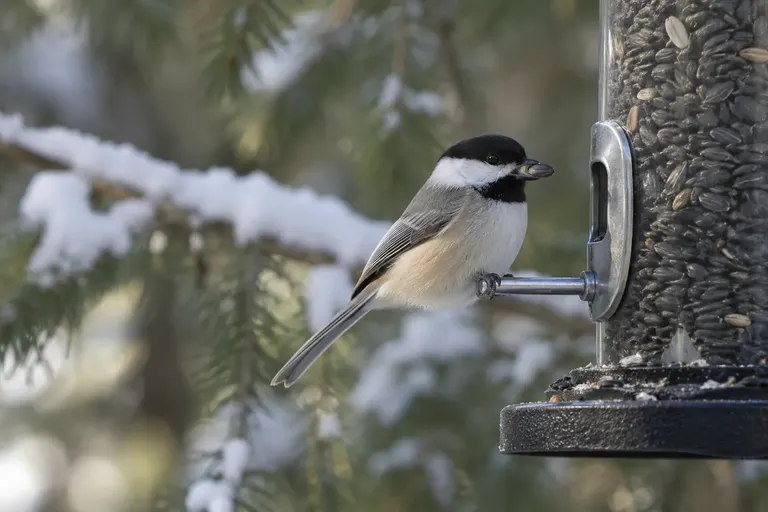
| Blue tit, great tit | Yes, very often | Hanging holder | RSPB, LBV |
| Coal tit, marsh tit | Yes | Hanging holder | LBV |
| Long-tailed tit | Yes | Hanging holder | LBV |
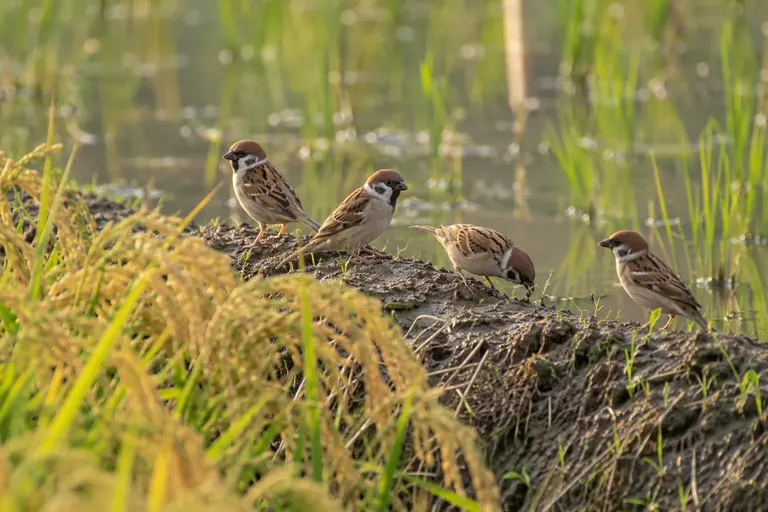
| House sparrow | Yes | Hanging holder | RSPB |
| Starling | Yes | Hanging holder | RSPB |
| Great spotted woodpecker | Yes | Holder near a trunk, or fat in a log | RSPB, LBV |
| Nuthatch, treecreeper | Yes | Fat pressed into bark or a feeder log | RSPB, LBV |
| Wren | Sometimes | Fat pressed into a log or post | RSPB |
| Robin, dunnock, blackbird | Rarely from a hanging ball | Small crumbled pieces on the ground | NABU, LBV |
Robins, dunnocks and blackbirds are mostly soft-food eaters that feed on the ground, according to NABU and the LBV. Vogelbescherming suggests cutting cooled fat into small pieces so birds that don’t normally sit on a fat ball can eat it too. Clear up any leftovers by evening.
What should you check on the label?
Look at the fat, the filler and the packaging. You can’t see much through a net, so the label is your best guide.
- No net. Pick balls sold loose in a tub or box. It’s the simplest way to avoid the problem.
- No palm oil. The LPO lists fat balls without palm oil among the foods you can give. Vogelbescherming’s own recipe also specifies fat without palm oil.
- No salt. Salted fat, bacon fat and meat scraps are on every charity’s avoid list. The LPO names salted lard and meat fat specifically.
- Few fillers. The LBV warns that many suppliers stretch bird food with fillers that birds don’t eat, which then pile up under the feeder. A short ingredient list of fat, seeds, oats or insects is a good sign.
- Melt-resistant for warm months. If you feed outside winter in the UK, the RSPB advises choosing products that state they resist melting.
Avoid butter and margarine too. Vogelbescherming says they act as a laxative in birds, and the LBV lists pure fat such as butter or margarine as something not to feed.
What’s actually in a fat ball?
Under EU feed-labelling rules, which Great Britain kept as retained law, the ingredients of compound feed such as fat balls must be listed in descending order by weight. Percentages are optional, except that any ingredient the pack emphasises in words or pictures, such as “with mealworms”, must have its percentage shown.
There’s a catch for bird food. For feed meant for animals that aren’t kept for food, the same regulation lets makers use a category name instead of the specific ingredient. A label that just says “oils and fats” doesn’t tell you whether palm fat is inside, so look for an explicit “no palm oil” statement.
A real example shows why order matters. The LPO’s own insect fat balls weigh 85 g each and list wheat flour first and tallow second, with 2% dried mealworms declared. Because flour comes first, the tallow can’t make up more than half the ball.
Why avoid palm fat? The LPO advises plant fats, ideally rapeseed-based, or beef tallow, and never palm oil. The wider concern is deforestation: palm oil is one of the commodities covered by the EU regulation on deforestation-free products. The RSPB lists lard and beef suet among suitable foods.
Is fat bad for tits? What the research says
Not in a way that should stop you feeding in a cold garden, but the evidence is mixed. The BTO has reviewed the studies and concludes that it’s hard to argue people should stop providing fat-based foods in their gardens. All of the research so far was done in woodland, not gardens.
What the woodland studies found, according to the BTO:
- Blue and great tits fed peanut cake (50% beef suet), and blue tits fed vegetable fat, produced fewer young than unfed birds.
- In a study by Plummer and colleagues (2013), blue tits fed fat balls in winter raised chicks the next spring that were smaller, lighter and less likely to fledge.
- Great spotted woodpeckers fed suet did better, with higher productivity.
What nobody has measured yet is whether fat helps tits survive autumn and winter, which could outweigh the effect on breeding. The practical reading: feed fat in the cold months when it does the most good, keep it fresh, and offer a variety of foods rather than fat alone. For the bigger picture, see do birds become dependent on feeders?
What to do next
Fat balls are one of the easiest ways to help garden birds through a cold spell, once the net is gone. Hang them in a metal holder, keep the station clean, swap any ball that smells off, and follow your local season rule.
Want more options? Read what to feed birds in winter for the full menu, try one of the homemade recipes linked above, or compare ready-made blocks in our best suet for birds guide.
Sources
- RSPB: How and what to feed your garden birds
- NABU: Vögel richtig füttern
- LBV: Welcher Vogel mag welches Futter?
- LPO: Quand nourrir les oiseaux ?
- Vogelbescherming Nederland: Wat is goed voer?
- Vogelbescherming Nederland: Hygiënisch vogels bijvoeren, 6 tips
- BTO: Keeping warm on winter nights
- BTO: Are fatty foods bad for birds?
- BTO: Winter food provisioning reduces future breeding performance in a wild bird (Plummer et al. 2013)
- FAO: Food energy, methods of analysis and conversion factors
- Regulation (EC) No 767/2009 on feed marketing and labelling, Article 17 (legislation.gov.uk)
- European Commission, Access2Markets: EU deforestation regulation
- LPO boutique: fat balls with insects, product sheet (French)
- LPO: Nourrir les oiseaux de son jardin en hiver (French)
- Cornell Lab, All About Birds: About suet, mealworms, and other bird foods
- Cornell Lab, All About Birds: How to clean your bird feeder
- NABU Niedersachsen: Futterknödel für Wintervögel (German)
- Vogelbescherming Nederland: Zelf een vetbol maken in 6 stappen (Dutch)

Frequently asked questions
Should you take fat balls out of the net?
Yes, always. The RSPB says never to put out any food in mesh bags, because birds' feet can get trapped and even broken, and woodpeckers can catch their barbed tongues. NABU in Germany and Vogelbescherming Nederland give the same advice. Cut the net off, put it in the bin, and hang the ball in a metal fat ball feeder or spiral instead.
Can you put fat balls out in summer?
It depends on the weather and whose advice you follow. The RSPB says suet can be fed year round but warns that fat goes soft or spoils in hot weather, so it suggests melt-resistant products in warm months. NABU advises no fat food from April to July, and the LPO recommends feeding only in winter. In a heatwave, take fat balls in.
How do you know if a fat ball has gone off?
Vogelbescherming Nederland lists three signs: the fat smells unpleasant, a black or white haze appears on the surface, or the seeds inside start to sprout. Remove the ball straight away if you see any of these. Mild, wet weather speeds spoiling, so offer only what birds finish in a day or two and keep spare balls somewhere cool and dry.
Do fat balls attract rats?
They can, mainly when crumbs pile up underneath or balls sit on a flat table or the ground. The RSPB advises clearing up under feeders regularly, matching the amount of food to demand and moving feeders, ideally weekly, so debris and droppings don't build up. Hanging the balls in a holder, rather than leaving them on a table or the ground, also helps.
Which birds eat fat balls?
Tits are the main customers: blue, great, coal, marsh and long-tailed tits. The RSPB also names sparrows and starlings at fat ball feeders, and nuthatches, woodpeckers, treecreepers and even wrens at fat pushed into a log. Robins, dunnocks and blackbirds feed mostly on the ground, so they take crumbled fat on the ground more readily than a hanging ball.
How many fat balls should I put out?
Start with one or two and adjust. The RSPB says food in feeders should be eaten within a day or two, and Vogelbescherming Nederland suggests amounts that are gone by evening. If a ball disappears within hours, starlings or sparrows are probably the cause, so a caged holder helps. If one sits untouched for days in mild, damp weather, take it in before it spoils.