Best Platform Bird Feeder: 6 Tray Feeders Compared
The best platform bird feeder for most yards is the Birds Choice Hanging Platform: screen floor drains fast, recycled plastic lasts. 6 tray feeders compared.
If you buy through links on this page we may earn a commission, at no cost to you. It never decides what we recommend. How we earn
In this article
- Quick picks
- How we chose
- Birds Choice Hanging Platform Feeder, Large: best overall
- Birds Choice Fly-Thru Feeder, Medium: best covered
- Birds Choice Seed Catcher Platform, Large: best seed catcher
- Duncraft Eco-Strong Ground Platform: best ground feeder
- Aspects Quick Clean Bigfoot 12 in Seed Tray: best tube add-on
- Birds Choice Platform Window Mount: best window tray
- Platform feeder comparison table
- What should you look for in a platform feeder?
- Which birds come to platform feeders?
- Hanging, pole or ground: which platform style is best?
- What food should you put on a platform feeder?
- How to clean a platform feeder
- Common mistakes with platform feeders
- The bottom line
- Sources
- Frequently asked questions
The best platform bird feeder for most yards is the Birds Choice Hanging Platform Feeder, Large. Its aluminum screen floor drains water fast, the recycled plastic frame will not rot or split, and at 15.25 by 12.25 inches it is big enough for cardinals and jays. If you live somewhere wet, the Birds Choice Fly-Thru Feeder adds a roof. For juncos and doves that stay near the ground, the Duncraft Eco-Strong Ground Platform is the better pick.
Platform feeders attract more kinds of birds than any other design, because nearly every species can land on a flat tray. The catch is that open trays get wet and dirty faster, so drainage and easy cleaning matter most.
Quick picks
- Best overall: Birds Choice Hanging Platform Feeder, Large. Screen floor, recycled plastic, made in USA.
- Best covered: Birds Choice Fly-Thru Feeder, Medium. Roofed platform for wet climates.
- Best seed catcher: Birds Choice Seed Catcher Platform, Large. Pole-mounted tray under your feeders.
- Best ground feeder: Duncraft Eco-Strong Ground Platform. Low legs, mesh floor.
- Best tube add-on: Aspects Quick Clean Bigfoot 12 in Seed Tray. Clips under Aspects tubes.
- Best window tray: Birds Choice Platform Window Mount. Small suction-cup tray.
Birds Choice Hanging Platform Feeder, Large
A roomy recycled-plastic tray with an aluminum screen floor, hung from collapsible steel rods.
- Best for
- Most yards and most platform-feeding birds.
- Skip it if
- You need seed protected from rain and snow.
- Size
- 15.25 x 12.25 x 2.625 in
- Weight
- 2.5 lb
- Floor
- Aluminum screen
- Made in
- USA
Birds Choice Fly-Thru Feeder, Medium
A roofed platform on a removable steel screen that keeps seed drier while staying open on all sides.
- Best for
- Wet or snowy climates.
- Skip it if
- You want to hang your platform from a branch or hook.
- Size
- 17.5 x 12.75 x 10.5 in
- Weight
- 8 lb
- Mount
- 1 in pole (flange sold separately) or legs
Birds Choice Seed Catcher Platform, Large
A big pole-mounted tray that sits under a hopper or tube feeder to catch spilled seed and hulls, or works as a standalone platform.
- Best for
- Pole systems where spilled seed piles up underneath.
- Skip it if
- You do not already use a pole-mounted feeder.
- Size
- 21.5 x 21.5 x 2.625 in
- Weight
- 8.5 lb
- Fits
- 1 in pole with flange
Duncraft Eco-Strong Ground Platform Feeder
A low recycled-plastic platform on four legs with a metal mesh tray, made for juncos, doves and sparrows.
- Best for
- Ground-feeding birds that rarely visit hanging feeders.
- Skip it if
- Rats, raccoons or deer are regular night visitors.
- Size
- 13.25 x 13.25 x 5 in
- Capacity
- 2 lb seed
- Floor
- Metal mesh
Aspects Quick Clean Bigfoot 12 in Seed Tray
A 12-inch polycarbonate tray that attaches under Aspects Quick-Clean tube feeders to catch seed and add perching room.
- Best for
- Owners of Aspects tube feeders who want less waste and room for cardinals.
- Skip it if
- Your tube feeder is another brand.
- Size
- 12 x 12 x 1 in
- Material
- Polycarbonate
- Made in
- USA
Birds Choice Platform Bird Feeder Window Mount (Small)
A small screen-floored tray that mounts on glass with suction cups, made in Wisconsin.
- Best for
- Close-up viewing of cardinals and chickadees.
- Skip it if
- Your windows are textured or screened.
- Size
- 8.5 x 7 x 3.2 in
- Weight
- 2 lb
- Floor
- Aluminum screen
How we chose
We have not set up these feeders ourselves yet, so this roundup is research-based. We compared manufacturer specifications for size, weight, floor material and mounting, and confirmed each model is currently listed by its maker. We looked for patterns in verified owner feedback on drainage, sagging screens, wind and squirrels. And we followed Project FeederWatch guidance on platform design, drainage and cleaning.
Drainage was our first filter. Every pick has a screen or mesh floor, or a roof, because solid trays that hold water are the most common reason platform feeders make birds sick.
Birds Choice Hanging Platform Feeder, Large: best overall
A simple rectangular tray made from recycled poly lumber with an aluminum screen floor. Four collapsible galvanized steel rods meet at a stainless steel S-hook, which keeps the tray hanging level.
Who it suits: Nearly any yard. It is the easiest way to feed cardinals, jays, doves and other birds that prefer to land on a flat surface.
Key specs: 15.25 by 12.25 by 2.625 inches, 2.5 lb, aluminum screen floor, collapsible steel hanging rods, stainless steel S-hook, model SNHPF250. Made in the USA.
Strengths:
- The screen floor lets rain drain straight through.
- Birds Choice guarantees its recycled poly lumber never to crack, split or fade.
- The raised rim holds seed in while giving birds a perch on every side.
- The rods collapse flat for cleaning and storage.
Drawbacks: No roof, so seed still gets wet in a storm. Hanging trays swing in wind, and owners commonly report that squirrels can drop onto them from branches above.
Skip it if: You want seed protected from weather; choose the Fly-Thru instead.
Birds Choice Fly-Thru Feeder, Medium: best covered
A fly-through feeder is a platform with a roof on posts, open on all four sides. Birds fly in and out freely, while the roof keeps off most rain and snow. This medium version has a removable powder-coated steel screen for drainage.
Who it suits: The Pacific Northwest, the Northeast, and anywhere rain or snow constantly soaks open trays.
Key specs: 17.5 by 12.75 by 10.5 inches, 8 lb, recycled poly lumber, removable steel screen, model SNFT-200. Mounts on a 1-inch round pole with Birds Choice flange #1202, sold separately, or converts to a ground feeder with the optional #SNLS leg set. Made in the USA.
Strengths:
- The roof keeps seed noticeably drier than an open tray.
- The removable screen makes cleaning simple.
- Open sides give an unobstructed view from the house.
Drawbacks: At 8 lb it needs a sturdy pole, and the mounting flange is an extra purchase. It cannot hang from a branch hook. The roof reduces snow but blowing rain still gets in.
Skip it if: You do not want to install a pole. For pole and baffle options, see our guide to the best bird feeder poles and baffles.
Birds Choice Seed Catcher Platform, Large: best seed catcher
This is a big square platform with a 1.5-inch hole in the center so it can slide onto a pole under an existing hopper or tube feeder. It catches seed and hulls that would otherwise pile up on the lawn, and birds use it as a second feeding surface.
Who it suits: Anyone with a pole-mounted feeder and a messy patch of ground underneath.
Key specs: 21.5 by 21.5 by 2.625 inches, 8.5 lb, two powder-coated screens for drainage, fits a 1-inch pole with flange #1202, recycled poly lumber, stainless steel fasteners, model SNSC-300. It can also stand alone as a platform, or become a ground feeder with the #SNLS leg set. Made in the USA.
Strengths:
- Cuts down on spilled seed, sprouting weeds and hulls on the lawn.
- Adds a large landing area for cardinals and doves under a tube feeder.
- Twin screens drain well across a big surface.
Drawbacks: It is large and heavy, and one of the more expensive trays. A wide platform on a pole can give squirrels a landing pad if it is within jumping range of anything. Seed and hulls collect quickly, so it needs regular sweeping.
Skip it if: Your feeders hang from hooks or trees.
Duncraft Eco-Strong Ground Platform: best ground feeder
Some of the most common backyard birds rarely use hanging feeders at all. Juncos, Mourning Doves and many sparrows prefer to feed on or near the ground. A low platform on short legs gives them what they want while keeping seed off wet soil.
Who it suits: Yards with Dark-eyed Juncos in winter, Mourning Doves year-round, and native sparrows.
Key specs: 13.25 by 13.25 by 5 inches, holds up to 2 lb of seed, recycled plastic frame, metal mesh tray, four legs. Made in the USA by Duncraft in Concord, New Hampshire, with a one-year guarantee.
Strengths:
- The mesh floor gives drainage and airflow.
- Legs keep seed up off damp ground and debris.
- Recycled plastic resists cracking, fading and moisture.
Drawbacks: Ground feeders are open to everything that walks, including squirrels, rabbits, raccoons and, at night, rodents. It is sold mainly through Duncraft, so Amazon availability varies.
Skip it if: You have nighttime visitors you do not want to feed. Put out only what birds eat by dusk.
Aspects Quick Clean Bigfoot 12 in Seed Tray: best tube add-on
Not a standalone feeder, but a tray that turns a tube feeder into a partial platform. It attaches under Aspects Quick-Clean tube feeders, catches falling seed, and gives larger birds like cardinals a place to stand that tube perches cannot provide.
Who it suits: Owners of Aspects Quick-Clean tubes, especially the 4-inch-diameter large models it was designed for.
Key specs: 12 by 12 by 1 inches, polycarbonate, fits all Aspects Quick-Clean tube models, made in the USA, lifetime guarantee.
Strengths:
- Reduces waste under the feeder.
- Adds perching room for birds that struggle on short tube perches.
- A shallow 1-inch rim keeps it low-profile under the tube.
Drawbacks: Designed for Aspects tubes, so it may not fit other brands. It has a solid tray rather than a screen, so it collects rain and needs emptying after storms.
Skip it if: Your tube feeder is from a different brand.
Birds Choice Platform Window Mount: best window tray
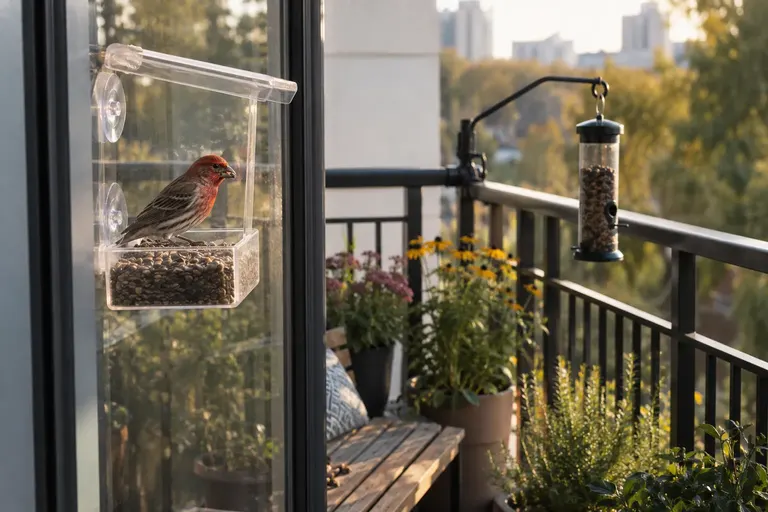
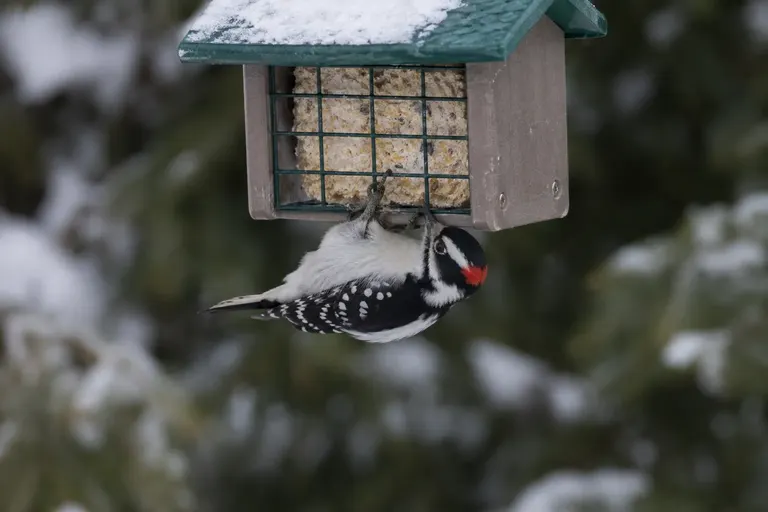
A small recycled-plastic tray with an aluminum screen floor that mounts on your window with suction cups. The cups slip into keyholes on the back, so the tray lifts off for cleaning without peeling the cups off the glass.
Who it suits: People who want cardinals, chickadees and woodpeckers feeding right outside the glass.
Key specs: 8.5 by 7 by 3.2 inches, 2 lb, aluminum screen, stainless steel fasteners, model SNWM100, made in Chilton, Wisconsin.
Drawbacks: No roof, and a 2 lb tray asks a lot of suction cups. Glass must be smooth and very clean.
Skip it if: Your windows are screened or textured.
Platform feeder comparison table
| Feeder | Mount | Size (in) | Weight | Floor | Roof | Made in USA |
|---|---|---|---|---|---|---|
| Birds Choice Hanging Platform, Large | Hanging | 15.25 x 12.25 x 2.625 | 2.5 lb | Aluminum screen | No | Yes |
| Birds Choice Fly-Thru, Medium | Pole or legs | 17.5 x 12.75 x 10.5 | 8 lb | Removable steel screen | Yes | Yes |
| Birds Choice Seed Catcher, Large | Pole | 21.5 x 21.5 x 2.625 | 8.5 lb | Two screens | No | Yes |
| Duncraft Eco-Strong Ground | Legs | 13.25 x 13.25 x 5 | Not listed | Metal mesh | No | Yes |
| Aspects Bigfoot Tray | Under tube | 12 x 12 x 1 | Not listed | Solid polycarbonate | No | Yes |
| Birds Choice Window Mount | Suction cups | 8.5 x 7 x 3.2 | 2 lb | Aluminum screen | No | Yes |
What should you look for in a platform feeder?
Platform feeders look simple, but a few details separate the ones that stay clean and useful from the ones that turn into soggy seed trays.
Floor: screen beats solid
A screen or mesh floor lets rain run straight through and lets air dry the seed. Solid floors, even with a few drain holes, hold water in corners and around the edges. If you like the look of a solid wooden tray, use it under a roof or only on dry days. Removable screens are a bonus, because you can scrub them flat in a sink or tub.
Frame material: recycled plastic, cedar or metal
Recycled poly lumber, used by Birds Choice and Duncraft, does not absorb water, rot or need sealing, and both makers say it resists cracking and fading. It is heavier than wood. Cedar looks natural and is lighter, but it weathers, can crack, and soaks up droppings and spilled oils that make it harder to sanitize. Powder-coated metal is thin and strong but can rust where the coating chips.
Size: match the tray to the birds
A tray around 10 to 12 inches across suits a few cardinals, chickadees and finches. Larger trays in the 15 to 20 inch range have room for doves, jays and small flocks of juncos, but they also hold more food for grackles and squirrels. Bigger is not always better: a large tray tempts you to pour out more seed than birds will eat before it spoils.
Rim height and perching edge
A low rim keeps seed from blowing or being kicked off, while still letting birds see around them. Birds are more comfortable at feeders where they can spot approaching predators, so avoid deep, boxy trays.
Mounting hardware
Check what is included. Hanging trays should come with rods or chains that keep them level. Pole-mounted platforms usually need a flange sized to your pole, and it is often sold separately, as with the Birds Choice Fly-Thru and Seed Catcher.
Which birds come to platform feeders?
Project FeederWatch describes platform feeders as attracting most feeder birds, and notes that low platforms work especially well for juncos, doves and sparrows. In practice, expect:
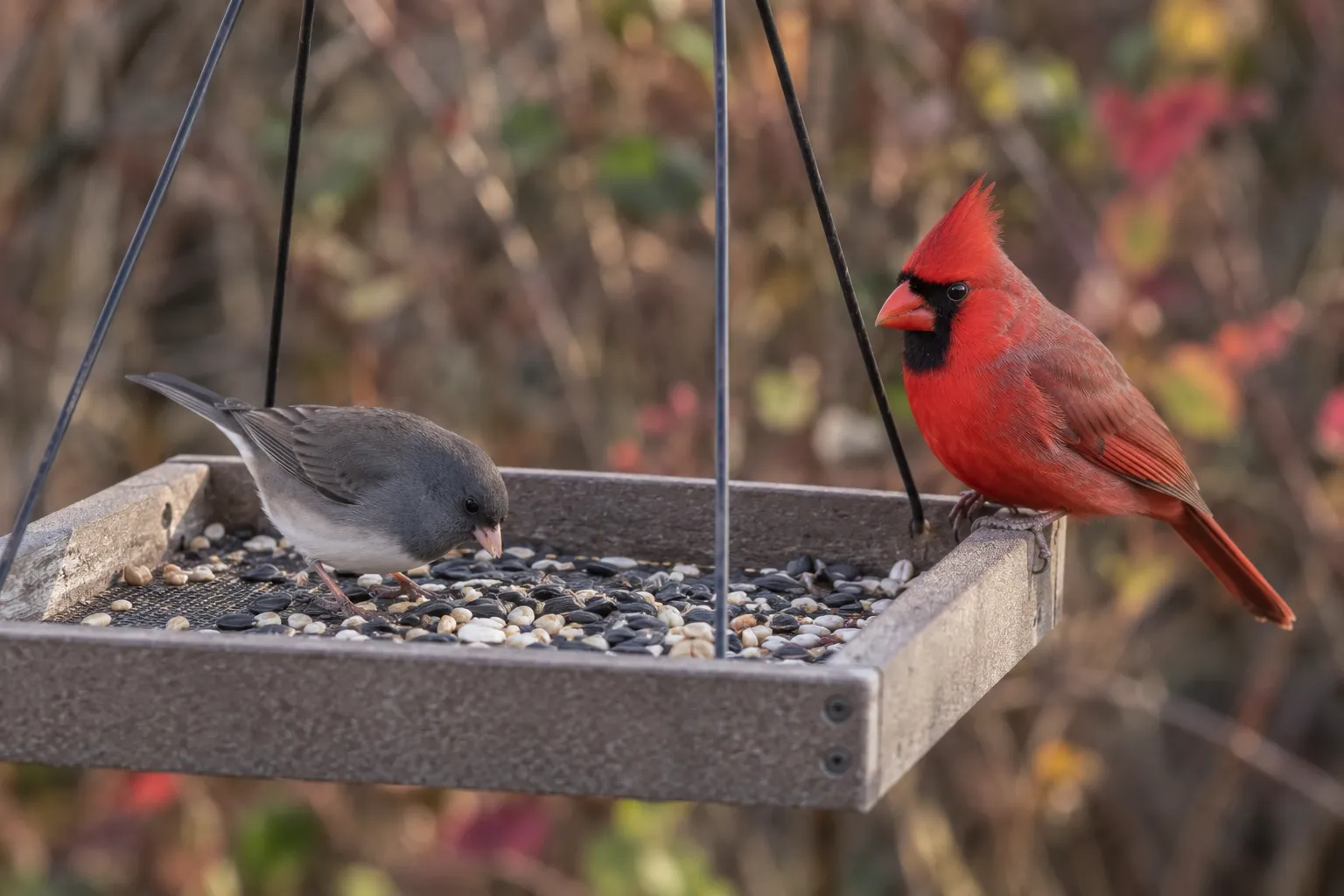
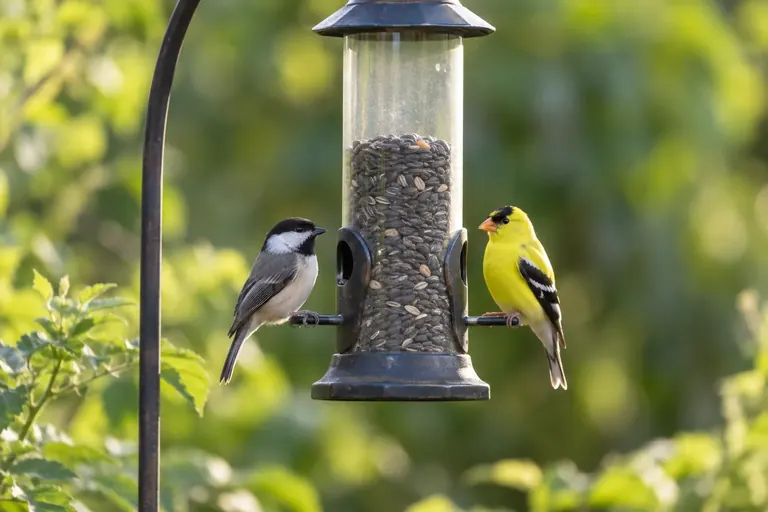
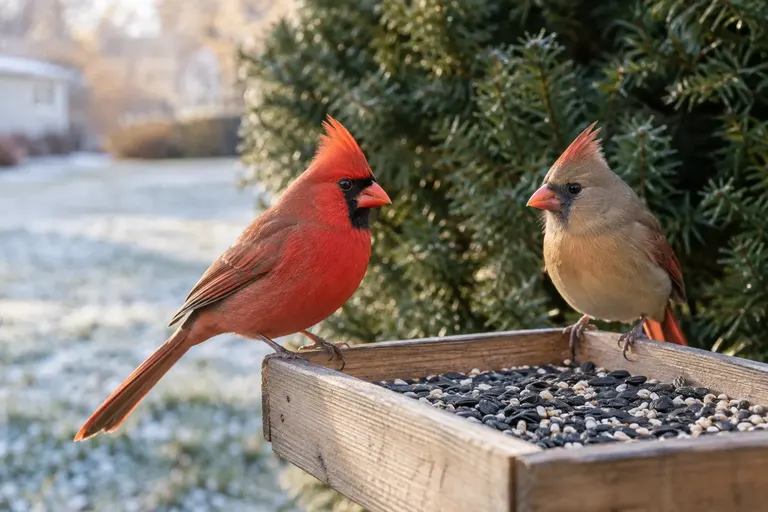
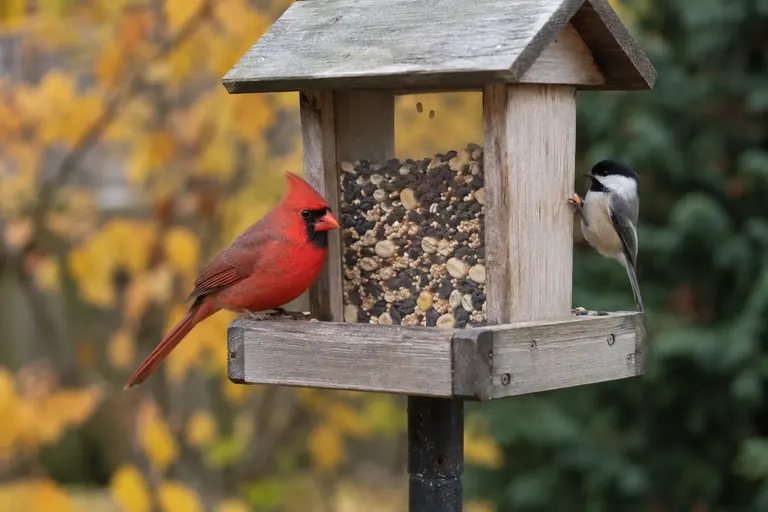
- Cardinals and grosbeaks: Northern Cardinals prefer a stable place to land, which is why many cardinal fans swear by trays.
- Jays: Blue Jays and Steller’s Jays like trays with whole peanuts.
- Ground feeders: Mourning Doves, Dark-eyed Juncos, White-throated and Song Sparrows, towhees.
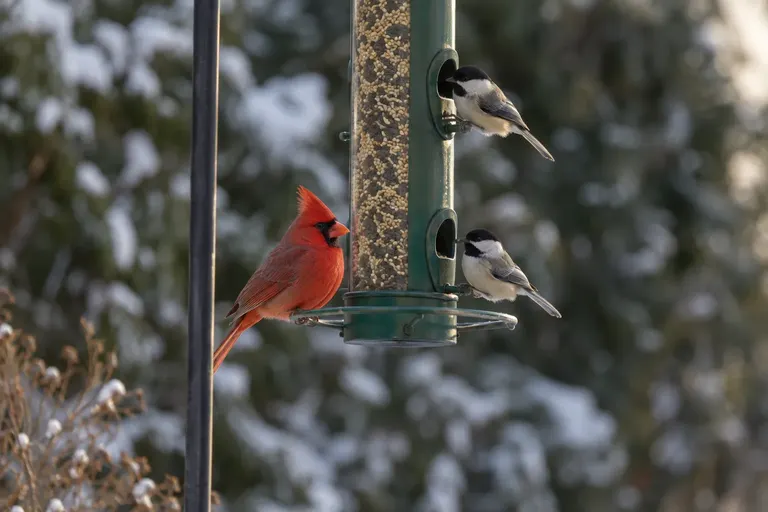
- Small clingers: Chickadees, titmice and nuthatches will grab a seed and fly off.
- Insect eaters: Bluebirds, wrens and robins will come for mealworms. See our picks for the best dried mealworms.
The same openness brings less welcome visitors: grackles, starlings, House Sparrows, pigeons and squirrels. Choosing your food carefully helps. Safflower attracts cardinals but is less popular with grackles and many squirrels.
Hanging, pole or ground: which platform style is best?
Hanging trays are the easiest to set up and move. They swing in wind, and squirrels can drop onto them from branches above.
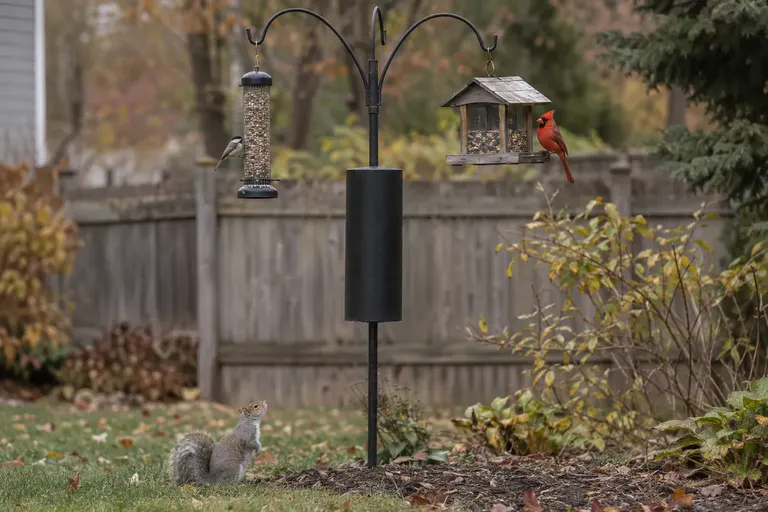
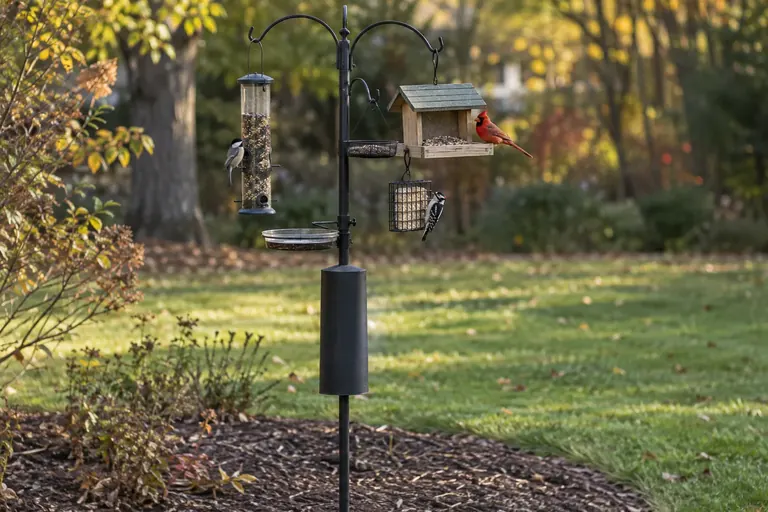
Pole-mounted platforms are the most stable and the easiest to protect. A properly sized baffle below keeps squirrels and raccoons from climbing. They also hold bigger trays and covered fly-through designs.
Ground platforms sit a few inches up on legs. They attract the ground-feeding birds that avoid everything else, but they are open to cats, rodents and other animals. Place them close enough to cover that birds feel safe, but not so close that a cat can hide within pouncing distance.
If you see hawks picking off birds at an open platform, our guide on how to stop hawks from hunting at your feeder explains what helps.
What food should you put on a platform feeder?
Platforms are the most flexible feeders, but that does not mean anything goes.
- Black oil sunflower seed is the best single choice. Almost every visitor eats it. See our guide to black oil sunflower seed.
- Safflower for cardinals with fewer grackles and squirrels.
- White proso millet on low platforms for juncos, doves and native sparrows. It also attracts House Sparrows, so use it sparingly if they are a problem.
- Shelled or in-shell peanuts for jays, woodpeckers and titmice.
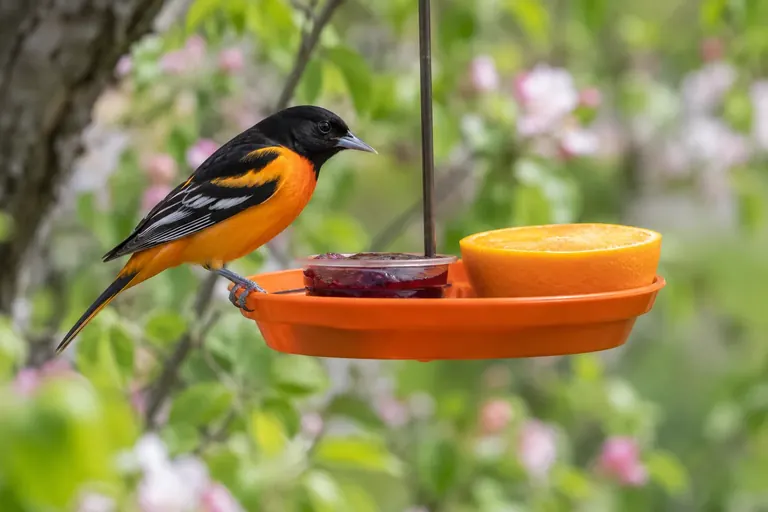
- Mealworms, fruit or grape jelly in shallow dishes for bluebirds, wrens and orioles.
Put out only what birds will finish in a day or two. A deep pile of seed on an open tray quickly becomes wet, trampled and fouled.
How to clean a platform feeder
Birds stand in the food on a platform, so droppings and seed mix together. That makes cleaning more important than with any other feeder type.
- Every day or two: Brush off old seed, hulls and droppings. Always remove seed that has been rained on.
- Weekly: Remove the screen if it lifts out, and scrub the frame and screen with hot, soapy water and a stiff brush.
- Every week or two, or if you see sick birds: Soak in a 1 to 9 bleach-to-water solution, as Project FeederWatch recommends, then rinse well.
- Let it dry completely before refilling.
- Rake or sweep the ground beneath the feeder to remove old seed and droppings.
Screened platforms are easier to clean than solid ones, since debris falls through. Our guide on how to clean a bird feeder covers schedules for every feeder type.
Common mistakes with platform feeders
- Choosing a solid tray without drainage. Water pools, seed rots and birds can get sick.
- Overfilling. A small scatter is better than a pile.
- Leaving seed out overnight on ground platforms. It feeds rodents and raccoons.
- Hanging trays under branches. Squirrels will drop onto them.
- Ignoring cleaning. Open trays need more attention than tube or hopper feeders.
The bottom line
The Birds Choice Hanging Platform Feeder, Large is the best place to start for most yards. Choose the Fly-Thru if you live somewhere wet, the Seed Catcher if you already have a pole system, and the Duncraft Eco-Strong Ground Platform if juncos, doves and sparrows are what you want to see. Keep it drained, keep it clean, and keep portions small.
Sources
- Project FeederWatch: Feeding Birds
- Project FeederWatch: House Finch Eye Disease and Feeder Cleaning
- Birds Choice: Hanging Platform Bird Feeder, Large
- Birds Choice: Fly-Thru Bird Feeder, Medium
- Birds Choice: Seed Catcher Platform Bird Feeder, Large
- Duncraft: Eco-Strong Ground Platform Feeder
- Birds Choice: Aspects Quick Clean Bigfoot 12 in Seed Tray
Frequently asked questions
What birds use platform feeders?
Nearly all common feeder birds will use a platform. Project FeederWatch notes platforms attract most feeder species, and low platforms near the ground are especially good for juncos, doves and sparrows. Northern Cardinals, jays, grosbeaks, chickadees, titmice and nuthatches also visit. Tray feeders are also the easiest way to offer mealworms, fruit and nuts.
Do platform feeders need drainage?
Yes. Project FeederWatch recommends platforms with drainage holes so water does not collect. Wet seed spoils and grows mold quickly, which can make birds sick. A screen or mesh floor drains best. Solid trays without holes should be avoided or used only under a roof, and emptied after every rain.
How often should you clean a platform feeder?
More often than a tube feeder, because droppings end up mixed with seed on an open tray. Remove old or wet seed every day or two and scrub the tray weekly. Project FeederWatch suggests soaking feeders in 1 part bleach to 9 parts water, rinsing well and letting them dry before refilling.
How do I keep squirrels off a platform feeder?
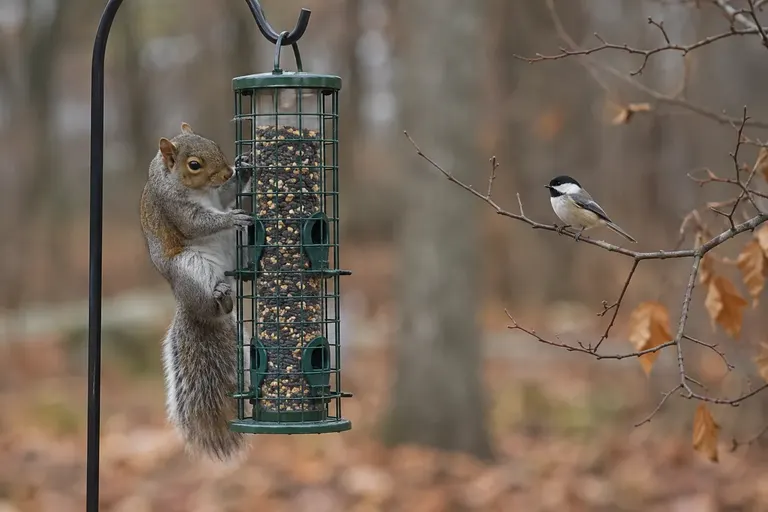
Platforms are the hardest feeders to protect because the food is open. Mount the platform on a pole with a properly sized baffle, far enough from branches, fences and roofs that squirrels cannot jump on. Offering safflower instead of sunflower also helps, since many squirrels leave safflower alone.
Should a platform feeder hang or sit on a pole?
Both work. Hanging trays are cheap and easy to move but swing in wind and are easy for squirrels to reach from branches. Pole-mounted platforms are steadier, can be baffled, and hold larger trays. Low ground platforms suit juncos and doves but are more exposed to cats and nighttime visitors.