Best Hummingbird Feeders (Easy to Clean, No Leaks)
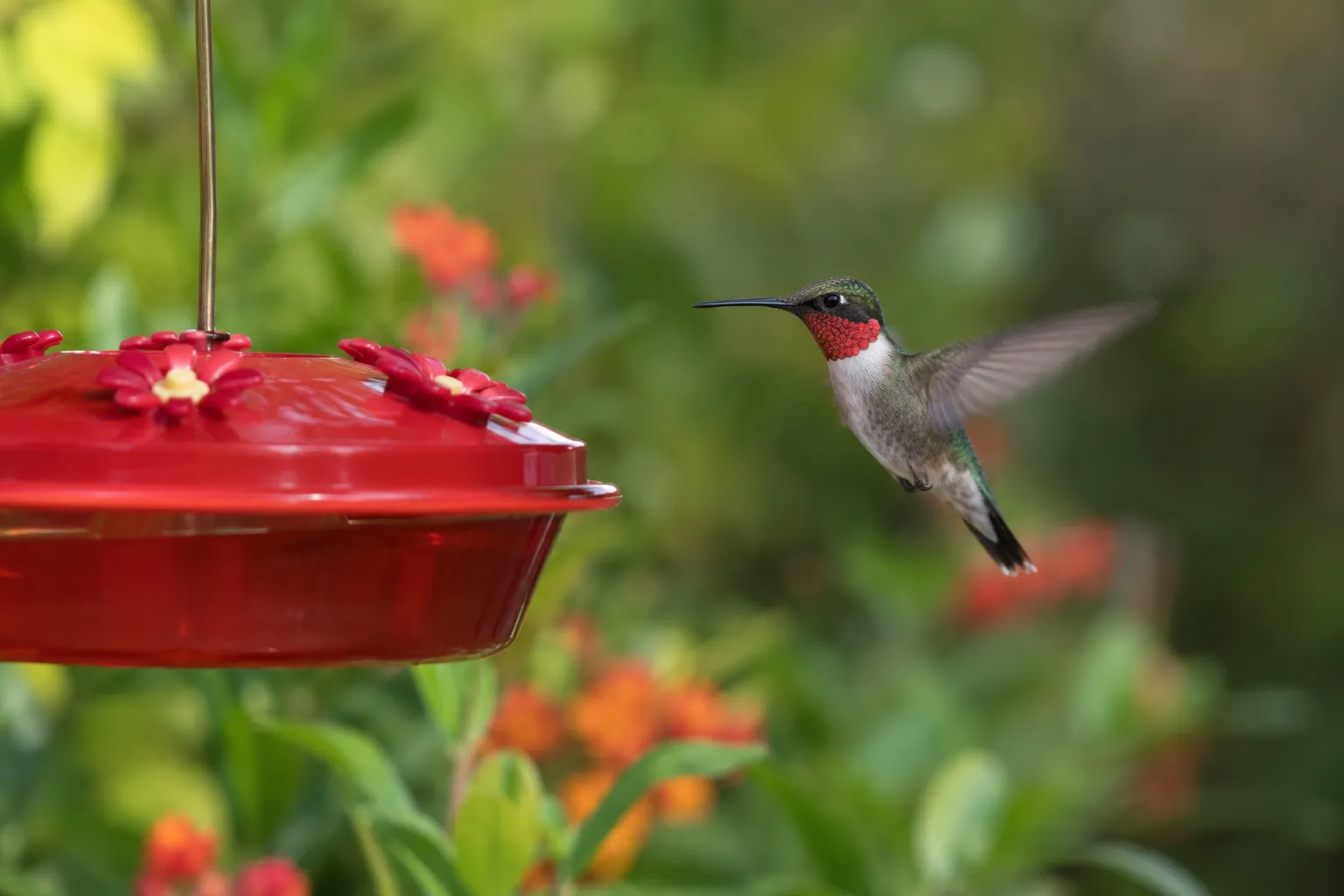
The best hummingbird feeder for most yards is a saucer design like the Aspects HummZinger HighView: it will not drip, has an ant moat and cleans in minutes.
If you buy through links on this page we may earn a commission, at no cost to you. It never decides what we recommend. How we earn
In this article
- Quick picks
- How we chose
- Aspects HummZinger HighView 12 oz: best overall
- More Birds Bird Health+ Garnet Glass 20 oz: best glass bottle
- First Nature 3055 32 oz: best high capacity
- Best-1 Hummingbird Feeder 32 oz: best made-in-USA glass
- Perky-Pet 203CPBN Pinch-Waist Glass 8 oz: best budget
- Aspects Jewel Box Window Feeder 8 oz: best window feeder
- Hummingbird feeder comparison table
- Saucer or bottle: which hummingbird feeder is better?
- What makes a hummingbird feeder easy to clean?
- How often should you change hummingbird nectar?
- How do you keep ants and bees off a hummingbird feeder?
- Where should you hang a hummingbird feeder?
- Which hummingbirds will visit your feeder?
- Common mistakes with hummingbird feeders
- The bottom line
- Sources
- Frequently asked questions
The best hummingbird feeder for most yards is a saucer design, and the Aspects HummZinger HighView 12 oz is the one we would start with. Saucers do not drip, they keep bees at a distance, and they come apart into two easy-to-scrub pieces. If you prefer glass, the More Birds Bird Health+ Garnet 20 oz is the better bottle feeder, and for busy western yards the First Nature 32 oz carries more nectar for less money.
Cleanliness decides whether hummingbirds keep coming back. Nectar spoils in a few days in summer heat, so the right feeder is the one you will clean without dreading it.
Quick picks
- Best overall: Aspects HummZinger HighView 12 oz. Leak-free saucer, built-in ant moat, lifetime guarantee.
- Best glass bottle: More Birds Bird Health+ Garnet Glass 20 oz. Wide mouth, flat detachable base, built-in moat.
- Best high capacity: First Nature 3055 32 oz. Ten ports, made in USA, simple to scrub.
- Best made-in-USA glass: Best-1 Hummingbird Feeder 32 oz. Glass bottle, no O-ring, replacement parts available.
- Best budget: Perky-Pet 203CPBN Pinch-Waist Glass 8 oz. Cheap and easy to fill, but less durable.
- Best window feeder: Aspects Jewel Box 8 oz. Suction-cup saucer for close-up viewing.
Aspects HummZinger HighView 12 oz
A two-piece saucer with a built-in ant moat, raised perch and no vacuum seal to fail, so it does not drip in sun or wind.
- Best for
- Most backyards, especially anyone who hates scrubbing bottles.
- Skip it if
- You get dozens of hummingbirds a day and need to refill less often.
- Capacity
- 12 oz
- Ports
- 4
- Ant moat
- Built in
- Material
- UV-stabilized polycarbonate
More Birds Bird Health+ Garnet Glass Hummingbird Feeder 20 oz
A wide-mouth glass bottle on a detachable flat base, with bee guards and a built-in ant moat.
- Best for
- People who prefer glass and like to see the nectar level at a glance.
- Skip it if
- Your feeder hangs in full afternoon sun, where any inverted bottle is more prone to drip.
- Capacity
- 20 oz
- Ports
- 5 with bee guards
- Ant moat
- Built in
- Size
- 10 x 8 x 8 in
First Nature 3055 32 oz Hummingbird Feeder
A large, simple, made-in-USA feeder with ten ports and a wide-mouth reservoir that is easy to fill and scrub.
- Best for
- Busy yards in late summer migration or in the West, where many birds share one feeder.
- Skip it if
- You only see one or two birds, since 32 oz of nectar will spoil before they drink it.
- Capacity
- 32 oz
- Ports
- 10
- Made in
- USA
Best-1 Hummingbird Feeder 32 oz
A clear glass bottle on a separable red base with no O-ring to wear out, long favored at busy feeding stations.
- Best for
- High-traffic yards where you want glass and replaceable parts.
- Skip it if
- You want a small feeder you can refill with a single cup of nectar.
- Capacity
- 32 oz (16 oz version also sold)
- Feeding stations
- 8
- Bottle
- Glass
- Made in
- USA
Perky-Pet 203CPBN Pinch-Waist Glass Hummingbird Feeder
An inexpensive 8 oz glass feeder with a wide mouth, bee guards and a top ant moat.
- Best for
- First-time hummingbird feeders and anyone buying a second or third feeder to spread birds out.
- Skip it if
- You want a feeder that lasts many seasons; owners often report base cracks over time.
- Capacity
- 8 oz
- Ports
- 4
- Height
- 8.38 in
- Weight
- 0.7 lb
Aspects Jewel Box Window Hummingbird Feeder 8 oz
A made-in-USA saucer that mounts to glass with a suction-cup bracket, so hummingbirds feed inches from your window.
- Best for
- Close-up viewing from a kitchen or office window.
- Skip it if
- Your window gets direct afternoon sun, which spoils nectar fast.
- Capacity
- 8 oz
- Ports
- 3
- Size
- 8.5 x 6 x 2.2 in
- Weight
- 0.68 lb
How we chose
We have not hung these feeders ourselves yet, so this guide is built on research, not hands-on testing. We compared manufacturer specifications for capacity, port count, materials and cleaning instructions. We read retailer product pages to confirm each model is currently sold. We looked for consistent patterns in verified owner feedback, especially complaints about leaks, cracking and hard-to-clean corners. And we checked feeder design against guidance from Cornell Lab of Ornithology, Audubon and Penn State Extension on nectar spoilage and insect problems.
Our main filters were simple: every pick must come apart for cleaning, have no hidden crevices where mold can hide, and have a sensible answer to ants. Decorative feeders with narrow necks and sealed bases were ruled out, no matter how pretty.
Aspects HummZinger HighView 12 oz: best overall
The HummZinger HighView is a shallow, two-piece saucer. Nectar sits in the red base, and birds sip through four flower-shaped ports in the lid. There is no bottle and no vacuum, so nothing pushes nectar out when the sun warms the feeder.
Who it suits: Nearly everyone east of the Rockies, where one to a few Ruby-throated Hummingbirds is typical, plus West Coast yards that want a second or third small feeder.
Key specs: 12 oz capacity, 4 ports, built-in center ant moat, UV-stabilized polycarbonate, solid brass hook. The manufacturer lists it at 7.8 inches across and backs it with a lifetime guarantee.
Strengths:
- The raised perching rail puts birds slightly higher on the rim, which improves the view from a window.
- Raised flower edges are designed to shed rain away from the ports.
- The wide basin can be wiped clean with a sponge. No bottle brush needed.
- Aspects sells optional Nectar Guard tips, flexible membranes that fit in the ports to block insects.
Drawbacks: Owners commonly mention that the lid can be snug to separate until you learn the twist. At 12 oz it needs refilling more often in busy yards. Aspects feeders are now sold through Birds Choice, so you may see either name on the listing.
Skip it if: You regularly have more than six or eight hummingbirds squabbling over one feeder.
More Birds Bird Health+ Garnet Glass 20 oz: best glass bottle
Some people simply prefer glass. It does not stain or cloud the way plastic can, and you can see at a glance how much nectar is left. The Bird Health+ Garnet pairs a wide-opening glass bottle with a detachable flat base and a built-in ant moat.
Who it suits: Anyone who wants a traditional hanging bottle feeder but without the narrow neck that makes older designs hard to scrub.
Key specs: 20 oz, 5 feeding ports with bee guards, built-in ant moat, glass and BPA-free plastic, 10 inches tall by 8 inches wide.
Strengths:
- The wide bottle opening fits a hand-held brush all the way to the bottom.
- The flat base comes off, so you can reach the underside of each port.
- The manufacturer gives clear cleaning directions: every 3 to 5 days, with a soak in equal parts white vinegar and water.
Drawbacks: It is hand wash only, since the maker warns that dishwasher heat can damage parts. Like any inverted bottle, it can drip if hung in strong afternoon sun. Older listings of the Garnet feeder show a different port count, so check you are buying the Bird Health+ version with the moat.
Skip it if: You can only hang a feeder in full sun.
First Nature 3055 32 oz: best high capacity
The First Nature 3055 is a plain red base and a clear reservoir, and that plainness is the point. The base splits in two, the reservoir has a wide mouth, and the whole thing rinses clean fast. First Nature makes its feeders in the USA.
Who it suits: Yards with many hummingbirds, such as parts of the Southwest during migration, or eastern yards in late August when young birds and migrants pile up.
Key specs: 32 oz capacity, 10 feeding ports, wide-mouth reservoir, two-part base, made in USA.
Strengths:
- Ten ports let several birds feed at once, which can reduce chasing.
- The wide mouth makes pouring nectar in without spills much easier.
- It is inexpensive enough to buy two and rotate them, one clean and one in use.
Drawbacks: There is no built-in ant moat; First Nature sells an ant barrier separately, and some multi-packs include one. Owners sometimes report that the red plastic fades after a few seasons. The big capacity is also a trap: if birds do not drain it in two or three days, you are pouring spoiled nectar away.
Skip it if: You see only a handful of hummingbirds a day. Fill it halfway, or choose a 12 oz saucer.
Best-1 Hummingbird Feeder 32 oz: best made-in-USA glass
The Best-1 has been a fixture at busy hummingbird stations in the Southwest for years. It uses a glass bottle over a red base that separates for cleaning, and it does not rely on an O-ring, which is a common failure point on bottle feeders.
Who it suits: Serious hummingbird hosts who want glass, lots of capacity and the ability to buy replacement parts rather than a whole new feeder.
Key specs: 32 oz glass bottle, 8 feeding stations with a built-in perch, bee- and wasp-resistant design, made in the USA. A 16 oz version with 8 ports and a flat, leak-resistant feeding area is also sold.
Strengths:
- No O-ring to crack, stretch or lose.
- Glass cleans well and does not hold odors.
- Retailers stock replacement bases, which extends the life of the feeder.
Drawbacks: Retailers note that the red base can fade with long sun exposure, though it keeps working. A full 32 oz glass bottle is heavy, so hang it from a sturdy hook, not a thin branch.
Skip it if: You need something light and small for a balcony or a narrow window bracket.
Perky-Pet 203CPBN Pinch-Waist Glass 8 oz: best budget
This is the classic hardware-store hummingbird feeder: a pinch-waist glass bottle, four flower ports with bee guards, and an ant moat at the top. Its wide-mouth bottle is the reason it makes the list, because it is far easier to scrub than older narrow-necked Perky-Pet designs.
Who it suits: New hummingbird feeders, and anyone who wants extra small feeders to spread out territorial birds.
Key specs: 8 oz, 4 ports with perches, bee guards, built-in ant moat, 8.38 inches tall, 0.7 lb.
Strengths:
- Low cost makes it easy to run two or three feeders out of sight of each other.
- It fully disassembles, including the bee guards.
- Small capacity means you are less tempted to leave nectar out too long.
Drawbacks: Perky-Pet’s own product page carries owner reviews describing plastic bases cracking and leaking over time, and it notes replacement parts are not currently available. It is not dishwasher safe.
Skip it if: You want a feeder that lasts five seasons or more.
Aspects Jewel Box Window Feeder 8 oz: best window feeder
The Jewel Box takes the leak-free saucer idea and puts it on your window. A single suction-cup bracket holds the feeder against the glass, and a removable ant moat sits in the design. It is made in the USA.
Who it suits: Anyone who wants to watch hummingbirds feed from a kitchen table or desk. For more window options, see our guide to the best window bird feeders.
Key specs: 8 oz, 3 feeding ports, HighView perch, removable ant moat, polycarbonate, 8.5 by 6 by 2.2 inches, 0.68 lb. It accepts optional Nectar Guard tips.
Strengths:
- Birds feed within inches of the glass, and a feeder that close is unlikely to cause a high-speed window strike.
- Raised flowers shed rain, and the saucer design will not drip down your window.
- It lifts off the bracket for cleaning.
Drawbacks: Suction cups need a clean, smooth window and can let go in cold snaps. Three ports and 8 oz are modest. A window facing south or west can overheat nectar quickly.
Skip it if: Your only window gets hours of direct afternoon sun.
Hummingbird feeder comparison table
| Feeder | Type | Capacity | Ports | Ant moat | Material | Made in USA |
|---|---|---|---|---|---|---|
| Aspects HummZinger HighView | Saucer | 12 oz | 4 | Built in | Polycarbonate | Yes, per Birds Choice |
| More Birds Bird Health+ Garnet | Bottle | 20 oz | 5 | Built in | Glass, plastic | Not stated |
| First Nature 3055 | Bottle | 32 oz | 10 | Sold separately | Plastic | Yes |
| Best-1 32 oz | Bottle | 32 oz | 8 | No | Glass, plastic | Yes |
| Perky-Pet 203CPBN | Bottle | 8 oz | 4 | Built in | Glass, plastic | Not stated |
| Aspects Jewel Box | Window saucer | 8 oz | 3 | Removable | Polycarbonate | Yes |
Saucer or bottle: which hummingbird feeder is better?
For most people, a saucer. The reason is physics. In an inverted bottle feeder, nectar is held in by a partial vacuum. When the sun warms the air pocket at the top of the bottle, that air expands and pushes nectar out through the ports. Cornell Lab’s All About Birds specifically warns against hanging bottle feeders in the sun for this reason. A saucer has no trapped air, so it cannot drip that way.
Saucers have a second advantage: nectar sits well below the ports, out of reach of most bees and wasps, while a hummingbird’s long tongue reaches it easily. Bottle feeders keep nectar right up at the port opening, where insects can sip.
Bottle feeders still have a place. They hold more, they let you see nectar levels, and glass versions stay clear for years. If you choose one, pick a wide-mouth bottle with a base that comes apart, and hang it in shade.
What makes a hummingbird feeder easy to clean?
Nectar is sugar water, and sugar water ferments and grows mold quickly in warm weather. A feeder that is hard to clean will be cleaned less often, and that is bad for the birds. Look for these features:
- Wide openings. You should be able to fit a sponge or brush into every part that touches nectar.
- Few parts, all removable. Two-piece saucers are the simplest. Bottle feeders should have a base that separates from the port ring.
- No decorative crevices. Molded flowers, twisted glass and fake leaves trap residue.
- Removable bee guards and port tips. Mold often grows inside the ports first.
- Clear cleaning guidance from the maker. Most manufacturers say hand wash only, because dishwasher heat can warp plastic.
For a full routine, including how to deal with black mold in ports, see how to clean a bird feeder, and how often.
A simple hummingbird feeder cleaning routine
- Pour out old nectar. Never top off old nectar with fresh.
- Take the feeder completely apart.
- Scrub every surface with hot water and a small brush. Audubon suggests hot water with a weak vinegar solution or hydrogen peroxide, and notes that dish soap can leave a residue.
- Soak ports and bee guards if you see black spots, then scrub again with a narrow port brush.
- Rinse thoroughly and let parts air dry before reassembling.
- Refill with fresh 4:1 nectar that has cooled to room temperature.
Owning two identical feeders makes this far easier. Hang the clean one while the dirty one soaks.
How often should you change hummingbird nectar?
Audubon’s guidance ties the schedule to temperature: daily or every other day in hot weather, about every three days in temperate weather, and twice a week when it is cool. Cornell Lab’s advice is similar, with a maximum of two to three days and daily changes in heat. If the nectar looks cloudy, stringy or has floating specks, change it now.
This is why capacity is a trap. A 32 oz feeder is only useful if your birds drink most of it before it spoils. Many people are better served by filling a large feeder halfway, or by using two or three small feeders.
Make nectar with 1 part refined white sugar to 4 parts water, and skip the red dye. Our 4:1 hummingbird nectar recipe covers the details, including why honey and brown sugar are unsafe.
How do you keep ants and bees off a hummingbird feeder?
Ants: Use a feeder with a built-in moat or add a separate ant moat on the hanger above the feeder. Fill it with plain water. Do not put oil, grease or insecticide in the moat or on the hanger, because it can end up on birds’ feathers.
Bees and wasps: Saucer feeders are the strongest defense. Cornell Lab notes that yellow bee guards can actually attract bees, so red ports are better. If a bottle feeder drips, fix the drip first, since spilled nectar draws insects. Moving the feeder a few feet often breaks the habit of wasps that have found it.
Where should you hang a hummingbird feeder?
Shade is the priority, especially in the afternoon. Shade slows spoilage and prevents bottle feeders from dripping. Beyond that:
- Hang it where you can see it, but close to shrubs or small trees so birds have a perch between visits.
- Keep it within a few steps of the house. A feeder you can reach easily is a feeder you will clean.
- If one male hummingbird guards the feeder, add a second feeder out of his line of sight, such as around a corner of the house.
- Put your first feeder out about a week before hummingbirds usually arrive in your area, as Audubon suggests.
Our guide on where to put a bird feeder covers height, cover and window safety in more depth. If birds keep striking glass near your feeders, read how to stop birds hitting windows.
Which hummingbirds will visit your feeder?
East of the Great Plains, you will almost certainly be feeding Ruby-throated Hummingbirds, which arrive in spring and leave for Central America in fall. Our guide on attracting Ruby-throated Hummingbirds covers timing and plants. Along the Pacific Coast, Anna’s Hummingbirds live year-round, so feeders there stay up through winter; see how to attract Anna’s Hummingbirds. The West and Southwest host many more species, which is why large feeders make more sense there.
Leaving feeders up in fall will not keep hummingbirds from migrating. Audubon notes that their departure is driven by day length, not food, and late feeders can help stragglers.
Common mistakes with hummingbird feeders
- Buying for capacity instead of cleanability. A big feeder you clean once a week is worse than a small one you clean every three days.
- Hanging a bottle feeder in full sun. This is the top cause of drips and fast spoilage.
- Using red dye or store-bought red nectar. It is unnecessary. The red on the feeder does the job.
- Topping off old nectar. Always empty, clean and refill.
- Putting oil or grease on the hanger for ants. Use a water moat instead.
- One feeder for a territorial bird. A dominant male can keep others away. Two or three feeders out of sight of each other spreads the peace.
The bottom line
Pick the feeder that is easiest for you to clean, then hang it in shade. For most people that means the Aspects HummZinger HighView saucer. If you want glass, choose the More Birds Bird Health+ Garnet, and if you have a crowd, the First Nature 32 oz or Best-1 32 oz carries more nectar. For a broader look at feeder types, see our guide to the best bird feeders for your backyard.
Sources

Frequently asked questions
What is the easiest hummingbird feeder to clean?
Saucer feeders are generally the easiest because the base and lid separate into two shallow pieces with no narrow bottle neck. The Aspects HummZinger HighView is a common example. Look for a wide opening, no hidden crevices under the ports, and parts you can reach with a small brush. Avoid feeders with decorative glass shapes or bases that cannot be taken apart.
Why does my hummingbird feeder leak?
Most leaks come from inverted bottle feeders. As sun warms the air trapped in the bottle, the air expands and pushes nectar out through the ports. A worn or missing gasket, a tilted hang, and wind can add to the problem. Moving the feeder into shade or switching to a saucer feeder, which has no vacuum seal, usually solves it.
How often should I change hummingbird nectar?
Audubon suggests changing nectar daily or every other day in hot weather, about every three days in mild weather, and roughly twice a week when it is cool. Cloudy nectar, floating specks or black mold mean it is overdue. Clean the feeder each time you change the nectar, not just when it looks dirty.
Do bee guards on hummingbird feeders work?
They help, but port design matters more. Saucer feeders keep nectar below the reach of bees and wasps, which is why they tend to have fewer insect problems. Cornell Lab's All About Birds also notes that yellow bee guards can actually attract bees, so red ports are the better choice.
Should hummingbird nectar be red?
No. Use plain white sugar and water at 1 part sugar to 4 parts water. Audubon, Cornell Lab and Penn State Extension all advise against red dye, which adds nothing the birds need. The red color on the feeder itself is enough to get their attention.