Best Bird Seed for Cardinals
The best bird seed for cardinals is black oil sunflower or a sunflower and safflower blend. Here is which bag to buy for squirrels, grackles, mess or budget.
If you buy through links on this page we may earn a commission, at no cost to you. It never decides what we recommend. How we earn
In this article
- Quick picks
- How we chose
- What do cardinals eat?
- Best overall: Wagner’s Four Season Black Oil Sunflower
- Best cardinal blend: Wagner’s 62032 Cardinal Blend
- Best large bag blend: Lyric Cardinal Premium Sunflower and Safflower Mix
- Best for grackles and squirrels: Wagner’s 57075 Safflower Seed
- Thinner-hulled safflower: Lyric Golden Safflower
- Best hot seed: Cole’s Cajun Cardinal Blend
- Best no-mess option: Lyric Sunflower Kernels
- Is black oil sunflower or safflower better for cardinals?
- How to switch cardinals to safflower
- What to avoid in a cardinal seed mix
- Which feeder is best for cardinals?
- Will cardinals come to my yard?
- Should you add mealworms or fruit for cardinals?
- Seasonal feeding for cardinals
- Common mistakes
- Comparison table
- Sources
- Frequently asked questions
For most yards, the best bird seed for cardinals is plain black oil sunflower, and Wagner’s Four Season bag, listed at a minimum of 14% protein and 24% fat, is an easy, filler-free choice. If grackles, starlings or squirrels are emptying your feeder, switch to safflower or a sunflower and safflower blend such as Wagner’s Cardinal Blend. For a clean patio, pay more for shelled sunflower kernels.
Quick picks
- Best overall: Wagner’s Four Season Black Oil Sunflower.
- Best cardinal blend: Wagner’s 62032 Cardinal Blend.
- Best large bag blend: Lyric Cardinal Premium Sunflower and Safflower Mix.
- Best for grackles and squirrels: Wagner’s 57075 Safflower Seed.
- Thinner-hulled safflower: Lyric Golden Safflower.
- Best hot seed: Cole’s Cajun Cardinal Blend.
- Best no-mess option: Lyric Sunflower Kernels.
Wagner's Four Season Black Oil Sunflower
One ingredient, thin shells and high fat: the seed Cornell's FeederWatch calls the preferred food of the widest range of feeder birds, cardinals included.
- Best for
- Most yards, most of the year.
- Skip it if
- Squirrels, grackles or House Sparrows already swarm your feeders.
- Ingredient
- Black oil sunflower
- Protein / fat (min)
- 14% / 24%
Wagner's 62032 Cardinal Blend
A short, filler-free recipe of black oil sunflower, safflower and striped sunflower, all seeds cardinals crack easily.
- Best for
- A platform or hopper feeder aimed at cardinals and other big-billed birds.
- Skip it if
- You go through seed fast; 6 lb bags cost more per pound than a large sack of plain sunflower.
- Ingredients
- Black oil sunflower, safflower, striped sunflower
- Protein / fat (min)
- 14% / 17%
- Bag
- 6 lb
Lyric Cardinal Premium Sunflower and Safflower Mix
A blend that is over 70% sunflower in three forms, plus safflower and buckwheat, sold in an 18 lb bag.
- Best for
- Busy feeders where a blend needs to last a few weeks.
- Skip it if
- You want no filler at all; buckwheat is eaten by fewer birds than sunflower.
- Main ingredients
- Black oil, striped and hulled sunflower, safflower, buckwheat
- Bags
- 3.75 lb, 18 lb
Wagner's 57075 Safflower Seed
Straight safflower, the white seed cardinals eat readily but that grackles, starlings and many squirrels tend to leave alone.
- Best for
- Yards overrun by blackbirds or squirrels.
- Skip it if
- You want the most species possible; many small birds prefer sunflower.
- Seed
- Safflower
- Bag
- 5 lb
Lyric Golden Safflower
A golden safflower variety that Lyric says has a 40% thinner hull and more protein and fat than white safflower.
- Best for
- Safflower feeders where you want easier cracking and less hull waste.
- Skip it if
- Your birds already take white safflower happily; owner feedback on the switch is mixed.
- Protein (min)
- 18%
- Bags
- 5 lb, 12 lb
Cole's Cajun Cardinal Blend
Sunflower meats and safflower coated with habanero pepper, which birds do not feel but mammals do.
- Best for
- Yards with determined squirrels that ignore safflower.
- Skip it if
- You handle seed with bare hands and touch your eyes; wear gloves.
- Ingredients
- Sunflower meats, safflower, habanero chili, safflower oil
- Bags
- 5, 10, 20 lb
Lyric Sunflower Kernels
Shelled sunflower only, so there are no hulls under the feeder and cardinals eat every piece.
- Best for
- Patios, decks and feeders over lawn or garden beds.
- Skip it if
- Your feeder is open to rain; hulled seed spoils faster when wet.
- Ingredient
- Shelled sunflower seed
- Bags
- 5 lb, 25 lb
How we chose
We have not physically tested these seeds. This list is based on research: ingredient lists and guaranteed analyses from manufacturers and major retailers, feeding guidance from the Cornell Lab of Ornithology and Project FeederWatch, and patterns in verified owner feedback. We favored products whose ingredients match what cardinals actually eat, and we avoided mixes padded with milo, red millet or cracked corn, which Project FeederWatch notes often go to waste. We also looked for recurring complaints, such as sticks and debris in bags, and we mention them where owners report them consistently.
What do cardinals eat?
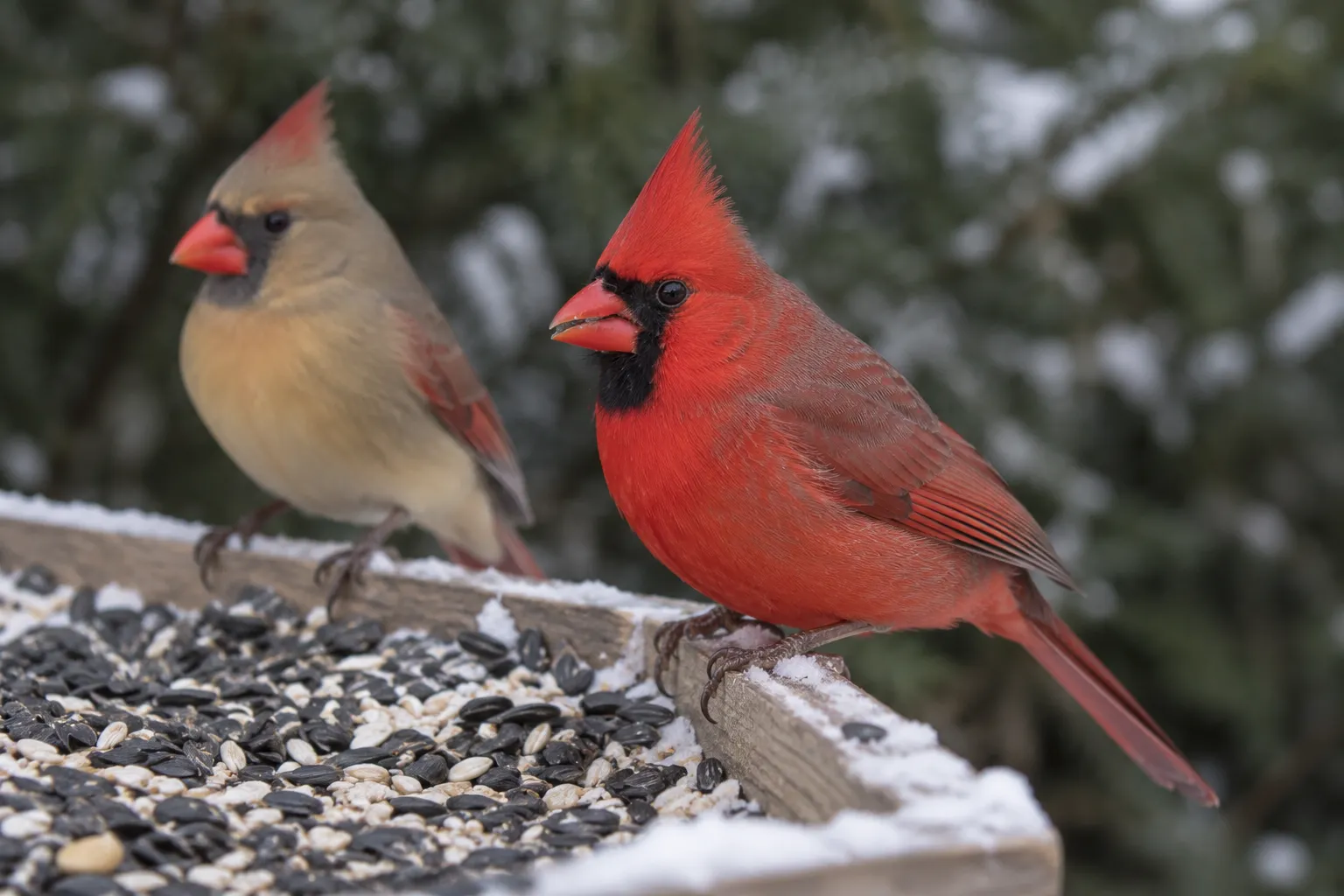
The Cornell Lab describes Northern Cardinals as eating mainly seeds and fruit, with insects added in spring and summer. Nestlings are fed mostly insects. At feeders, cardinals favor black oil sunflower seed. In the wild they eat dogwood berries, wild grape, sedge and grass seeds, and many other seeds and fruits.
Their bill is the key. A cardinal’s thick, cone-shaped bill is built to crack hard shells. That makes sunflower and safflower easy work, while it also makes cardinals less dependent on tiny seeds such as nyjer, which suit finches better.
Cardinals are also ground and low-shrub foragers. Cornell notes they hop through low branches and forage on or near the ground, often alongside juncos, sparrows, titmice and goldfinches in winter. That tells you where to put the food: on a sturdy hopper or tray, close to cover. Our Northern Cardinal guide covers plants and nesting in more depth.
Best overall: Wagner’s Four Season Black Oil Sunflower
This bag contains one thing: black oil sunflower seed. Retail listings show a guaranteed analysis of at least 14% protein and 24% fat, and it is sold in sizes from 10 lb to 40 lb. Wagner’s says it has made bird food in the USA since 1894.
Why it suits cardinals: black oil sunflower has thinner shells and more oil than striped sunflower, so cardinals crack it quickly and get more energy per seed. Project FeederWatch calls it the preferred food of a wide variety of birds, and Cornell names it as the cardinal’s feeder favorite.
Strengths: no filler, broad appeal to chickadees, titmice, nuthatches and finches, and low cost per pound in large bags.
Drawbacks: hulls pile up under the feeder. Squirrels, grackles and House Sparrows love it too. Several owners on major retail sites report sticks and plant debris in some bags, so a quick sift before filling a tube feeder is worthwhile.
Skip it if: blackbirds or squirrels already dominate your feeder. Start with safflower instead. Our guide to black oil sunflower seed explains why it is the one seed to start with.
Best cardinal blend: Wagner’s 62032 Cardinal Blend
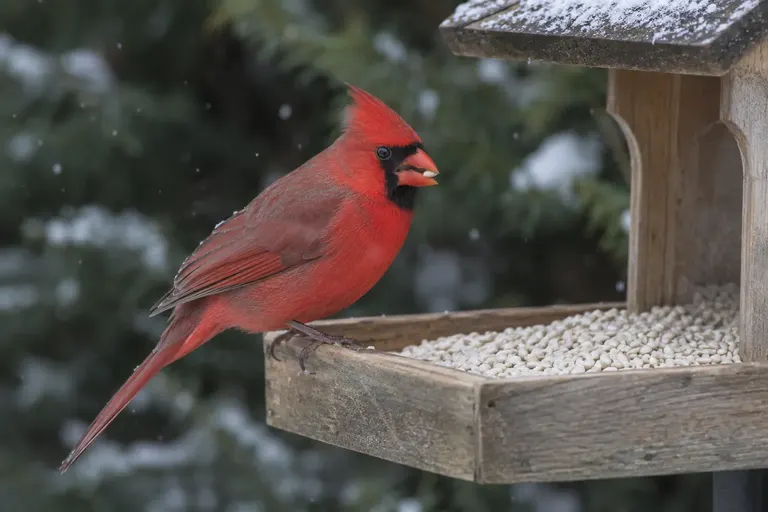
Wagner’s Cardinal Blend lists three ingredients: black oil sunflower, safflower and striped sunflower. The guaranteed analysis shows 14% protein and 17% fat, and it comes in a 6 lb bag. The maker suggests offering it in a platform feeder or scattered on the ground.
Why it suits cardinals: every seed in the bag is one cardinals eat. Striped sunflower has a thicker shell that small birds struggle with, which tilts the mix toward larger birds such as cardinals, jays and grosbeaks.
Strengths: no milo, millet or corn filler. Owner feedback frequently reports cardinals arriving quickly after switching to it.
Drawbacks: the 6 lb bag costs more per pound than bulk sunflower. As with Wagner’s sunflower, some owners report sticks in the bag.
Skip it if: you want the lowest cost per pound. A 25 lb bag of black oil sunflower plus a 5 lb bag of safflower gives you a similar mix for less.
Best large bag blend: Lyric Cardinal Premium Sunflower and Safflower Mix
Lyric’s Cardinal mix is over 70% sunflower, split between black oil sunflower, black striped sunflower and sunflower kernels, with safflower and buckwheat added. It is sold in 3.75 lb and 18 lb bags.
Why it suits cardinals: the high sunflower share and the safflower keep it attractive to cardinals, and the hulled kernels give smaller birds something easy to eat as well.
Strengths: the 18 lb bag lasts a busy feeder several weeks. Lyric lists grosbeaks, jays, chickadees and mockingbirds among the target species.
Drawbacks: buckwheat is less popular than sunflower, and some of it may end up on the ground. Lyric notes the recipe is adjusted as needed, so exact proportions can vary.
Skip it if: you want a blend with only sunflower and safflower.
Best for grackles and squirrels: Wagner’s 57075 Safflower Seed
This is plain safflower in a 5 lb bag. Safflower is a small, white, hard-shelled seed with a bitter taste that many squirrels and blackbirds dislike.
Why it suits cardinals: Birds and Blooms calls cardinals huge fans of safflower, and the seed also draws titmice, chickadees, house finches, grosbeaks and mourning doves. Grackles, starlings and blackbirds tend to avoid it.
Strengths: the best single tool for taking a feeder back from grackles. Cole’s, a seed maker, also describes safflower as close to sunflower in nutrition.
Drawbacks: Project FeederWatch notes most birds prefer sunflower over safflower, so total traffic can drop at first. Some squirrels learn to eat it anyway. Birds may take a week or more to accept it.
Skip it if: you have no pest problem. Sunflower draws more species. Our safflower seed guide explains how to switch.
Thinner-hulled safflower: Lyric Golden Safflower
Golden safflower is a different safflower variety. Lyric states that it has a 40% thinner hull than white safflower, with 25% more protein, 30% more fat and 15% more oil. Retail listings show a guaranteed analysis of at least 18% protein, in 5 lb and 12 lb bags.
Why it suits cardinals: the thinner hull means less work per seed and fewer hulls on the ground.
Strengths: keeps the squirrel and grackle resistance of safflower while making the seed easier to open.
Drawbacks: owner feedback is mixed. Some report birds taking it eagerly, and others report birds ignoring it in favor of white safflower. Some reviewers mention stems in bags.
Skip it if: your cardinals already eat white safflower well. There is little reason to change a food that works.
Best hot seed: Cole’s Cajun Cardinal Blend
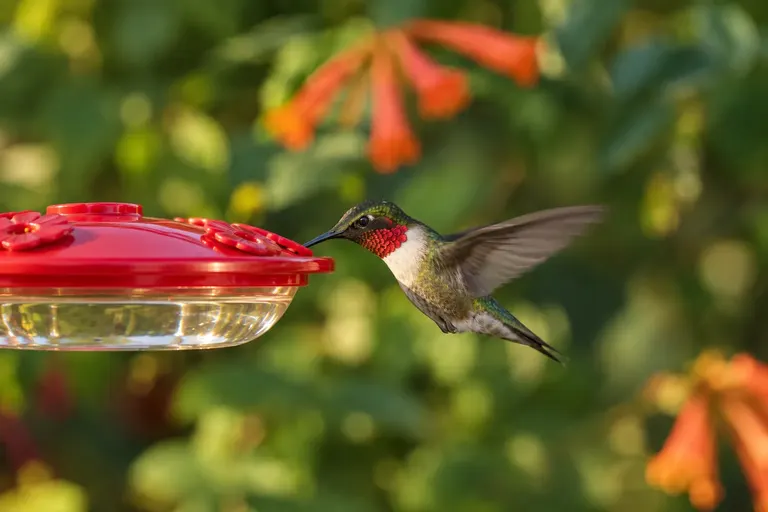
Cole’s Cajun Cardinal Blend lists sunflower meats, safflower, food-grade liquid habanero chili peppers and safflower oil. It comes in 5, 10 and 20 lb bags.
Why it suits cardinals: it is made of the two seeds cardinals like most, and the sunflower is already shelled. The pepper coating targets mammals. Research on pain receptors has shown that birds do not respond to capsaicin the way mammals do, so cardinals eat it normally while squirrels find it unpleasant.
Strengths: a strong option when squirrels ignore safflower alone, and hulled sunflower means less waste on the ground.
Drawbacks: hot seed usually costs more per pound than plain seed. Pepper residue can irritate eyes and skin, so wear gloves.
Skip it if: a baffle would solve your squirrel problem for less. Our guide to bird food squirrels won’t eat compares hot seed with other options.
Best no-mess option: Lyric Sunflower Kernels
Lyric Sunflower Kernels are shelled sunflower seed and nothing else. Lyric describes the product as 100% edible, sold in 5 lb and 25 lb bags, and lists cardinals, grosbeaks, buntings, chickadees, finches, nuthatches and woodpeckers among the birds it draws.
Why it suits cardinals: they eat the kernel instantly without cracking a hull, and nothing is left behind.
Strengths: no hulls on the patio, no seed sprouting in flower beds, and fast feeding for shy birds that grab a seed and leave.
Drawbacks: hulled seed costs more per pound, and without a shell it spoils faster in rain. Lyric recommends feeders that protect seed from weather.
Skip it if: your feeder is an open tray with no roof. For more options, see our roundup of the best no-mess bird seed.
Is black oil sunflower or safflower better for cardinals?
Black oil sunflower wins on appeal. It draws cardinals faster and brings more species with them. Safflower wins on selectivity. It keeps cardinals, titmice and finches coming while turning away many grackles, starlings and squirrels.
| Factor | Black oil sunflower | Safflower |
|---|---|---|
| Cardinal appeal | Very high | High |
| Other songbirds | Very wide range | Narrower range |
| Grackles and starlings | Eat it | Tend to avoid |
| Squirrels | Eat it | Many avoid it |
| Hull waste | Moderate | Low to moderate |
| Time to acceptance | Immediate | Can take a week or more |
A practical middle path: run one feeder with sunflower and one with safflower. If pests take over the sunflower feeder, pull it for a few weeks while the safflower feeder keeps cardinals coming.
How to switch cardinals to safflower
- Offer safflower alone. Birds and Blooms advises against mixing it with sunflower at the start, since birds will pick out the sunflower and leave the rest.
- Use a platform or hopper feeder. Safflower is a larger seed that suits these feeders.
- Start with a small bag. Local birds vary, and some yards see quick results while others do not.
- Give it at least a week. Cardinals are cautious with new foods.
- Keep sunflower elsewhere if you like. A distant feeder with sunflower can draw pests away while cardinals learn the new seed.
What to avoid in a cardinal seed mix
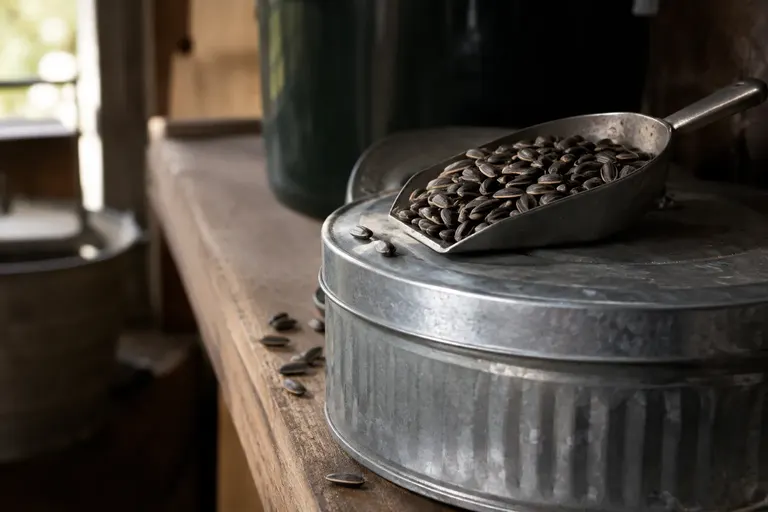
Cheap mixes are often mostly filler. Project FeederWatch notes that milo is not a favorite of most birds and often goes to waste, and eastern hosts in particular should avoid mixes heavy in it. Red millet and large amounts of cracked corn tend to draw House Sparrows, cowbirds, blackbirds and squirrels rather than cardinals.
Read the ingredient list, which is ordered by weight. If sunflower or safflower is not first or second, the bag is not built for cardinals. Also skip anything with artificial color. Cardinals do not choose seed by color, and dyes add nothing.
Which feeder is best for cardinals?
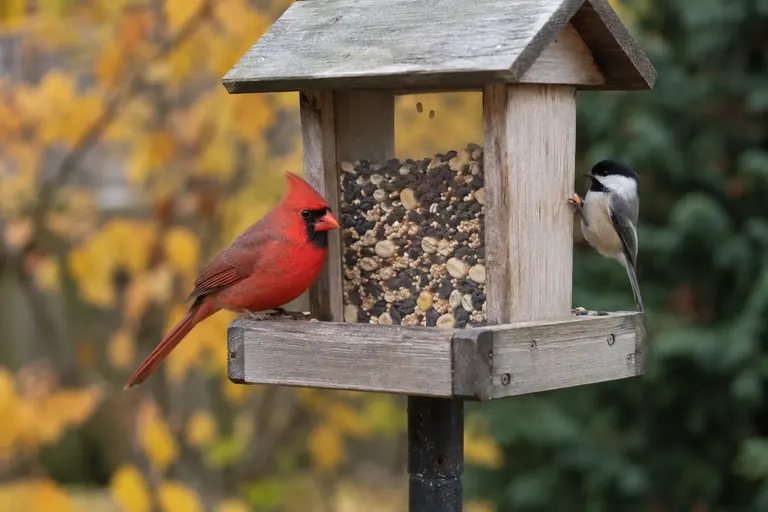
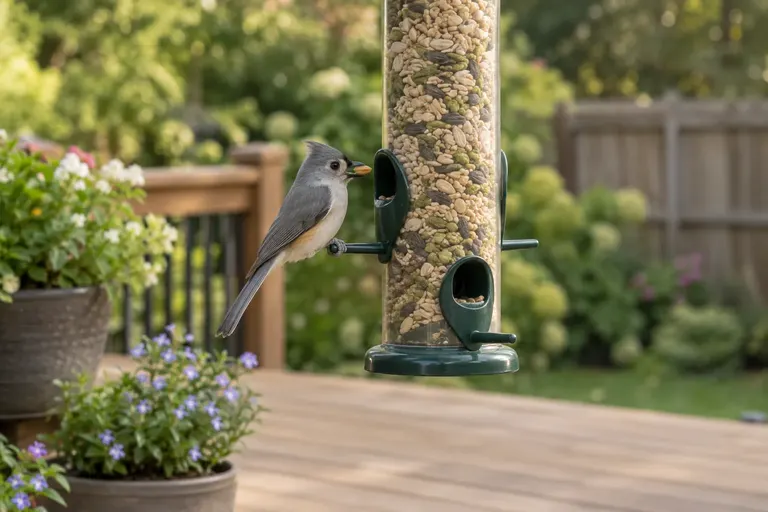
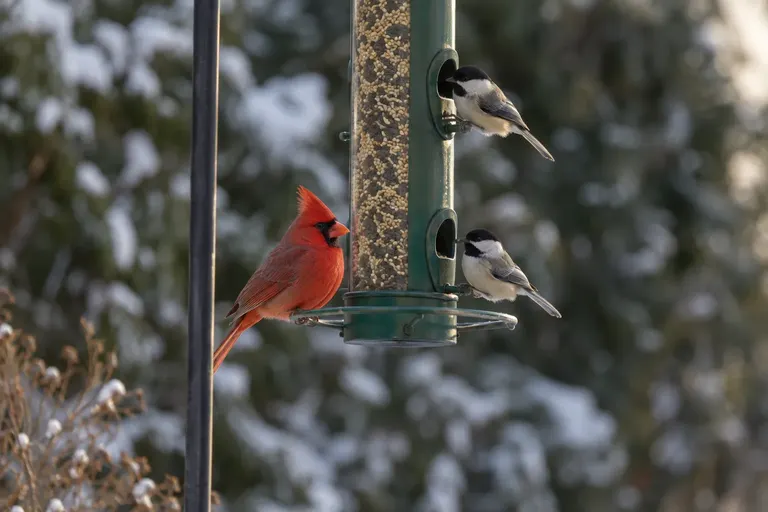
Cardinals want a wide, stable place to stand. Hopper feeders with a full-length ledge and platform feeders work best. Tube feeders with short perches are usable but less comfortable for a bird this size.
Placement matters as much as the feeder. Put it 10 to 15 feet from dense shrubs or small evergreens, so cardinals can reach cover quickly, and not so close that cats can ambush from the bushes. Cardinals often visit early and late in the day, when light is low. For specific models, see our roundup of feeders to attract cardinals.
Will cardinals come to my yard?
Northern Cardinals live year-round across the eastern and central United States, south into Mexico, with separate populations in parts of the desert Southwest. The Cornell Lab notes that the species has expanded northward over the past century and that its numbers have grown since the 1960s, helped by suburban yards, edge habitat and bird feeders. If you live in New England, the Great Lakes region or southern Canada, cardinals are now common where they were once scarce.
If you live in the Pacific Northwest, the Rockies or most of California, cardinals are rare or absent, and the best seed in the world will not change that. In those regions, the same sunflower and safflower feed grosbeaks, jays and towhees instead.
Should you add mealworms or fruit for cardinals?
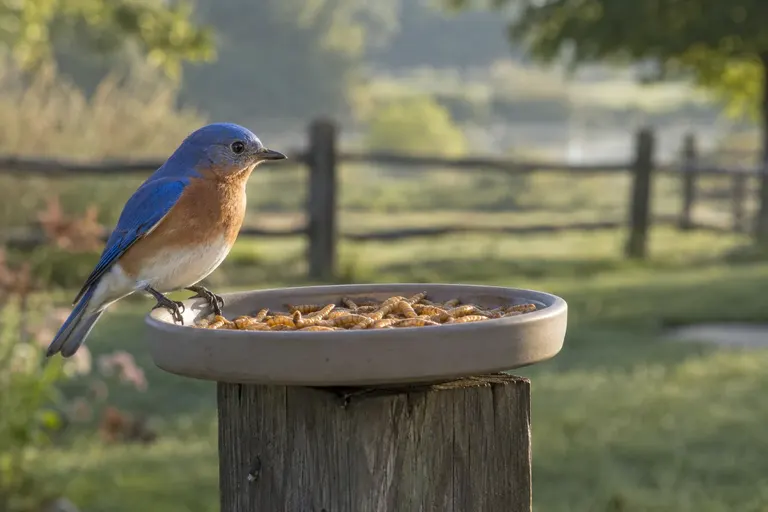
Seed should be the base, but a small side dish can help in some seasons. Cornell notes that cardinals feed nestlings mostly insects and eat beetles, crickets, katydids and spiders themselves in summer. A few dried or live mealworms in a dish near cover can bring adults in during nesting season. Our guide to the best dried mealworms covers the options.
In fall and winter, cardinals eat wild fruit such as dogwood berries and wild grape. Planting native fruiting shrubs does more than any feeder food, because it gives cardinals both food and the dense cover they want nearby.
Seasonal feeding for cardinals
Northern Cardinals do not migrate, so the same birds may use your feeder all year.
- Winter: high-fat food matters most. Keep sunflower or safflower available every day, especially before storms.
- Spring: males may feed females at the feeder during courtship. Add a small dish of mealworms if you like, since nestlings are fed mostly insects.
- Summer: cardinals find more natural food, and visits can drop. Keep hulled seed dry, since it spoils faster in heat and humidity.
- Fall: young cardinals, brown with dark bills, join adults at the feeder.

Common mistakes
- Buying a mix full of millet and milo. It attracts sparrows and blackbirds, not cardinals.
- Using only a small tube feeder. Cardinals prefer a wide perch or tray.
- Placing the feeder in the open. Without nearby cover, cardinals visit less.
- Mixing safflower into sunflower on day one. Birds pick out the sunflower and ignore the rest.
- Letting seed get wet. Moldy seed can sicken birds. Store seed dry in a sealed, rodent-proof container.
- Ignoring grackles. If blackbirds are the problem, see our guide to keeping starlings and grackles off feeders.
Comparison table
| Seed | Main ingredients | Bag sizes | Best for | Main drawback |
|---|---|---|---|---|
| Wagner’s Four Season Black Oil Sunflower | Black oil sunflower | 10 to 40 lb | Most yards | Pests love it too |
| Wagner’s 62032 Cardinal Blend | Black oil sunflower, safflower, striped sunflower | 6 lb | Cardinal-focused feeders | Higher cost per pound |
| Lyric Cardinal Mix | Sunflower in three forms, safflower, buckwheat | 3.75, 18 lb | Busy feeders | Some buckwheat waste |
| Wagner’s 57075 Safflower | Safflower | 5 lb | Grackles, squirrels | Fewer species |
| Lyric Golden Safflower | Golden safflower | 5, 12 lb | Easier-to-crack safflower | Mixed acceptance |
| Cole’s Cajun Cardinal Blend | Sunflower meats, safflower, habanero | 5, 10, 20 lb | Stubborn squirrels | Handle with gloves |
| Lyric Sunflower Kernels | Shelled sunflower | 5, 25 lb | No mess | Spoils faster when wet |
Sources

Frequently asked questions
What seed do cardinals like best?
Black oil sunflower is the top choice. The Cornell Lab notes that cardinals favor black oil sunflower at feeders, and Project FeederWatch describes it as the preferred food of a wide variety of birds thanks to its thin shell and high energy. Safflower is a close second for cardinals and has the bonus of being less popular with grackles, starlings and many squirrels.
Do cardinals eat safflower seeds?
Yes. Cardinals are one of the species most associated with safflower, along with titmice, chickadees, house finches and grosbeaks. The seed is bitter to many squirrels and blackbirds. Birds may take a week or more to accept it, so Birds and Blooms suggests offering it alone rather than mixed with sunflower at first.
What kind of feeder is best for cardinals?
A hopper or platform feeder with a wide, sturdy ledge suits cardinals best. They are fairly large birds that prefer to perch facing their food and often forage on or near the ground, according to the Cornell Lab. Small tube feeders with short perches are less comfortable for them.
Is hot pepper bird seed safe for cardinals?
Yes, when made for birds. Capsaicin, the compound that makes peppers hot, does not trigger the same pain response in birds that it does in mammals, so cardinals eat pepper-coated seed normally while squirrels are deterred. Wear gloves when filling feeders, and keep the seed away from pets.
Why are cardinals not coming to my feeder?
The usual causes are the wrong feeder, too little cover or a seed mix full of filler. Cardinals like dense shrubs within about 10 to 15 feet of the feeder, a wide perch or tray, and sunflower or safflower. They often feed early in the morning and near dusk, so check at those times before deciding they are absent.