How to Store Bird Seed So It Stays Fresh
How to store bird seed: a lidded metal can in a cool, dry, shaded spot, bought in amounts you use within weeks. Stop mold, moths, mice and rancid seed.
In this article
- Quick answer: how to store bird seed
- Why storing bird seed properly matters
- What is the best container for bird seed?
- Where should you store bird seed?
- How long does bird seed last?
- How much bird seed should you buy at once?
- Should you freeze bird seed?
- How to tell if bird seed has gone bad
- How to get rid of moths in bird seed
- Common mistakes when storing bird seed
- A simple storage routine
- How we put this guide together
- Sources
- Frequently asked questions
The best way to store bird seed is simple: a metal can with a tight lid, kept off the floor in a cool, dry, shaded spot, holding no more seed than your birds will eat in a few weeks. Moisture, heat, insects and rodents are the four things that ruin seed, and that setup blocks all of them.
Everything else in this guide is detail: which seeds spoil fastest, how to deal with pantry moths, when freezing helps, and how to tell when seed should go in the trash instead of the feeder.
Quick answer: how to store bird seed
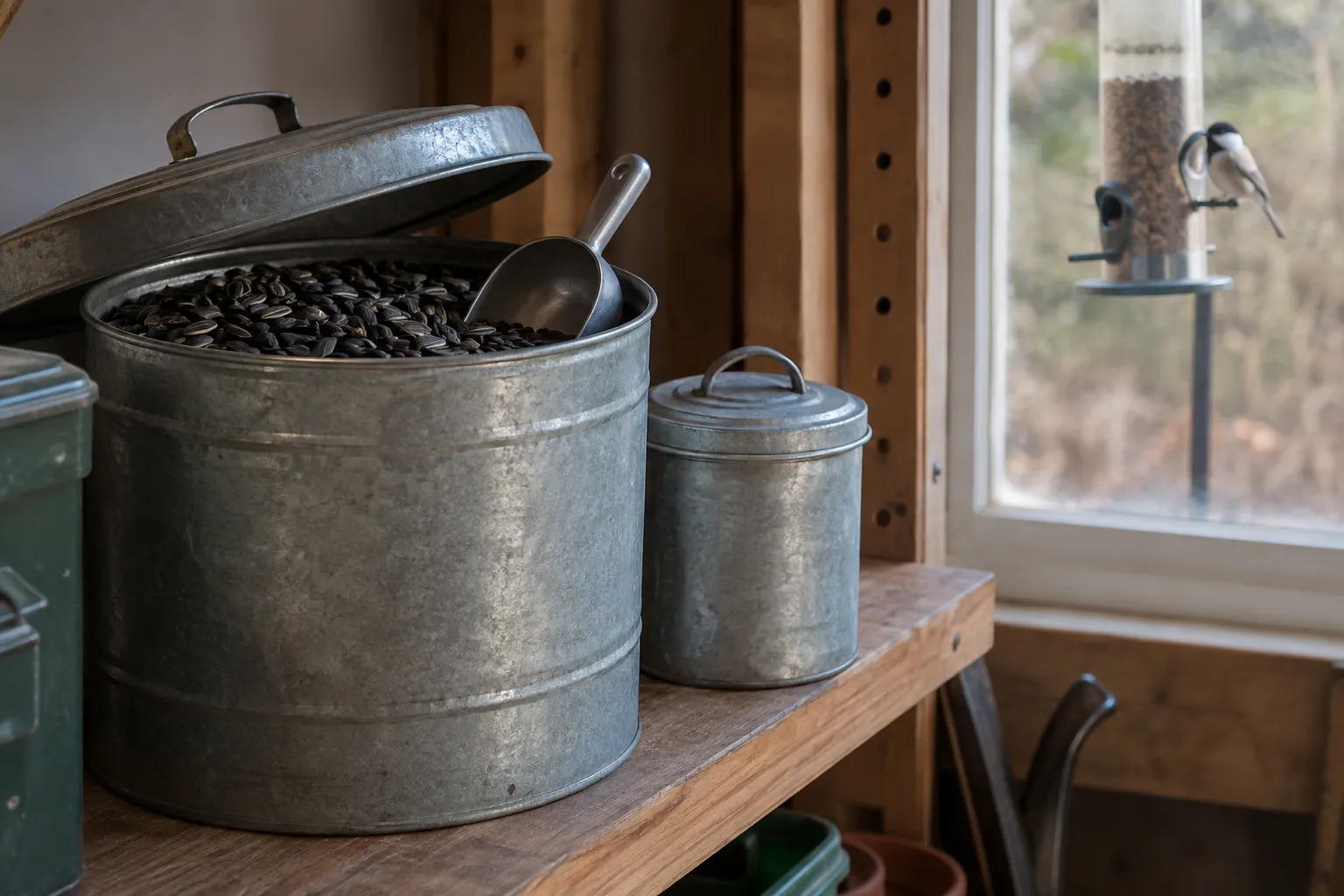
- Use a metal container with a tight lid. Galvanized steel cans stop mice, rats and squirrels that chew through bags and plastic.
- Keep it dry. Damp seed molds, and some molds produce toxins harmful to birds.
- Keep it cool and shaded. Heat speeds up rancidity in oily seed and nuts.
- Raise it off the floor. Concrete floors can wick moisture, and floor-level bins are easy for rodents to find.
- Buy smaller amounts. Buy what your birds will eat in a few weeks to a couple of months, not a year.
- Do not mix old and new seed. Empty the container, wipe it out, then refill.
- Check before every refill. Look, smell and feel for mold, clumps, webbing and bugs.
Why storing bird seed properly matters
Bird seed is a natural agricultural product. Nothing stops it aging, and a big bag can stay in a garage for months. Four things go wrong.
Moisture and mold
Mold is the most serious risk to birds. Project FeederWatch tells feeders to dispose of moldy fruit and moldy peanuts because some molds create toxins that are harmful to birds. The Cornell Lab of Ornithology warns that corn is the bird food most likely to be contaminated with aflatoxins, which are extremely toxic even at low levels, and that peanuts carry a similar risk. Its advice for corn is blunt: never buy it in plastic bags and never allow it to get wet.
Damp storage is how seed goes from safe to hazardous. A leaking shed roof, a bag set on wet concrete, or condensation inside a sealed tub on a hot day can all do it.
Insects
Stored seed attracts the same pantry pests that get into flour and cereal. Clemson University’s Home and Garden Information Center lists bird seed among the products pantry pests infest, and University of California IPM specialists note that sawtoothed and merchant grain beetles commonly infest pet food and bird seed. The Indian meal moth is the most common moth pest in stored food.
Birds will not be poisoned by a few moth larvae, but infested seed loses quality, and moths that emerge from a bag in your kitchen or pantry will move into your own food.
Rodents and other animals
A bag of seed is a feast for mice, rats, chipmunks, squirrels and raccoons. Rodents chew through paper and woven plastic bags easily, and they leave droppings and urine in the seed. That contaminated seed should not go into a feeder. The fix is a container they cannot chew.
Heat and rancidity
Black oil sunflower, sunflower hearts, peanuts and nyjer are all rich in oil. Oils oxidize over time, faster in heat and light, and the seed goes stale or rancid. Rancid seed smells sharp, sour or paint-like. Birds often pick through and reject stale seed, which leaves more waste under the feeder.
What is the best container for bird seed?
The right container depends on where you store it.
| Container | Rodent-proof | Airtight | Best place | Drawbacks |
|---|---|---|---|---|
| Galvanized steel can with tight lid | Yes | Close, not fully | Garage, shed, porch | Can dent; lid may need a bungee against raccoons |
| Metal bin or storage chest | Yes | Varies | Garage, shed | Takes floor space |
| Food-grade plastic bin with gasket lid | No, can be chewed | Yes | Indoors, pantry | Rodents can gnaw through outdoors |
| Glass or plastic jars | Mostly | Yes | Kitchen, small amounts | Small capacity |
| Original paper or plastic bag | No | No | Short-term only | Offers no protection |
Why metal beats plastic in a garage or shed
Galvanized steel is the traditional choice for good reason: mice and squirrels cannot chew through it. Plastic bins are lighter and often seal better, but in an outbuilding, rodents that smell seed will gnaw a corner. Clemson’s pantry pest guidance recommends airtight, insect-proof containers, and UC IPM advises containers with tight-fitting lids, not plastic bags, for bulk goods like pet food. For outdoor storage, metal is the practical way to meet both goals.
Should you pour seed out of the bag?
Yes. Pour the seed into the container rather than dropping the whole bag in. Bags can hide insects in their seams and trap moisture against the seed. Some people keep the bag’s label, or snap a photo of it, to note the product and any date code.
Container size
Match the container to your buying habit. A can that holds one large bag is right for most yards. A huge bin encourages you to buy more than you can use while it is fresh.
Where should you store bird seed?
The best spot is cool, dry, dark and not easy for animals to reach. Here is how common locations compare.
Garage
A garage works well if it stays dry. Keep the can off the concrete on a shelf or pallet, away from the main door, and out of direct sun through windows. In hot climates, garages can bake in summer, which speeds up rancidity, so buy smaller amounts in hot months.
Shed
A shed is fine if it has a sound roof and a floor. Sheds are often where mice live, so metal containers are essential. Check the lid seal after storms.
Basement
Basements are cool, which is good, but many are humid. If you store seed in a basement, use an airtight container and check it often for clumping.
Indoors: pantry or closet
Indoors keeps seed cool and dry, but any insects that hatch in the seed can spread to your own food. If you store seed indoors, freeze it first or keep it in a separate, airtight container away from human food.
Porch or deck
A porch is convenient for refills but exposes seed to rain, heat and raccoons. If you must, use a metal can with a lid you can clamp or bungee shut, placed in shade.
How long does bird seed last?
No reputable body publishes one shelf life for all bird seed, because it depends on the seed type, how it was handled before you bought it, and your storage. What is well established is which seeds spoil faster.
| Seed or food | Keeps well? | Why |
|---|---|---|
| Black oil sunflower in shell | Relatively well | Shell protects the kernel |
| Safflower | Relatively well | Hard shell |
| White proso millet | Relatively well | Small, dry grain |
| Sunflower hearts and chips | Spoils faster | No shell; the Cornell Lab says they spoil quickly |
| Nyjer | Goes stale fairly fast | Small, oily seed dries out |
| Peanuts | Needs care | Aflatoxin risk; keep dry and use fairly quickly |
| Cracked corn | Needs care | Highest aflatoxin risk of common bird foods |
| Suet cakes | Depends on heat | Fat softens and can go rancid in warm weather |
| Dried mealworms | Keeps if dry | Absorbs moisture if left open |
A sensible rule: buy what your birds will finish in a few weeks to a couple of months. If you feed heavily in winter, a larger bag in November may be fine. In summer, when feeding slows and heat speeds up spoilage, buy less.
Storage tips by food type
Sunflower in the shell and safflower. These are the easiest seeds to store. A metal can in a dry garage is ideal. Our guides to black oil sunflower seed and safflower seed explain why they are good first foods.
Sunflower hearts and no-mess blends. Without shells, the kernels are exposed to air and moisture. Buy smaller bags and keep them sealed. The Cornell Lab suggests offering no more hulled sunflower than birds can eat in a day or two, which also applies to how long it sits in a feeder. See our roundup of no-mess bird seed.
Nyjer. Nyjer seed sold in the US is heat-treated so it does not sprout, and finches can lose interest when it goes stale and dry. Buy small amounts, keep it sealed, and refresh finch feeders so old seed does not sit in the bottom of the tube.
Peanuts and corn. Be strictest with these. The Cornell Lab says to keep them dry, use them up fairly quickly, never buy corn in plastic bags, and change peanuts in tube feeders often, especially in rainy or humid weather.
Suet. Store commercial suet cakes somewhere cool. Homemade suet keeps best in the refrigerator or freezer. In summer, choose no-melt products; our suet cakes and blends roundup covers them.
Dried mealworms. Reseal the bag or move them to an airtight jar. Moisture ruins them quickly. See our guide to dried mealworms.
Hummingbird nectar. Not seed, but it spoils fastest of all. The Smithsonian’s National Zoo says extra sugar water can be stored in the fridge for no more than one week. Our 4:1 nectar recipe covers mixing and changing it.
How much bird seed should you buy at once?
The right bag size is the one you finish while the seed is still fresh. Since every yard is different, the easiest way to find it is to measure your own use for a month.
- Note the date you start a new bag and the bag weight.
- Fill feeders from that bag only until it runs out.
- Divide the weight by the number of weeks it lasted. That is your weekly use for that season.
- Buy about a month or two of seed at a time, using that number, and less in summer.
Your use will change through the year. Many yards go through seed fastest in winter, when natural food is scarce and flocks of juncos, finches and chickadees visit, and slowest in late summer, when insects and wild seeds are plentiful. Migrants passing through in spring and fall can also cause short spikes.
Bulk bags are tempting because the price per pound is usually lower, but that saving disappears if the last third of the bag goes moldy or stale. If a large bag suits your budget, split it: keep one sealed can for current use and freeze or tightly seal the rest.
Should you freeze bird seed?
Freezing is useful for one job: killing insects that may already be in the seed. Clemson’s Home and Garden Information Center says items not meant for human consumption can be placed in a freezer for a few days to kill existing insects.
How to do it:
- Put new seed in a sealed freezer bag or airtight container.
- Freeze it for several days.
- Let it come back to room temperature while still sealed, so moisture condenses on the outside, not on the seed.
- Transfer to your storage container.
Freezing a large bag is not practical for most people, and it is not necessary if you buy fresh seed from a busy store and use it quickly. It is most worth doing if you have had pantry moths before or if you store seed indoors.
How to tell if bird seed has gone bad
Check seed each time you refill. Throw it out if you see any of these:
- Mold: white, green, gray or black fuzz, or seeds stuck together.
- Clumping: a sign it got damp, even if mold is not visible yet.
- Musty, sour or rancid smell: fresh seed smells dry and faintly nutty.
- Webbing: silky threads or clumped strands are a classic sign of Indian meal moth larvae.
- Larvae, beetles or moths: small worms, tiny brown beetles, or moths flying out when you open the lid.
- Sprouting: seeds with little shoots have been wet.
- Rodent droppings or chewed bags.
Do not try to rescue moldy seed by drying it out. Mold toxins do not go away when the seed dries. Bag it and put it in the trash, not on the compost pile or the lawn.
How to get rid of moths in bird seed
If moths are flying out of your seed:
- Remove the infested seed in a sealed bag and take it outside to the trash.
- Check nearby food. UC IPM notes that by the time you spot a pantry pest, it has usually spread to other food packages. Look in flour, cereal, pet food and dried fruit.
- Clean the container. Empty it, vacuum crumbs and webbing, wash it, and let it dry fully.
- Clean the storage area. Vacuum shelves and corners.
- Restock carefully. Freeze new seed for a few days if the problem keeps returning, and use airtight containers.
Common mistakes when storing bird seed
- Leaving seed in the bag on the floor. It is the easiest way to invite mice and moisture.
- Topping up old seed with new. UC IPM advises against mixing old and new food. Empty and clean first.
- Buying a year’s supply. Bulk bags save money only if the seed stays good until you use it.
- Storing seed in a hot spot. Attics, sunny porches and metal sheds in summer speed up rancidity.
- Sealing warm seed in a tub. Temperature swings can cause condensation inside a closed container.
- Using moldy seed “just this once.” Mold toxins are the main health risk from bad storage.
- Forgetting the feeder itself. Good storage is wasted if seed rots in a dirty feeder. The Cornell Lab recommends cleaning feeders about every two weeks, more often in wet weather; see how to clean a bird feeder.
A simple storage routine
For most backyards, this routine covers everything:
- When you buy: check the bag for holes, damp spots and webbing. Choose smaller bags in summer.
- When you get home: pour the seed into a clean metal can. Freeze first if you have had moths.
- Each refill: look, smell and feel. Scoop from the top and close the lid firmly.
- Each time the can empties: wipe it out and let it dry before refilling.
- Each season: move the can if it gets sun or damp, and adjust how much you buy.
How we put this guide together
Perch and Glass has not run storage trials. This guide is research-led, drawing on the Cornell Lab of Ornithology and Project FeederWatch for bird-specific risks such as mold and aflatoxins, university extension and IPM services for pantry pest biology and control, and the Smithsonian’s National Zoo for nectar storage. We do not give a single shelf-life number because we could not find a reputable source that publishes one for bird seed in general.
Sources
- Cornell Lab of Ornithology, All About Birds: A Quick Guide to Seed Types
- Project FeederWatch: Food Types
- Cornell Lab of Ornithology, All About Birds: How to Clean Your Bird Feeder
- Clemson University HGIC: Pantry Pests
- University of California IPM: Pantry Pests
- Smithsonian’s National Zoo: Hummingbird Nectar Recipe
Frequently asked questions
What is the best container to store bird seed in?
A galvanized metal can or bin with a tight-fitting lid is the most common recommendation, because mice, rats and squirrels cannot chew through it. Extension services advise storing grains and pet foods in containers with tight-fitting lids rather than bags. Airtight food-grade plastic works indoors, but in a garage or shed rodents can gnaw through plastic.
How long does bird seed last?
There is no single official shelf life. Seed in the shell, such as black oil sunflower and safflower, keeps longer than hulled seed, nuts and nyjer, whose oils go stale or rancid sooner. The safest rule is to buy what your birds will eat in a few weeks to a couple of months and to check stored seed for mold, clumps, webbing and off smells.
Should I freeze bird seed?
Freezing a new bag for a few days is a common way to kill insect eggs or larvae that may be hiding in it. Clemson University's Home and Garden Information Center says non-food items can be placed in a freezer for a few days to kill existing insects. Let the seed return to room temperature in a sealed container so condensation does not wet it.
Can you store bird seed in the garage?
Yes, if the garage stays dry and the seed is in a sealed metal container off the floor. Garages can get hot in summer, which speeds up rancidity in oily seed, and they are a favorite route for mice. Keep the can away from the door, off damp concrete and out of direct sun.
How can you tell if bird seed has gone bad?
Throw seed out if it is moldy, clumped together, damp, smells musty or sour, has webbing or small larvae, or has moths flying out of it. Seed that has sprouted also means it got wet. The Cornell Lab warns that corn and peanuts can carry aflatoxins, which are toxic at low levels, so be especially strict with those.