Does Bird Seed Go Bad?
Does bird seed go bad? Yes. Oily seed turns rancid, damp seed molds and pantry pests move in. Most seed keeps roughly 6 to 12 months if stored cool and dry.
In this article
- Quick answer: how long different seeds last
- Why does bird seed go bad?
- How can you tell if bird seed has gone bad?
- Can birds get sick from bad bird seed?
- Does nyjer seed go bad faster?
- How should you store bird seed so it lasts?
- Does the climate you live in change how fast seed spoils?
- How fast does seed go bad inside a feeder?
- What should you do with old or bad bird seed?
- Common mistakes that make seed go bad faster
- Myths and facts
- Quick facts
- Sources
- Frequently asked questions
Yes, bird seed goes bad. It does not spoil overnight like milk, but over weeks and months it can turn rancid, lose nutrition, grow mold or fill with pantry insects. Stored in a cool, dry, sealed container, most seed stays good for roughly 6 to 12 months. Oily seeds such as sunflower hearts and nyjer go stale faster, and any seed that gets wet can mold within days.
The practical test is simple: fresh seed looks glossy or clean, flows freely and smells neutral or faintly nutty. Seed that is clumped, dusty, musty, sour, webbed or fuzzy belongs in the trash, not the feeder.
Quick answer: how long different seeds last
These are rough guides for seed stored cool, dry and sealed. Warm garages, humid climates and torn bags shorten them.
| Seed or food | Approximate shelf life | Main way it goes bad | Warning signs |
|---|---|---|---|
| Black oil sunflower (in shell) | About 6 to 12 months | Rancid oils, insects | Dull shells, bitter smell, webbing |
| Sunflower hearts (hulled) | About 3 to 6 months | Rancidity, mold if damp | Darkened kernels, sour smell, clumping |
| Nyjer (niger) | About 6 months or less | Drying out, rancid oils | Birds ignore it, dusty or dull seed |
| Safflower | About 6 to 12 months | Rancid oils | Off smell, discolored seed |
| White proso millet | About 12 months or more | Insects, moisture | Webbing, clumps, musty odor |
| Cracked corn | About 3 to 6 months | Mold, insects | Clumps, dark spots, musty or sour smell |
| Peanuts (shelled) | About 3 to 6 months | Mold, aflatoxin risk | Dark or shriveled nuts, fuzz, bitter taste |
| Suet cakes (sealed) | Check package; months when sealed and cool | Rancid fat | Sour, soapy or paint-like smell |
| Seed mixes | Shortest-lived ingredient sets the limit | All of the above | Any sign above |
Why does bird seed go bad?
Four processes do most of the damage. Understanding them makes storage decisions obvious.
1. Oxidation turns the oils rancid
The seeds birds value most are the ones rich in fat. Black oil sunflower is roughly 40 percent fat by weight, and nyjer and safflower are also oily. Those fats are largely unsaturated, which makes them prone to reacting with oxygen. The process speeds up with heat, light and damaged seed coats. Rancid seed smells sharp, bitter or like old paint, and it has lost some of its energy and vitamins, especially vitamin E.
That is why hulled sunflower hearts go stale faster than seed in the shell. The shell is a natural barrier to air and light. Once it is removed, oxidation starts faster.
2. Moisture feeds mold
Dry seed is inert. Wet seed is a growth medium. Molds such as Aspergillus can grow on seed, peanuts and corn that stay damp, especially in warm weather. Some Aspergillus species produce aflatoxins, which damage the liver in birds and mammals. Moldy seed and damp feeder debris are also linked to aspergillosis, a respiratory infection caused by inhaling fungal spores. Wildlife health agencies regularly list moldy food and dirty feeders among the avoidable risks of backyard feeding.
Moisture enters in two ways: rain and snow getting into feeders, and humidity or condensation getting into stored bags. A bag stored on a concrete floor in a damp garage can wick moisture from below.
3. Insects move in
Grain and seed are prime food for stored-product insects. The most common in bird seed are Indian meal moths, whose larvae leave silky webbing and clumps, and various weevils and grain beetles. Eggs are often already present in seed when you buy it, and warm temperatures let them hatch. The insects are not toxic to birds, and many birds eat them happily, but they spoil seed, create clumps that trap moisture and spread into kitchen cupboards.
4. Rodents contaminate it
Mice and rats chew through paper and plastic bags easily. Beyond eating seed, they leave droppings and urine that can carry bacteria such as Salmonella and, in some regions, viruses that are dangerous to people. Seed that rodents have been in should be discarded. Our guide to keeping rats away from bird feeders covers the outdoor side of the problem.
How can you tell if bird seed has gone bad?
Use your senses. Check new bags when you open them and check stored seed each time you refill.
Look
- Clumps, especially ones that hold together when squeezed.
- White, green, gray or black fuzz, or a dusty coating that was not there before.
- Silky threads or webbing, small moth larvae, or beetles.
- Darkened or shriveled kernels, particularly with sunflower hearts and peanuts.
- Sprouted seeds, which mean the seed was wet for some time.
Smell
- Fresh seed smells neutral, grassy or slightly nutty.
- Rancid seed smells bitter, sharp or like old paint or crayons.
- Moldy seed smells musty, earthy or sour.
Feel
- Fresh seed pours freely and feels dry.
- Bad seed feels damp, sticky or dusty, and it bridges or clogs in feeders.
Watch the birds
Birds are good quality inspectors. If goldfinches that used to empty a nyjer feeder suddenly leave it untouched, the seed may have dried out or gone stale. Nyjer that has lost its oil is a common reason finches abandon a feeder. That said, many other factors affect feeder visits, from hawks to natural food supplies. Our article on why birds suddenly disappear from feeders covers the other causes.
Can birds get sick from bad bird seed?
Stale, dry seed is mainly a waste of money. It is less nutritious and birds may reject it, but it is not usually dangerous. The health concerns come from contamination.
Mold and mycotoxins
Aflatoxins and other mycotoxins are the biggest food-safety issue. They are most associated with peanuts and corn, and they build up when those foods are harvested or stored in warm, damp conditions. In the UK, the Birdcare Standards Association runs a scheme in which member suppliers test peanuts for aflatoxin, and bird food sold for human-grade use in many countries is regulated. Buying from reputable sources helps, but it cannot protect seed you later store badly.
Aspergillosis
Aspergillosis is a fungal disease that affects the airways and lungs of birds. It is caused by inhaling spores of Aspergillus, which thrive in moldy seed, damp hulls and debris under feeders. Wild birds, particularly waterfowl and some songbirds, can die from it. Keeping seed dry and raking up wet debris under feeders reduces the risk.
Bacteria spread at dirty feeders
Salmonella outbreaks among finches and siskins at feeders are usually linked to dirty feeders and crowding rather than to seed age, but damp, dropping-contaminated seed is part of the picture. Clean feeders roughly every two weeks, and more often during outbreaks. Our guide to sick birds at the feeder explains what to watch for and when to take feeders down.
Does nyjer seed go bad faster?
Nyjer deserves its own section because it behaves differently. Nyjer is imported, mainly from Africa and Asia, and in the US it is heat-treated on import so the seed will not germinate and spread as a weed. That treatment is one reason nyjer does not sprout under feeders. It may also be one reason it dries out relatively quickly.
Nyjer is small and oily, and once it loses its oil, finches seem to lose interest. Many experienced feeders suggest buying nyjer in small quantities, storing it airtight and using it within a few months. If you have a nyjer feeder that goldfinches ignore, empty it, check the seed, and try a fresh batch before concluding the birds have left.
How should you store bird seed so it lasts?
Storage is the single biggest factor in how long seed lasts. The goal is to keep it cool, dry, dark and sealed away from pests.
Best practices
- Buy what you can use in a season. Bulk bags save money only if the seed is used before it goes stale. For most yards, one to three months of seed at a time is a sensible target.
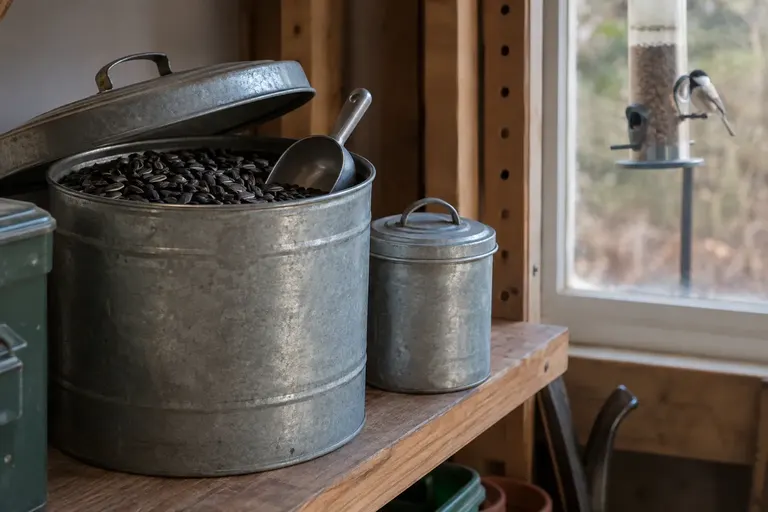
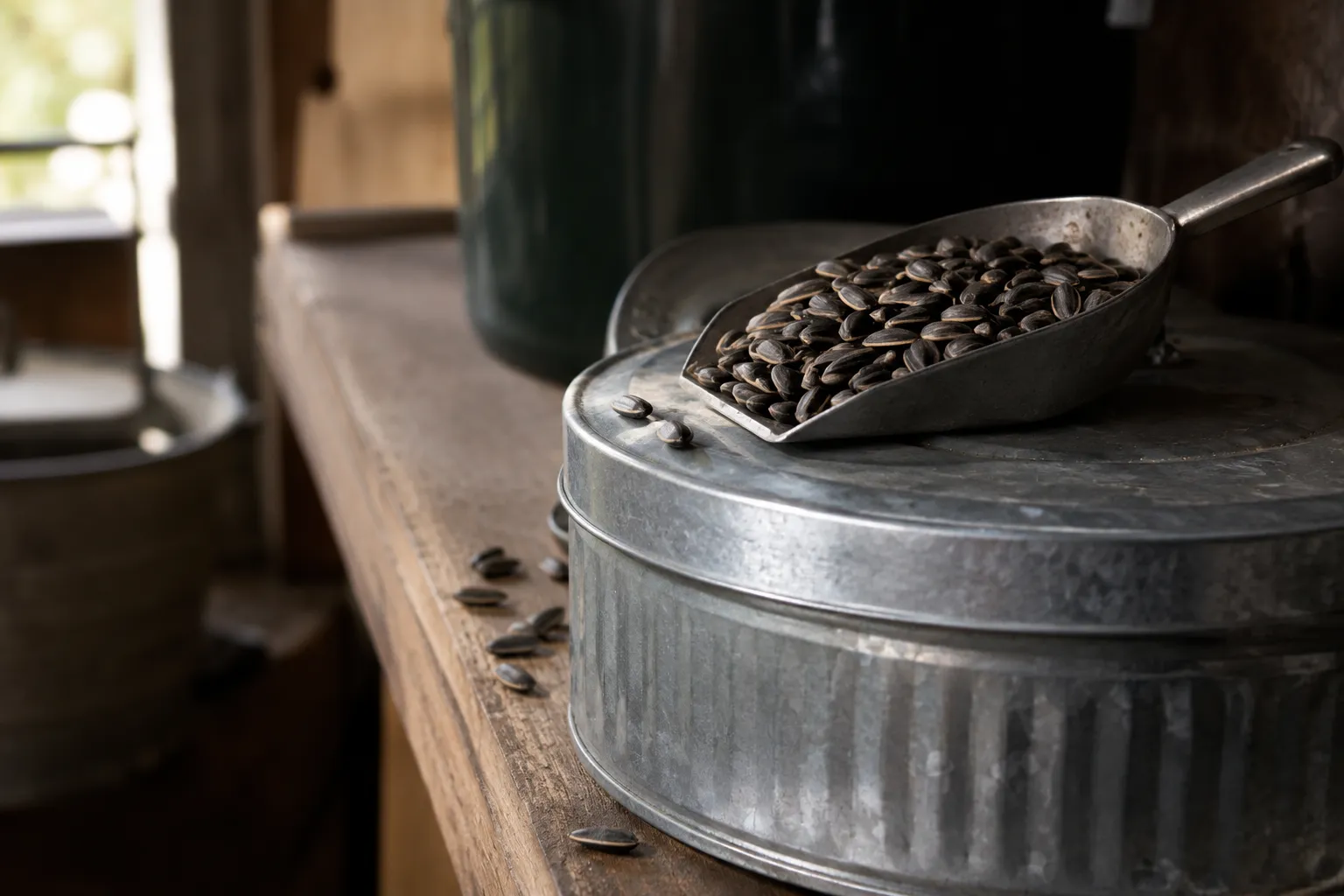
- Use a sealed metal can. Galvanized steel trash cans with tight lids are the classic choice. Rodents can chew through plastic bins over time.
- Keep it off the floor. Put bins on a shelf, pallet or board to avoid moisture wicking up from concrete.
- Keep it cool. A cool shed, basement or garage is better than a sunny porch. Heat speeds rancidity and insect hatching.
- Keep it dark. Light accelerates oxidation of oils.
- Freeze new seed if pests are a problem. Many people freeze new seed for several days to kill insect eggs and larvae, then let it return to room temperature in a sealed container. This is especially useful for millet mixes and corn.
- Do not mix old and new seed. Use up or discard the old batch, clean the bin, then add new seed. Otherwise any pests or mold in the old seed contaminate the fresh.
- Clean the container between batches. Wipe out dust, hulls and webbing, and let the bin dry fully.
For a more detailed walk-through, including container options for apartments and small spaces, see our guide on how to store bird seed.
Special cases
- Hulled seed and peanuts: Consider storing smaller quantities in the refrigerator or freezer, especially in hot climates.
- Suet: Keep unopened cakes in a cool place, and refrigerate or freeze homemade suet. Rancid suet smells soapy or sour.
- Mealworms: Dried mealworms keep well if sealed and dry. Live mealworms need refrigeration and regular checks.
Does the climate you live in change how fast seed spoils?
Yes, significantly. Warmth and humidity are the two main accelerators.
- Hot, humid climates, such as the US Gulf Coast, Florida and much of Brazil, can turn sunflower hearts rancid and let mold grow in weeks rather than months. Buying smaller amounts and storing seed indoors in airtight containers pays off. In Brazil, where many people feed fruit and mixed seed to tanagers, finches and doves, fruit should be replaced daily and seed stored in closed jars away from heat.
- Cool, damp climates, such as the UK, Ireland and the Pacific Northwest, pose less of a rancidity problem but a bigger mold problem, both in storage and in feeders. Drainage holes in feeder trays and feeders with covered ports help.
- Hot, dry summers and cold winters, as on the Anatolian plateau in Turkey or in the US interior, mean seed stored in an unheated shed faces extremes. Winter cold helps preserve seed, but summer heat in an uninsulated space speeds oxidation and insect activity.
How fast does seed go bad inside a feeder?
Much faster than in storage. A feeder is an outdoor container exposed to rain, dew, sun and droppings. In dry, cool weather, seed in a well-designed tube feeder can stay in good condition for a week or more. After heavy rain, seed at the bottom of a tube or in the corners of a hopper can clump and start to mold within two or three days, especially in warm weather.
A few habits keep feeder seed fresh:
- Fill feeders partway in wet or warm weather, so the seed is eaten before it has time to spoil.
- Choose feeders with drainage. Tray and platform feeders should have mesh or drilled bottoms. Our guide to platform and tray feeders looks at designs that drain well.
- Shake and inspect tubes after storms. If seed will not flow, it is probably clumped at the base.
- Use hulled seed carefully. Hearts leave no shells but soak up water faster than seed in the shell. Offer them in covered feeders.
- Keep ground feeding small. Seed scattered on wet ground molds quickly. Offer only what birds clear in an hour or two.
Black oil sunflower in the shell is one of the more forgiving choices here, because its shell sheds water better than hulled or cracked seed. Our guide to black oil sunflower seed explains why it is the best all-round seed for most feeders.
What should you do with old or bad bird seed?
If it is just old but dry and smells fine
You can usually still use it. Offer it in small amounts and see if birds eat it. Seed that is simply past its best-by date but has been stored well may still be perfectly acceptable to birds.
If it smells rancid
Throw it out. Birds may eat it, but it offers less nutrition, and there is no benefit in feeding a degraded food.
If it is moldy, wet or contaminated by rodents
Seal it in a bag and put it in the trash. Do not compost it, spread it on the ground or put it in the garden, where birds and other wildlife may still eat it. Clean and dry the container before reusing it.
If it has moths or weevils but is otherwise dry
Some people freeze it and use it, since the insects themselves are not harmful to birds. If webbing and clumps are extensive, throw it out, because clumps trap moisture and mold. Deal with the source, and check nearby kitchen cupboards for spread.
Common mistakes that make seed go bad faster
- Buying huge bags for a few feeders. The discount disappears if a third of the bag ends up rancid.
- Storing seed in the original paper bag on the floor. Paper absorbs moisture and offers no defense against mice.
- Keeping seed in a hot shed or in direct sun. Heat and light speed up rancidity.
- Topping up feeders without emptying old seed. Old, damp seed at the bottom of a tube feeder molds and never gets eaten. Empty and clean feeders between fills. Our guide to how to clean bird feeders covers the process.
- Using feeders without drainage. Trays and hoppers that hold water turn seed moldy after every storm.
- Offering more than birds eat in a day or two. Seed sitting in feeders for a week in wet weather is effectively being stored outdoors.
- Ignoring the debris under feeders. Wet hulls and spilled seed underneath can grow mold and draw rodents. Rake it up regularly or use hulled seed.
Myths and facts
Myth: Bird seed lasts forever because it is dry. Oily seeds oxidize, and all seeds absorb moisture from humid air. Shelf life is measured in months, not years.
Myth: If birds eat it, it must be fine. Birds will eat marginal food when hungry, especially in winter. That does not mean it is good for them.
Myth: Freezing ruins seed. Freezing does not harm seed for feeding purposes. It kills insect eggs and slows oxidation. Just let it warm in a sealed container to avoid condensation.
Fact: Shells protect seeds. Seed in the shell generally keeps longer than hulled seed, because the shell blocks air, light and insects.
Quick facts
- Most bird seed keeps roughly 6 to 12 months when stored cool, dry and sealed.
- Sunflower hearts, peanuts and cracked corn go bad faster than whole seeds.
- Moisture is the biggest single risk, because it allows mold and mycotoxins.
- Indian meal moths are the most common pests in stored bird seed.
- Nyjer sold in the US is heat-treated so it will not germinate.
- Metal cans with tight lids keep out rodents better than plastic bins.
Sources
- Cornell Lab of Ornithology and Birds Canada: Project FeederWatch
- Cornell Lab of Ornithology, All About Birds: American Goldfinch
- Royal Society for the Protection of Birds: rspb.org.uk
- British Trust for Ornithology: bto.org
- National Audubon Society: audubon.org
Frequently asked questions
How long does bird seed last?
Stored cool, dry and sealed, most bird seed stays good for roughly 6 to 12 months. Oil-rich seeds such as sunflower hearts and nyjer are at the shorter end, because their fats oxidize. Whole seeds in the shell, such as black oil sunflower and white proso millet, tend to keep longer. Heat, humidity and sunlight shorten shelf life sharply.
Can old bird seed make birds sick?
Stale seed that is simply dry and old is mainly less nutritious and less appealing. Seed that has gotten wet and moldy is the real hazard. Molds can produce toxins such as aflatoxins, and moldy seed and feeder debris are linked to aspergillosis, a fungal respiratory disease in birds. Throw away any seed that is clumped, musty, discolored or fuzzy.
What are the tiny moths in my bird seed?
They are most likely Indian meal moths, a common pantry pest whose larvae feed on grains, seeds and nuts and leave silky webbing. They are not dangerous to birds, and birds will eat the larvae, but they spread into kitchen cupboards. Freezing new seed for several days and storing it in sealed metal containers helps prevent infestations.
Does bird seed expire?
Many bags carry a best-by or packed-on date rather than a hard expiry date. Seed does not become unsafe on a particular day, but its oils oxidize and its appeal fades over months. Use the date as a guide, buy only what you can use in a season, and judge by smell, texture and whether birds are still eating it.
Can I use bird seed that got wet?
If seed got briefly damp and you can dry it within a day by spreading it thinly in the sun or a warm, airy place, it can be used as long as it smells normal and shows no mold. Seed that sat wet for days, clumped, sprouted or smells musty should be thrown out. Never put damp seed back into a sealed bin.