Black Oil Sunflower Seed: The One Seed to Start With
Black oil sunflower seed is the one food to start with: thin shells, high oil, and eaten by more feeder birds than any other seed. Here is how to use it well.
If you buy through links on this page we may earn a commission, at no cost to you. It never decides what we recommend. How we earn
In this article
- Quick answer: why black oil sunflower seed first
- What is black oil sunflower seed?
- What birds eat black oil sunflower seed?
- Black oil vs striped sunflower seed
- Black oil sunflower vs hulled sunflower (hearts and chips)
- Which feeder is best for black oil sunflower?
- How to start feeding black oil sunflower seed
- Downsides of black oil sunflower seed (and fixes)
- How much black oil sunflower seed do you need?
- Can I feed birds sunflower seeds from the grocery store?
- Is black oil sunflower better than a seed mix?
- Is black oil sunflower seed good for birds all year?
- Can you grow black oil sunflowers for birds?
- Common black oil sunflower mistakes
- Black oil sunflower seed through the seasons
- How we chose
- Sources
- Gear mentioned in this guide
- Frequently asked questions
Black oil sunflower seed is the one bird food to start with. It has thin shells that almost any seed-eating bird can crack, a high oil content, roughly 38 to 50 percent, that supplies the energy birds need in cold weather, and it attracts more species than any other single seed. Project FeederWatch calls it the most common seed offered at feeders in North America, and the Cornell Lab of Ornithology says it attracts the widest variety of birds.
It has two real downsides: squirrels love it, and the shells make a mess. Both are manageable, and neither changes the verdict.
Quick answer: why black oil sunflower seed first
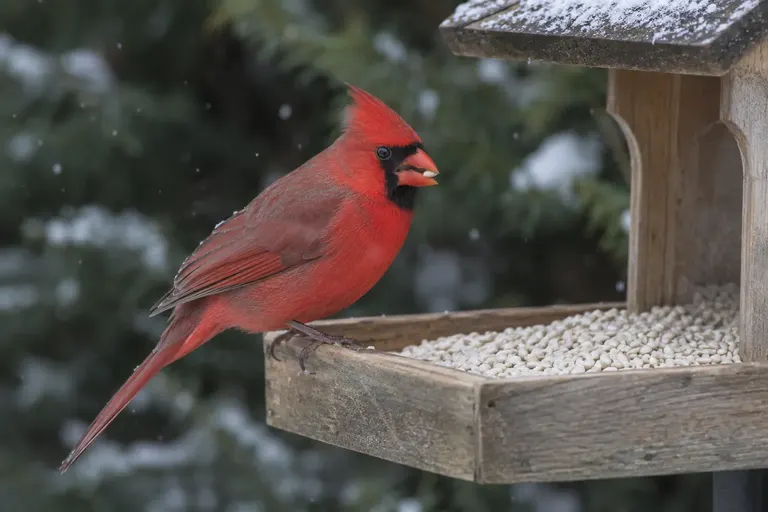
- Most birds eat it. Cardinals, chickadees, titmice, nuthatches, finches, jays, grosbeaks, sparrows and more.
- Thin shell. Small-billed birds can open it. That is the key difference from striped sunflower.
- High energy. Oil-type sunflower seeds contain roughly 38 to 50 percent oil, according to the Agricultural Marketing Resource Center.
- Works in almost any feeder. Tube, hopper, platform, window and ground.
- Downsides: squirrels, shell litter and some unwanted birds such as House Sparrows and blackbirds.
What is black oil sunflower seed?
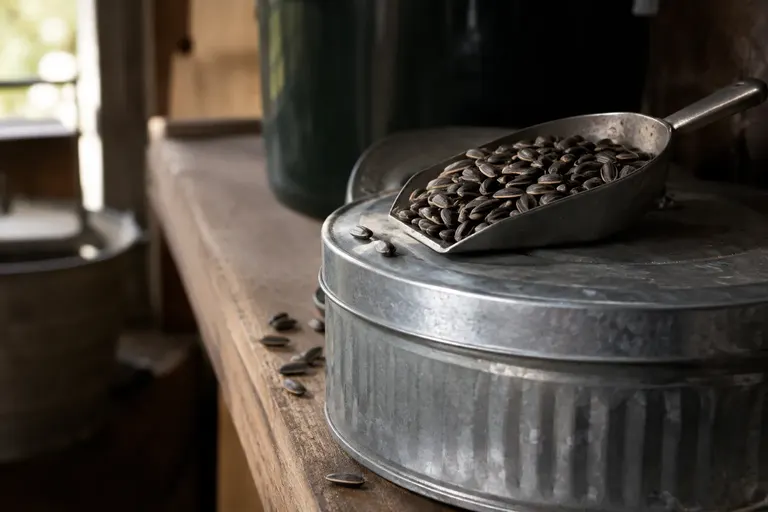
Black oil sunflower is the seed of oilseed-type sunflowers, the same crop grown for sunflower cooking oil. It is different from the striped “confection” sunflower sold as a snack. The seeds are small, uniform and solid black, with a thin, papery shell around a meaty kernel.
In the United States, most sunflower is grown in North and South Dakota, with significant acreage in Minnesota, Colorado, California, Nebraska, Texas and Kansas, according to the Agricultural Marketing Resource Center. The same source notes that oil-type seeds contain 38 to 50 percent oil, while confection types have less.
For birds, that oil is the point. Fat delivers more than twice the energy per gram of carbohydrate, and small songbirds burn through their reserves on long winter nights. The Cornell Lab describes black oil sunflower’s high fat content as “extremely valuable for most winter birds.”
What is in a typical bag?
Straight black oil sunflower is a single-ingredient food. Guaranteed analysis varies by brand and crop year. As one example, Purina lists its black oil sunflower at a minimum 15 percent crude protein, minimum 38.5 percent crude fat and maximum 28 percent crude fiber. Much of that fiber is the shell the birds discard.
What birds eat black oil sunflower seed?
Project FeederWatch names cardinals, chickadees, finches and sparrows among its biggest fans, with woodpeckers taking it occasionally. The Cornell Lab says virtually all seed-eating birds can crack the thin shells. Here is what that means at a typical North American feeder.
| Bird | How it uses black oil sunflower | Best feeder |
|---|---|---|
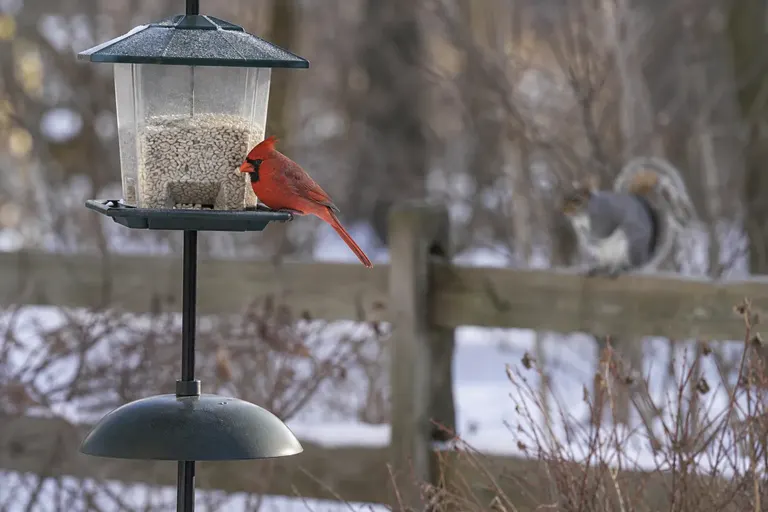
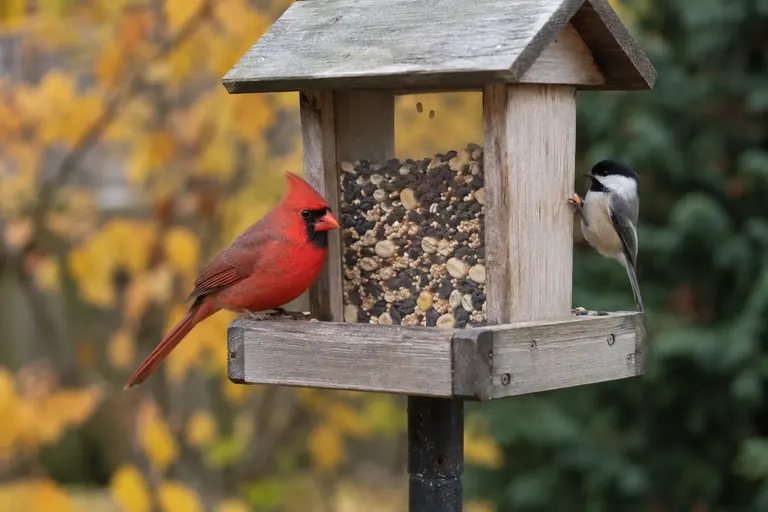
| Northern Cardinal | Cracks seeds with its heavy bill, prefers a stable perch | Hopper, platform, tray |
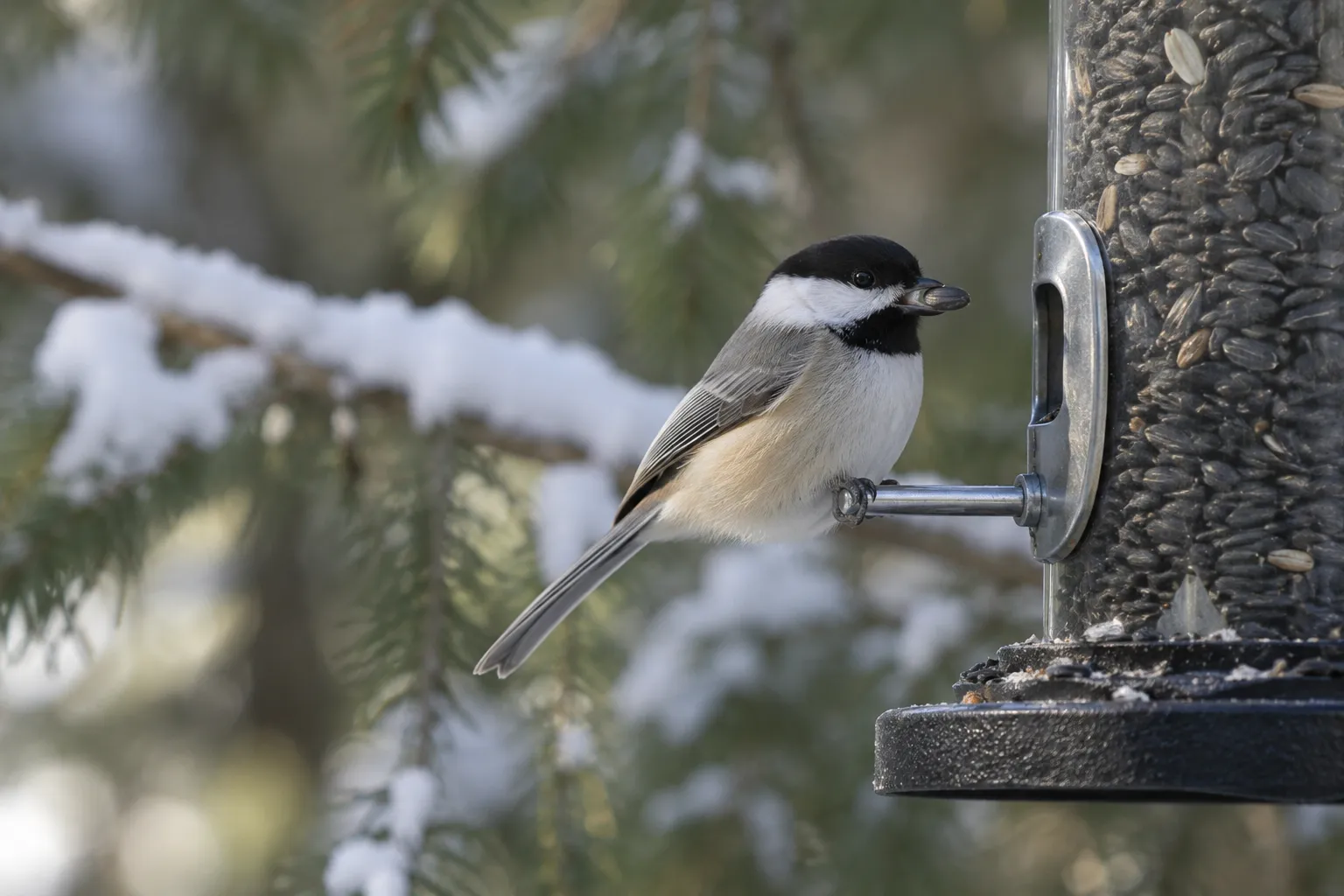
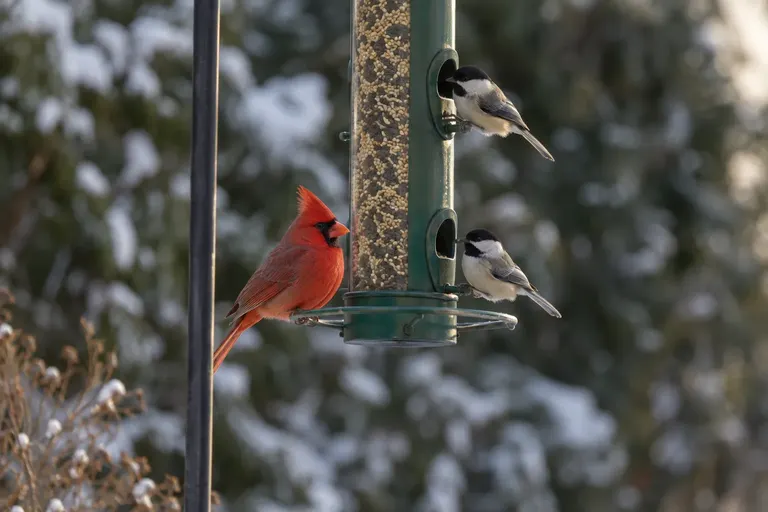
| Black-capped and Carolina Chickadees | Grab one seed, fly off to hammer it open or cache it | Tube, hopper, window |
| Tufted Titmouse | Takes single seeds away to open or store | Tube, hopper |
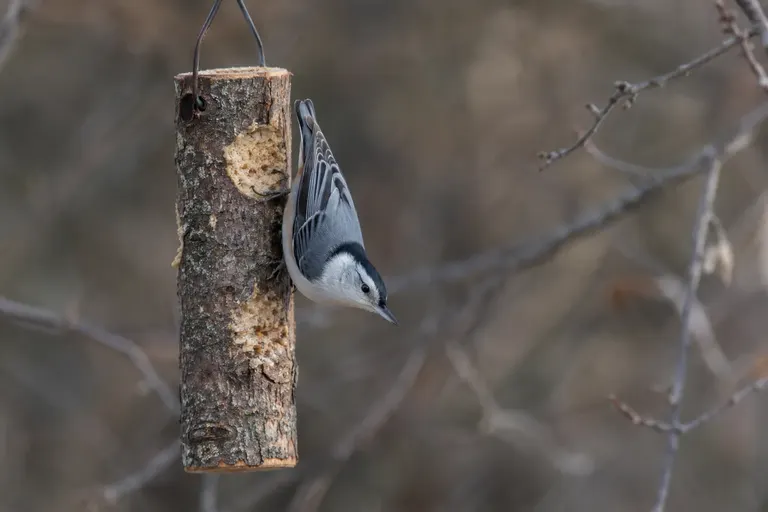
| White-breasted and Red-breasted Nuthatches | Wedge seeds in bark and hack them open | Tube, hopper |
| American Goldfinch and House Finch | Crack seeds at the port | Tube |
| Blue Jay | Takes several seeds at once, often caches them | Platform, hopper |
| Rose-breasted and Evening Grosbeaks | Crack seeds easily with large bills | Platform, hopper |
| Downy, Hairy and Red-bellied Woodpeckers | Occasional takers | Hopper, tube with tray |
| Mourning Dove, Dark-eyed Junco, native sparrows | Pick up seeds and kernels on the ground | Ground, low platform |
Our species guides go deeper on the favorites, including Northern Cardinals and Black-capped Chickadees.
Black oil vs striped sunflower seed
Both come from sunflowers, but they feed different birds.
| Feature | Black oil sunflower | Striped sunflower |
|---|---|---|
| Size | Small | Larger |
| Shell | Thin, easy to crack | Thick, hard to crack |
| Oil content | Higher | Lower |
| Birds that can open it | Almost all seed eaters | Mainly larger-billed birds such as cardinals, jays and grosbeaks |
| House Sparrows and blackbirds | Eat it readily | Have a harder time, per the Cornell Lab |
| Best use | Default feeder seed | Yards overrun by House Sparrows or blackbirds |
For most yards, black oil wins because more birds can use it. Striped sunflower is a problem-solver rather than a starting point.
Black oil sunflower vs hulled sunflower (hearts and chips)
Hulled sunflower is the same seed with the shell removed, sold as whole “hearts” or broken “chips.”
Advantages of hulled sunflower:
- No shells under the feeder, which makes it a staple of no-mess bird seed blends.
- Even small birds such as goldfinches and chickadees eat it quickly. Project FeederWatch notes many birds will prefer this easy, work-free meal.
- No wasted weight: you pay for kernel only.
Disadvantages:
- It costs more per pound.
- It spoils fast. The Cornell Lab warns that without the shell’s protection, sunflower hearts and chips spoil quickly and can harbor dangerous bacteria, so offer no more than can be eaten in a day or two.
- It attracts starlings more readily than in-shell seed.
A good compromise is in-shell black oil in the main feeders and a small amount of hearts in a feeder over a patio or deck where shells would be a nuisance.
Which feeder is best for black oil sunflower?
Black oil sunflower fits almost any seed feeder. The choice depends on which birds you want to favor and how you handle squirrels.
Tube feeders
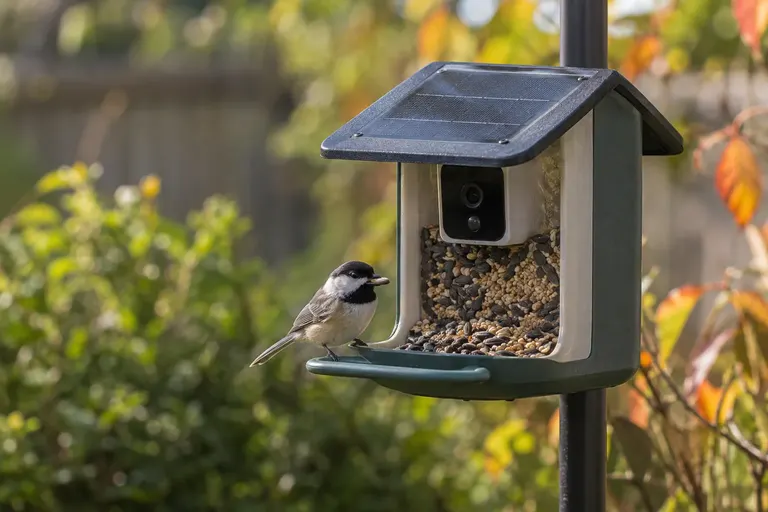
Tube feeders with small perches favor chickadees, titmice, finches and nuthatches. Larger birds struggle to perch. Choose a tube with ports sized for sunflower, not the narrow slits made for nyjer. A seed tray underneath lets cardinals join in but also invites bigger birds.
Hopper feeders
Hoppers hold a lot of seed and give a wide ledge for cardinals, grosbeaks and jays. Keep seed dry by choosing one with a good roof and drainage.
Platform and tray feeders
Open trays welcome the widest range of birds, including ground feeders. They also collect rain and droppings, so use trays with a mesh bottom and clean them often. See our picks for the best platform and tray feeders.
Window feeders
Small window feeders filled with black oil sunflower bring chickadees and titmice within a few feet of the glass. Feeders within about 3 feet of a window are also safer for birds than feeders a little farther out.
For a full comparison of feeder designs, see the best bird feeders for your backyard.
How to start feeding black oil sunflower seed
- Start with a single seed. Fill one feeder with straight black oil sunflower rather than a cheap mix. Mixes with fillers lead birds to toss seed they do not want onto the ground.
- Place the feeder near cover. Birds want shrubs or trees within a short flight, but Project FeederWatch suggests keeping feeders about 10 feet from dense brush where predators hide. Our guide to where to put a bird feeder has the details.
- Fill it partway at first. Until birds find the feeder, smaller amounts stay fresher.
- Be patient. New feeders can take days to weeks to be discovered. If nothing happens after that, check placement, cover and freshness before changing foods.
- Keep it clean. Project FeederWatch recommends cleaning seed feeders every week or two, and more often in wet weather or heavy use.
- Add foods later. Once birds are coming, add suet, nyjer for finches, or safflower to broaden what you attract.
Downsides of black oil sunflower seed (and fixes)
Squirrels
Squirrels eat black oil sunflower as eagerly as cardinals do, and the Cornell Lab notes its appeal to them. The fix is physical: a correctly placed pole baffle or a weight-activated feeder. See our explainer on squirrel baffle sizes and placement. If squirrels still win, some yards switch a feeder to safflower seed, which many squirrels find less appealing.
Shell mess
Shells pile up under feeders. Left for a season, the layer can smother grass and turn moldy in wet weather. Fixes:
- Rake or vacuum shells up regularly.
- Hang feeders over mulch, gravel or a patio you can sweep.
- Use a seed catcher tray under the feeder.
- Switch some or all feeders to hulled sunflower.
House Sparrows, grackles and blackbirds
These birds also eat black oil sunflower. If they take over, try striped sunflower, safflower, or tube feeders with short perches. Removing trays and open platforms for a few weeks also helps.
Spoilage
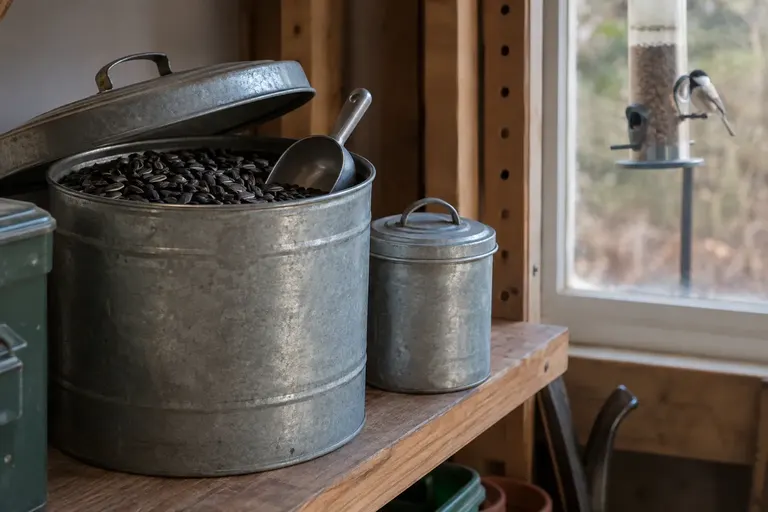
Because it is oily, black oil sunflower can go stale or rancid if stored warm, and it molds if it gets wet. Store it cool and dry, and buy an amount you will use within a reasonable time. Our guide on how to store bird seed so it stays fresh covers containers and shelf life.
How much black oil sunflower seed do you need?
There is no fixed amount. It depends on how many birds you host, the season and how many feeders you run. A useful rule: buy the bag size you can use up while it still smells fresh. In winter, when birds rely on feeders more, a busy yard can go through seed quickly. In summer, when insects are abundant, consumption often drops.
Watch the feeder for a few weeks and note how long a fill lasts. Then size your bags to match. Smaller bags cost more per pound but stay fresher; large bags only make sense if you store them well and use them steadily.
Can I feed birds sunflower seeds from the grocery store?
Only if they are plain. Snack sunflower seeds are usually the striped confection type, and they are often salted, roasted or flavored. Project FeederWatch advises against salted peanuts or nuts roasted with coatings or flavorings, and the same logic applies to sunflower seeds: seasonings add salt and oils birds do not need. Snack seeds are also large and thick-shelled, so small birds struggle with them.
Raw, unsalted hulled sunflower kernels from the bulk aisle are fine in small amounts, but they are the same seed as the hearts sold for birds, usually at a higher price. For regular feeding, buy black oil sunflower sold as bird food.
Is black oil sunflower better than a seed mix?
For most yards, yes. A bag of straight black oil sunflower contains nothing the birds throw away. Many inexpensive mixes lean on red millet, golden millet, flax and milo. The Cornell Lab lists golden millet, red millet and flax among fillers most birds reject, and that rejected seed ends up on the ground where it grows mold and bacteria and draws rodents.
Good blends exist, and they usually list black oil sunflower or sunflower chips first. If you want variety, a practical approach is to put straight black oil sunflower in one feeder and add a second food, such as white proso millet on a low tray for ground feeders, safflower for cardinals, or nyjer in a finch feeder. That way you can see what each food brings in and adjust.
Is black oil sunflower seed good for birds all year?
Yes. Black oil sunflower is safe to offer in every season, and many backyard feeders keep it out year-round. What changes is how much birds depend on it.
In winter, birds rely heavily on feeders because insects are scarce and nights are long. The oil in black oil sunflower helps small birds build the fat reserves they burn overnight. In spring and summer, adult songbirds switch toward insects, which provide the protein that nestlings need, and feeder traffic may drop. That is normal. Feeders supplement natural food; they do not replace it.
Two warm-weather adjustments help:
- Offer less at a time so seed does not sit in humid air and mold.
- Clean more often. Heat and humidity speed up mold growth in the seed and on the feeder.
Can you grow black oil sunflowers for birds?
You can. Oilseed sunflower varieties grow like other annual sunflowers: full sun, well-drained soil and seed sown after the last spring frost. Goldfinches in particular pick seeds straight from ripening heads in late summer.
A few practical notes:
- Leave the heads on the stalk if you want birds to harvest them in place. Expect them to clean the heads over several weeks.
- Or cut ripe heads once the backs turn yellow-brown, dry them somewhere airy and protected from rodents, and set them out in winter on a platform feeder.
- Squirrels and chipmunks will also harvest heads, so a garden crop is a bonus rather than a replacement for purchased seed.
- Spilled birdseed often sprouts under feeders on its own, which is why volunteer sunflowers pop up in spring. For a planned patch, garden seed gives you a named variety with known height and head size.
Sunflowers are native to North America, and a patch in a sunny corner adds both food and cover for birds late in the season.
Common black oil sunflower mistakes
- Buying a cheap mix instead of straight sunflower. Fillers such as red millet, golden millet and flax are rejected by most birds, and the Cornell Lab notes waste seed becomes a breeding ground for bacteria and fungus.
- Letting seed sit wet. Clumped, moldy seed in a feeder should be dumped and the feeder cleaned.
- Ignoring the shell pile. It builds up faster than you think.
- Assuming birds will come immediately. Discovery takes time.
- Hanging sunflower where squirrels can reach it. You will feed squirrels, not birds.
- Offering hulled seed in bulk. Hearts spoil fast, so offer only a day or two’s worth.
Black oil sunflower seed through the seasons
- Winter: its high fat content matters most now. Keep feeders full, especially before cold snaps and storms. Offer water too, since birds need it even in freezing weather.
- Spring: migrants such as Rose-breasted Grosbeaks may stop at sunflower feeders.
- Summer: adults bring fledglings to feeders. Clean more often in heat and humidity.
- Fall: chickadees, titmice, nuthatches and jays cache seeds, so feeders empty faster.
How we chose
We have not run our own feeding trials. This guide draws on Project FeederWatch and the Cornell Lab of Ornithology’s seed guidance, crop data from the Agricultural Marketing Resource Center, manufacturer product pages and guaranteed analyses, and patterns in verified owner feedback. For the product picks, we looked for straight black oil sunflower with no fillers from widely available brands, in bag sizes that suit different feeding levels.
Wagner’s Four Season Black Oil Sunflower Seed
A straight black oil sunflower seed in a 20-pound bag (model 76026). It suits yards with several feeders or heavy winter traffic, where a large bag is used up while it is still fresh.
Skip it if you feed lightly or cannot store 20 pounds somewhere cool, dry and rodent proof.
Kaytee Wild Bird Black Oil Sunflower
Kaytee sells its black oil sunflower in 5, 10 and 20-pound bags and describes the thinner hulls as easier for small songbirds to eat. The smaller bags make sense for a single feeder or a new setup.
Skip it if you already go through a large bag every few weeks.
For a wider look at seed options, see the best bird seed to attract the most species.
Sources
- Project FeederWatch: Black-oil Sunflower Seeds
- Project FeederWatch: Feeding Birds
- Cornell Lab of Ornithology, All About Birds: A Quick Guide to Seed Types
- Agricultural Marketing Resource Center: Sunflower Profile
- Kaytee: Black Oil Sunflower product page
- Purina: Black Oil Sunflower Wild Bird Seeds guaranteed analysis
Gear mentioned in this guide
Wagner's Four Season Black Oil Sunflower Seed
A straight black oil sunflower seed with no fillers, sold in a 20-pound bag that suits a busy feeder through winter.
- Best for
- Yards with several feeders or heavy winter traffic.
- Skip it if
- You feed lightly and cannot store 20 pounds somewhere cool, dry and rodent proof.
- Contents
- 100% black oil sunflower
- Bag size
- 20 lb
- Model
- 76026
Kaytee Wild Bird Black Oil Sunflower
A widely stocked black oil sunflower seed that comes in 5, 10 and 20-pound bags, so you can buy only what you will use while it is fresh.
- Best for
- New feeders and small yards where a smaller bag stays fresher.
- Skip it if
- You already go through a large bag every few weeks; bigger bags usually cost less per pound.
- Contents
- Black oil sunflower
- Bag sizes
- 5, 10 and 20 lb
Frequently asked questions
What birds eat black oil sunflower seed?
Project FeederWatch lists it among the favorite feeder foods of cardinals, chickadees, finches and sparrows, and woodpeckers take it occasionally. In practice it also draws titmice, nuthatches, jays, grosbeaks, Mourning Doves and juncos. The Cornell Lab notes that virtually all seed-eating birds can crack its thin shells, which is why it attracts the widest variety.
What is the difference between black oil and striped sunflower seed?
Black oil sunflower seeds are smaller, have thinner shells and contain more oil. Striped sunflower seeds are larger, with thick, striped shells. According to the Cornell Lab, the thicker shell makes striped seed harder for House Sparrows and blackbirds to open, so it can be useful where those birds dominate, but fewer small birds can use it.
Do squirrels eat black oil sunflower seed?
Yes. Squirrels eat it readily, and the Cornell Lab notes it appeals to them as well as birds. Protect sunflower feeders with a properly placed baffle or a weight-activated squirrel-proof feeder. If squirrels still dominate, switching part of your feeding to safflower may help, since many squirrels find it less appealing.
Is black oil sunflower seed messy?
Yes. Birds crack the seeds and drop the shells, which pile up under the feeder. The shells can smother lawn grass if left to build up. To avoid this, use hulled sunflower hearts or chips, which leave no shells, but offer only what birds eat in a day or two because the Cornell Lab warns hulled seed spoils quickly.
How should I store black oil sunflower seed?
Keep it in a sealed metal or heavy plastic container in a cool, dry place such as a garage or shed. Moisture leads to mold, and warm storage makes the oily seed go stale faster. Buy an amount you will use in a few weeks to a couple of months, and throw out any seed that smells musty or looks clumped.