Safflower Seed for Birds: Who Eats It and Who Skips It
Safflower seed for birds is a cardinal favorite that many squirrels, grackles and starlings ignore. Which birds eat it, how to switch, and where it falls short.
If you buy through links on this page we may earn a commission, at no cost to you. It never decides what we recommend. How we earn
In this article
- Quick answer: is safflower seed worth it?
- What is safflower seed?
- What birds eat safflower seed?
- Do squirrels eat safflower seed?
- Safflower vs black oil sunflower
- How to switch birds to safflower seed
- Best feeders for safflower seed
- Using safflower to beat grackles and starlings
- When is the best time to feed safflower?
- Is safflower seed nutritious for birds?
- Safflower blends and cardinal mixes
- What to look for in a bag of safflower
- Downsides of safflower seed
- What if safflower does not work in your yard?
- Storing safflower seed
- Common safflower mistakes
- How we chose
- Sources
- Gear mentioned in this guide
- Frequently asked questions
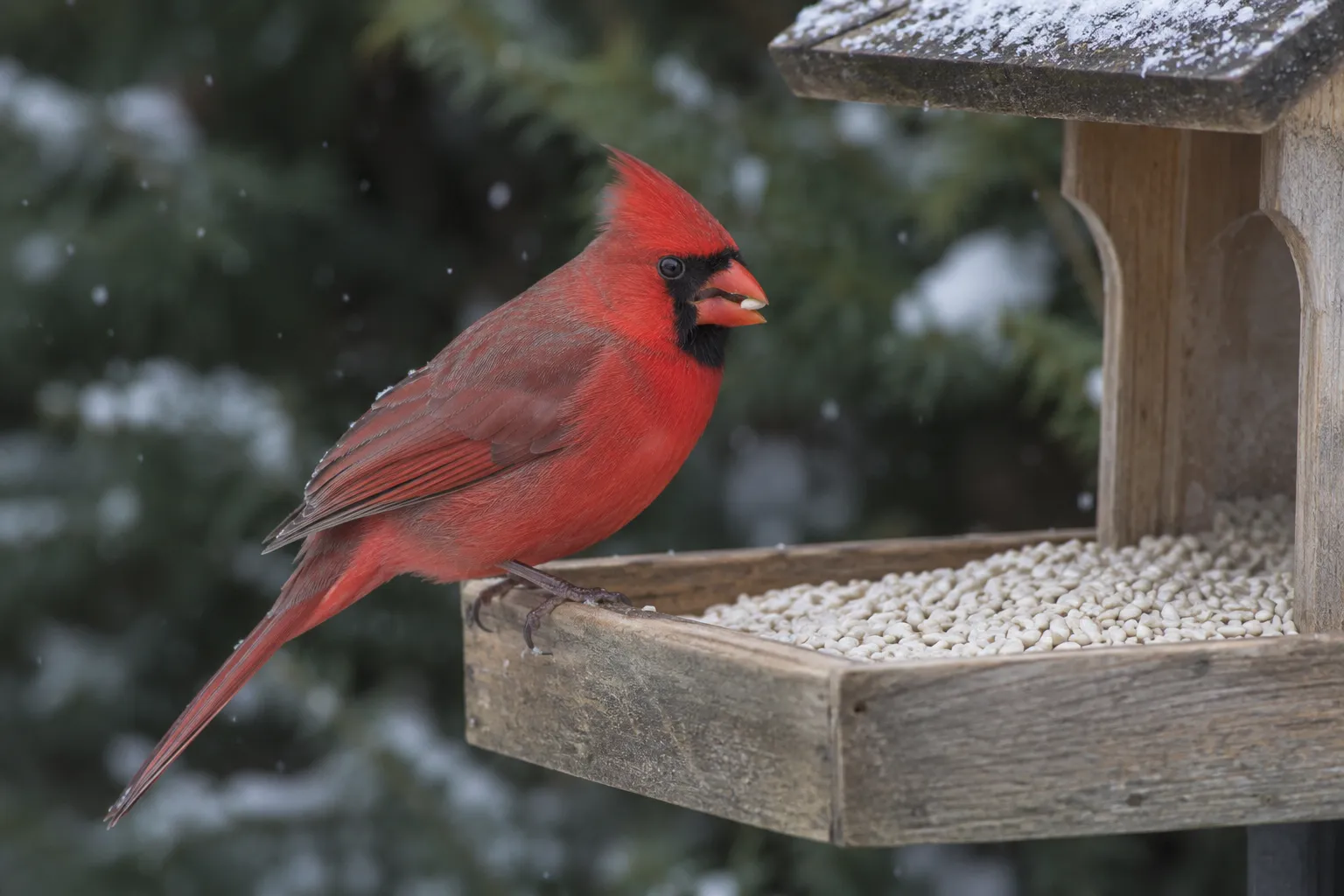
Safflower seed for birds is the one to add when cardinals are your favorite visitors and squirrels, grackles or starlings are your problem. The Cornell Lab of Ornithology calls it “a favorite among cardinals,” and many squirrels, grackles, starlings and blackbirds tend to leave it alone. It is not magic: most birds still prefer black oil sunflower, and some squirrels eat safflower anyway. But as a second seed, or a replacement when pests take over, it earns its place.
Quick answer: is safflower seed worth it?
- Yes, if cardinals, chickadees, titmice and doves are your main visitors and grackles, starlings or squirrels empty your sunflower feeders.
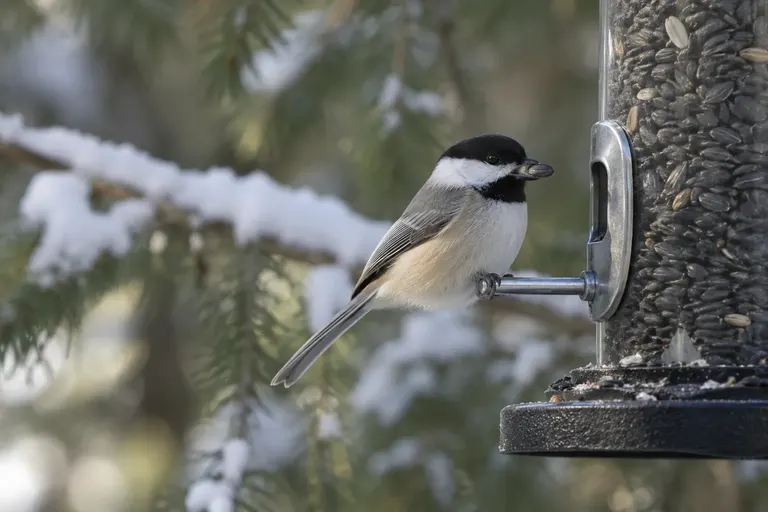
- Birds that usually eat it: Northern Cardinals, chickadees, titmice, nuthatches, grosbeaks, finches, doves, some native sparrows and woodpeckers.
- Animals that often avoid it: grackles, starlings, blackbirds and many squirrels.
- Downsides: fewer species than sunflower, a learning curve before birds accept it, and squirrel resistance that varies by yard.
- How to switch: offer it alone in a hopper or platform feeder and give birds a week or more.
What is safflower seed?
Safflower (Carthamus tinctorius) is a thistle-like annual plant with red, orange, yellow or white flowers, native to Asia and Africa. Penn State’s Ecologist’s Notebook notes that in North America it is widely grown in Mexico and California and as a summer crop in the Northern Great Plains. Most safflower is grown for cooking oil; birdseed is a side market.
The seed is white to off-white, slightly pointed and a little smaller than a black oil sunflower seed. Project FeederWatch describes it as resembling a white sunflower seed. Each seed sits inside a thin but tough hull.
Why many pests avoid it
Safflower has a bitter taste. Penn State’s Ecologist’s Notebook notes that many bird species tolerate the flavor or get used to it, but others, including grackles and starlings, are described as intolerant of it and avoid safflower feeders. Many squirrels react the same way when other food is available. Nothing about the seed harms these animals; they simply prefer something else.
White vs golden safflower
Most bags are standard white safflower. Some brands sell “golden” safflower, a different variety with a tan color. Lyric, for example, describes its golden safflower as thin-hulled and lists a guaranteed analysis of at least 18 percent crude protein and 45 percent crude fat. Both types are used the same way in feeders. The white version is more widely stocked.
What birds eat safflower seed?
Sources agree on the core list, with regional variation.
| Bird | Eats safflower? | Notes |
|---|---|---|
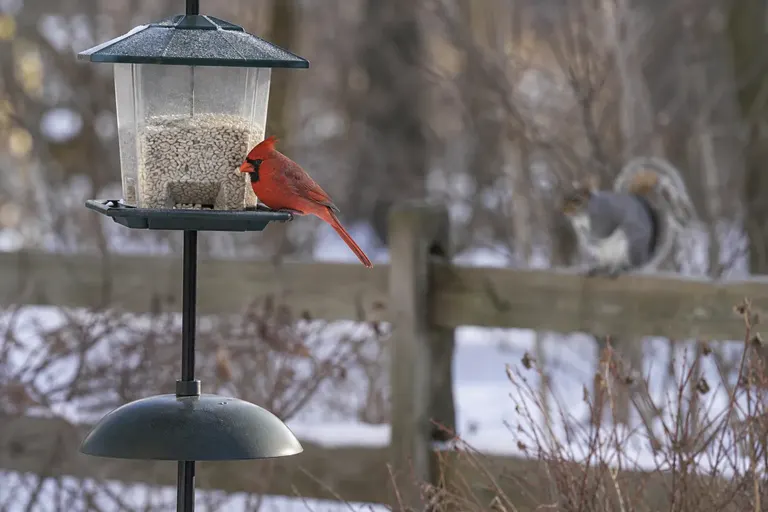
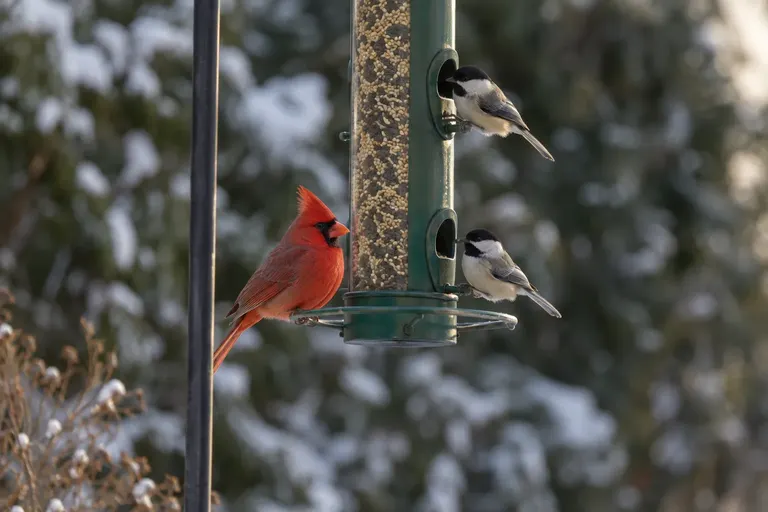
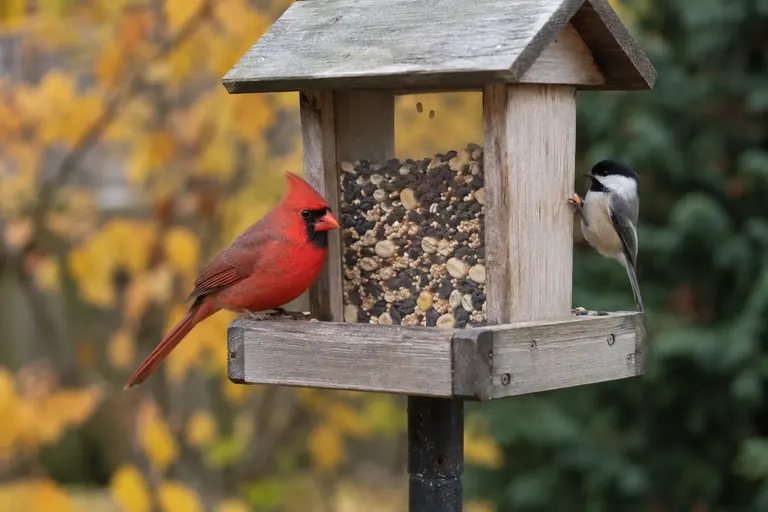
| Northern Cardinal | Yes, readily | The Cornell Lab calls safflower a cardinal favorite |
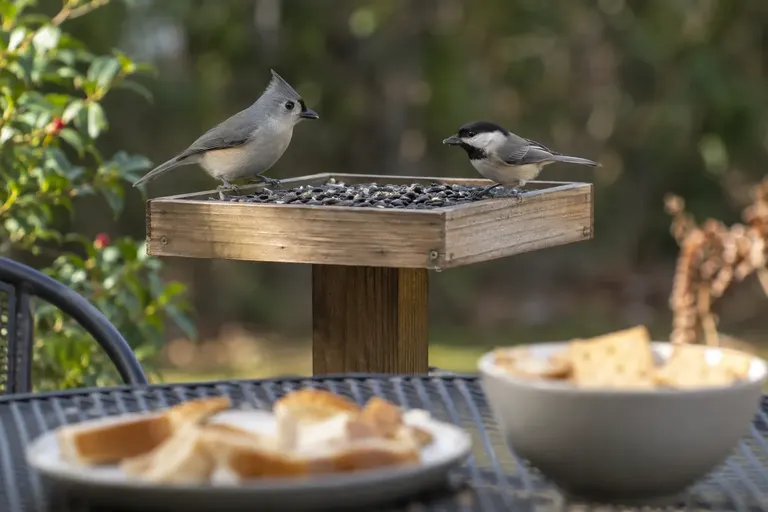
| Chickadees | Yes | Named by the Cornell Lab |
| Tufted Titmouse | Yes | Reported by Birds and Blooms and Penn State |
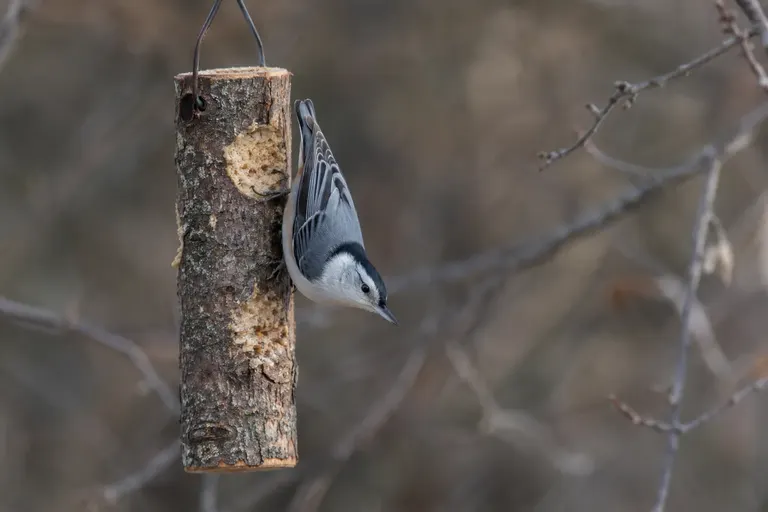
| Nuthatches | Yes | Reported by Penn State’s Ecologist’s Notebook |
| Grosbeaks | Yes, some species | The Cornell Lab lists “some grosbeaks” |
| Blue Jay | Often | Reported by Penn State’s Ecologist’s Notebook |
| House and Purple Finches | Often | Reported by Birds and Blooms |
| Mourning Dove | Yes | Often feeds on safflower dropped on the ground |
| Native sparrows | Some | The Cornell Lab lists native sparrows |
| Woodpeckers | Sometimes | Reported by Birds and Blooms |
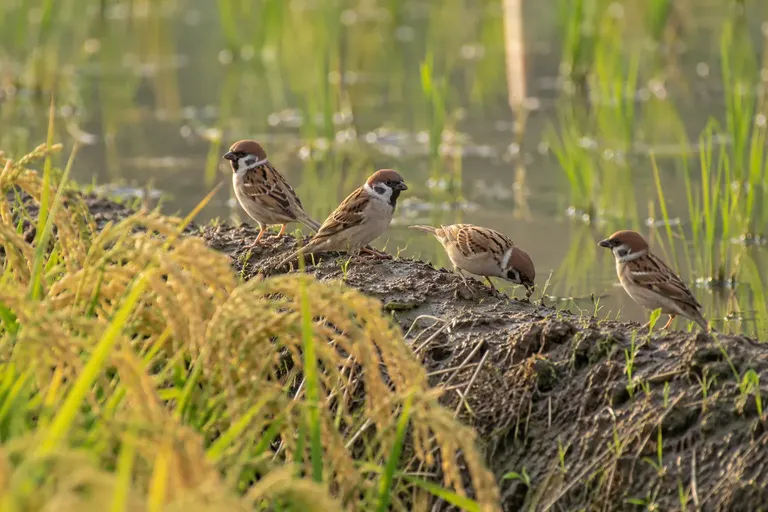
| House Sparrow | Varies | The Cornell Lab says they typically avoid it; Penn State lists them as eaters |
| European Starling | Usually no | Avoids it according to the Cornell Lab and Penn State |
| Common Grackle | Usually no | Described as intolerant of the taste |
| Red-winged and other blackbirds | Usually no | Reported to avoid it |
The conflicting reports on House Sparrows are a good reminder: the Cornell Lab notes that preferences vary by region. Your local birds decide.
For more on the star of the show, see how to attract Northern Cardinals to your yard.
Do squirrels eat safflower seed?
Often not, but it is not squirrel-proof.
Many feeder owners report squirrels ignoring safflower while sunflower is nearby. Birds and Blooms includes squirrels on its list of animals that avoid safflower, and Lyric markets its safflower on the basis that most squirrels dislike the taste. On the other side, the author of Penn State’s Ecologist’s Notebook found that the squirrels in their own yard ate safflower readily, contradicting the marketing claims.
The fair conclusion: safflower lowers the appeal of your feeder to many squirrels, especially when easier food is around. Hungry squirrels in lean times, or squirrels that learn to eat it, will still take it. Use safflower as one layer and combine it with physical protection. Our guide on squirrel baffle sizes and placement covers the physical side, and bird food squirrels won’t eat compares other deterrent foods such as hot pepper blends.
Safflower vs black oil sunflower
| Feature | Safflower | Black oil sunflower |
|---|---|---|
| Species attracted | Fewer, favors cardinals and big-billed birds | Widest range of any single seed |
| Bird preference | Most birds prefer sunflower when both are offered, per FeederWatch | The default favorite |
| Grackles and starlings | Usually avoid it | Readily eat it |
| Squirrels | Many avoid it; not guaranteed | Eat it eagerly |
| Shell mess | Light, thin hulls | Heavier shell layer |
| Acceptance | May take a week or more | Birds find it quickly |
| Best use | Pest-pressure yards, cardinal feeders | Starting seed for any yard |
The takeaway: start with black oil sunflower, and add or switch to safflower when pests become the main problem.
How to switch birds to safflower seed
Birds are creatures of habit. If sunflower has been available, many will ignore safflower at first. These steps give the switch the best chance.
- Pick one feeder. Hopper and platform feeders work best. Birds and Blooms recommends them because safflower is a slightly larger seed and cardinals prefer a stable ledge.
- Offer safflower on its own. When it is mixed with other seeds, birds tend to eat around it. Use straight safflower in that feeder.
- Remove the competition for a while. If you keep sunflower in other feeders, many birds will go there first. Consider pausing sunflower for a week or two.
- Or blend gradually. An alternative is to start with mostly sunflower plus some safflower, then increase the safflower share every few days until it is all safflower.
- Scatter a little on a low tray for Mourning Doves and other ground feeders.
- Give it time. Birds and Blooms notes birds may take a week or more to accept it.
- Start small. Buy a small bag first to see how your local birds react before buying in bulk.
Best feeders for safflower seed
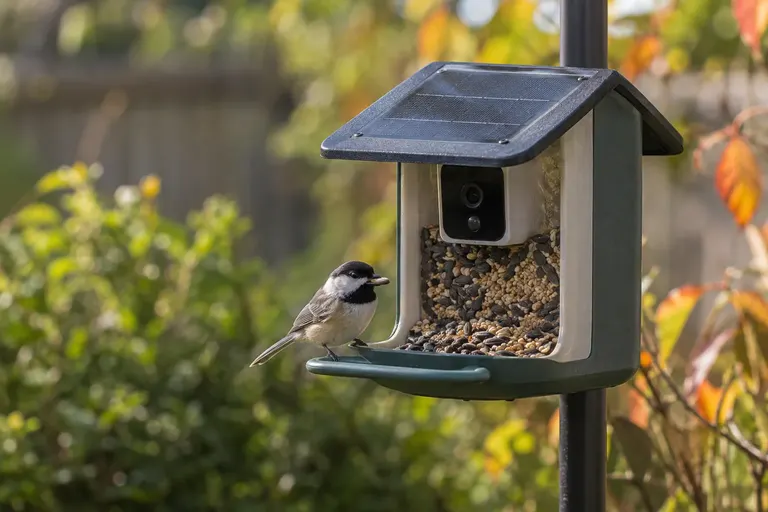
- Hopper feeders: the top choice for cardinals. A wide perch ledge suits their size and posture.
- Platform and tray feeders: easy for cardinals, doves and grosbeaks. Use a mesh bottom and keep it clean. Note that trays make it easier for other species to reach any sunflower you also offer, so keep them safflower-only if pests are the issue.
- Tube feeders with larger ports: chickadees and titmice use them well. Check that the ports are wide enough for safflower, not narrow nyjer slits.
- Weight-activated feeders: pair safflower with a feeder that closes under a squirrel’s weight for a two-layer defense.
Our roundup of the best feeders to attract cardinals covers hopper and platform designs suited to safflower, and the best bird seed for cardinals compares safflower with sunflower and cardinal blends.
Using safflower to beat grackles and starlings
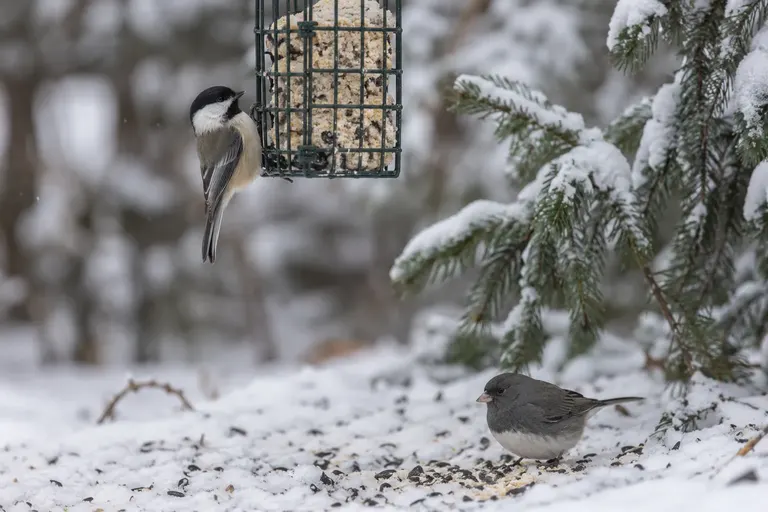
Grackle and starling flocks can empty a feeder in minutes. Because both usually avoid safflower, it is one of the most effective tools against them.
- Make safflower the only seed in reachable feeders during grackle season, typically spring and early summer in much of the East.
- Take down suet and open trays of sunflower for a while, since those draw starlings.
- Keep offering safflower after they leave. Once flocks move on, you can reintroduce other foods.
Our guide on how to keep starlings and grackles off feeders covers feeder designs and timing in more detail.
When is the best time to feed safflower?
Safflower works in any season, but it is most useful at specific times.
- Spring and early summer: in much of the East and Midwest, this is when grackle and blackbird flocks are most active around feeders. It is also nesting season for cardinals, which keep visiting feeders through summer. Switching to safflower now keeps cardinals coming while the flocks look elsewhere.
- Fall migration: starling and blackbird flocks form again in many areas. A safflower feeder can carry you through.
- Winter: safflower is a solid winter food for cardinals, chickadees and titmice. Many people run it alongside black oil sunflower in winter, when the widest range of birds needs calories.
The flexible approach is to keep one feeder on safflower all year, and move other feeders between sunflower and safflower as pest pressure rises and falls.
Is safflower seed nutritious for birds?
Yes. Safflower is an oilseed, so it is rich in fat, the concentrated energy that small birds need to get through cold nights. As one example, Lyric’s golden safflower lists a guaranteed analysis of at least 45 percent crude fat and 18 percent crude protein. Standard white safflower varies by crop and supplier, so check the label on the bag you buy.
Safflower should not be the only food in a yard for long periods if you want variety, simply because fewer species eat it. In spring and summer, remember that most songbirds feed their nestlings insects, not seed. Native plants, a pesticide-free yard and a clean water source do more for breeding birds than any seed.
Safflower blends and cardinal mixes
You will see many “cardinal” blends that combine safflower with black oil sunflower, striped sunflower and sometimes peanuts or fruit. They can be good foods, but know what you are buying.
- For pest control, a blend is weaker. Grackles, starlings and squirrels will still eat the sunflower portion, and they may toss safflower aside to get at it. If pests are the reason you want safflower, buy it straight.
- For attracting cardinals, a blend is fine. Cardinals eat both seeds, and blends can widen the mix of visitors.
- Read the ingredient order. Ingredients are listed by weight, largest first. A “safflower” blend that lists millet or milo first is mostly filler.
What to look for in a bag of safflower
- Clean seed. Look for little dust, few broken seeds and no stems or debris.
- Freshness. Seed should smell neutral, not musty or sour.
- No clumps or webbing. Clumps suggest moisture; webbing suggests pantry moths.
- Straight safflower unless you specifically want a blend.
- A bag size you can use up within a couple of months in normal conditions.
Downsides of safflower seed
- Fewer species. Goldfinches, for example, are much more interested in sunflower and nyjer. A safflower-only yard will be quieter than a sunflower yard.
- Slow acceptance. Expect a lag while birds learn the new food.
- Variable squirrel resistance. Some squirrels eat it. Do not skip baffles on its reputation alone.
- Regional differences. A seed that clears grackles in one region may be eaten by House Sparrows in another.
- Availability. Safflower is less widely stocked than sunflower in general stores, so plan purchases ahead.
What if safflower does not work in your yard?
Sometimes birds never warm to safflower, or the pests you hoped to deter eat it anyway. Before you give up, run through these checks.
- Birds ignore it after two weeks. Confirm there is no other seed nearby that they prefer. If sunflower is available anywhere in the yard, including a neighbor’s feeder, many birds will keep going there. Try again in late fall or winter, when natural food is scarce and birds are more willing to try new foods.
- Squirrels eat it. Your squirrels have learned it is food. Rely on physical defenses instead: a correctly placed baffle, a pole away from launch points, or a weight-activated feeder.
- House Sparrows eat it. Reports differ by region. Try a feeder style that favors cardinals, such as a hopper with a single wide perch, and remove open trays.
- Grackles still visit. A few individuals may sample it, especially young birds. Most flocks lose interest when safflower is the only food on offer, so remove every other seed source for a while.
- Only cardinals come. That may be the trade. Add a second feeder with nyjer for finches, or suet in winter for woodpeckers, placed away from the problem area.
If safflower still fails, it is not a bad seed; it is just not the right tool for your yard. Hot pepper treated seed and physical barriers are the next options for squirrels.
Storing safflower seed
Safflower stores much like sunflower. Keep it in a sealed metal or heavy plastic container in a cool, dry place, away from rodents. Its hull protects it better than hulled sunflower hearts, but moisture still leads to mold. Throw out seed that smells musty or clumps together. Our guide on how to store bird seed covers containers, bugs and shelf life.
Common safflower mistakes
- Mixing it into sunflower and expecting results. Birds pick out the sunflower and toss the safflower. Offer it alone.
- Giving up after two days. Allow a week or more.
- Using a narrow-port finch feeder. Safflower will not flow through nyjer ports.
- Relying on safflower alone to stop squirrels. Pair it with a baffle or squirrel-resistant feeder.
- Buying a huge bag first. Test with a small bag.
- Letting spilled seed pile up. Even disliked seed rots on wet ground and can attract rodents.
How we chose
We have not run feeding trials ourselves. This guide is based on seed guidance from the Cornell Lab of Ornithology and Project FeederWatch, Penn State’s Ecologist’s Notebook, Birds and Blooms, manufacturer product pages and guaranteed analyses, and patterns in verified owner feedback on how birds and squirrels respond to safflower. For the product picks, we looked for straight safflower from established brands, offered in small bag sizes that make a first trial practical.
Wagner’s Safflower Seed Wild Bird Food
Straight white safflower in a 5-pound bag (model 57075). The small bag is the point: it lets you test safflower in one feeder before buying more. Owners commonly report cardinals taking to it while results with squirrels vary, which matches the independent guidance above.
Skip it if you already know your birds eat safflower and you run several feeders.
Lyric Golden Safflower Seed Wild Bird Food
A golden safflower that Lyric describes as thin-hulled, sold in 5 and 12-pound bags, with a listed guaranteed analysis of at least 18 percent crude protein and 45 percent crude fat. Lyric recommends it for platform and hopper feeders and says it attracts cardinals, grosbeaks, nuthatches and towhees.
Skip it if you want the most economical straight safflower.
Sources
Gear mentioned in this guide
Wagner's Safflower Seed Wild Bird Food
Plain white safflower in a 5-pound bag, a sensible size for trying safflower before committing to a large bag.
- Best for
- Testing safflower in one feeder to see how your local birds and squirrels react.
- Skip it if
- You already know your birds eat safflower and you feed several feeders; a bigger bag makes more sense.
- Contents
- Safflower seed
- Bag size
- 5 lb
- Model
- 57075
Lyric Golden Safflower Seed Wild Bird Food
A golden safflower variety that Lyric describes as thin-hulled, with a listed guaranteed analysis of at least 45 percent crude fat.
- Best for
- Cardinal feeders where you want a thinner-hulled safflower option.
- Skip it if
- You want the most economical straight safflower; standard white safflower does the same core job.
- Type
- Golden safflower
- Bag sizes
- 5 and 12 lb
- Crude fat
- 45% minimum (listed)
Frequently asked questions
What birds eat safflower seed?
The Cornell Lab calls safflower a favorite among cardinals, and says some grosbeaks, chickadees and native sparrows eat it too. Other sources add Tufted Titmice, nuthatches, Blue Jays, House and Purple Finches, woodpeckers and Mourning Doves. Which species take it varies by region and by how used to it your local birds are.
Do squirrels eat safflower seed?
Many squirrels dislike safflower's bitter taste and ignore it while sunflower is available, which is why it is sold as squirrel-resistant. It is not squirrel-proof. Some squirrels eat it readily, especially when food is scarce. Treat safflower as one layer of defense and still use a baffle or squirrel-resistant feeder where squirrels are persistent.
Do grackles and starlings eat safflower?
Usually not. The Cornell Lab says starlings typically avoid safflower, and Penn State's Ecologist's Notebook describes grackles and starlings as intolerant of its taste. Blackbirds often avoid it as well. That makes safflower one of the most useful tools for keeping flocks of grackles and starlings from emptying feeders.
Why won't birds eat my safflower seed?
Birds may ignore a new food at first, especially if sunflower is also on offer. Put safflower alone in a feeder, remove other seed for a while, and give it a week or more. Mixing a little safflower into sunflower and gradually increasing the ratio also helps. Some regions simply have fewer safflower eaters.
Is safflower seed messy?
Less than sunflower. Birds shed safflower hulls, but Penn State's Ecologist's Notebook describes them as thin and fragile, so they do not form a thick layer under the feeder the way sunflower shells can. Birds that toss seeds while searching for something else still create some waste.