Millet for Birds: Who Eats It and How to Feed It
Millet for birds is a top seed for sparrows, juncos and doves on the ground. Which birds eat white and red millet, how to offer it and when to skip it.
In this article
- Quick answer: is millet good bird seed?
- What is millet bird seed?
- Which birds eat millet?
- Which birds usually ignore millet?
- How to feed millet: ground, tray or tube?
- How much millet should you put out?
- Millet in seed mixes: filler or useful?
- Will millet attract house sparrows, cowbirds or pigeons?
- Millet, rats and hygiene
- How to store millet
- When should you feed millet?
- Millet vs sunflower vs safflower
- Common mistakes with millet
- Sources
- Frequently asked questions
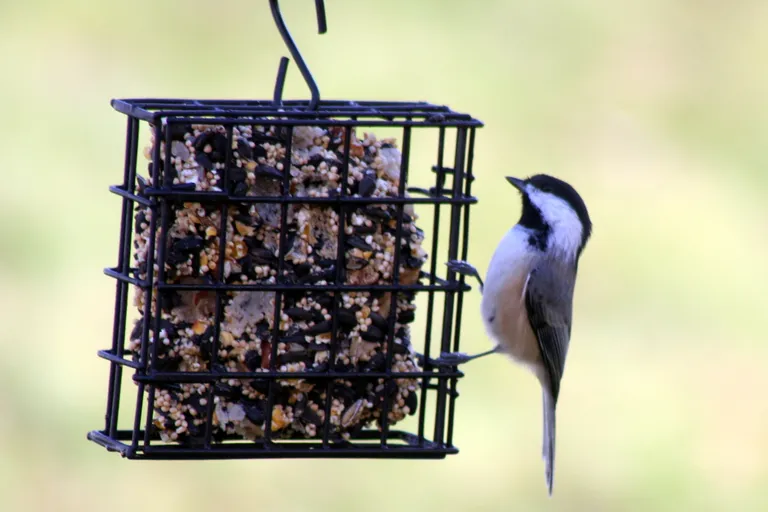
Millet for birds is the small, round, pale seed that ground-feeding birds love. White proso millet is a favorite of sparrows, juncos and doves, and Project FeederWatch calls millet a favored food of many smaller ground-foraging birds. It does little for chickadees, titmice or finches at hanging feeders, so it works best scattered sparingly or offered on a tray.
Quick answer: is millet good bird seed?
Millet is good bird seed for the right birds and the right spot. It is one of the most useful foods you can offer near the ground, and one of the most wasted when it sits in a hanging tube.
- Best for: juncos, native sparrows, doves, and in Europe house and tree sparrows, dunnocks and some finches and buntings.
- Best type: white proso millet. Red millet is eaten too, but less often named as a first choice.
- Best way to offer it: a small handful on the ground or on a raised tray, refilled daily, no more than birds clear in a day.
- Not for: chickadees, titmice and most birds that use hanging feeders. They prefer sunflower.
- Watch out for: House Sparrows, Brown-headed Cowbirds and pigeons, which all like millet, and rats if seed is left on the ground overnight.
If you already feed black oil sunflower and want more species, adding millet at ground level is the cheapest way to bring in the birds that rarely use hanging feeders. Our best bird seed guide explains how millet fits next to the other seeds.
What is millet bird seed?
Millet bird seed is the small grain of cultivated millet grasses. In bird food, the main one is proso millet (Panicum miliaceum), a fast-growing grass grown on the plains and dry farmland of North America, Europe and Asia. Each seed is round, about 2 to 3 mm across, with a smooth shiny hull that small beaks crack easily.
Bags and mixes use a few different names. The table sorts them out.
| Name on the bag | What it is | How birds treat it |
|---|---|---|
| White proso millet | Proso millet with a cream to white hull | The standard millet for wild birds; widely eaten by ground feeders |
| Red proso millet | Proso millet with a red to brown hull | Eaten by juncos and several sparrows; common in budget mixes |
| German or golden millet | Foxtail millet (Setaria italica), a smaller seed | Eaten by some sparrows and cowbirds; more common in cage-bird food |
| Spray millet | Whole seed heads of foxtail millet | Sold mainly for pet birds; wild birds will pick at it |
| Milo (sorghum) | A larger round red seed, not a millet | Often listed with millet in mixes; most eastern birds ignore it |
The important difference is between white proso millet and milo. They often share a bag, and they look similar in photos, but birds treat them very differently. More on that below.
White vs red millet
White proso millet is the one to buy if you buy millet on its own. A long-running feeder study by Aelred Geis for the U.S. Fish and Wildlife Service, published in 1980, found that white proso millet was “eagerly taken,” alongside black oil sunflower, and it appeared on the favorite-food lists of more species than red millet. Red proso millet still made the lists for Dark-eyed Juncos and Song, White-crowned and White-throated Sparrows, so it is not useless. It just appears mostly as a cheaper ingredient in mixes rather than as a straight seed.
Which birds eat millet?
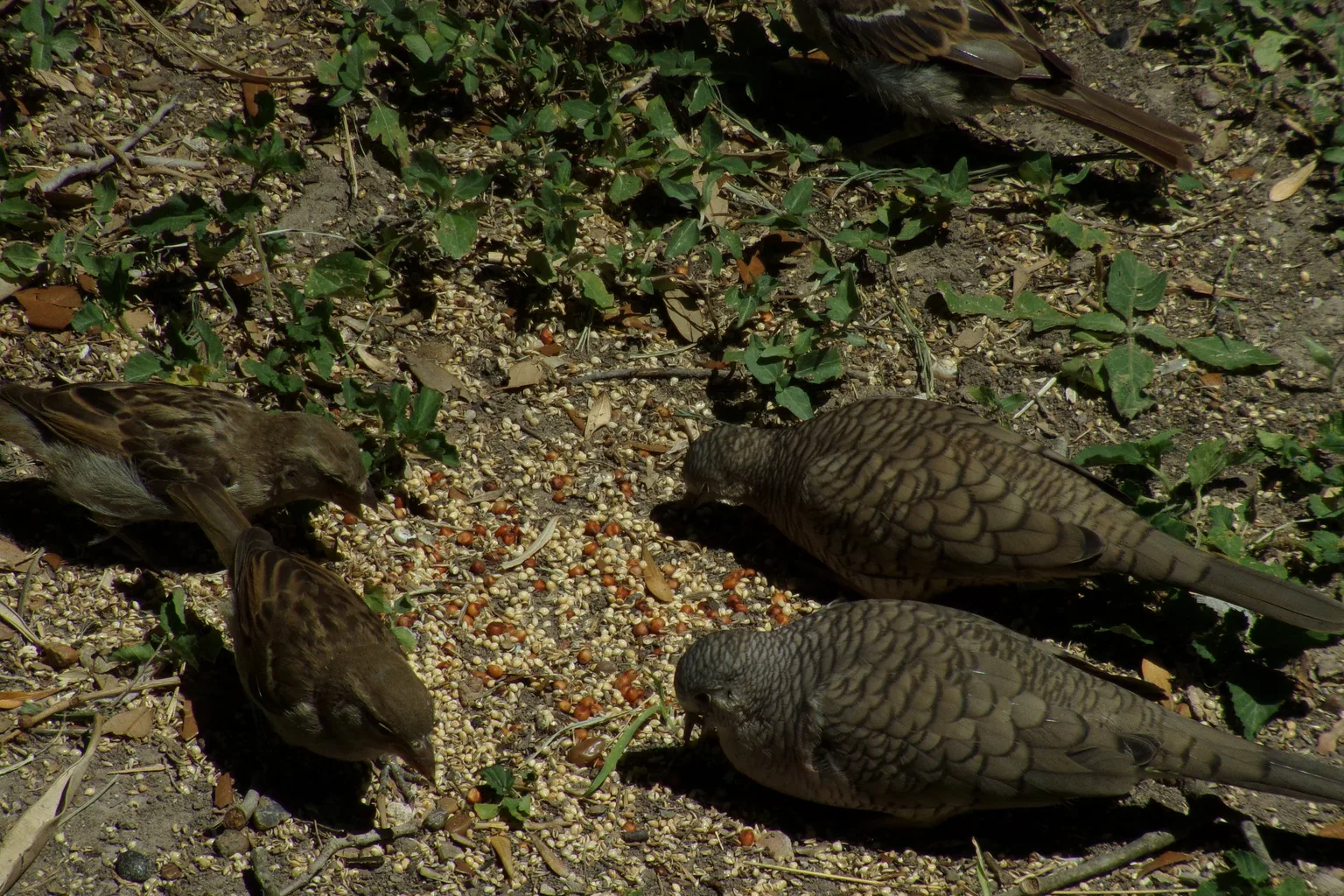
Millet is eaten mainly by small seed-eaters that forage on the ground: sparrows, juncos, doves, buntings and some finches. Which ones visit depends on where you live.
North America
Project FeederWatch, run by the Cornell Lab of Ornithology and Birds Canada, describes millet as a favored food of many smaller ground-foraging birds and names juncos and sparrows. The 1980 Fish and Wildlife Service study adds detail. White proso millet ranked among the preferred seeds of:
- Dark-eyed Junco
- Mourning Dove
- House Sparrow
- Song Sparrow
- White-crowned Sparrow
- White-throated Sparrow
- Brown-headed Cowbird
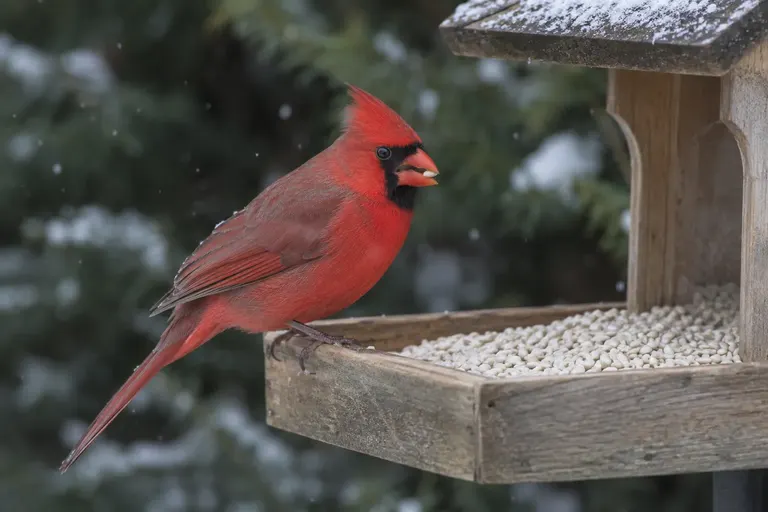
Maryland’s Department of Natural Resources says cardinals, blue jays, juncos, sparrows and Mourning Doves will flock to a platform feeder stocked with a mix of millet, sunflower, cracked corn and peanut kernels. In that kind of mix, cardinals and jays are mostly there for the sunflower and peanuts, while the sparrows and doves eat the millet. If juncos are your favorite winter visitor, see our Dark-eyed Junco guide for what else they eat.
Britain and Europe
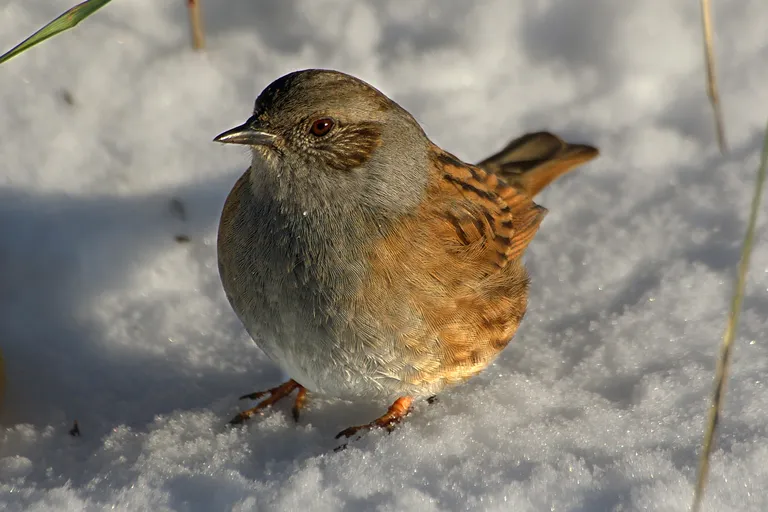
In Europe, millet is a standard part of wild bird seed mixes rather than a seed people usually buy on its own. The French bird charity LPO lists millet in the typical winter mix alongside sunflower, maize, oats and peanuts. Vine House Farm, a UK grower that farms its own bird seed, says red and white millet are mainly eaten by house and tree sparrows, plus some finches and buntings, and lists dunnocks and reed buntings among the takers.
| Region | Birds most likely to eat millet | Where they feed |
|---|---|---|
| Eastern North America | Juncos, White-throated and Song Sparrows, Mourning Doves | Ground, low trays |
| Western North America | Juncos, White-crowned Sparrows, doves | Ground, low trays |
| Britain | House and tree sparrows, dunnocks, finches, reed buntings | Ground, trays, seed feeders |
| Continental Europe | House and tree sparrows, dunnocks, finches, buntings | Ground, trays, feeder houses |
Expect pigeons and doves at any tray of small grain, on both sides of the Atlantic. That is fine in small numbers, but large flocks can clear a tray quickly.
Which birds usually ignore millet?
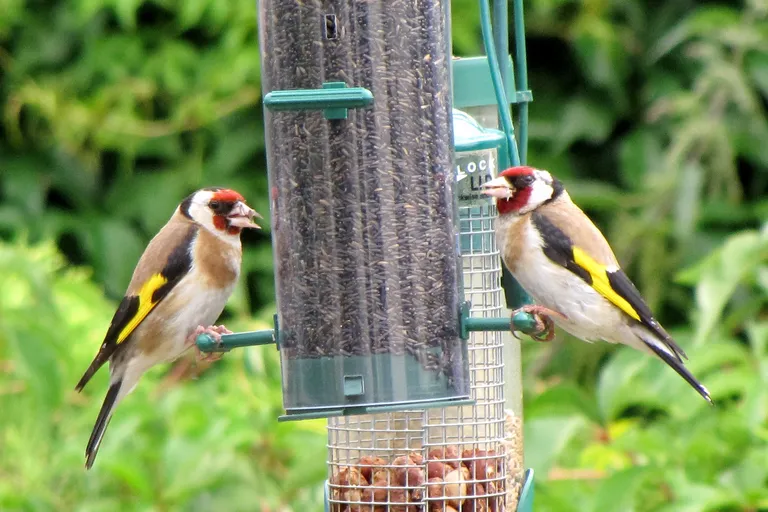
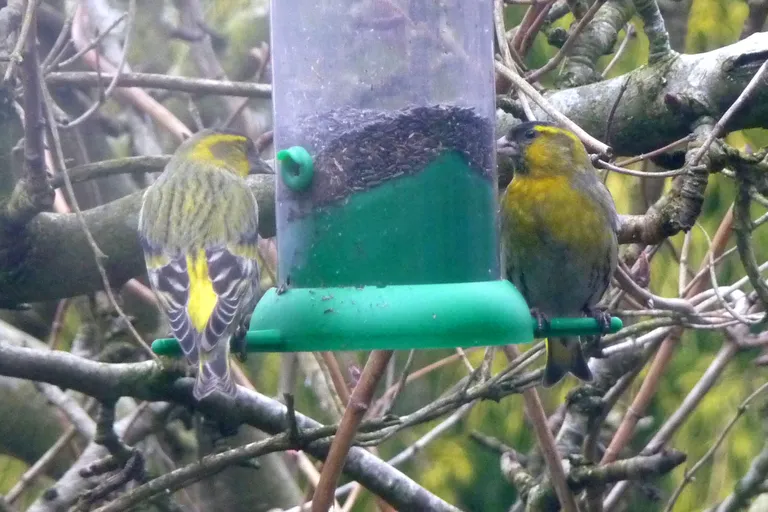
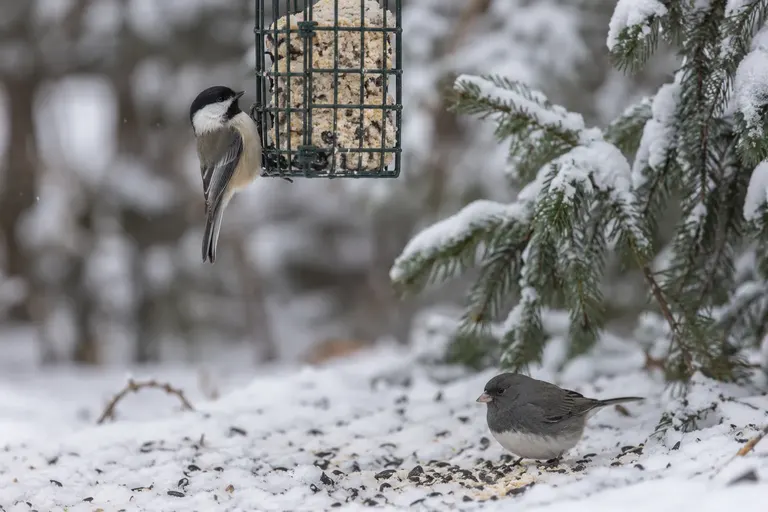
Most birds that feed at hanging feeders ignore millet. The 1980 study found that Tufted Titmice showed no interest in millet and Carolina Chickadees showed little interest in anything except oil-type sunflower. American Goldfinches preferred hulled sunflower and nyjer, and House Finches strongly preferred oil-type sunflower.
That pattern matches what most people see. Chickadees, titmice, nuthatches, woodpeckers and most finches skip millet when sunflower is available. They are not missing anything: their diets lean on oily seeds, nuts and insects. If those are the birds you want, put your money into black oil sunflower instead.
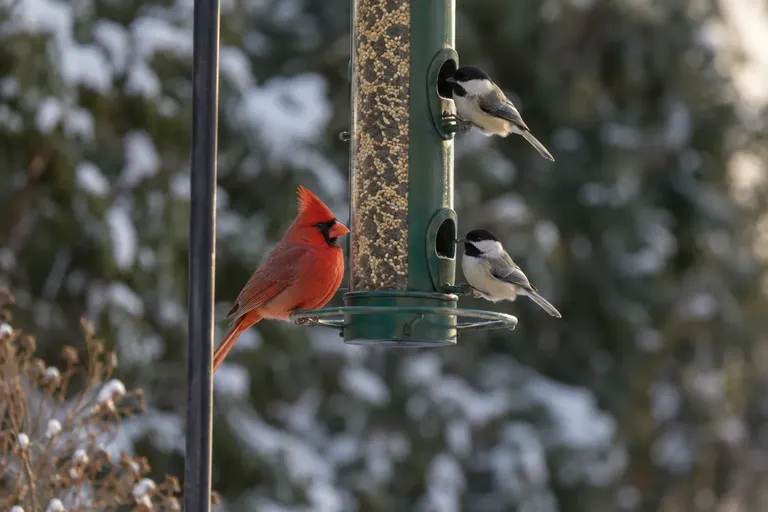
This is also why millet in a hanging tube feeder often ends up on the ground. Birds at the tube are looking for sunflower. They flick the millet out of the way to reach it, and the sparrows and doves underneath clean it up. We explain the behavior in why birds throw seed out of the feeder.
How to feed millet: ground, tray or tube?
The best way to feed millet is low: a small scatter on the ground or a raised tray that ground-feeding birds will use. Project FeederWatch suggests sprinkling a handful on the ground, and Maryland’s natural resources agency recommends platform feeders for millet mixes.
On the ground
Ground feeding suits juncos, native sparrows, dunnocks and doves best, because that is where they naturally forage. Keep it small and frequent:
- Choose a spot with cover nearby, such as a shrub or brush pile a few meters (about 10 ft) away, so birds can dive for safety but cats cannot hide right beside the food.
- Sweep or rake a small patch of short grass, gravel or paving so seed doesn’t vanish into thick grass.
- Scatter a handful in the morning.
- Check at dusk. If seed is left, put out less the next day.
- Move the spot a short distance every week or two so droppings and old seed don’t build up in one place.
On a tray or platform feeder
A tray is the better choice in wet weather, in yards with rats, or where the ground is muddy or snow-covered. A raised platform feeder with a mesh or drilled floor lets water drain so the seed stays dry. Low trays about 30 to 45 cm (1 to 1.5 ft) off the ground still feel safe to ground feeders, while higher pole-mounted trays also suit cardinals and jays. Maryland’s agency notes that platform feeders work best on poles with predator baffles.
The trade-off: the French bird charity LPO prefers vertical feeders over open trays, because birds standing in the food can spread disease such as salmonellosis and trichomonosis. If you use a tray, offer only what is eaten in a day and clean it often.
In a tube or hopper
A tube or hopper is the least efficient place for millet, unless it is a dedicated millet feeder with short perches and small ports, or a mix that is mostly sunflower. In most yards, the birds that use tubes are not the birds that want millet.
How much millet should you put out?
Put out only as much millet as birds finish in one day. For most gardens that means a handful or two, roughly 50 to 150 g (2 to 5 oz), adjusted after a few days of watching.
Vine House Farm advises putting out only what birds will eat within a few days and warns that wet, uneaten seed can clump and grow mould or bacteria. On the ground, one day is a safer limit than a few days, because leftover seed overnight is what draws rats and mice.
A simple routine:
| What you see | What to change |
|---|---|
| Seed gone by mid-morning | Add a little more, or add a second small scatter after lunch |
| Seed left at dusk | Put out less tomorrow |
| Seed wet or clumped | Clear it, dry the tray, feed smaller amounts |
| Pigeons or cowbird flocks taking most of it | Feed smaller amounts later in the day, or pause millet for a week |
| Rats or mice seen | Stop ground feeding and switch to a raised tray only |
Millet in seed mixes: filler or useful?
White proso millet is a useful ingredient. Milo, wheat and red millet in large amounts are what make cheap mixes wasteful, especially in eastern North America.
Project FeederWatch says milo is a major ingredient in many inexpensive mixes but is not a favorite of most birds, so the seed often goes to waste. It notes that western birds eat more milo than eastern birds, and advises eastern feeders to avoid mixes with large amounts of milo. The 1980 study found milo and several other common mix ingredients rarely attractive when sunflower or white proso millet were available. Maryland’s agency adds that only a few southwestern species eat red milo.
How to read a mix label:
- Good sign: black oil sunflower or sunflower hearts first, white proso millet second, some cracked corn or peanuts.
- Mixed sign: red millet high on the list. Juncos and sparrows eat it, but less eagerly.
- Poor sign: milo, wheat or cracked grain first, especially in the eastern US. Pigeons and doves will eat it; most songbirds won’t.
In Britain and Europe the same logic applies. Mixes heavy in whole wheat, split peas or large cereal grains mostly feed pigeons. A mix with sunflower hearts and millet near the top feeds a wider range of small birds. If mess is your bigger problem than cost, a hulled no-mess blend wastes less.
Will millet attract house sparrows, cowbirds or pigeons?
Yes, millet attracts House Sparrows, Brown-headed Cowbirds and pigeons, because it is one of their favorite foods. In the 1980 study, House Sparrows took white proso millet and most other seeds except flax and rape, and Brown-headed Cowbirds favored both proso millets, German millet and canary seed.
That matters most in North America, where House Sparrows are an introduced species that compete with native cavity nesters, and cowbirds lay their eggs in other birds’ nests. In Britain and much of Europe, house sparrows are a native bird whose numbers have fallen, so many people are glad to see them.
If these birds are taking over, Cornell’s NestWatch suggests:
- Avoid platform trays and stop scattering seed on the ground for a while.
- Use tube feeders with short perches, small ports and no catch basin.
- Offer foods cowbirds like less, such as nyjer, suet, nectar, whole peanuts or safflower.
- Clean up seed spilled under feeders.
You don’t have to stop millet for good. Many people pause it for a week or two when flocks appear, then bring it back in smaller amounts. For pigeons and starlings, our guide to keeping starlings and grackles off feeders covers feeder changes that help.
Millet, rats and hygiene
Millet on the ground is the food most likely to attract rats and mice, because small seeds are easy for them to find after dark. The fix is in how you serve it, not in giving it up:
- Feed in the morning and only what birds clear by evening.
- Use a raised tray or a tray with a seed catcher if rodents appear.
- Never leave a pile of seed out overnight.
- Sweep up husks and spilled seed every few days.
Hygiene matters as much for the birds. The LPO advises cleaning feeders weekly and stopping feeding for four weeks if sick birds are seen. NABU in Germany recommends feeders where birds cannot walk in the food, such as seed silos, to limit the spread of disease and to keep food from spoiling. Our step-by-step feeder cleaning guide and rat prevention guide cover both in detail.
How to store millet
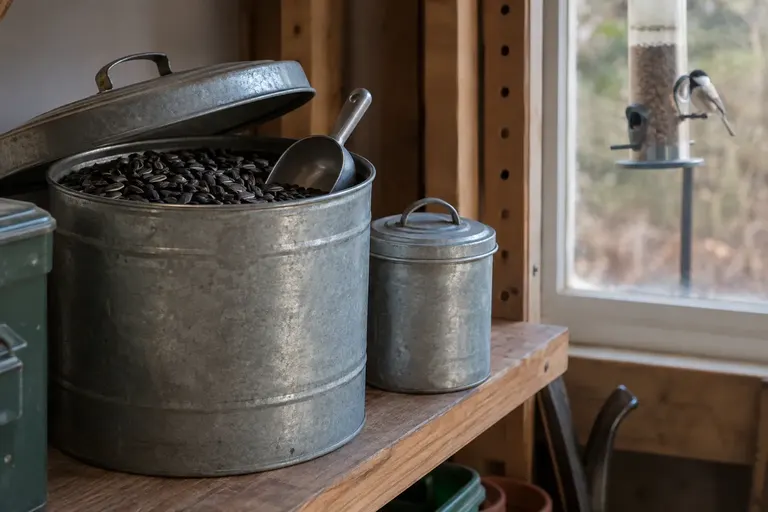
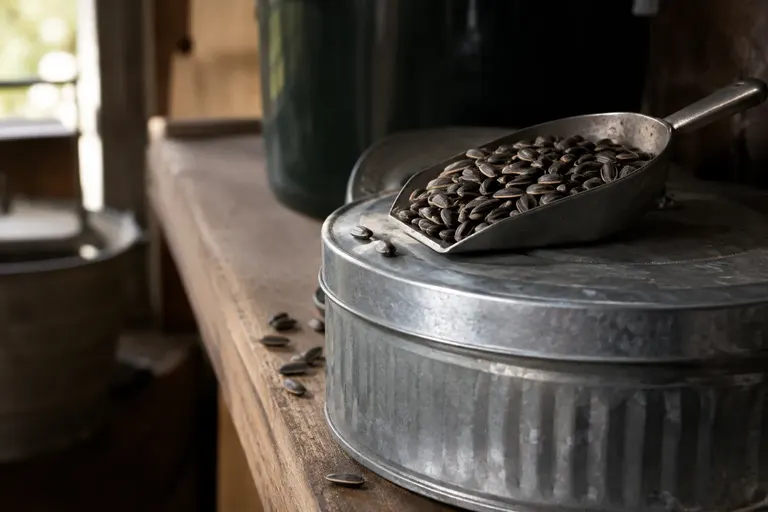
Store millet in a cool, dry place in a sealed metal or thick plastic container, away from damp and rodents. Millet keeps better than hulled seeds because the hull protects the kernel. Vine House Farm says millet stored cool, dry, dark and airtight stays fresh for about 12 to 18 months, which is longer than oily seeds such as sunflower hearts.
Signs that millet has gone off:
- A musty or sour smell
- Clumps that don’t break apart
- Webbing, small moths or insects in the bag
- Green, grey or black patches of mould
Throw away any seed with mould. The LPO also advises against using food bought the previous winter, because it may have been badly stored. Buy a bag size you will use within a season. Our bird food storage guide and does bird seed go bad? cover containers and shelf life in more depth.
When should you feed millet?
Millet is most useful from late autumn to early spring, when ground-feeding birds have the fewest natural seeds. The LPO recommends winter feeding roughly from November to March, and advises tapering off gradually in spring rather than stopping suddenly.
| Season | Millet plan |
|---|---|
| Late autumn | Start small as juncos, white-throated sparrows or dunnocks arrive; build a routine |
| Winter | Daily small scatters or a tray; increase slightly in snow or hard frost |
| Early spring | Keep going while natural seed is scarce, then reduce amounts week by week |
| Summer | Usually unnecessary; if you feed, use small amounts and watch hygiene in the heat |
In snow, clear a small patch or use a covered tray so seed is not buried. Juncos and sparrows will scratch through light snow, but a clear patch helps them find food quickly on the coldest days.
Millet vs sunflower vs safflower
Millet complements sunflower and safflower rather than replacing them. Each seed serves a different group of birds.
| Seed | Main birds | Best feeder | Main downside |
|---|---|---|---|
| White proso millet | Sparrows, juncos, doves, dunnocks, buntings | Ground or low tray | Attracts House Sparrows, cowbirds, pigeons and rodents if overfed |
| Black oil sunflower | Chickadees, titmice, finches, cardinals, nuthatches, tits | Tube, hopper, tray | Shell mess under feeders |
| Safflower | Cardinals, chickadees, titmice, doves | Hopper or tray | Fewer species; birds need time to accept it |
| Sunflower hearts | Almost every seed-eater | Tube or tray | Spoils faster in wet weather |
A simple setup that covers most garden birds: sunflower in a hanging feeder, a small daily scatter of white millet on the ground or a low tray, and suet or fat in winter. For the full winter plan, see what to feed birds in winter.
Common mistakes with millet
- Filling a tube feeder with straight millet when the birds at your tube want sunflower. Most of it ends up on the ground.
- Putting out too much. A heap left overnight feeds rats, not birds.
- Buying milo-heavy mixes in eastern North America and wondering why seed piles up.
- Ignoring wet seed. Clumped, damp millet can grow mould within days.
- Feeding on the same patch all winter. Droppings and old seed build up; move the spot now and then.
- Feeding on an open lawn far from cover. Ground feeders feel exposed and visit less; a shrub a few meters away helps.
Sources
- Project FeederWatch: Common feeder foods
- U.S. Fish and Wildlife Service: news release on the bird food preference study (28 November 1980)
- Geis, A.D. (1980): Relative attractiveness of different foods at wild bird feeders, USFWS Special Scientific Report Wildlife 233
- Maryland Department of Natural Resources: Supplemental feeding of wild birds
- NestWatch (Cornell Lab of Ornithology): Brown-headed Cowbirds
- LPO: Nourrissage des oiseaux (winter feeding advice sheet)
- Vine House Farm: Millet, oats and wheat


Frequently asked questions
What birds eat millet?
Mostly small seed-eaters that feed on or near the ground. Project FeederWatch names juncos and sparrows, and a classic U.S. Fish and Wildlife Service feeder study found white proso millet among the top seeds for Dark-eyed Juncos, Mourning Doves, House Sparrows and Song, White-crowned and White-throated Sparrows. In Britain, house and tree sparrows, dunnocks, finches and reed buntings take it.
Is white or red millet better for birds?
White proso millet is the standard choice. It is the type named most often in feeder studies and guides, and it is what most ground-feeding birds take first. Red proso millet is eaten too, by juncos and several sparrows in the Fish and Wildlife Service study, but it shows up mainly in cheaper mixes. If you buy straight millet, buy white.
Should I put millet on the ground or in a feeder?
Both work, but millet is a ground food first. Project FeederWatch suggests sprinkling a handful on the ground, and Maryland's natural resources agency recommends platform feeders for millet mixes. Put out only what birds clear in a day, use a raised tray with drainage if rats or wet weather are a problem, and keep tube feeders for sunflower or nyjer.
Does millet attract house sparrows and cowbirds?
Yes. House Sparrows and Brown-headed Cowbirds both rank white proso millet among their favorite foods. If they crowd out other birds, Cornell's NestWatch suggests avoiding platform trays and ground scatter, using tube feeders with short perches and switching to foods they like less, such as nyjer, suet, whole peanuts or safflower, for a while.
Why are my birds throwing millet out of the feeder?
They are usually sorting a mix. Birds such as finches and chickadees want sunflower, so they flick small seeds like millet aside to reach it, and the millet lands on the ground. That is where sparrows and doves would eat it anyway. Feed straight sunflower in hanging feeders and offer millet separately on the ground or a tray to cut waste.