Best Material for a Bird Bath: Stone, Ceramic or Resin?
The best material for a bird bath is one with a rough, shallow basin that survives your winters. Concrete, stone, ceramic, glass, metal and resin compared.
In this article
- Bird bath materials compared at a glance
- What makes a good bird bath, whatever the material?
- Concrete vs ceramic: which bird bath is better?
- Are stone bird baths better than concrete?
- Are plastic and resin bird baths any good?
- Glass, copper and metal bird baths: what to watch for
- Are hanging bird baths a good idea?
- Which bird bath material is best for winter?
- Which bird bath material is easiest to clean?
- How to choose: a quick decision guide
- Common mistakes when choosing a bird bath
- Sources
- Frequently asked questions
The best material for a bird bath is the one that gives birds a rough, shallow basin and survives your winters. Tough plastic or resin is the safest bet where water freezes, concrete and stone give the best grip and stability, and glazed ceramic, glass and metal look good but need extra care with frost, slipperiness or summer heat.
Bird groups such as the RSPB, the Cornell Lab of Ornithology and Germany’s LBV agree far more on shape than on material. Their shared checklist is a shallow basin, gently sloping sides and a surface birds can grip. Material decides how well a bath meets it over the years, and whether it cracks in the first hard frost.
Bird bath materials compared at a glance
Every material involves a trade-off. Use this table to shortlist, then read the sections below for the details.
| Material | Frost | Weight and stability | Grip for birds | Cleaning | Summer sun | Best for |
|---|---|---|---|---|---|---|
| Concrete and cement | Can crack below freezing | Very heavy, very stable | Naturally rough, good | Porous, stains, hard to tip out | Stays fairly cool | Mild winters, windy sites |
| Natural stone | Depends on the stone; water in cracks can split it | Very heavy, very stable | Usually good if not polished | Porous, scrub with a brush | Stays fairly cool | Permanent garden features |
| Glazed ceramic and terracotta | Frost resistant at best, not frostproof | Medium, can chip | Glaze can be slippery | Easy to wipe | Moderate | Gardens where you can empty it in winter |
| Glass | Can crack if water freezes in it | Light to medium, often hanging | Slippery unless textured | Very easy to wipe | Moderate | Small patios, summer use |
| Copper and other metals | Survives frost better than ceramic | Light to medium | Smooth unless hammered or textured | Easy, but avoid harsh cleaners | Can get hot in direct sun | Shaded spots, decorative use |
| Plastic and resin | Tough plastic won’t break if water freezes | Light, can tip | Varies, choose matte or textured | Easy to lift and scrub | Moderate | Cold climates, easy cleaning |
| Hanging baths (any material) | Same as the bowl material | Swings in wind and under heavy birds | Depends on bowl | Easy to take down | Small water volume warms fast | Balconies, small yards |
What makes a good bird bath, whatever the material?
A good bath is shallow, gently sloped and rough enough to grip. Get those three right and most materials will work.
- Depth. The Cornell Lab recommends water no deeper than 2.5 cm (1 inch) at the edges, sloping to a maximum of 5 cm (2 inches) in the middle. The RSPB and the LBV give a wider range of 2.5 to 10 cm so that larger birds can bathe too, while Vogelbescherming Nederland says to keep the middle no deeper than 5 cm because birds are wary of deep water.
- Slope. The RSPB asks for shallow sloping sides with a shallow approach to the water, and the Cornell Lab says a gentle slope lets birds wade in gradually.
- Grip. The RSPB says the surface must be rough so birds can grip it with their claws and not slip, and advises avoiding shiny, slippery containers. The LBV gives the same advice.
If a bowl you love fails one of these tests, you can often fix it. Add a few flat stones or a layer of gravel for footing and to raise the floor in a deep bowl. For depth and placement in more detail, see our guide on where to put a bird bath.
Concrete vs ceramic: which bird bath is better?
For grip and stability, concrete wins. For easy cleaning and looks, glazed ceramic wins. Neither likes hard frost.
Concrete and cement baths are the classic garden-center pedestal. Their rough surface gives birds sure footing, and their weight keeps them upright in wind and when a heavy bird such as a pigeon lands on the rim. The downsides are real, though. The Cornell Lab warns that many decorative concrete baths are too deep, that concrete is hard to clean, and that it may crack if the temperature drops below freezing. Concrete is porous, so algae and stains work into the surface, and a heavy bowl is awkward to lift and tip out.
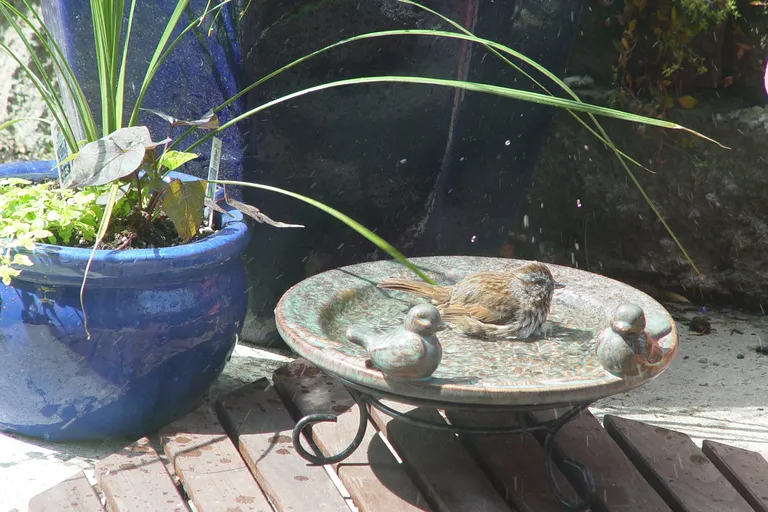
Glazed ceramic and terracotta baths are lighter and easier to wipe clean, and they come in far more colors and shapes. The Cornell Lab notes that glazed baths can be slippery for birds, so look for a matte or textured glaze, or add stones. Frost is the bigger risk. The RSPB’s own care advice for a high-fired glazed terracotta bath says it is frost resistant but not frostproof, that all glazed ceramics can eventually suffer water penetration and frost damage, and that the bath should be emptied in sub-zero temperatures. Raising the bowl on small feet so it doesn’t sit in wet ground also helps.
In short: if you get regular freezes and won’t empty the bath every cold night, neither is ideal. If you do, choose concrete for a windy, open spot and ceramic where you want something lighter and easier to scrub.
Are stone bird baths better than concrete?
Natural stone behaves much like concrete: heavy, stable and usually rough enough for birds to grip. The difference is mostly in finish and durability.
Cast stone is simply concrete molded to look like stone, so treat it exactly as concrete. Solid natural stone varies by type. A dense stone with a slightly rough, unpolished basin is close to ideal for birds. A polished or honed basin can be as slippery as glaze, and any stone with cracks or layers can be split when water in those gaps freezes. Before buying, run a finger across the bowl. If it feels slick, birds will struggle.
Stone and concrete are both heavy enough that you’ll clean them in place rather than tipping them out, so a stiff brush and a hose are your main tools. Our guide on how to clean a bird bath covers material-safe methods, including when a pressure washer is fine on concrete and when to avoid it.
Are plastic and resin bird baths any good?
Yes, and they are often the most practical choice in cold climates. The Cornell Lab suggests looking for a bath made of tough plastic that won’t break if the water freezes.
Plastic and resin are light, which makes them easy to lift, empty and scrub, and easy to move until you find the spot birds like. That lightness is also the main weakness: a light pedestal can tip on uneven ground or in strong wind, so set it on firm, level ground or choose a ground or deck-mounted model. Smooth, glossy plastic can be slippery, so look for a matte or textured basin. Most purpose-made heated bird baths also use plastic or resin bowls for the same frost reasons.
Glass, copper and metal bird baths: what to watch for
These materials are popular for their looks. Each one needs a little extra attention.
Glass. Glass bowls are easy to wipe and look striking, but plain glass is slippery. Choose one with a textured or embossed bottom, or add pebbles. Like any rigid bowl, glass can crack if water freezes solid in it, so bring it in or empty it before frost.
Metal. Metal handles freezing better than ceramic, but it has a summer problem. A thin metal bowl in direct sun can get hot to the touch and warm the shallow water quickly. The Cornell Lab advises putting a bath in the shade during hot weather if you can, and that matters most with metal. Polished metal is also smooth, so a hammered or textured basin is better for grip. Check painted or coated metal now and then, and retire it if the finish starts flaking into the water.
Copper. Copper bird baths are often sold as keeping water cleaner or slowing algae. Treat that as a marketing claim. The RSPB, the Cornell Lab and Audubon don’t rely on any basin material to keep water clean. Their advice is the same for every bath: the RSPB says to rinse daily and scrub about once a week, and the Cornell Lab says to change the water every day or two. Copper pennies dropped in the water don’t help either, as our cleaning guide explains. Choose copper because you like it, not as a cleaning shortcut.
Are hanging bird baths a good idea?
They’re a good option for balconies, porches and small yards, with a few trade-offs. A hanging bowl is easy to take down and clean, and it keeps birds off the ground away from lurking cats.
The downsides come from the hanging part. A bowl on a chain swings when a heavier bird lands and spills water in wind, so hang it from a firm bracket or branch where it stays fairly level. Hanging bowls are usually small, so the water warms faster on hot days and needs topping up more often. Material rules still apply: a glass or glazed hanging dish is slippery unless textured, and it can crack in frost. Hang it away from windows, as our placement guide explains.
Which bird bath material is best for winter?
Plastic, resin and metal cope with freezing best. Concrete, stone, ceramic and glass are the most likely to crack if water freezes in them.
The Cornell Lab notes that concrete basins often crack if they freeze, and the RSPB recommends emptying glazed ceramic baths in sub-zero temperatures. If you want to keep water open through the winter, a heated plastic bath or a de-icer in a suitable basin is the usual answer. Plug any heater into a ground-fault protected outlet, as the Cornell Lab advises. Never add antifreeze, glycerin or salt to the water: the RSPB and the Cornell Lab both warn these can harm birds or their feathers. Our guide to keeping a bird bath ice-free in winter covers the safe options step by step.
Which bird bath material is easiest to clean?
Smooth, light materials are quickest to clean: plastic, resin, glass and glazed ceramic. Porous, heavy concrete and stone take the most work.
Whatever you choose, cleaning matters more than material. The RSPB advises rinsing the bath daily and scrubbing it about once a week. The LBV recommends cleaning at least weekly in normal weather and daily in great heat, using a brush and hot water rather than chemicals. Audubon suggests a rinse and scrub with nine parts water to one part vinegar and says to skip soaps and cleansers, which can strip the natural oils from feathers.
How to choose: a quick decision guide
Match the material to your climate, your site and how much upkeep you want.
| Your situation | Good choice | Avoid |
|---|---|---|
| Hard winters, bath left out | Tough plastic or resin, or a heated bath | Unprotected concrete, ceramic, glass |
| Windy, open site | Heavy concrete or stone | Light plastic pedestals, hanging bowls |
| Hot, sunny spot with no shade | Pale concrete, stone or plastic | Thin dark metal |
| Little time for cleaning | Light plastic, resin or glazed bowl you can tip out | Heavy porous concrete |
| Balcony or small patio | Hanging or rail-mounted textured bowl | Heavy pedestals |
| You want something decorative | Textured ceramic, glass or copper, emptied in frost | Polished, slippery basins |
When you’re ready to buy, our roundup of the best bird baths compares pedestal, ground, deck and hanging types, and our solar bird bath fountain guide covers adding moving water.
Common mistakes when choosing a bird bath
- Buying for looks alone. A deep, glossy bowl can look great and still be unusable for small birds.
- Ignoring frost. Leaving concrete, ceramic or glass full through a freeze is the fastest way to crack it.
- Choosing a light pedestal for a windy spot. Plastic baths can tip; set them on level, firm ground.
- Putting metal in full sun. Shade keeps the water cooler and more inviting in summer.
- Expecting copper to keep water clean. Fresh water and regular scrubbing do that, whatever the bowl is made of.
Sources
- RSPB: Bird baths buying guide
- RSPB: Echoes ceramic bird bath, care and frost advice
- Cornell Lab of Ornithology, All About Birds: Attract birds with birdbaths
- Audubon: Why you should keep your birdbath clean
- LBV: Tipps für eine Vogeltränke
- Vogelbescherming Nederland: Geef vogels extra water tijdens warme dagen


Frequently asked questions
What is the best material for a bird bath?
There's no single winner. Tough plastic or resin suits cold climates because the Cornell Lab notes it won't break if water freezes. Concrete and stone are heavy, stable and naturally rough, so birds grip them well, but concrete can crack in frost. Glazed ceramic and glass look good but can be slippery. Pick the material that matches your winters, then check the basin is shallow and rough.
Is concrete or ceramic better for a bird bath?
Concrete usually gives birds better footing, because its surface is rough, and its weight keeps it steady. The Cornell Lab warns that concrete baths are often too deep, hard to clean and can crack below freezing. Glazed ceramic is easier to wipe but can be slippery, and the RSPB says glazed ceramics can eventually suffer frost damage. In both cases, empty the bath before hard frosts.
Are metal bird baths safe for birds?
Yes, as long as the basin is shallow, has some texture and isn't left in strong sun. A thin metal bowl can get hot in direct summer sun and warm the shallow water quickly, and the Cornell Lab advises putting a bath in shade during hot weather. Avoid painted or coated metal that is flaking, and check the bowl's surface is not polished smooth.
Do copper bird baths stop algae?
Don't count on it. Copper bird baths are often sold with that claim, but the RSPB, the Cornell Lab and Audubon all keep water clean the same way: change it often and scrub the basin. The RSPB advises rinsing daily and scrubbing about once a week. Treat a copper bath as a decorative choice, not as a substitute for cleaning.
How deep should a bird bath be?
The Cornell Lab recommends no more than 2.5 cm (1 inch) at the edges, sloping to a maximum of 5 cm (2 inches) in the middle. The RSPB gives a wider range of 2.5 to 10 cm so different species can choose their depth, with shallow sloping sides. If your bowl is deeper, add flat stones so small birds can stand at the right depth.