How to Clean a Bird Bath (Without Harming Birds)
How to clean a bird bath safely: change the water every 1 to 3 days, scrub weekly with a stiff brush, disinfect with 1:9 bleach when needed and rinse well.
In this article
- Quick answer: a bird bath cleaning schedule
- Why does a bird bath need regular cleaning?
- How do you clean a bird bath step by step?
- What is the best cleaner for a bird bath?
- Which products and additives should you avoid?
- How do you remove stubborn algae and stains?
- How should you clean different bird bath materials?
- How can you keep a bird bath cleaner for longer?
- What does a clean bath mean for backyard birds?
- Common mistakes when cleaning a bird bath
- Is cleaning a bird bath a health risk for people?
- Quick facts
- Sources
- Frequently asked questions
How to clean a bird bath safely comes down to a simple routine: dump the water every one to three days, scrub the basin with a stiff brush and plain water or a mild 1:9 white vinegar solution about once a week, and disinfect with diluted bleach only when needed, followed by a thorough rinse. That routine keeps algae, droppings and mosquito larvae in check without leaving residues that could harm birds.
Clean water matters more than most people realize. A bird bath is a shared drinking fountain and public shower in one, and the same features that make it valuable to birds make it a place where germs can spread. This guide explains how often to clean, exactly how to do it, which products to use and avoid, and how to keep a bath cleaner for longer.
Quick answer: a bird bath cleaning schedule
| Task | How often | What to use |
|---|---|---|
| Dump and refill | Every 1 to 3 days (daily in heat) | Hose or watering can |
| Quick wipe of the basin | At each refill if a film has formed | Stiff brush, plain water |
| Full scrub | About weekly, more in summer | Brush plus 1:9 white vinegar solution |
| Disinfecting clean | Every few weeks, or after sick birds are seen | 1:9 household bleach solution, then rinse well |
| Deep inspection | Each season | Check cracks, stability, depth and placement |
The exact timing depends on your climate, how many birds visit and how much sun the basin gets. A bath in full sun in July in Georgia or Andalusia needs far more attention than a shaded one in a cool Oregon spring.
Why does a bird bath need regular cleaning?
A bird bath collects everything birds bring to it. Droppings, feathers, skin flakes, seed hulls, pollen and leaves all end up in the water. Warm, shallow, nutrient-rich water is ideal for algae and bacteria, and it can become a place where disease passes from bird to bird.
Which bird diseases can spread through dirty water?
Several infections that affect garden birds can travel through shared food and water:
- Salmonellosis. Salmonella bacteria are shed in droppings and can contaminate water and feeding areas. Outbreaks in finches, siskins and sparrows are reported in North America and Europe, often in late winter.
- Trichomonosis. This parasite spreads in saliva and contaminated food and water. In Britain it has been linked by researchers at the British Trust for Ornithology and partners to steep declines in Greenfinches since the mid-2000s, and it also affects Chaffinches, doves and pigeons.
- Avian pox. A virus that causes warty growths on bare skin around the bill, eyes and feet. It spreads through contact, contaminated surfaces and biting insects.
- Mycoplasmal conjunctivitis. Best known as House Finch eye disease in North America, it spreads mainly at feeders, but crowded, dirty stations of any kind make transmission easier.
A clean bath does not make disease impossible, but it removes the build-up that lets germs linger. If you see sick birds, our guide to sick birds at the feeder explains what to look for and when to pause feeding and bathing stations.
Does a bird bath breed mosquitoes?
It can, if you let the water sit. Mosquitoes lay eggs on or just above still water, and in warm weather many species can go from egg to flying adult in roughly a week to 10 days. Dumping and refilling the bath every few days interrupts that cycle, because the larvae are poured out before they emerge.
Some container-breeding mosquitoes, including Aedes aegypti, the dengue and Zika carrier common in Brazil and other warm regions, glue their eggs to the inner wall of a container just above the waterline. Those eggs can survive dry spells for months. That is why public health agencies in dengue-prone countries tell people to scrub the sides of water containers, not just empty them. The same advice applies to bird baths anywhere these mosquitoes live: dump, then brush the walls.
Birds do eat some mosquitoes, but not enough to control them. Our article on whether birds eat mosquitoes explains why.
How do you clean a bird bath step by step?
This routine works for concrete, ceramic, resin, metal and glass baths. Adjust the brush and cleaner to the material, as described further down.
What you need
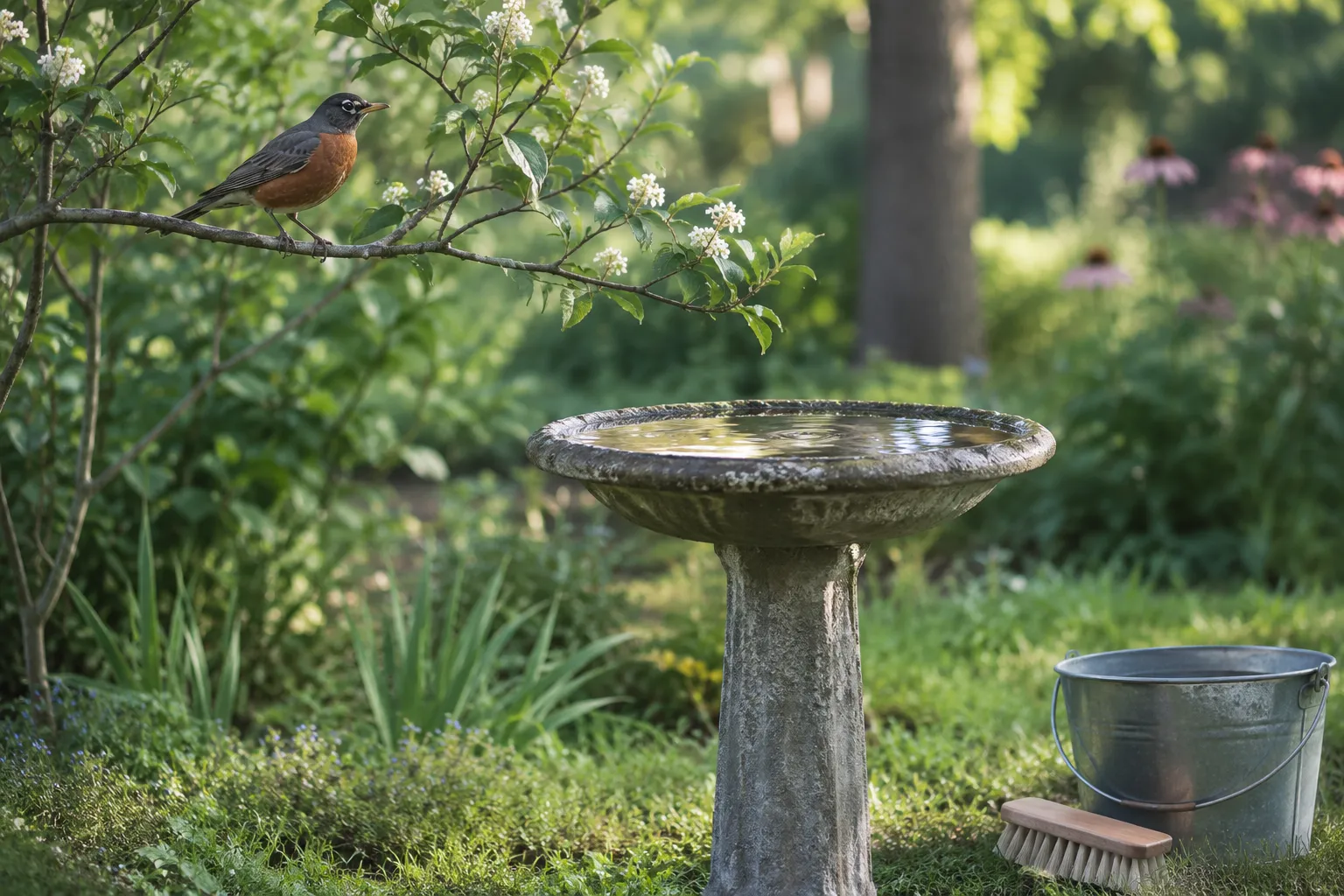
- A stiff-bristled scrub brush (keep it only for bird equipment)
- Rubber gloves
- A bucket
- White vinegar, and household bleach for occasional disinfecting
- A hose or watering can
- An old towel or cloth for small baths
The steps
- Empty the bath. Tip out the water away from flower beds you do not want soaked, and away from storm drains if you are about to use bleach. Scoop out leaves and debris.
- Scrub with plain water first. Brush the whole basin, including the rim and the sides above the waterline, where film and insect eggs collect. On many days this is all the bath needs.
- Apply a cleaning solution if needed. For algae or mineral scale, pour in a 1:9 mix of white vinegar and water, enough to cover stains. For disinfecting, use a 1:9 mix of household bleach and water instead. Use one or the other, never both.
- Let it sit. Leave vinegar for 15 to 30 minutes on stubborn scale. Leave bleach solution about 10 minutes. Keep birds, pets and children away while it sits; covering the basin with a board helps.
- Scrub again. The soaked deposits should lift easily. Pay attention to textured areas and the joint between basin and pedestal.
- Rinse thoroughly. Rinse at least three times, until you cannot smell vinegar or bleach at all. This is the step that protects birds, so do not rush it.
- Let it dry. Sunlight and drying help kill remaining microbes. An hour or two in the sun is ideal before refilling.
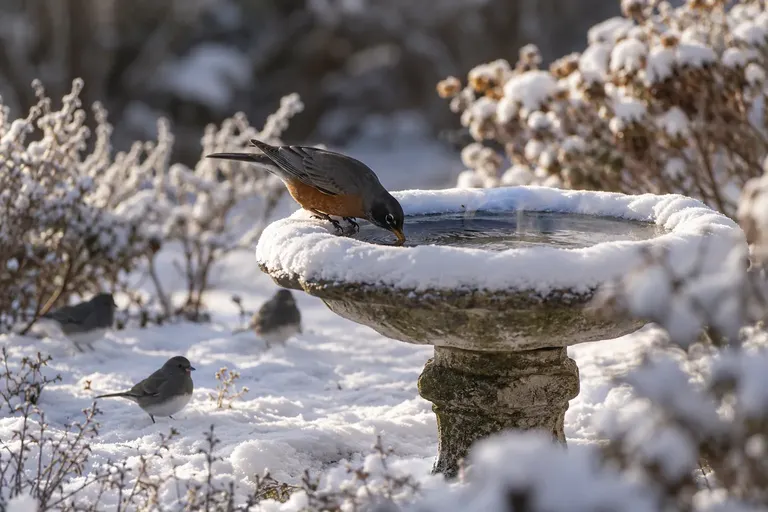
- Refill with fresh water. Aim for a depth of about 1 to 2 inches at the deepest point, with a gentle slope so small birds can wade in.
- Clean your tools. Rinse the brush and bucket and let them dry. Keep them separate from kitchen equipment.
What is the best cleaner for a bird bath?
For most weekly cleaning, the best cleaner is a stiff brush and water. Mechanical scrubbing removes biofilm, the slimy layer where bacteria and algae live, and chemicals do little until that layer is broken up.
Vinegar or bleach: which should you use?
| Cleaner | Best for | Strengths | Cautions |
|---|---|---|---|
| Plain water and brush | Routine refills | No residue, quick | Does not disinfect |
| White vinegar, 1:9 | Algae, hard-water scale | Mild, widely available | Weaker disinfectant; rinse well |
| Household bleach, 1:9 | Disinfecting, disease outbreaks | Effective against many pathogens | Must be rinsed completely; can fade colored finishes |
| Mild unscented dish soap | Greasy film | Cuts oils | Residue may affect feathers; rinse very well or skip |
The 1 part bleach to 9 parts water ratio is the dilution commonly recommended by Cornell Lab of Ornithology programs for cleaning feeders, and it works just as well for baths. The same cleaning logic appears in our guide on how to clean bird feeders.
Why should you never mix cleaning products?
Mixing bleach with vinegar or other acids releases chlorine gas, and mixing bleach with ammonia-based cleaners releases chloramine vapors. Both are dangerous to breathe. Use one product per cleaning session, rinse well between steps, and work outdoors.
Is soap harmful to birds?
Soap is not poisonous in the small amounts left after a careless rinse, but residue can make feathers less water-repellent, and a soapy taste may keep birds away. Most bird baths do not need soap at all. If you use it for a greasy film, choose a mild, unscented product and rinse until no bubbles appear.
Which products and additives should you avoid?
Many products sold for fountains, ponds or swimming pools are not meant for water that birds drink and bathe in. Avoid:
- Pool chemicals and chlorine tablets. Designed for dilution in thousands of gallons, not a basin of a gallon or two.
- Algaecides not labeled for bird baths. Many pond algaecides contain copper compounds or other ingredients at levels not intended for drinking water.
- Dyes and colorants. They add nothing for birds.
- Glycerin, salt or antifreeze to stop freezing. These can damage feathers or poison birds. A heated bath is the safe option, covered in our guide to keeping a bird bath ice-free in winter.
- Mosquito oils or surface films. They coat water surfaces and would coat feathers too.
What about enzyme and “bird bath protector” products?
Some commercial additives use enzymes or other ingredients and are marketed as safe for birds. Manufacturers state they slow scum and staining. There is little independent research on how well they work in real garden conditions. If you use one, follow the label exactly, and treat it as a supplement to regular dumping and scrubbing, not a replacement.
Do copper pennies keep bird baths clean?
This is a long-running myth. Copper does have antimicrobial properties, but US pennies minted since 1982 are about 97.5 percent zinc with a thin copper plating. A handful of coins releases too little copper to stop algae in outdoor water, and dissolved copper in large amounts is not something you want birds drinking. Skip the coins.
How do you remove stubborn algae and stains?
Green algae, brown mineral rings and black spots are common on older baths. Here is how to tackle each.
Green algae
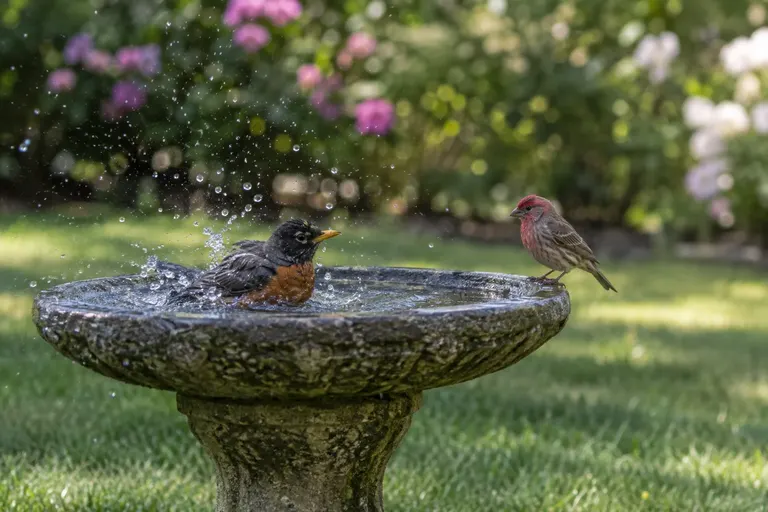
Algae thrives in sun and warmth. Scrub it off with a stiff brush, then soak with a 1:9 vinegar solution if it clings. Prevention is easier than removal: change the water every day or two in summer and consider moving the bath into partial shade.
White or brown mineral scale
Hard water leaves a chalky ring as it evaporates. Vinegar dissolves calcium deposits well. Soak for 30 minutes, then scrub. On concrete, test in a small area first, because acids can slowly etch cement surfaces with repeated long soaks.
Black or gray spots
These are often mildew or deep-seated algae in porous stone or concrete. A 1:9 bleach soak followed by scrubbing and a very thorough rinse usually clears them. Some staining on old concrete is permanent and harmless once the surface is clean.
Can you use a pressure washer?
Yes, on concrete and stone. It strips algae quickly. Use a wide fan tip and keep some distance from the surface, because a narrow jet can pit concrete and create rough spots where algae returns faster. Do not pressure-wash painted, glazed or resin baths.
How should you clean different bird bath materials?
| Material | Cleaning tips | Watch out for |
|---|---|---|
| Concrete and cast stone | Stiff brush, vinegar or bleach, pressure washer allowed | Porous; stains; heavy |
| Glazed ceramic | Soft to medium brush, vinegar | Cracks in freezing weather; slippery glaze |
| Resin and plastic | Soft brush, vinegar | Scratches that trap algae; fading in sun |
| Metal (copper, steel) | Soft brush, mild vinegar | Heats fast in sun; bleach may discolor |
| Glass | Soft brush or cloth | Fragile; slippery; can fall in wind |
Whatever the material, the basin surface matters. Birds need grip. A slightly textured bottom is safer than a glassy one, and a flat stone in the center gives small birds a perch at the right depth.
How can you keep a bird bath cleaner for longer?
Most bath problems come from placement and water chemistry. A few habits cut cleaning time noticeably.
Place it in partial shade
Full sun heats shallow water and feeds algae. A spot with morning sun and afternoon shade stays cooler and clearer. Our guide on where to put a bird bath covers distance from shrubs, windows and predators.
Keep it away from feeders
Seed hulls, droppings and dust from feeders end up in nearby water. Put the bath at least several feet from feeders, and not directly beneath perches or overhanging branches where birds sit and drop waste.
Add moving water
A small dripper, bubbler or solar fountain keeps the surface moving. Mosquitoes avoid laying on disturbed water, and many birds are attracted to the sound. Moving water still needs regular cleaning, and pumps need their intake cleared.
Change water on a routine
Tie refilling to a daily habit, such as your morning coffee or evening walk. In hot, dry summers, including much of Turkey, southern Europe, Australia and the US Southwest, water may also evaporate to nothing within a day, so a daily top-up is doubly useful.
Use the right depth
Deep water collects more debris and invites fewer birds. Most songbirds prefer water no deeper than about 2 inches. A shallow bath is also quicker to empty and scrub.
What does a clean bath mean for backyard birds?
Birds depend on water for drinking and feather care. Bathing helps loosen dirt and prepares feathers for preening, which keeps them in good condition for flight and insulation. Our article on how birds drink water explains the different ways species sip, scoop and suck water.
In dry spells and heat waves, a reliable bath can draw species that never visit feeders: warblers, thrushes, vireos, orioles and, in Europe, Blackcaps and Song Thrushes. In Brazilian gardens, thrushes such as the Rufous-bellied Thrush and tanagers regularly visit water. A dirty, smelly or empty bath wastes that opportunity, and a contaminated one can do quiet harm.
What should you do during bird flu outbreaks?
Highly pathogenic avian influenza mainly affects waterfowl, seabirds, raptors and poultry, but guidance on backyard feeders and baths changes with outbreaks and varies by country. Where authorities advise extra caution, keeping baths very clean or temporarily removing them near poultry is common advice. Check the latest in our guide to bird flu and backyard feeders.
Common mistakes when cleaning a bird bath
- Only topping up. Adding fresh water on top of old water leaves the film and larvae in place. Dump it first.
- Skipping the scrub. A rinse alone does not remove biofilm.
- Using too much bleach. Stronger is not better. It is harder to rinse and harsher on surfaces.
- Rinsing once. Residue is the main risk from cleaning. Rinse until there is no smell.
- Mixing cleaners. Never combine bleach with vinegar or ammonia.
- Ignoring the rim and sides. Mosquito eggs and film sit at or above the waterline.
- Letting the bath sit dry, then refilling dirty. Dried droppings rehydrate. Scrub first.
- Leaving it running during a disease outbreak. If you see sick birds, empty, disinfect and pause the bath for a couple of weeks.
Is cleaning a bird bath a health risk for people?
The risk is low with basic hygiene. Salmonella from bird droppings can infect people, so wear gloves, keep bird equipment out of the kitchen sink and wash your hands after cleaning. Children should wash up too if they help. Our article can you get sick from bird feeders covers the same precautions in detail.
Quick facts
- Dump and refill every 1 to 3 days; daily in heat or heavy use.
- Scrub about once a week with a stiff brush.
- Use 1 part white vinegar to 9 parts water for routine cleaning.
- Use 1 part bleach to 9 parts water to disinfect, then rinse thoroughly.
- Never mix bleach with vinegar or ammonia.
- Keep depth to about 1 to 2 inches for songbirds.
- Partial shade and distance from feeders slow algae.
- Copper pennies and pool chemicals are not useful or safe shortcuts.
Sources
Frequently asked questions
How often should you clean a bird bath?
Change the water every one to three days, and daily in hot weather or when many birds use it. Give the basin a full scrub with a stiff brush at least once a week, more often in summer or whenever you see algae, droppings or a film on the surface. Regular dumping also stops mosquito larvae from maturing.
Is it safe to use bleach to clean a bird bath?
Yes, if it is diluted and rinsed away completely. A common recommendation is 1 part household bleach to 9 parts water. Scrub, let it sit about 10 minutes, then rinse several times until you cannot smell bleach, and let the bath dry in the sun before refilling. Never mix bleach with vinegar or ammonia.
Can I use vinegar to clean a bird bath?
Yes. A mix of about 1 part white vinegar to 9 parts water loosens algae and mineral scale on most surfaces. It is a good routine cleaner, but it is a weaker disinfectant than diluted bleach. Rinse thoroughly afterward, because leftover vinegar can make the water taste odd and discourage birds.
Do copper pennies keep bird bath water clean?
Not in any useful way. Modern US pennies are mostly zinc with a thin copper coating, and a few coins release too little copper to stop algae in an outdoor basin. Dissolved copper in high amounts would not be healthy for birds anyway. Changing the water and scrubbing work far better.
Why does my bird bath turn green so fast?
Algae grows quickly in warm, still, sunlit water enriched by bird droppings, fallen leaves and seed hulls. Moving the bath to partial shade, keeping it away from feeders and changing the water every day or two slow the growth. Rough or scratched surfaces also give algae a place to hold on.