Wren House: Hole Size, Dimensions and Placement
A wren house needs a 1-inch hole, a 5 1/2-inch floor and 8 inches of depth, hung 5 to 10 feet up near shrubs. Specs for House, Carolina and European wrens.
In this article
- Which wrens use a wren house?
- What size should a wren house be?
- Where should you put a wren house?
- Will a wren house cause problems for bluebirds?
- Why do wrens fill boxes with sticks?
- When should you put up a wren house?
- How do you clean a wren house?
- What kind of wren house works in Europe?
- Do wrens roost in nest boxes in winter?
- Common wren house mistakes
- Sources
- Frequently asked questions
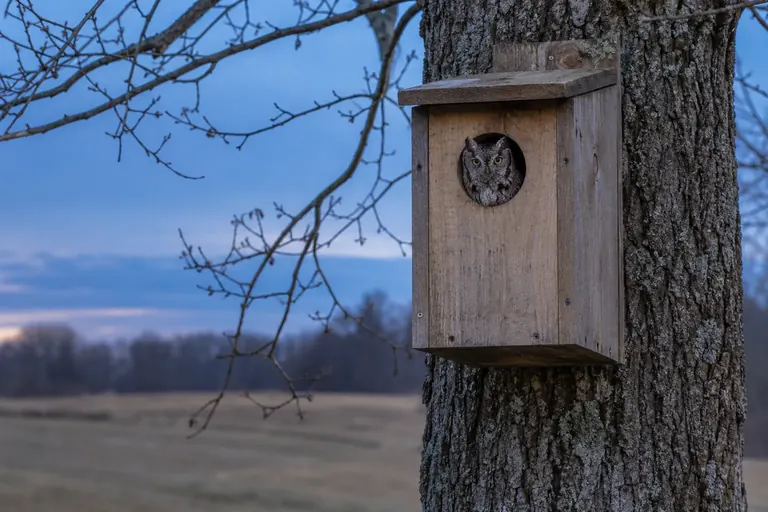
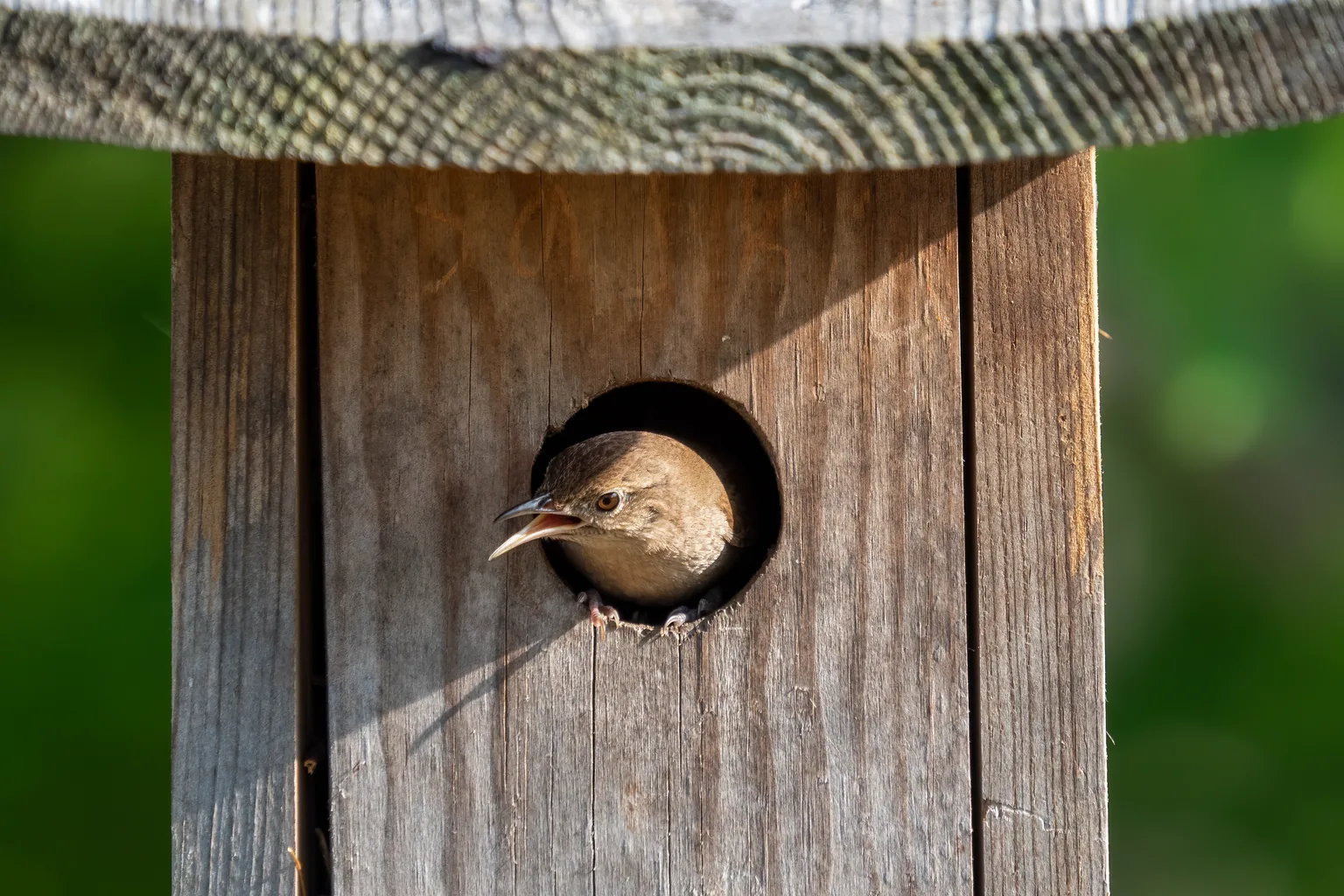
A wren house for House Wrens is a small closed box with a 1-inch (25 mm) entrance hole, a 5 1/2-inch square floor and about 8 inches of inside depth, mounted 5 to 10 feet up within 100 feet of shrubs or trees. Those are the NestWatch specs, and the small hole keeps House Sparrows out.
That answer covers the most common box-nesting wren in North America. But “wren house” means different things depending on where you live. Carolina Wrens want a bigger, lower box. Bewick’s Wrens sit in between. And the Eurasian Wren of Europe hardly uses a closed box at all: it prefers open-fronted boxes, dense ivy and, in winter, a sheltered spot where a crowd of wrens can sleep together. This guide sorts out which wren you have and what to build or buy for it.
Which wrens use a wren house?
In North America, the wrens that regularly take to nest boxes are the House Wren, the Carolina Wren and Bewick’s Wren. In Europe, the Eurasian Wren uses boxes now and then, mostly for roosting.
| Wren | Where it lives | Uses boxes? | Best box type |
|---|---|---|---|
| House Wren | Most of the US and southern Canada in summer | Readily | Small closed box, 1-inch hole |
| Carolina Wren | Eastern US, year-round | Often, and roosts in boxes in winter | Larger, low box with a wide opening, on a building |
| Bewick’s Wren | Mainly western North America | Yes | Closed box, 1 1/8-inch hole |
| Eurasian Wren | Europe, including the UK | Sometimes for nesting, often for winter roosting | Semi-open box or ball-shaped wren nest hidden in cover |
A note on names: in 2024, ornithologists split the House Wren, and the bird that breeds across the US and Canada is now the Northern House Wren. Most guides, including this one, still just say House Wren. For identification and behavior, see our full House Wren guide and Carolina Wren guide.
What size should a wren house be?
Use the NestWatch dimensions for your species. The entrance hole matters most, because it decides which birds can get in.
| Species | Entrance hole | Inside floor | Inside depth | Mounting height |
|---|---|---|---|---|
| House Wren | 1 in (25 mm) | 5 1/2 x 5 1/2 in (14 x 14 cm) | 8 in (20 cm) | 5 to 10 ft (1.5 to 3 m) |
| Bewick’s Wren | 1 1/8 in (29 mm) | 5 1/2 x 5 1/2 in (14 x 14 cm) | 8 in (20 cm) | 3 to 6 ft (0.9 to 1.8 m) |
| Carolina Wren | 2 1/2 in (64 mm) | 5 x 6 1/2 in (13 x 16.5 cm) | 7 in (18 cm) | 3 to 6 ft (0.9 to 1.8 m) |
| Eurasian Wren | Semi-open front | About 12 x 12 cm or more | Varies by design | 1.5 to 3 m (5 to 10 ft) |
A few points the numbers don’t show:
- Keep the House Wren hole at 1 inch. A 1-inch hole admits House Wrens but excludes House Sparrows, a non-native species that takes over boxes. Some boxes sold as wren houses have larger holes, and at 1 1/4 inches House Sparrows can get in too. Our birdhouse hole size chart compares every common size.
- Carolina Wrens like an open entrance. In the wild they nest in open cavities, overhangs and stumps, so the NestWatch plan uses a wide opening rather than a small round hole.
- The basics still apply. Look for untreated wood, ventilation gaps under the roof, drainage in the floor, a side or front that opens for cleaning and no perch. Our roundup of the best birdhouses explains each feature.
Where should you put a wren house?
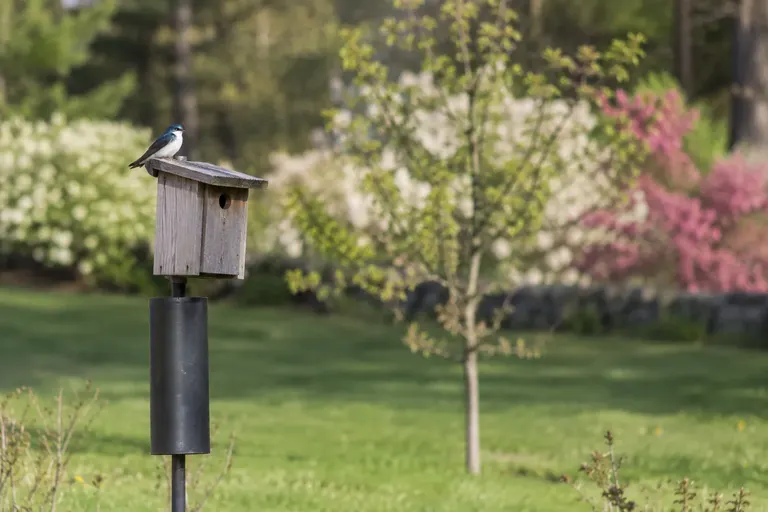
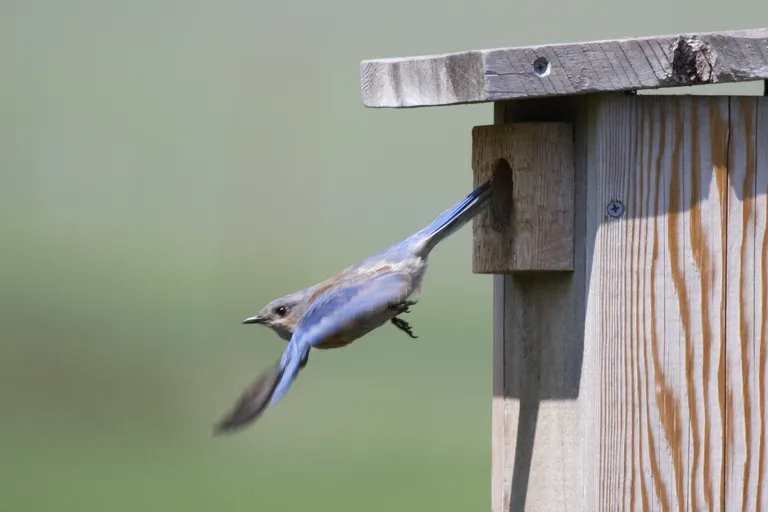
Put it near woody cover. NestWatch advises placing a House Wren box within 100 feet of shrubs or trees, with enough open space for the birds to fly in and out, and spacing House Wren boxes about 100 feet apart.
Cornell Lab notes that House Wrens avoid sites far from woody cover and also avoid heavily wooded spots. A yard edge, an orchard or the border between lawn and shrubs is ideal. The box can face any direction, and it can go on a pole, a post, a tree or a building.
Carolina Wrens want shelter. NestWatch suggests mounting their box 3 to 6 feet up on a building, and near houses they nest in all sorts of semi-covered places: flowerpots, mailboxes, propane tank covers, even old boots and coat pockets. A box under a porch roof, on a shed wall or tucked into a vine near a brush pile suits them well.
Two practical tips:
- Add a predator guard. Cornell Lab recommends a guard to keep predators from raiding eggs and young. On a pole, a baffle below the box works best. Our guide to mounting a birdhouse on a pole, tree or wall covers baffles and fixings.
- Grow cover and insects. Wrens eat insects and spiders, not seed. A brush pile, native shrubs and a pesticide-free yard do more to keep wrens around than any feeder.
Will a wren house cause problems for bluebirds?
It can. House Wrens are fierce competitors for cavities, and both males and females may destroy the eggs or nestlings of other cavity nesters, NestWatch warns.
Cornell Lab adds that a House Wren can evict a larger bird even after that bird has started nesting. Audubon notes that adults may puncture the eggs of nearby birds, including other House Wrens. They are native birds, so the answer is placement, not removal. NestWatch recommends keeping boxes for other species at least 100 feet from wren boxes, in more open habitat. If you host bluebirds, put their boxes out in the open, away from shrubs, and put the wren house near the hedge.
Why do wrens fill boxes with sticks?
It’s courtship. Male House Wrens defend several cavities and fill them with twigs as mock nests, and the female chooses only one to use, according to NestWatch.
She then shapes a cup in the twigs and lines it with feathers, grass and other plant material, Cornell Lab says, sometimes with odd items such as spider egg sacs and snakeskin. Clutches run from 3 to 10 eggs, incubation lasts about 9 to 16 days and the young stay in the nest 15 to 17 days. Audubon notes that pairs often raise two broods a year.
Carolina Wrens work the same way: the male builds several starter nests, the female picks one and the pair finishes it together. Their nest is bulky and often domed, with a side entrance.
Because males stuff several boxes, a yard with two or three wren houses may only produce one brood. That’s normal.
When should you put up a wren house?
Before the breeding season, and earlier is better. Cornell Lab advises setting out a box early, before the birds start looking for nest sites.
House Wrens migrate, so in most of their breeding range the box should be up before they return in spring. Carolina Wren pairs stay on their territory all year and may shelter in nest boxes in harsh winters, so a box put up in fall is useful straight away. In Europe, the LPO and NABU both recommend hanging boxes in autumn or early winter, partly because Eurasian Wrens use them as winter roosts. For a month-by-month view, see when to put up birdhouses.
How do you clean a wren house?
Clean it once the breeding season is over. NestWatch advises leaving the nest in place during the season, since the pair may raise another brood, then removing the old material and scrubbing the inside with mild detergent and water.
If the box is soiled with droppings, NestWatch suggests a solution of one part bleach to ten parts water, then letting the box dry fully. If you’re ever unsure whether a box is still in use, wait and check another day. Nests are protected while in use, so never pull out a nest with eggs or young.
In Europe, the timing is similar: the LPO suggests September to October, and the RSPB says to clean boxes between September and January at the latest. Leave boxes up over winter: NestWatch notes Carolina Wrens use them for roosting, and Eurasian Wrens do the same. Our step-by-step guide on when and how to clean out a birdhouse covers tools and timing.
What kind of wren house works in Europe?
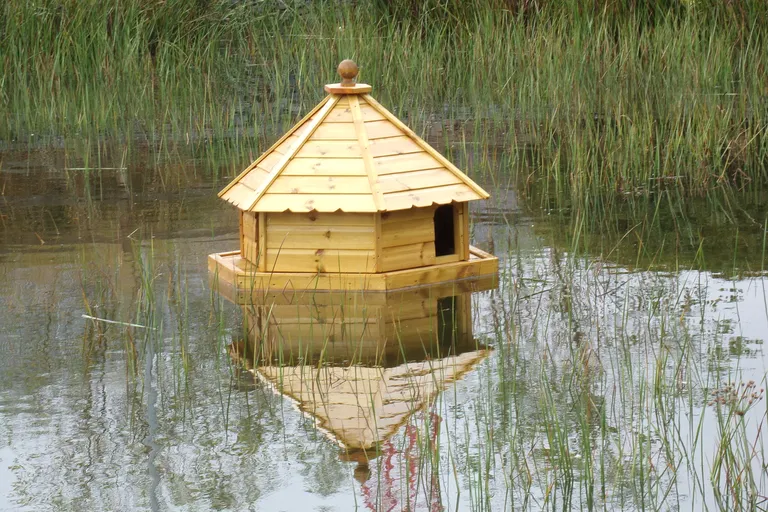
A semi-open box or a ball-shaped wren nest, hidden in dense cover. The Eurasian Wren builds a domed nest with a side entrance in brambles, ivy, crevices and banks, and a closed box with a small round hole is not its first choice.
NABU lists its semi-open box design for wrens, robins, black redstarts, spotted flycatchers and white wagtails, and suggests hanging it about 2 to 3 meters up, away from the prevailing weather and out of reach of cats and martens. The LPO gives 1.5 to 3 meters on a wall in a quiet spot. The RSPB says robin and wren boxes should be hidden among shrubs and climbing plants, for example on a fence or wall.
Expect patience. The male builds several nests, and Vogelbescherming Nederland notes that special wren boxes are not often used for breeding. Breeding runs from mid-April to July, usually with two clutches of 5 to 7 eggs.
Do wrens roost in nest boxes in winter?
Yes, and sometimes in crowds. The RSPB reports that more than 60 Wrens were once found huddled together in a single nest box to keep warm.
In the BTO’s garden roosting survey in winter 2010 to 2011, Wrens were the stars: the biggest group was 51 birds roosting together near Lyme Regis, Dorset, and Wrens found in nest boxes averaged about 10 birds per box. That’s why a well-placed wren box is worth leaving up all winter, even if it never holds a nest. The RSPB rates the Wren as the UK’s most common breeding bird, but numbers drop after long, severe winters, so a sheltered roost can matter.
Common wren house mistakes
- A hole that’s too big. A House Wren box with a 1 1/4-inch hole invites House Sparrows.
- A perch under the hole. Wrens don’t need one, and it helps predators and competitors.
- Wrens next to bluebirds. Keep wren houses near shrubs and other boxes about 100 feet away in the open.
- A box with no cleaning access. Old nests and parasites build up fast.
- Open lawn, no cover. Wrens rarely nest far from shrubs or trees.
- Closed boxes for European wrens. Use a semi-open box hidden deep in ivy or a hedge.
- Taking the box down in fall. Carolina and Eurasian Wrens use boxes as winter roosts.
Wrens and robins both use open-fronted boxes. For robins, see our guide to the best robin nest box.
Sources


Frequently asked questions
What size hole does a wren house need?
For House Wrens, NestWatch recommends a 1-inch (25 mm) entrance hole. That size lets the wren in but keeps out House Sparrows and most other competitors. Bewick's Wrens use a 1 1/8-inch hole, and Carolina Wrens, which are bigger and prefer more open sites, get a 2 1/2-inch opening in the NestWatch plan. Match the hole to the wren that actually lives near you.
How high should you hang a wren house?
NestWatch suggests 5 to 10 feet for a House Wren box and 3 to 6 feet for Carolina and Bewick's Wrens. House Wren boxes can go on a pole, a tree or a building, while Carolina Wren boxes usually go on a building, such as under a porch roof or on a shed. In Europe, semi-open wren boxes go about 1.5 to 3 meters up, hidden in dense cover.
When should I put up a wren house?
Have it up before the breeding season starts. Cornell Lab advises putting a box out early, before House Wrens return in spring. Carolina Wrens stay all year and roost in boxes in winter, so a box put up in fall can be used right away. In Europe, the LPO and NABU suggest autumn, because Eurasian Wrens use boxes as winter roosts.
Why is my wren house full of sticks?
Male House Wrens defend several cavities and fill them with twigs as mock nests. The female inspects them and picks only one, which she lines with grass, feathers and other soft material. The other stick-filled boxes are often never used. Leave them alone during the season, because a box that looks abandoned may still be part of an active territory.
Do European wrens use nest boxes?
Sometimes, but not the closed boxes North American wrens use. The Eurasian Wren builds a domed moss nest with a side entrance in ivy, hedges and crevices. It may nest in a semi-open box hidden in dense cover, but Vogelbescherming Nederland notes that special wren boxes are not often used for breeding. In winter, though, wrens often roost together in boxes.