How to Make a Bird Bath: 5 Easy DIY Builds That Work
How to make a bird bath: use a wide, shallow dish (2.5 cm at the edge, 5 cm max in the middle), add a rough base and stones, and place it near cover.
In this article
- What makes a good DIY bird bath?
- What can you use to make a bird bath?
- How do you make a terracotta saucer bird bath?
- How do you make a ground-level bird bath?
- How do you make a raised bird bath?
- How do you make a hanging bird bath?
- Where should you put a homemade bird bath?
- How do you keep a DIY bird bath clean and safe?
- What should you do with a homemade bird bath in winter?
- How do you get birds to use a new bird bath?
- Common mistakes when making a bird bath
- Sources
- Frequently asked questions
To make a bird bath, take a wide, shallow, watertight dish such as a large plant saucer or a dustbin lid, make sure it is no deeper than about 2.5 cm at the edge and 5 cm in the middle, add a few stones for grip, and set it in an open spot with cover a short flight away. Fill it with clean water and refresh it daily.
That is the whole secret. Birds don’t care what a bath looks like; they care that it is shallow, steady, non-slip and safe from cats. A homemade bath that gets those things right will be used just as much as a shop-bought one. Below are five easy builds, the measurements that matter, and the mistakes that keep birds away.
What makes a good DIY bird bath?
A good bird bath copies a shallow puddle: wide, gently sloping, rough underfoot and easy to keep clean. Size and depth matter far more than looks.
| Feature | Target | Why it matters |
|---|---|---|
| Depth at the edge | About 2.5 cm | Small birds test the water from the rim first |
| Depth in the middle | About 5 cm, never more than 10 cm | Songbirds wade, they don’t swim |
| Width | As wide as you can, ideally over 30 cm | More room to bathe, and the water lasts longer |
| Sides | Very shallow and sloping | Birds walk in gradually |
| Base | Rough, or covered with stones or gravel | Wet feet slip on glaze, glass and plastic |
| Stability | Doesn’t tip or wobble | Shy birds leave a bath that moves |
The depth figures come from Cornell Lab of Ornithology, which recommends 2.5 cm at the edges sloping to 5 cm in the middle. The RSPB’s own design is a little more generous, with a maximum of about 10 cm, very shallow sloping sides and a width of over 30 cm. The LPO, France’s bird protection league, notes that 3 to 4 cm is enough for small species, while larger birds can use up to 9 cm. If you only remember one thing, keep it shallow.
What can you use to make a bird bath?
Almost anything that is wide, shallow and holds water. The RSPB suggests an upturned dustbin lid or a large circular plant tray, and an old bowl or cooking pot will also do. Cornell Lab’s list of homemade options includes a trash can lid, a saucer-type snow sled, a shallow pan or an old frying pan.
Good choices, in rough order of how easy they are:
- Large plant saucer. Terracotta or plastic, 35 cm or more across. Cheap, the right shape and easy to lift for cleaning.
- Dustbin lid or trash can lid. Turned upside down, it has the ideal gentle slope.
- Shallow baking tray or old frying pan. Fine on the ground; add gravel for grip.
- Plastic snow sled (saucer type). Wide, light and shallow, good for a ground bath.
- Old sink or shallow basin. Heavier and deeper, so fill it partly with stones.
Avoid anything that has held paint, oil, garden chemicals or cleaning products, unless you are sure it can be scrubbed completely clean. Skip deep buckets and bowls with steep sides; they trap small birds.
How do you make a terracotta saucer bird bath?
Turn a large terracotta pot upside down, set a wide terracotta saucer on top, add a handful of stones and fill it with water. This is the build the Natural History Museum in London recommends, and it takes about ten minutes.
- Pick a pot and saucer that match. The saucer should be noticeably wider than the base of the upturned pot so it sits flat.
- Choose the spot first. An open, level place with shrubs or trees nearby, but not right against thick cover. Moving a full bath later is awkward.
- Set the pot upside down on firm, level ground. On soft soil, put a paving slab underneath so it can’t sink or lean.
- Place the saucer on top and check it is level. Water should sit evenly around the rim.
- Add stones. A handful of flat stones gives birds and insects somewhere to perch, and a stone that breaks the surface lets birds drink without getting wet.
- Fill it. The museum suggests 2.5 to 10 cm of water; for small garden birds, keep to the shallow end.
For extra stability, some people glue the saucer to the pot with outdoor-grade adhesive. If you do, let it cure fully and rinse the saucer well before you add water, and keep it easy to tip out for cleaning.
How do you make a ground-level bird bath?
Set a wide, shallow dish such as an upturned dustbin lid or a plant tray directly on the ground in an open, flat area. The RSPB’s own bird bath design works this way. Many birds that drink at puddles, such as thrushes, Blackbirds, American Robins and doves, are happy to use water at ground level.
- Level the ground first, or sink the lid slightly into the soil so its rim is flush with the surface.
- Keep the surroundings open. The RSPB advises avoiding long grass or low bushes next to the bath, where a cat could hide and pounce.
- Add stones or a branch so smaller birds can perch at the edge.
Ground baths are the cheapest and easiest to fill, but they are within easy reach of cats. If cats roam your garden, a raised bath is safer. Our guide to cats and birds covers other ways to reduce the risk.
How do you make a raised bird bath?
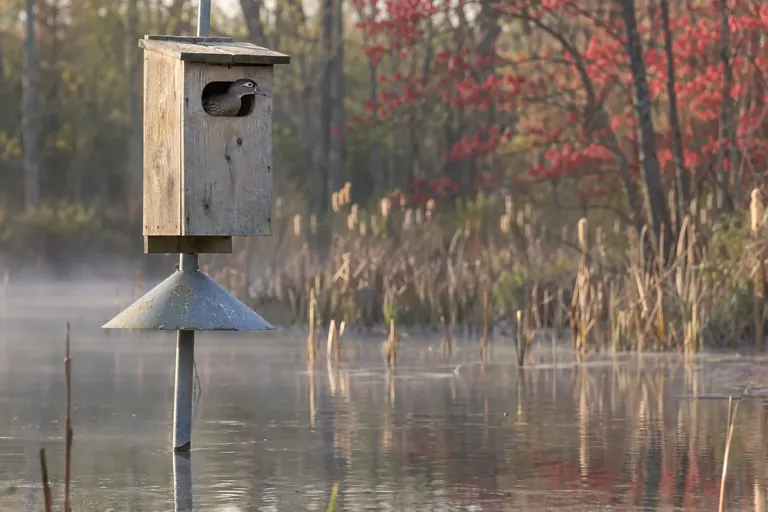
Put a shallow dish on top of a stable base such as a tree stump, an upturned pot, a stack of bricks or a sturdy post. NABU, Germany’s nature conservation union, recommends placing a bird bath at least 1.5 m above the ground to keep birds safe from cats, although any height that a cat can’t reach in a single leap from cover helps.
Ideas for a raised base:
- A log or tree stump, cut flat on top, with the dish resting in place.
- Two or three bricks or blocks, stacked dry and level.
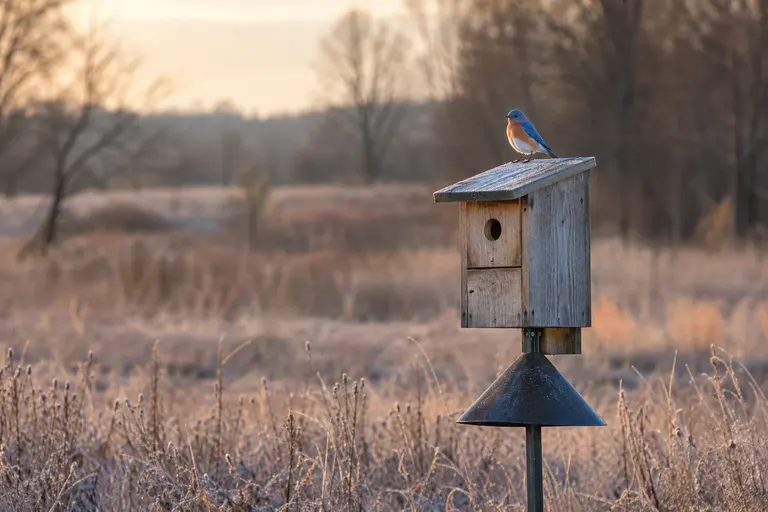
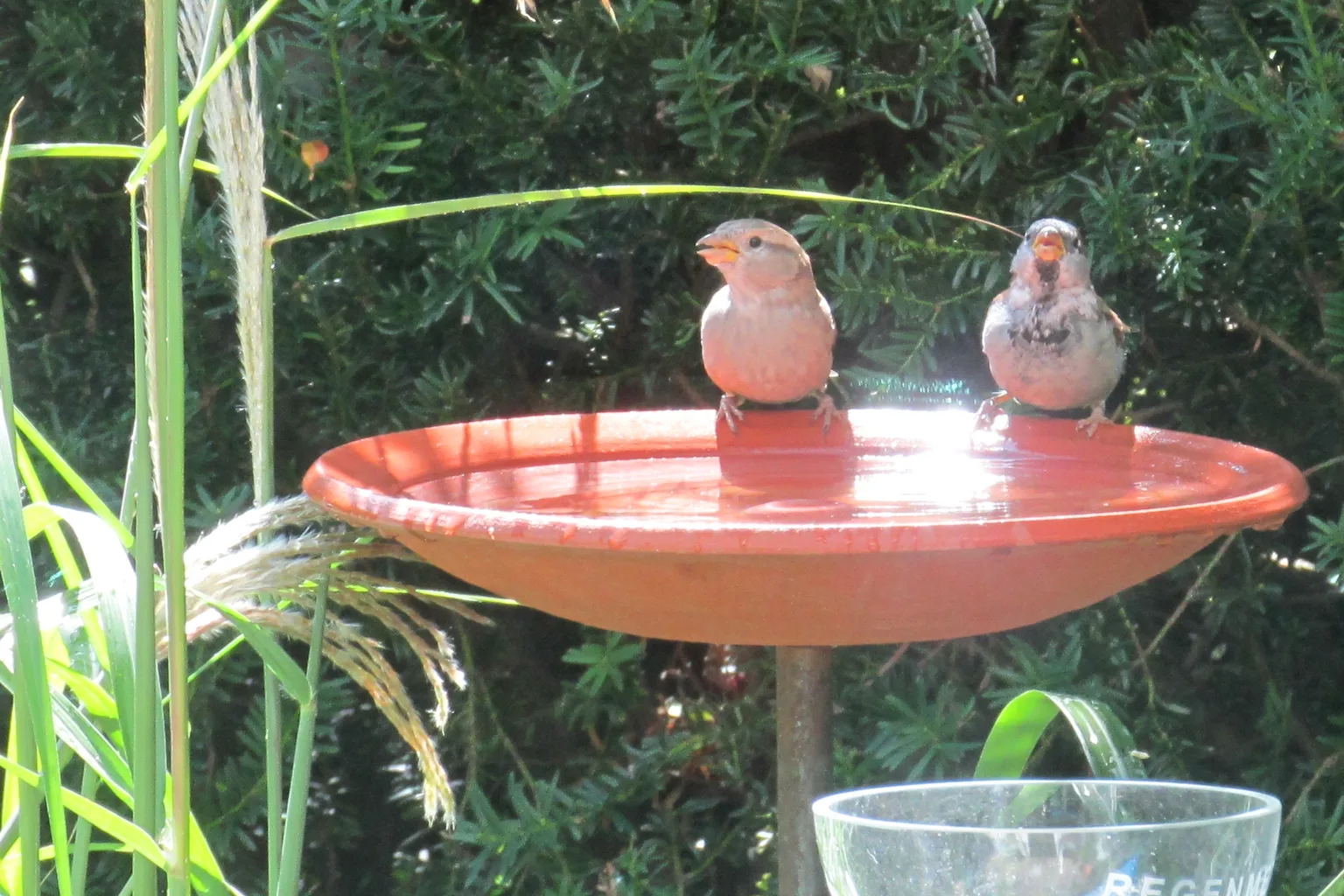
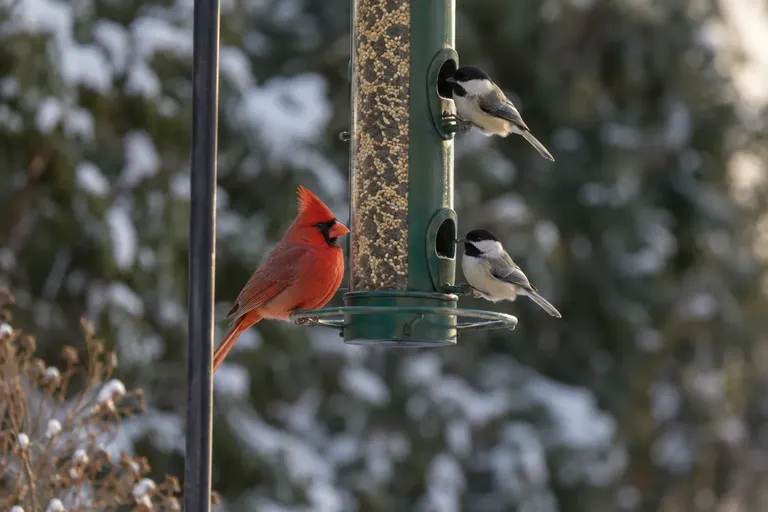
- A post or metal stake with a ring or plate to hold the saucer, like the one in the photo above.
- A plant stand that won’t tip when a pigeon lands on the rim.
Whatever you use, test it by pressing on one side of the rim. If it rocks, add weight to the base or choose something wider. A bath that wobbles spills water and makes birds nervous.
How do you make a hanging bird bath?
Hang a shallow dish from a strong branch, bracket or beam with three chains or cords, so it stays level. A shallow plant saucer with three holes drilled near the rim works well. Water is heavy, about 1 kg for every liter, so use a hook rated for far more than the filled weight.
Hanging baths suit small gardens and balconies and keep water out of reach of most cats, but they suit small, agile birds like tits, chickadees and finches more than ground feeders. Keep the chains short to stop the bowl swinging, and hang it where you can reach it every day without a ladder.
Where should you put a homemade bird bath?
In an open, flat spot with shrubs or trees a short flight away, but with clear ground around the bath itself. Cornell Lab suggests leaving open ground between the bath and the nearest thick shrubbery so birds can see a prowling cat, and placing the bath in shade during hot months. Vogelbescherming Nederland, the Dutch bird protection society, advises putting water near a shrub or small tree so wet birds have an escape route.
A few more rules:
- Away from feeders, so seed husks and droppings don’t foul the water.
- Close to a window or well away from it, to cut the risk of birds flying into the glass.
- Not right under a busy perch, where droppings fall into the bath.
- Where you can see it, both for the pleasure of watching and because you will refill it more often.
For a full checklist, see where to put a bird bath.
How do you keep a DIY bird bath clean and safe?
Change the water every day or two and scrub the dish regularly. The Natural History Museum suggests emptying, cleaning and refilling ideally every day, and topping up more often in hot weather. Cornell Lab says to change the water every day or two, which also stops mosquito larvae from developing.
- No chemicals in or near the water. If you use a diluted disinfectant to clean the dish, rinse it thoroughly before refilling, as the Natural History Museum advises.
- Scrub off algae and droppings with a stiff brush.
- Choose a dish you can lift. A light saucer gets cleaned far more often than a heavy sink.
Our step-by-step guide on how to clean a bird bath covers the full routine.
What should you do with a homemade bird bath in winter?
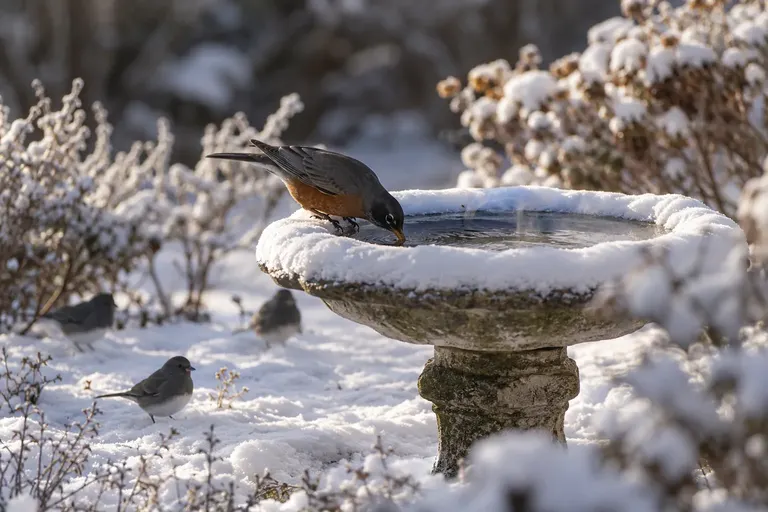
Keep it if you can manage the ice, but never add anything to stop it freezing. Cornell Lab warns that antifreeze and glycerin must never be used, and the Natural History Museum says no de-icers or salt; crack and remove the ice or melt it with hot water instead.
Terracotta, ceramic and concrete can crack when water freezes inside them, so empty fragile dishes before a hard frost or bring them indoors. A plastic plant tray or a metal lid copes better with frost. For ways to keep water open all winter, see keeping a bird bath ice-free.
How do you get birds to use a new bird bath?
Give it time, keep it shallow and full, and add a little movement. Birds can take days or weeks to find new water.
- Add dripping water. Cornell Lab suggests punching a tiny hole in a bucket or container and hanging it above the bath so water drips in. A small solar fountain does the same job.
- Keep it within sight of your feeders, but not under them.
- Never let it dry out. A bath that is empty by noon teaches birds not to come back.
Common mistakes when making a bird bath
- Too deep. A bowl filled to 10 cm or more is a hazard for small birds.
- Slippery base. Glazed ceramic, glass or smooth plastic with nothing to grip. Add stones or gravel.
- Wobbly stand. If it rocks when you press the rim, birds won’t trust it.
- Hidden by dense plants. It looks natural, but it gives cats cover.
- Hard to clean. A heavy or awkward bath gets cleaned less often.
- Left full in a hard frost. Ice can crack terracotta and concrete.
If you’d rather buy than build, our guide to the best bird baths compares pedestal, ground, deck and heated types, and bird bath materials explains which surfaces last.
Sources
- Cornell Lab of Ornithology, All About Birds: Attract birds with birdbaths
- RSPB: Make the perfect bird bath
- Natural History Museum: How to make a bird bath
- NABU: Vogeltränke und Vogelbad
- Vogelbescherming Nederland: Extra water tijdens warme dagen
- LPO Occitanie: L’eau et les oiseaux (fiche Refuges LPO)

Frequently asked questions
What can I use to make a bird bath?
Almost any wide, shallow, watertight dish. The RSPB suggests an upturned dustbin lid or a large round plant tray, and Cornell Lab lists a trash can lid, a saucer-type snow sled, a shallow pan or an old frying pan. A large terracotta plant saucer on an upturned pot, as the Natural History Museum describes, is one of the easiest builds of all.
How deep should a homemade bird bath be?
Shallow. Cornell Lab advises no more than 2.5 cm at the edges, sloping to about 5 cm in the middle. The RSPB gives about 10 cm as the absolute maximum for its design, so if your dish is deeper, add flat stones or clean gravel to make a shallow shelf. Small songbirds wade into water; they don't swim, and they avoid deep bowls.
Do birds need stones in a bird bath?
Stones help a lot. The Natural History Museum suggests a handful of stones in the saucer for birds and insects to perch on, and Cornell Lab says stones or branches let birds drink without getting wet. Stones also give grip on a smooth base and make a deep dish shallower in one corner, so smaller birds have a safe place to stand.
Where should I put a DIY bird bath?
Somewhere open and flat with shrubs or trees a short flight away, but with no long grass or low bushes right beside it where a cat could hide. The RSPB and Cornell Lab both stress that birds need to see danger coming. Some shade in summer helps keep the water cool, and a spot you can see from a window makes daily refilling easier.
How often should you change the water in a bird bath?
Every day if you can, and at least every day or two. The Natural History Museum suggests emptying, cleaning and refilling ideally every day, and Cornell Lab says every day or two, which also stops mosquito larvae from developing. Top it up more often on hot days, and never add chemicals to the water.