When to Put Up Birdhouses
When to put up birdhouses: by late winter, February in most of the US and Europe, so birds can find them before nesting. Timing by region, species and season.
In this article
- Quick answer: when to put up a birdhouse by region
- Why is late winter the best time?
- When do common backyard birds start nesting?
- Is it too late to put up a birdhouse in spring or summer?
- Should you put up birdhouses in the fall?
- What is the full nest-box calendar?
- How long does it take birds to find a new birdhouse?
- Does weather change the best timing?
- How long does a nesting cycle take?
- What should you check before nesting season starts?
- Should you monitor your nest boxes, and when?
- Common mistakes
- Quick facts
- Sources
- Frequently asked questions
The best time to put up a birdhouse is late winter, before birds start choosing nest sites: January in the southern US, February across most of the US, the UK and Europe (the BTO’s National Nest Box Week starts on 14 February), and by early March in colder northern areas. Fall is an equally good time, because a box that goes up in autumn can serve as a winter roost and is already in place when prospecting begins.
That said, it is rarely too late. Many species nest more than once a year, and latecomers such as House Wrens and swallows are still looking for homes in May and June. This guide explains how birds choose nest sites, when each common species starts nesting, and how to time box installation, cleaning and repairs through the year, including in the Southern Hemisphere.
Quick answer: when to put up a birdhouse by region
| Region | Ideal time to install | Earliest nesters start |
|---|---|---|
| US South and Gulf Coast, southern California | December to January | February to March |
| Mid-Atlantic, Midwest, Pacific Northwest | January to February | March to April |
| Northern US, Canada, New England, Rockies | February to early March | April to May |
| UK, Ireland, western and central Europe | By mid-February | March to April |
| Southern Europe, western Turkey | January to February | March |
| Central and eastern Turkey, uplands | February to March | April |
| Southern Brazil, Argentina, Uruguay | June to July | August to September |
| Tropical regions | Check local breeding seasons, often tied to rains | Varies |
In the UK, the BTO’s National Nest Box Week runs from 14 February each year, a timing chosen because it is just before many resident birds start looking for sites.
Why is late winter the best time?
Birds do not arrive at a box and move in the same afternoon. Nest-site selection is a process that starts weeks before the first egg.
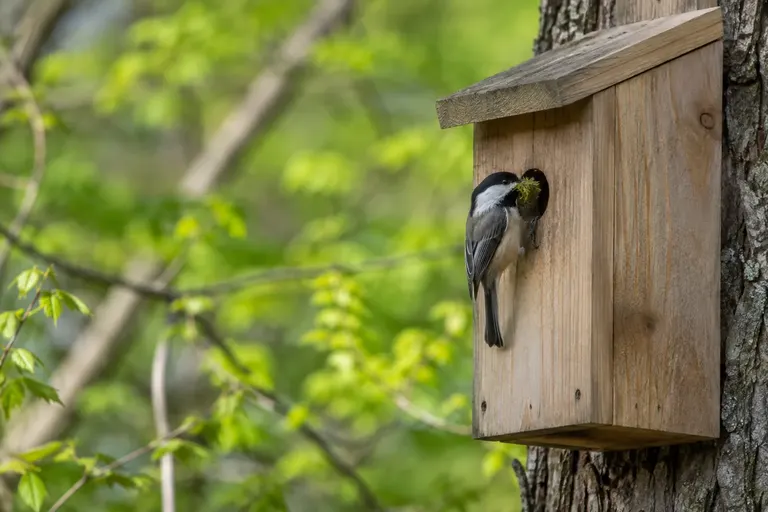
Resident birds prospect early. Chickadees, titmice, nuthatches and tits stay on or near their territories through winter. On mild days in late winter, pairs begin inspecting cavities. A box that is up by then is part of the options they compare.
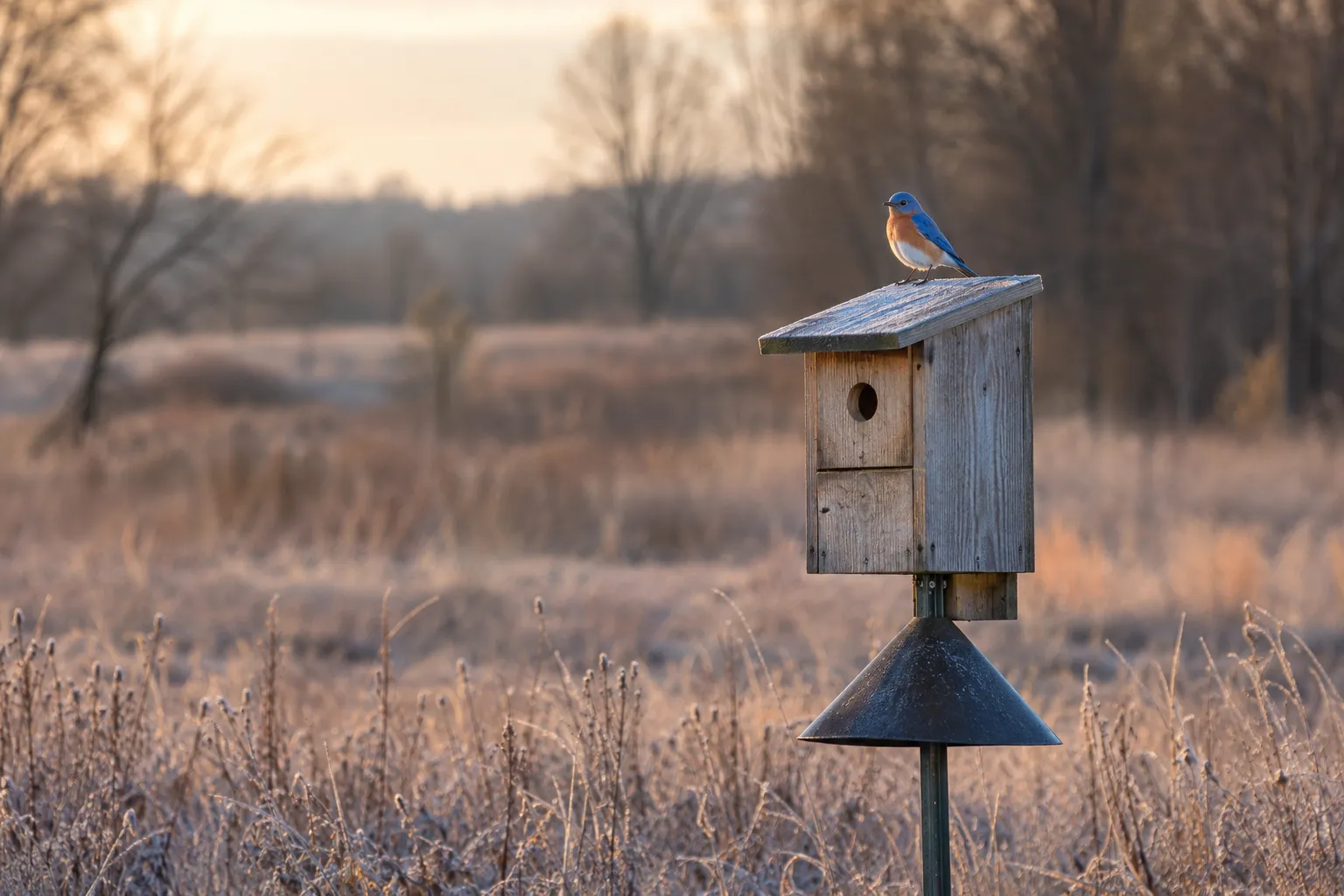
Bluebirds start early too. Eastern Bluebirds in the southern US often begin building in late February or March, and the males start showing females potential nest sites even earlier. Farther north, bluebirds return in March and April and start soon after.
Competition favors the first choice. Good cavities are limited. The earliest birds get the best sites, and a box available early is more likely to be claimed by a resident native species than left for a latecomer.
New boxes need time to weather. A freshly built box smells and looks new. A few weeks outdoors lets it lose that newness, although many birds use brand-new boxes without hesitation.
When do common backyard birds start nesting?
The table gives approximate start times for the main nest-box species. Local dates vary with latitude, elevation and the year’s weather, so treat them as a guide.
| Species | Typical nest-building start | Broods per year | Notes |
|---|---|---|---|
| Eastern Bluebird | Feb to Mar (South), Apr (North) | 2 to 3 | Among the earliest box users |
| Black-capped and Carolina Chickadees | Mar to Apr | 1 | Line nests with moss and fur |
| Tufted Titmouse | Mar to Apr | Usually 1 | Famous for plucking hair for nest lining |
| White-breasted Nuthatch | Mar to Apr | 1 | Prefers boxes on or near large trees |
| Tree Swallow | Apr to May | Usually 1 | Arrives early for a migrant |
| House Wren | Late Apr to May | 2 | Very late start, long season |
| Carolina Wren | Mar to Jul | 2 to 3 | Nests in all sorts of odd places |
| Purple Martin | Mar to May, depending on latitude | 1 | Older birds arrive first |
| Blue Tit and Great Tit (Europe) | Late Mar to Apr | Usually 1 | Timed to the spring caterpillar peak |
| House Sparrow (Europe, Turkey) | Mar onward | 2 to 3 | Long season, into August |
For species-specific details on nesting, see our guides to attracting the Eastern Bluebird and the House Wren.
Why do Blue Tits and Great Tits nest when they do?
European tits time their breeding so that their chicks hatch when oak and other tree caterpillars are most abundant, typically in May in Britain. A single brood of 8 to 12 chicks needs an enormous supply of caterpillars over about three weeks. That is why a box put up in May may still attract a House Sparrow but is unlikely to attract tits the same year.
Is it too late to put up a birdhouse in spring or summer?
Rarely. There are three reasons a late box can still be used.
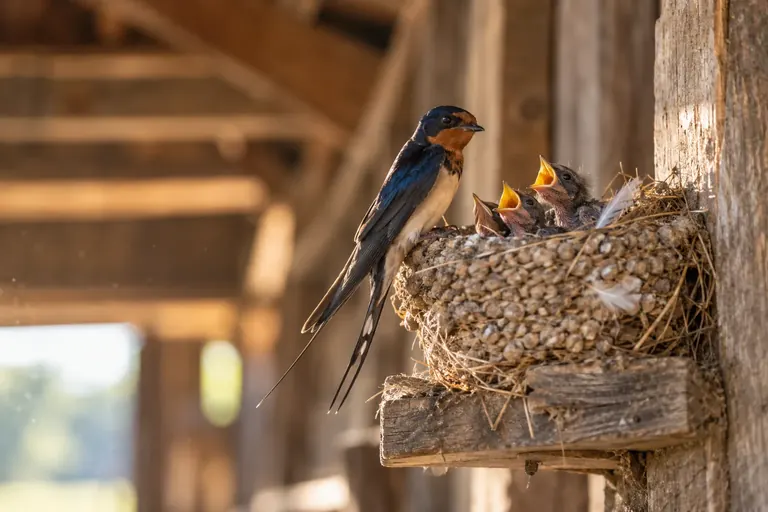
Late migrants. House Wrens, Tree Swallows, Great Crested Flycatchers and Purple Martins arrive later than resident birds. House Wrens in particular are still pairing and building in May and June across much of North America.
Second and third broods. Bluebirds, Carolina Wrens and House Wrens often raise two or more broods a season. Many pairs choose a fresh site for the second nesting rather than reusing the first, partly because old nests can harbor parasites. We explain why in do birds reuse nests?.
Failed nests. When a nest fails to predators or bad weather, the pair often tries again elsewhere within days.
Even if a box goes unused in its first summer, it may be used as a winter roost and will be ready for next spring.
Should you put up birdhouses in the fall?
Yes. Fall installation has several advantages.
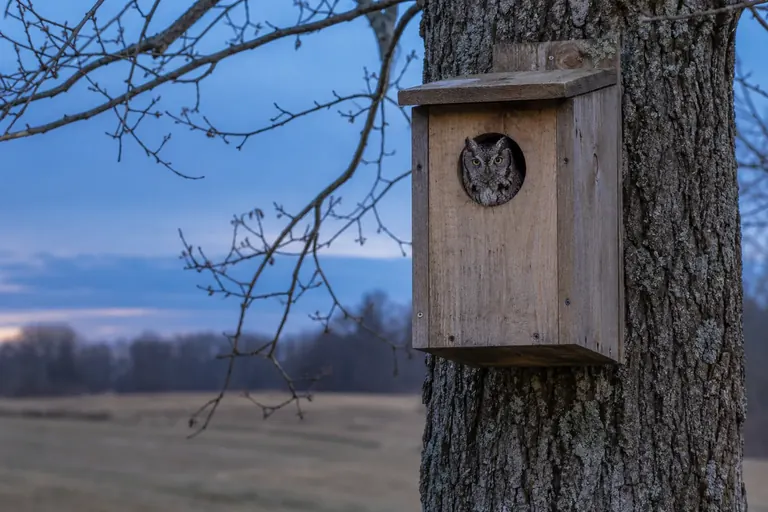
- Winter roosting. On cold nights, small birds sleep in sheltered cavities. Eastern Bluebirds sometimes pile into a single box together, and chickadees, wrens, titmice and European tits all roost in boxes. See do birds sleep in nests? for how birds use cavities outside the breeding season.
- Easier work. The ground is not frozen yet, which makes setting a pole easier, and you are not racing the start of nesting.
- Earlier discovery. Birds that roost in or inspect a box over winter already know it when spring comes.
If you expect a box to be used for roosting, you can temporarily plug some of the ventilation gaps with removable weatherstripping or foam, then open them again before nesting starts. Some roost boxes are built with the entrance near the bottom so warm air stays trapped, but a standard nest box works too.
What is the full nest-box calendar?
Here is a practical year for a backyard nest box in the Northern Hemisphere.
January and February
- Install new boxes by the middle of February in most areas, earlier in the South.
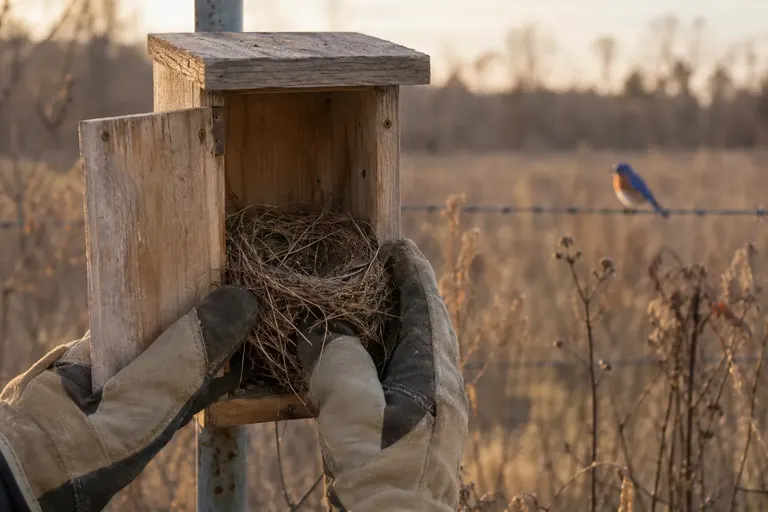
- Check that existing boxes are clean, dry and securely mounted.
- Add or check predator guards, such as pole baffles or entrance extenders.
- Replace boxes with split wood, gaps or loose roofs.
March to May
- Prospecting and nest building. Check boxes about once a week if you are monitoring them, and keep visits short, around a minute.
- Avoid checking in cold rain or when young are close to fledging, because disturbing near-fledged young can make them leave early.
- In North America, remove House Sparrow nests promptly from boxes meant for native birds. Native species’ nests are protected.
June to August
- Second broods for bluebirds, wrens and many others.
- Once a brood has fledged, you can remove the old nest to make room for a new one, where the law allows. In North America this is legal once the nest is no longer active. See when and how to clean out a birdhouse.
- Watch for heat. Boxes in full afternoon sun can overheat; shade or better ventilation helps.
September to December
- Main clean-out of all boxes after the season ends.
- In the UK, the law protects active nests, and standard guidance is to clear out old nests between autumn and the end of January. If eggs remain, they can legally be removed only during this period.
- Put up new boxes for winter roosting and next season.
- Repair or move boxes that were not used.
Southern Hemisphere calendar
In Brazil, southern Argentina, South Africa and Australia, move everything six months: install in June and July, expect nesting from August or September through January, and clean out in the southern autumn from March to May. In tropical areas, breeding is often tied to the wet season instead of temperature, so check with local bird groups.
How long does it take birds to find a new birdhouse?
It varies widely. A well-placed box in good habitat, with the right hole size, may be inspected within days. Other boxes sit empty for a season or two. The main reasons a box is ignored:
- Wrong habitat. A bluebird box in dense woodland or a chickadee box in open lawn will likely stay empty. Match the box to the species and the setting using our birdhouse hole sizes by species chart.
- Too many natural cavities nearby. In old woodland full of dead trees, birds have plenty of options.
- Poor mounting. A box that sways, faces into prevailing wind and rain or sits on a fence where cats patrol is less attractive. Our guide on how to mount a birdhouse covers heights, directions and guards.
- Disturbance. A box right next to a busy feeder, a door or a play area gets constant traffic.
- Too many boxes too close together. Territorial species will not nest close to each other.
If a box is empty after two seasons, try moving it rather than simply waiting.
Does weather change the best timing?
Yes, to a degree. Birds respond to day length, temperature and food supply. A warm spell in late winter can bring nest building forward by a week or two, while a cold, wet spring delays it. Long-term studies in Europe and North America have found that many species now start breeding earlier than they did several decades ago, linked to warmer springs.
That is another reason to have boxes up early. If spring comes early, the birds will not wait for you.
A late cold snap after nesting has begun can be hard on early broods, especially bluebirds and swallows, which feed on flying insects. There is little you can do in the box itself, but offering mealworms nearby can help bluebirds through a cold spell.
How long does a nesting cycle take?
Knowing the timeline helps you plan checks and clean-outs. For a typical small songbird:
- Nest building: a few days to two weeks.
- Egg laying: one egg per day, usually in the morning.
- Incubation: roughly 12 to 14 days for bluebirds, wrens, chickadees and tits. See how long does it take bird eggs to hatch?.
- Nestling period: roughly 15 to 21 days, depending on the species.
- After fledging: parents keep feeding the young outside the box for another week or more.
From first twig to fledging, a single brood of a small cavity nester takes about five to seven weeks.
What should you check before nesting season starts?
A box that goes up at the right time still needs to be ready for use. Run through this list each late winter, whether the box is new or old.
- Hole size. Confirm it matches the species you want and the habitat around it.
- Drainage. The floor should have several small drain holes, or recessed corners, so rain that blows in can escape.
- Ventilation. Gaps or holes near the top of the side walls let hot air out in late spring and summer.
- Access. A side or front panel that swings open lets you monitor and clean. Check that the latch closes firmly, because raccoons can open loose doors.
- Roof overhang. A roof that extends 2 inches or more past the front shades the entrance and keeps rain out.
- No perch. Remove any perch below the entrance.
- Clean interior. Old nest material, dead insects or wasp nests should be gone.
- Secure mount. The box should not wobble in wind, and any baffle or guard should be in place.
Doing this in January or February means you are not opening boxes during prospecting or early building, when disturbance matters more.
Should you monitor your nest boxes, and when?
Monitoring is optional but rewarding, and it helps science. Programs such as Cornell Lab’s NestWatch in North America and the BTO’s Nest Record Scheme in the UK collect records from volunteers to track breeding timing and success over decades. Those records are part of how researchers know that many birds are nesting earlier than they used to.
If you monitor, follow standard practice:
- Check once or twice a week, ideally in the late morning or afternoon, when most birds have already laid their daily egg.
- Approach openly, and tap or speak before opening the box so an incubating bird can leave rather than be startled.
- Keep it brief, count eggs or chicks, close the box and move away.
- Stop opening the box in the last few days before expected fledging, often around day 12 for bluebirds and small songbirds. Early fledging lowers survival.
- Record dates: first egg, hatching, fledging. That tells you when to expect second broods and when to clean out.
Timing your checks to the nesting calendar also protects you legally, because you are observing, not disturbing, an active nest.
Common mistakes
- Waiting until April. By then, many resident birds have chosen their sites.
- Taking boxes down in fall. Leaving them up provides winter roosts and a head start for spring. Clean them, then leave them.
- Cleaning out an active nest. In the US, native birds’ active nests are protected under the Migratory Bird Treaty Act. In the UK, active nests are protected under the Wildlife and Countryside Act. Wait until the young have fledged.
- Checking too often or too late. Weekly, short checks are fine. Avoid opening a box when young are close to fledging.
- Giving up after one empty season. Move the box to better habitat and try again.
- Ignoring predator guards. Timing is wasted if a raccoon or cat raids the box. Install guards from the start.
Quick facts
- Best time to install: late winter, or fall for roosting plus next season.
- Southern US: by January. Most of the US, UK and Europe: by mid-February. Far north: by early March.
- Southern Hemisphere: June to July.
- UK National Nest Box Week starts on 14 February.
- House Wrens and swallows nest later, into May and June.
- Bluebirds and wrens raise multiple broods, so summer boxes still get used.
- Clean out after the season, and never disturb an active nest.
- Leave boxes up in winter for roosting birds.
Sources
Frequently asked questions
Is it too late to put up a birdhouse in spring?
Usually not. Early nesters such as chickadees and bluebirds may already have chosen sites by April, but House Wrens, Tree Swallows, and second broods of bluebirds and many other species keep looking into June. A box put up in May can still be used the same season, and it will be ready for the following year.
Can I put up a birdhouse in the fall?
Yes, and it is a good time. A box put up in fall gives birds months to find it, weathers so it looks less new, and may be used as a winter roost by chickadees, bluebirds, wrens or small tits. Make sure the box is clean and has ventilation holes that you can plug in the coldest months.
What month do birds start looking for nest boxes?
It depends on latitude and species. In the southern US, bluebirds prospect as early as January and February. In the northern US, southern Canada and the UK, many resident birds start inspecting boxes in February and March. House Wrens and swallows follow when they return from migration in April and May.
How long does it take for birds to use a new birdhouse?
Some boxes are used within days, and others stay empty for a year or more. Occupancy depends on habitat, hole size, placement and how many natural cavities are nearby. If a box goes unused for two seasons, try moving it to a more suitable spot rather than waiting.
When is nesting season over?
For most backyard cavity nesters in North America and Europe, nesting winds down by late July or August, though some bluebirds and wrens raise broods into early September in the South. In the Southern Hemisphere, such as Brazil, most nesting runs roughly from September to January.