Birding Hotspots Near Me: How to Find the Best Spots
Birding hotspots near me? Use eBird Explore, Merlin, Audubon chapters, wildlife refuges and state parks, then judge each spot by its water, edges and season.
In this article
- What is a birding hotspot?
- How do you find eBird hotspots near you?
- How does Merlin help you choose where to go?
- Which tools and places should you check first?
- How can a local Audubon chapter help?
- Are national wildlife refuges good places to go birding?
- Are state parks worth checking for birds?
- How do you tell if a birding spot is any good?
- What should you bring to a new hotspot?
- A simple plan for finding your first hotspot
- Sources
- Frequently asked questions
The fastest way to find birding hotspots near you is eBird’s free Explore Hotspots map: type in your town and it shows the public birding spots other people use, ranked by how many species they’ve recorded. Add Merlin’s Likely Birds list, a local Audubon chapter, the nearest national wildlife refuge and a state park, and you’ll have a short list in an evening.
This guide walks through each tool, then shows how to judge a spot on the ground by looking at water, edges and the season. If you live in a town or city, our guide to city birding covers parks, cemeteries and rooftops in more detail.
What is a birding hotspot?
A birding hotspot is a public place where birds reliably gather and birders regularly visit, such as a lake, marsh, park, refuge or wooded trail. In eBird, the word has a specific meaning: a shared location where everyone who birds there logs sightings to the same point on the map.
That pooling is what makes hotspots useful. Every checklist adds to one species list, so a busy hotspot can show years of data about which birds turn up and when. A private yard or a one-off pin can’t tell you that. Our guide on how to use eBird explains the difference between hotspots and personal locations if you plan to submit your own lists.
How do you find eBird hotspots near you?
Open eBird’s Explore page and choose Explore Hotspots, then search for your town, county or zip code. The map fills with markers, and the brighter the color, the more species have been reported there.
eBird’s own help pages describe three ways in:
- Explore Hotspots on eBird.org, which opens the hotspot map.
- Explore Regions, where you search for a county, state or country and then click the Hotspots tab for a ranked list.
- The eBird mobile app, whose Explore tools show recent reports and hotspots in an area you choose.
When you open a hotspot, eBird shows its species list, an illustrated checklist, recent visits and the top eBirders for that site. The Cornell Lab’s guide to planning a birding day trip with hotspots adds a few habits worth copying:
- Filter by date. Set the map to the months you’ll be visiting so summer hotspots don’t crowd out winter ones.
- Read the bar charts. They show how often each species is reported week by week, so you can see what’s likely right now.
- Check recent visits. The latest checklists tell you what people actually found in the past few days.
- Get directions. Each hotspot links to a map, so you can find the parking lot or trailhead.
One more tip from eBird: the colored grid cells on the hotspot map include sightings from personal locations, so a bright cell with no hotspot marker can point to a good area that hasn’t been formally named yet.
How does Merlin help you choose where to go?
Merlin doesn’t map hotspots, but it tells you which birds to expect at a place and time, which helps you pick the right spot. In the Explore Birds section, tap the filter icon, choose Likely Birds, and set your location and date.
The result is a list of the birds most likely to be around you right now. Use it to decide what you’re after. If the list is full of ducks and grebes, head for open water. If it’s warblers and vireos, look for a wooded park during migration. Once you’re there, Merlin’s Sound ID can help you name what you hear, and our guide to Merlin Sound ID explains how to use it without fooling yourself.
Which tools and places should you check first?
Each source answers a different question. This table sums up where to start.
| Source | What it tells you | Best for |
|---|---|---|
| eBird Explore Hotspots | Which public spots have the most species and recent sightings | Ranking places near home |
| eBird bar charts | Which birds show up at a site in each week of the year | Timing your visit |
| Merlin Likely Birds | Which birds to expect at your location and date | Choosing a habitat to visit |
| Local Audubon chapter | Guided field trips and local knowledge | Learning a new area fast |
| National wildlife refuges | Large protected habitats, often with tour loops and boardwalks | Waterbirds, raptors, migration |
| State parks and birding trails | Mapped sites with trails, parking and facilities | Weekend outings |
| Audubon Important Bird Areas | Sites recognized as vital for birds | Finding lesser-known places |
How can a local Audubon chapter help?
A local Audubon chapter is the quickest way to borrow years of local knowledge. Audubon says its chapters offer birding field trips and identification classes for members and the public, run outreach events such as birding festivals, and gather data through the Christmas Bird Count, the Great Backyard Bird Count and other surveys.
Going on a guided walk shows you not just where to go, but where to stand, which path to take and what time the birds are active. Leaders also know the seasonal quirks of each site. To find your nearest chapter, use the Audubon Near You page on audubon.org. Many other bird clubs, nature centers and park districts run similar walks, so check their calendars too. If a winter project appeals, the Christmas Bird Count is a classic way to join a local group.
Are national wildlife refuges good places to go birding?
Yes. National wildlife refuges are some of the best birding spots in the country, and many were created to protect birds. The U.S. Fish and Wildlife Service manages more than 570 of them across the country.
Finding one is simple: the Service’s “find a refuge” map lets you search by state, zip code or refuge name. Most refuges are free. The Service notes that only about 30 charge a nominal entrance fee to cover road and facility upkeep.
Refuges are especially good for beginners because many have infrastructure that brings birds close. The Fish and Wildlife Service highlights a few examples:
- Bear River Migratory Bird Refuge, Utah: an 80,000-acre refuge with a visitor center and a 12-mile auto tour loop.
- Billy Frank Jr. Nisqually, Washington: a long boardwalk, with more than 200 bird species visiting each year.
- Bosque del Apache, New Mexico: a famous fall spectacle of waterfowl and cranes.
- Ottawa National Wildlife Refuge, Ohio: marshland on a major migration corridor along Lake Erie, busiest during May migration.
You don’t need a famous refuge, though. A smaller one near home, visited often, will teach you more than a single trip to a big name.
Are state parks worth checking for birds?
Often, yes, and they’re easy to overlook. State parks protect forests, lakes, beaches and grasslands with trails, parking and restrooms already in place, which makes them comfortable for a first outing. Most will also be listed as eBird hotspots, so you can check their species lists before you go.
Many state wildlife agencies also publish birding trail maps that link parks, refuges and other public sites. Texas Parks and Wildlife, for example, runs the Great Texas Wildlife Trails, a set of nine interactive driving maps covering regions across the state. Search your state’s wildlife or parks agency for “birding trail” to see if there’s one near you.
For lesser-known places, Audubon’s Important Bird Areas program is worth a look. Audubon has identified more than 2,700 Important Bird Areas in the United States, covering both public and private land. Not all are open to visitors, but many overlap with parks and refuges.
How do you tell if a birding spot is any good?
Look for water, edges and variety, then check the season. A spot that has all of these will almost always beat a large but uniform one.
Water
Water is the biggest draw. The American Museum of Natural History’s birding guide points out that birds depend on fresh water for drinking and bathing, and that many also feed on fish, aquatic insects or underwater plants. Lakes, ponds, marshes, rivers and even flooded fields pull in ducks, herons, shorebirds and swallows, and songbirds come down to drink. In the Cornell Lab’s day-trip guide, the richest hotspots around Cayuga Lake were those hugging the shoreline, where songbirds mix with waterfowl and shorebirds.
Edges
Edges are where two habitats meet: a wood beside a field, a marsh beside shrubs, a lawn beside a hedge. The same museum guide notes that openings next to woods are good places for woodland birds to find seeds, worms, grubs and other insects. Walk along these boundaries slowly rather than cutting straight through the middle of a forest or field.
Variety of habitats
A site with several habitats in a small area holds more species than one big block of the same thing. A park with a pond, some old trees, a brushy corner and an open meadow can hold woodpeckers, sparrows, ducks and hawks on the same morning.
Season and timing
The same spot can be quiet in July and full of birds in May. Before you go, open the site’s eBird bar charts and look at the current week. They show which species are regular, which are passing through and which have left. Then go early. Our guide to the best time of day for birding explains why the first hours after sunrise are usually the most active.
What should you bring to a new hotspot?
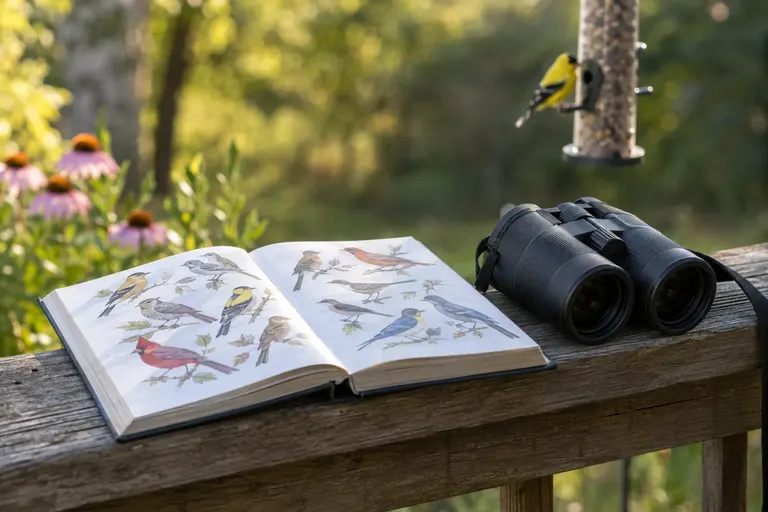
Not much. A pair of binoculars matters most, since many hotspot birds are on water or across a marsh. An 8x42 is the usual all-round choice, and our guide to the best binoculars for birding compares good options. Beyond that, bring water, layers, a phone with eBird and Merlin installed, and a field guide if you like paper.
When you get there, follow the posted rules, stay on trails and give nesting birds plenty of room. Our guide to birding etiquette covers the basics, from playback to sharing sightings of sensitive species.
A simple plan for finding your first hotspot
- Open eBird Explore Hotspots and search your town or zip code.
- Pick two or three bright spots within a short drive, ideally with water.
- Check the bar charts for the current week and read a few recent checklists.
- Run Merlin’s Likely Birds for your location and date to see what to expect.
- Look up the nearest refuge, state park and Audubon chapter for extra options and guided walks.
- Go early, walk the edges and log a checklist so the next birder benefits too.
Sources

Frequently asked questions
What is the easiest way to find birding hotspots near me?
Open eBird, go to Explore and choose Explore Hotspots, then type in your town or zip code. The map shows public birding locations that other birders use, with brighter colors where more species have been reported. Click any hotspot to see its species list, recent visits and bar charts. It's free, works worldwide and takes only a few minutes.
What is an eBird hotspot?
An eBird hotspot is a shared public birding location, such as a park, refuge, trail or lake, where many people log their sightings to the same place. Because everyone's checklists are pooled, a hotspot page builds up a long species list, bar charts by week and a feed of recent visits. That makes it far more useful for planning a trip than a private location.
Are national wildlife refuges good for birding?
Yes. The U.S. Fish and Wildlife Service manages more than 570 national wildlife refuges, and many were set up specifically to protect birds and their habitat. Several have auto tour loops, boardwalks and viewing platforms that make birding easy. Most are free to visit; the Service says only about 30 refuges charge a small entrance fee.
How do I know if a birding spot is any good?
Look for three things. Water of any kind, because birds need it for drinking, bathing and food. Edges, where woods meet fields, marsh or shrubs, because birds feed in those openings. And variety, since a site with several habitats holds more species. Then check the eBird bar charts for that site to see which birds turn up in the current season.
Can a local bird club help me find good places to bird?
Yes, and it's one of the fastest ways to learn your area. Audubon chapters and similar clubs run field trips and identification classes for members and the public, and the leaders know which local spots are good in each season. You can find the nearest Audubon chapter through the Audubon Near You page on audubon.org.