Do Birds Become Dependent on Feeders?
Do birds become dependent on feeders? No. Research shows feeder birds still get most of their food from the wild and cope fine when feeders are taken down.
In this article
- Quick answer
- What does the research say about feeder dependency?
- Do birds starve if you stop feeding them?
- Do hummingbird feeders stop hummingbirds from migrating?
- How has bird feeding changed bird populations?
- Which birds benefit most from feeders?
- How should you stop feeding birds if you need to?
- What are the real risks of feeding, if not dependency?
- Myths vs facts about feeder dependency
- What does this mean for backyard birders?
- Common mistakes
- Quick facts
- Sources
- Frequently asked questions
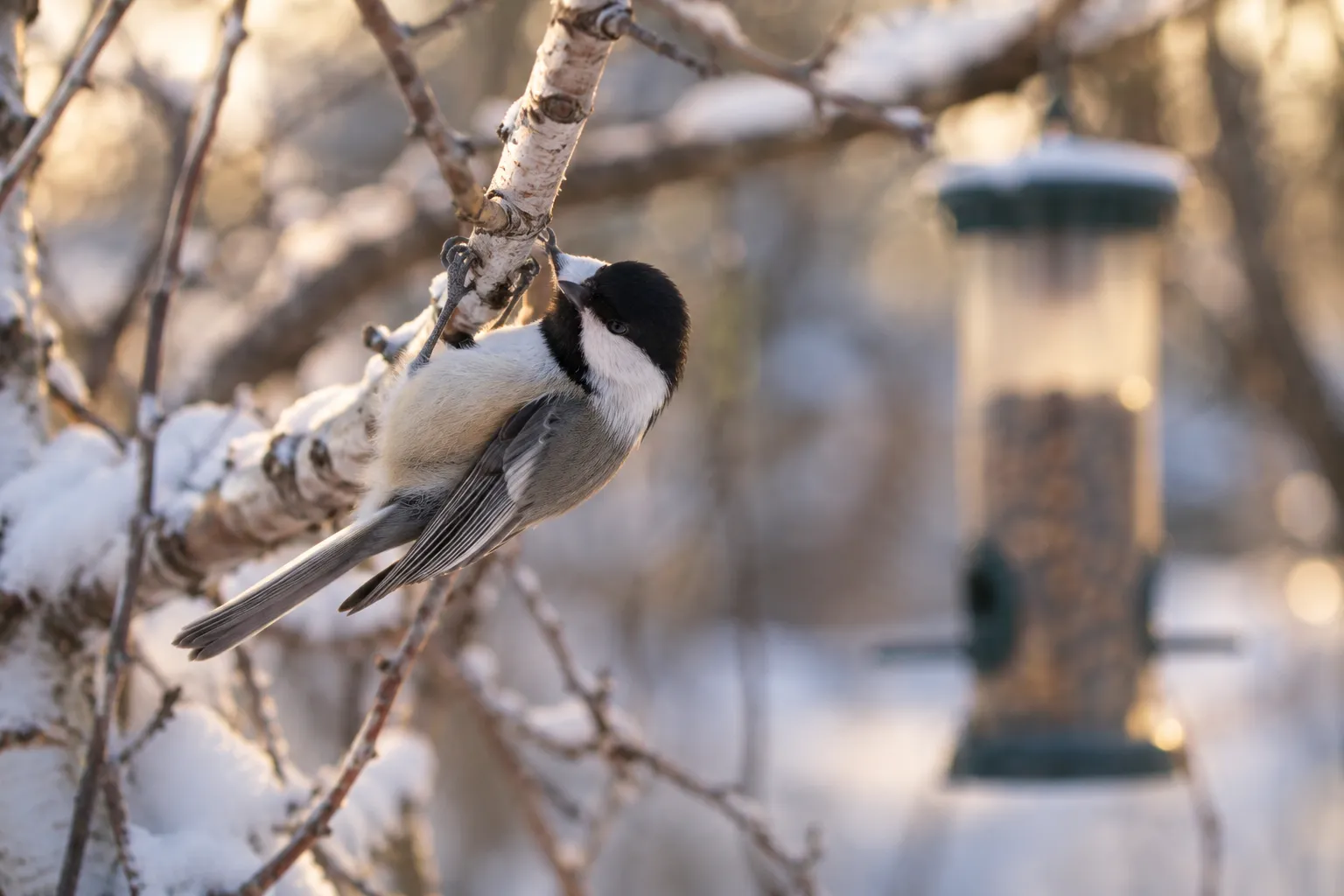
No, wild birds do not become dependent on feeders in the way people often fear. Research on Black-capped Chickadees in Wisconsin found that even regular feeder visitors got only around 21 to 25 percent of their daily energy from feeders, and that they survived just as well as unfed birds after a feeder was taken away. Feeders are a supplement, not a lifeline, for healthy wild birds.
That said, “not dependent” is not the same as “no effect.” Feeding does change bird behavior, can help survival in harsh weather, and at a large scale has nudged the ranges and timing of some species. This guide explains what the research actually shows, where the myth comes from, and what it means for how you feed.
Quick answer
- Individual birds do not lose the ability to find wild food. They visit feeders as one stop among many.
- Feeder birds still eat mostly wild food. In a classic Wisconsin study, chickadees got roughly a fifth to a quarter of their daily energy from feeders.
- Stopping feeding is usually fine. The same research found no drop in survival after feeders were removed.
- Harsh weather is the exception. In severe cold or snow, feeders can make a measurable difference to survival, so a sudden stop at that moment is best avoided.
- Population-level effects are real but mixed. Feeding has been linked to range expansions, shifts in migration and changes in which species dominate gardens.
What does the research say about feeder dependency?
The Wisconsin chickadee studies
The most widely cited work on this question comes from Margaret Brittingham and Stanley Temple at the University of Wisconsin, who studied Black-capped Chickadees in the late 1980s and early 1990s. Several findings from their work are still the backbone of expert advice today:
- Feeder birds did not rely on feeders for most of their food. By estimating energy intake, they found chickadees with feeder access obtained only around 21 to 25 percent of their daily energy needs from feeders. The rest came from natural foraging.
- Removing feeders did not reduce survival. When feeders that chickadees had used for years were taken away, the birds’ winter survival was no different from that of chickadees in areas that had never had feeders. The birds simply foraged more widely.
- Feeders helped most in extreme cold. In their earlier work, the researchers found that winter survival was noticeably higher for chickadees with feeder access during a particularly severe winter, when temperatures dropped very low for extended periods.
The takeaway is balanced. Chickadees used feeders heavily when they were available, but they kept their foraging skills and wild food routes intact, and switched back without trouble.
Why don’t birds forget how to forage?
Wild birds are not like pets or farm animals raised from birth on a single food source. From the time they leave the nest, they forage across a wide area, learn to find insects, seeds and fruit, and follow the seasonal changes in what is available. Several features of bird behavior protect them from true dependency:
- They spread their risk. A chickadee, tit or sparrow visits many food patches in a day. Relying on one source would be a poor survival strategy, and natural selection has not produced birds that do it.
- Many species cache food. Chickadees, nuthatches, titmice, jays and European Coal Tits store seeds and insects in bark crevices and remember where they hid them. That habit keeps them in the business of finding and storing wild food. Our guide to why birds hoard food explains how it works.
- Diets shift with the seasons. Many “seed eaters” switch heavily to insects in spring and summer, and to fruit in fall. Feeders rarely supply those foods, so birds cannot become fully reliant on them.
- Feeders are unreliable from a bird’s point of view. Seed runs out, feeders get moved, squirrels empty them. Birds that visit feeders keep their options open.
Do birds starve if you stop feeding them?
For healthy birds in normal conditions, stopping feeding is very unlikely to cause starvation. That includes going on vacation, pausing feeders to deal with rats or a hawk, or taking feeders down for two weeks during a disease outbreak, which is standard advice from Project FeederWatch.
When a sudden stop can matter
The main caution applies to severe winter weather. When temperatures plunge, snow covers the ground, or ice coats branches, small birds burn through energy quickly. A chickadee may need to eat a large fraction of its body weight in food each winter day, and can lose a substantial portion of its body fat overnight just to stay warm. Our guide on how birds stay warm in winter explains the physiology.
In those conditions, a feeder that birds have been using can make a real difference, and removing it suddenly means they must find an alternative when food is hardest to find. If you plan to stop feeding for good, the kinder approach is to do it in spring or early fall rather than in the middle of a hard winter, or to taper off over a couple of weeks.
What about vacations?
Going away for a week or two is fine. Birds will visit other feeders and wild sources. If you are leaving during a severe cold spell, asking a neighbor to top up the feeders is a nice gesture, but not essential. Before leaving, clean your feeders and fill them only partly, so seed does not sit and spoil.
Do hummingbird feeders stop hummingbirds from migrating?
This is one of the most persistent versions of the dependency myth, and the answer is no. Migration in hummingbirds, as in most migratory birds, is driven mainly by changing day length and internal hormonal rhythms, not by food supply. A Ruby-throated Hummingbird will leave on schedule regardless of whether your feeder is full.
The Cornell Lab of Ornithology advises that leaving nectar feeders up in fall does not delay migration, and may help late migrants and stragglers refuel on their way south. A common rule is to keep feeders up for about two weeks after the last hummingbird you see. For more, see our guide to how birds know where to migrate and our hummingbird nectar recipe.
There is a genuine, related story on the Pacific coast of North America. Anna’s Hummingbird has expanded its range northward over the past several decades and now winters regularly in places such as the Pacific Northwest and southwestern Canada. Research published in 2017 linked this expansion to the spread of hummingbird feeders and non-native flowering plants in towns and suburbs. That is not individual dependency, but it shows feeding can shape where a species can live.
How has bird feeding changed bird populations?
Although individual birds are not helplessly dependent, bird feeding happens on a massive scale. Tens of millions of households in the US and a large share of households in the UK feed birds. At that scale, feeding has measurable effects.
Blackcaps wintering in Britain
The Eurasian Blackcap is a small warbler that traditionally wintered around the Mediterranean and in Africa. Since the mid-20th century, growing numbers of Blackcaps from central Europe have instead migrated northwest to winter in Britain and Ireland. Studies by the BTO and university researchers linked this shift to garden feeding, which provides reliable winter food, along with milder winters. Some research suggests this new migration route has become partly inherited. It is one of the clearest examples of feeding reshaping a species’ behavior.
Northern Cardinals and other expanding species
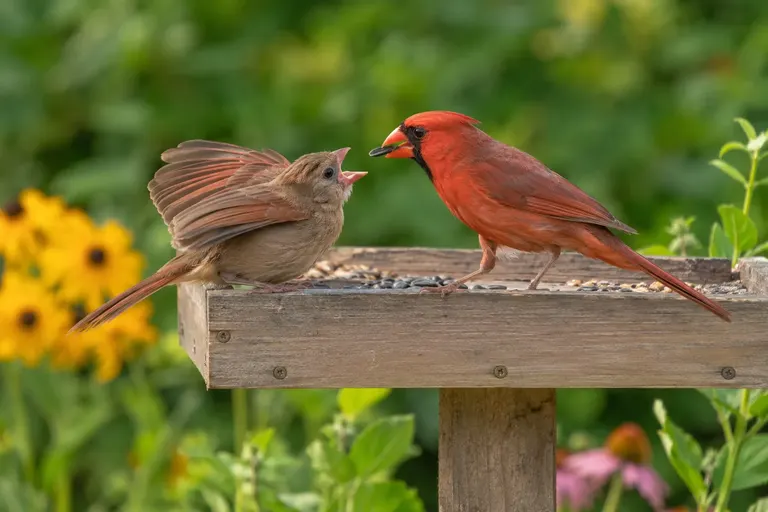
Northern Cardinals have spread northward across the northeastern US and into southeastern Canada over the past century or so. Researchers usually attribute this to a combination of warmer winters, changes in habitat such as more suburban edges, and widespread bird feeding. Feeding probably played a supporting role rather than acting alone. See our guide to attracting Northern Cardinals.
Changes in which birds use gardens
A long-term analysis of British garden bird data by BTO researchers, published in 2019, found that as garden feeding grew and diversified over several decades, the number of species regularly using feeders increased, and the populations of feeder-using species tended to do better than species that did not use feeders. The flip side is that feeding favors adaptable, dominant species. Some studies from New Zealand and elsewhere have found that feeders mainly benefit introduced species such as House Sparrows and European Starlings, at the expense of shyer natives.
Effects on breeding
Research on Blue Tits in Britain has produced mixed results. Some studies found that birds fed through winter laid earlier or had better breeding success. At least one experiment found that Blue Tits fed fat over winter had lower breeding success the following spring than unfed birds, possibly because feeding allowed lower-quality birds to survive and breed, or because of the type of food provided. The science here is still developing, and the effects likely depend on food type, timing and location.
Which birds benefit most from feeders?
Feeders do not help every species equally. The birds that gain most tend to share a few traits: they eat seeds or fat in winter, they are comfortable near people, and they live in the same area year-round.
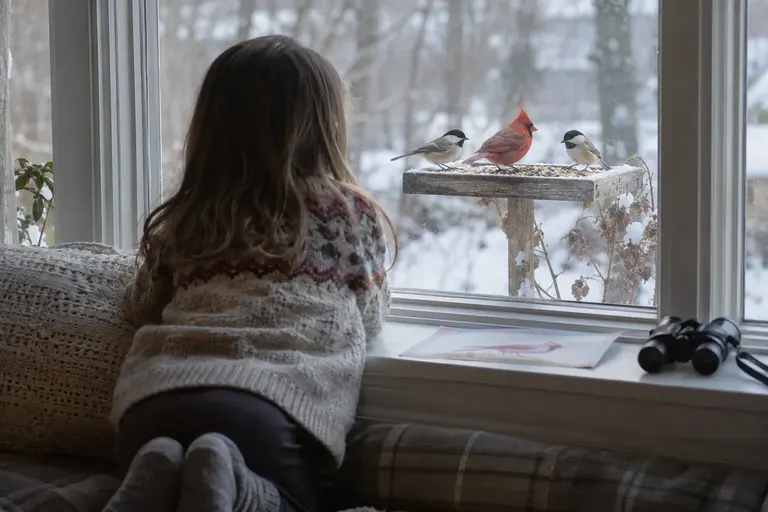
- Small resident songbirds in cold climates. Chickadees, titmice, nuthatches, and in Europe Blue Tits, Great Tits and Coal Tits, have high energy needs relative to their size and little room to store fat. Winter feeders are most useful to them.
- Finches and sparrows. House Finches, American Goldfinches, European Goldfinches, juncos and many sparrows are heavy seed eaters and readily use feeders, especially when snow covers ground seeds.
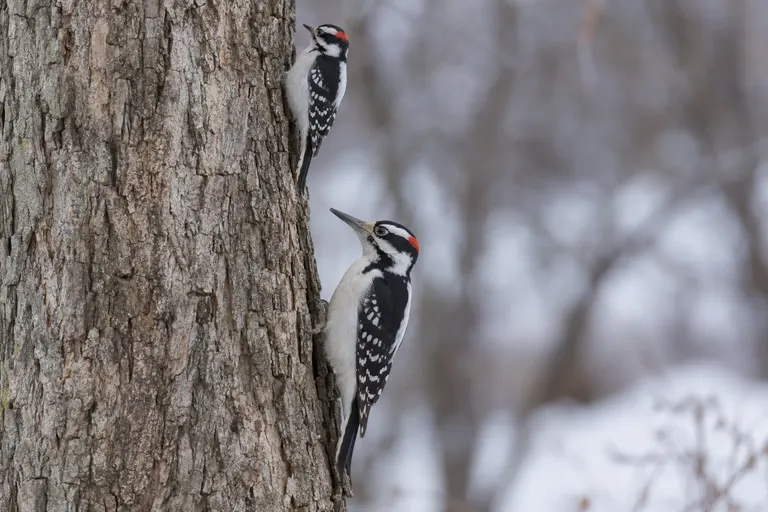
- Woodpeckers. Downy, Hairy and Red-bellied Woodpeckers in North America, and Great Spotted Woodpeckers in Europe, take suet and peanuts, which provide dense winter energy.
- Hummingbirds, at the margins. Nectar feeders can help early spring arrivals and late fall migrants when flowers are scarce.
Species that feed mainly on flying insects, such as swallows, swifts and flycatchers, get almost nothing from feeders. Many thrushes and warblers use feeders only occasionally. For these birds, habitat is everything, which is another reason feeders cannot create dependency across a whole bird community.
How should you stop feeding birds if you need to?
Sometimes people need to stop feeding for good: a move, a rat problem, a new pet, a health issue or simply a change of routine. The research suggests birds will cope, but a thoughtful approach makes the transition easier.
- Pick the season. Spring through early fall is best, when insects, seeds and fruit are plentiful. Avoid stopping in the depth of winter.
- Taper gradually. Reduce the amount you put out over one to two weeks, and remove feeders one at a time if you have several.
- Keep the water going. If you can, leave a bird bath in place. Water is often harder to find than food, especially in summer heat or winter freezes.
- Leave natural food. Let seed heads stand, keep berry shrubs, and leave some leaf litter under shrubs for ground-feeding birds.
- Clean up. Remove spilled seed and hulls under old feeder spots so they do not attract rodents or grow mold.
If you are pausing rather than stopping, such as during a disease outbreak, there is no need to taper. Take feeders down, clean them, and put them back when it is safe.
What are the real risks of feeding, if not dependency?
If dependency is mostly a myth, what should backyard birders actually think about? The evidence points to a few real issues:
- Disease transmission. Feeders bring birds into close contact, which helps diseases such as House Finch eye disease, salmonellosis and trichomonosis spread. The trichomonosis outbreak in British greenfinches is a sobering example. Regular cleaning is the single most important thing you can do. See how to clean bird feeders.
- Predation. Feeders concentrate birds, attracting hawks and cats. Thoughtful placement matters.
- Window collisions. Feeders placed at the wrong distance from windows increase strike risk.
- Poor food. Stale, moldy or unsuitable food, such as bread, can do harm.
- Unwanted visitors. Spilled seed can attract rats, and feeders can attract bears in some regions.
None of these are reasons to stop feeding, but they are reasons to feed well.
Myths vs facts about feeder dependency
| Myth | Fact |
|---|---|
| Birds forget how to find wild food if you feed them. | Feeder birds keep foraging widely and get most of their food from wild sources. |
| If you start feeding, you can never stop. | Studies found no drop in survival when long-used feeders were removed. |
| Feeders keep hummingbirds from migrating. | Day length and internal rhythms drive migration, not food supply. |
| Winter feeding makes no difference to survival. | In severe cold, feeders can improve survival for small birds. |
| Feeding has no wider effect on bird populations. | Feeding has been linked to range expansions and changes in migration in some species. |
| Taking feeders down during an outbreak harms birds. | Pausing feeders for about two weeks is standard advice to slow disease spread. |
What does this mean for backyard birders?
- Feed without guilt. You are not trapping birds into dependence.
- Be consistent in hard weather. If you feed in winter, try to keep going through severe cold spells, and avoid stopping abruptly during a freeze.
- Stop at a sensible time if you plan to stop. Spring and early fall are the easiest times for birds to adjust.
- Pause without worry when needed. Taking feeders down for disease, rats or a hawk is fine.
- Keep feeders clean and food fresh. Hygiene matters more than any dependency concern.
- Plant for wild food. Native trees, shrubs and flowers supply the insects, seeds and fruit birds rely on most. See designing a small bird-friendly garden.
- Offer water. A clean bird bath is valuable year-round, especially in heat and drought.
Common mistakes
- Feeling unable to take a vacation. Birds will be fine.
- Stopping abruptly in a blizzard. That is the one time a sudden stop can hurt.
- Leaving feeders dirty to “avoid disturbing” birds. Disease is a bigger risk than disturbance.
- Relying on feeders alone to help birds. Habitat does far more for bird populations than seed.
- Taking hummingbird feeders down early to “push” birds to migrate. It does not work and removes fuel for late migrants.
Quick facts
- In Wisconsin research, feeder chickadees got around 21 to 25 percent of their daily energy from feeders.
- Chickadees survived just as well after long-used feeders were removed.
- Feeders measurably helped chickadee survival during a severe winter.
- Hummingbird migration is triggered mainly by day length, not by feeder availability.
- Blackcaps from central Europe increasingly winter in Britain, a shift linked to garden feeding.
- Anna’s Hummingbird’s northward range expansion has been linked to feeders and exotic plants.
Sources
Frequently asked questions
Will birds starve if I stop feeding them?
Healthy birds are very unlikely to starve if you stop feeding them. Studies of chickadees found that birds with feeder access still got most of their daily energy from wild food and survived just as well as unfed birds after feeders were removed. The main exception is severe cold or snow, when a sudden stop can be harder on birds that were relying on your feeder.
Can I leave for vacation without feeding the birds?
Yes. Birds visit many food sources and will switch to wild food and other feeders while you are away. If you leave during extreme winter weather, you could ask a neighbor to refill feeders, but in normal conditions a gap of a week or two causes no harm. Clean feeders before you go so leftover seed does not spoil.
Do hummingbird feeders stop hummingbirds from migrating?
No. Migration is triggered mainly by day length and internal rhythms, not by food supply. The Cornell Lab advises that leaving feeders up in fall will not keep hummingbirds from migrating, and may help late migrants refuel. Many people leave nectar feeders up for a couple of weeks after they see their last hummingbird.
Is it better for birds if I only feed in winter?
Winter is when feeding helps most, because energy needs are high and natural food is scarce. Year-round feeding is widely considered acceptable if feeders are kept clean and food is fresh. In spring and summer, parent birds still feed their young mostly insects, so planting native plants that support caterpillars matters more than extra seed.
Does bird feeding change bird populations?
It can, at a broad scale. Research has linked feeding to range changes in some species, such as more Blackcaps wintering in Britain and Anna's Hummingbird spreading north on the Pacific coast. Feeding also tends to favor common, adaptable species. These effects are real but mixed, and they do not mean individual birds become helplessly dependent.