Keeping a Birding Journal
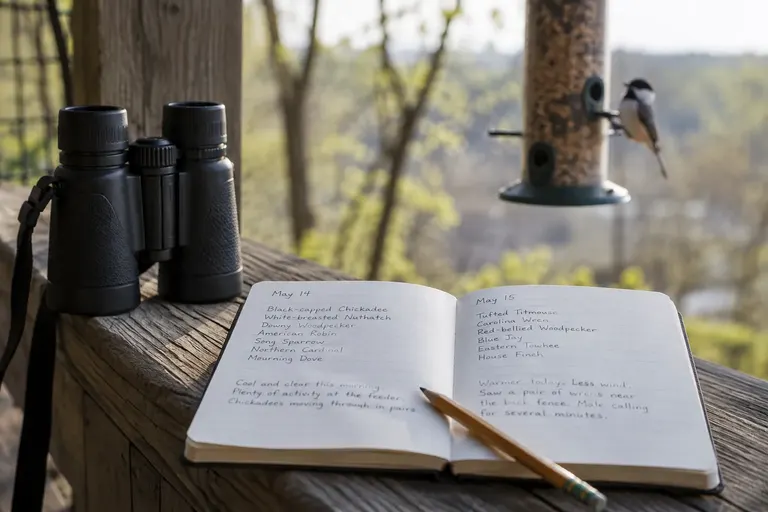
Keeping a birding journal is simple: note date, place, weather, species, counts and behavior every time you watch. Here is what to record and why it pays off.
In this article
- Quick answer: what goes in a birding journal?
- Why keep a birding journal at all?
- What should you record in every entry?
- How do you set up a journal you will actually keep?
- Should you sketch birds in your journal?
- Paper vs eBird: do you need both?
- What can you learn from a year of journal entries?
- A sample journal entry
- What are the most common birding journal mistakes?
- How does a journal fit with good birding habits?
- Quick facts
- Sources
- Frequently asked questions
Keeping a birding journal means writing down, every time you watch birds, the date, time, place, weather, the species you saw, how many, and what they were doing. That is the whole method. The payoff comes later: after a year or two, your notes show when your first migrants arrive, such as juncos on October 12 one year and November 3 the next, which birds leave in winter, how feeder traffic changes with the weather, and how much sharper your own eye has become.
A journal is also the cheapest tool in birding. A pocket notebook and a pencil will teach you more than an extra pair of binoculars, because writing forces you to look long enough to have something to write. This guide covers what to record, how to set up a system you will actually keep, how paper and digital records fit together, and the mistakes that make most journals fizzle out after a few weeks.
Quick answer: what goes in a birding journal?
- The basics every time: date, start and end time, location, weather.
- The birds: species list with counts, including “heard only” birds.
- One or two observations: behavior, song, food, nesting, interactions.
- Questions: anything you could not identify or explain.
- Optional: quick sketches, maps of your yard, sound descriptions.
If you only have two minutes, write the date, place and species. Everything else is a bonus.
Why keep a birding journal at all?
The honest answer is that memory is unreliable. You will be sure the juncos arrived “around Halloween” until your notes show they came on October 12 one year and November 3 the next. Written records turn impressions into evidence.
It trains you to see more
Naturalists from Gilbert White in 18th century England to modern field biologists kept notebooks because the act of writing sharpens attention. When you know you will write something down, you watch a bird longer. You notice that the sparrow under the feeder scratches backward with both feet, or that the nuthatch always takes a seed and flies to the same oak branch. Those are the details that make identification easier next time, as covered in our guide on how to identify birds.
It reveals patterns in your own yard
A single morning tells you little. A year of mornings tells you when to put out nectar, when goldfinches molt into their dull winter plumage, and which weeks bring the biggest variety. Backyard birders who keep notes often discover that their “sudden” empty feeder days follow a predictable pattern, such as the appearance of a hawk or the arrival of wild food in fall. Our guide to why birds suddenly disappear from feeders explains the usual causes, and your journal can tell you which one applies to you.
It becomes a personal history
Many birders find that old journals are some of their most treasured possessions. A notebook entry from a trip, a first sighting with a grandchild, or the winter a flock of waxwings stripped the holly in a day brings back the moment in a way photos often do not.
What should you record in every entry?
Consistency matters more than detail. If every entry has the same core fields, you can compare any two days, years apart.
The core fields
- Date. Write the full date including year. It sounds obvious, but undated notes lose most of their value.
- Time. Record a start and end time. Bird activity changes sharply through the day, and counts from 7 a.m. are not comparable with counts from 2 p.m. Our guide to the best time of day to see birds explains why.
- Location. Be specific. “Backyard, front feeder” or “Riverside Park, north trail loop” is better than “home” or “park.” For places you visit often, give each one a short code.
- Weather. Temperature, wind, cloud cover and precipitation. A simple shorthand works: “38F, NW wind light, overcast, snow overnight.”
- Effort. How long you watched and whether you walked, sat or scanned from a window. This is what lets you compare a ten-minute glance with a two-hour walk.
The bird list
List every species you identified, with a count. Counting feels tedious at first, but it is the single most useful habit you can build. “House finch 14” tells you far more than “house finches” when you compare the entry with next winter.
Use these conventions:
- Count the maximum seen at once, not a running total, when birds come and go from a feeder. If you see 3 chickadees, then 2, then 4, write 4. This avoids counting the same bird repeatedly.
- Mark heard-only birds, for example with “(H).” Learning songs makes this part of your list grow quickly; see our guide on how to bird by ear.
- Use “sp.” for uncertain birds. “Woodpecker sp.” or “gull sp.” is honest and still useful. Never promote a guess to a species just to complete the list.
Observations: the part that makes it a journal
A list is a record. A journal adds what the birds were doing. Pick one or two things each session and describe them properly:
- Feeding: what food, where, how.
- Social behavior: chases, displays, pairs, flocks.
- Breeding: carrying nest material, feeding young, begging juveniles.
- Sounds: new songs, alarm calls, unusual calls.
- Plumage: molt, worn feathers, unusual coloring.
- Reactions: what caused the whole feeder to empty in a second?
Our guide to bird behavior covers what common behaviors mean, which will give you more to notice and record.
Questions
End with anything you could not answer. “Small brown bird with streaky breast and a central spot, sang from the fence. Song sparrow?” A question written today often gets answered in a field guide tonight or by the same bird next week. Tracking your questions is also a quiet way to watch your skill grow.
How do you set up a journal you will actually keep?
Most journals fail because the system is too ambitious. Start small and make the habit easy.
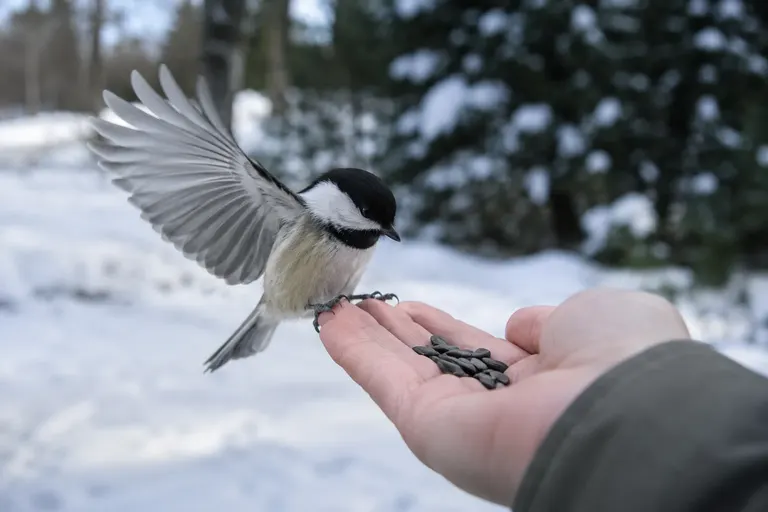
Step 1: Choose your format
There are three common approaches:
| Format | Best for | Drawbacks |
|---|---|---|
| Pocket notebook in the field | Quick notes, counts, sketches on the spot | Can get wet or lost; handwriting gets rushed |
| Home journal written up after | Thoughtful entries, neat records, reflections | Details fade if you wait too long |
| Digital (app, spreadsheet, eBird) | Searchable counts, backups, sharing data | Less room for sketches and free-form thinking |
Many experienced birders combine them: a small field notebook for rough notes, then either a home journal or a digital checklist that same day.
Step 2: Pick the right notebook
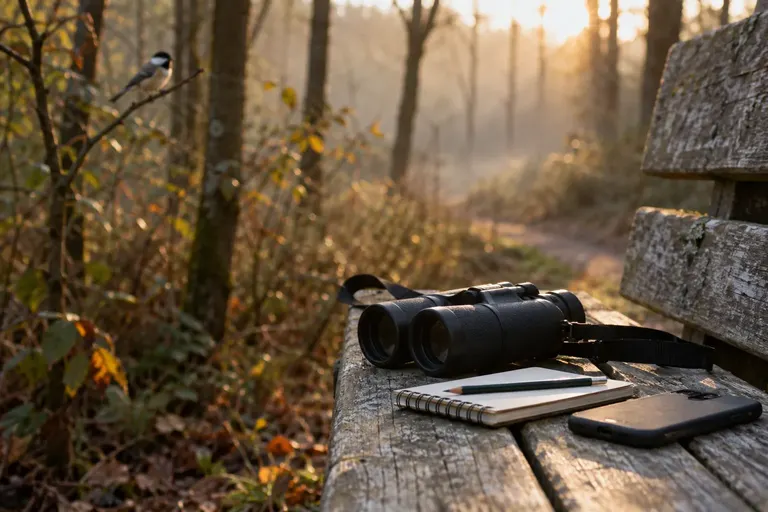
For paper, choose something that fits in a jacket pocket and survives weather. A notebook of roughly 3.5 by 5.5 inches with a stiff cover is a common choice. Water-resistant paper is worth considering if you often bird in rain or mist, and a pencil is more reliable than a pen, because pencil writes on damp paper and in cold that thickens ink.
For a home journal, any bound notebook works. Some people prefer larger, unlined or dotted pages for sketches and maps.
Step 3: Create a simple template
Write your core fields at the top of each entry in the same order every time. A header line such as this is enough:
2026-10-14 | 07:10-07:50 | Backyard (window + patio) | 41F, calm, clear, frost | 40 min stationary
Then the species list, then observations, then questions. When the structure is automatic, you will write entries in a couple of minutes.
Step 4: Set a regular session
The most valuable journals come from repeated watching of the same place. A fixed session, such as 20 minutes at the kitchen window every Saturday at 8 a.m., gives you a data set you can compare across seasons. Occasional trips can be added on top.
Step 5: Write it up the same day
If you take rough field notes, transfer or tidy them the same evening. After a day or two, you will not remember whether there were six robins or sixteen.
Should you sketch birds in your journal?
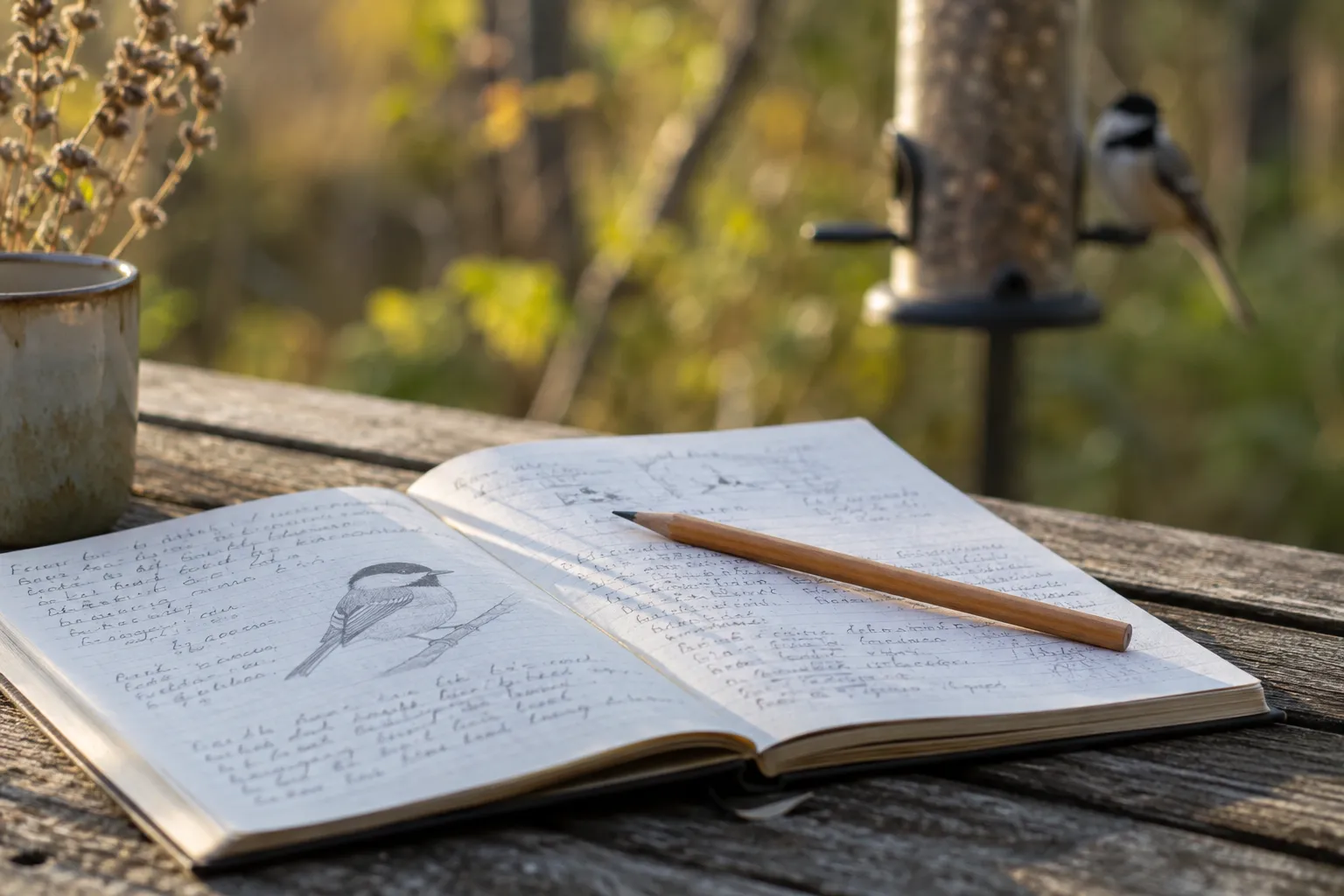
Sketching is optional, but it is one of the fastest ways to learn birds. Drawing a bird, even badly, forces you to decide where the eye sits, how long the tail is compared with the body, and where the wing bars start. Those are exactly the field marks that identification depends on.
How to sketch without artistic skill
- Start with two ovals. A smaller one for the head, a larger one for the body. Their size and angle alone capture much of a bird’s character: a tilted body suggests a thrush, an upright one a flycatcher.
- Add the bill and tail as simple lines. Note length and shape. Is the bill thick and conical like a finch, thin and pointed like a warbler, or chisel-like like a woodpecker?
- Label, do not shade. Draw arrows to field marks and write what you see: “white eye ring,” “buff flanks,” “two white wing bars.”
- Sketch behavior, not just birds. A few arrows showing how a nuthatch moved headfirst down a trunk can be more useful than a detailed portrait.
The nature journaling approach popularized by educators such as John Muir Laws uses a simple prompt set: “I notice, I wonder, it reminds me of.” Those three phrases work well for bird journals and help you record thinking, not just facts.
Paper vs eBird: do you need both?
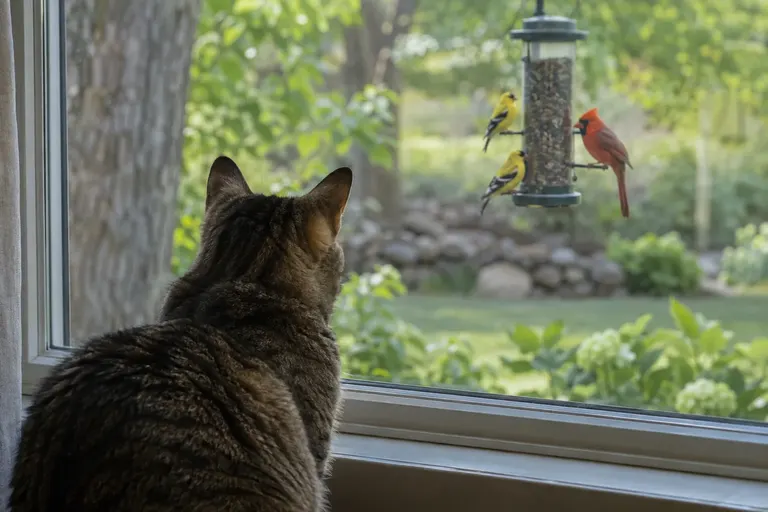
eBird, the free global database run by the Cornell Lab of Ornithology, is the natural digital partner to a paper journal. It stores your checklists, maps your sightings, tracks your life list and makes your counts available to researchers. Our guide on how to use eBird walks through setting it up.
The two tools do different jobs:
- eBird is best for structured data. It asks for date, location, effort and counts, then checks your entries against regional records and flags unusual species. That structure is also what makes the data scientifically valuable.
- A journal is best for observations and thinking. eBird has a comments field, but it is not built for sketches, maps, questions or reflection.
A practical rule: counts go into eBird, stories go into the notebook. If you also keep a life list, see our guide on how to keep a life list for how the journal and list fit together.
Other citizen science outlets for your notes
Your journal habit makes it easy to contribute to structured surveys around the world:
- Project FeederWatch in the United States and Canada asks participants to count feeder birds on set days through winter.
- The Great Backyard Bird Count is a short, global event each February that anyone can join from a yard or balcony.
- The BTO Garden BirdWatch in the United Kingdom collects weekly garden records year round.
- The RSPB Big Garden Birdwatch in the UK is a one-hour count each January with hundreds of thousands of participants.
Similar volunteer programs run in many countries, and eBird accepts checklists from anywhere, from a balcony in Istanbul to a garden in São Paulo.
What can you learn from a year of journal entries?
Once you have a season or more of notes, go back and read them. This is where the effort starts to pay you back.
Arrival and departure dates
Record the first and last date each migrant is seen. Over several years you will build your own local calendar. In much of the eastern United States, that means first Ruby-throated Hummingbirds in spring and last ones in fall. In Europe, it might be the first Common Swift screaming over rooftops in late April or May. In southern Brazil, it might be the return of migratory flycatchers in spring, which falls in September to November there.
Feeder trends
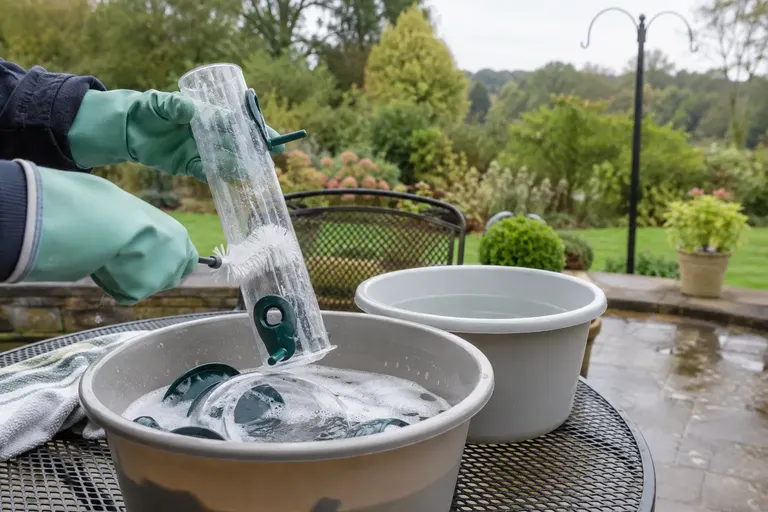
Monthly species counts reveal which foods draw which birds, how weather changes feeder use, and when to clean or adjust feeders. Many birders find, for example, that feeder traffic drops in late summer and early fall when wild seeds and insects are abundant, which is normal and not a sign that something is wrong.
Behavior timelines
Breeding notes add up to a calendar: first song, first nest material, first fledglings, first family flocks. That calendar tells you when to put up and clean nest boxes and when to avoid heavy yard work. General advice on nest box timing is much easier to apply once you know your own local calendar.
Your own progress
Compare your first month’s question marks with this month’s. Most people are surprised by how much they have learned.
A sample journal entry
Here is what a complete but quick entry might look like for a backyard session:
2026-11-08 | 08:05-08:35 | Backyard, kitchen window | 34F, light N wind, clear after rain | 30 min stationary
Dark-eyed Junco 6 (first of season, all under platform feeder) Black-capped Chickadee 3 White-breasted Nuthatch 1 Downy Woodpecker 1 (female, no red on head) House Finch 9 Northern Cardinal 2 (pair) Blue Jay 2 (H first, then at peanuts) Mourning Dove 4
Observations: Juncos fed only on the ground, never on the tube. Nuthatch took one sunflower seed per visit to the oak, wedged it in the bark and hammered it open. All birds froze and then scattered at 08:22; no hawk seen, but jays gave a harsh alarm call first.
Questions: Is the jay alarm always a hawk? Watch for pattern.
That took perhaps five minutes to write, and every line will be useful later.
What are the most common birding journal mistakes?
- Skipping the date or year. Undated entries lose most of their long-term value.
- Writing only rarities. Common birds tell you the most about seasons and trends. Record the House Sparrows and starlings too.
- Not counting. “Lots of finches” cannot be compared with anything. A rough count is far better than none.
- Guessing identifications. Write “sp.” or note the uncertainty. A journal full of confident errors misleads your future self.
- Making it too elaborate. A system that needs 30 minutes per entry will not last. Keep the core short.
- Waiting too long to write up. Details fade within hours. Write the same day.
- Never rereading. A journal only teaches you if you go back to it. Set a reminder to review each season.
- Leaving out effort. Without start time and duration, you cannot tell whether a drop in birds was real or just a shorter session.
How does a journal fit with good birding habits?
Journaling pairs naturally with ethical, patient birding. When you are writing, you are not chasing birds, playing recordings or pushing closer to a nest. You are sitting still and watching, which is the behavior that shows you the most. Our guide to birding etiquette covers the wider set of habits that keep birds and other people comfortable.
Be careful with sensitive information. If you find a nest of a rare species, or a roost of owls, keep precise locations in your private notes rather than on public platforms. eBird automatically hides locations for certain sensitive species, but a posted photo with a detailed caption can still draw crowds that disturb birds.
Quick facts
- The core of every entry: date, time, place, weather, effort, species and counts.
- Count the maximum number seen at once to avoid double counting.
- Mark uncertain birds with “sp.” rather than guessing.
- Pencil works on damp paper and in cold weather where many pens fail.
- eBird stores structured counts; a notebook stores observations and questions.
- Regular sessions at the same place and time create the most useful records.
- Reread your journal each season to spot patterns in arrivals, departures and feeder use.
Sources
Frequently asked questions
What should I write in a birding journal?
At minimum, record the date, start and end time, exact location, weather and a list of species with counts. Then add anything that caught your attention: behavior, songs, plumage details, nests, food being eaten or birds interacting. Those extra notes are what make a journal useful years later, because they show patterns that a plain species list cannot.
Is a paper notebook or an app better for a birding journal?
Many birders use both. An app such as eBird is best for counts and locations, because the data is backed up, searchable and shared with researchers. A paper notebook is better for sketches, observations and questions, and the act of writing slows you down so you look more carefully. A simple habit is to submit counts to eBird and keep observations on paper.
How often should I write in my birding journal?
Write every time you watch birds on purpose, even for ten minutes at the kitchen window. Short, regular entries are more valuable than occasional long ones because they let you compare dates across seasons and years. If daily entries feel like too much, aim for a consistent weekly session at the same time and place.
Do I need to draw to keep a nature journal?
No. Drawing helps many people notice detail, but words, numbers and simple diagrams work just as well. Quick shape sketches, even stick-like outlines with arrows pointing to field marks, are enough to capture what you saw. The goal is observation, not art, and many excellent journals contain no drawings at all.
Can my birding journal help scientists?
Your private notebook cannot, but the same observations can when entered into citizen science programs. eBird checklists, Project FeederWatch counts in North America and garden bird surveys run by groups such as the BTO in Britain all use volunteer records to track bird populations. Keeping careful notes makes it easy to submit accurate data.