Birding Etiquette: The Unwritten Rules
Birding etiquette in plain terms: put the bird first, go easy on playback, stay back from nests and owl roosts, respect private land, share sightings with care.
In this article
- Quick answer: the core rules of birding etiquette
- What is the ABA Code of Birding Ethics?
- How close should you get to a bird?
- Is it OK to use playback when birding?
- How to behave around nests
- Why owls need extra care
- Birding on private property: the rules
- Etiquette at a crowded rare bird stakeout
- How to share bird sightings responsibly
- Group birding and field trip etiquette
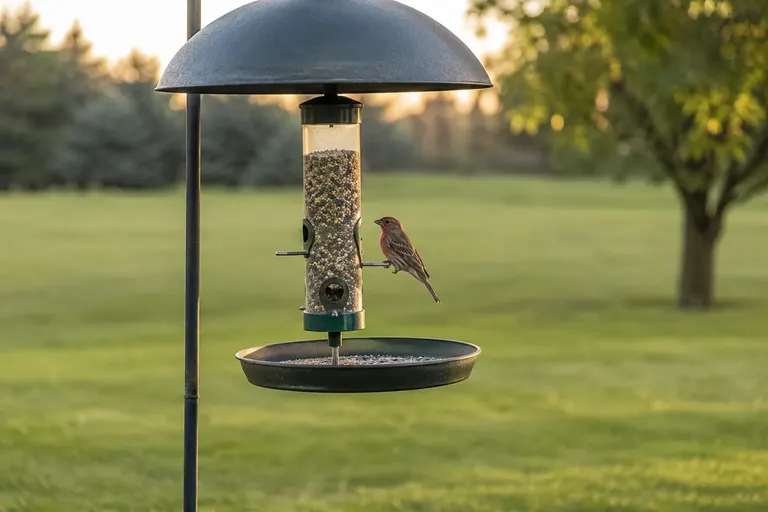
- Etiquette in your own backyard
- Photography etiquette
- Legal rules every US birder should know
- Common birding etiquette mistakes (and easy fixes)
- How to be the birder others want around
- Sources
- Frequently asked questions
Good birding etiquette comes down to one idea: the bird comes first, then the habitat, then other people. In practice that means going easy on playback, keeping away from nests and owl roosts, never entering private land without permission, and thinking before you share the location of a sensitive bird. None of it is complicated, and most of it is written down in the American Birding Association’s Code of Birding Ethics, revised in 2019, which is the standard most clubs and field trips follow.
This guide covers the written rules and the unwritten ones: how to behave at a crowded rarity, how to share sightings responsibly, what to do about kids and dogs, and the small habits that make other birders glad you showed up.
Quick answer: the core rules of birding etiquette
| Situation | What good etiquette looks like | Why it matters |
|---|---|---|
| Any bird | Stop approaching if it changes behavior | Stress costs birds energy and feeding time |
| Playback | Rarely, briefly, quietly; never near nests or for rare species | Repeated playback pulls birds off territory and duties |
| Nests | Keep your distance and do not linger | Human scent trails and attention can lead predators in |
| Owls | Do not flush, do not use flash, share locations sparingly | Flushed owls get mobbed and may abandon roosts |
| Private land | Enter only with permission | Trespass ends access for everyone |
| Groups | Stay quiet, stay on trails, let others look | Shared views depend on shared restraint |
| Sharing sightings | Delay or generalize sensitive species | Crowds can harm vulnerable birds |
| Feathers and nests | Photograph, do not collect | Federal law protects native birds |
What is the ABA Code of Birding Ethics?
The American Birding Association (ABA) publishes a Code of Birding Ethics that most North American clubs, Audubon chapters and tour companies point to. The current version was revised in 2019 and is built around three principles: respect and promote birds and their environment, respect and promote the birding community, and respect and promote the law and the rights of others.
Paraphrased, the code asks birders to:
- Avoid stressing birds or exposing them to danger. Be especially careful around active nests, nesting colonies, roosts, display sites and feeding sites.
- Limit recordings and other audio methods of attracting birds, particularly in heavily birded areas, for species that are rare in the area, and for threatened or endangered species.
- Use caution and restraint when photographing, recording or approaching birds.
- Think before sharing news of a rare bird, weighing the potential for disturbance to the bird, its surroundings and other people.
- Stay on roads, trails and paths where they exist, and otherwise keep habitat disturbance to a minimum.
- Never enter private property without the owner’s permission, and follow all laws, rules and regulations governing the places you bird.
- Be an ethical role model, share knowledge generously, especially with beginners, and treat other birders with courtesy.
The code is short enough to read in five minutes, and it is worth reading in full on the ABA website (linked in Sources). The rest of this guide explains how those principles play out in real situations.
How close should you get to a bird?
Closer than the bird is comfortable with is too close. There is no universal distance in feet, because a Northern Mockingbird defending a suburban hedge tolerates far more than a Snowy Owl resting on a winter beach. Instead of a number, read the bird.
Signs you are too close
- The bird stops feeding, preening or singing and watches you.
- It freezes, crouches or flattens its feathers.
- It gives repeated alarm calls or chip notes.
- It flicks its wings or tail, or shifts its weight as if ready to fly.
- Shorebirds and waterfowl start walking or swimming away from you as a group.
- It flushes, even a short distance.
If you see any of these, stop, then step back slowly. Every flush costs a bird energy, and for a migrant refueling on a stopover or a wintering bird with thin fat reserves, repeated disturbance adds up.
Let optics do the approaching
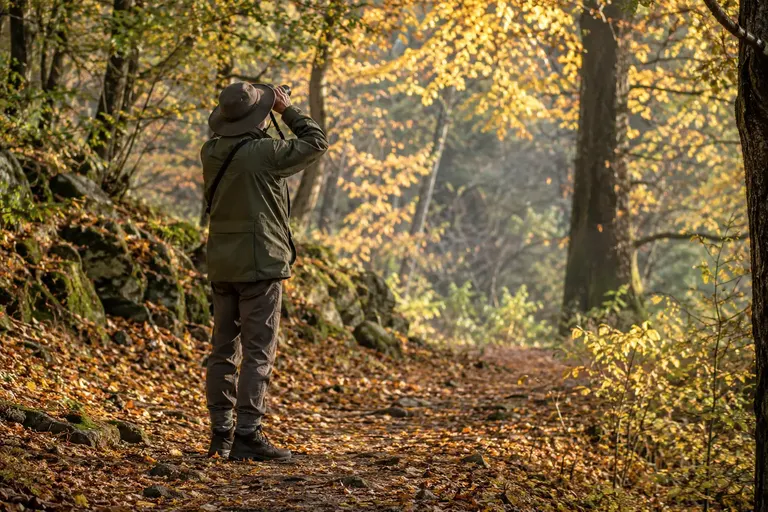
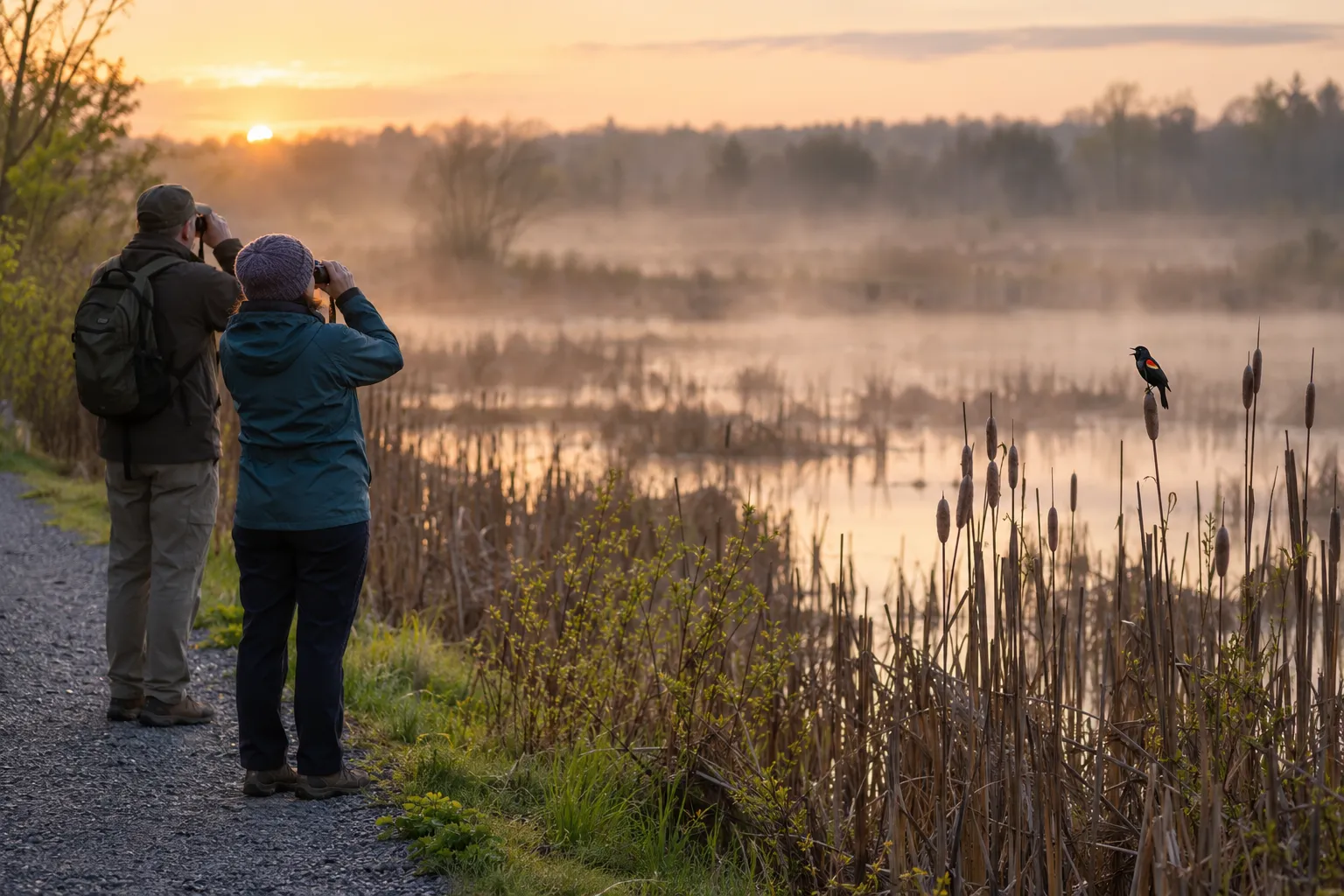
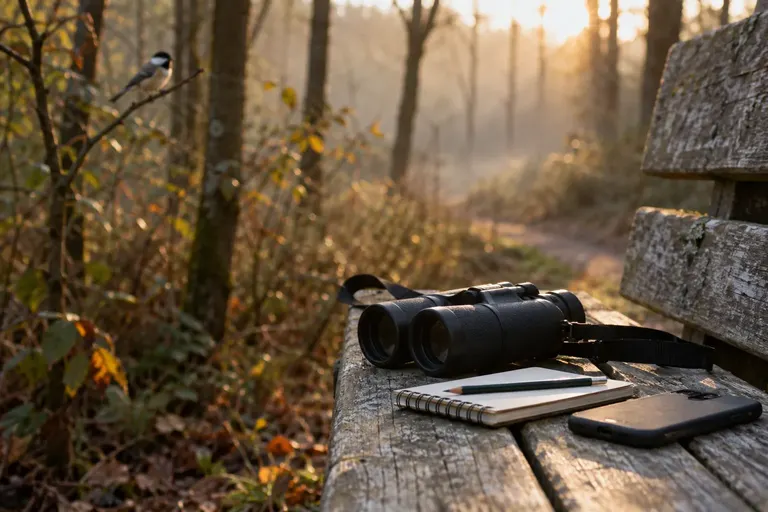
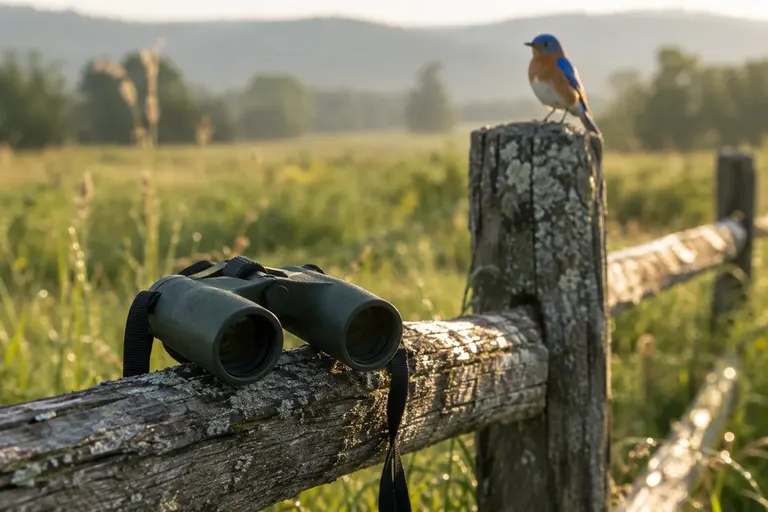
The easiest way to keep your distance is to own binoculars that let you see detail from farther away. An 8x42 pair is the usual recommendation for general birding. If you are still choosing, our guide on how to choose binoculars explains what matters, and 8x42 vs 10x42 covers when extra magnification helps. For photographers, a longer lens is the ethical alternative to walking closer.
Is it OK to use playback when birding?
Playback means playing a recorded song or call to draw a bird into view. It is the single most argued-over topic in birding etiquette. The ABA code does not ban it; it asks birders to limit it and to avoid it entirely in certain situations.
When to skip playback completely
- During nesting season near a likely nest. A bird that spends time chasing a phantom rival is not feeding young or guarding eggs.
- For rare, threatened or endangered species.
- In heavily birded places, where one bird may hear dozens of recordings a day from different visitors.
- Where it is prohibited. Some parks, refuges and preserves restrict playback. Check posted rules or the site’s website before you go.
- When other birders are present and have not agreed to it. Using playback at a group stakeout without asking is a fast way to annoy everyone.
If you do use it
- Play a short burst, then wait and listen before playing again.
- Keep the volume at a natural level, not louder than a real bird.
- Stop as soon as the bird responds or if it shows agitation.
- Never play recordings of predators, such as owls, to provoke mobbing responses.
A simpler alternative is “pishing,” a soft, repeated shushing sound that many songbirds find curious. Even pishing should be brief. And remember that listening is a skill worth building on its own; apps like Merlin can help you learn calls without broadcasting them. Our guide to using Merlin Sound ID shows how to use it as a listening tool.
How to behave around nests
Nests are where good intentions do the most damage. The problem is not only the stress to adult birds. Predators such as raccoons, snakes, cats and jays can follow human activity and scent trails straight to a nest.
- Watch from a distance and do not linger. A few minutes with binoculars is plenty.
- Do not move branches or vegetation for a better view or photo. That cover is what hides the nest.
- Do not approach fledglings. Young birds just out of the nest often hop on the ground for days while parents feed them nearby. If you want to know when a young bird truly needs help, see our guide on what to do if you find a baby bird.
- Do not flush incubating birds. Eggs chill quickly without an adult on them.
- If you monitor nest boxes, follow NestWatch’s guidance from the Cornell Lab, which covers how often to check and when to stay away, such as when young are close to fledging.
Why owls need extra care
Owls attract crowds. They sit still, they are photogenic, and a known roost can draw dozens of people in a weekend. That attention is exactly what makes them vulnerable.
eBird’s sensitive species guidance explains the mechanics. A roosting owl that gets flushed often attracts crows and jays, which mob it. That exposes a bird that depends on camouflage, and repeated disturbance can push owls to abandon a roost. eBird specifically mentions Long-eared Owls at day roosts in the Northeast as an example.
Good owl etiquette:
- Do not flush roosting owls. If an owl opens its eyes wide and stares at you, or sleeks its feathers, it is alert and may be about to leave.
- Do not use flash on owls, especially at night.
- Do not bait owls with live mice or other lures.
- Keep owl locations quiet. Share them privately with trusted birders, share only a general area, or do not share at all.
- Limit your visit and do not return repeatedly.
Birding on private property: the rules
The ABA code is blunt on this point: never enter private property without the owner’s permission. That includes farm fields, gated roads, private ponds, company land and backyards.
When a rare bird shows up in someone’s yard
Rare birds sometimes appear at a homeowner’s feeder. When the owner agrees to let birders visit, a few habits protect that goodwill:
- Follow every instruction the host gives about hours, parking and where to stand.
- Park legally and never block driveways or mailboxes.
- Keep voices low, especially early in the morning.
- Stay off lawns and gardens unless invited.
- Thank the host. Many hosts put out a donation jar or ask visitors to contribute to a local bird charity or to buy seed; if they do, it is good form to contribute.
- Leave when asked, even if the bird has not shown yet.
Birders sometimes talk about how one generous host leads to another rare bird being found nearby, because more eyes are watching the area. The reverse is also true: one rude visitor can close access for everyone.
Etiquette at a crowded rare bird stakeout
A rare bird can draw a crowd within hours of being posted. The unwritten rules at a stakeout:
- Ask before you walk in. Someone may know exactly where the bird was last seen and which approach will not flush it.
- Do not walk in front of scopes or step into a line of sight.
- Share the view. If you have the bird in your scope, offer a look to those who have not seen it.
- Keep quiet. Talk softly and silence your phone.
- Do not try to “get it to move” for a better photo by walking closer, clapping or tossing objects.
- Report updates honestly, including when the bird was not seen.
How to share bird sightings responsibly
Sharing sightings is part of what makes modern birding work. eBird checklists, local email groups and rare bird alerts help people find birds and feed scientific data. But not every bird should have its exact location broadcast.
eBird’s guidance for sensitive situations offers four practical options:
- Delay your report until the bird has left or the season has ended.
- Use a general location, such as a park name, rather than a precise pin.
- Wait about a week before submitting so the record stays out of fast-moving alerts.
- Hide the checklist from public view through your account settings after submitting.
eBird also automatically restricts public location detail for some species it has flagged as sensitive, typically birds targeted by poachers or harmed by crowds. If you are new to checklists, our guide on how to use eBird walks through submitting, hotspots and alerts.
What to share and what to hold back
| Sighting | Usually fine to share widely | Think twice or generalize |
|---|---|---|
| Common backyard and park birds | Yes | No need |
| Rare migrant in a public park | Yes, with access notes | If habitat is fragile |
| Bird on private property | Only with owner consent | Default to no |
| Owl roost | Rarely | Almost always |
| Active nest of a sensitive species | No | Keep it private |
| Threatened or endangered species | Follow local guidance | Usually generalize |
Group birding and field trip etiquette
Field trips and club walks are where new birders learn most of their habits, so this is where etiquette gets passed on.
- Arrive on time and let the leader set the pace.
- Walk behind the leader, not ahead, so the group does not flush birds before anyone sees them.
- Keep chatter low. Many birds are found by ear first.
- Point with words, not just a finger. “Bare branch, two o’clock, halfway up the big oak” is far more useful than “there!”
- Call out birds you find, but do not shout.
- Give beginners the first look when you can. It costs nothing and creates birders for life.
- Do not correct people harshly. If someone misidentifies a bird, point out a field mark politely.
Learning to describe a bird’s location clearly is a skill in itself. Our guide on finding a bird in your binoculars fast includes tips for getting on a bird someone else has spotted.
Etiquette in your own backyard
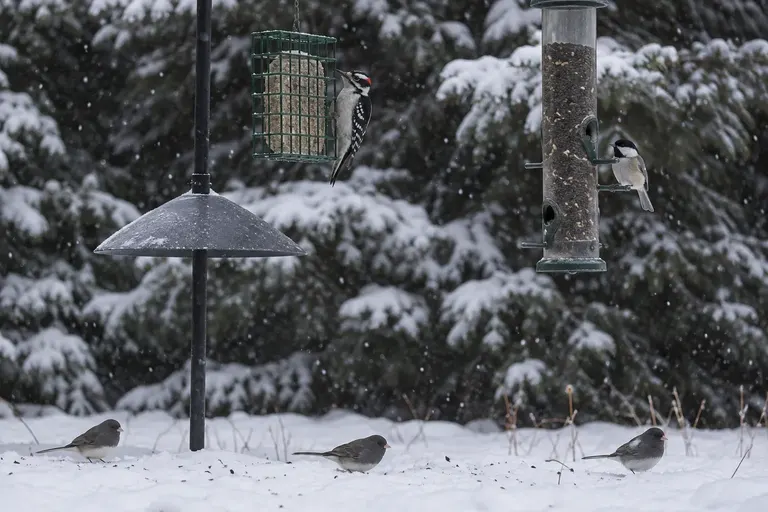
Etiquette is not only for the field. Home bird feeding carries responsibilities too.
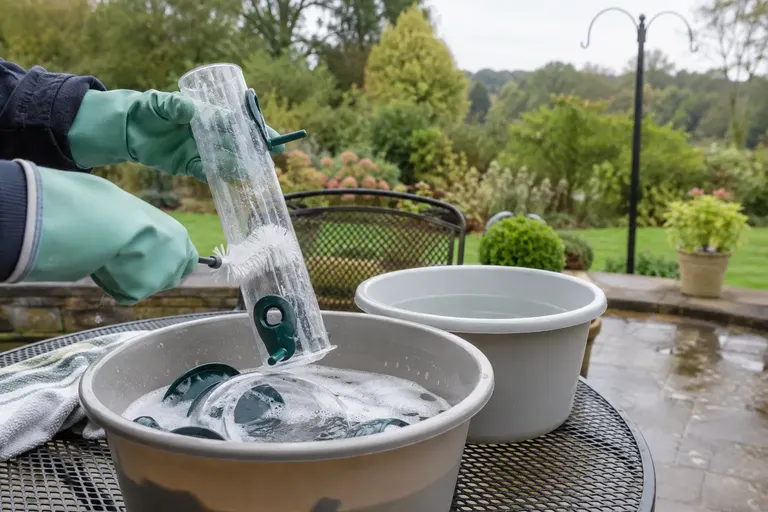
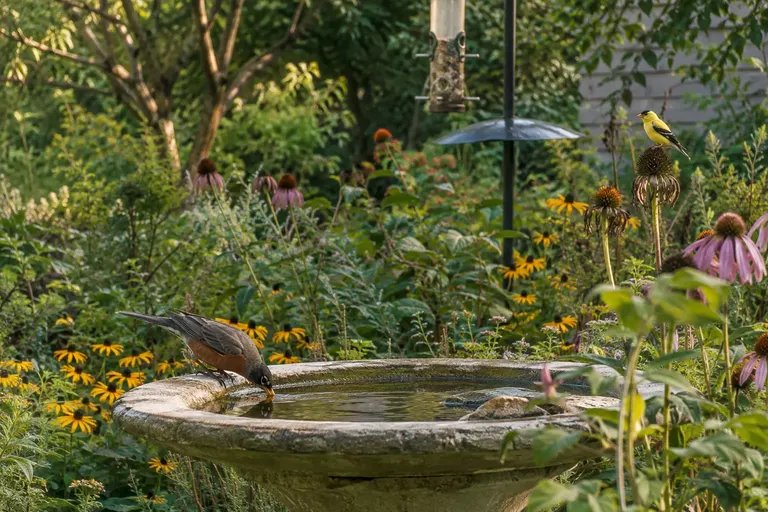
- Keep feeders clean. Dirty feeders spread disease among birds that crowd together. See how to clean a bird feeder for a simple routine.
- Keep cats indoors. The American Bird Conservancy estimates outdoor cats kill about 2.4 billion birds in the US each year, making them the top source of direct, human-caused bird deaths.
- Make nearby windows safer. The Cornell Lab cites research estimating up to about 1 billion birds die from window strikes in the US each year.
- Be a good neighbor. Keep spilled seed under control so it does not draw rodents, and take feeders down in bear country when local wildlife agencies advise it.
Photography etiquette
Bird photography has its own pressures, because a better image often seems to be one step closer. The same principles apply, with a few specifics:
- Never bait birds of prey with live animals.
- Avoid flash on nocturnal birds and on nests.
- Do not trim or tie back vegetation around nests.
- Do not chase birds from perch to perch.
- Be honest about how a photo was made if you enter contests or post images, including whether the bird was baited or in captivity.
- Drones: many parks and refuges ban them, and they can alarm birds. Check local rules and keep well clear of nesting colonies and raptors.
Legal rules every US birder should know
Etiquette covers courtesy, but some rules are law.
- Migratory Bird Treaty Act. This federal law protects most native wild birds in the United States. It generally makes it illegal to take, possess or harass them, and also covers feathers, nests and eggs, even ones found on the ground. The practical rule: look, photograph, leave it.
- Endangered Species Act. Harassing listed species carries serious penalties.
- Site rules. Parks, refuges and preserves set their own rules on hours, trails, pets, drones and sometimes playback.
- Trespass law. Posted land means no entry without permission.
If you find an injured bird, contact a licensed wildlife rehabilitator rather than trying to care for it yourself.
Common birding etiquette mistakes (and easy fixes)
- Playing a song on repeat. Fix: one short burst, then listen.
- Walking toward a bird that is already watching you. Fix: stop and let optics do the work.
- Posting an owl’s exact location online. Fix: share privately or generalize.
- Stepping off the trail for a better angle. Fix: find another angle from the trail.
- Letting a dog run loose in bird habitat. Fix: leash it, or leave it at home for serious birding.
- Ignoring beginners at a stakeout. Fix: offer a look through your scope.
- Taking a “just a feather” souvenir. Fix: take a photo instead.
- Talking over the leader or the birds. Fix: whisper, and let birdsong carry the walk.
How to be the birder others want around
The best birders are not always the ones with the longest lists. They are the ones who spot a bird and quietly help five strangers see it, who know when to put the phone speaker away, and who leave a host’s driveway exactly as they found it.
If you are just starting out, the gear list is short and the etiquette list is shorter than it looks. Our guide to birding for beginners covers what you actually need, so you can spend less time chasing birds and more time simply watching them.
Sources
Frequently asked questions
Is it rude to use bird calls or playback while birding?
It is not automatically rude, but it is the most debated habit in birding. The American Birding Association's Code of Birding Ethics asks birders to limit recordings, especially in heavily birded places, for rare species and for threatened or endangered birds. Use it briefly, at low volume, never near nests, and never where a park or refuge prohibits it.
Can I go onto private property to see a rare bird?
Not without the owner's permission. The ABA code is explicit that birders should never enter private property without permission. If a homeowner welcomes birders, follow their rules on parking, hours and where to stand, and thank them. Many hosts of rare birds keep access open only because visitors behave well.
Should I report the location of an owl?
Be careful. eBird's sensitive species guidance suggests delaying reports, giving a general location instead of exact coordinates, or hiding the observation. Roosting owls flushed by crowds get mobbed by crows and jays and may abandon a roost. Many birders share owl locations only privately, with people they trust, or not at all.
How close is too close to a bird?
There is no single distance, because it depends on the species and the situation. Watch the bird rather than a tape measure. If it stops feeding, stares at you, freezes, gives alarm calls or moves away, you are too close. Back off slowly and use binoculars or a longer lens instead of stepping forward.
Is it OK to pick up a feather or an empty nest?
In the United States, the Migratory Bird Treaty Act generally makes it illegal to possess feathers, nests or eggs of native wild birds without a permit, even ones you find on the ground. The simplest rule is to photograph them and leave them. Feathers from non-native species such as House Sparrows and European Starlings are not covered.