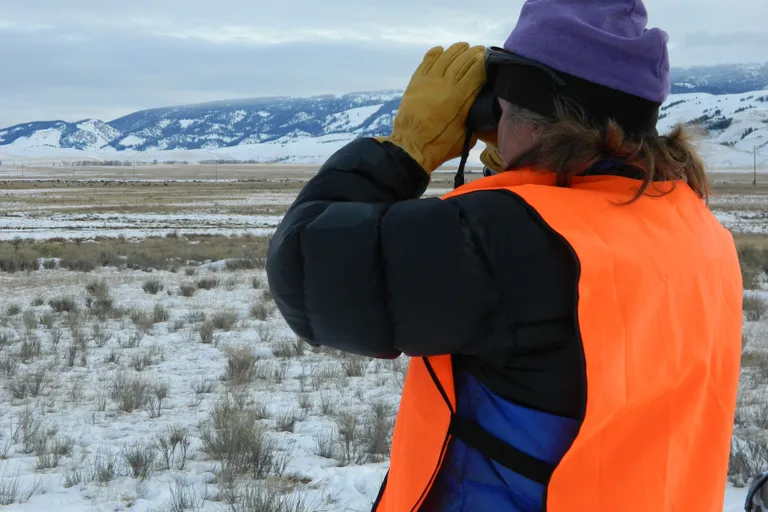
City Birding: Where to Find Birds in Urban Areas
City birding works best in parks, cemeteries, rivers and lakes, where migrants crowd into small patches of green. Where to look, when to go and what helps.
In this article
- Where to look for birds in a city
- Why are city parks so good during migration?
- Are cemeteries good for birding?
- How do you bird rivers, lakes and waterfronts?
- Which birds live on buildings?
- Do birds use green roofs?
- When is the best time for city birding?
- How do eBird and Merlin help in the city?
- How can city birders help birds?
- A simple plan for your first city birding morning
- Sources
- Frequently asked questions
City birding works because birds concentrate wherever a city offers trees, water and cover. Head for the biggest green space near a river or lake, go early in the morning, and pay extra attention in spring and fall migration, when small parks and cemeteries can fill with warblers, thrushes and other songbirds that have stopped to rest and refuel.
This guide covers where to look, what to look for on buildings and in the sky, when to go, and how eBird and Merlin make urban birding far easier. It’s the natural next step after backyard birding, and you don’t need a car or a nature reserve to do it.
Where to look for birds in a city
The short answer: anywhere a city breaks its pattern of concrete. Birds need food, water and shelter, so the most productive spots are the ones that provide all three in one place.
| Urban habitat | What to look for | Best season |
|---|---|---|
| Large parks with trees and shrubs | Migrant songbirds, woodpeckers, thrushes, sparrows | Spring and fall migration |
| Old cemeteries | Warblers, owls, hawks, finches | Migration and winter |
| Rivers, lakes and harbors | Ducks, gulls, herons, cormorants, kingfishers | Winter and migration |
| Tall buildings, bridges and church towers | Peregrine Falcons, pigeons, swifts | Year-round, swifts in summer |
| Green roofs and planted plazas | Foraging songbirds, gulls, swallows | Spring to fall |
| Vacant lots and rough ground | Sparrows, finches, Black Redstarts in Europe | Year-round |
A useful habit is to pick one or two “patches” close to home and visit them often. You’ll learn what’s normal, which makes anything new stand out.
Why are city parks so good during migration?
City parks work as migrant traps: small islands of habitat that pull in birds flying over large built-up areas. Most songbirds migrate at night, and at dawn they drop into the nearest trees they can find. In a city, that means the few big green spaces can hold far more birds than their size suggests.
A 2026 study in Nature, led by Miguel Jimenez of Colorado State University and reported by Audubon, used weather radar to map where migrating birds stop across the continental United States. It found that 48 percent of spring migration hotspots and 44 percent of fall hotspots were in metropolitan areas. The researchers pointed to two drivers: artificial light, which draws birds in at night, and water, since many cities are built along rivers or include engineered lakes and ponds.
New York City shows how this plays out. Local birders count Central Park, Prospect Park, Pelham Bay and other parks among the city’s classic migrant traps, and the NYC Bird Alliance notes that “even the smallest parks can hold great surprises during migration season.”
To make the most of a park in migration:
- Walk the edges where lawns meet shrubs and trees, and check any water.
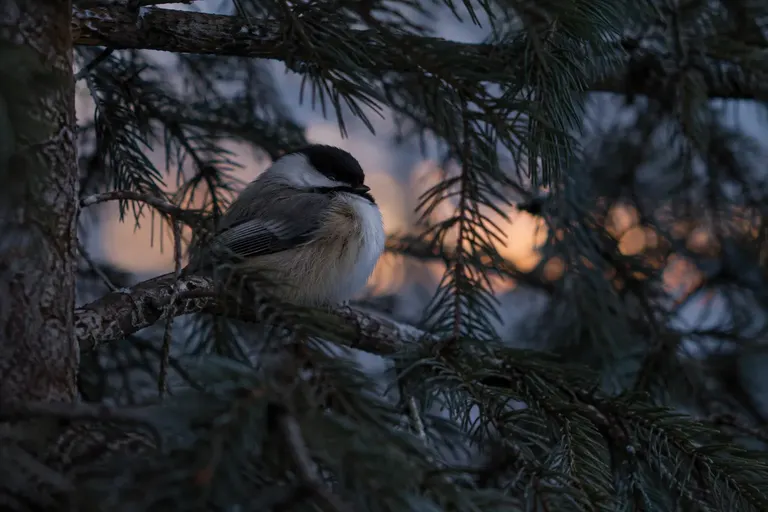
- Look for feeding flocks. Chickadees and other residents often lead mixed flocks that migrants join.
- Listen first. Chip notes and song give birds away long before you see them.
- Come back the next day. Migrants turn over fast, so a quiet morning can be followed by a busy one.
Are cemeteries good for birding?
Yes. Many old cemeteries were landscaped with mature trees, flowering shrubs and sometimes ponds, which makes them some of the best bird habitat in a city. Audubon highlights cemeteries known for spring and fall warblers, wintering finches and owls, and even nesting Monk Parakeets.
They’re also places of mourning, so etiquette matters more than usual. Audubon’s advice for birding with the dead comes down to a few rules:
- Check visiting hours and which areas are open to the public.
- Park only in designated spots and never drive on the grass.
- Keep your voice low and give mourners and funerals plenty of space.
- Don’t touch gravestones, monuments or mausoleums.
- Stay off plantings and don’t pick anything.
- Don’t scatter seed on graves or do anything disruptive.
How do you bird rivers, lakes and waterfronts?
Water is the second big draw after green space. The Nature study above found water was a major reason migrants concentrate in cities, especially in drier regions. Rivers, reservoirs, harbors and even ornamental lakes attract ducks, geese, gulls, herons, grebes and cormorants.
Waterfronts are often at their best in winter, when northern ducks and gulls move south and open water becomes a magnet. Scan from a bridge or embankment, check any sheltered corners out of the wind, and look along the far bank where herons and kingfishers like to hunt. A pair of compact binoculars helps here, and our guide to the best compact binoculars covers light options that fit in a coat pocket.
Which birds live on buildings?
Some birds treat tall buildings like cliffs. Look up at ledges, towers, bridges and roofs, not just into trees.
Peregrine Falcons
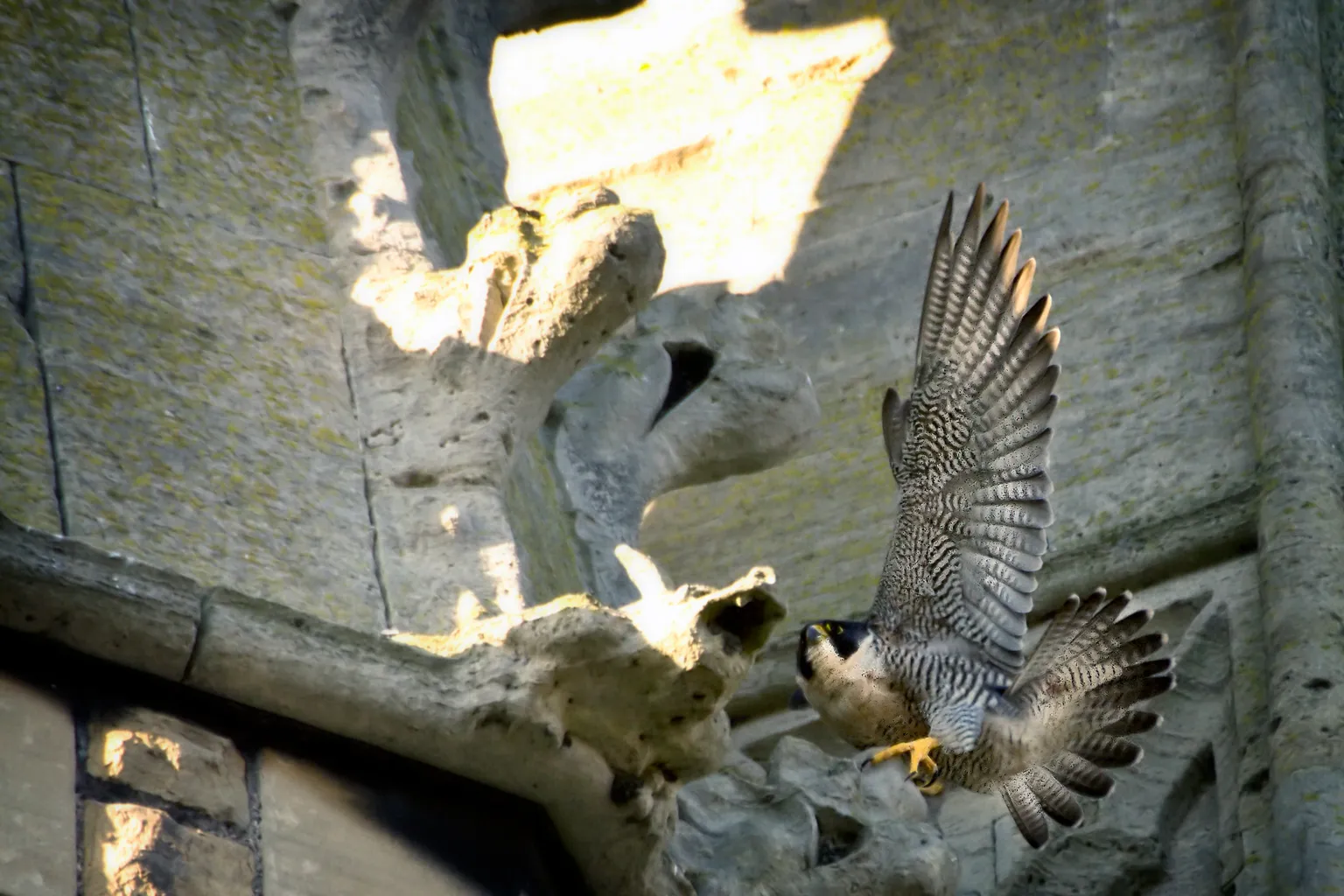
The Peregrine Falcon is the classic city raptor. The Cornell Lab lists skyscrapers, churches, bridges, electricity towers and nest boxes on tall buildings among its nest sites, and notes that city Rock Pigeons give it a reliable food supply. When stooping on prey with its wings closed, a Peregrine has been calculated to reach 238 mph, which is why it’s often called the fastest bird.
To find one, scan high ledges, cornices and bridge towers, especially near large pigeon flocks. Peregrines often use the same perch day after day. A sudden explosion of pigeons from a plaza is worth following with your eyes. Many cities run public nest cameras on buildings and churches, which is an easy way to learn where local pairs live.
Swifts
Swifts are the sound of summer evenings in many cities. In North America, Chimney Swifts now nest mainly in chimneys and other artificial sites. The Cornell Lab notes that in migration, as many as 10,000 may circle at dusk and funnel into a single roosting chimney. The species has declined by an estimated 74 percent since 1966, partly because suitable old chimneys are disappearing.
In Europe, the Common Swift squeezes through tiny gaps to nest inside roofs. The RSPB reports that swifts return to the UK from late April, peak in May and leave again by early August, and that their UK numbers fell by about 62 percent between 1995 and 2021. If you have swifts nearby, our guide to the swift nest box explains how to help.
Black Redstarts and parakeets
European cities have their own building birds. The RSPB describes the Black Redstart, a robin-sized bird with a red tail, as a bird that has adapted to live at the heart of industrial and urban centres. In Britain it is rare, with fewer than 100 breeding pairs, but it is far more widespread in towns across mainland Europe.
The Rose-ringed Parakeet, known in Britain as the Ring-necked Parakeet, is the UK’s only naturalised parrot. It’s loud, bright green and social, and the RSPB notes that its roosts can reach hundreds of birds.
Do birds use green roofs?
Yes, where roofs are planted with real vegetation. The NYC Bird Alliance monitors the 6.75-acre green roof on the Javits Center in Manhattan and has recorded 65 bird species there, along with bats, native bees and butterflies. Herring Gulls have even nested on it. At a smaller planted roof in Brooklyn, monitors recorded 20 bird species within two years, including foraging Barn Swallows and Chimney Swifts.
Most green roofs aren’t open to the public, but some rooftop gardens, museum terraces and parking decks are. They’re worth checking in migration, when tired songbirds use any greenery they can find.
When is the best time for city birding?
Early morning is best on almost every day. Birds feed hardest after dawn, parks are quieter, and migrants that landed overnight are still moving through the trees. Our guide to the best time of day for birding explains why.
Through the year, the calendar looks like this:
- Spring migration. The biggest variety of songbirds. In New York City, the NYC Bird Alliance puts the peak from late April through mid-May.
- Summer. Nesting residents, swifts on warm evenings, and fledglings in parks.
- Fall migration. A longer, more drawn-out passage, with many young birds.
- Winter. Ducks, gulls and other waterbirds on rivers and lakes, plus finches and sparrows in parks and cemeteries.
Weather matters too. In migration, a morning after a front passes or a rainy start can bring birds down into parks.
How do eBird and Merlin help in the city?
eBird tells you where to go and what to expect, and Merlin helps you name what you find. Both are free apps from the Cornell Lab of Ornithology.
eBird hotspots are shared birding locations where many people log sightings to the same place. On eBird you can open Explore, choose Explore Hotspots, and see a map of your city. Each hotspot page shows the species recorded there, an illustrated checklist, recent visits and the birds most special to that site compared with the surrounding region. The eBird mobile app has the same Explore tools. Our guide on how to use eBird walks through checklists, hotspots and alerts.
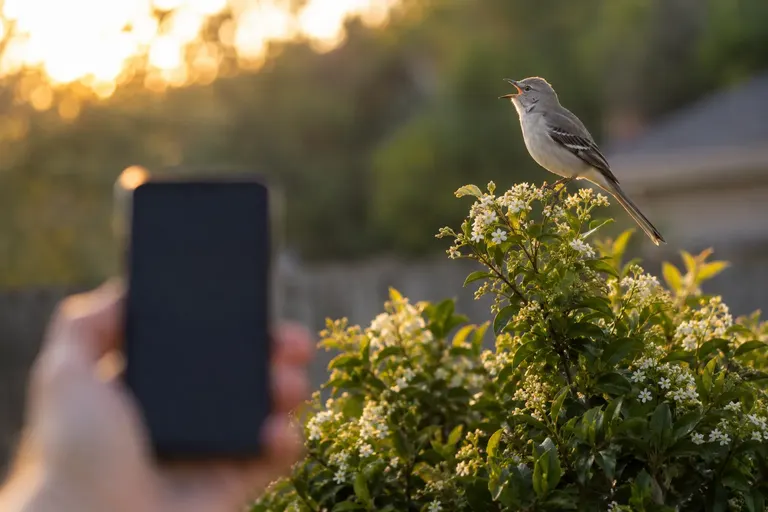
Merlin Bird ID identifies birds from sound, photos or a short set of questions. Its Sound ID listens to birds around you and suggests who’s singing in real time, and it covers birds in the US, Canada, Europe, India and parts of Central and South America. It works offline once you download a bird pack. In a busy park full of song, that’s a big help, and our guide to Merlin Sound ID explains how to avoid common mistakes.
A simple routine: check eBird the night before to choose a hotspot, then use Merlin in the field to confirm what you’re hearing.
How can city birders help birds?
The same features that pull birds into cities also put them at risk. BirdCast, the Cornell Lab’s migration forecasting project, explains that artificial light attracts night-migrating birds and draws them close to buildings and glass. It recommends turning off non-essential lights from dusk to dawn during migration, which it dates from March 1 to June 15 in spring and August 15 to November 30 in fall.
Other steps Audubon suggests for city residents:
- Turn off unneeded lights at night during migration.
- Make windows safer for birds. Our guide to preventing window collisions explains what works.
- Keep cats indoors.
- Plant native species, even in small spaces.
- Support bird-safe building policies.
In the field, skip playback in city parks. The NYC Bird Alliance notes that New York City parks ask birders not to play recorded calls, because it stresses birds that are already tired from migration.
A simple plan for your first city birding morning
- Pick a hotspot on eBird: the nearest large park or cemetery with water nearby.
- Arrive early, within an hour or two of sunrise.
- Walk slowly along edges where trees, shrubs and open ground meet.
- Listen first, and use Merlin to check songs you don’t know.
- Look up at ledges and towers for falcons, and at the sky for swifts and gulls.
- Log a checklist on eBird so your sightings help science.
Sources

Frequently asked questions
What is the best place to go birding in a city?
Start with the largest patch of green near water: a big park with trees, shrubs and a pond or river edge. In spring and fall, these patches act as migrant traps, pulling in tired songbirds that have flown over miles of buildings. Old cemeteries with mature trees are a close second. Check eBird hotspots for your city to see which sites local birders visit most.
When is the best time for city birding?
Early morning is best on most days, because birds feed actively after dawn and parks are quieter. Spring and fall migration bring the biggest variety. In New York City, for example, spring migration peaks from late April through mid-May. Winter is good for ducks, gulls and other waterbirds on rivers and lakes, and summer evenings are the time to watch swifts.
Can you really see falcons in a city?
Yes. Peregrine Falcons nest on skyscrapers, church towers, bridges and nest boxes placed on tall buildings, and city pigeons give them a reliable food supply. Look for a bulky, dark-hooded falcon perched on a high ledge or cornice, often the same one day after day. Many cities run public nest cameras, which is the easiest way to learn where a pair lives.
Which app helps with birding in the city?
Two free apps from the Cornell Lab cover most needs. eBird shows hotspots, recent sightings and which species turn up at a site in each season, and lets you log your own checklists. Merlin Bird ID identifies birds from sounds, photos or a few simple questions, and works offline once you download a bird pack for your region. Sound ID is especially useful in noisy, leafy parks.
Is it OK to go birding in a cemetery?
Usually yes, and many old cemeteries are excellent for birds, but follow the rules. Check opening hours and which areas are public, park only in marked spots, keep your voice low and give mourners plenty of space. Never touch gravestones or monuments, stay off plantings and do not scatter seed on graves. Some cemeteries welcome birders and even partner with local bird groups.