Best Time of Day for Birding: Dawn, Dusk and Midday
The best time of day for birding is the first few hours after sunrise, when birds sing and feed most. When to look for hawks, owls, shorebirds and feeder birds.
In this article
- Quick answer: when to look for which birds
- Why early morning is the best time for birding
- What time are birds most active in your backyard?
- How the best birding time changes by season
- Best time of day for specific types of birds
- Is morning or evening better for birding?
- How long after sunrise do birds stay active?
- What to do at midday
- Best time of day for bird photography
- How weather affects the best time of day
- Birds follow the sun, not the clock
- How to plan a morning birding session
- Common mistakes about birding times
- Sources
- Frequently asked questions
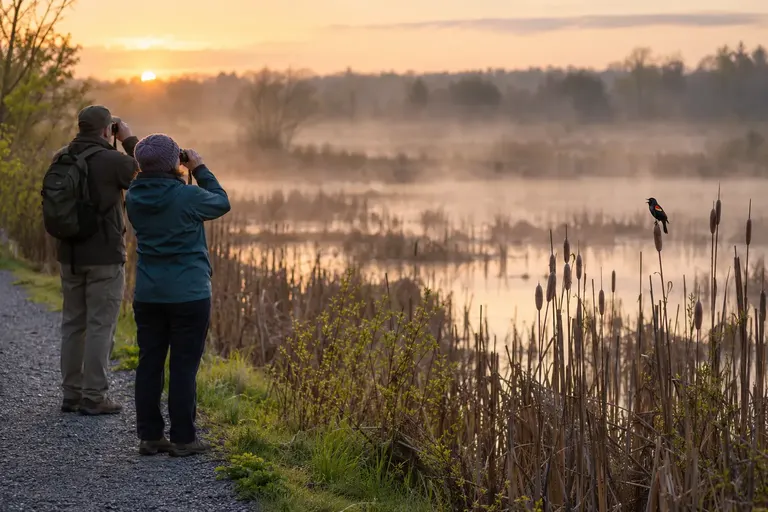
The best time of day for birding is from dawn through the first 2 to 3 hours after sunrise. That is when most songbirds sing hardest, feed most actively after a long night, and when night-flying migrants drop in to refuel. Late afternoon is a good second window. Midday is usually the quietest time, with a few important exceptions: hawks soar best once the day warms, shorebirds follow the tide, and owls come out after dark.
This guide explains why birds keep the schedules they do, what to expect in your yard hour by hour, and how season and weather shift the best times.
Quick answer: when to look for which birds
| Time of day | What is most active | Why |
|---|---|---|
| Pre-dawn | Owls, early singers like American Robin | Darkness; some species start singing before first light |
| Sunrise to about 3 hours after | Songbirds, feeder birds, fresh migrants | Dawn chorus, refueling after the night, migrants landing |
| Mid-morning to mid-afternoon | Hawks, vultures, soaring birds | Thermals form as the ground warms |
| Midday | Quietest for songbirds | Birds rest, especially in heat |
| Late afternoon | Feeder birds, songbirds feeding before roost | Fueling up for the night |
| Dusk | Swifts, swallows, owls, woodcock in spring | Roosting flights and crepuscular species |
| Night | Owls, nocturnal migrants overhead | Most migratory species fly at night |
| Any time, by tide | Shorebirds on the coast | Tide height pushes birds closer or spreads them out |
Why early morning is the best time for birding
Several things line up in the first hours of daylight.
The dawn chorus
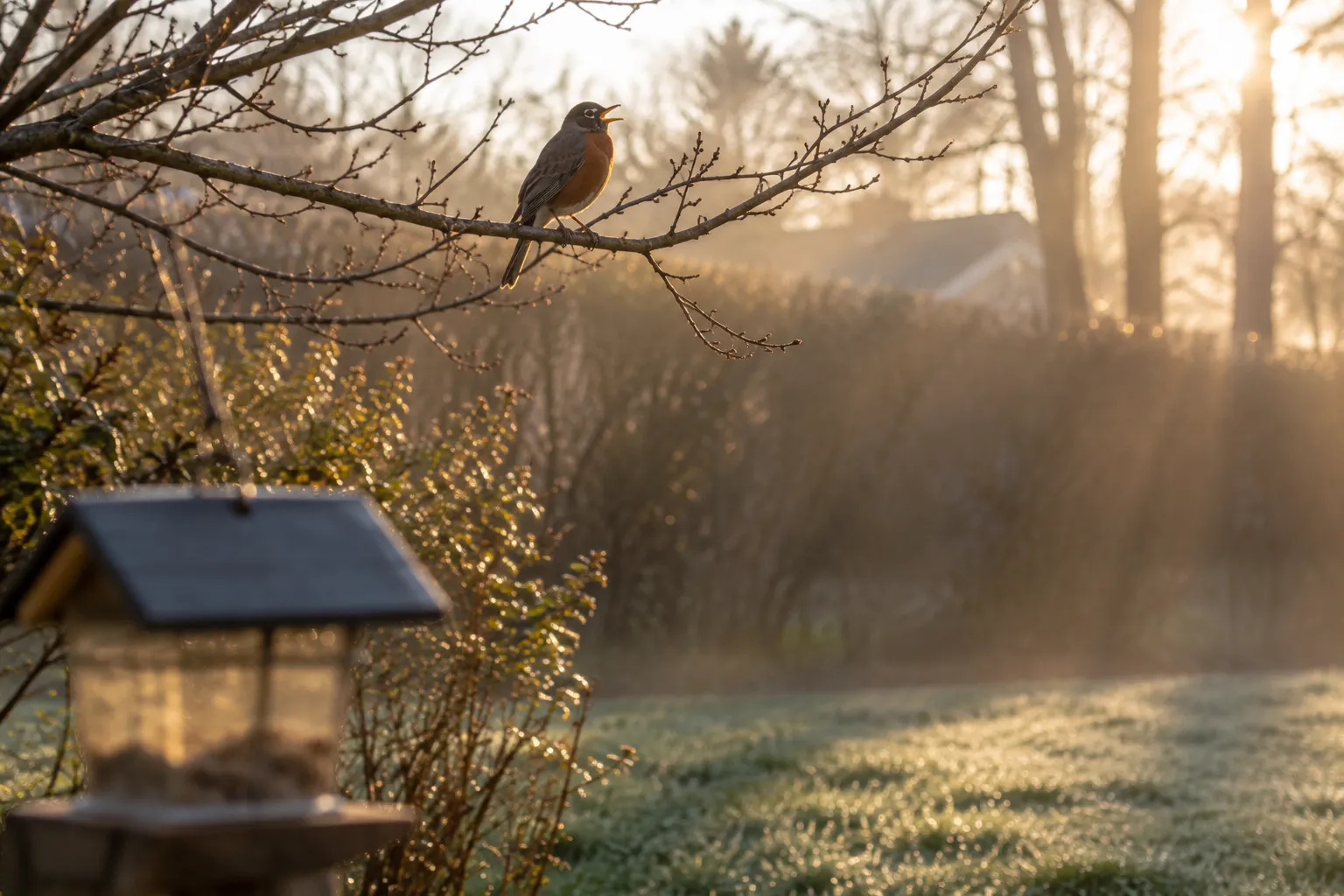
In spring and early summer, many birds sing most intensely around dawn. The dawn chorus is most noticeable in spring in temperate regions, when males are defending breeding territories and trying to attract mates. Researchers have proposed several reasons it peaks so early: still, cool morning air may carry sound well; low light makes foraging less efficient, so singing is a good use of the time; and birds appear to respond to other singers, so song spreads through a neighborhood once it starts.
Different species start at different times. Birders commonly notice American Robins, Northern Cardinals and some thrushes singing in the half-light well before sunrise, with others joining as the light grows. If you want to learn songs, or run Merlin’s Sound ID, this is the richest time. Our guide to using Merlin Sound ID without getting fooled explains how to sort out a busy morning chorus.
Refueling after the night
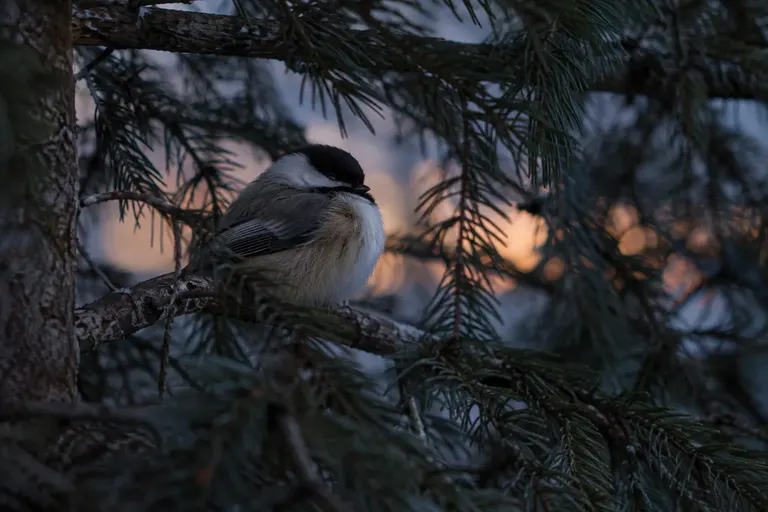
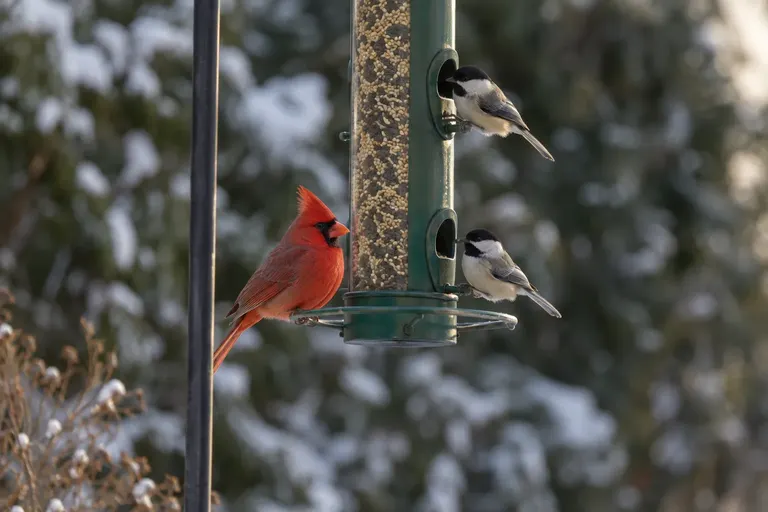
Small birds burn through much of their energy reserves overnight, especially on cold nights. At first light they need to eat. That is why feeders are often busiest early in the morning and why the first hours after sunrise are the easiest time to see chickadees, titmice, nuthatches and finches up close.
Migrants land at dawn
During migration, the morning has an extra advantage. BirdCast, a migration forecasting project involving the Cornell Lab of Ornithology, says more than 80 percent of North American migratory bird species migrate at night. Many take off just after sunset, fly through the night when conditions are good and land just before dawn. They then spend the morning feeding hard in whatever habitat they find, which makes warblers, vireos, thrushes and flycatchers far easier to see in the morning than later in the day.
What time are birds most active in your backyard?
Here is a typical day at a backyard feeding station in the cooler months. Exact times shift with season, weather and location, but the shape is consistent.
First light
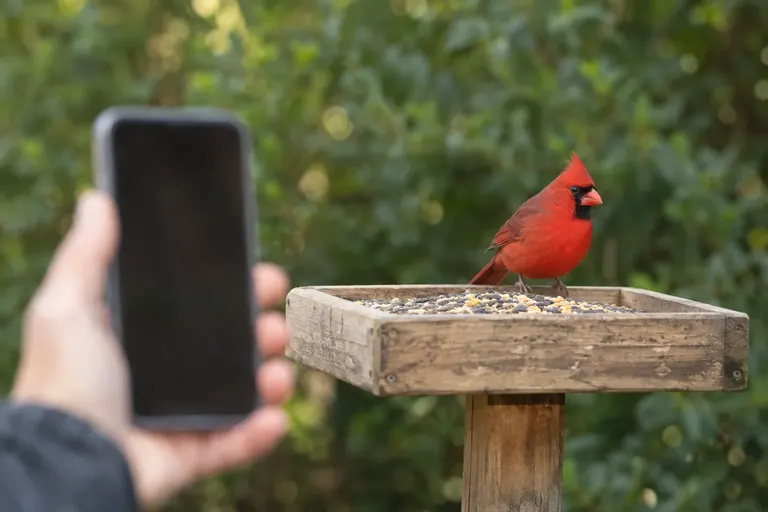
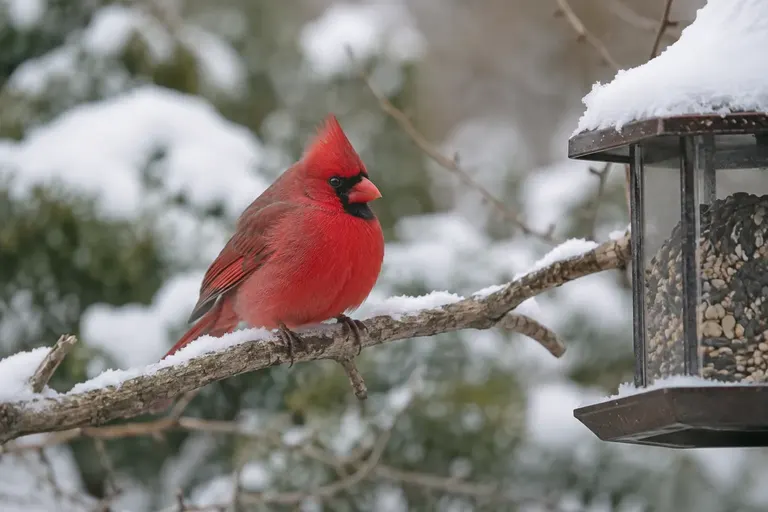
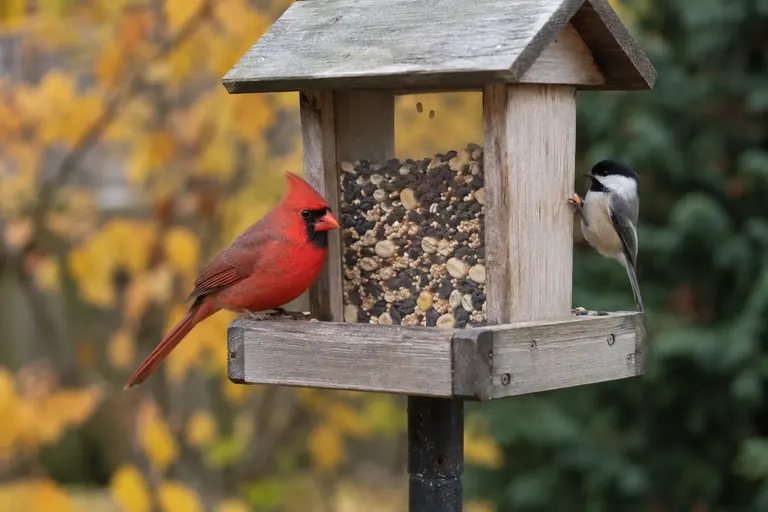
The first visitors often arrive in the gray light before sunrise. Cardinals are known for feeding early and late in low light. Juncos and sparrows feed on the ground below feeders.
The first two to three hours after sunrise
Peak traffic. Chickadees, titmice and nuthatches make repeated quick trips, finches settle on tube feeders, and woodpeckers come to suet. If you only have 20 minutes to watch, make it now.
Late morning to early afternoon
Traffic usually slows, especially on warm days. Birds are still around, resting, preening or foraging in cover. Hawks may appear as the air warms, and a visit from a Cooper’s Hawk can empty a yard for a while. Our guide to hawks at feeders explains what to do.
Mid to late afternoon
A second rise in activity as birds fuel up before the night. It is usually smaller than the morning peak but reliable, especially on cold days.
Dusk
Feeders empty out as birds head to roost in dense shrubs, evergreens and cavities. This is a good time to listen for owls.
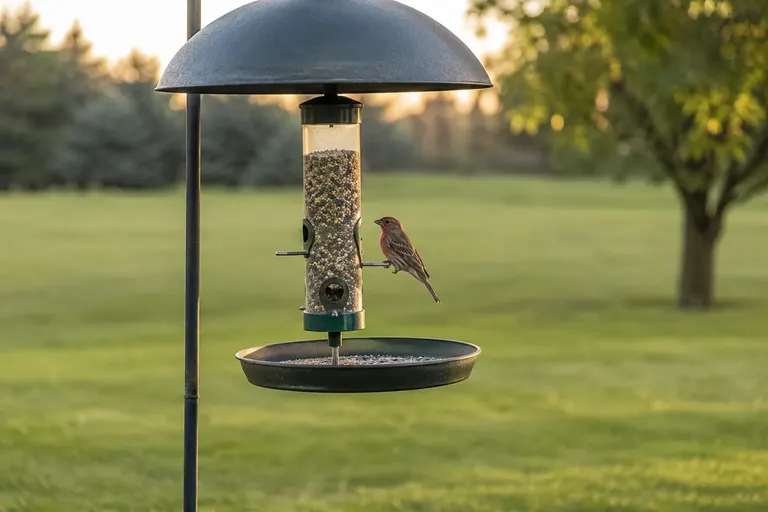
Practical tip: fill feeders in the evening so food is waiting at dawn, when birds need it most. If feeders sit empty for the morning rush, birds may move on to a neighbor’s yard. If birds seem to be ignoring your station entirely, our guide to why birds aren’t coming to your feeder walks through the usual causes.
How the best birding time changes by season
Spring
The best season for early-morning birding. The dawn chorus is at its peak, migrants arrive overnight and forage in the morning, and breeding birds are vocal and conspicuous. BirdCast describes spring peak migration in the contiguous United States as typically mid-April to mid-May. Be out as close to sunrise as you can.
Summer
Singing continues into early summer and then drops off as nesting finishes. Hot afternoons are very quiet, so the first two hours after sunrise matter even more. Birds also visit water heavily on hot days, so a bird bath can be busy in the late afternoon. Hummingbirds are active through the day; many backyard watchers notice heavy feeding at first light and again in the evening. Change sugar water often in hot weather so it does not spoil.
Fall
Fall migration in the contiguous United States typically peaks from mid-September through mid-October, according to BirdCast. Mornings after a night with good migration conditions can bring waves of warblers, sparrows and thrushes. Hawk migration also peaks in fall, and that is a mid-day event, covered below.
Winter
With short days and cold nights, birds feed hard in the morning and again before dusk, and on very cold or snowy days they may feed almost continuously. Because the sun rises later, “early” birding in winter is a more civilized hour. Winter is when feeders matter most, and our guide to winter bird feeding covers what birds need.
Best time of day for specific types of birds
Hawks and other soaring birds: mid-morning to afternoon
Broad-winged Hawks, Red-tailed Hawks, vultures and eagles often ride thermals, columns of rising warm air that form as the sun heats the ground. Thermals are weak or absent at dawn, so soaring birds tend to get going from mid-morning onward. At fall hawk watches, the biggest flights usually build through the late morning and afternoon, especially on clear days after a cold front passes. Accipiters like Sharp-shinned and Cooper’s Hawks, which hunt songbirds, can appear at any time, including early morning at feeders.
Owls: dusk, night and pre-dawn
Most North American owls are active from dusk to dawn. Great Horned Owls call in winter as they begin nesting, and Eastern Screech-Owls and Barred Owls often call at dusk and in the hour before dawn. Listen quietly from a porch or yard, and avoid playing recorded calls, which can disturb them.
Shorebirds and waterbirds: follow the tide
On the coast, the tide matters more than the clock. At low tide, shorebirds spread out over wide flats, often far away. A rising tide pushes them closer to shore and concentrates them. Many coastal birders time outings for a couple of hours before high tide. Inland, lakes and ponds are often best in the morning before boat traffic and wind pick up.
Swallows and swifts: dusk in late summer and fall
In late summer and fall, swallows and Chimney Swifts gather in large numbers before roosting, and swifts may funnel into chimneys at dusk. Evening is the time to see these gatherings.
American Woodcock: spring dusk and dawn
In early spring, male American Woodcocks perform a display flight over open fields at dusk and before dawn, spiraling up high and then fluttering down while giving twittering sounds. It is one of the best reasons to go out in the evening in March and April in the East.
Is morning or evening better for birding?
For songbirds, morning wins in almost every season. But evening has its own strengths, and for some birders it is simply the time they have. Here is how the two windows compare:
| Factor | Early morning | Late afternoon and evening |
|---|---|---|
| Songbird singing | Peak, especially in spring | Much quieter; some evening song |
| Feeding activity | Highest; birds refuel after the night | Second peak before roosting |
| Fresh migrants | Best; birds land before dawn | Fewer, and more settled |
| Light for viewing | Soft, low light; sun can be behind birds if you face east | Soft, warm light; face east to keep the sun behind you |
| Wind | Often calm | Often breezier after a warm day |
| Special species | Dawn singers, woodcock in spring | Owls, roosting swifts and swallows, woodcock in spring |
| Human disturbance | Low: fewer walkers, dogs and boats | Higher in parks and on lakes |
If you can only go out once, go in the morning. If your schedule only allows evenings, a regular late-afternoon session at the same spot still produces a steady list, and it is the better time for owls and roosting flights.
How long after sunrise do birds stay active?
There is no fixed cutoff, but the pattern birders commonly describe is consistent: song and feeding are strongest in roughly the first two to three hours after sunrise and taper off toward late morning. The taper comes sooner on hot summer days and later on cool, overcast days. Cloud cover can keep birds active and singing longer, which is why gray, calm mornings are often excellent.
During migration, activity can stay high later into the morning when many migrants have landed and are moving through the trees in feeding flocks. In winter, activity is more evenly spread through the short day, with peaks at the start and end.
What to do at midday
Midday is not wasted time. It is just a different kind of birding.
- Watch the sky. On warm, sunny days this is prime time for soaring hawks, vultures and, near water, eagles and Ospreys.
- Watch the water. On hot days, a bird bath or a shallow dripping water feature may draw more visitors at midday and in the afternoon than seed does.
- Check shaded edges. Woodland edges, streamside shrubs and dense cover hold birds resting out of the heat.
- Visit ponds and marshes. Herons, egrets, ducks and kingfishers are often active through the day.
- Do the maintenance. Midday, when yard traffic is lowest, is the least disruptive time to clean your feeders and refill them.
Best time of day for bird photography
Photographers often prefer the same windows birders do, for slightly different reasons. The first and last hours of sunlight give warm, low-angle light with soft shadows, and birds are active. In the middle of a bright day, harsh overhead light creates dark shadows on a bird’s face and blown-out highlights on white feathers.
Two practical points:
- Keep the sun behind you. In the morning, that means positioning yourself so the birds are to your west; in the evening, to your east. Front-lit birds show true color and a catchlight in the eye.
- Overcast days are useful too. Even cloud light removes harsh shadows and is forgiving for dark or very pale birds, and birds may stay active longer.
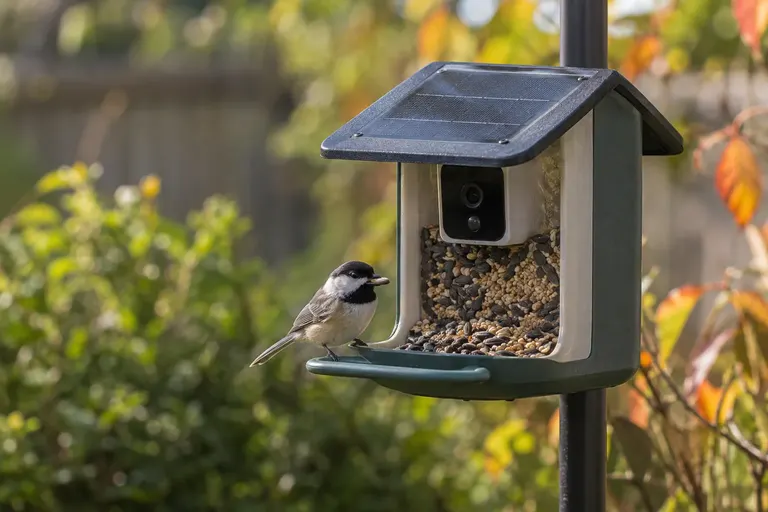
If you use a feeder camera, point it so the sun does not shine straight into the lens during the morning rush. Our guide to setting up a bird feeder camera covers placement.
How weather affects the best time of day
- Wind: strong wind keeps small birds low and quiet and makes them hard to hear. Calm mornings are best.
- Rain: light rain may not stop activity, and birds often feed heavily just after rain clears. Heavy rain shuts things down. BirdCast notes that migrants may be grounded by rain.
- Heat: on hot days, the morning window is shorter. Be out at first light.
- Cold: on very cold days, feeding activity may continue through the day as birds try to keep up with energy demands.
- Cold fronts: in fall, the passage of a cold front often brings clear skies and winds that favor southbound migrants, followed by productive mornings and good hawk-watching days.
- Migration forecasts: BirdCast offers migration forecast maps and a local dashboard during the spring and fall seasons. Checking the previous night’s migration activity each morning is a simple way to decide whether to go out early.
Birds follow the sun, not the clock
It sounds obvious, but it trips people up twice a year. Birds time their day by light, not by the clock on your wall. When daylight saving time begins in March, the dawn chorus suddenly seems to start an hour “later” by the clock; when it ends in November, feeder traffic appears to begin an hour “earlier.” Nothing about the birds changed.
The same logic applies across the country and through the year. Sunrise in late June comes hours earlier than in late December, and it also varies with your position within a time zone. Instead of setting a fixed alarm year-round, plan around the local sunrise time. A simple rule for backyard birders: be at the window or on the porch within about half an hour of sunrise, and you will catch the busiest part of the morning in any season.
How to plan a morning birding session
- Check sunrise time for your location the night before.
- Look at BirdCast in migration season to see if a big flight is forecast.
- Check eBird for recent sightings at nearby hotspots. Our guide to how to use eBird covers the tools.
- Arrive around sunrise, or step outside with coffee at first light for a yard session.
- Start with your ears. Stand still for five minutes and listen before walking.
- Put the sun at your back. In the morning, face west where possible so birds are front-lit rather than silhouetted.
- Keep going for two to three hours, then slow down as activity drops.
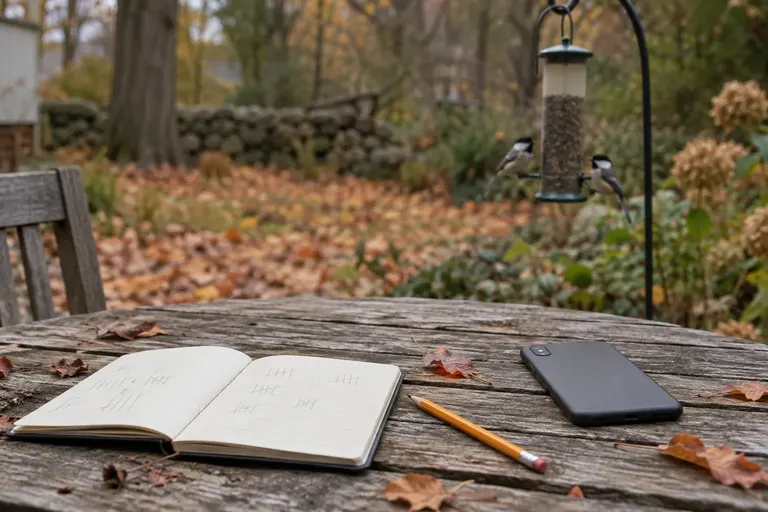
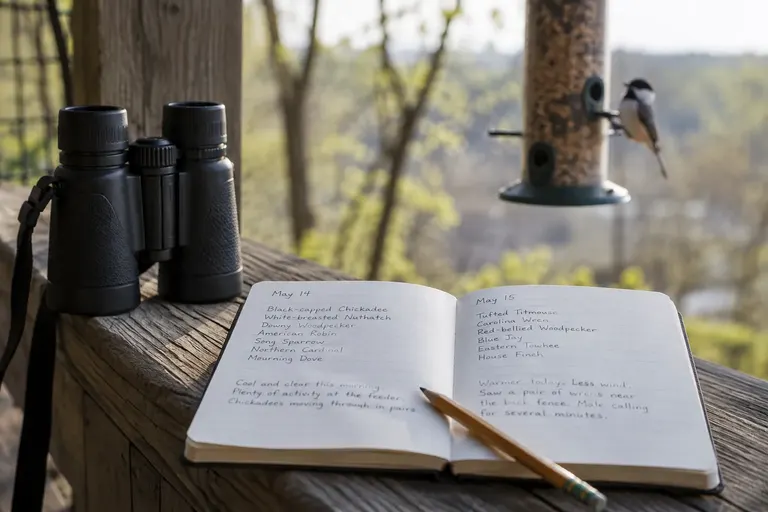
- Record what you saw while it is fresh.
Good optics help in low morning light. Binoculars with larger objective lenses gather more light at dawn and dusk; our guide to binoculars for watching birds from your window covers what matters for yard viewing.
Common mistakes about birding times
- Starting too late. By 10 a.m. on a summer day, much of the activity has passed.
- Giving up at midday on migration days. Hawks may just be getting started.
- Ignoring the tide on the coast. Low tide can leave shorebirds as distant specks.
- Leaving feeders empty overnight. The dawn rush finds nothing to eat.
- Only birding on weekends when weather is bad. A calm, clear weekday morning often beats a windy Saturday.
- Talking and walking straight away. The first few minutes of quiet listening often reveal the most birds.
- Forgetting evening. Dusk brings owls, roosting flights and, in spring, woodcock displays.
Sources
Frequently asked questions
What time are birds most active?
Most songbirds are most active from dawn through the first few hours after sunrise, when they sing to defend territories and feed to refuel after the night. Activity usually slows around midday, especially in hot weather, and picks up again in late afternoon before birds settle to roost. Hawks, owls and shorebirds follow different patterns.
Why do birds sing so much at dawn?
The dawn chorus is most noticeable in spring, when males sing to defend breeding territories and attract mates. Researchers have proposed several reasons it peaks early, including still morning air, low light making foraging less efficient, and birds responding to other singers. Whatever the cause, early morning is when you will hear the most species.
What time of day do birds come to feeders?
Feeder traffic is typically busiest early in the morning, when small birds need to replace energy used overnight, with another rise in mid to late afternoon as they fuel up before dark. On very cold days, birds may feed steadily through the day. Keep feeders full by evening so food is ready at first light.
Is evening a good time for birding?
Late afternoon and dusk can be productive. Birds feed again before roosting, and evening brings owls, American Woodcock displays in spring, and swallows and swifts gathering to roost in late summer and fall. It is usually quieter than early morning for songbirds, but light is often softer and you may see different species.
What is the best time of day for hawk watching?
Migrating hawks such as Broad-winged Hawks ride thermals, rising columns of warm air that form as the sun heats the ground. That means hawk flights usually build from mid-morning into the afternoon rather than at dawn. Clear days after a cold front, with helpful winds, tend to be best during fall migration.
Do birds migrate at night?
Yes. BirdCast, a project involving the Cornell Lab of Ornithology, says more than 80 percent of North American migratory bird species migrate at night. Many take off just after sunset and land before dawn. That is why migrants are often most visible in the morning, feeding in trees and shrubs after a night of flying.