Do Birds Recognize the People Who Feed Them?
Do birds recognize the people who feed them? Many do. Crows, jays, pigeons and mockingbirds learn faces, and feeder birds learn your routine, clothes and voice.
In this article
- Quick answer
- Which birds are proven to recognize individual people?
- What about chickadees, titmice and other small feeder birds?
- How do birds recognize people?
- How do scientists test whether a bird recognizes a person?
- Do parrots and other tropical birds recognize people?
- Can birds recognize my car or my house?
- How long do birds remember people?
- Do birds tell other birds about people?
- Why would birds evolve to recognize people?
- What does this mean for backyard birders?
- How can I build a good relationship with feeder birds?
- Myths vs facts
- Common mistakes
- Quick facts
- Sources
- Frequently asked questions
Yes, many birds learn to recognize the people who feed them, and some species recognize individual human faces for years. Crows, magpies, jackdaws, pigeons and mockingbirds have all shown in experiments that they can tell one person from another; in a 2011 Paris study, feral pigeons told apart two people who fed them. Smaller feeder birds such as chickadees and titmice clearly learn your routine and cues, including your timing, clothing, voice and the sound of the back door.
For backyard birders, this is not just a curiosity. It explains why birds seem to wait for you, why they scatter when a stranger appears, and why they may scold a neighbor they have learned to distrust. This guide explains what the research shows, which birds are best at it, how they do it, and how to build a good relationship with your feeder birds without taming them in unhealthy ways.
Quick answer
- Proven face recognition: American Crows, Eurasian and Black-billed Magpies, Jackdaws, feral pigeons and Northern Mockingbirds.
- Long memory: crows remember threatening people for years and teach other crows about them.
- Routine learning: chickadees, titmice, jays, robins and many others learn feeding times, sounds and familiar people.
- Cues birds use: face, gait, clothing, voice, behavior, location and time of day.
- What it means: birds treat people as individuals with reputations, good or bad.
Which birds are proven to recognize individual people?
American Crows
The most famous research comes from John Marzluff and colleagues at the University of Washington. Researchers wore a distinctive “caveman” mask while trapping and banding crows on campus. Afterward, crows scolded and mobbed anyone wearing that mask, while ignoring people wearing a neutral mask. The response continued for years, and crows that had never been trapped joined in, apparently learning from others which face meant danger.
Later work used brain imaging and found that seeing the “dangerous” face activated brain regions linked to fear and learning, in ways broadly similar to how mammal brains process threats. For more on crow cognition, see are crows really that smart.
Northern Mockingbirds
A study in Florida, published in 2009, had the same person approach mockingbird nests on campus and touch the nest briefly on several consecutive days. By the later visits, the birds flushed earlier and gave alarm calls sooner to that person, but reacted to a new person as they had to the first person on day one. They had learned one specific human in just a few short encounters, despite thousands of students walking past daily. Our Northern Mockingbird guide covers their behavior more widely.
Magpies
Researchers in Seoul, South Korea, found that magpies there (Oriental Magpies, at the time classed as Eurasian Magpies) recognized a person who had climbed to their nests, chasing and scolding that person, but not a different person dressed similarly. This happened in a busy urban setting.
Jackdaws
Studies of Jackdaws in the UK showed that the birds could recognize individual humans who had been a threat and were sensitive to human gaze, reacting more strongly when a person looked at them than when the person looked away.
Feral pigeons
A study in a Paris park, published in 2011, showed that feral pigeons learned to tell apart two people who fed them, one friendly and one who chased them away. The pigeons continued to avoid the hostile person even when the two swapped lab coats, suggesting they used features such as face or body rather than clothing alone.
Gulls
Herring Gulls in coastal towns in England were less likely to approach food when a person was watching them directly than when the person looked away, showing close attention to human behavior. Gulls also appear to learn which places and people offer food.
What about chickadees, titmice and other small feeder birds?
The honest answer is that small feeder songbirds are less studied for face recognition than crows or pigeons. We know a lot about their memory in other areas. Chickadees, for example, cache thousands of seeds and remember the locations, and their hippocampus, a brain region involved in spatial memory, grows seasonally in some populations.
What people commonly report, and what fits their known abilities, is that feeder birds learn:
- When you refill feeders.
- What sounds come before food: a door, a lid, a scoop in a seed bin.
- Who is harmless, based on repeated calm encounters.
- Where you stand or sit.
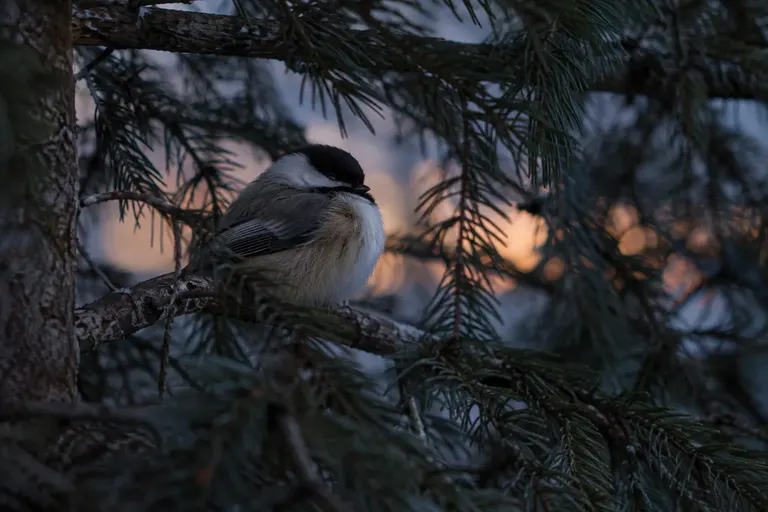
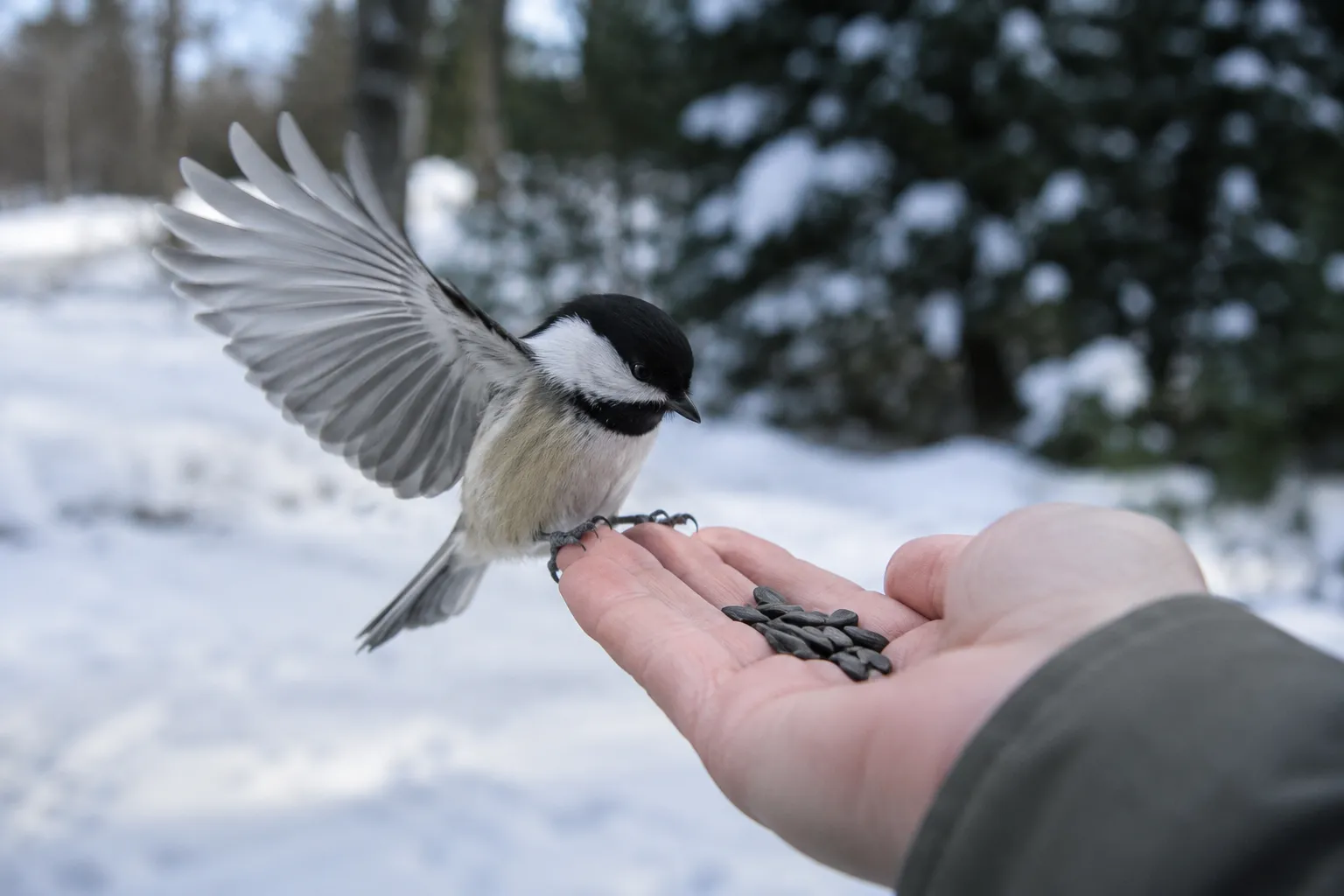
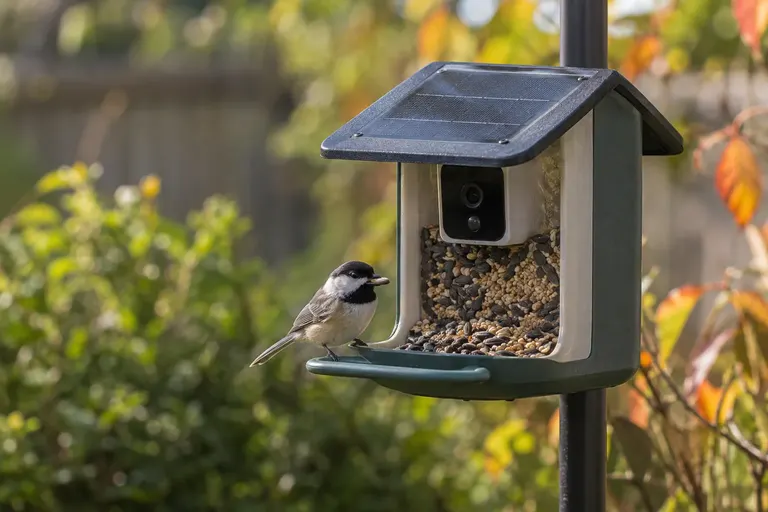
Hand-feeding chickadees shows this well. Birds that learn a person is safe will come to an outstretched hand, often faster for a familiar person than a stranger. Whether they are recognizing the face, the voice, the clothing, or the whole situation is not fully known, but they clearly learn you in some sense. See our Black-capped Chickadee guide for more on their behavior.
Hummingbirds
Hummingbirds have excellent memory for food sources. Experiments show they remember which flowers they have already emptied and roughly when those flowers will refill. Many people report hummingbirds hovering at a window or near them when a feeder is empty. This fits their known abilities, but formal studies of hummingbirds recognizing individual people are lacking.
Robins that follow gardeners
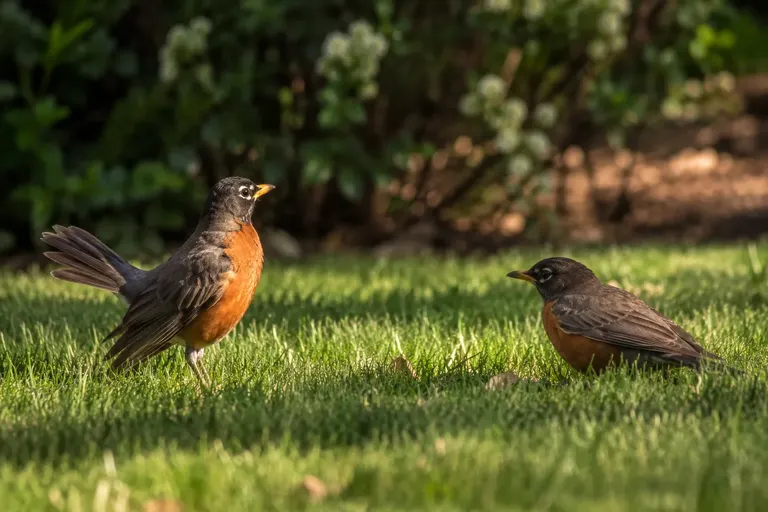
In Europe, European Robins famously follow gardeners and pick up worms and insects from freshly dug soil. The behavior likely evolved from following wild boar and other animals that disturb the ground. Individual robins learn which gardeners dig regularly and can become very bold around them.
How do birds recognize people?
Birds use a mix of cues, and the combination matters more than any single feature.
Faces
Crows, magpies and pigeons respond to faces, as mask experiments show. Birds have excellent vision, and many can distinguish subtle differences in shape and features. Some species also pay attention to eyes and gaze direction.
Gait and body shape
The way a person moves, their height and build, and their posture can all serve as cues. Pigeons in the Paris study seemed to use features other than clothing.
Clothing and color
Birds see color well, including ultraviolet in many species, so clothing may be a useful cue in the short term, even if experiments show some species can look beyond it. See can birds see color for how bird vision works.
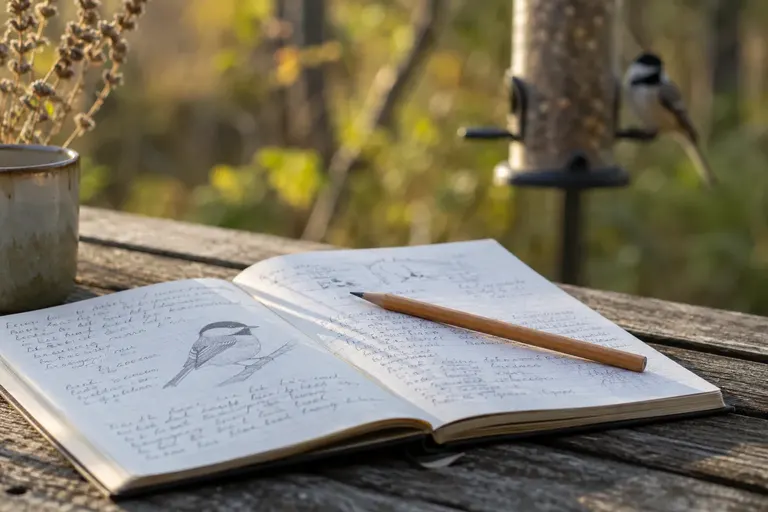
Voice
Some birds, including parrots and corvids, respond to individual human voices. Some studies suggest even species like Jackdaws can discriminate familiar human voices. Many people who hand-feed birds use a whistle or call that the birds come to associate with food.
Routine, place and time
A person who appears at the same time and place each day and behaves predictably is easy to learn. Birds track feeding schedules closely, especially in winter.
How do scientists test whether a bird recognizes a person?
Anecdotes are easy to find, but they are hard to interpret. A bird that comes to you might be responding to the feeder, the time of day, or simply the fact that someone is standing in the usual spot. Researchers use several designs to separate true recognition from these simpler explanations.
- Masks. In the crow studies, people wore identical masks, so the birds could not be reacting to a real face they had seen elsewhere. A “dangerous” mask and a neutral mask were worn by different people at different times, which shows the birds were tracking the mask, not the wearer.
- Repeated approaches with a control person. In the mockingbird study, the same person approached a nest over several days, then a new person approached. If the birds had simply become more wary of everyone, they would have reacted to the newcomer the same way. They did not.
- Swapping clothing. In the pigeon study, the friendly and hostile people switched coats. Pigeons still avoided the hostile person, which ruled out clothing as the only cue.
- Gaze tests. In the gull and jackdaw studies, a person either looked at the birds or looked away while everything else stayed the same. Differences in behavior show the birds were attending to where the person’s eyes were pointed.
These experiments are why scientists are confident about the species listed above. For most small songbirds, similar tests have not been run, which is why this article describes their learning more cautiously.
Do parrots and other tropical birds recognize people?
Parrots are highly social, long-lived and intelligent, and pet parrots clearly distinguish individual people, often forming strong preferences for some household members and reacting badly to others. Wild parrots in places such as Brazil and Australia often learn which houses, gardens and people provide food, and flocks may visit on predictable schedules.
Wild parrot feeding can create problems, though. Seed and processed food can crowd out natural diets, and gatherings of parrots at feeding stations can spread disease. In Australia, for example, wildlife agencies generally discourage feeding wild parrots such as lorikeets and cockatoos. Check local guidance before offering food to wild parrots anywhere.
Can birds recognize my car or my house?
Birds certainly learn places, and many people report that crows, jays or gulls react to a particular car arriving, or gather on a roof when a familiar person comes home. Given what we know about corvid and gull learning, this is plausible, since a car or a door is a reliable signal that a known person is about to appear. It has not been tested as carefully as face recognition, so treat specific stories as likely rather than proven.
How long do birds remember people?
It depends on species and experience.
- Crows: in the Seattle research, crows continued to scold the “dangerous” mask for years, and the response spread to birds that had never been trapped. Reports suggest the memory lasted more than a decade.
- Mockingbirds: learned a person within a few days, but long-term memory was not the main focus of the study.
- Feeder birds: individual chickadees and other small birds can live for several years, and people who hand-feed them often report the same banded birds returning each winter. See how long do backyard birds live.
Negative experiences may be remembered more strongly than positive ones, because avoiding danger is critical for survival.
Do birds tell other birds about people?
Some do. In the crow studies, birds that had never been trapped began scolding the dangerous mask, apparently learning from others. This kind of social learning means a person’s reputation can spread through a local crow population.
Mobbing calls of chickadees, titmice and other small birds also spread information about predators, and other species respond to them. Whether they spread information about specific harmless people is less clear.
Why would birds evolve to recognize people?
People are a major part of the environment for urban and suburban birds. Being able to tell a harmless person from a dangerous one saves energy: a bird that flees every human loses feeding time, while a bird that trusts every human risks being caught. Species that live near people, especially intelligent, long-lived species such as corvids, benefit most from telling individuals apart.
Many birds already recognize individual members of their own species, such as mates, neighbors and rivals, by voice or appearance. Extending that ability to other species, including people, may not be a big step.
What does this mean for backyard birders?
Will birds come to trust me?
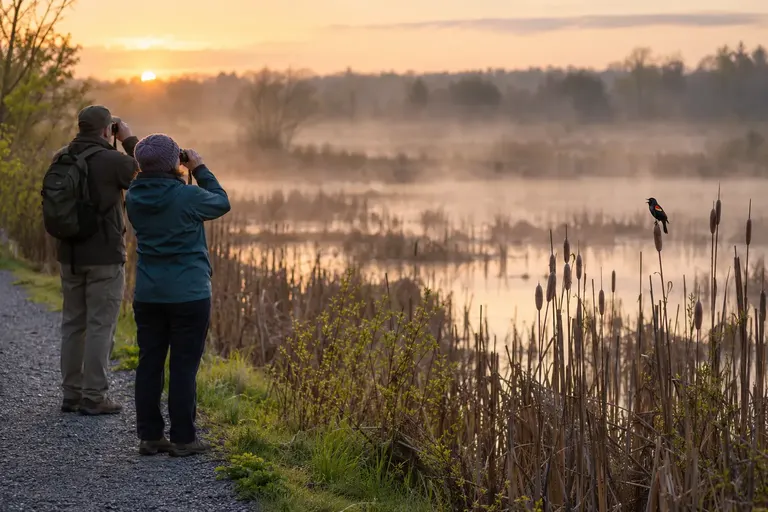
Yes, often. Calm, predictable behavior at feeders helps birds learn you are safe. Move slowly, avoid staring directly at birds up close, and keep a regular routine.
Should I hand-feed birds?
Hand-feeding chickadees, nuthatches or titmice can be a rewarding experience, and in many places it is done without apparent harm. But it has costs:
- Birds that lose fear of people may approach others who are not kind.
- Tame birds may be more vulnerable to cats.
- Large birds such as gulls, jays, crows and magpies can become bold or aggressive toward people who do not feed them.
If you do hand-feed, use plain black oil sunflower seed or shelled peanuts, keep hands clean, and limit it to species that are small and naturally curious.
Will feeding crows cause problems?
Crows who learn you are a food source may follow you, gather in numbers, and become noisy. Neighbors may not appreciate it. Offer modest amounts, avoid human junk food, and clean up leftovers. Also be aware that crows remember negative experiences. Chasing them may earn you a reputation.
Do birds become dependent on me?
Studies of chickadees in Wisconsin found that birds with access to feeders still got most of their daily food from natural sources, and survival did not drop when feeders were removed after a long period of feeding. See do birds become dependent on feeders.
Why do birds scatter when someone else comes out?
Birds that learn one person is harmless may still flee a stranger. That is normal. It is also why birds may take time to return after a new family member or neighbor starts spending time in the yard. For more on behavior, see bird behavior: reading what birds are doing.
How can I build a good relationship with feeder birds?
- Keep a routine. Refill feeders at roughly the same time each day.
- Move calmly. Avoid sudden movements and loud noises near feeders.
- Keep feeders clean and seed fresh.
- Avoid staring at birds up close. Many species react to direct gaze as a threat.
- Do not chase birds you do not want, such as crows, jays or grackles. Use feeder design instead.
- Stay consistent. Wear similar clothing if you hand-feed, and use the same whistle or call.
- Keep cats inside. Trusting birds are easier prey.
Myths vs facts
| Myth | Fact |
|---|---|
| Birds cannot tell people apart. | Crows, magpies, jackdaws, pigeons and mockingbirds can. |
| Birds only recognize clothing. | Some species recognize features beyond clothing, including faces. |
| Birds forget people quickly. | Crows remember threatening people for years. |
| Feeder birds depend on you. | Most still get most of their food from natural sources. |
| Hand-feeding always harms birds. | Careful hand-feeding of small species appears low-risk, but taming large birds can cause problems. |
Common mistakes
- Chasing crows or jays away, which may teach them to distrust you.
- Hand-feeding large, bold species that can become aggressive.
- Feeding unhealthy foods such as bread, chips or processed snacks.
- Staring at birds from close range, which many species read as a threat.
- Changing routine abruptly in harsh weather, when birds rely on steady food.
Quick facts
- American Crows remember threatening faces for years.
- Northern Mockingbirds learned one specific person in a few visits.
- Feral pigeons told apart friendly and hostile feeders, even with clothing swapped.
- Herring Gulls respond to human gaze.
- Chickadees remember thousands of cache locations.
- Negative experiences may be remembered more strongly than positive ones.
Sources
- Marzluff, J. M. et al. (2010). Lasting recognition of threatening people by wild American crows. Animal Behaviour
- Levey, D. J. et al. (2009). Urban mockingbirds quickly learn to identify individual humans. PNAS
- Cornell Lab of Ornithology, All About Birds: American Crow
- Cornell Lab of Ornithology, All About Birds: Black-capped Chickadee
Frequently asked questions
Do crows remember people who feed them?
Research on American Crows shows they remember individual human faces for years and share information about people with other crows. The best-known studies focused on people who threatened crows, but crows also learn positive associations. Many people who feed crows regularly report the birds waiting for them, following them along a route or greeting them, which fits what experiments show about crow memory.
Can small backyard birds like chickadees recognize me?
Small feeder birds certainly learn routines: the time you refill feeders, the sound of a door or seed container, and whether a person is a threat. Chickadees can be hand-tamed and may approach a familiar feeder faster than a stranger. There is less formal research on face recognition in chickadees than in crows, so it is more accurate to say they learn cues that include you.
Do hummingbirds recognize people?
Hummingbirds have excellent spatial memory and remember individual flowers and feeders, including when they were last refilled. Many owners report hummingbirds hovering near them or a window when a feeder is empty, which suggests they associate a person or place with food. Controlled studies of hummingbirds recognizing specific human faces are limited, so treat such stories as plausible but not proven.
Is it bad to tame wild birds?
Occasional hand-feeding of chickadees or nuthatches is generally considered low-risk if done with care. Problems arise when birds lose their wariness of people generally, when large birds such as gulls, jays or crows become bold or aggressive, or when feeding concentrates birds in unhealthy numbers. Never feed human junk food, keep your hands and feeders clean, and avoid taming birds where cats are around.
Will birds miss me if I stop feeding them?
Birds will notice the food is gone and adjust, usually within a day or two, by switching to other feeders and natural food. Research on chickadees shows they get most of their food from natural sources even when feeders are available. If possible, avoid stopping suddenly during severe winter weather, when a reliable food source matters most.