Why Birds Suddenly Disappear From Feeders
Why birds suddenly disappear from feeders: usually abundant wild food, molt, nesting or a hawk nearby. The real causes, how to spot each and what to do.
In this article
- Quick answer: the most common reasons, in order
- Why do birds stop coming to feeders in late summer and fall?
- How does nesting season affect feeder visits?
- Why are birds harder to see when they molt?
- Could a hawk be scaring birds away from my feeder?
- Do migration and dispersal explain empty feeders?
- Could the seed or the feeder be the problem?
- Could a disease outbreak be the reason?
- Could changes in the neighborhood be responsible?
- What about weather?
- How can you tell which cause applies to your yard?
- What should you do while you wait for birds to return?
- Common mistakes when birds disappear
- Quick facts
- Sources
- Frequently asked questions
Why birds suddenly disappear from feeders usually comes down to ordinary reasons: wild food has become abundant, adults are nesting or molting and keeping a low profile, young birds are dispersing, or a hawk has started hunting the feeder. Less often the cause is stale or moldy seed, a dirty feeder, a disease outbreak such as the trichomonosis that has hit greenfinches in Britain since around 2005, or a change in the surrounding habitat. In most cases the birds have not gone far and will return on their own.
That is reassuring, but it is still worth working out which cause applies to your yard, because a few of them are fixable and one or two are worth acting on quickly. This guide walks through each reason, the clues that point to it, and what, if anything, you should do.
Quick answer: the most common reasons, in order
- Natural food is plentiful. Late summer and fall bring seeds, berries and insects, so birds need feeders less.
- Breeding season changes behavior. Nesting pairs spread out, defend territories and feed their young mostly insects.
- Molt makes birds secretive. Many adults replace their feathers in late summer and hide more while flight is slightly compromised.
- A predator is nearby. A hawk, a cat or a new dog can empty a feeder for days.
- Migration and dispersal. Seasonal visitors leave, and young birds wander to new areas.
- Food or feeder problems. Stale, wet or moldy seed, or a dirty feeder, puts birds off.
- Disease. An outbreak can reduce local numbers, and you may see sick birds first.
- Habitat or neighborhood changes. Tree removal, construction or a new, better feeder next door can shift traffic.
Why do birds stop coming to feeders in late summer and fall?
The single most common “disappearance” happens every year, somewhere between midsummer and mid-fall. Feeder watchers across North America and Europe notice it so reliably that it has become a routine question for groups like Project FeederWatch in the US and the British Trust for Ornithology (BTO) in the UK. The BTO’s long-running Garden BirdWatch data show a clear seasonal dip in garden use by many common species in late summer and early autumn, followed by a recovery as winter approaches.
The main driver is simple supply and demand. Feeders are a supplement. When wild food is everywhere, birds spend less time at them.
What wild food are they eating instead?
By late summer, natural food is at its annual peak:
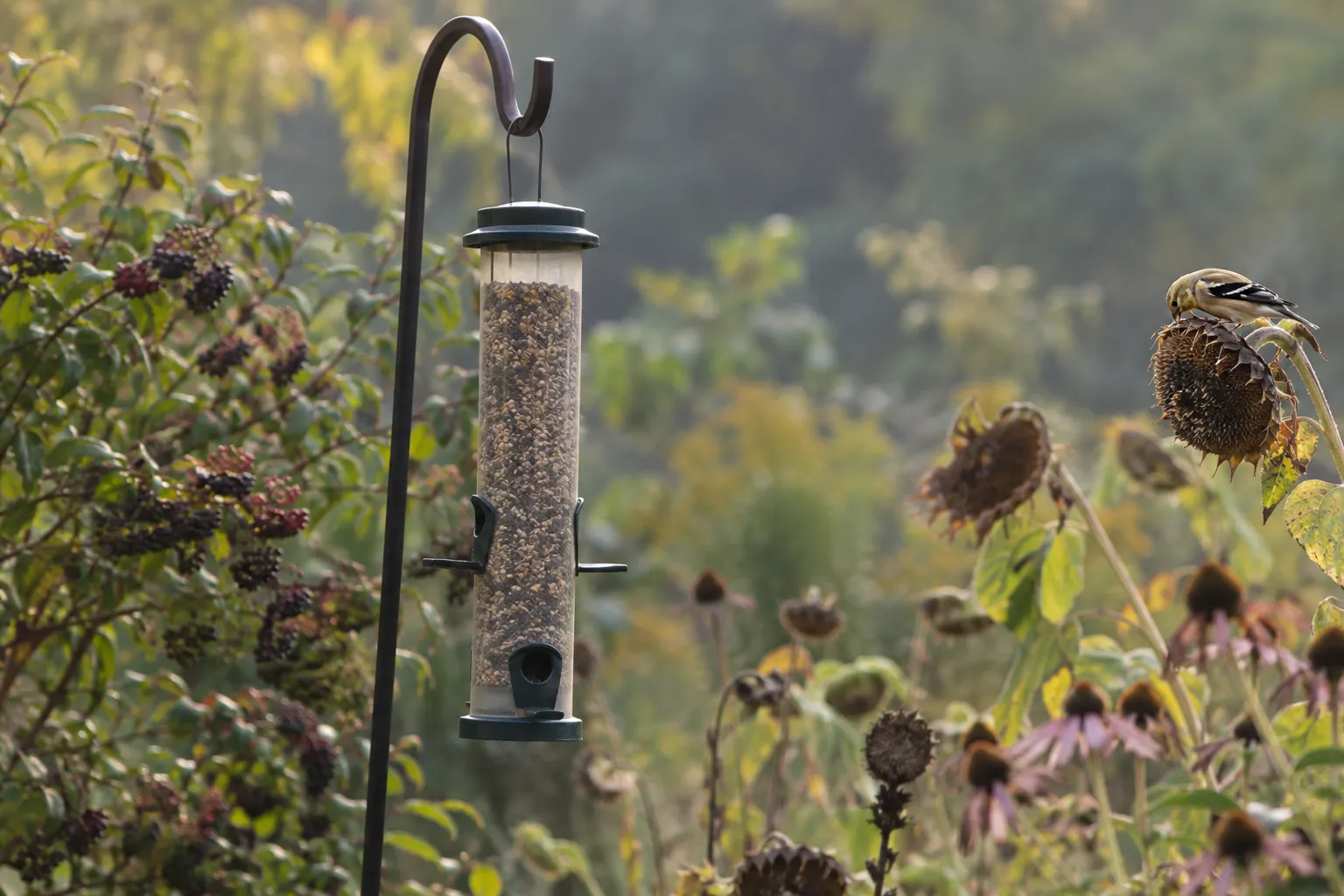
- Seeds. Grasses, sunflowers, coneflowers, asters, thistles and many weeds ripen in late summer and fall. Goldfinches in North America and European Goldfinches and Siskins in Europe shift readily onto these.
- Fruit and berries. Dogwoods, elderberries, viburnums, pokeweed, blackberries and in Europe rowan, hawthorn and bramble fruit all ripen now. Thrushes, waxwings, starlings and even woodpeckers switch toward fruit.
- Insects. Insect numbers stay high well into early fall in temperate regions, and many seed-eaters eat far more insects in summer than in winter.
- Tree seeds and nuts. In a year with a big crop of acorns, beechnuts or hazelnuts, jays, nuthatches, titmice and tits may largely ignore feeders. In Britain, a heavy beech mast year is well known for emptying gardens of tits and finches in autumn.
Does it mean the birds have left the area?
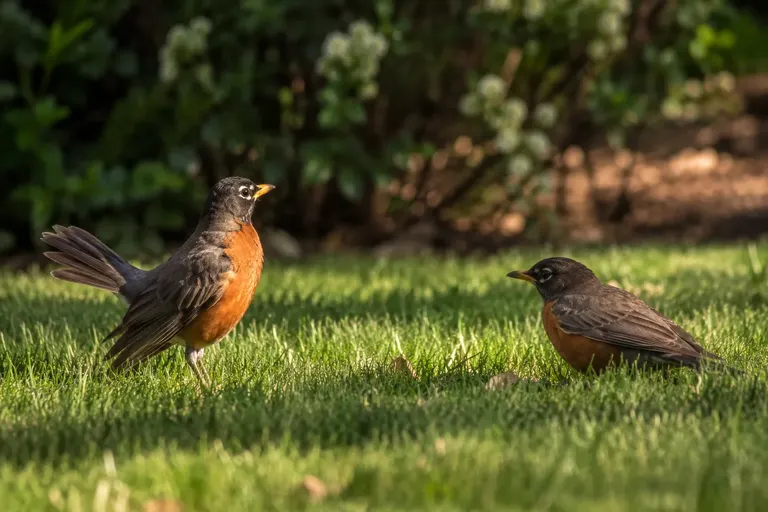
Usually not. Most resident birds, such as chickadees, titmice, cardinals, nuthatches, and in Europe Great Tits and Blue Tits, stay within a fairly small home range all year. They are nearby, just eating something else. Once the natural crop runs down and nights get colder, birds need more energy per day, and feeder use climbs again. In much of the US this recovery shows up in October and November. You can read more about the colder months in our guide to winter bird feeding.
How does nesting season affect feeder visits?
Spring and early summer can bring their own quiet spell, especially after a busy winter.
Why do winter flocks break up in spring?
In winter, many small birds travel in mixed flocks and may visit a feeder together in large numbers. In spring, those flocks break apart. Pairs settle into territories and actively chase other birds of their own species away. Where you had ten chickadees in January, you may now see one pair, and only when they need a quick meal.
Why do parent birds switch away from seed?
Most songbirds feed their nestlings insects, even species that eat mostly seed as adults. Caterpillars and other soft insects provide the protein and moisture that fast-growing chicks need. Parent birds spend much of the day hunting insects in trees and shrubs, and your feeder becomes a side stop rather than the main table. A single brood of chickadees can need thousands of caterpillars before fledging.
A few weeks later, many feeder watchers see the reverse: a sudden rush of scruffy young birds being shown the feeder by their parents. That is a good sign that your local birds bred successfully.
Why are birds harder to see when they molt?
Molt is the process by which birds replace worn feathers. Most North American and European songbirds undergo a complete molt once a year, typically in late summer after breeding. Replacing every feather takes a lot of protein and energy, and while flight feathers are growing in, a bird may be slightly less agile in the air.
Many birds respond by becoming quieter and more secretive during this period. They sing less, move less and stay closer to cover. Combined with the abundance of wild food, this is a big part of why late-summer feeders feel deserted. Some birds look strange during molt too, which can cause confusion. A Northern Cardinal or Blue Jay that loses all its head feathers at once can look bald and alarming, but it is usually a normal, if uneven, molt. Our guide to why birds molt explains the process.
Could a hawk be scaring birds away from my feeder?
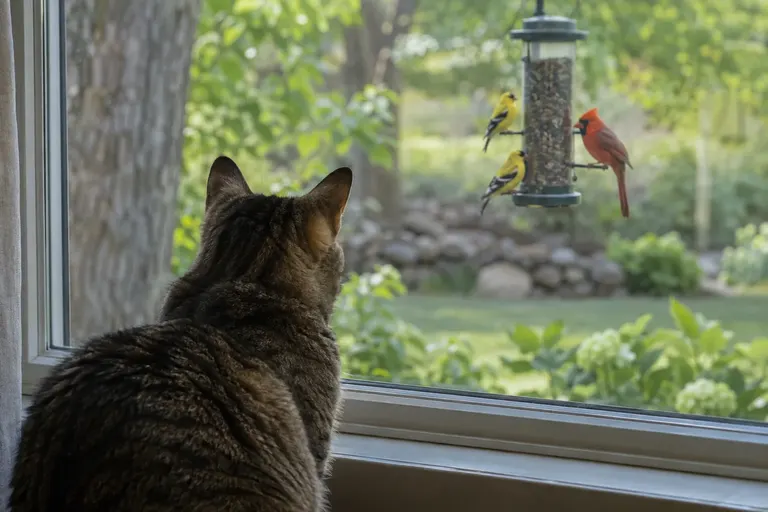
Yes, and this is the most common reason for a truly sudden disappearance, especially in fall and winter.
Which predators hunt at feeders?
In North America, the usual suspects are Cooper’s Hawks and Sharp-shinned Hawks, both bird-hunting specialists in the genus Accipiter that have learned feeders concentrate prey. In Britain and across much of Europe, the equivalent is the Eurasian Sparrowhawk. Merlins and, in towns, Peregrine Falcons occasionally take feeder birds too. Domestic cats are another major predator, and a new cat in the neighborhood can change feeder traffic quickly.
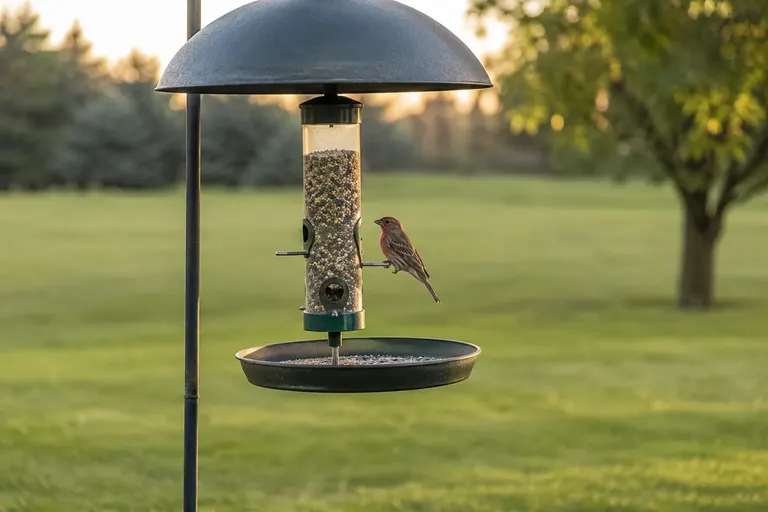
What are the signs a predator is the cause?
- Birds vanish abruptly, sometimes after a flurry of alarm calls.
- You find a pile of plucked feathers under a tree or on the lawn.
- Remaining birds freeze in cover, sit motionless, or feed nervously and flee at small movements.
- Squirrels and doves may keep feeding while small birds stay away.
What should you do about a hawk?
Hawks are native, protected predators, and a hawk taking a bird is a natural event. The practical response is to make the feeder less attractive as a hunting station:
- Take feeders down for one to two weeks. Without the concentration of prey, the hawk usually moves on.
- Provide nearby cover. A dense shrub or brush pile about 10 feet from the feeder gives birds somewhere to escape into.
- Rethink placement. Very open feeders give hawks a clear approach, while feeders right against dense cover can let cats ambush birds.
Our guide to hawks at feeders goes further.
Do migration and dispersal explain empty feeders?
Some species simply leave. In North America, Rose-breasted Grosbeaks, Baltimore Orioles and Ruby-throated Hummingbirds are summer visitors in most areas and head south in late summer and fall. In winter, Dark-eyed Juncos and White-throated Sparrows arrive in much of the US and then vanish again in spring. In Europe, Bramblings and Siskins can appear in winter in some years and be absent in others.
What is post-breeding dispersal?
After the nesting season, young birds leave their parents’ territory and wander, sometimes a short distance and sometimes many miles. This dispersal redistributes birds across the landscape. A yard that had many young birds in July may lose most of them by September, simply because they moved on to settle elsewhere.
What are irruption years?
Some northern finches, such as Pine Siskins, Common Redpolls, Evening Grosbeaks and Red-breasted Nuthatches, move south in large numbers only in years when seed and cone crops fail in the boreal forest. In a big irruption year your feeders may be busy all winter. The following year, when northern crops are good, those same species stay north and feeders can feel empty by comparison. Nothing is wrong. The birds are where the food is.
Could the seed or the feeder be the problem?
This is the cause most directly in your control, and it is worth ruling out early.
How do you tell if bird seed has gone bad?
Bad seed tends to show one or more of these signs:
- Clumping or caking inside the feeder, especially at the bottom of a tube.
- A musty or sour smell.
- Visible mold, often white, gray or greenish fuzz.
- Sprouting seeds after wet weather.
- Insects or webbing, such as pantry moth larvae.
- Dry, dusty Nyjer that finches ignore. Nyjer is oily and loses appeal as it dries out.
Moldy seed is not just unappealing. Some molds produce toxins that can harm birds. If the seed looks or smells off, empty the feeder, throw the seed out, and clean the feeder before refilling. Our guide on whether bird seed goes bad covers prevention.
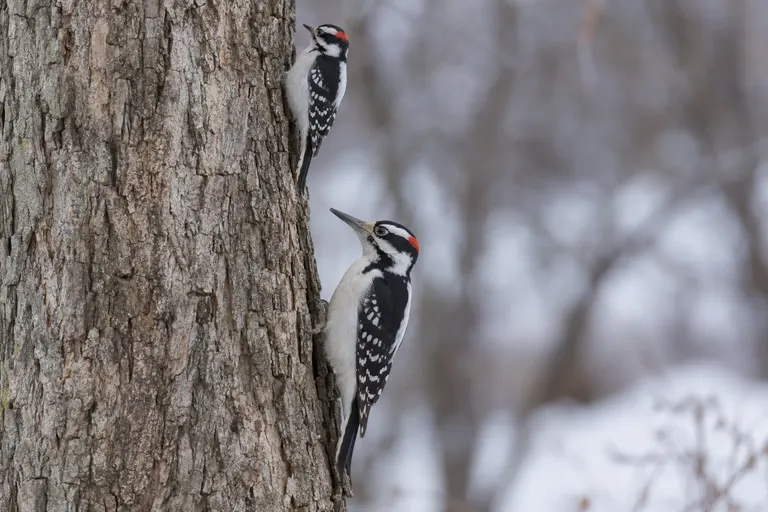
Does a dirty feeder keep birds away?
Birds do not avoid dirt in any human sense, but dirty feeders build up wet, moldy seed, droppings and hulls, and they are one of the main routes by which feeder diseases spread. Cleaning every two weeks or so, and more often in warm, wet weather, is standard advice from the Cornell Lab and Project FeederWatch. See how to clean bird feeders.
Did you change something?
Birds often react to change. A new feeder in a new spot, a switch from black oil sunflower to a cheap mix full of milo and red millet, or moving a feeder into the open can cut traffic for a while. If you recently made a change and birds dropped off, try reverting it. If you have a brand-new setup that birds have never used, that is a different problem, covered in why birds are not coming to your new feeder.
Could a disease outbreak be the reason?
Sometimes. Feeders bring birds closer together than they would naturally gather, and several diseases spread readily at feeders.
- House Finch eye disease (Mycoplasma gallisepticum) causes red, swollen, crusty eyes and has caused substantial declines in House Finch numbers in eastern North America since it emerged in the 1990s.
- Salmonellosis can kill many finches and siskins at once, often in late winter, and birds may look fluffed up and lethargic before dying.
- Trichomonosis has caused a severe, long-term decline in European Greenfinches in Britain since it jumped to finches around 2005. BTO research links it to a large drop in the UK greenfinch population.
- Avian pox causes wart-like growths on the face and feet.
If you see fluffed-up, lethargic birds, birds with swollen eyes, or several dead birds, take the feeders down for about two weeks, disinfect them, and clean the ground and bird bath. Our guide to sick birds at the feeder lists the signs and steps, and bird flu and backyard feeders covers current avian influenza advice.
Could changes in the neighborhood be responsible?
Birds use the whole landscape, not just your yard. A feeder’s traffic depends heavily on what surrounds it.
- Loss of cover or trees. If a neighbor removes a hedge, clears a wooded lot or cuts large trees, birds lose the shelter they use to approach feeders safely.
- Construction and noise. Heavy machinery and constant activity can push shy birds away for weeks.
- Pesticides. Heavy insecticide use nearby can reduce the insects birds rely on during breeding.
- Competition. A neighbor who starts offering sunflower hearts, suet and fresh water may simply be offering a better deal.
- Aggressive species. A flock of European Starlings, House Sparrows or grackles can dominate a feeder and make smaller birds wary. Feeders with short perches or cages help small birds.
What about weather?
Weather affects feeder traffic in two directions. Mild, calm weather in fall and winter reduces the energy birds need, and they can find enough wild food, so feeders stay quieter. A sudden cold snap, heavy snow or ice does the opposite and can fill a feeder within hours.
Strong winds and heavy rain can also reduce visits in the short term, because small birds shelter in dense cover and feed in brief bursts. If your feeder is exposed on a windy corner, birds may prefer a sheltered feeder elsewhere.
How can you tell which cause applies to your yard?
| Clue | Most likely cause | What to do |
|---|---|---|
| Quiet from about July to October, lots of wild seed and fruit around | Natural food abundance, molt, dispersal | Keep a small amount of fresh food out, clean feeders, wait |
| Sudden drop in spring after a busy winter | Flocks breaking up, nesting | Nothing needed; offer water and keep feeders clean |
| Abrupt disappearance, alarm calls, plucked feathers | Hawk or cat | Take feeders down one to two weeks, add cover |
| Seed clumped, musty or moldy | Spoiled food | Empty, clean, refill with fresh seed in smaller amounts |
| Fluffed-up or crusty-eyed birds, dead birds | Disease | Take feeders down about two weeks, disinfect, report dead birds |
| Specific species missing seasonally | Migration or irruption cycles | Nothing needed; they follow the food |
| Change coincides with tree removal or construction | Habitat change | Add cover and native plants in your own yard |
What should you do while you wait for birds to return?
- Scale down, do not give up. Put out smaller amounts so seed stays fresh and nothing goes moldy.
- Clean everything. A quiet spell is the easiest time to scrub feeders and trays.
- Offer water. A clean bird bath attracts birds in every season, even when they ignore seed. Scrub and refill it every few days.
- Plant for the long term. Native shrubs, trees and seed-bearing perennials provide the natural food that drew birds away in the first place, and they bring birds to your yard all year.
- Leave seed heads and leaf litter. Standing seed heads and fallen leaves feed and shelter birds into winter.
- Keep notes. A simple log of dates and species will show you your own yard’s seasonal pattern within a year or two. Joining Project FeederWatch or eBird makes those notes useful to science too.
Common mistakes when birds disappear
- Overfilling to tempt birds back. More seed in a quiet feeder means more seed going stale.
- Assuming the birds have died. In most cases they are nearby and eating wild food.
- Moving the feeder every few days. Constant change keeps cautious birds away. Make one change, then wait a week or two.
- Ignoring sick birds. If you see signs of disease, act quickly rather than waiting for traffic to recover.
- Trying to deter a hawk with harmful methods. Hawks are protected by law in the US under the Migratory Bird Treaty Act and in the UK under the Wildlife and Countryside Act. Taking feeders down is legal and effective.
Quick facts
- Feeder use typically dips in late summer and early fall, when wild food peaks.
- Most songbirds feed their nestlings insects, not seed.
- Many songbirds molt all their feathers once a year, usually in late summer.
- A hawk hunting a feeder can empty it for days; a one- to two-week break usually solves it.
- Northern finch numbers at feeders swing widely from year to year, depending on boreal seed crops.
- Moldy or wet seed can harm birds and should be thrown out.
Sources
Frequently asked questions
Why have all the birds left my feeder in late summer?
Late summer and early fall is when wild food peaks. Seeds, berries and insects are everywhere, many adult birds are molting and keeping a low profile, and young birds are dispersing to new areas. Feeder traffic often drops sharply from about July to October, then recovers as natural food runs down and cold weather arrives.
Can a hawk make birds stop coming to my feeder?
Yes. A Cooper's Hawk, Sharp-shinned Hawk or, in Europe, a Eurasian Sparrowhawk that hunts a feeder regularly can empty it for hours or days. Small birds remember a dangerous spot and feed elsewhere. Taking feeders down for a week or two usually persuades the hawk to move on, and the songbirds return afterward.
Could my bird seed be the reason birds stopped coming?
It can be. Seed that is damp, clumped, moldy, sprouting or infested with insects is less attractive and can be harmful. Nyjer loses appeal quickly once it dries out. Empty the feeder, check the seed by smell and touch, clean the feeder, and refill with a small amount of fresh food.
How long does it take birds to come back to a feeder?
It depends on the cause. After a hawk or a short disturbance, birds often return within days. After a seasonal lull, traffic usually builds again over a few weeks in fall as temperatures drop. Birds that left because of a disease outbreak or habitat loss nearby may take a season or longer to rebuild in numbers.
Is it a bad sign if birds disappear from my feeder?
Usually not. In most cases the birds are still nearby and simply eating wild food, nesting, molting or avoiding a predator. It is worth checking your seed, feeder hygiene and any sick birds, but a quiet feeder in summer or early fall is normal and does not mean local birds have died.