How to Bird by Ear: Start With 10 Common Songs
How to bird by ear: learn 10 common backyard songs first, listen for rhythm, pitch and tone, and use apps to check, not replace, your ears. A step-by-step plan.
In this article
- Quick answer: a 5-step plan
- Why is birding by ear worth learning?
- Song or call: what’s the difference?
- What should I listen for in a bird song?
- The 10 songs to learn first
- How do I actually practice?
- How do I tell similar songs apart?
- How do I learn chip notes and flight calls?
- What if my hearing is not what it used to be?
- Tips for readers outside North America
- Why do songs vary so much?
- Common mistakes
- Quick facts
- Sources
- Frequently asked questions
The simplest way to learn how to bird by ear is to start small: learn the songs of about 10 common birds in your own neighborhood, one or two at a time, until you know them without thinking. Listen for four things, rhythm, pitch, tone quality and repetition, rather than trying to memorize every note. Use recordings and sound ID apps to check your guesses, then confirm by seeing the singer whenever you can.
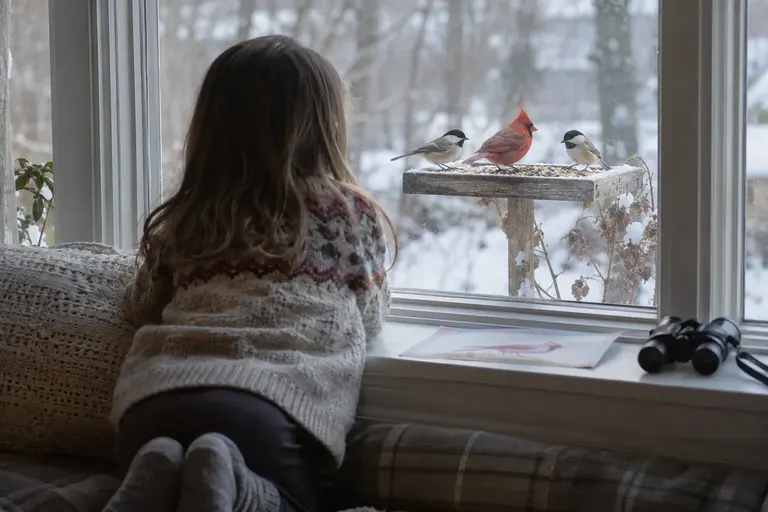
Birding by ear transforms backyard birding. Most birds you “find” on a spring morning are heard before they are seen, and many are never seen at all. Once you know the common voices, the unfamiliar ones stand out, which is how birders pick out something new. This guide gives you a practical method and a starter list of 10 songs from common backyard birds, plus notes for readers in Europe, Brazil and Turkey.
Quick answer: a 5-step plan
- Pick 10 common species that live near you year-round or all summer.
- Learn two or three at a time, listening to reference recordings daily for a week.
- Go outside and match what you hear to what you studied, confirming by sight.
- Describe each song in your own words: rhythm, pitch, quality, repetition.
- Add new species slowly once the first set feels automatic.
Why is birding by ear worth learning?
- You detect far more birds. In leafy woods and gardens, the majority of birds are heard, not seen.
- It makes finding birds faster. A song tells you which direction to look and what to look for. See how to find a bird in your binoculars fast once you have located it.
- It works in any light. At dawn, dusk and in rain, ears beat eyes.
- It reveals behavior. Alarm calls often mean a hawk or cat is nearby. Begging calls tell you fledglings are out.
- It is good for you. Listening focuses attention in a way many people find calming.
Song or call: what’s the difference?
Before you start, it helps to know what you are listening to.
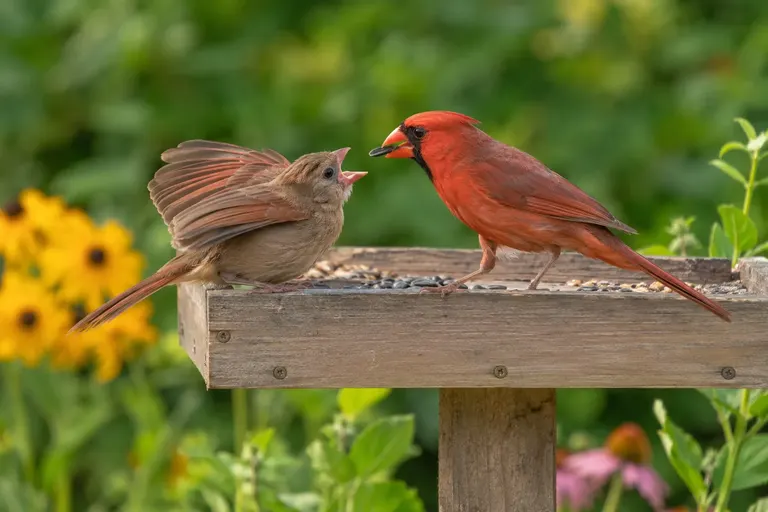
Songs are longer, patterned vocalizations. In many temperate-zone songbirds they are sung mostly by males in spring and summer to claim territory and attract a mate, although female song is common in many species, especially in the tropics, and some birds such as Northern Cardinals and Carolina Wrens have singing females. Songs are the easiest place to begin because they are loud, repeated and distinctive.
Calls are short notes used year-round by both sexes: contact calls to keep a flock together, alarm calls, and flight calls given in the air. Learning calls lets you identify birds in fall and winter, when few birds sing.
If you want to know why birds sing so much in the early morning, see why birds sing in the morning.
What should I listen for in a bird song?
Beginners often try to memorize a song as a whole, which is hard. Experienced birders break it into features.

Rhythm and pattern
Is the song a steady series of the same note, a phrase repeated two or three times, a trill, or a jumble? Does it speed up or slow down? Does it end with a flourish? Rhythm is the single most useful feature.
Pitch
Is it high or low? Does it rise, fall, or stay flat? A falling series sounds very different from a rising one, even if the notes are similar.
Tone quality
Is it clear and whistled, buzzy, harsh, liquid, metallic or flute-like? A clear whistle, like a chickadee’s “fee-bee,” is easy to separate from a buzzy trill.
Repetition and delivery
Does the bird sing the same phrase many times before switching, or vary every phrase? Does it sing continuously or pause for several seconds between songs?
Where is the bird singing?
Treetop, mid-canopy, low shrub, ground or in the air? Location narrows options quickly.
Writing a one-line description in these terms, such as “low, cooing, slow, five notes, second note rising,” makes a song easier to recall than any single mnemonic.
The 10 songs to learn first
This list covers widespread North American backyard birds. Your 10 may be different, depending on region, so check which species are common near you with eBird or a local field guide and swap in local birds as needed.
| Species | Pattern | Common mnemonic | When heard |
|---|---|---|---|
| American Robin | Rich, caroling phrases, pause between | cheerily, cheer-up, cheerio | Spring and summer, dawn and dusk |
| Northern Cardinal | Loud, clear, repeated slurred whistles | cheer cheer cheer, birdie birdie | Late winter through summer |
| Black-capped Chickadee | Two clear whistled notes, second lower | fee-bee | Late winter and spring |
| Tufted Titmouse | Repeated two-note whistle | peter-peter-peter | Late winter through summer |
| Carolina Wren | Very loud, rolling triplets | teakettle-teakettle-teakettle | Year-round |
| Mourning Dove | Low, soft cooing, rising second note | coo-OO-oo, oo, oo | Spring and summer |
| Blue Jay | Harsh screaming call, many other sounds | jay jay | Year-round |
| American Goldfinch | Flight call in bouncing flight | po-ta-to-chip | Year-round |
| Song Sparrow | Two or three clear notes, then a trill and jumble | maids, maids, maids, put on your teakettle | Late winter through summer |
| House Finch | Long, bubbly warble, often ending in a buzz | none widely used | Most of the year |
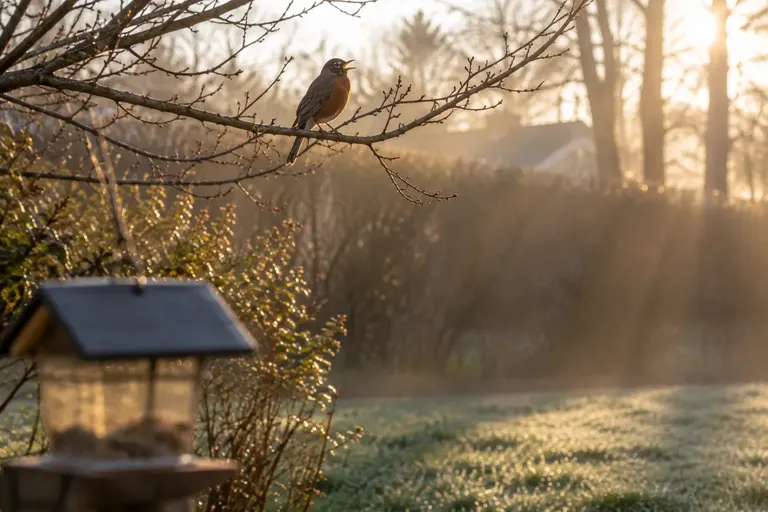
1. American Robin
A series of rich, whistled phrases, each two or three notes, with short pauses between: “cheerily, cheer-up, cheerio.” Robins sing early, often before dawn, and late into dusk. Once you know the robin, it becomes a reference point: many beginners describe other songs as “like a robin, but…” The Scarlet Tanager and Rose-breasted Grosbeak are classic examples, the tanager hoarser and the grosbeak sweeter and faster.
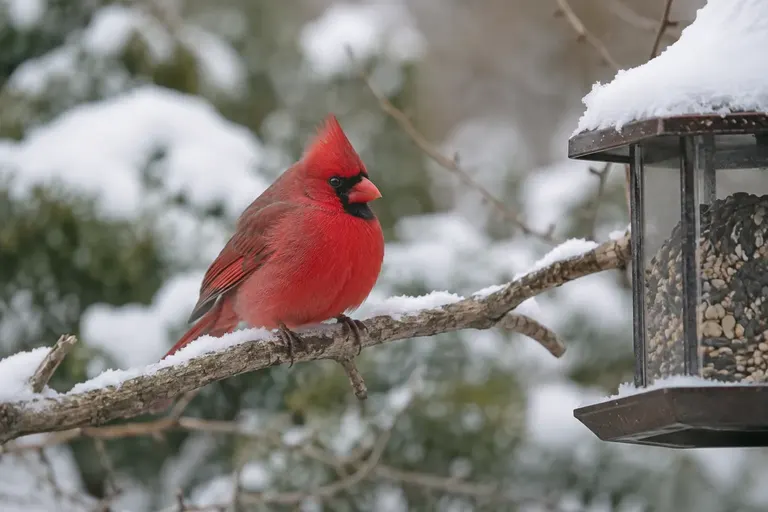
2. Northern Cardinal
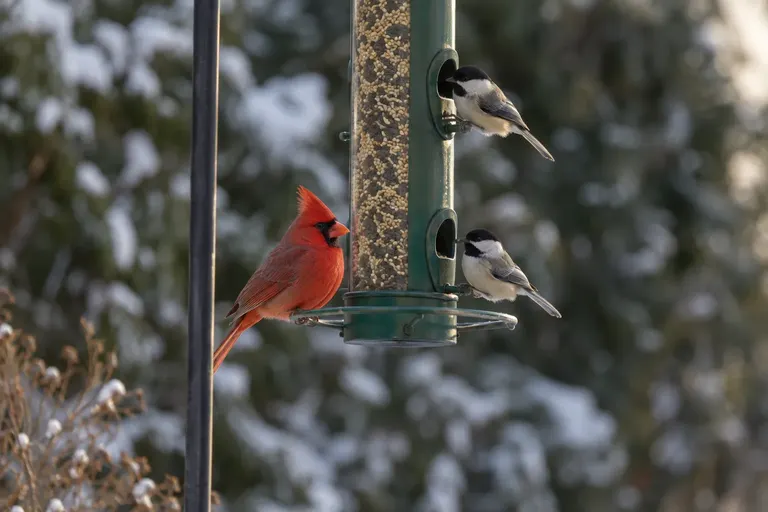
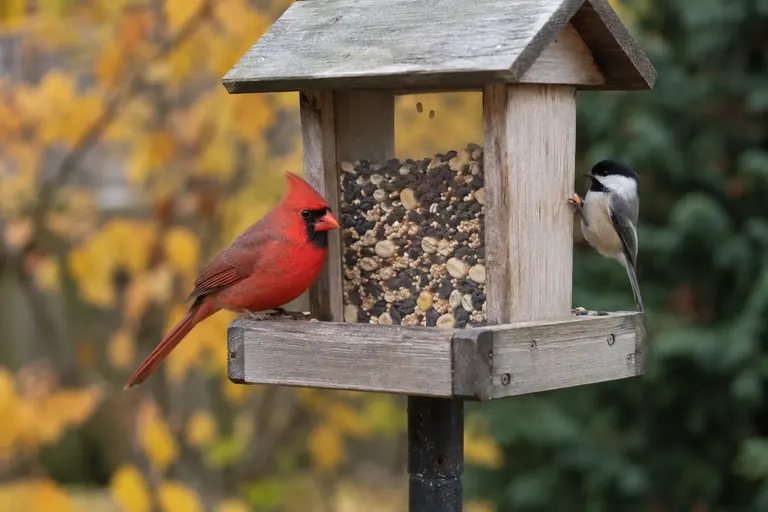
Loud, clear, slurred whistles repeated several times, often “cheer cheer cheer” or “birdie birdie birdie,” sometimes ending in a rapid series. Both males and females sing. Cardinals are among the first birds to start singing in late winter. See our Northern Cardinal guide for habitat and feeding details.
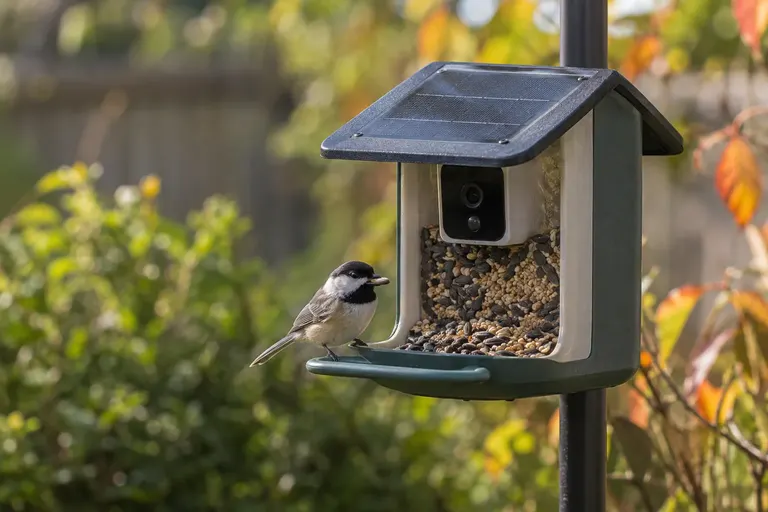
3. Black-capped Chickadee
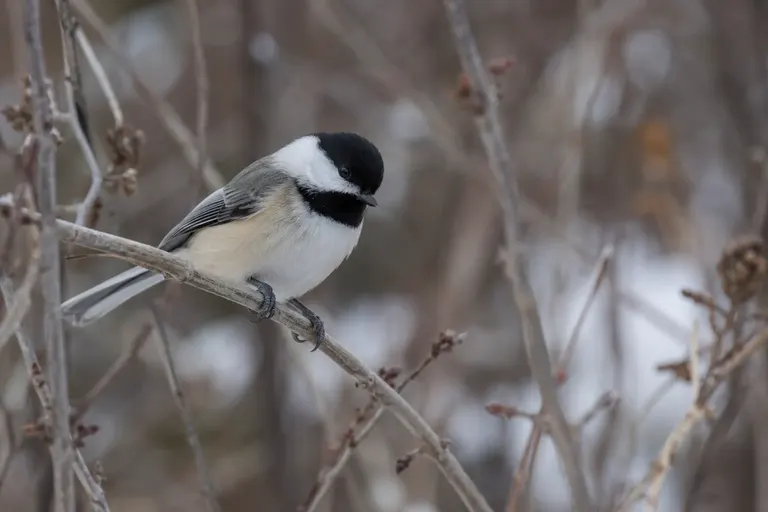
The song is a clear, two-note whistle, “fee-bee,” with the second note lower. The familiar “chick-a-dee-dee-dee” is a call, not the song, and the number of “dee” notes can increase with the level of threat. In the Southeast, the Carolina Chickadee sings a four-note version, often “fee-bee fee-bay,” a useful clue where the two species overlap.
4. Tufted Titmouse
A loud, repeated two-note whistle, “peter-peter-peter,” delivered rapidly several times. It can be confused with a cardinal but is usually shorter, simpler and more even in rhythm. Titmice also give scolding calls similar to chickadees but harsher.
5. Carolina Wren
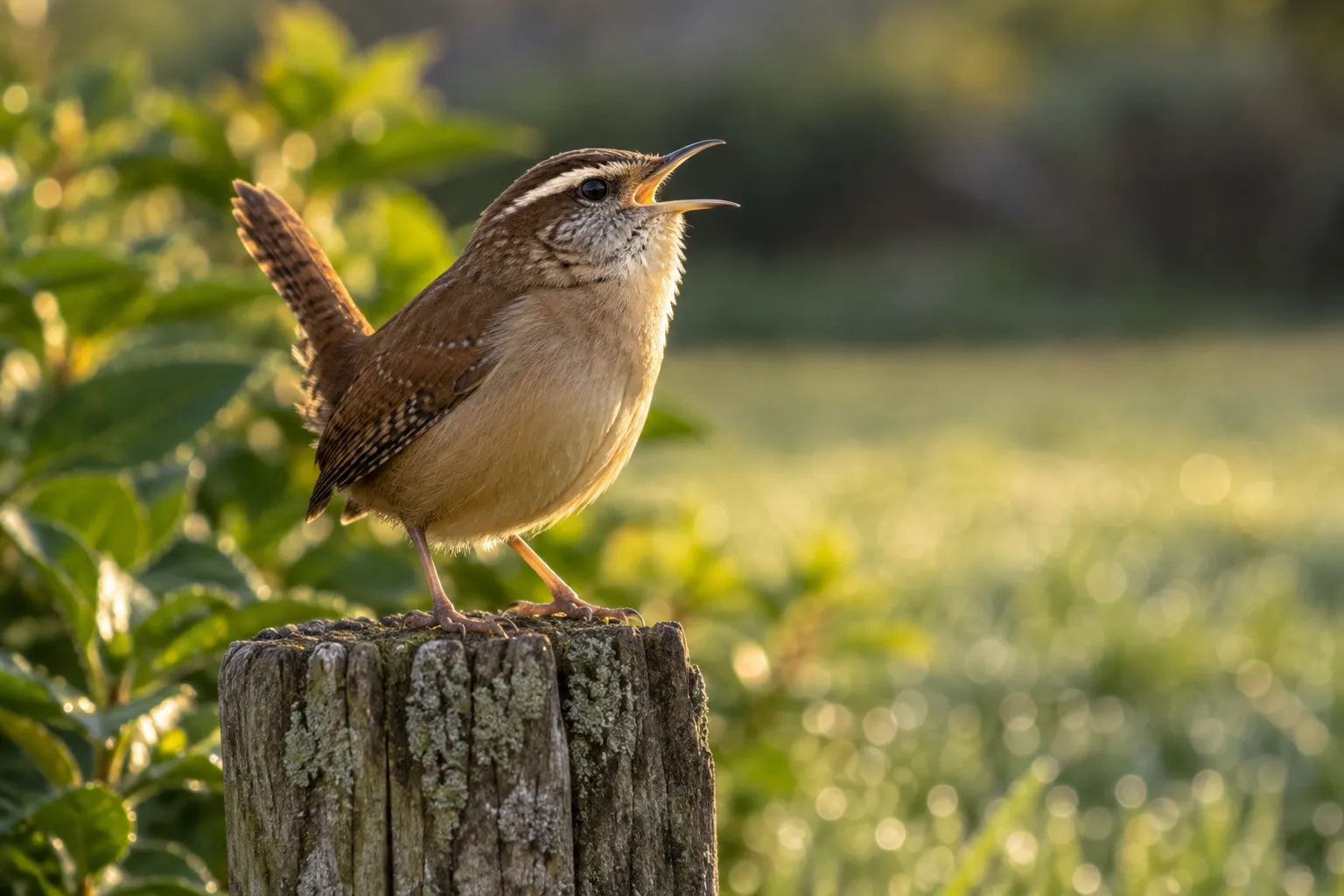
One of the loudest songs for its size: rapid, rolling triplets, “teakettle-teakettle-teakettle,” or sometimes “germany-germany-germany.” Carolina Wrens sing year-round across the eastern US, and both members of a pair keep in touch with calls and song. See our Carolina Wren guide for more.
6. Mourning Dove
A low, soft, mournful cooing, “coo-OO-oo, oo, oo,” with the second note rising. It is often mistaken for an owl. The wings also make a whistling or twittering sound on takeoff, a useful non-vocal clue.
7. Blue Jay
Blue Jays make a wide range of sounds. The best known is a loud, harsh “jay jay,” but they also give liquid bell-like “queedle” calls, clicks and rattles, and often mimic Red-shouldered and Red-tailed Hawks well. A “hawk” calling from a feeder area deserves a second look.
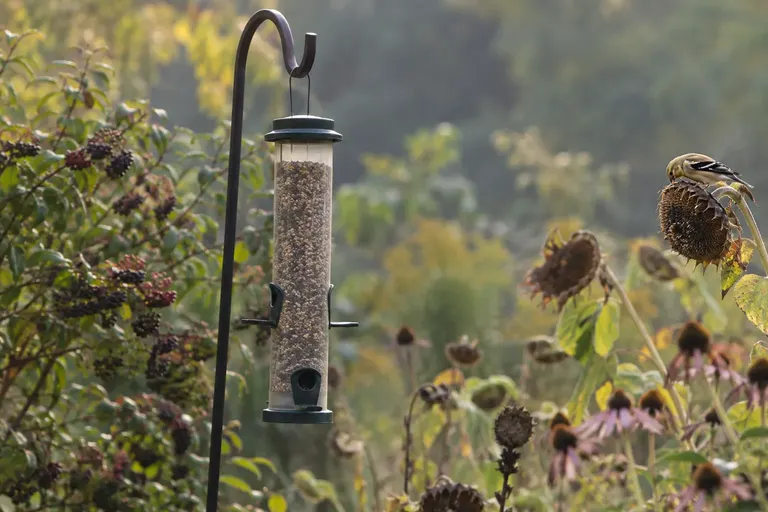
8. American Goldfinch
The easiest goldfinch sound to learn is the flight call, a bouncy “po-ta-to-chip” given as the bird flies in its undulating, roller-coaster flight. The song is a long, varied series of twitters and warbles. Learning one flight call makes it easier to learn others later.
9. Song Sparrow
Typically begins with two or three clear, separate notes, then a buzzy note, then a trill or jumble: “maids, maids, maids, put on your teakettle-ettle-ettle.” Individual males sing many variations, and regional differences are strong, so focus on the opening notes and the overall structure.
10. House Finch
A long, bubbly, jumbled warble that often ends with a buzzy, downward “zreee.” House Finches sing from rooftops, wires and trees for much of the year. They can be confused with Purple Finches, whose song is richer and lacks the harsh ending.
How do I actually practice?
Step 1: Study reference recordings
Choose two or three species. Listen to their songs several times a day for a week, using a field guide app or an online library such as the Macaulay Library at the Cornell Lab. Listen for rhythm, pitch and tone, and write your own description.
Step 2: Listen at the right time
The best time to practice is the first two hours after sunrise in spring and early summer, when song is at its peak. Quiet, windless mornings are ideal.
Step 3: Match sound to sight
When you hear a song you think you know, find the bird and confirm it. Seeing the singer ties the sound to a memory, which is how the song sticks.
Step 4: Use apps as a check, not a crutch
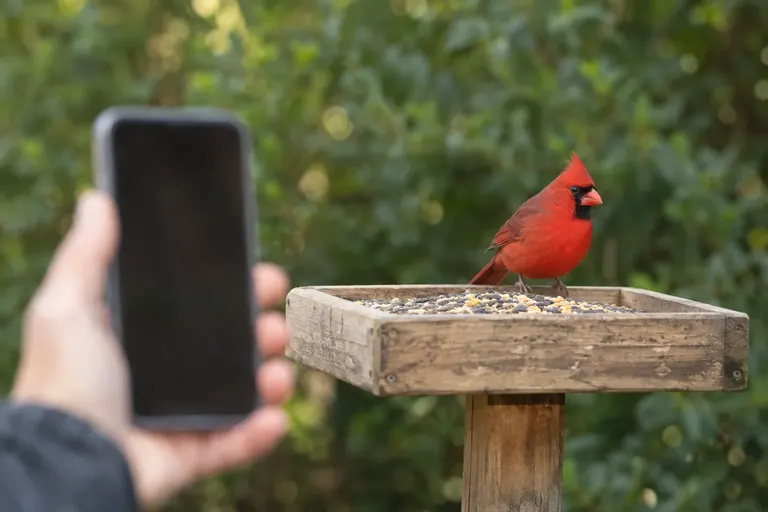
Sound ID apps can be a great tutor, highlighting species as they sing. But they make mistakes, especially with distant or overlapping birds and with mimics like mockingbirds, starlings and jays. Use the app to suggest, then confirm yourself. Our guide on Merlin Sound ID explains how to avoid common errors.
Step 5: Review and expand
Once the first species are automatic, add two or three more. Revisit your list in late winter each year as birds start singing again. Writing notes in a journal helps; see keeping a birding journal.
How do I tell similar songs apart?
Once you know your first 10, you will start meeting look-alikes, or rather sound-alikes. The trick is to learn them in pairs, listening to both back to back.
Robin vs Scarlet Tanager vs Rose-breasted Grosbeak
All three sing phrases of short, whistled notes. The robin is clear and caroling, with pauses between phrases. The tanager sounds like a robin with a sore throat: the same pattern, but hoarse and burry. The grosbeak sounds like a robin that has taken singing lessons: sweeter, faster and more continuous, with fewer pauses.
Cardinal vs Tufted Titmouse
Both sing loud, repeated whistles. Cardinals usually slur their notes downward or upward and often change phrase partway through a song. Titmice repeat a short two-note “peter” with a more even, clipped rhythm.
Chipping Sparrow vs Dark-eyed Junco vs Pine Warbler
All three sing trills, a rapid series of identical notes. The Chipping Sparrow’s trill is dry and mechanical, like a sewing machine. The junco’s is more musical and ringing. The Pine Warbler’s is softer and sweeter, often slower, and comes from pines. Habitat and season help a great deal here.
Mourning Dove vs owls
Beginners often report owls at dawn that turn out to be Mourning Doves. The dove’s cooing has a distinctive rising second note and a soft, breathy quality. Most owls calling near homes, such as Great Horned and Barred Owls, give deeper, more rhythmic hoots, mostly at night.
How do I learn chip notes and flight calls?
Calls are the advanced course, but a few are worth learning early because you hear them all year.
- Start with contact calls of flocking birds at your feeder: chickadees, titmice, goldfinches, juncos and nuthatches. The White-breasted Nuthatch’s nasal “yank-yank” is distinctive.
- Learn alarm calls. When chickadees, titmice and jays suddenly start scolding together, look for a hawk, owl or cat.
- Notice context. A call given from a tree while other birds scatter means something different from a soft call in a feeding flock.
- Be patient with chip notes. Many warblers and sparrows give short “chip” or “tsip” notes that differ only slightly. Even experts rely on recordings and practice for these.
What if my hearing is not what it used to be?
Age-related hearing loss usually affects high frequencies first. Many people find they can no longer hear the thin, high songs of Cedar Waxwings, Golden-crowned Kinglets, Brown Creepers and some warblers, while lower voices such as doves, robins, cardinals and wrens remain clear.
A few practical points:
- Build your list around the birds you can hear. Most common backyard songs are in a comfortable range.
- Ask an audiologist about hearing aids tuned for high frequencies. Some birders report that modern aids bring back bird sounds they had lost.
- Use apps as an extra pair of ears. A sound ID app can alert you to a high singer you missed, which you can then look for.
- Face the sound. Turning your head and cupping a hand behind one ear helps you locate a singer.

Tips for readers outside North America
The same method works anywhere. Choose your own 10 common species. Some good starting points:
Europe and the UK
- Common Blackbird: rich, slow, fluting phrases, often from rooftops at dusk.
- European Robin: thin, wistful, varied song, sung almost year-round, including in winter.
- Great Tit: loud two-note “teacher, teacher,” with many variations.
- Common Chaffinch: a descending rattle ending in a flourish.
- Eurasian Wren: extremely loud, fast trills for such a small bird.
- Common Wood Pigeon: a five-note cooing phrase, often remembered as “my toe bleeds, Betty.”
Brazil
- Rufous-bellied Thrush (sabiá-laranjeira): rich, melodic phrases, often heard at dawn.
- Great Kiskadee (bem-te-vi): loud, three-part call that gives the bird its Portuguese name.
- Rufous Hornero (joão-de-barro): loud, rapid duets by pairs.
- House Wren (corruíra): bubbly, energetic song.
Turkey
- Common Blackbird and Great Tit, as in Europe.
- Eurasian Collared Dove: three-note cooing with the middle note stressed.
- House Sparrow: repeated chirps, often in groups.
- Common Nightingale: famous rich song, often at night, in spring.
Why do songs vary so much?
Many songbirds learn their songs from adults, so local dialects develop, similar to human accents. White-crowned Sparrows in California and Chaffinches in Europe are classic examples. Individual birds may also sing several song types, and mimics such as mockingbirds and starlings copy other species. Learn more in how birds learn songs and do birds have regional accents.
The practical lesson: focus on overall quality and structure, not exact notes. A Song Sparrow in Oregon and one in Maine may sing quite different songs, but both have the same clear opening and buzzy, jumbled finish.
Common mistakes
- Trying to learn too many at once. Ten songs in a week will blur together. Two or three a week is better.
- Relying only on mnemonics. A phrase helps, but rhythm and tone matter more.
- Trusting apps blindly. Confirm unusual suggestions.
- Ignoring calls. Many birds do not sing in fall and winter, but they call all year.
- Not practicing outdoors. Recordings are clean; real birds sing over wind, traffic and other birds.
- Skipping the common birds. Knowing robins, cardinals and wrens by ear is what lets rare birds stand out.
Quick facts
- Most backyard birds are detected by ear before they are seen.
- The chickadee’s “chick-a-dee” is a call; its song is “fee-bee.”
- Both male and female Northern Cardinals sing.
- Blue Jays often mimic hawks.
- Song is at its peak shortly after dawn in spring.
- Many songbirds have local dialects learned from adults.
Sources
Frequently asked questions
How long does it take to learn bird songs?
Most people can learn 10 common backyard songs well in a few weeks of short daily practice, especially in spring when birds sing most. Reaching confidence with the 40 to 60 species common in your area typically takes a season or two. Progress is fastest when you learn a few species at a time, repeat them often and check what you hear against the bird you see.
What is the difference between a bird song and a call?
Songs are usually longer, more complex and patterned, and in many temperate songbirds they are sung mostly by males to defend territory and attract mates, mainly in spring and summer. Calls are shorter notes used year-round by both sexes for contact, alarm and flight. Chip notes and flight calls are harder to learn but let you identify birds in every season.
Are bird song apps like Merlin accurate?
Sound ID apps are often accurate for common, clearly recorded singers, but they make mistakes with distant birds, mimics, overlapping songs, unusual variants and background noise. Treat a suggestion as a lead, not a confirmed identification. Try to see the bird, compare the recording with reference songs, and be skeptical of rare species suggested without other evidence.
Why does the same bird species sound different in different places?
Many songbirds learn their songs from adults nearby, so local dialects develop, much like human accents. White-crowned Sparrows and Chaffinches are classic examples. Individuals also sing several song types, and some species improvise constantly. Learning the overall quality, rhythm and pitch of a species helps you recognize it despite local variation.
What are good mnemonics for bird songs?
Popular phrases include teakettle-teakettle for the Carolina Wren, cheerily cheer-up for the American Robin, fee-bee for the Black-capped Chickadee, peter-peter-peter for the Tufted Titmouse and potato-chip for the American Goldfinch's flight call. Mnemonics you invent yourself are often easier to remember, as long as they capture the rhythm and number of notes.