Pishing: Does It Work and Is It Ethical?
Pishing works on many songbirds by mimicking alarm and mobbing calls, and used briefly it is widely considered ethical. Learn how to pish and when not to.
In this article
- Quick answer: pishing at a glance
- What exactly is pishing?
- Why does pishing attract birds?
- Which birds respond to pishing?
- How do you pish effectively?
- What does a bird’s response to pishing tell you?
- Does pishing work on backyard birds?
- Is pishing legal?
- Is pishing ethical?
- How is pishing different from playback?
- Are there better alternatives to pishing?
- Pishing myths vs facts
- Common pishing mistakes
- Quick facts
- Sources
- Frequently asked questions
Pishing works on many small songbirds, and when used briefly, in bursts of 5 to 10 seconds, and sparingly it is widely considered an ethical birding technique. By making a soft, repeated “pish-pish-pish” sound, you imitate the scolding and mobbing calls birds use when they find a predator, and curious or alarmed birds often pop out of cover to see what is happening. The ethical problems come from overuse: pishing for long periods, at the same birds repeatedly, in heavily birded places, or near active nests.
Pishing is one of the oldest tricks in birding. It needs no equipment and can turn a silent thicket into a flurry of chickadees, wrens and warblers. It can also fail completely, or pull in birds that are then left confused. This guide explains why pishing works, which birds respond, how to do it well, and where the line between helpful and harmful sits.
Quick answer: pishing at a glance
- What it is: a hissing “pish” or “spsh” sound made through the teeth, repeated in short bursts.
- Why it works: it resembles the alarm and mobbing calls of small songbirds.
- Best responders: chickadees, titmice, tits, wrens, many warblers, kinglets, some sparrows and gnatcatchers.
- Poor responders: most large birds, raptors, waterbirds, doves and many ground birds.
- When to use it: for a few seconds to a minute, to get a look at birds already present.
- When to avoid it: near nests, in the breeding season in sensitive areas, with rare or stressed birds, and in busy spots where others have already done it.
What exactly is pishing?
Pishing is a family of sounds rather than one. Most birders make some version of these:
- Classic pish: a breathy “pish, pish, pish,” pushed through closed teeth with the lips slightly apart.
- Harsh pish: a rougher, more buzzy “psshh” that sounds more like a scold.
- Squeaking: kissing the back of your hand loudly, producing a high, squeaky note that can resemble a distressed small bird.
- Chip notes: imitating the short “chip” or “tsk” calls many birds give when agitated.
Some birders add imitations of small owls, such as a screech-owl’s whinny in North America or the whistles of a pygmy-owl in parts of Europe and Latin America. Owl imitation is a stronger stimulus than pishing, since it signals an actual predator, and deserves more restraint.
There are also mechanical callers: small devices that squeak when twisted. They work on the same principle as squeaking and raise the same ethical points.
Why does pishing attract birds?
The short answer is that pishing sounds like a mobbing call. The longer answer involves how small birds deal with predators.
Mobbing behavior
When a small bird finds a roosting owl, a snake or a cat, it often does something counterintuitive: rather than flee, it approaches and scolds loudly. Other birds hear the scolding and join in. Soon a crowd of chickadees, titmice, wrens, warblers and other songbirds may be flitting around the predator, calling harshly and flicking wings and tails.
Mobbing serves several purposes. It announces that the predator has been spotted, which removes its advantage of surprise. It may drive the predator away. It also teaches young birds what a predator looks like. Our guide to bird behavior covers mobbing and other alarm behaviors in more detail.

What pishing mimics
Alarm and mobbing calls of many small songbirds are harsh, noisy and broadband, meaning they cover a wide range of frequencies. That makes them easy to locate and easy for different species to recognize, even though each species has its own version. Pishing produces a similar harsh, broadband hiss.
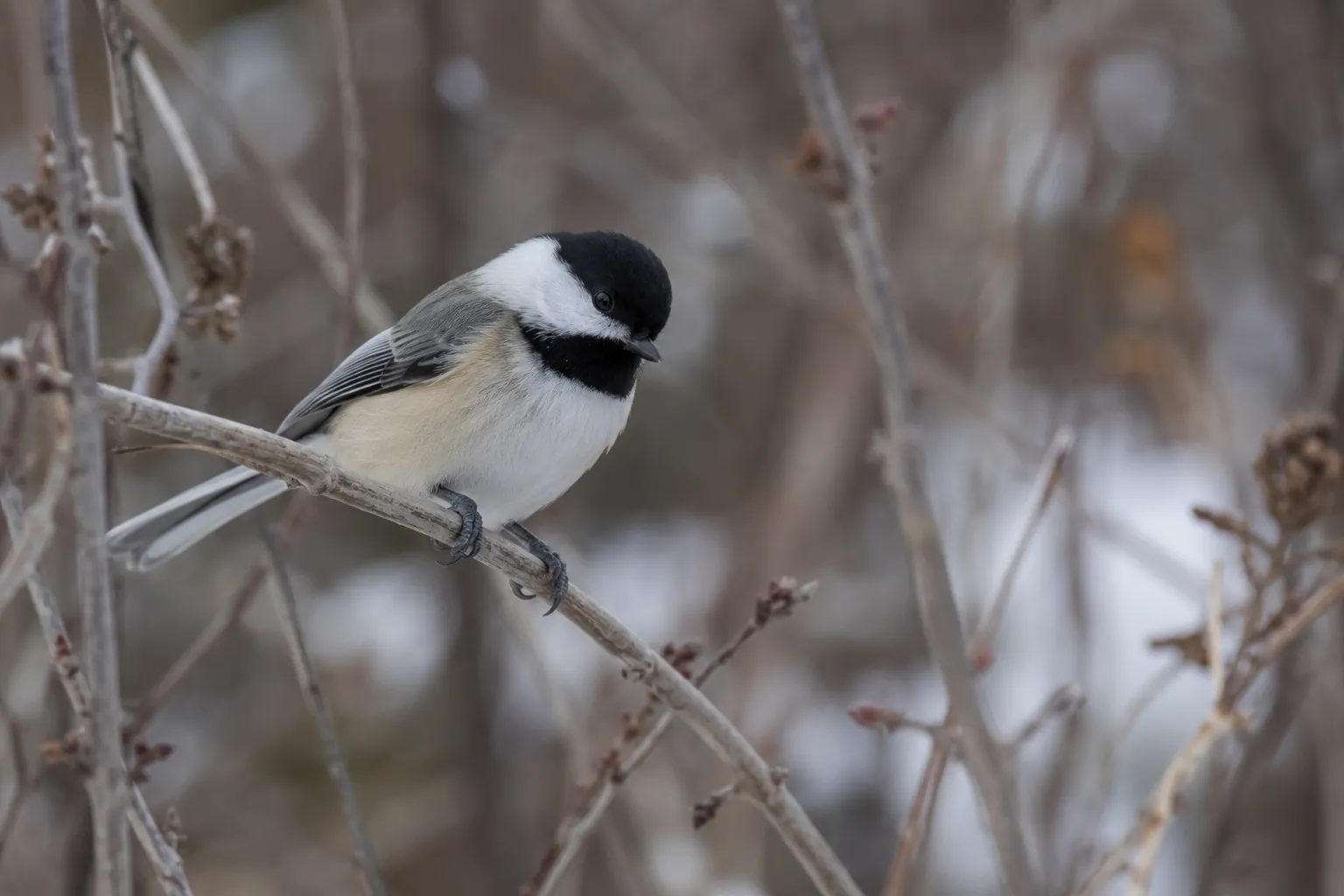
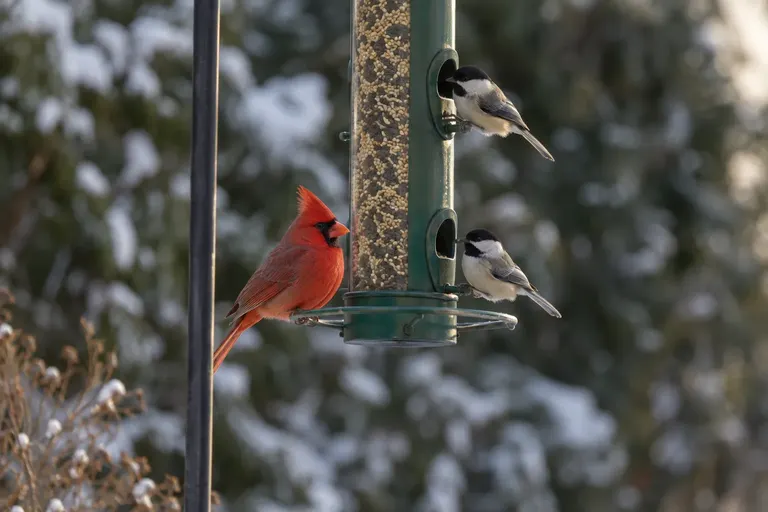
Chickadee calls are a well-known example. The familiar “chick-a-dee-dee-dee” call of North American chickadees carries information about threat level: research on Black-capped Chickadees found that they add more “dee” notes when mobbing smaller, more dangerous predators, and that other species respond to these calls. Pishing seems to tap into this shared alarm network. Because many birds eavesdrop on chickadee and titmouse alarms, a pish can draw in species that would not otherwise respond.
Curiosity
Not every response is alarm. Many birders note that birds sometimes approach pishing calmly, look around and leave, as if checking out an odd noise. Curiosity and information gathering are both likely factors, and the exact mix probably varies by species.
Which birds respond to pishing?
Responses vary hugely by species, region, habitat and season. As a broad guide:
| Usually respond well | Sometimes respond | Rarely respond |
|---|---|---|
| Chickadees and titmice | Sparrows and buntings | Raptors |
| Tits (Great, Blue, Coal) | Vireos | Doves and pigeons |
| Wrens | Flycatchers | Waterfowl and shorebirds |
| Many wood-warblers | Thrushes | Gamebirds |
| Kinglets and gnatcatchers | Woodpeckers | Swifts and swallows |
| Some Old World warblers | Finches | Large corvids |
North America
Pishing is famously effective in North American woodlands, particularly in mixed flocks led by chickadees and titmice. In fall migration, a well-timed pish into a mixed flock may bring kinglets, warblers, vireos and nuthatches into view.
Europe
Many European birders report that pishing works but is less reliable than in North America. Eurasian Wrens, European Robins, tits and some warblers often respond. The difference may reflect species composition: North American flocks are anchored by chickadees and titmice, whose alarm calls pishing closely resembles. Some European birders find that squeaking or imitating a small owl draws a stronger response than a classic pish, though this varies.
Tropics
In tropical forests, such as the Atlantic Forest of Brazil or lowland Amazonia, mixed-species flocks are a major feature, and birders commonly pish or whistle to bring flock members closer. Responses vary widely among species, and many tropical birders rely more on patience and knowledge of flock behavior than on sound.
How do you pish effectively?
Pishing is a skill, and small changes make a big difference.
Step by step
- Pick the right spot. Stand at the edge of cover, such as a thicket, hedge or forest edge, where birds are already present or likely. Pishing into an empty field rarely works.
- Partly hide yourself. Stand beside a tree or shrub rather than in the open. Birds are more likely to approach if you are not the most obvious thing around.
- Start soft. Begin with a few quiet pishes. Loud pishing from the start can scare birds rather than draw them in.
- Use short bursts. Pish for 5 to 10 seconds, then stop and listen for 10 to 20 seconds. Birds often respond with their own calls first.
- Vary the sound. Mix classic pishes with harsher scolds and a few chip notes.
- Watch the edges. Birds often approach low and along cover, not straight toward you. Scan the undergrowth.
- Stop when birds respond. Once birds are in view, stop pishing and simply watch. Continuing only raises their agitation.
- Know when to quit. If nothing responds within a minute or so, move on.
Having your binoculars ready matters, because birds may appear briefly. Our guide on how to find a bird in your binoculars fast helps you get on them quickly.

Timing
Pishing generally works best:
- In fall and winter, when mixed flocks roam woodlands.
- In the morning, when birds are active.
- In calm weather, when sound carries.
It tends to work less well in the heat of midday, in strong wind, and in the peak of the breeding season, when many birds are focused on territories and nests.
What does a bird’s response to pishing tell you?
Watching how birds respond is part of the value of pishing, and it teaches you about their behavior.
- Birds call back before appearing. Wrens and chickadees often scold from deep cover first. Listen for their calls to work out where they are.
- Birds approach low and along cover. Many species move toward the sound through the densest vegetation, pausing on inner branches. Watch the gaps between leaves rather than the outer edges.
- Birds flick wings and tails. Wing flicks, tail pumping and raised crests are signs of agitation. If you see these, you have done enough.
- Birds look past you. Birds responding to an apparent mobbing call often scan around for the predator. That is a reminder that pishing is, in effect, a small false alarm.
- Birds leave quickly. Many birds lose interest within a minute once they find nothing threatening. That is normal and a good point to stop.
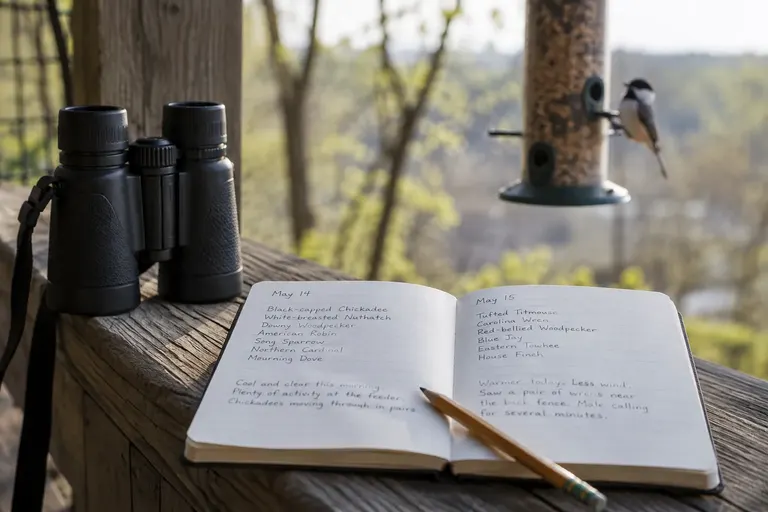
Noticing which species come first, which hang back and which ignore you entirely is one of the quiet pleasures of pishing, and it is worth recording in a notebook. Our guide to keeping a birding journal explains how.
Does pishing work on backyard birds?
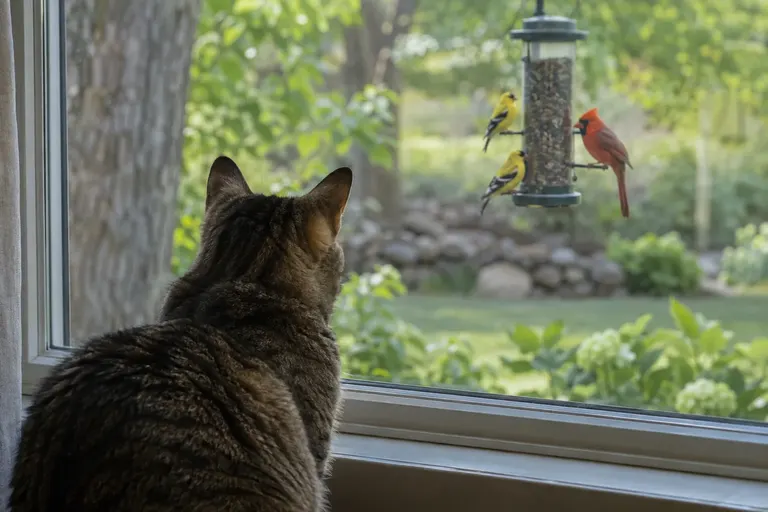
Sometimes, but you rarely need it. Backyard birds that visit feeders are usually easy to see, and they are also the birds most exposed to repeated disturbance if you pish at them every day. Chickadees, titmice and tits in a yard may respond, but the benefit is small and the cost of repeated false alarms is real. In a backyard, a well-placed feeder, a birdbath and a quiet seat by the window do the same job without any disturbance.
Pishing is more useful on walks, in woodland edges and in thickets where birds are harder to see.
Is pishing legal?
In most places pishing is not specifically regulated, because it involves no recordings, devices or bait. However:
- Some reserves and parks ban all methods of attracting or disturbing wildlife, which could in principle include pishing. Check the rules posted at the site.
- Laws protecting nesting birds apply everywhere in many countries. In the United Kingdom, for example, it is an offence to intentionally or recklessly disturb certain specially protected species at or near the nest. Pishing near such a nest could put you on the wrong side of that law.
- Protected species in the United States and elsewhere may have rules against harassment. Brief pishing for a view is unlikely to count, but prolonged efforts to provoke a rare bird could raise concerns.
When in doubt, do not pish.
Is pishing ethical?
Most ornithologists and birding organizations regard occasional, brief pishing as acceptable. The American Birding Association’s Code of Birding Ethics does not ban audio methods of attracting birds but asks birders to limit their use, particularly in heavily birded areas, for species that are rare, and during the breeding season. Pishing falls within the spirit of that guidance.
The possible harms
The concern is cumulative disturbance:
- Energy costs. A bird that responds to an alarm stops feeding. A few seconds matters little. Repeated disturbance, especially in cold weather when birds need every calorie, adds up.
- Predator exposure. A bird that leaves cover to investigate may become more visible to a real hawk or cat.
- Nesting disruption. Parents that leave a nest to investigate an alarm are not incubating or feeding young. Repeated disturbance near nests can harm breeding success.
- Habituation. In heavily birded places, birds may learn to ignore pishing, which could conceivably dull responses to real alarms. This is plausible but not well studied, so it is best treated as a reason for restraint rather than a proven harm.
Practical ethical rules
- Keep it brief. Seconds, not minutes.
- Stop once you have a look. The goal is a view, not a spectacle.
- Avoid nests. Do not pish near an active nest or in obvious breeding territory.
- Be careful with rarities. A rare bird that attracts many birders may be pished by dozens of people in a day. Let it be.
- Consider the weather. In severe cold or heat, birds are already under stress.
- Respect other birders. Ask before pishing in a group. Some people find it distracting.
- Follow local rules. Some parks and reserves restrict all audio methods.
Our guide to birding etiquette covers these and other shared norms.
How is pishing different from playback?
Playback means playing a recording of a species’ song or call, often from a phone. It is much more powerful than pishing because it targets a specific species and can mimic a territorial rival. A male hearing a rival’s song on his territory may search intensely, sing more and neglect other activities. That is why playback raises stronger ethical concerns and is banned in many protected areas, including many US National Wildlife Refuges and national parks, where use of recordings may be prohibited or restricted.
| Feature | Pishing | Playback |
|---|---|---|
| Targets | Many species, loosely | One species, specifically |
| Mimics | Generic alarm or mobbing | Territorial song or call |
| Response strength | Mild to moderate | Often strong |
| Risk of stress | Low if brief | Higher, especially in breeding season |
| Legal restrictions | Rare | Common in parks and refuges |
Our guide on how to use Merlin Sound ID explains how apps can help you identify birds by listening, which does not disturb them at all.
Are there better alternatives to pishing?
Often, yes. The most effective tools are patience and position:
- Wait quietly. Many birds that hide from a moving person emerge after a few minutes of stillness.
- Learn songs and calls. Birding by ear lets you locate birds without drawing them in. Start with our guide on how to bird by ear.
- Find the flock. In winter, a single chickadee’s call often signals a mixed flock nearby. Follow the flock rather than calling it to you.
- Use feeders and water. In a backyard, feeders and a birdbath bring birds into view without any disturbance. See our guide to backyard birding.
- Choose the right time. Early morning and late afternoon activity makes birds more visible.
Pishing myths vs facts
Myth: Pishing works on every bird. Fact: many birds ignore it completely, including most raptors, waterbirds and doves. It is most effective on small, flocking songbirds.
Myth: Pishing is harmless no matter how often you do it. Fact: a single short bout is low impact, but disturbance is cumulative. A bird pished by twenty people in a morning is not having the same experience as one pished once.
Myth: Birds come because they think you are one of them. Fact: the best explanation is that they think a predator has been found and a mob is forming. They are coming to deal with a threat, not to meet a friend.
Myth: Louder is better. Fact: soft pishing usually draws more birds, and loud pishing can send them away.
Myth: Pishing is the same as playback. Fact: playback targets one species with its own song and provokes stronger reactions. The two are treated very differently in ethics codes and park rules.
Common pishing mistakes
- Pishing too loudly at the start. It can scare birds instead of intriguing them.
- Pishing without pausing. Birds need a chance to respond, and you need to listen.
- Standing in the open. Birds are more cautious about approaching an exposed human.
- Pishing for too long. If nothing comes within a minute, move on.
- Continuing once birds appear. Stop and watch.
- Pishing at nests or rarities. This is where disturbance is most harmful.
- Expecting it to work everywhere. Many species and regions are unresponsive.
Quick facts
- Pishing imitates the harsh, broadband alarm and mobbing calls of small songbirds.
- Chickadees, titmice, tits, wrens and many warblers respond best.
- Many birders find it less reliable in Europe than in North America.
- Short bursts with pauses work better than continuous pishing.
- The ABA Code asks birders to limit audio methods, especially in the breeding season and with rare birds.
- Playback is a stronger stimulus than pishing and is restricted in many protected areas.
- Stop as soon as birds respond, and never pish near active nests.
Sources
Frequently asked questions
What is pishing in birding?
Pishing is making a repeated hissing sound, usually a soft 'pish-pish-pish' through the teeth, to draw small birds out of cover. The sound resembles the scolding and mobbing calls many songbirds make when they find a predator. Curious or alarmed birds come closer to investigate, giving the birder a better view.
Why do birds respond to pishing?
The most widely accepted explanation is that pishing resembles the harsh, broadband alarm and mobbing calls of chickadees, titmice, wrens and other small songbirds. Many species join mobbing flocks to drive off owls and other predators, so they approach a sound that suggests a mob is forming. Curiosity also plays a part, and responses vary widely by species, season and region.
Is pishing bad for birds?
Brief, occasional pishing is widely considered low impact, and the American Birding Association code does not ban it. Problems arise with overuse: repeated pishing in busy parks, during nesting season, or at the same birds day after day. That can distract parents from feeding young, expose birds to predators and waste their energy. Keep it short and stop when birds respond.
Does pishing work in Europe?
Pishing can work in Europe, especially on tits, wrens, warblers and robins, but many birders report that it is less reliably effective than in North America. One suggested reason is that North American mixed flocks often include chickadees and titmice, whose mobbing calls pishing closely resembles. Results depend on local species, habitat and season.
What is the difference between pishing and playing bird songs?
Pishing is a generic sound that suggests alarm, so many species may respond but none is being specifically targeted. Playback uses a recording of a particular species' song or call, which that species may treat as a territorial intruder. Playback can provoke stronger, more stressful responses and is subject to stricter rules, including bans in some parks and protected areas.