Bird Feeding Station: Best Pole Kits and Stands for 2026
The best bird feeding station is a rigid steel multi-arm pole with a baffle, set 10 feet from jump points. Research-based picks, sizing chart and checklist.
If you buy through links on this page we may earn a commission, at no cost to you. It never decides what we recommend. How we earn
In this article
- Quick picks
- How we chose
- What is a bird feeding station, and which type do you need?
- Erva Multi-Arm Pole System: best overall
- Squirrel Stopper Deluxe: best squirrel-proof kit
- Kettle Moraine Pole Set with Raccoon Baffle: best for raccoons
- Gray Bunny GB-6844D Deluxe: best budget all-in-one
- Erva Patio Base: best for patios and decks
- Comparison table
- Which size bird feeding station do you need?
- Where should you put a bird feeding station?
- How do you squirrel-proof a bird feeding station?
- Ground stake or base: which anchor holds better?
- How much weight can a feeding station hold?
- Should you add trays and water to a feeding station?
- How do you keep a bird feeding station clean?
- Which birds will a feeding station attract?
- Bird feeding station setup checklist
- Common mistakes
- Alternatives to a bird feeding station
- Sources
- Frequently asked questions
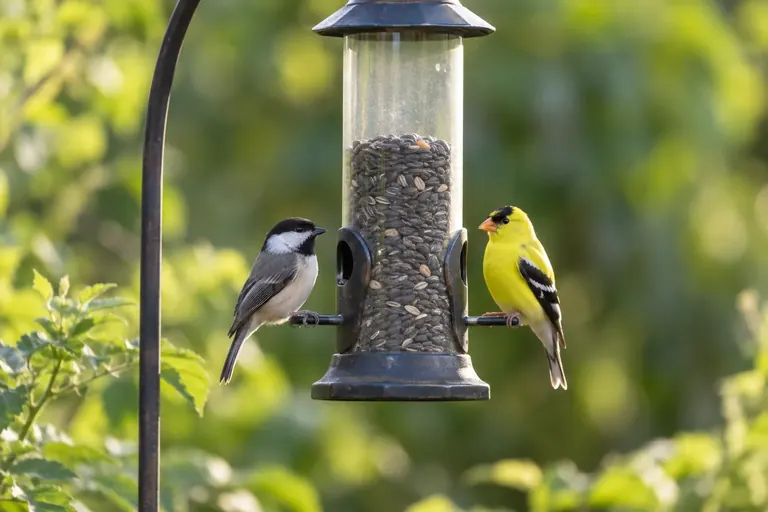
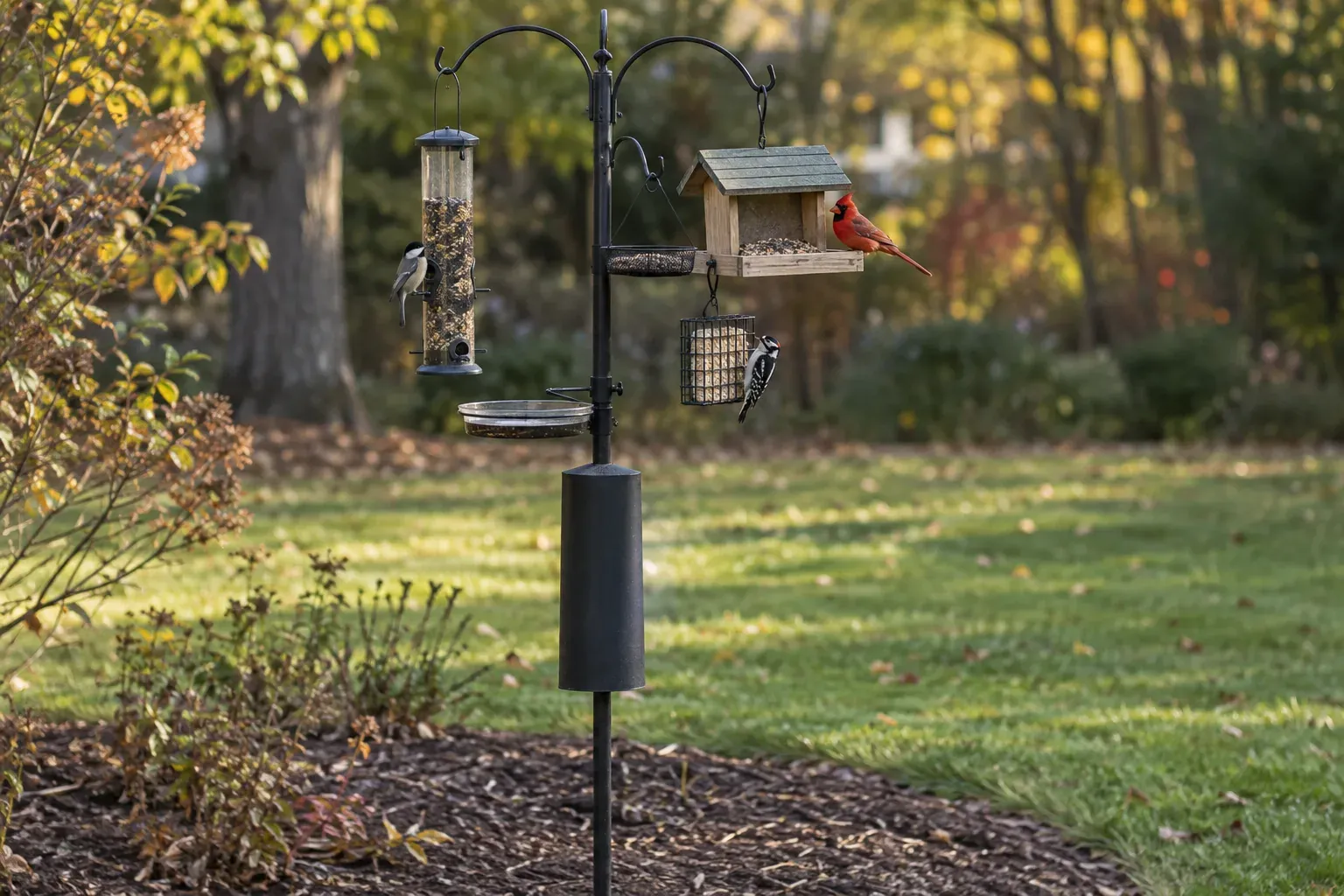
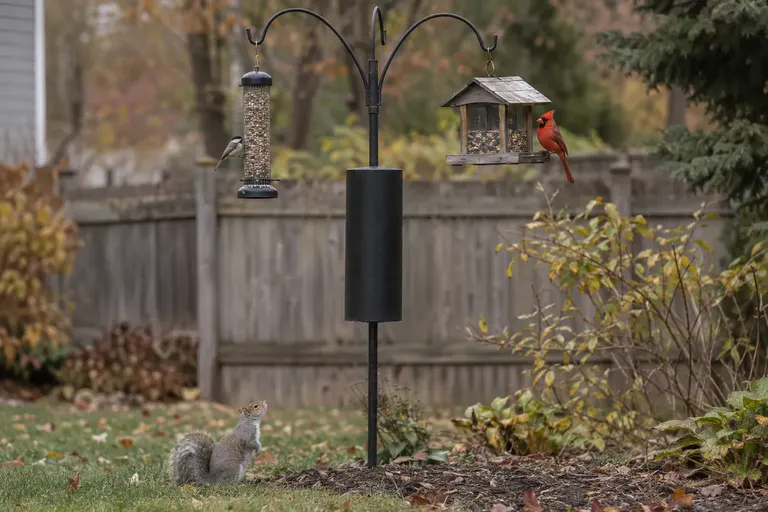
A bird feeding station is a single pole or stand that holds several feeders, a seed tray and often water in one spot, and the best one for most yards is a rigid steel multi-arm pole with a baffle, set 8 to 10 feet from anything a squirrel can jump from. Based on specs and owner feedback, the Erva Multi-Arm Pole System is our top pick, the Squirrel Stopper Deluxe is the most complete squirrel-proof kit, and the Gray Bunny GB-6844D is the budget all-in-one.
The station matters less than three decisions: how you anchor it, what baffle guards it, and where you put it.
Quick picks
- Best overall: Erva Multi-Arm Pole System. US-made 16-gauge steel, 20-inch twist-in socket, two to four arms.
- Best squirrel-proof kit: Squirrel Stopper Deluxe. Spring-mounted baffle, auger anchor, up to eight feeders.
- Best for raccoons: Kettle Moraine Pole Set with Raccoon Baffle. A 28-inch cylinder baffle on a 1-inch steel pole.
- Best budget all-in-one: Gray Bunny GB-6844D Deluxe. Four hanging points, mesh tray and water dish, no digging.
- Best patio base: Erva Patio Base. A 24-inch, 7 lb steel base for decks and pavers.
Erva Multi-Arm Pole System
A US-made 16-gauge steel pole with a 20-inch twist-in socket and two to four arms, strong enough to carry a full station without leaning.
- Best for
- People who want a station that stays straight for years and can be expanded.
- Skip it if
- You want the baffle chosen for you in one box.
- Height
- 90 in above ground
- Ground socket
- 20 in twist-in
- Arms
- 2, 3 or 4
- Arm reach
- About 12 in, or 22 in extended
Squirrel Stopper Deluxe Pole System
A complete kit with a spring-mounted baffle that rocks when climbed, a screw-in auger and a wide multi-arm top.
- Best for
- Big stations in yards with determined squirrels.
- Skip it if
- You only want one or two feeders, or your soil is rocky.
- Total height
- 8 ft
- Feeders
- Up to 8
- Arm spread
- 36 in
- Rated load
- 30 lb per arm
Kettle Moraine Pole Set with Raccoon Baffle
A 1-inch steel pole package with a long 28-inch cylinder baffle that raccoons cannot reach over.
- Best for
- Yards where raccoons empty feeders overnight.
- Skip it if
- You plan to hang heavy hoppers at full reach in soft, windy ground.
- Height to hooks
- 84 in (two-arm set)
- Raccoon baffle
- 28 in long, 6.25 in wide
- Ground socket
- Twists 20 in into soil
Gray Bunny GB-6844D Deluxe Premium Bird Feeding Station
A freestanding steel kit with four hanging points, a mesh seed tray and a water dish, set on a pronged base with no digging.
- Best for
- First stations, renters and anyone who wants everything in one box.
- Skip it if
- Squirrels are already a problem, since no baffle is included.
- Height
- 91 in total, 82 in above ground
- Width
- 22 in
- Extras
- Mesh tray and water dish
Erva Patio Base
A 24-inch solid steel base that lets a 1-inch pole stand on a patio or deck without a ground socket.
- Best for
- Patios, decks and ground you cannot dig into.
- Skip it if
- You have open lawn, where a ground socket is steadier.
- Diameter
- 24 in
- Weight
- 7 lb
- Fits
- 1 in poles (4x4 version sold)
How we chose
We have not installed or tested these stations ourselves. This is a research-led guide. We compared manufacturer specifications, including height above ground, anchoring method, arm reach, steel gauge and baffle size, using each maker’s product pages or a specialist retailer where the maker did not publish full numbers. We checked that each product is currently sold.
We then looked for repeated patterns in verified owner reviews, such as leaning poles, tipping bases and baffles squirrels learned to beat. Placement and hygiene guidance comes from the Cornell Lab of Ornithology, Project FeederWatch and baffle makers. Where we could not verify a number, we left it out.
What is a bird feeding station, and which type do you need?
A feeding station is a pole or stand with several hanging points, sometimes with a clamp-on tray and water dish. There are two families, and picking the right one is the first decision.
Multi-arm pole kits (ground socket or auger)
These are sectional steel poles, usually about 1 inch in diameter, set in a socket twisted roughly 20 inches into the soil. They are the strongest option, accept real baffles and lift out of the socket for winter. They suit lawns and garden beds.
Freestanding feeder stands (pronged or weighted base)
These lighter kits stand on a pronged base pressed into the ground, or a flat base for hard surfaces. They are cheap and often include a tray and water dish, but they lean when loaded unevenly, and most lack a baffle.
Our rule: if squirrels or raccoons visit your yard, buy a pole kit or add a baffle. If they do not, a freestanding stand is fine.
Erva Multi-Arm Pole System: best overall
What it is: A sectional steel pole from Erva with two, three or four arms in several styles, including standard, heavy-duty square, scrolled and extended reach. Baffles are sold separately.
Who it suits: Anyone building a station they want to keep for years and expand later.
Key specs: Erva lists 90 inches above ground to the finial, a 20-inch twist-in ground socket, three pole sections and 16-gauge steel with a powder-coat finish. Standard arms reach about 12 inches, extended arms about 22 inches. Erva states the poles are made in the USA.
Strengths: Wall thickness is the point. Thin poles slowly lean under a full hopper and suet cage, moving feeders toward jump points. Separate baffles let you match the baffle to your pest.
Drawbacks: You have to choose and buy the baffle yourself. Extended arms add leverage, so the socket works harder in soft soil.
Skip it if: You want every part chosen for you in one box.
Squirrel Stopper Deluxe: best squirrel-proof kit
What it is: A complete steel pole kit with a multi-arm topper, a spring-mounted baffle that rocks and sways when climbed, and a screw-in ground auger.
Who it suits: People running a busy station in a yard where squirrels already win.
Key specs: Duncraft lists it at 8 feet tall overall with a 36-inch arm spread, room for up to eight feeders and a rating of 30 lb per arm.
Strengths: The floating baffle is the standout. A fixed baffle gives a squirrel something to brace against; this one moves. The auger resists leaning better than a straight spike.
Drawbacks: It is a large, heavy kit, and the auger is hard to drive into rocky or root-filled ground. Owners commonly point out that it still fails if the arms end within jumping distance of a fence or tree.
Skip it if: You only need one or two feeders.
Kettle Moraine Pole Set with Raccoon Baffle: best for raccoons
What it is: A powder-coated steel pole in three sections with a two-, three- or four-arm topper, a twister ground socket and a long galvanized raccoon baffle.
Who it suits: Yards where raccoons climb at night. Raccoons are larger than squirrels and can reach around a short cone.
Key specs: The two-arm package measures 84 inches from the ground to the bottom of the hooks. Poles are 1-inch steel, arms reach 12 inches and the socket twists 20 inches into the soil. The raccoon baffle is 28 inches long and 6.25 inches in diameter.
Strengths: Baffle length is the number that matters for raccoons, and 28 inches is long enough that they cannot reach over the closed top. Kettle Moraine’s placement guidance, 8 to 10 feet from rails, roofs and trees with the baffle at least 4 feet up, matches other specialist advice.
Drawbacks: A 1-inch pole is slimmer than heavy-duty options, so heavy feeders at full reach in soft ground can cause a slow lean.
Skip it if: You want to hang large hoppers on every arm in sandy, windy ground.
Gray Bunny GB-6844D Deluxe: best budget all-in-one
What it is: A freestanding steel feeding station kit with twin top hooks, two side hooks, a detachable mesh seed tray and a plastic water dish, all adjustable along the pole with hand-tightened wing nuts. Feeders are not included.
Who it suits: First-time station builders, renters and anyone who wants the tray and water in the box.
Key specs: Gray Bunny lists it at 91 inches total and 82 inches above ground, 22 inches wide, with a pronged base (the Deluxe version uses a wider multi-prong base). It assembles without tools and is described as baffle compatible.
Strengths: Everything arrives together and goes up with no digging. The mesh tray drains and catches dropped seed.
Drawbacks: Owners commonly report leaning in soft ground or wind once feeders are loaded unevenly, and the thin pole gives squirrels an easy climb. No weight rating is published, so keep arms light and balanced.
Skip it if: Squirrels already raid your feeders and you are not adding a baffle.
Erva Patio Base: best for patios and decks
What it is: A flat, round steel base that holds a 1-inch pole upright on hard surfaces. A 4x4 post version is also sold.
Who it suits: People who want a real pole station on pavers, a patio or a deck where no socket can go in.
Key specs: Erva lists it at 24 inches in diameter and 7 lb, made of 1/2-inch solid steel with a powder coat, made in the USA. Erva sells stakes to secure it in high-wind areas.
Strengths: The wide footprint resists tipping better than small pronged bases.
Drawbacks: No base is as steady as 20 inches of soil. Keep arms balanced and stake it where wind is strong.
Skip it if: You have lawn to dig into, where a ground socket is steadier.
Comparison table
| Station | Type | Height | Anchor | Baffle | Extras |
|---|---|---|---|---|---|
| Erva Multi-Arm Pole System | Pole kit | 90 in above ground | 20 in twist-in socket | Sold separately | 2 to 4 arms, extended reach option |
| Squirrel Stopper Deluxe | Pole kit | 8 ft overall | Screw-in auger | Spring-mounted, included | Up to 8 feeders, 36 in spread |
| Kettle Moraine with Raccoon Baffle | Pole kit | 84 in to hooks (2-arm) | 20 in twist-in socket | 28 in cylinder, included | 2 to 4 arms |
| Gray Bunny GB-6844D Deluxe | Freestanding stand | 82 in above ground | Pronged base | Not included | Mesh tray, water dish |
| Erva Patio Base | Base accessory | Depends on pole | 24 in steel base | Use pole baffle | Stakes sold for wind |
Which size bird feeding station do you need?
For most yards, a three-arm pole with four feeders, one tray and a water dish is the sweet spot. More hooks mean more seed spilled, more cleaning and more crowding, not always more birds. Use the sizing chart below, built from typical feeder mixes and spacing rules.
| Your yard | Arms or hooks | Suggested feeders | Pole type |
|---|---|---|---|
| Small patio or deck | 2 | Tube plus suet cage | Patio base, balanced load |
| Average suburban lawn | 3 to 4 | Tube, hopper, suet, small tray | Ground socket pole with baffle |
| Large yard, many species | 4 to 6 | Add nyjer tube and platform | Heavy-duty pole or two separate poles |
| Heavy squirrel or raccoon traffic | Any | Fewer, sturdier feeders | Pole kit with long cylinder baffle |
If you want more than six feeders, two poles 10 or more feet apart usually beat one crowded pole.
Where should you put a bird feeding station?
Put it in the open, 8 to 10 feet from anything a squirrel can climb or jump from, and 10 to 12 feet from dense shrubs that give birds a quick escape route. Our full guide to where to put a bird feeder covers sight lines and cover in more depth.
The distance rules that matter:
- Jump points: 8 to 10 feet from trees, fences, rails, roofs and wires. Measure from the tip of the longest arm.
- Cover: close enough to shrubs that small birds can dash to safety, but not so close that cats can ambush them from under the branches.
- Windows: the Cornell Lab advises feeders either within about 3 feet of a window or more than 30 feet away, which reduces deadly collisions. A station usually belongs in the far zone.
How do you squirrel-proof a bird feeding station?
Use a baffle sized for your pest and keep every part of the station out of jumping range. A baffle only stops climbing, so placement does half the work. Our squirrel baffle explainer covers sizes in detail.
Choose the right baffle
- Squirrels only: a wide cone of about 15 to 18 inches, or a cylinder of about 16 inches or more.
- Raccoons too: a long cylinder of about 24 to 28 inches with a closed top, like the Kettle Moraine raccoon baffle.
Set the height correctly
Mount the baffle with its bottom at least 4 feet above the ground and the lowest feeder just above the baffle top. If the yard slopes, measure from the highest nearby ground. A squirrel on the ground should not be able to leap past the baffle to a feeder.
For pole-specific picks, see our bird feeder poles and baffles roundup. If you would rather let the feeder do the defending, our squirrel-proof feeder picks work well on a station too.
Ground stake or base: which anchor holds better?
A twist-in ground socket or auger holds better than any base, because the soil resists movement on every side. Use a base only on hard surfaces or ground you cannot dig into.
- Drive the socket straight, checked with a level. A few degrees off at the base becomes inches at the top.
- In sandy soil, owners commonly pack gravel or concrete around the socket to stop leaning.
- Step pronged bases fully in and recheck after heavy rain.
How much weight can a feeding station hold?
It depends on the pole, and many budget kits do not publish a figure. Among our picks, only the Squirrel Stopper lists a rating, 30 lb per arm. For kits without a rating, keep the total modest and balanced.
Snow and ice add weight too. Put the heaviest feeder closest to the pole, balance opposite arms, and avoid extended arms on thin poles.
Should you add trays and water to a feeding station?
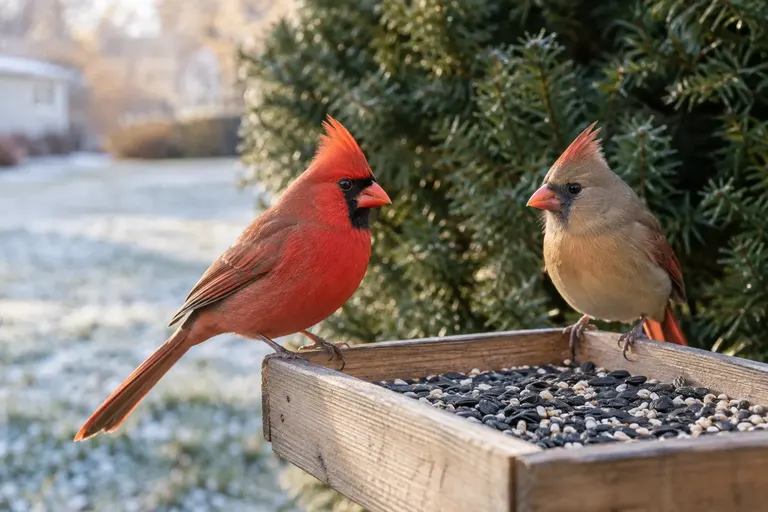
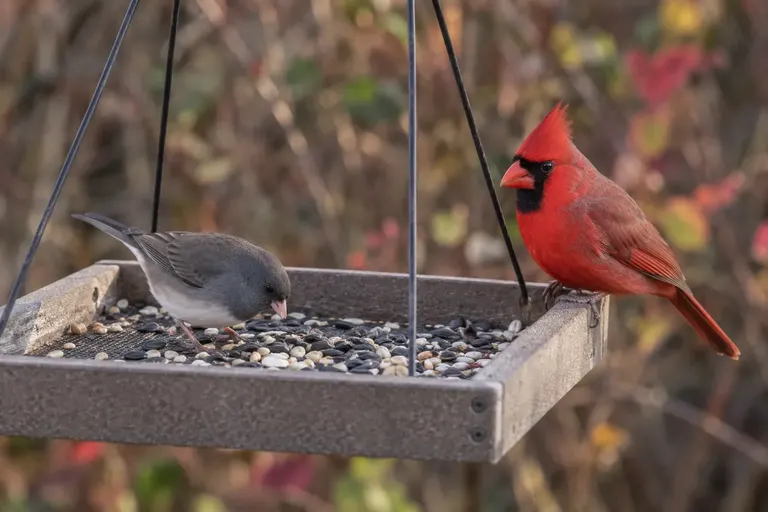
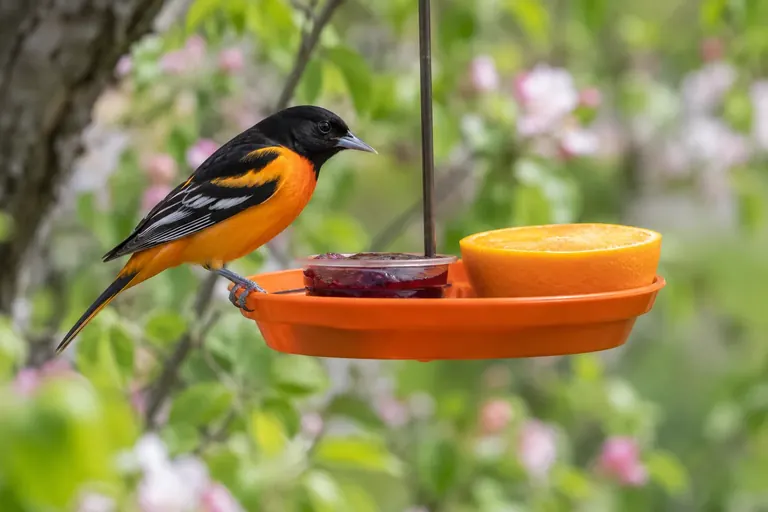
Yes, a tray and water both widen the range of birds, but place them carefully. A tray under a tube feeder catches spilled seed for ground feeders such as Mourning Doves, juncos and cardinals, and it cuts the mess below. Water draws birds that never eat seed.
Trays
A mesh-bottom tray drains rain and dries faster than a solid one. Keep it small and empty it often, since a tray full of wet husks grows mold and draws rodents. For dedicated tray and platform options, see our platform and tray feeder guide. If rats are a concern, our guide to keeping rats away from bird feeders explains why nighttime spilled seed is the main draw.
Water
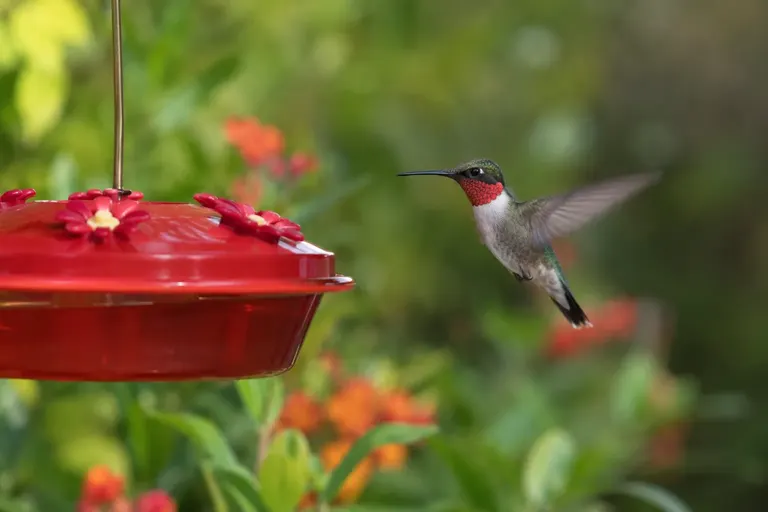
Clamp the water dish below or to the side of the feeders so droppings and husks do not fall in. Change the water every day or two in warm weather. Small clamp-on dishes freeze fast in winter, so a separate heated bath is usually the better cold-weather choice.
How do you keep a bird feeding station clean?
Clean feeders about every two weeks, and more often in wet or hot weather or if you see sick birds. Project FeederWatch recommends regular scrubbing with a dilute bleach solution, a thorough rinse and full drying before refilling. Our step-by-step feeder cleaning guide covers the details.
A station adds a few extra jobs:
- Scrub the tray and water dish more often than the feeders.
- Rake spilled hulls from under the station every week or two.
- Pause feeding and clean everything if you see birds with swollen eyes or lethargy.
Which birds will a feeding station attract?
The mix depends on the foods you offer. A station lets you serve several foods at once, which is its biggest advantage over a single feeder.
| Station element | Common backyard visitors (eastern and central US) |
|---|---|
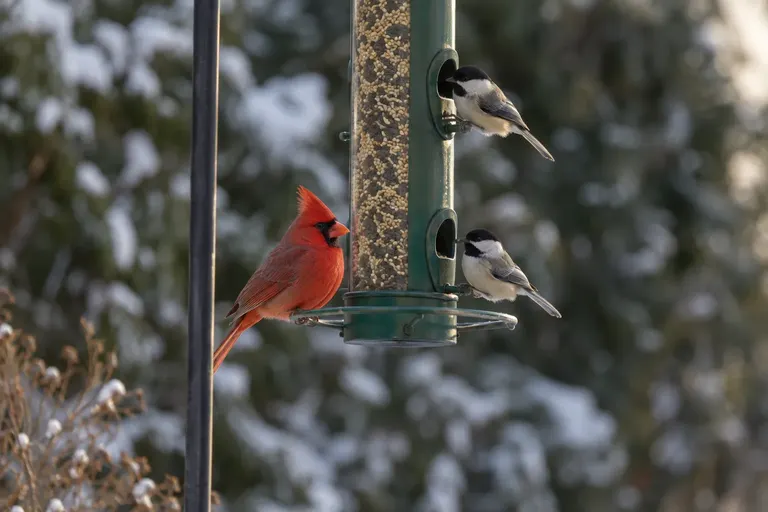
| Tube with black-oil sunflower | Chickadees, titmice, nuthatches, House Finches |
| Hopper with sunflower or safflower | Northern Cardinals, grosbeaks, Blue Jays |
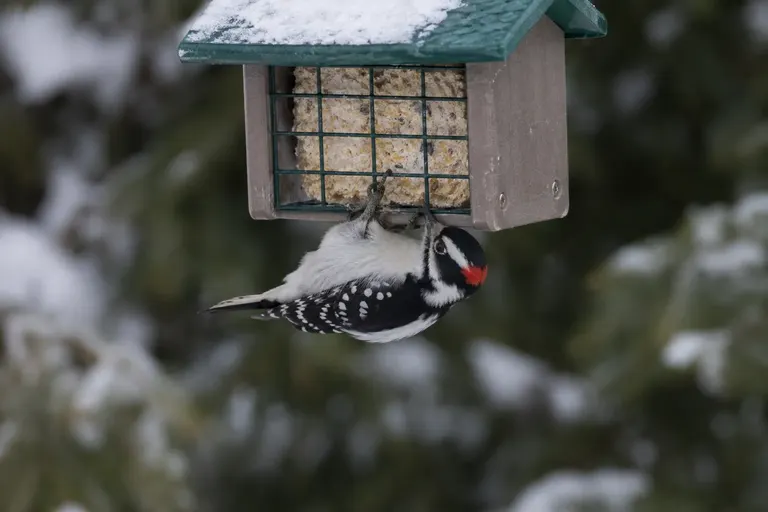
| Suet cage | Downy, Hairy and Red-bellied Woodpeckers, nuthatches |
| Nyjer tube | American Goldfinches, Pine Siskins |
| Low tray or platform | Mourning Doves, juncos, sparrows, cardinals |
| Water dish | Robins, bluebirds, warblers, and nearly every seed-eater |
Western and southern yards see different species, but the pattern holds: variety in food and feeder style brings variety in birds. For single-feeder picks by type, start with our best bird feeders roundup.
Bird feeding station setup checklist
Use this checklist before you buy and again on install day. It is the part most competing guides skip.
Before you buy
- Measured a spot 8 to 10 feet from every jump point, including arm reach
- Decided: ground socket (lawn) or base (patio or deck)
- Identified your pest: squirrels only, or raccoons too
- Chosen a baffle that matches: wide cone or 24 to 28 inch cylinder
- Confirmed the view from your usual window and more than 30 feet from glass
On install day
- Socket or auger driven straight, checked with a level
- Baffle bottom at least 4 feet off the ground
- Lowest feeder just above the baffle, not below it
- Heaviest feeder closest to the pole, arms balanced
- Tray under the seed feeders, water dish off to the side
Common mistakes
- Placing it by the fence “for now.” Squirrels find it within days.
- Hanging feeders below the baffle. The baffle only guards what sits above it.
- Overloading a thin stand. It leans, and a leaning pole defeats your distance rules.
- Water under the feeders. It fouls fast and spreads disease.
- Letting hulls pile up. Moldy waste below the station draws rats and can sicken ground-feeding birds.
Alternatives to a bird feeding station
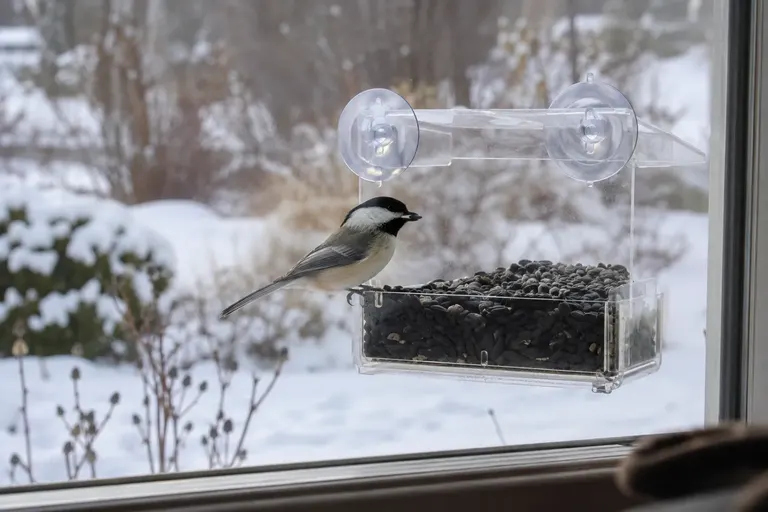
A single baffled pole with one feeder is simpler and cheaper. A window feeder suits apartments, since it sits in the safe 3-foot zone. A deck-rail arm is quick, but squirrels on the rail can reach it, so pair it with a squirrel-proof feeder. Native shrubs and seed heads feed birds with no hardware at all.
Sources
- Where to Put Your Bird Feeder (Cornell Lab, All About Birds)
- Feeder Placement (Project FeederWatch)
- House Finch Eye Disease and Feeder Cleaning (Project FeederWatch)
- Multi-Arm Bird Feeder Pole Systems (Erva)
- Patio Base (Erva)
- Raccoon Baffle (Kettle Moraine Woodworking)
- Squirrel Stopper System (Duncraft)
- Premium Bird Feeding Station Kit (Gray Bunny)
Frequently asked questions
How tall should a bird feeding station be?
Aim for feeders that hang about 5 to 6 feet off the ground, which means a pole around 7 to 8 feet tall once arms and hooks are added. The baffle needs its bottom at least 4 feet up, and the lowest feeder should sit just above it. Taller than about 8 feet makes daily refilling and cleaning awkward without a step stool.
How far should a bird feeding station be from trees?
Keep the whole station, including its longest arm, about 8 to 10 feet from trees, fences, deck rails, roofs and anything else a squirrel can climb. Baffle makers such as Kettle Moraine use this range. Measure from the tip of the arm, not the pole, because squirrels jump to whatever is closest.
Is a ground stake or a base better for a feeding station?
In a lawn or garden bed, a deep twist-in ground socket or auger is steadier than a base because the soil resists leaning on every side. Use a heavy base only on patios, decks or ground you cannot dig. A base can tip under a loaded arm in wind, so keep feeders balanced and stake the base down where possible.
Can you put a bird bath on a feeding station?
Yes. Many kits include a small clamp-on water dish, and it does attract birds. Keep it below or to the side of the feeders so seed husks and droppings do not fall in, and change the water every day or two. For a heated winter supply, a separate heated bath on its own stand is usually more practical.
How many feeders can a bird feeding station hold?
Most kits carry four to eight hanging points. The limit is less about hooks than about balance and the pole. Put the heaviest feeder closest to the pole, balance arms on opposite sides, and on a budget kit keep each arm light. Four well-chosen feeders plus a tray and water serve most yards better than eight crowded ones.